
What Does PU Mean in Text? Popular Meanings Explained
If you’ve received a message containing “PU” and aren’t sure what it means, you’re not alone. PU is a popular texting abbreviation used across social media, Snapchat, and everyday chats. Depending on the context, PU can have different meanings, from “Pop Up” to other slang expressions. This guide explains what PU means in text, when people use it, and how to understand it correctly.
PU means “pop up,” and it’s a casual way of asking someone to message you, reach out, or start a conversation. It’s short, punchy, and used constantly on Snapchat, Instagram DMs, and text messages by Gen Z and younger millennials alike.
It’s one of those slang terms that feels obvious once you know it — but completely confusing before that moment. In this guide, you’ll learn exactly what PU means, how to use it, and how to reply.
What Does PU Mean?
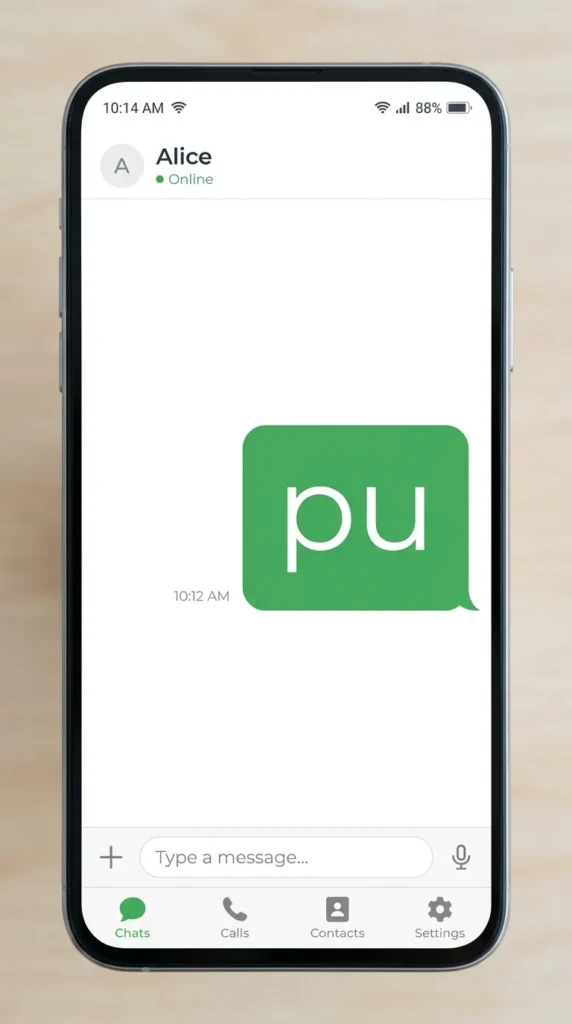
PU stands for “pop up,” meaning “come talk to me” or “reach out.”
When someone sends you “pu,” they’re basically asking you to message them, start a conversation, or check in with them. Think of it as a casual, low-effort nudge that says, hey, I’m here — hit me up.
The tone is almost always friendly and neutral. It’s not aggressive, it’s not a demand — it’s more of an open invitation. Some people use it when they’re bored and want to chat. Others use it to signal that they want to pick up a conversation that went quiet.
You’ll see it most on Snapchat, where it’s practically a native phrase at this point. Someone might post “pu” on their Snapchat story to invite their followers to DM them. It’s also common in Instagram stories and texts between friends.
What Does PU Mean in Texting?
In texting and DMs, PU is a super casual, low-key way of telling someone to message you. It works in one-on-one conversations and even better as a broadcast on social media stories.
The beauty of “pu” is that it removes all the awkwardness of asking someone to talk directly. Instead of saying “hey can we chat?” you just say “pu” and leave the door open. It feels effortless — almost like a wave from across the room.
Here are four realistic conversation examples:
Example 1 — Bored on a Friday night:
Jordan: pu Casey: omg finally, I’ve been so bored all day Jordan: same lol what are you doing tonight
Example 2 — Reconnecting with a friend:
Mia: pu when you get a chance Lena: just saw this! what’s up? Mia: nothing just miss you, we haven’t talked in forever
Example 3 — Snapchat story response:
Tyler: [posts “pu” on Snapchat story] Sam: [snaps back] yo what’s good Tyler: nothing just tryna talk to someone
Example 4 — Making plans:
Ava: pu, need to tell you something Nate: I’m here, what happened?? Ava: nothing bad lol just tea 🍵
PU is often typed in all lowercase (“pu”) and sometimes followed by an emoji like 👆or ⬆️ to emphasize the “pop up” visual. You might also see variations like “pu rn” (pop up right now) or “pu asap” for a bit more urgency.
See Also: What Does HN Mean in Text? Full Slang Guide (2026)
See Also: AFK Slang Meaning: How & When to Use It
What Does PU Mean From a Girl?
When a girl sends you “pu,” she’s typically being casual and friendly — she wants you to reach out without making a big deal of it. It’s a laid-back invitation, not a dramatic statement.
Scenario 1: She posts “pu” on her Snapchat story after not hearing from you in a while. This usually means she misses talking to you and wants you to initiate — but she doesn’t want to be the one to text first. It’s her way of opening the door without stepping through it herself.
Scenario 2: She texts you “pu when you’re free” after a conversation dies down. This is a softer version — she’s interested in continuing the chat but respects your time. The phrase “when you’re free” added at the end makes it less urgent and more considerate.
Girls often use “pu” as a gentle way to say “I want to talk to you” without sounding too eager. Read the context — if she’s sending it specifically to you (not on a story), there’s usually a reason she picked you to reach out to.
What Does PU Mean From a Guy?
When a guy texts you “pu,” it usually means one of two things: he’s bored and wants to chat, or he genuinely wants to catch up and is using slang to keep things casual.
Scenario 1: He sends “pu” on a random Tuesday afternoon with no context. Nine times out of ten, he’s sitting around with nothing to do and wants some company — at least over text. It’s a lazy but friendly reach-out.
Scenario 2: He texts you “pu, got something to tell you” — this signals there’s an actual reason behind it. Guys don’t always initiate detailed conversations, so “pu” paired with something like this is actually more intentional than it looks.
Guys tend to use “pu” the same way they use “hmu” — it’s a quick, low-effort signal that keeps things chill. Don’t overthink it. If it feels random, it probably is. If it comes with extra context, there’s likely something on his mind.
How to Use PU Correctly
PU is one of those slang terms that’s versatile but still context-dependent. Here’s a quick breakdown of when it works — and when to skip it.
✅ When to use PU:
1. On your Snapchat or Instagram story — This is the most natural home for “pu.” Posting it on your story is an open invitation for your followers to DM you. It’s especially common when you’re bored or just want to have a conversation.
2. Texting a close friend — If you want to catch up but don’t want to seem too try-hard about it, “pu” is perfect. It’s casual and signals that you’re available without any pressure.
3. Reopening a conversation that went quiet — Did a text thread die out a few days ago? Sending a simple “pu” can restart it without the awkwardness of a “so anyway…” opener.
❌ When NOT to use PU:
1. In professional or school settings — Texting “pu” to a teacher, boss, or colleague is a hard no. It’ll either confuse them or come across as unprofessional. Stick to “please reach out” or “let me know when you’re available.”
2. With someone you don’t know well — Sending “pu” to an acquaintance or a new contact can feel random or even forward. It works best between people who already have an established, casual dynamic.
PU is most at home on Snapchat, Instagram, and iMessage. It’s less common on Twitter/X and almost never used in email or formal messaging platforms.
How to Reply When Someone Texts PU
Got a “pu” and not sure how to respond? Here are six ready-to-use replies depending on your mood:
- Casual/chill reply: “Yo what’s up?” — Simple, natural, and gets the conversation going without overthinking it.
- Funny reply: “I have popped. I am here. What do you need lmao” — Leaning into the literal meaning always gets a laugh.
- Confused/ask-for-clarity reply: “Wait what’s going on? You good?” — Use this if their “pu” felt a little urgent or out of the blue.
- Agreement reply: “On my way 👆” — A quick, playful response that matches their energy.
- Short/one-word reply: “Here” — Dead simple. It works. Sometimes less is more.
- Emoji-only reply: 👆 or ⬆️ — If you’re really not in the mood to type, the upward arrow emoji is widely understood as a “I see you / I’m here” response.
See Also: TF Mean in Text — The Slang Term Everyone’s Using 2026
PU vs Similar Slang
PU isn’t the only way to tell someone to reach out. Here’s how it stacks up against similar slang terms:
| Slang | Full Form | Meaning | Tone | When to Use |
|---|---|---|---|---|
| PU | Pop Up | Message me / come talk to me | Casual, friendly | Snapchat stories, casual texts |
| HMU | Hit Me Up | Contact me | Casual, inviting | Texts, social media bios |
| LMK | Let Me Know | Keep me informed | Neutral, practical | Response to plans/decisions |
| WYD | What You Doing | What are you up to? | Casual, conversational | Opening a conversation |
| WYA | Where You At | Where are you? | Casual, urgent-ish | Plans, meetups |
The biggest difference between PU and HMU is subtle but real. “HMU” is more about requesting contact — it implies you want them to take an action. “PU” is a bit more mutual — it’s like saying I’m open to talking, pop into my DMs whenever. Both work as conversation starters, but PU has that distinctly Snapchat flavor that HMU doesn’t carry as strongly.
Origin & History of PU
The phrase “pop up” in casual conversation isn’t new — people have been saying “pop by” or “pop over” for decades to mean stopping in somewhere casually. But “PU” as a texting acronym is largely a product of the Snapchat era.
Around 2015–2017, as Snapchat stories became a daily habit for millions of teens and young adults, posting “pu” on a story became a go-to move for anyone who wanted engagement without having to reach out individually. It spread fast because it required zero effort and communicated exactly what someone wanted.
By 2019–2020, “pu” had expanded beyond Snapchat into Instagram stories and regular SMS conversations. It stuck around because it filled a real communicative niche — there wasn’t another two-letter phrase that meant exactly the same thing.
In 2026, PU is still very much alive and in regular use, especially among Gen Z. It’s not fading out. If anything, it’s settled comfortably into the everyday texting vocabulary of anyone under 30.
See Also: What Does JSP Mean in Text? The Meaning Everyone Is Searching For
Frequently Asked Questions
What does PU mean in a text from a girl?
When a girl texts you “pu,” she’s inviting you to reach out or continue a conversation — usually in a low-key, no-pressure way. If she sends it directly to you rather than on a story, she specifically wants to hear from you. It’s friendly, and sometimes flirty depending on the relationship.
What does PU mean in a text from a guy?
A guy texting “pu” typically means he’s bored, wants to chat, or has something on his mind that he wants to bring up casually. It’s his way of signaling availability without sounding too serious about it. Read it as a relaxed “hey, talk to me.”
Is PU rude or offensive?
No, PU is not rude or offensive at all. It’s a neutral, friendly acronym. That said, it can feel pushy if the context isn’t right — like if someone sends it repeatedly when you haven’t responded. In normal use, though, it’s completely harmless and well-intentioned.
Can I use PU at work or school?
It’s best to avoid using PU in professional or academic settings. Teachers, professors, and coworkers may not know what it means, and it can come across as unprofessional regardless. Stick to formal language in those contexts and save the slang for your personal chats.
What is the full form of PU?
PU stands for “pop up.” It’s a casual way of asking someone to message you or start a conversation, most commonly used on Snapchat and in text messages.
Is PU still used in 2026?
Yes, PU is still widely used in 2026, especially among Gen Z and younger millennials. It remains particularly popular on Snapchat stories. While slang cycles in and out, PU has proven to be one of the more durable short-form expressions in the texting world.
Conclusion
PU means “pop up” — a simple, casual way of asking someone to message you or strike up a conversation. Whether it shows up on a Snapchat story or lands directly in your DMs, the message is always the same: come talk to me.
Now that you know what PU means in text, you can use it confidently and respond without confusion when someone sends it your way. It’s short, it’s friendly, and it’s not going anywhere.

8 Comments