What Does JSP Mean in Text? The Meaning Everyone Is Searching For
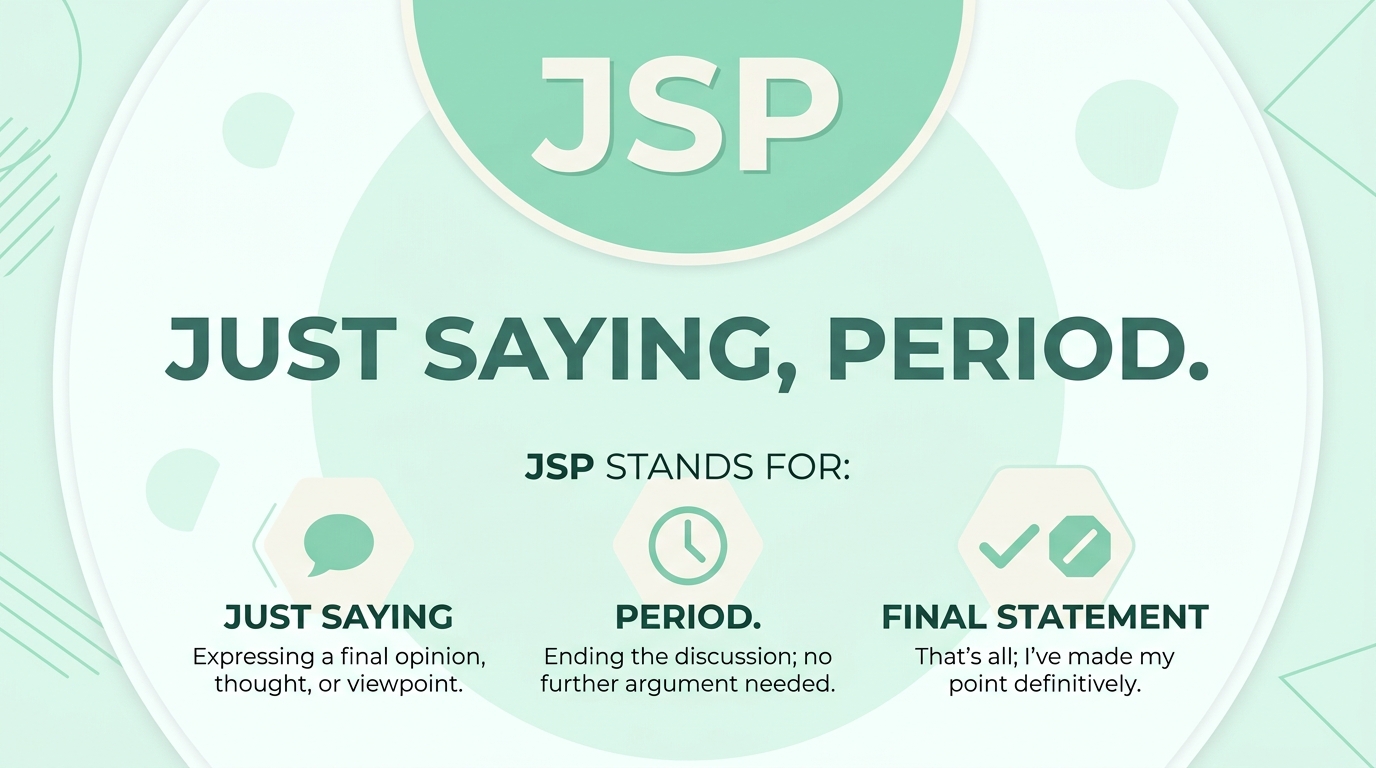
You’re scrolling through your messages and someone shoots you a quick “jsp” — and you freeze. What does that even mean? JSP stands for “Just Sayin’ Please” or, more commonly, “Just Saying, Period” — a casual text slang used to add emphasis or a passive-aggressive edge to a statement without sounding too pushy. In this guide, you’ll learn exactly what JSP means, how to use it, and how to reply.
What Does JSP Mean?
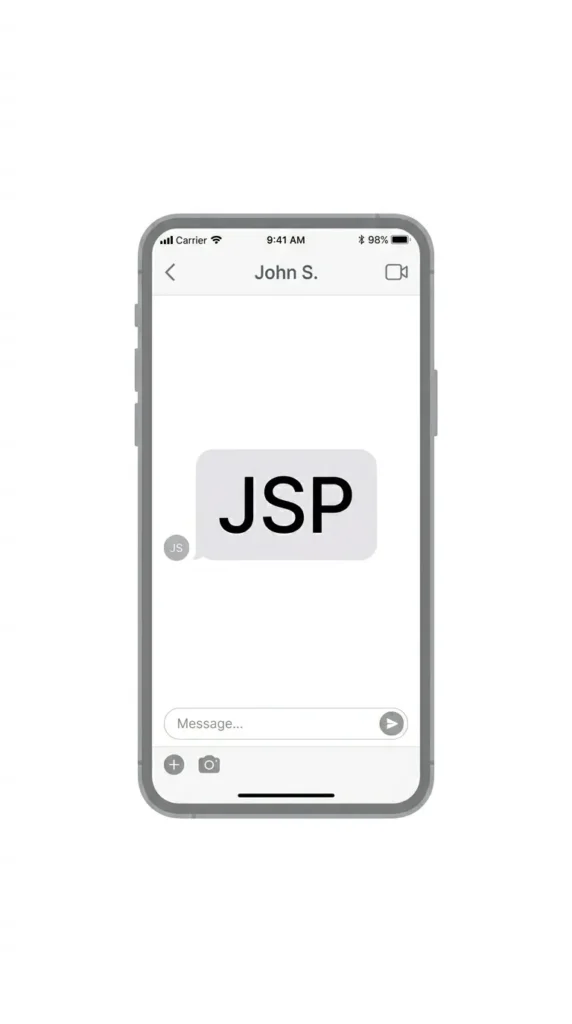
JSP means “Just Saying, Period” — a text slang abbreviation used to firmly close out a statement or opinion without inviting debate.
The full form breaks down simply: J = Just, S = Saying, P = Period. It’s the texting equivalent of dropping the mic after making a point. The tone here is usually neutral to slightly assertive — you’re not being rude, but you’re making it clear you’re done talking about it.
Think of it as a more compact cousin of “just saying” but with an extra layer of finality. When someone throws a “jsp” at the end of their message, they’re usually signaling that they’ve shared their honest opinion and aren’t looking for pushback.
It’s used across all major messaging platforms — Snapchat, iMessage, Instagram DMs, and TikTok comments — mostly by Gen Z and younger Millennials who want to be direct without sounding aggressive.
What Does JSP Mean in Texting?
In texting, JSP is shorthand that saves time while adding a bit of attitude to whatever point you’re making. You’ll typically see it tacked on at the end of an opinion or statement — kind of like saying “and I stand by that.”
It doesn’t carry any threatening or harmful vibe. It’s actually pretty chill in most cases. The emphasis level depends entirely on context — a “jsp” after a lighthearted comment is playful, but a “jsp” after calling someone out on something reads more seriously.
Here are four realistic text conversation examples showing how JSP gets used:
Example 1 — Casual opinion:
Alex: Did you see what she wore to the party?
Jamie: It was a lot. jsp
Alex: Lmaoo okay fair
Example 2 — Gentle callout:
Riley: Why didn't you tell me the meeting was moved?
Jordan: I texted you twice, you just didn't check your phone. jsp
Riley: Okay okay you're right, my bad
Example 3 — Playful shade:
Sam: I think pineapple on pizza is good
Taylor: That's wrong. jsp
Sam: 😂 fight me then
Example 4 — Standing firm:
Morgan: You're being way too harsh on him
Casey: He deserved it. I'm not apologizing. jsp
Morgan: Okay well...
You’ll also see JSP written in these variations: jsp, JSP, j.s.p, or sometimes with a period after — jsp. — for even more emphasis. Emojis like 🙃, 😐, or 💅 often tag along with it in more casual, playful messages.
What Does JSP Mean From a Girl?
When a girl uses JSP in a text, it usually means she’s being honest with you and isn’t sugarcoating. It’s her way of saying “this is my take, and I’m not debating it.” It doesn’t mean she’s angry — it’s often said lightly, almost as a confidence thing.
Scenario 1: You ask her if she thinks your new haircut is a good look. She says, “Honestly, the old one was better. jsp.” That’s not a diss — it’s just her being real with you.
Scenario 2: She’s venting about a mutual friend and ends her message with “She’s been low-key messy lately, jsp.” She’s not starting drama. She’s expressing her honest read on the situation and moving on.
Girls tend to use JSP in a way that closes a topic politely but firmly. The message is: I said what I said, no hard feelings. It often has a sassy but non-confrontational energy — especially when paired with 💅 or 🤷.
What Does JSP Mean From a Guy?
From a guy, JSP usually comes with a slightly more blunt edge. When a guy texts “jsp,” it often means he made a point, knows he’s right, and doesn’t feel the need to argue further. It’s his version of dropping facts and walking away.
Scenario 1: You’re arguing about which team is better. He says, “Lakers haven’t won anything worth talking about since 2020. jsp.” He’s done with the debate. That’s the whole message.
Scenario 2: You’re making plans and he says, “We should’ve just gone with my idea from the start. jsp.” He’s not being a jerk — he’s just noting the obvious (in his mind) and moving on.
Guys tend to use JSP as punctuation to an argument rather than an emotional statement. It’s less about feelings and more about finality. Don’t read too much into it — if a guy texts you “jsp,” he’s usually just being candid, not cold.
See Also: What Does TF Mean in Text? Full Slang Guide (2026)
How to Use JSP Correctly
Using JSP correctly isn’t complicated, but context still matters. Here’s a quick breakdown of when it works — and when it doesn’t.
✅ 3 Situations Where JSP Works Well
1. Sharing an opinion you’re confident about When you’ve said your piece and don’t want to debate it further, tack on a “jsp.” It signals you’re firm but not aggressive. Great for pop culture opinions, light disagreements, or personal preferences.
2. Calling something out lightly If you want to point something out without starting a whole conversation about it, “jsp” does the job. It’s low-key and doesn’t escalate.
3. Being real with a close friend With someone you’re close to, JSP adds an honest, unfiltered vibe without any malice. It tells them you’re keeping it 100 without being harsh.
❌ 2 Situations Where You Shouldn’t Use JSP
1. Serious or emotional conversations If someone is going through something tough, ending your message with “jsp” can come across as cold or dismissive. Save it for casual chats.
2. Professional settings Don’t use JSP in emails, Slack messages at work, or texts to your professor or boss. It reads as immature in formal contexts.
What about school and work?
At school with friends during lunch? Sure. In a group project chat? Maybe not. As a general rule — if the person on the other end might not know the slang, skip it.
JSP is most common on Instagram DMs, Snapchat, iMessage, and Twitter/X. You’ll see it less on platforms like LinkedIn or Reddit, where users typically write more fully.
How to Reply When Someone Texts JSP
Getting a “jsp” in your messages? Here are six solid ways to respond depending on your mood and the situation:
1. Casual / chill reply “Fair enough lol”
2. Funny reply “Okay but also you could be wrong… jsp 😂”
3. Confused / ask-for-clarity reply “Wait what do you mean by that? Lol are you serious?”
4. Agreement reply “No you’re literally right. That’s facts.”
5. Short / one-word reply “Noted.”
6. Emoji-only reply 😶 or 💀 or 🙃 — works when no words are needed and you just want to acknowledge without getting into it.
The emoji replies work especially well when the “jsp” message was a little cheeky or playful. Responding with “💀” to something petty but accurate? Chef’s kiss.
See Also: TF Mean in Text — The Slang Term Everyone’s Using 2026
JSP vs Similar Slang
JSP lives in a family of acronyms that all share a “just saying” vibe. Here’s how they stack up:
| Slang | Full Form | Meaning | Tone | When to Use |
|---|---|---|---|---|
| JSP | Just Saying, Period | Firm final statement | Assertive, neutral | Closing an opinion |
| JS | Just Saying | Casual opinion disclaimer | Light, friendly | Softening a comment |
| JUS | Just | Literally “just” | Neutral | Casual shortening |
| NGL | Not Gonna Lie | Honest admission | Candid, open | Sharing real feelings |
| ISTG | I Swear to God | Serious emphasis | Intense, passionate | Adding urgency or frustration |
| TBH | To Be Honest | Blunt opinion | Direct, genuine | Giving real feedback |
The biggest difference between JSP and JS is finality. “JS” softens a comment — like “just so you know, I’m not mad.” JSP shuts the door on it — “this is my opinion and we’re done here.” It’s a subtle but important distinction that changes the whole energy of a message.
Origin & History of JSP
JSP as a slang term started picking up traction around 2018–2019 on platforms like Twitter and Snapchat. It grew alongside the broader “just saying” culture that became popular in meme format around that era — the idea of stating something provocative and then immediately distancing yourself with “just saying.”
It likely evolved from the already-popular JS (Just Saying) acronym, with “Period” added to give it more finality — a nod to the “period” mic-drop energy that was blowing up on Black Twitter and later across Gen Z culture. Saying “period” at the end of a statement became a widely recognized way of saying “this is facts and I won’t be taking questions.”
As that verbal habit moved from spoken language into text, JSP emerged as the natural shorthand.
By 2021–2022, it had solidified its place in everyday Gen Z texting vocabulary and started appearing more frequently in TikTok comment sections and Snapchat conversations.
In 2026, JSP is still very much alive — not a dying slang term, but also not at peak novelty anymore. It’s settled into the “standard Gen Z vocab” category, meaning people use it naturally without overthinking it. It’s not trying to be trendy — it just is.
Frequently Asked Questions
What does JSP mean in a text from a girl?
When a girl texts JSP, she’s usually expressing a firm but casual opinion — “I said what I said.” It’s not aggressive; it’s more of a confident, honest vibe. She’s sharing her real take and not looking to debate it.
What does JSP mean in a text from a guy?
From a guy, JSP typically means he’s made his point and considers the discussion closed. It’s more about being direct than being dismissive. If a guy sends “jsp,” he’s usually just stating what he sees as obvious and moving on.
Is JSP rude or offensive?
JSP is not inherently rude. Its tone depends entirely on the context and relationship. Between close friends, it reads as playful and honest. In a tense conversation, it can come across as dismissive if the other person feels shut down. As long as the topic doesn’t call for real empathy or depth, you’re fine.
Can I use JSP at work or school?
Definitely not at work — it’s way too informal for professional communication. At school, it’s fine in casual convos with classmates, but you’d want to avoid it with teachers or in any academic context. Stick to texting with friends for this one.
What is the full form of JSP?
JSP stands for “Just Saying, Period.” It’s used to punctuate a firm or confident statement, signaling that the speaker is done discussing it.
Is JSP still used in 2026?
Yes, JSP is still actively used in 2026, especially by Gen Z and younger Millennials. It’s not a trending buzzword anymore — it’s more of an established slang staple that people use naturally. You’ll see it most often on Snapchat, Instagram DMs, and iMessage.
Conclusion
JSP meaning in text is simple: it stands for “Just Saying, Period” — a direct, confident way to close out a statement without inviting debate. Whether it’s coming from a friend sharing their honest opinion or someone shutting down an argument, JSP carries a clear “I said what I said” energy.
Now that you know what JSP means, how it’s used, and how to respond to it, you can read the room and use it with confidence yourself. It’s casual, it’s relatable, and it gets the point across fast.



7 Comments