What Does STTM Mean in Text? Meaning, Uses & Examples
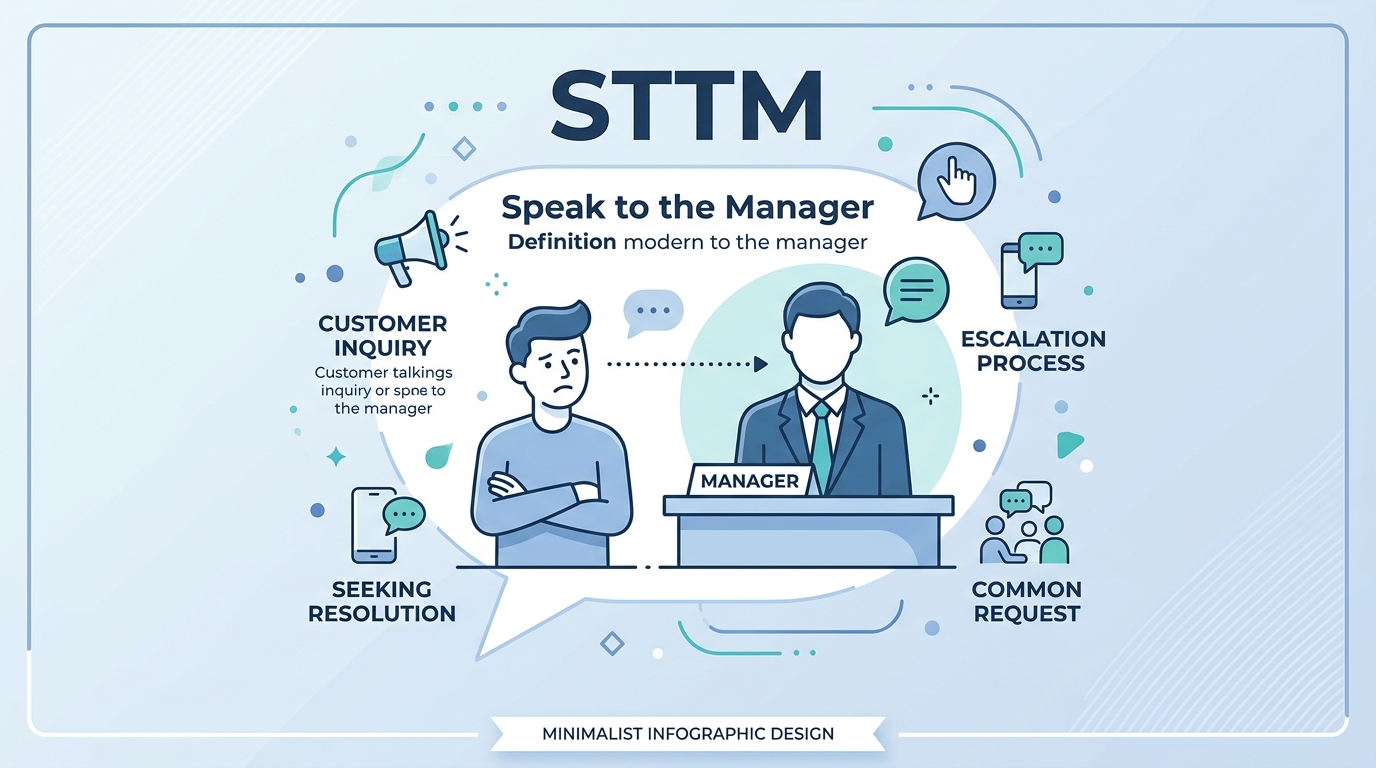
You’re scrolling through your messages, and someone just hit you with “STTM.” No context. No explanation. Just those four letters staring back at you. Sound familiar? STTM stands for “Speak to the Manager” — a sarcastic, often humorous acronym used in texting to mock someone acting entitled, dramatic, or overly demanding. In this guide, you’ll learn exactly what STTM means, how to use it, and how to reply.
Have you received the abbreviation STTM in a message and wondered what it means? STTM most commonly means “Stop Talking to Me.” People use it in text messages, online chats, TikTok comments, Snapchat conversations, and Instagram DMs.
Depending on the situation, STTM may sound angry, playful, sarcastic, or dismissive. A close friend may use it as a joke, while someone involved in an argument may use it to end the conversation. Therefore, understanding the context, relationship, and tone of the message is important.
In this guide, you will learn what STTM means in text, how people use it on different social media platforms, whether it is rude, and how you can respond appropriately.
What Does STTM Mean?
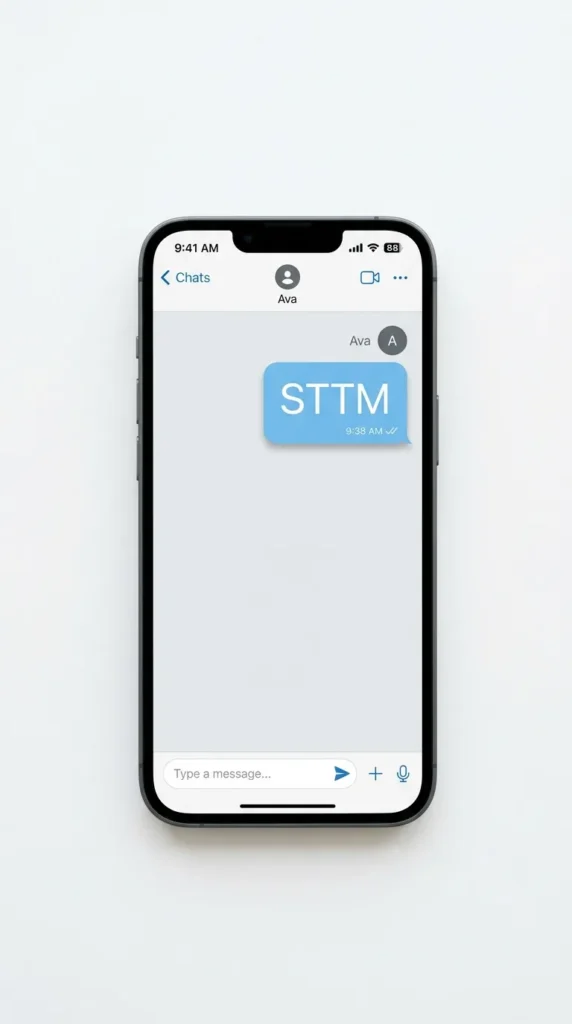
STTM means “Speak to the Manager” — a sarcastic acronym used to mock someone being overly entitled, dramatic, or demanding.
Each letter breaks down like this:
- S — Speak
- T — To
- T — The
- M — Manager
The tone is almost always sarcastic or joking. Nobody texts “STTM” as a genuine instruction. It’s a playful jab — the digital equivalent of rolling your eyes at someone who’s complaining too much or acting like they deserve special treatment.
Think of the classic “Karen” stereotype — someone demanding to speak to the manager over something minor. STTM bottles that whole energy into four letters. It can be used affectionately between close friends or more sharply when someone is genuinely being ridiculous.
The vibe is comedic and internet-savvy. If someone texts you STTM, they’re probably laughing at the situation more than actually judging you.
What Does STTM Mean in Texting?
In texting, STTM is most commonly sent as a reaction. Someone says something dramatic, throws a minor complaint, or acts like the world owes them a favor — and the reply is STTM.
It’s widely used on iMessage, WhatsApp, Snapchat, and even Instagram DMs. The acronym travels fast in group chats where someone inevitably goes full “Karen mode” over something small.
Here are four realistic conversations showing STTM in action:
Example 1 — The restaurant complaint:
Alex: “They forgot extra sauce on my burger AGAIN. I’m so done with this place.” Jamie: “sttm lmaooo go get your refund bestie” Alex: “I literally might 💀”
Example 2 — Online drama:
Alex: “The game update broke my account and no one is responding to my ticket” Jamie: “STTM at this point, you’ve been complaining for 3 days” Alex: “I deserve answers!!”
Example 3 — Friend group chaos:
Alex: “The Airbnb host said we can’t use the pool after 10pm, this is outrageous” Jamie: “sttm karen 😭” Alex: “YOU’RE NOT HELPING”
Example 4 — Work vent:
Alex: “My coworker took my lunch from the fridge AGAIN” Jamie: “bro STTM for real this time” Alex: “I’m writing an email I’m not even joking”
You’ll also see STTM written in lowercase (sttm), with emojis like 😭👏💀, or paired with “lol” and “fr” for extra emphasis. The casing rarely changes the meaning — it’s all in the context.
Example: Serious Use
Person A: Why are you ignoring my messages?
Person B: STTM. I need some space.
In this example, the person is seriously asking the other person to stop messaging.
Example: Playful Use
Person A: I ate the last slice of pizza.
Person B: STTM 😂
Here, STTM is being used jokingly because the laughing emoji makes the tone playful.
Example : During an Argument
Person A: Let me explain what happened.
Person B: STTM. I do not want to discuss it anymore.
In this situation, STTM shows frustration and indicates that the person wants to end the conversation.
See Also: What Does AWL Mean in Text? Full Slang Guide (2026)
What Does STTM Mean From a Girl?
When a girl texts STTM, she’s usually playfully calling out someone’s dramatic energy. Girls tend to use it in close-friend dynamics where the joke lands without anyone actually getting offended.
Scenario 1: Her friend is ranting about a barista making her coffee wrong for the second time. She texts back “sttm bestie 😂” — it’s affectionate teasing, not a real dig.
Scenario 2: Someone in the group chat is complaining about a guy not texting back fast enough. The STTM response is her way of saying “girl, calm down” without being harsh about it.
Girls often pair STTM with laughing emojis or heart reactions to soften it. The intent is usually to keep things light and funny, not to actually shame the other person.
What Does STTM Mean From a Guy?
Guys tend to use STTM with a little more edge — but still mostly in a joking way. Between friends, it’s a classic reaction to someone over-reacting or escalating unnecessarily.
Scenario 1: His buddy is going off about a ref’s bad call during a game. He fires back “STTM bro 💀” because the ranting has hit dramatic levels.
Scenario 2: A coworker friend texts him complaining about the office coffee machine for the fourth day in a row. His response? “dude just STTM at this point.”
Guys tend to drop the emojis and go drier with STTM, which can make it hit a little sharper. Context matters — if it’s used in a tight friend group, everyone’s laughing. If it’s used with someone who doesn’t get the joke, it could come off as dismissive.
How to Use STTM Correctly
Knowing when to deploy STTM is the whole game. Here’s a breakdown:
3 Situations Where STTM Works:
- Your friend is dramatically venting about something minor — a cold coffee, a slow driver, a wifi issue. STTM works here as playful “you’re being extra” energy.
- Someone in a group chat escalates quickly — they go from zero to full rant in two messages. Dropping STTM gets a laugh and breaks the tension.
- Self-deprecating humor — you can even use it on yourself: “I’m literally about to STTM rn 😂” when you’re the one being a little dramatic.
2 Situations Where You Should NOT Use STTM:
- When someone is genuinely upset or dealing with a real problem. If your friend is crying about something serious, STTM will land terribly. Read the room.
- In professional or formal settings. Never send STTM to a coworker you don’t know well, your boss, or in a work Slack channel. It reads as mocking and immature in those contexts.
STTM lives on platforms like Snapchat, Instagram DMs, and group texts between close friends. It’s casual-only territory.
See Also: What Does TBH Mean in Text? Full Slang Guide (2026)
How to Reply When Someone Texts STTM
Got hit with STTM and not sure what to say back? Here are six ready-to-use replies:
- Casual / chill reply: “lmao okay fair, I’m done complaining”
- Funny reply: “I WILL speak to the manager, watch me 😤”
- Confused / ask-for-clarity reply: “wait are you calling me a Karen rn 💀”
- Agreement reply: “you’re right you’re right, I’ll chill”
- Short / one-word reply: “rude.” or “noted.”
- Emoji-only reply: 😭😂👏
The funniest responses are usually the ones that lean into the joke rather than fight it. If someone calls you out with STTM, owning the dramatic behavior is always the funnier move.
STTM vs Similar Slang
| Slang | Full Form | Meaning | Tone | When to Use |
|---|---|---|---|---|
| STTM | Speak to the Manager | Mocking entitlement or over-reaction | Sarcastic, jokey | When someone’s being dramatic |
| SMH | Shaking My Head | Disapproval or disbelief | Mild disappointment | When someone does something dumb |
| IYKYK | If You Know You Know | Inside reference | Playful, exclusive | Shared inside jokes |
| NGL | Not Gonna Lie | Honest confession | Casual, neutral | When admitting something real |
| FR | For Real | Emphasis or agreement | Casual | Agreeing or emphasizing a point |
The key difference between STTM and SMH is specificity. SMH is a broad reaction to anything annoying or dumb. STTM is laser-targeted at entitled, demanding, or over-the-top behavior. If SMH is a general sigh, STTM is a very specific eye-roll at someone in full Karen mode.
See Also: What Does TYSM Mean in Text? Full Slang Guide (2026)
Origin & History of STTM
STTM grew out of the broader internet culture surrounding the “Karen” meme, which exploded around 2017–2018. The “I want to speak to the manager” punchline became one of the most viral tropes on social media — memes, videos, and Twitter threads all ran with the image of an entitled person demanding management escalation over trivial issues.
As the Karen meme hit peak saturation on platforms like Reddit, Twitter, and TikTok around 2019–2020, the phrase naturally compressed into texting shorthand. STTM started appearing in tweet threads, Instagram comment sections, and group chats as a fast way to reference that whole energy without spelling it out.
By 2021–2022, it had settled into everyday slang use among Gen Z and younger Millennials. It didn’t blow up as massively as acronyms like LOL or SMH, but it carved out a solid niche in sarcastic internet humor.
In 2026, STTM is still in active use — particularly in group chats and social media comments. It’s not the flashiest slang out there, but anyone plugged into meme culture will recognize it instantly. It’s reliable, punchy, and gets a laugh every time someone’s being just a little too extra.
Frequently Asked Questions
What does STTM mean in a text from a girl?
When a girl texts STTM, she’s usually teasing someone for being dramatic or acting entitled. It’s most often used humorously between close friends. She’s probably not being mean — she’s making a joke about Karen energy.
What does STTM mean in a text from a guy?
Guys use STTM to call out someone who’s overreacting or escalating a situation unnecessarily. It can be a bit drier or more direct when guys use it. Either way, it’s meant as a joke, not a genuine insult.
Is STTM rude or offensive?
STTM isn’t inherently rude, but context matters a lot. Between close friends, it’s a funny, light jab. If someone uses it on a person who’s genuinely upset or doesn’t share that sense of humor, it can come off as dismissive. Always read the room before dropping it.
Can I use STTM at work or school?
It’s best to keep STTM out of professional settings. It implies someone is being a Karen, which could easily be taken the wrong way by colleagues or teachers. Stick to using it in personal, casual conversations with people who get the joke.
What is the full form of STTM?
STTM stands for “Speak to the Manager.” It’s a sarcastic acronym that references the popular “Karen” stereotype of demanding to escalate to management over minor issues.
Is STTM still used in 2026?
Yes, STTM is still in circulation in 2026. It’s not at peak viral status, but it’s held on as a reliable piece of sarcastic slang — especially in group chats and comment sections when someone goes a little too dramatic.
Conclusion
So now you know — STTM means “Speak to the Manager,” and it’s the internet’s favorite way to call out dramatic, entitled, or over-the-top behavior in a funny, low-stakes way. Whether someone sends it your way or you’re looking to use it yourself, the key is to keep it light and make sure your audience gets the joke.
STTM slang is best used between people who share the same humor. When the timing’s right and the person deserves a gentle roast, there’s no better four letters to fire off. Bookmark this page — next time you see confusing slang, we’ve got you covered.
![HWY Meaning in Text — What It Really Means [2026]](https://meaningdict.com/wp-content/uploads/2026/05/HWY-Meaning-in-Text-—-What-It-Really-Means-2026-768x429.jpeg)

4 Comments