
TF Mean in Text — The Slang Term Everyone’s Using 2026
You’re scrolling through your messages and a friend texts back: “TF are you talking about?” You pause. You get the vibe — but do you actually know what TF means? You’re not alone.
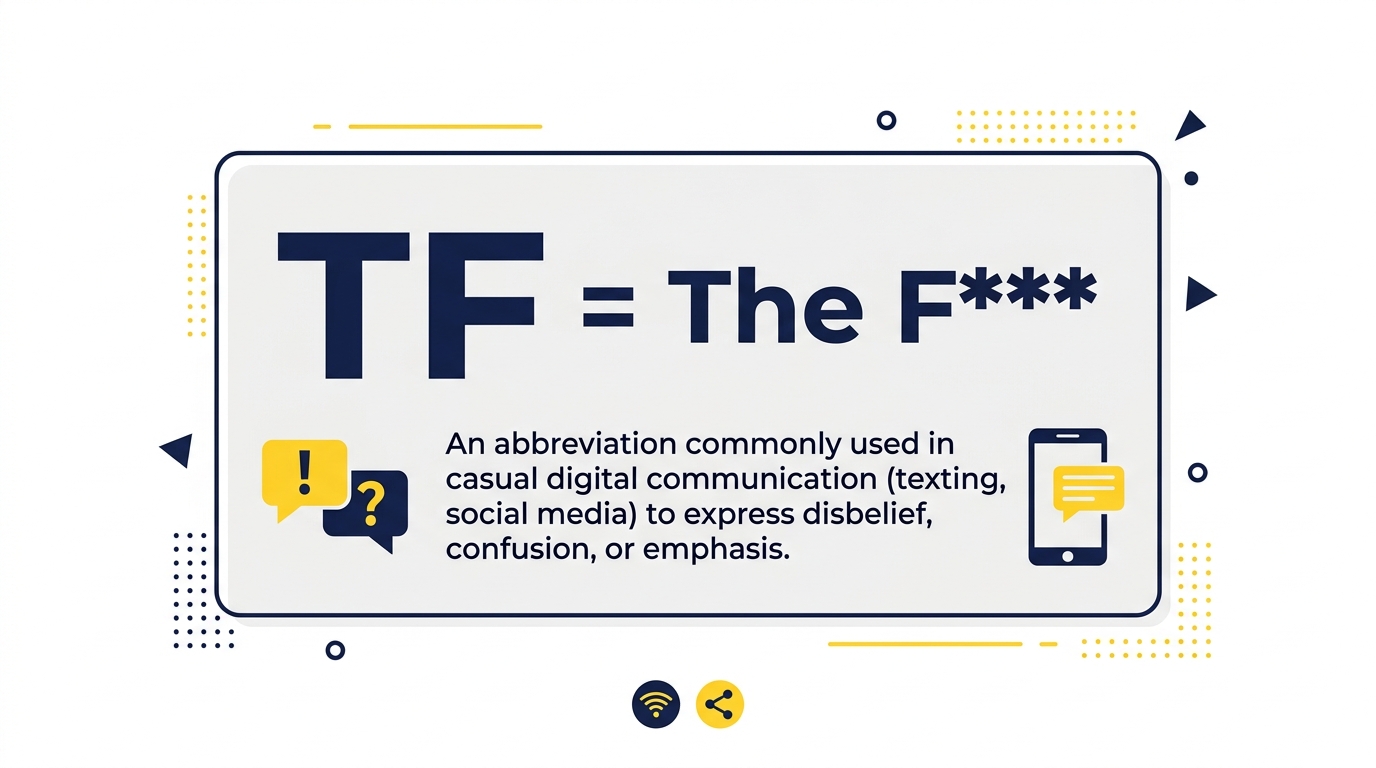
TF stands for “The F*” — a blunt, expressive acronym used to show shock, disbelief, confusion, or irritation.** It’s one of the most common acronyms in casual texting and social media, and it’s been around long enough to have dozens of different flavors depending on who’s using it and how.
In this guide, you’ll learn exactly what TF means, how to use it, and how to reply.
What Does TF Mean?
TF means “The F*” — a versatile expletive acronym expressing shock, confusion, disbelief, or anger.**
Each letter breaks down simply: T = The, F = F*** (the explicit word). That’s it. No complicated backstory, just a shorthand way to drop one of the most emotionally loaded phrases in English without spelling it all out.
The tone of TF is almost always strong — it’s not a neutral word. Whether someone is genuinely shocked, playfully annoyed, or completely baffled, TF adds punch to whatever they’re saying. It can be funny, it can be sharp, and in the wrong context, it can come off as aggressive or hostile.
Most people use TF as part of a question — like “TF is this?” or “What TF happened?” — but it also appears as a standalone reaction, the digital equivalent of a jaw drop.
What Does TF Mean in Texting?
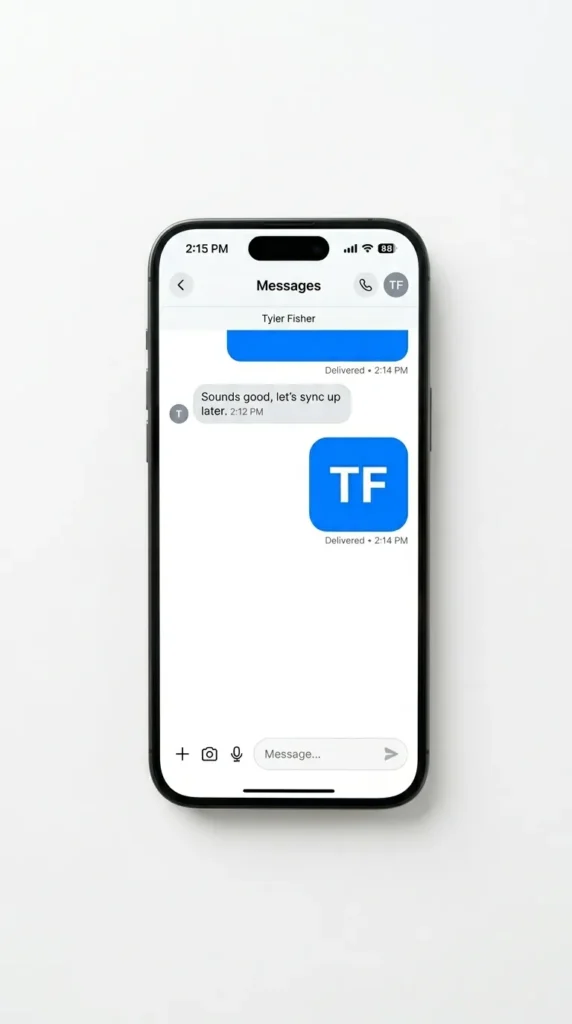
In texting, TF is basically a shorthand exclamation point with attitude. You throw it in when something catches you completely off guard, when you’re calling someone out, or when you genuinely don’t understand what’s going on.
It shows up in SMS, WhatsApp, iMessage, and just about every chat app you can think of. It’s fast to type, easy to understand, and gets the emotional point across immediately.
Here are four realistic text conversations that show TF in action:
Example 1 — Disbelief:
Alex: Dude I just saw your ex at the mall with your best friend Jamie: TF?? Are you serious right now Alex: Dead serious bro, they were holding hands and everything
Example 2 — Playful Confusion:
Alex: I made pasta but forgot to boil the noodles first Jamie: TF were you thinking lmao Alex: I don’t even know, I was half asleep
Example 3 — Calling Someone Out:
Alex: You never texted me back last night Jamie: TF you mean? I replied at like 10pm Alex: Oh wait it didn’t send on my end my bad
Example 4 — Reacting to News:
Alex: They’re canceling the show after season 2 Jamie: what tf 😭😭 that’s so unfair Alex: I know, I cried when I saw the announcement
You’ll also see TF written as tf, Tf, or paired with emojis like 😭, 😤, 💀, and 🤯 to amp up the emotion. The lowercase version (tf) feels more casual; all-caps TF tends to hit harder, like you’re actually yelling it.
What Does TF Mean From a Girl?
When a girl texts TF, she’s usually expressing one of two things: genuine disbelief or playful exasperation. Girls tend to use TF in a way that’s emotionally expressive — it’s less about aggression and more about reacting to something ridiculous or unexpected.
Scenario 1 — Shock at drama: Her friend tells her that their mutual friend said something shady behind her back. She fires back with “TF? She actually said that?” It’s less about anger and more about being genuinely stunned.
Scenario 2 — Playful teasing: You tell her you ate an entire pizza by yourself. She replies “tf 😭 how” — not mad, just amused and a little judgy. That’s a classic TF-from-a-girl moment.
Girls often soften TF with emojis or lowercase lettering, which signals they’re not actually upset — just reacting dramatically for effect. If it’s uppercase and comes without emojis, take it a bit more seriously.
What Does TF Mean From a Guy?
Guys use TF a little differently — it often comes out as a confrontational or competitive reaction. When a guy texts TF, it can mean he’s genuinely confused, annoyed, or trying to call someone out.
Scenario 1 — Calling out nonsense: His friend tells him a wild story that doesn’t add up. He responds with “TF are you on about bro” — not asking a real question, just signaling that the story sounds completely off.
Scenario 2 — Reacting to something crazy: He sees a clip of someone doing something reckless and texts back “bro TF 💀” — pure shock, no anger. It’s more of a reaction than a confrontation.
Guys are more likely to use TF in a punchy, standalone way. You’ll see it dropped mid-conversation without much explanation — just a quick “tf” and that’s the whole reaction. It works because the emotion is already clear.
See Also: What Does JSP Mean in Text? Full Slang Guide (2026)
See Also: Tennis Puns: Funny Jokes, One-Liners & Clever Captions
See Also: What Is NS? Text Slang Meaning Decoded
How to Use TF Correctly
TF is a strong acronym, so it works best when the moment actually calls for genuine emotion — not just as filler.
3 situations where TF fits perfectly:
- Reacting to unexpected news — Someone tells you something shocking. “TF, when did that happen?” is a totally natural response.
- Expressing playful disbelief — Your friend does something ridiculous. “What tf were you thinking lol” gets the point across while keeping things light.
- Calling out inconsistency — Someone says something that doesn’t make sense. “TF are you talking about” is direct and effective.
2 situations where you should skip TF:
- Work chats or professional emails — TF is very casual and contains a masked expletive. It has no place in a work Slack channel, email, or any professional context. Even if your workplace is laid-back, this one’s a hard skip.
- Talking to people who might not know the acronym — If you’re texting a parent, a teacher, or someone older who isn’t plugged into internet slang, TF might come off as rude or confusing. Spell out your reaction instead.
TF is most at home on platforms like Snapchat, Twitter/X, Instagram DMs, and group chats with close friends. It’s casual-to-blunt territory, and it thrives there.
How to Reply When Someone Texts TF
Getting a TF in your messages usually means the person is surprised, confused, or calling you out. Here’s how to respond depending on the mood:
- Casual/chill reply: “Yeah I know lol it was wild” — Acknowledge the shock without making it a big deal.
- Funny reply: “Right?? I said the same thing when I heard 💀” — Match their energy and add some humor.
- Confused reply: “Wait what do you mean? TF happened?” — If you’re not sure what triggered the TF, ask for context.
- Agreement reply: “Literally tf, I can’t believe it either” — Echo the sentiment to show you’re on the same page.
- Short/one-word reply: “Exactly.” — Sometimes the less you say, the more it lands.
- Emoji-only reply: 😭💀🤯 — No words needed. Let the emojis do the talking.
TF vs Similar Slang
TF is one of several expletive-based acronyms, but they’re not all interchangeable. Here’s a quick breakdown:
| Slang | Full Form | Meaning | Tone | When to Use |
|---|---|---|---|---|
| TF | The F*** | Shock, disbelief, confusion | Strong / blunt | Reacting to something wild or calling someone out |
| WTF | What The F*** | Stronger shock or outrage | Very strong / expressive | When something is deeply confusing or outrageous |
| AF | As F*** | Intensifier (“tired AF”) | Casual / emphatic | To amplify an adjective or feeling |
| TBH | To Be Honest | Sharing a candid opinion | Neutral / casual | When being upfront about something |
| IDK | I Don’t Know | Expressing uncertainty | Neutral / passive | When you genuinely don’t have an answer |
The closest comparison is TF vs WTF. The key difference? WTF is the complete question — What the f***. TF drops the “what” and slides in more naturally mid-sentence. “TF are you doing?” reads faster and snappier than “WTF are you doing?” — same energy, slightly different delivery. WTF tends to feel more like an outburst; TF feels more like a sharp side-eye.
Origin & History of TF
TF as internet slang started gaining traction in the early-to-mid 2000s, alongside the broader explosion of texting abbreviations like LOL, BRB, and OMG. As SMS messaging became the default way teens communicated, shorthand for swear words naturally followed — people wanted to express strong emotions without typing everything out.
Twitter, Tumblr, and eventually Vine played a huge role in cementing TF as part of mainstream slang. The phrase “TF you doing?” became a comedic format on its own — used in memes, reaction videos, and tweets where someone catches another person doing something baffling. That meme format pushed TF into the cultural mainstream around 2012–2015.
By 2018, TF was everywhere — Instagram captions, YouTube comment sections, TikTok reactions, and everyday group chats. It became less of a “shocking” abbreviation and more of a casual punctuation mark for strong emotions.
In 2026, TF is still very much alive and actively used. It hasn’t faded the way some slang does — partly because it’s flexible, partly because strong emotions never go out of style. It’s a staple of Gen Z and Millennial texting, and it’s not going anywhere soon.
Frequently Asked Questions
What does TF mean in a text from a girl?
When a girl uses TF, she’s usually expressing shock, disbelief, or playful exasperation. It’s a strong emotional reaction, but it often comes with humor — especially if she pairs it with emojis. Pay attention to the context to tell whether she’s actually annoyed or just being dramatic for effect.
What does TF mean in a text from a guy?
Guys typically use TF to call something out or react to something unexpected. It can be confrontational or just casual disbelief depending on the tone of the conversation. If he drops “TF bro” without explanation, it usually means something caught him genuinely off guard.
Is TF rude or offensive?
TF contains a masked expletive, so yes — it’s considered profane in most contexts. It’s not as harsh as spelling out the full word, but it’s still a strong expression. Among close friends, it reads as casual and totally normal. In formal settings or with people you don’t know well, it can come across as disrespectful or aggressive.
Can I use TF at work or school?
Hard no for work — even in casual office cultures, TF crosses a line in professional communication. At school, it depends on the setting; among friends in the hallway, no one blinks, but in a class presentation or email to a teacher, definitely skip it. Stick to it in personal, informal spaces only.
What is the full form of TF?
TF stands for “The F***” — a shorthand way of expressing the phrase without typing out the expletive in full. It’s almost always used in emotional or reactive contexts.
Is TF still used in 2026?
Yes, very much so. TF is one of those acronyms that has staying power because it’s versatile and emotionally resonant. It shows up constantly on TikTok comment sections, Twitter/X, Instagram DMs, and everyday text threads. It’s not dated or cringe — it’s still as relevant as ever.
Conclusion
TF means “The F***” — a sharp, expressive acronym for shock, confusion, disbelief, or frustration. Whether someone drops it as a question, a reaction, or a full-on call-out, TF gets the message across fast and clearly.
Now that you know what TF means in texting, you can use it confidently and respond to it without missing a beat. It’s casual, it’s punchy, and when the moment calls for it, nothing quite lands the same way.
![OP Meaning in Text — What It Really Means [2026]](https://meaningdict.com/wp-content/uploads/2026/05/OP-Meaning-in-Text-—-What-It-Really-Means-2026-768x429.jpeg)



7 Comments