
What Does ISTG Mean in Text? “I Swear to God” Explained
ISTG stands for “I swear to God,” and in texting it is the fastest way to add real weight to a sentence. You will see it in texts, TikTok comments, Snapchat captions, DMs, and group chats. Almost nobody uses it as a literal oath anymore. Most of the time it is an emphasis marker: a way of telling the reader, “Take this sentence seriously.”
Same four letters, completely different jobs. This guide covers what ISTG means, how it differs from lookalikes like ISG and ONG, where it came from, and how to reply when someone drops it on you.
Table of Contents
- What Does ISTG Mean?
- The Two Jobs ISTG Does in a Message
- ISTG vs ISG (and the Rest of the Slang Family)
- Where Did ISTG Come From?
- How to Read the Tone: The ISTG Tone Decoder
- ISTG Across Platforms: TikTok, Snapchat, Group Chats
- When ISTG Is Too Strong for the Chat
- How to Reply When Someone Texts You ISTG
- FAQs About ISTG
What Does ISTG Mean?
ISTG stands for “I swear to God.” In texting and social media it works as an emphasis marker, not a literal oath. It tells the reader to take the sentence seriously, whether the writer is being sincere, venting frustration, reacting with surprise, or joking around. The tone comes from the words, punctuation, and emojis around it, not from the letters alone.
Letter by letter it is simple: I (I), S (swear), T (to), G (God). Four letters replace five words, which is exactly why it survived. Digital conversation rewards compression, and phrases that carry strong emotion and show up constantly tend to collapse into acronyms and stay there.
One misunderstanding to clear up: ISTG is almost never about religion. In practice it works the way “literally” drifted into an intensifier rather than a claim about literal truth. Dictionary.com’s informal entry describes it as an acronym used to convey extreme seriousness, exasperation, or surprise, which the texting guide at Plisio notes went public back in April 2018. Urban Dictionary got there about a decade earlier with a January 2008 entry that read simply “I swear to God. Promising.”
Think of ISTG as a volume knob for sentences. Without it, “you really forgot my birthday” is a statement. With it, “ISTG, you really forgot my birthday” carries emotional pressure. The guide at SlangWise calls it a tone booster rather than just a shortcut, and that is the most useful way to understand it.
The Two Jobs ISTG Does in a Message
ISTG does two main jobs in conversation: the emphatic declaration, which is the everyday default, and the sincere vow, which is rarer and heavier. The food and lifestyle site EatHealthy365 breaks it into exactly these two uses, and the split explains almost every ISTG you will ever read. The table below lays out the difference, and the sections after it give each job its moment.
| Job | What the sender is doing | How common | Example |
|---|---|---|---|
| Emphatic declaration | Adding strong feeling to a statement: frustration, excitement, disbelief, humor | The modern default, the vast majority of uses | “ISTG if my flight is delayed one more time…” |
| Sincere vow | Making a genuine promise or insisting something is the absolute truth | Less common, shows up in serious conversations | “I did not forget your birthday, ISTG. The gift is in the mail.” |
The emphatic declaration: the modern default
In the overwhelming majority of cases, ISTG is emphasis, not a promise. It is a way to raise your voice in text without using all caps. People reach for it when they are frustrated (“This Wi-Fi is so slow, ISTG I am going to throw my laptop out the window”), amazed (“ISTG that was the best concert I have ever been to”), or exaggerating for comedy (“My cat just stared at me for five minutes straight. ISTG he is plotting something”).
The sincere vow: use with care
The original, more literal meaning still appears, mostly between people who know each other well. It shows up when someone needs to be believed without a shadow of a doubt: “I know I messed up last time, but ISTG I will be there to help you move on Saturday.” Because this version carries the weight of an actual oath, it works best sparingly.
ISTG vs ISG (and the Rest of the Slang Family)
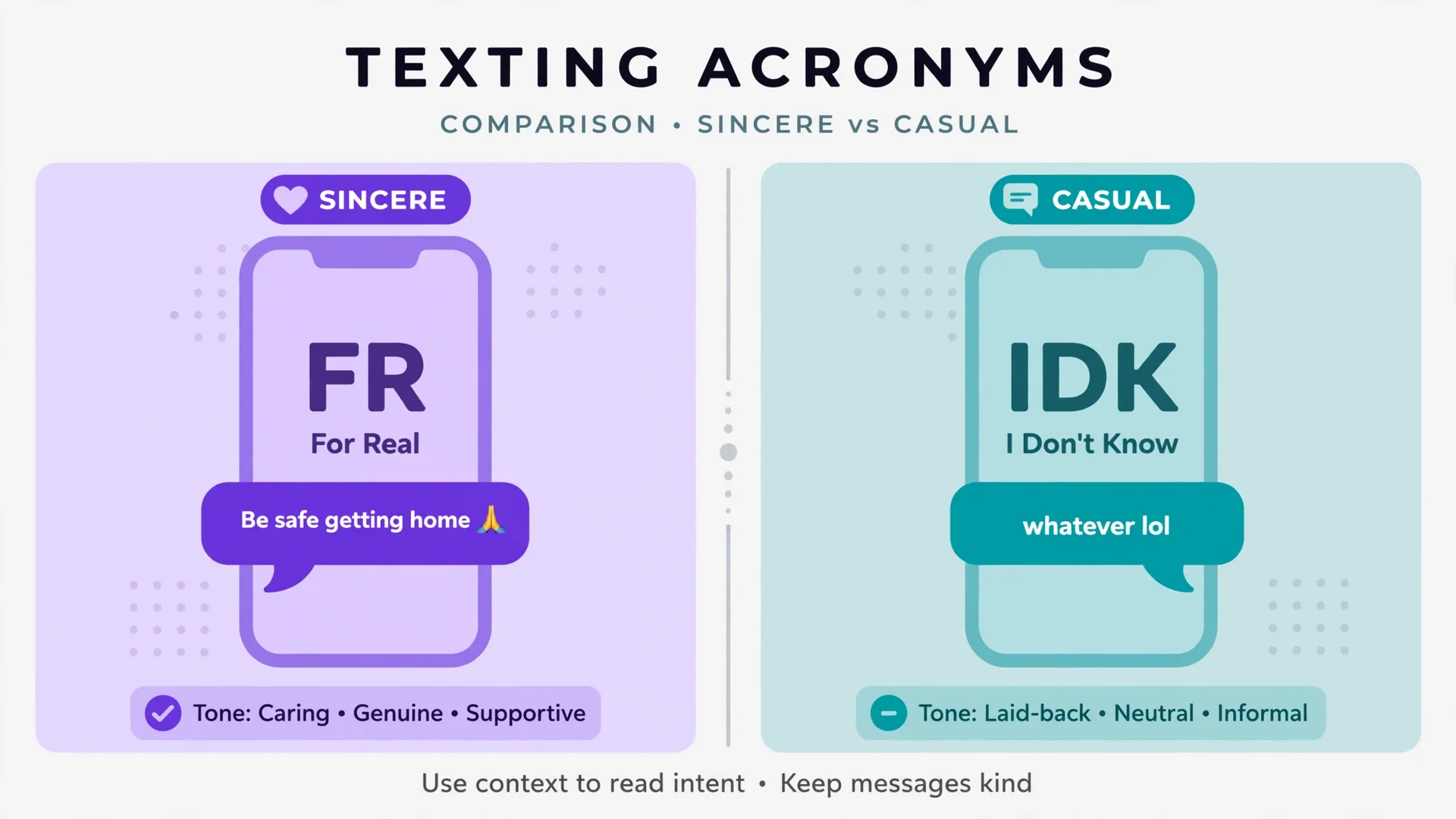
ISTG belongs to a family of acronyms that all deal in emphasis, honesty, and strong feeling, but each one has a slightly different job. The closest lookalike is ISG, which also expands to “I swear to God.” The honest difference is one of dominance and presence: ISTG is the standard, widely recognized form with heavy use on TikTok, X, and in group chats, while ISG is its shorter, less common cousin. They are related, not identical, and treating them as fully interchangeable undersells how much more established ISTG is. The rest of the family is mapped below.
| Term | Stands for | Relationship to ISTG | When people use it |
|---|---|---|---|
| ISTG | I swear to God | The standard form | Strong emphasis, sincerity, frustration, dramatic flair |
| ISG | I swear to God | Shorter cousin, same root phrase, less common | Same contexts, smaller footprint |
| ONG | On God | Closest rival for emphasis | Strong confirmation that something is true or serious |
| FR / FRFR | For real | Lighter and softer than ISTG | Agreement or confirmation without the heavy oath |
| No cap | No lie | Honesty-focused like ISTG, trendier wording | Emphasizing that something is genuinely true |
| SMH | Shaking my head | Complements ISTG, different emotion | Disappointment or disapproval; pairs well in frustrated messages |
| TBH | To be honest | Softer, more confessional | Opening up an honest opinion rather than swearing by it |
| NGL | Not gonna lie | Sincerity-focused like ISTG but gentler | Honest takes, often slightly self-effacing |
| OMG | Oh my God | Reaction, not emphasis | Surprise or shock; ISTG is a promise, OMG is a reaction |
| I swtg | I swear to God | Rare spelling-out of the “to” | Same job as ISTG, much less common |
A quick rule of thumb from the SlangWise guide is worth memorizing: OMG reacts, FR confirms, TBH admits, SMH disapproves, and ISTG intensifies. That single line makes choosing the right acronym much easier. And one decoding mistake comes up constantly: ISTG does not mean Instagram. The “IG” inside it fools people, but IG is Instagram and ISTG is “I swear to God.” The extra “ST” changes everything.
Where Did ISTG Come From?
The spoken phrase “I swear to God” is old, but ISTG as an acronym grew out of early-2000s internet and SMS culture. Wiktionary traces it to a July 2003 Usenet post, a January 2008 Urban Dictionary entry marks its early texting use, and Dictionary.com’s informal entry went up in April 2018. TikTok cemented it as everyday Gen Z vocabulary around 2020 to 2021.
The mechanics of why it stuck are simple. Four letters beat five words, and early texting, AIM, and Yahoo Messenger rewarded anything that saved keystrokes. ISTG rode the same character-saving wave as LOL, BRB, and OMG. After a steady run through the Facebook status era and the Snapchat and WhatsApp years, it became standard vocabulary on TikTok in the early 2020s, where reaction-style captions gave it the perfect habitat.
There is also a linguistic angle worth knowing. The internet linguist Gretchen McCulloch calls the process “semantic bleaching”: a word loses its literal meaning as it becomes an everyday marker. Her favorite example is LOL, which nobody reads as actual laughter anymore. The same drift hit ISTG. Most people typing it are not invoking God. They are marking intensity, which is why it survives while flashier slang fades.
How to Read the Tone: The ISTG Tone Decoder
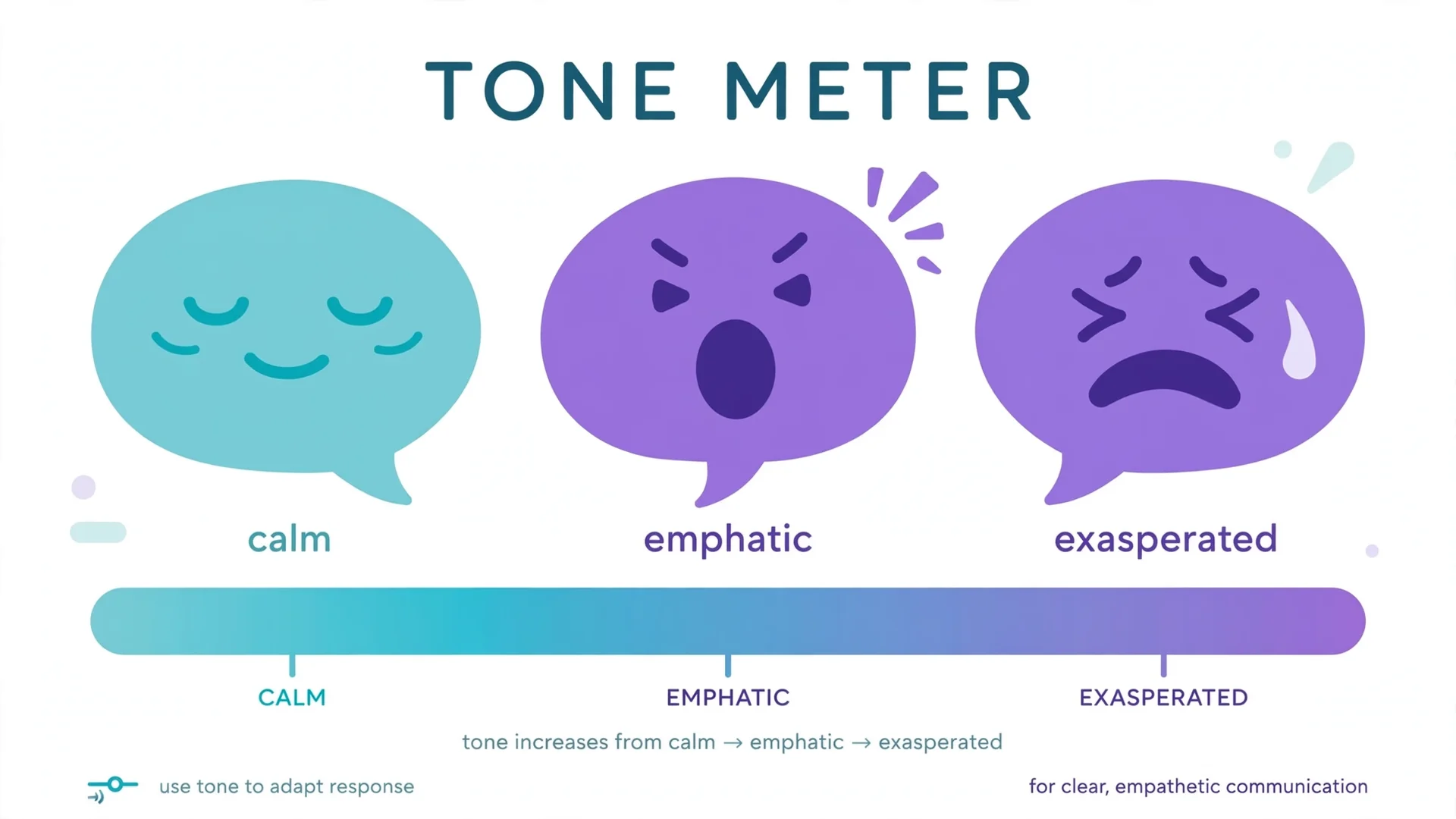
Memorizing “ISTG means I swear to God” is only half the job. The other half is reading the signals around it. Capitalization, punctuation, emojis, sentence position, and your relationship with the sender all shift the meaning. Use the decoder below the next time one lands in your inbox.
| Signal | What it usually means | Example |
|---|---|---|
| Uppercase ISTG at the start | Maximum intensity, the speaker wants full attention | “ISTG, stop doing that.” |
| Lowercase istg | Casual and relaxed, softer emphasis | “istg same, that movie was awful” |
| ISTG with ! | Excitement or anger, high energy either way | “ISTG this is the best day ever!” |
| ISTG + laughing emoji | Playful exaggeration, definitely a joke | “ISTG this dog thinks he owns the sofa” |
| ISTG + angry or skull emoji | Genuine frustration, venting | “ISTG if this printer jams again” |
The relationship matters as much as the formatting. From a close friend, ISTG is usually playful shorthand or harmless venting. From an acquaintance or a colleague, tread carefully before matching the energy. When the tone is genuinely unclear, read the previous messages before deciding the sender is angry. Context beats letters every time.
ISTG Across Platforms: TikTok, Snapchat, Group Chats
ISTG is a chameleon. It adapts to the vibe of each platform, and recognizing the local flavor helps you read it correctly. The patterns below come from how the acronym actually shows up across the major apps.
TikTok comments
This is ISTG’s natural habitat in the 2020s. Comments are instant emotional reactions, so the acronym usually signals strong identification with a video: “ISTG, every family has one person exactly like this,” or “ISTG, the ending caught me completely off guard.” On TikTok it is less about making a literal oath and more about saying “seriously,” “I cannot believe this,” or “I completely relate.”
Snapchat
On Snapchat, ISTG gets shorter and more reaction-based. Captions like “ISTG this weather changed three times today” or “ISTG why does my alarm hate me” do the emotional work while the photo supplies the rest. A picture of a disastrous meal plus “ISTG” can communicate frustration or humor without another word.
Group chats and DMs
In texts and DMs, ISTG works like an emotional underline. It intensifies whatever follows: “ISTG, the bus arrived exactly when I reached the stop.” In group chats it often shows up mid-vent, when someone is processing something in real time: “ISTG we need to cancel the trip, I cannot deal.” Among close friends this is normal background chatter, not a crisis.
X (Twitter) and Reddit
On X it adds punch to short-form reactions and hot takes: “ISTG some of y’all need to touch grass.” On Reddit it shows up in storytelling and debates, where it emphasizes a point or expresses frustration. The character limit and fast pace of both platforms are exactly the conditions where a four-letter emphasis marker thrives.
When ISTG Is Too Strong for the Chat
ISTG is casual internet slang, and like any strong tool it has settings where it does not belong. Knowing when to leave it out is as important as knowing what it means. The texting guides at Trecke and SlangWise agree on the main danger zones, and they are worth taking seriously.
First, keep it out of professional communication. Job applications, work emails, formal Slack channels, client messages, and academic work are all places where ISTG reads as unprofessional or too casual. When in doubt, swap in “I promise,” “I assure you,” or “honestly.” Second, remember the religious dimension. The phrase literally references God, and some readers may read it more literally than you intended. In mixed company or with people you do not know well, a neutral alternative is the safer choice.
Third, do not overuse it. Repetition drains its power, and a message full of ISTGs starts to sound forced rather than emphatic. Save it for the sentences that genuinely need the weight. The best slang users know not only what a term means, but when not to use it.
How to Reply When Someone Texts You ISTG
Understanding the meaning is half the job. The other half is responding well, and the right reply depends on the tone you just decoded. The rule is simple: match their energy, and respond to the message behind the acronym, not the acronym itself.
- If they are venting: address the actual problem. “ISTG I have had the worst week ever” deserves sympathy, not slang trivia. Try “Ugh, I am sorry. What happened?”
- If they are being sincere: respond to the claim directly. “ISTG I did not take your charger” is asking to be believed, so believe them or ask what happened without the interrogation tone.
- If they are joking: laugh along. “ISTG this cat thinks she is my landlord” pairs naturally with “She absolutely does” or a laughing emoji.
- If they are excited: share the enthusiasm. “ISTG this is the best pizza I have ever had” works with “Now I need to try it.”
- If you cannot tell: ask. “Wait, are you actually upset or joking?” beats guessing wrong. A quick clarification is always better than a misread tone.
FAQs About ISTG
What does ISTG stand for?
ISTG stands for “I swear to God.” It is an internet slang acronym used to add emphasis, sincerity, frustration, or dramatic flair to a statement.
Is ISTG rude or offensive?
Not exactly. ISTG is not a curse word, and most online circles do not treat it as one. Because it references God, though, some religious readers may find its casual use disrespectful, so audience awareness matters.
Does ISTG mean Instagram?
No. This is one of the most common decoding mistakes because the abbreviation contains the letters “IG.” IG commonly means Instagram, but ISTG stands for “I swear to God.” The extra “ST” changes the meaning completely.
What does lowercase istg mean?
It means the same thing as uppercase ISTG. Online, lowercase writing usually feels more casual and relaxed, while uppercase can read as more emphatic or intense.
Can ISTG be used in a positive way?
Yes. ISTG is not limited to anger or frustration. “ISTG you are the kindest person I know” is a genuine compliment, and people use it for excitement, admiration, and humor all the time.
Is ISTG the same as ISG?
They share the same root phrase, “I swear to God,” but they are not identical. ISTG is the standard, widely recognized form with heavy use across TikTok, X, and group chats. ISG is a shorter, less common cousin. In practice, ISTG is the one most people will recognize instantly.
How should I reply when someone texts me ISTG?
Match their tone and respond to the message behind the acronym. Sympathize with venting, believe sincere claims, laugh along with jokes, and ask for clarification if the tone is unclear.
Sources I Actually Opened
- Wiktionary’s entry for ISTG, which lists it as internet slang for “I swear to God” and traces it to a July 2003 Usenet post
- Plisio’s ISTG meaning guide, covering the acronym’s history from AIM to TikTok and its Dictionary.com and Urban Dictionary milestones
- SlangWise’s ISTG guide, which frames it as a tone booster and maps its use across Snapchat, TikTok, and Instagram
- Trecke’s ISTG guide, with platform-specific examples, a decision tree for decoding it, and etiquette do’s and don’ts
- EatHealthy365’s ISTG guide, which breaks its two uses into emphatic declaration and sincere vow
Related:
SMS Meaning: What Does SMS Mean in Text?
Kismet Meaning: Definition, Origin, and Real-Life Examples
ISG Meaning in Text: 3 Possible Meanings Explained
What Does NGL Mean in Text? Full Meaning Explained
What Does TBH Mean in Text? Meaning, Uses & Examples