
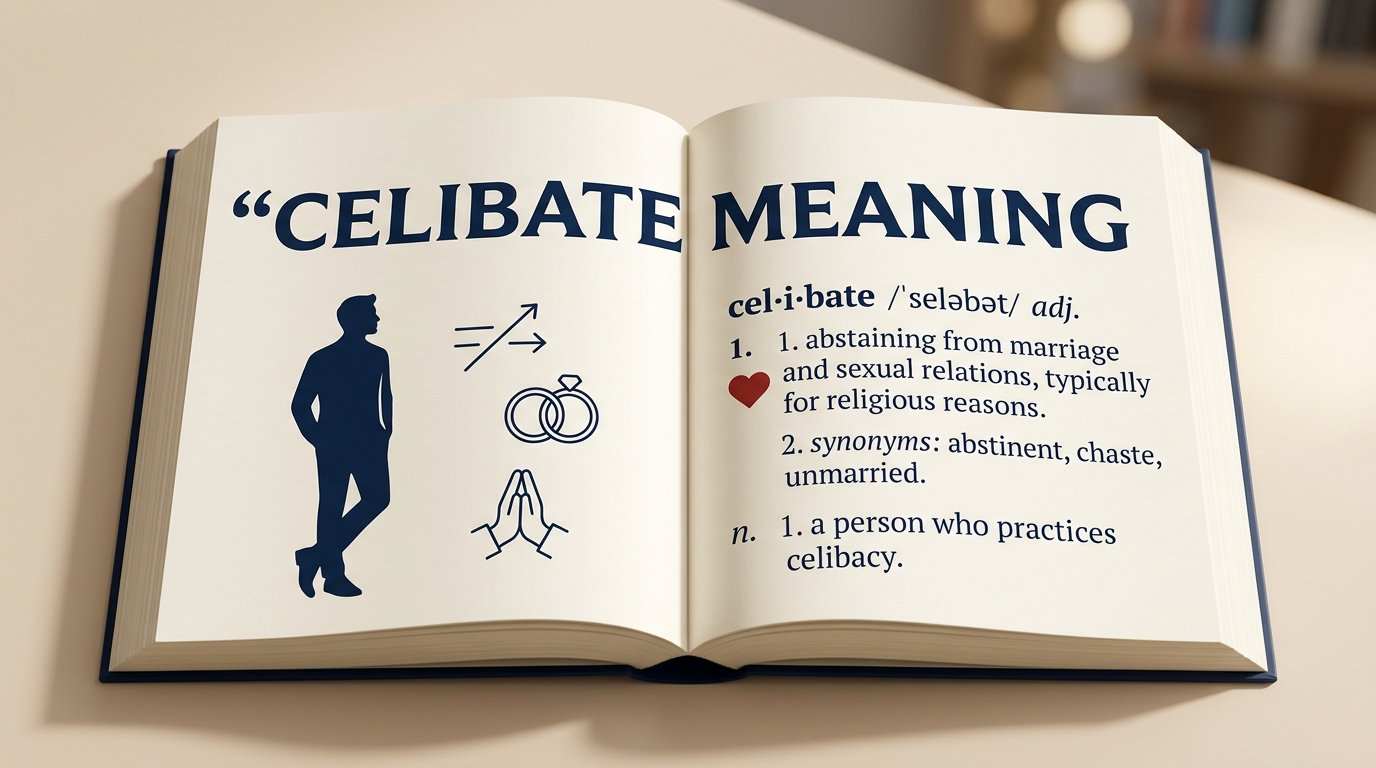
Celibate Meaning: Simple Definition, Relationships, and Key Differences
The celibate meaning is simple: a celibate person intentionally chooses not to have sex. The choice may be temporary, long term, religious, spiritual, emotional, or personal. In older and formal use, celibacy can also mean remaining unmarried, especially as part of a religious vow. In modern conversation, people usually use the word to describe a sex-free lifestyle.
Being celibate does not automatically mean someone is single, a virgin, asexual, lonely, or uninterested in love. A celibate person may date, enter a committed relationship, marry, experience attraction, or choose to remain single. The word describes a boundary around sexual activity, not a complete picture of the person’s identity or relationship status.
The exact rules can differ. Some people avoid only partnered sex, while others also avoid kissing, sexual touching, masturbation, or romantic relationships. That is why personal communication matters more than assumptions.
This guide explains celibacy in plain language and compares it with abstinence, chastity, virginity, and asexuality. Readers who prefer clear, practical word explanations can also use MeaningDict to understand relationship and lifestyle terms without confusing definitions.
Celibate Meaning at a Glance
Celibate means deliberately not engaging in sexual activity. It may be a personal choice, a temporary boundary, a long-term lifestyle, or a formal religious commitment. The meaning does not automatically include being unmarried, although traditional religious celibacy often includes both avoiding sex and remaining unmarried.
| Term | Simple meaning |
|---|---|
| Celibate | Intentionally not having sex |
| Abstinent | Avoiding sex, often temporarily |
| Single | Not currently married or partnered |
| Virgin | A person who has not had a defined sexual experience |
| Chaste | Following chosen sexual or moral rules |
| Asexual | Experiencing little or no sexual attraction |
A person’s reason for celibacy can shape its boundaries. One person may avoid intercourse but still date and kiss. Another may avoid every form of sexual or romantic contact. The safest definition is the one the individual clearly communicates. Celibacy should therefore be understood as an intentional sexual boundary rather than a judgment about someone’s character, experience, orientation, or ability to form relationships.
What Does Celibate Mean in Simple Words?
Celibate means choosing not to have sex. In some settings, it can also mean choosing not to marry, especially for religious or spiritual reasons. In everyday conversation, however, the word usually describes a person who is not taking part in sexual activity for a period of time or as a long-term lifestyle.
A person may be celibate because of faith, personal values, healing, emotional focus, health, self-discipline, or a desire to avoid casual relationships. Celibacy is normally a conscious decision, although the exact boundaries can differ from one person to another.
A simple definition is:
Celibate means intentionally living without sexual activity.
The word does not automatically tell you whether someone is single, dating, married, attracted to others, or experienced sexually. It only describes their current choice or commitment regarding sex. For clear word meanings, practical examples, and relationship-related definitions, MeaningDict helps readers understand terms such as “celibate” in plain language without unnecessary complexity.
What Does Celibate Mean in a Relationship?
In a relationship, celibate usually means one or both partners have agreed not to have sex. The relationship may still include emotional closeness, commitment, affection, companionship, romance, and shared plans. Celibacy changes the sexual boundary of the relationship, but it does not automatically make the relationship less serious or less loving.
Some couples choose celibacy while dating because of religious beliefs, personal values, healing after past experiences, or a wish to build emotional trust before becoming sexually active. Others may choose it temporarily during a stressful, medical, spiritual, or personal period.
The most important point is mutual understanding. Both partners should clearly discuss what celibacy means to them, how long it may last, and which forms of physical affection feel comfortable. One person should not pressure the other to change the boundary.
In simple terms, a celibate relationship is a relationship where sex is intentionally excluded, while emotional and romantic connection may still continue.
What Does It Mean When a Woman Is Celibate?
When a woman is celibate, it means she has chosen not to engage in sexual activity. Her decision may be temporary or long term, and it may come from personal, religious, emotional, cultural, or practical reasons. Celibacy does not reveal whether she is single, dating, married, attracted to someone, or has had sex in the past.
A celibate woman may still want love, companionship, marriage, affection, or a committed relationship. She may also prefer to stay single. The choice is personal and should not be treated as a sign that she is unavailable emotionally or unable to feel attraction.
Some women become celibate to focus on healing, faith, career, education, parenting, self-respect, or clearer dating standards. Others simply feel more peaceful without sexual involvement.
The respectful approach is to listen to how she defines her own boundary. Celibacy can include different rules for different people, so assumptions about kissing, dating, or other forms of intimacy may be inaccurate.
What Does It Mean When a Man Is Celibate?
When a man is celibate, he has decided not to take part in sexual activity. The choice may be based on religion, self-discipline, emotional recovery, personal values, mental focus, relationship goals, or a desire to avoid casual sex. It can last for a short period, several years, or become a lifelong commitment.
Being celibate does not mean a man has no sexual feelings or attraction. It also does not prove that he is single, inexperienced, shy, or unable to find a partner. Celibacy describes behavior and commitment, not masculinity, confidence, fertility, or sexual orientation.
A celibate man may date, fall in love, marry, show affection, or remain single. The exact limits depend on his personal definition and any promises or beliefs connected to the choice.
In relationships, honest communication matters. A man who is celibate should explain his boundaries early enough for both people to decide whether their expectations are compatible, without pressure or judgment.
See Also: Tralalero Tralala Meaning: English Translation, Meme Origin, and Full Explanation
Is Celibate the Same as Being Single?
No. Celibate and single do not mean the same thing. “Single” describes relationship status, while “celibate” describes a choice not to engage in sexual activity. A person can be single and sexually active, or single and celibate. A person can also be dating, engaged, or married while living celibately.
For example, someone may be single because they are not currently in a committed relationship, but they may still have casual sexual partners. Another person may be in a committed relationship and choose not to have sex until marriage. Both examples show why the two words should not be used as synonyms.
The easiest distinction is:
- Single: Not married or not currently in a committed partnership.
- Celibate: Intentionally not having sex.
Relationship status and sexual behavior are separate parts of a person’s life. Knowing that someone is celibate does not tell you whether they have a partner. Knowing that someone is single does not tell you whether they are sexually active.
Is Celibate the Same as Being a Virgin?
No. Celibacy and virginity are different concepts. A virgin is generally understood as someone who has never had sexual intercourse, although people may define virginity differently. A celibate person is someone who currently chooses not to engage in sexual activity, whether or not they have had sex before.
A person may have previous sexual experience and later decide to become celibate. In that case, the person is celibate but not a virgin. A person may also be a virgin without actively identifying as celibate, especially if they have not made a deliberate commitment to avoid sex.
A clear comparison is:
- Virginity usually refers to past sexual experience.
- Celibacy refers to a present choice or lifestyle.
Neither term should be used to judge someone’s character, maturity, worth, or relationship ability. Personal definitions can also vary across cultures and individuals. When the distinction matters, respectful conversation is more accurate than assumptions. Celibacy is about current behavior; virginity is about whether a particular sexual experience has happened before.
What Is the Difference Between Celibacy and Abstinence?
Celibacy and abstinence both involve not having sex, but they often differ in duration, purpose, and level of commitment. Abstinence usually means avoiding sexual activity for a limited time or in a specific situation. Celibacy more often describes a longer-term lifestyle, personal commitment, or religious vow.
A person may practice abstinence while waiting for marriage, recovering from a breakup, avoiding pregnancy, protecting sexual health, or taking a break from dating. Someone who chooses celibacy may see the decision as part of their identity, faith, life direction, or long-term values.
The difference is not always strict because people use the terms in different ways. In modern conversation, some people say “celibate” even when their choice is temporary.
A useful distinction is:
- Abstinence: Usually temporary or situation-based.
- Celibacy: Usually long-term, intentional, or vow-based.
Both choices require clear personal boundaries. Neither term automatically explains whether kissing, masturbation, dating, or romantic affection is included, so individual definitions still matter.
What Is the Difference Between Celibacy and Chastity?
Celibacy means choosing not to engage in sexual activity, while chastity means following a set of sexual or moral boundaries. Chastity does not always require avoiding sex completely. For example, in some religious traditions, a married person may be considered chaste while having sex only within marriage.
Celibacy is therefore more specific about not having sex. Chastity is broader and depends on the values, faith, or ethical code a person follows. A single person may practice chastity through abstinence, while a married couple may practice chastity through faithfulness and agreed sexual conduct.
The distinction can be summarized as:
- Celibacy: No sexual activity.
- Chastity: Sexual behavior that follows chosen moral or religious standards.
The two can overlap. A priest, monk, nun, or spiritual devotee may practice both celibacy and chastity. A married person may practice chastity without being celibate. Because beliefs differ, it is best to understand the term within the speaker’s cultural, personal, or religious context rather than applying one universal rule.
What Is the Difference Between Celibacy and Asexuality?
Celibacy is a behavior or personal choice, while asexuality is a sexual orientation. A celibate person may experience sexual attraction but decide not to act on it. An asexual person experiences little or no sexual attraction, although individual experiences within the asexual spectrum vary.
Asexual people may date, fall in love, marry, have sex, avoid sex, or identify as celibate. Likewise, celibate people can be heterosexual, gay, bisexual, asexual, or have another orientation. The decision not to have sex does not reveal a person’s orientation.
The key difference is:
- Celibacy: What a person chooses to do.
- Asexuality: How a person experiences sexual attraction.
Romantic attraction is also separate. An asexual person may be romantically interested in others, while another may not be. A celibate person may feel strong romantic and sexual attraction but follow a personal boundary.
Using the terms correctly avoids confusion. Celibacy should not be treated as proof of asexuality, and asexuality should not be assumed to mean lifelong celibacy.
Can You Be Celibate and Still Be in a Relationship?
Yes, a person can be celibate and still be in a relationship. Celibacy limits sexual activity, not emotional connection. A celibate relationship can include love, commitment, conversation, dates, shared goals, romance, support, and forms of affection that both partners consider acceptable.
Some couples begin a relationship with a shared decision to avoid sex. In other cases, one partner is already celibate and explains that boundary to the other. The relationship can work when both people freely agree, communicate honestly, and respect each other’s needs.
Important topics to discuss include the meaning of celibacy, acceptable physical affection, expected duration, future marriage plans, and how each partner will handle differences in sexual desire. These conversations should happen without guilt, pressure, or hidden expectations.
Celibacy does not make a relationship incomplete, but compatibility still matters. One person may feel comfortable with a sex-free relationship while another may not. A healthy decision allows both partners to be truthful and choose the relationship freely.
Can a Married Person Choose to Be Celibate?
Yes, a married person can choose celibacy, but the decision should normally be discussed and agreed upon by both spouses. A married couple may live without sex temporarily or permanently because of faith, health, personal healing, age, emotional circumstances, or a shared spiritual commitment.
When both partners willingly agree, this arrangement is sometimes called a celibate marriage. The couple may still share affection, companionship, family life, emotional intimacy, and commitment. A sexless marriage, however, is not always the same as a celibate marriage because a lack of sex may occur without a deliberate shared choice.
Consent and communication are essential. One spouse should not impose celibacy as punishment, control, or a way to avoid honest discussion. Both partners need space to express their feelings, expectations, and concerns.
A married person can personally desire celibacy, but marriage involves another person’s needs and promises. Respectful dialogue, mutual agreement, and professional support when needed can help couples handle the decision fairly and protect the relationship.
Does Celibate Mean No Kissing or Physical Intimacy?
Not always. Celibate usually means no sexual activity, but the word does not have one universal rule about kissing, hugging, cuddling, or other physical affection. Some celibate people allow nonsexual touch, while others avoid romantic or intimate contact that could lead to sexual activity.
The boundary often depends on the person’s reason for celibacy. Someone following a strict religious vow may avoid kissing and romantic touch. A dating couple waiting for marriage may allow hand-holding, hugs, or kissing but choose not to have sex. Another person may avoid all physical intimacy while focusing on emotional healing.
Because definitions vary, it is better to ask respectfully than to assume. Useful questions include what forms of touch feel comfortable, which actions are considered sexual, and whether boundaries may change over time.
The simple answer is that celibacy always involves avoiding sex, but it may or may not include avoiding kissing and physical affection. Personal values, relationship agreements, and religious commitments determine the exact limits.
Does Being Celibate Include No Masturbation?
Celibacy may or may not include masturbation, depending on how a person defines the commitment. The basic modern meaning of celibacy is avoiding sexual activity with another person. Under that definition, some people consider masturbation separate and still describe themselves as celibate.
Others avoid masturbation because their celibacy is connected to religious beliefs, spiritual discipline, recovery, personal values, or a broader goal of avoiding sexual stimulation. For them, celibacy includes both partnered sex and solo sexual activity.
There is no single rule that applies to every celibate person. The answer depends on the purpose, belief system, and boundaries behind the choice. Someone following a formal religious vow may use a stricter definition than someone taking a break from dating.
In simple terms:
- Some celibate people masturbate.
- Some celibate people do not.
- The label alone does not provide the answer.
Respecting privacy is important. A person does not owe others detailed information about private sexual behavior unless it directly affects a mutually agreed relationship boundary.
Why Do People Choose to Become Celibate?
People choose celibacy for many personal reasons. Some make the decision because of religion or spiritual commitment. Others want time to heal after a breakup, recover from unhealthy relationship patterns, focus on personal growth, or create stronger emotional boundaries in dating.
Common reasons include:
- Waiting for marriage or a committed partnership
- Strengthening faith or spiritual discipline
- Avoiding casual sex or relationship pressure
- Healing from heartbreak, trauma, or unhealthy habits
- Focusing on education, work, parenting, or life goals
- Reducing emotional confusion in dating
- Protecting personal values or peace of mind
Celibacy can also help a person reconsider what they want from intimacy and relationships. However, it should be a freely chosen boundary rather than a result of shame, fear, coercion, or pressure from others.
There is no single correct reason to be celibate. The meaning comes from the individual’s goals and values. A healthy choice is informed, voluntary, respectful, and open to honest self-reflection.
What Are the Benefits of Living a Celibate Life?
A celibate life may offer benefits when the choice matches a person’s values and needs. Some people report greater focus, clearer dating decisions, stronger emotional boundaries, reduced relationship pressure, and more time for faith, work, education, healing, or personal goals.
Possible benefits include:
- More time and energy for personal priorities
- Freedom from pressure to have sex
- Lower risk of sexually transmitted infections from partnered sex
- No risk of pregnancy from sexual intercourse
- Space to heal after difficult relationships
- Greater clarity about emotional compatibility
- Stronger self-discipline or spiritual focus
These benefits are not automatic. Celibacy does not guarantee happiness, maturity, or a healthy relationship. It can also feel lonely or frustrating if it is chosen for the wrong reasons or maintained without support.
The value of celibacy depends on personal motivation. It is most helpful when the decision is voluntary, realistic, and connected to a meaningful goal. People should choose it because it supports their well-being, not because they feel ashamed or forced.
What Does Voluntary Celibacy Mean in Modern Dating?
Voluntary celibacy in modern dating means intentionally choosing not to have sex while still deciding whether to date, build relationships, or remain single. The word “voluntary” matters because the person is making an active choice rather than describing a lack of opportunity.
Someone may choose voluntary celibacy to avoid hookup culture, protect emotional boundaries, wait for commitment, follow faith, heal from past relationships, or understand what they truly want from a partner. The person may still use dating apps, go on dates, flirt, kiss, or form a serious relationship, depending on personal limits.
Clear communication is essential. A celibate dater should explain the boundary before sexual expectations become strong. The other person has the right to decide whether the relationship fits their needs, but not to pressure or manipulate.
In modern dating, voluntary celibacy is best understood as a values-based boundary. It is not a rejection of love or attraction. It is a deliberate decision about when, why, or whether sex belongs in a person’s life.
See Also: Serendipity Meaning: Definition, Examples, Origin and Usage
Frequently Asked Questions
How Long Can a Person Remain Celibate?
A person can remain celibate for any length of time. Some choose it for a few weeks or months, while others continue for years or for life. There is no fixed time limit. The duration depends on the person’s values, goals, faith, relationship situation, and emotional needs. A temporary celibate period is still valid even if the person later changes the decision.
Can Celibacy Be Temporary?
Yes. Celibacy can be temporary or permanent. Someone may choose it after a breakup, during personal healing, while waiting for marriage, or while focusing on faith, work, or education. Although celibacy often suggests a stronger or longer commitment than abstinence, modern speakers sometimes use both words for a temporary decision not to have sex.
Can Celibate People Date?
Yes. Celibate people can date, form romantic connections, and enter committed relationships. Dating does not require sexual activity. However, they should communicate their boundaries clearly so both people understand what is and is not part of the relationship. Honest discussion helps prevent pressure, resentment, or mismatched expectations later.
Does Celibacy Remove Sexual Attraction?
No. Celibacy does not necessarily remove attraction or sexual desire. Many celibate people still experience attraction but choose not to act on it. The choice concerns behavior, while attraction concerns feelings. This is also why celibacy should not be confused with asexuality, which describes a pattern of experiencing little or no sexual attraction.
Is Choosing Celibacy Healthy?
Celibacy can be a healthy choice when it is voluntary, informed, and consistent with a person’s values. It may provide focus, emotional space, or relief from sexual pressure. It can become difficult when it is based on shame, fear, coercion, or unresolved distress. A person experiencing significant emotional difficulty may benefit from speaking with a qualified professional.
How Do You Tell a Partner You Are Celibate?
Explain the boundary calmly and early, using direct language. State what celibacy means to you, which forms of affection are comfortable, and whether the choice is temporary or open-ended. Avoid apologizing for the boundary or promising that it will change. Your partner may accept or decline the arrangement, but they should not pressure you to abandon it.
Can Someone Stop Being Celibate?
Yes. A person can stop being celibate if the choice was personal rather than part of a permanent vow. Changing the decision does not mean the earlier period was false or unsuccessful. People’s beliefs, relationships, needs, and goals can change. The important point is that any future sexual activity should be consensual, informed, and consistent with the person’s current values.
Does Celibate Mean Someone Does Not Want Love?
No. Celibacy does not mean avoiding love, romance, or emotional connection. Many celibate people want committed relationships, marriage, companionship, and affection. They simply choose not to include sex within the relationship, either temporarily or permanently. Sexual activity and emotional love are connected for some people, but they are not the same thing.
Final Thoughts
The celibate meaning is not complicated: it describes an intentional decision to live without sexual activity. What makes the topic more complex is that people set different limits around dating, kissing, physical affection, masturbation, marriage, and long-term relationships.
Celibacy is not the same as being single, being a virgin, practicing chastity, or identifying as asexual. It can overlap with these experiences, but each term answers a different question. Celibacy describes a choice about sexual behavior.
The healthiest understanding comes from clear communication. When someone says they are celibate, listen to the boundaries they describe instead of assuming what the label includes. Whether the choice is based on religion, emotional healing, dating standards, personal focus, or another reason, it deserves the same respect as any other freely chosen relationship boundary.
![ATP Meaning in Text — What It Really Means [2026]](https://meaningdict.com/wp-content/uploads/2026/05/ATP-Meaning-in-Text-—-What-It-Really-Means-768x429.jpeg)





2 Comments