
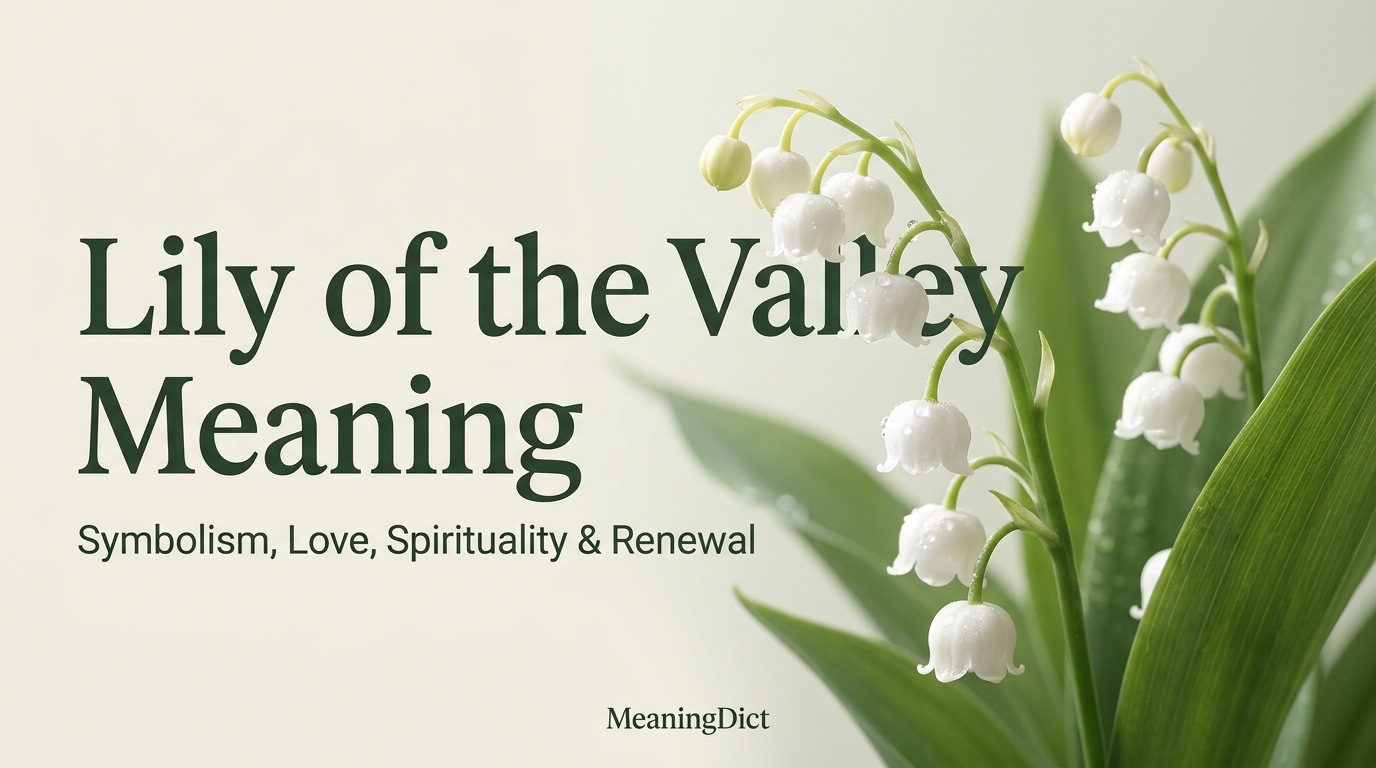
Lily of the Valley Meaning: Symbolism, Love, Spirituality, and History
The lily of the valley meaning is closely connected with purity, humility, happiness, love, renewal, and the hope of better days. Its tiny white, bell-shaped flowers appear delicate, yet the plant returns each spring and spreads through underground stems. This contrast between a gentle appearance and strong growth has helped shape its symbolic meaning.
In the traditional language of flowers, lily of the valley is best known for representing the return of happiness. People also connect it with fresh beginnings, emotional healing, innocence, motherhood, devotion, and good luck. It is commonly used in wedding bouquets because its white flowers and sweet fragrance support themes of sincere love, purity, and a joyful new chapter.
The flower also carries religious, cultural, and mythological associations. However, some popular stories, such as the flower growing from the tears of the Virgin Mary, belong to Christian folklore rather than the Bible itself.
At MeaningDict, flower meanings are explained through history, cultural traditions, emotional associations, and modern use. This complete guide explores what lily of the valley symbolizes in love, spirituality, dreams, weddings, Christianity, mythology, and different cultures.
Lily of the Valley Meaning: Quick Answer
Lily of the valley means the return of happiness, purity, humility, love, renewal, and hope. Its white bell-shaped flowers commonly symbolize innocence and sincerity, while its spring blooming season represents fresh beginnings after a difficult or inactive period.
In romantic relationships, it can express faithful love, emotional closeness, reconciliation, and the wish for lasting happiness. In weddings, it represents a joyful new beginning and a marriage built on genuine affection. Spiritually, lily of the valley can suggest inner healing, spiritual renewal, grace, and the quiet strength needed to begin again.
The flower is also traditionally associated with May, making it one of the best-known May birth flowers. In Victorian floriography, its most recognized message was “return of happiness.” The Royal Horticultural Society continues to list this as its traditional flower meaning. on lily of the valley meaning.
What Is the Meaning of Lily of the Valley Flower?
The most widely accepted meaning of the lily of the valley flower is the return of happiness. It represents the moment when joy returns after disappointment, sadness, distance, or a difficult season. This meaning is strengthened by the flower’s natural habit of appearing during spring, when warmer weather and new plant growth replace the cold conditions of winter.
Lily of the valley also means purity, humility, innocence, sweetness, and emotional renewal. Its small downward-facing bells create a modest appearance, so the flower is often linked with quiet beauty rather than pride or attention-seeking. Its white color further supports traditional ideas of sincerity, peace, and cleanliness.
When given as a gift, the flower may communicate:
- “May happiness return to your life.”
- “I value your gentle and sincere nature.”
- “Our relationship deserves a fresh beginning.”
- “Better days are coming.”
Botanically, lily of the valley is Convallaria majalis, a fragrant woodland perennial in the asparagus family. It is not a true lily from the genus Lilium. e Valley Meaning and Symbolism
Lily of the valley symbolism combines emotional softness with surprising strength. The flower looks fragile because its blooms are small, white, and gently curved. However, the plant grows through underground rhizomes and can form large colonies when conditions suit it. This makes it an effective symbol of quiet resilience.
Its main symbolic meanings include:
- Return of happiness: Joy returning after loss or difficulty
- Purity: Honest intentions, innocence, and moral clarity
- Humility: Beauty that does not demand attention
- Renewal: A fresh chapter following a difficult period
- Hope: Confidence that conditions can improve
- Love: Sincere affection and emotional devotion
- Good luck: Positive wishes for someone’s future
The flower’s spring appearance also gives it a connection with recovery and new life. Unlike symbols of sudden transformation, lily of the valley represents gradual renewal. Its message is that happiness may return quietly, one small step at a time.
In traditional floriography, lily of the valley became strongly connected with the return of happiness, a meaning still recognized in modern flower guides. e Valley Spiritual Meaning and Significance
The spiritual meaning of lily of the valley centers on inner renewal, emotional healing, humility, grace, and hope after hardship. Because the flower emerges in spring, it is often seen as a sign that difficult periods do not last forever. Life can return even after a season that feels cold, empty, or inactive.
Its small, downward-facing flowers are also interpreted as symbols of spiritual humility. They suggest that personal growth does not always need to be dramatic or visible. A person may be healing, learning, or becoming stronger without showing the full process to others.
Spiritually, lily of the valley may represent:
- Letting go of emotional heaviness
- Finding peace after conflict
- Returning to faith or personal purpose
- Accepting help with humility
- Trusting gradual progress
- Beginning again with a clearer heart
The flower’s bell shape can also be viewed symbolically as a call to awareness. It may remind someone to listen to their conscience, notice small blessings, or reconnect with what gives their life meaning.
These spiritual interpretations are symbolic rather than scientific, but they reflect the flower’s long association with happiness, purity, and renewal.
Lily of the Valley Flower Meaning in Love
In love, lily of the valley represents sincere affection, loyalty, emotional renewal, and the return of happiness between two people. It is not usually associated with intense passion in the same way as a red rose. Instead, it expresses a softer form of love built on trust, tenderness, patience, and emotional closeness.
Giving lily of the valley to a romantic partner can communicate that the relationship brings happiness and peace. It may also express the hope that love will continue to grow through changing circumstances.
The flower can be especially meaningful when:
- A couple is beginning a serious relationship
- Two people have reunited after time apart
- Partners are rebuilding trust
- A wedding or anniversary is being celebrated
- Someone wants to express gentle, faithful love
Its “return of happiness” meaning also makes it suitable for reconciliation. However, flowers should support honest communication rather than replace it.
Lily of the valley can also represent self-love. Its seasonal return may remind a person that emotional happiness can return after heartbreak and that personal worth does not disappear when a relationship ends.
Also Read: Feening Meaning: What Does Feening Mean in Text and Slang?
Lily of the Valley Meaning in Different Cultures
The meaning of lily of the valley changes slightly across cultures, but happiness, spring, purity, and good fortune remain common themes.
In France, lily of the valley is called muguet. It is traditionally given on May 1 as a wish for happiness and good luck. French government information describes the custom of offering it as a lucky flower and traces the tradition back to the Renaissance. *, lily of the valley is the national flower. Its fragrant white blooms are familiar in Finnish woodlands, gardens, poetry, and songs. Its national status connects the flower with Finnish nature and cultural identity. and Victorian culture**, the flower became associated with the return of happiness through floriography, the symbolic language used to communicate emotions through flowers.
In several Christian European traditions, it is linked with humility, purity, Mary, and tears transformed into flowers. These stories are devotional legends, not direct biblical accounts.
Across modern cultures, lily of the valley remains popular for weddings, May birthdays, spring celebrations, perfumes, and meaningful floral gifts.
What Does Lily of the Valley Symbolize?
Lily of the valley primarily symbolizes happiness returning after a period of sadness or difficulty. It can represent emotional recovery, renewed hope, and the beginning of a more positive stage in life.
The flower also symbolizes purity because of its clean white color. In symbolic traditions, white flowers often communicate innocence, honesty, peace, and sincere intentions. Its small size and downward-facing blooms contribute to its association with humility and modesty.
Another important symbol is resilience. Lily of the valley may appear delicate above the ground, but it grows from a strong underground system. This creates a meaningful contrast: true strength does not always look loud or powerful.
Its key symbols can be summarized as follows:
- Happiness after sorrow
- Hope after uncertainty
- Renewal after stagnation
- Love without selfishness
- Strength expressed gently
- Purity of thought or intention
- Humility and quiet grace
The flower can therefore be used for many occasions. It suits weddings, anniversaries, birthdays, reconciliations, new homes, personal milestones, and messages of encouragement. Its symbolism is positive, but it is more thoughtful and understated than dramatic.
Lily of the Valley Biblical Meaning and Symbolism
The biblical meaning of lily of the valley requires careful explanation. Song of Songs 2:1 contains the phrase often translated as “the lily of the valleys.” However, scholars cannot confidently identify that biblical flower as the modern plant Convallaria majalis. The plant does not naturally belong to the biblical region, and some historians suggest the original reference may have described another flower, such as a hyacinth. stian interpretation, the phrase developed meanings connected with beauty, humility, divine care, and grace. Some Christian hymns and teachings also use “Lily of the Valley” as a symbolic title for Jesus, presenting him as a source of comfort, hope, and spiritual beauty. This association comes from Christian devotional tradition rather than a direct statement in the New Testament.
Another popular legend says lily of the valley grew from Mary’s tears near the cross. The flower is therefore sometimes called “Our Lady’s Tears” or “Mary’s Tears.” This is Christian folklore, not a story recorded in Scripture.
Biblically inspired symbolism includes purity, comfort during suffering, humility, spiritual hope, and faith renewed after sorrow.
Lily of the Valley Flower Meaning and History
The history of lily of the valley begins with its natural presence in the woodlands of Europe and parts of Asia. Its scientific name is Convallaria majalis. The genus name comes from the Latin word convallis, meaning valley, while majalis refers to May, the month in which the plant commonly flowers. common name contains the word “lily,” it is not a true lily. Modern botanical classification places it in the Asparagaceae, or asparagus, family. The plant produces fragrant white bells followed by red berries and spreads through underground rhizomes. e flower entered European folklore, Christian legends, poetry, perfume, wedding traditions, and the Victorian language of flowers. Its spring flowering period encouraged associations with new life and returning happiness.
During the 19th century, flower dictionaries made symbolic messages especially popular. Lily of the valley became a recognized way to communicate that happiness had returned or was expected to return.
Today, its meaning remains connected with its historical identity: a modest woodland flower that reappears faithfully, fills shaded areas with fragrance, and signals seasonal renewal.
Lily of the Valley Meaning as a Birth Flower
Lily of the valley is traditionally recognized as one of the birth flowers for May, alongside hawthorn. Its connection with May is reflected in the scientific name Convallaria majalis, since majalis means belonging or relating to May.
As a May birth flower, lily of the valley represents happiness, optimism, purity, humility, and personal growth. It can suggest that people born in May have a warm but grounded nature. They may appreciate beauty, value emotional honesty, and show strength without needing constant attention.
A lily of the valley birthday gift can communicate:
- May happiness follow you throughout the year
- May this new age bring a fresh start
- Your quiet strength is appreciated
- You bring joy and comfort to others
- May good fortune return again and again
The flower’s seasonal meaning fits May particularly well because May is widely associated with active growth, warmer days, and gardens returning to life. Birth-flower interpretations are traditional rather than personality tests, so they should be enjoyed as symbolic ideas rather than fixed descriptions.
Lily of the valley remains widely identified as May’s birth flower. e Valley Spiritual Meaning in Dreams
Seeing lily of the valley in a dream may symbolize emotional healing, renewed happiness, innocence, spiritual awareness, or a fresh beginning. Dream interpretation is personal, and there is no scientific rule proving that one flower always has the same meaning. The dream’s setting and the dreamer’s emotions matter more than a fixed dictionary definition.
A healthy blooming lily of the valley may reflect hope returning after stress. It could suggest that a difficult emotional phase is ending or that the dreamer is ready to trust happiness again.
Receiving the flowers from someone may represent sincere affection, forgiveness, or the desire to reconnect. Giving them away may suggest that the dreamer wants to comfort another person or restore harmony.
Wilted flowers can reflect disappointment, neglected emotions, or fear that happiness will not last. Growing lily of the valley may symbolize patience, private progress, and gradual healing.
Questions to consider include:
- How did the flowers make you feel?
- Who was present in the dream?
- Were the flowers blooming or fading?
- Are you currently starting or repairing something important?
The most useful interpretation connects the flower’s symbolism with the dreamer’s real circumstances.
Also Read: Abecedarium Meaning: Definition, Pronunciation, and Examples
Why Is Lily of the Valley Associated With Happiness and Purity?
Lily of the valley is associated with happiness because it appears during spring, when plant life returns after winter. Its flowers often emerge when days become brighter and warmer, making the plant a natural symbol of relief, hope, and seasonal joy.
Its traditional meaning of “return of happiness” became especially established through the language of flowers. Rather than symbolizing ordinary pleasure, it describes happiness returning after absence. This gives the flower emotional depth and makes it suitable for reconciliation, recovery, and hopeful new beginnings. mainly from the appearance of the flowers. Their white color has long been associated with innocence, sincerity, peace, and clean intentions. The blooms are also small and modest, supporting ideas of humility and gentle character.
Together, happiness and purity create a balanced meaning. Lily of the valley does not represent careless excitement. It represents a peaceful, sincere kind of joy that arrives after growth, patience, or healing.
Its symbolism can be understood as a simple message: happiness is most meaningful when it returns with gratitude, honesty, and a renewed appreciation for life.
Lily of the Valley Flower Meaning in Weddings
In weddings, lily of the valley means purity, sincere love, humility, renewed happiness, and the joyful beginning of married life. Its white flowers work naturally with traditional bridal colors, while its small size gives bouquets an elegant and delicate appearance.
The “return of happiness” meaning can be interpreted as the couple entering a new chapter of shared joy. It may also symbolize the hope that affection, patience, and trust will continue to renew the marriage over time.
Lily of the valley can be used in:
- Bridal bouquets
- Groom’s boutonnieres
- Bridesmaid posies
- Table arrangements
- Ceremony decorations
- Floral hairpieces
- Anniversary flowers
The flower has appeared in notable royal wedding bouquets. The Royal Horticultural Society notes that lily of the valley was selected for Catherine, Princess of Wales’s bouquet because of its traditional symbolic meaning. is especially suitable for couples who prefer understated elegance. Instead of expressing dramatic passion, it communicates tenderness, loyalty, and happiness built through mutual care.
Because the plant is poisonous if eaten, it should be kept away from food, drinks, small children, and pets during wedding events.
Lily of the Valley Meaning in the Language of Flowers
In the language of flowers, lily of the valley means “return of happiness.” This symbolic language is often called floriography. It became especially popular during the Victorian period, when flowers were used to express thoughts and emotions that people might not communicate directly.
A small bouquet could carry a message through its chosen flowers. Lily of the valley might be used after a separation, disagreement, illness, disappointment, or period of mourning to express hope that joy would return.
Its message was positive but emotionally specific. It did not simply mean “I am happy.” It suggested restoration: something valuable had been lost, interrupted, or delayed, but there was hope of receiving it again.
Modern uses of this floriography meaning include:
- Reconciliation bouquets
- Recovery and encouragement gifts
- Wedding arrangements
- New-home flowers
- Anniversary gifts
- Flowers celebrating a fresh start
The Royal Horticultural Society lists “return of happiness” as the flower’s traditional meaning and documents its continued use in symbolic wedding arrangements. -of-flowers meaning remains the clearest and most widely recognized interpretation of lily of the valley.
Lily of the Valley Symbolism in Christianity and Mythology
In Christianity, lily of the valley is associated with purity, humility, sorrow transformed into hope, and spiritual comfort. A well-known Christian legend claims the flowers grew where the Virgin Mary’s tears fell during the crucifixion. This explains traditional names such as “Mary’s Tears” and “Our Lady’s Tears.” The story is devotional folklore rather than biblical history.
Another legend connects the flower with Eve’s tears after she left the Garden of Eden. In this interpretation, the flower represents sorrow, repentance, and the possibility of hope following loss.
Greek-inspired folklore sometimes claims that Apollo created a soft carpet of lily of the valley flowers for the Muses. This story is frequently repeated in flower lore, although it should be treated as a later legend rather than a central myth preserved consistently in ancient Greek texts. lore also links lily of the valley with woodland spirits, fairies, protection, and the return of spring.
Across these traditions, the main pattern remains consistent: something gentle and beautiful emerges after difficulty. The flower transforms tears, darkness, cold, or hardship into purity, hope, music, or renewed life.
Is Lily of the Valley a Symbol of Good Luck and Renewal?
Yes, lily of the valley is widely considered a symbol of good luck, renewal, happiness, and positive change. Its good-luck connection is especially strong in France, where people traditionally exchange sprigs of muguet on May 1. The gift expresses a wish for happiness and good fortune in the months ahead. ymbolism comes from its spring growth. The plant disappears from view during part of the year but returns when seasonal conditions improve. This cycle makes it a fitting symbol for recovery, second chances, and fresh beginnings.
Lily of the valley may be given to mark:
- A new job or business
- Moving into a new home
- Recovery after illness
- Reconciliation between loved ones
- The beginning of marriage
- A May birthday
- Emotional or spiritual healing
The flower does not promise literal luck or guarantee that a situation will improve. Its meaning is symbolic. It communicates hope, encouragement, and the belief that positive experiences can return.
For this reason, lily of the valley is particularly meaningful when someone is leaving a difficult stage and beginning a more hopeful one.
Lily of the Valley Meaning by Color
White is the natural and most familiar lily of the valley color. It carries the flower’s traditional meanings of purity, humility, innocence, sincere love, peace, and returning happiness.
Pink cultivars also exist, although they are less common. Pink lily of the valley can be interpreted as affection, gentleness, admiration, emotional warmth, and tender love. Its meaning is often softer and more romantic than the symbolism of the classic white flower.
| Flower color | Common symbolic meaning |
|---|---|
| White | Purity, happiness, renewal, humility |
| Cream or ivory | Grace, warmth, understated elegance |
| Pale pink | Affection, gentleness, admiration, romance |
Color meanings are not universal rules. They may change according to culture, occasion, personal experience, and the other flowers included in an arrangement.
For traditional weddings, white lily of the valley remains the most meaningful choice. For birthdays or romantic gifts, pink flowers can add a warmer emotional message. In both cases, the flower’s central idea remains the same: sincere happiness, gentle beauty, and hope for a positive new chapter.
When Should You Give Lily of the Valley Flowers?
Lily of the valley is appropriate when you want to express hope, sincere affection, encouragement, or happiness returning after a challenging time. Its gentle appearance makes it suitable for personal occasions where a dramatic bouquet might feel too strong.
Good occasions include weddings, anniversaries, May birthdays, reconciliations, new homes, career milestones, recovery celebrations, and spring gatherings. It may also be given to someone who has completed a difficult period and is ready to begin again.
The flower can communicate different messages depending on the situation:
- To a partner: “You bring happiness into my life.”
- To a friend: “I hope brighter days are ahead.”
- To newlyweds: “May your happiness continue to return.”
- To a May-born person: “May your new year bring growth and joy.”
- To someone starting again: “This new chapter holds hope.”
Lily of the valley can also be included in remembrance arrangements because of its associations with purity, comfort, and hope after sorrow. However, its most established meaning remains positive: happiness returning after absence.
Important Lily of the Valley Safety Information
Despite its delicate appearance and pleasant fragrance, lily of the valley is poisonous if consumed. Its leaves, flowers, stems, rhizomes, and berries contain cardiac glycosides, which can affect the heart. Missouri Botanical Garden states that all parts of the plant are poisonous. uld never be used as an edible decoration, herbal tea, homemade remedy, or cake garnish. It should also be kept away from children, pets, food-preparation surfaces, and drinking water.
Possible poisoning symptoms can include nausea, vomiting, stomach pain, dizziness, weakness, confusion, changes in heart rhythm, and other serious reactions. Anyone who may have eaten the plant should contact local emergency services or a poison-control service promptly rather than waiting for symptoms.
Florists and gardeners can handle the flowers for normal decorative use, but washing hands afterward is sensible. Wedding planners should avoid placing cut stems directly on food tables.
Its toxicity does not change its symbolic meaning, but responsible handling is an important part of discussing the flower accurately.
Frequently Asked Questions
What does lily of the valley mean?
Lily of the valley mainly means the return of happiness. It also symbolizes purity, humility, hope, emotional healing, sincere love, good luck, and renewal. Its meaning comes from traditional flower symbolism and its habit of returning during spring after the colder winter season.
Does lily of the valley symbolize love?
Yes. In love, lily of the valley symbolizes sincere affection, loyalty, tenderness, and happiness shared between two people. It can also represent reconciliation or renewed closeness after a period of distance. Its romantic meaning is gentle and faithful rather than passionate or dramatic.
What is the spiritual message of lily of the valley?
Its spiritual message is that renewal can follow pain, uncertainty, or emotional darkness. The flower encourages humility, patience, hope, inner healing, and gratitude. It may remind someone that meaningful progress often develops quietly before it becomes visible.
Is lily of the valley mentioned in the Bible?
The phrase “lily of the valleys” appears in Song of Songs 2:1, but the original flower cannot be confidently identified as modern Convallaria majalis. The current plant is not native to the biblical region, so the biblical phrase may refer to a different species. ly of the valley called Mary’s Tears?
A Christian legend says lily of the valley flowers appeared where the Virgin Mary’s tears fell during the crucifixion. This is why the plant is sometimes called Mary’s Tears or Our Lady’s Tears. The story is a religious tradition and is not recorded in the Bible.
What does a lily of the valley tattoo mean?
A lily of the valley tattoo can symbolize happiness returning after hardship, healing, purity, resilience, a fresh start, or remembrance. Some people choose it as a May birth-flower tattoo, while others use it to represent surviving a difficult period without losing hope.
Is lily of the valley good luck?
Yes, it is traditionally viewed as a good-luck flower, particularly in France. Giving lily of the valley on May 1 expresses a wish for happiness and good fortune. Its luck symbolism is cultural and emotional rather than a guarantee of future events.
What does lily of the valley mean at a wedding?
At a wedding, lily of the valley represents pure intentions, sincere love, humility, devotion, and the beginning of a joyful new chapter. Its traditional meaning, “return of happiness,” also expresses the hope that happiness will continually renew itself throughout the marriage.
Is lily of the valley the May birth flower?
Yes. Lily of the valley is commonly recognized as one of May’s birth flowers, together with hawthorn. As a birth flower, it represents optimism, happiness, humility, personal growth, and renewal.
Is lily of the valley poisonous?
Yes. Every part of the plant can be poisonous if swallowed, including its flowers, leaves, rhizomes, and red berries. It contains cardiac glycosides that can affect heart function. Keep it away from children, pets, food, and homemade herbal preparations. ghts on Lily of the Valley Meaning
The lily of the valley meaning is best summarized as the return of happiness. Its delicate white bells symbolize purity, humility, sincere love, hope, and renewal. Because the flower returns during spring, it offers a meaningful reminder that difficult seasons can end and that joy may return gradually.
In love, it represents tenderness, loyalty, and emotional closeness. In weddings, it symbolizes pure intentions and a joyful beginning. Spiritually, it suggests healing, grace, and quiet inner growth. In French culture, it is offered for good luck, while in Finland it holds national importance. Christian and mythological stories add further associations with tears, comfort, beauty, and hope, although these legends should not be confused with confirmed biblical or historical accounts.
Whether it appears in a bouquet, dream, tattoo, wedding, birthday gift, or garden, lily of the valley carries a gentle but powerful message: happiness can return after sorrow.
MeaningDict helps readers explore flower symbolism, word meanings, spiritual interpretations, and cultural definitions through clear, context-rich explanations.





2 Comments