

25 Purse Storage Ideas for Your Closet That Keep Every Bag Visible and Easy to Grab
These 25 purse storage ideas for your closet will end the daily dig through a tangled pile of bags for good. If you have ever forgotten a bag buried at the back, the problem is storage, not how many purses you own. Below are simple, budget-friendly ways to hang, stack, and display every bag so you can see it, reach it, and use it. Start with one idea today.
Hooks and Hangers That Use the Closet Rod
1. S-Hooks on the Closet Rod
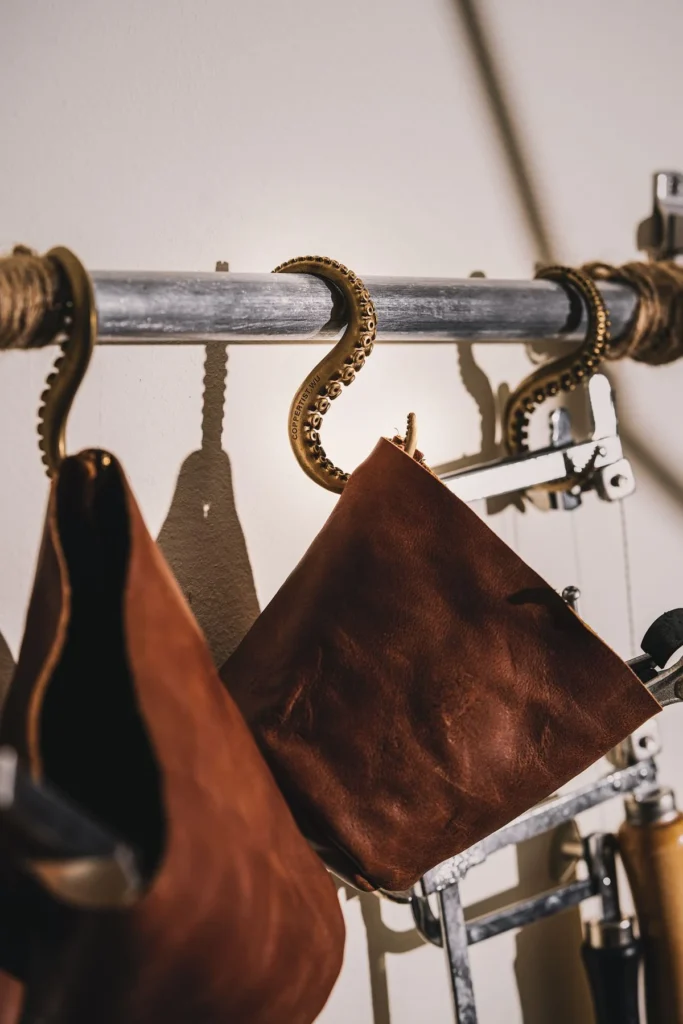
Large metal S-hooks are the cheapest fix for a crowded closet, working in minutes. Hook one end over the rod and hang a purse by its strap from the other, spacing bags so they do not rub. It uses dead air below the rod instead of precious shelf space, and every bag stays visible at a glance. Tip: choose smooth, sturdy hooks and hang heavier totes near the rod ends, where the rod has the most support.
2. Shower Curtain Rings on a Hanger
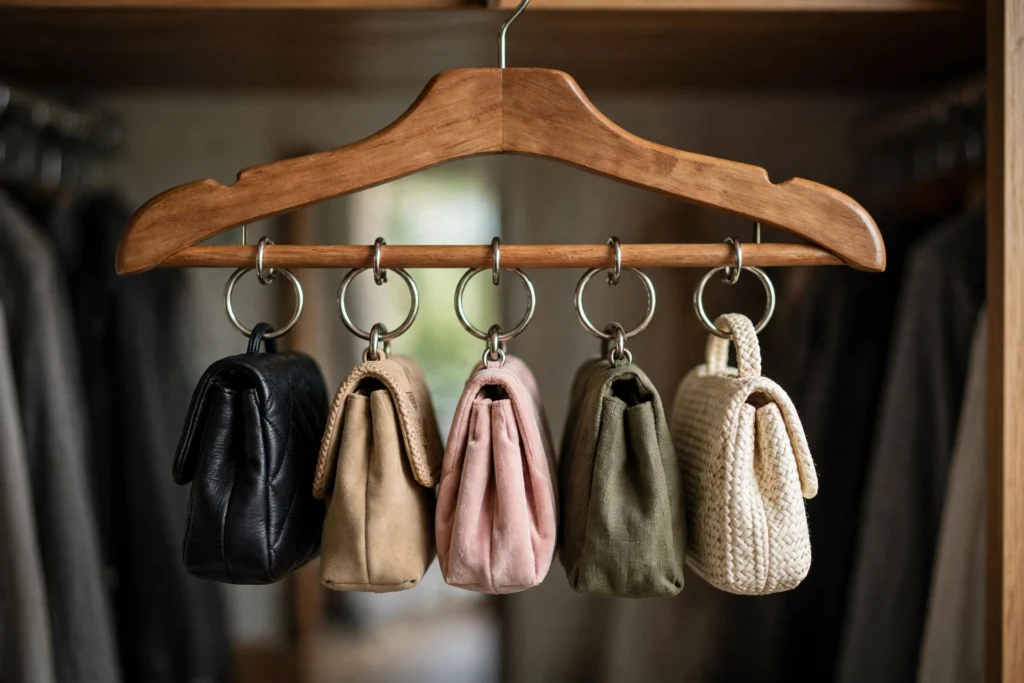
Thread shower curtain rings onto a sturdy hanger, then clip one small bag onto each ring. Suddenly one hanger holds four or five clutches, wristlets, or mini bags that used to vanish inside a drawer. Small bags are hardest to store neatly, and rings keep them separated instead of stacked in a jumble. Tip: use a wooden or velvet hanger that will not bend, and keep the heaviest bag closest to the hook.
3. Hanging Purse Organizer With Pockets
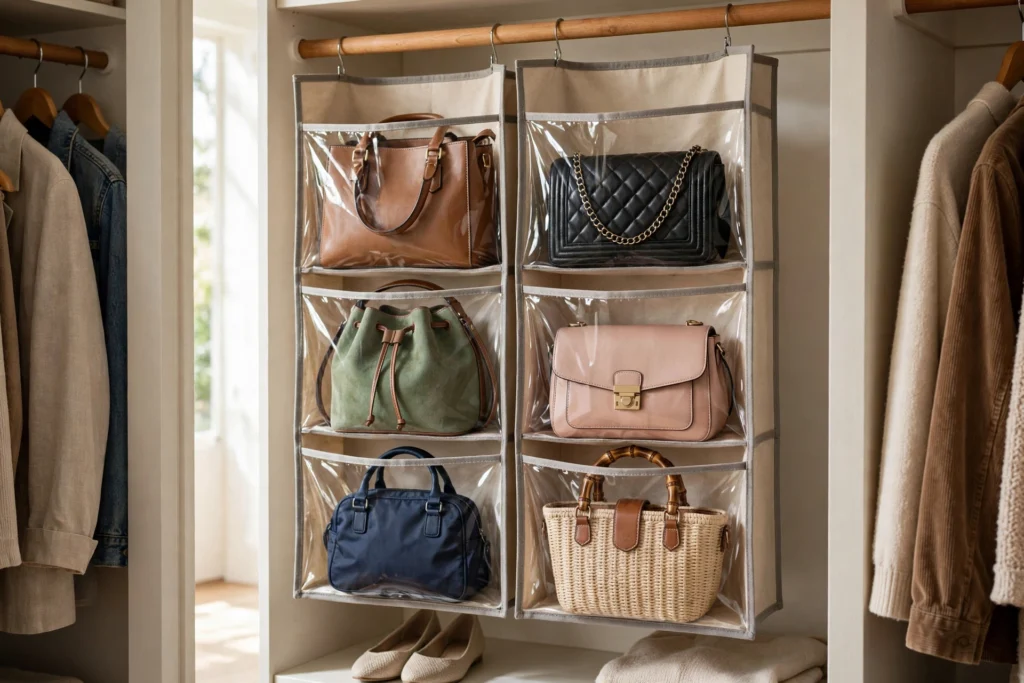
A hanging organizer with clear or mesh pockets slips over the closet rod and gives every bag its own slot. Renters love it because it needs no drilling, shelves, or permanent closet changes. Pockets stop bags from squashing each other, and clear fronts mean you can spot the bag you want without opening anything. Tip: put everyday bags at eye level and occasion bags higher up, so your morning routine stays fast.
4. Multi-Hook Purse Hanger for the Rod
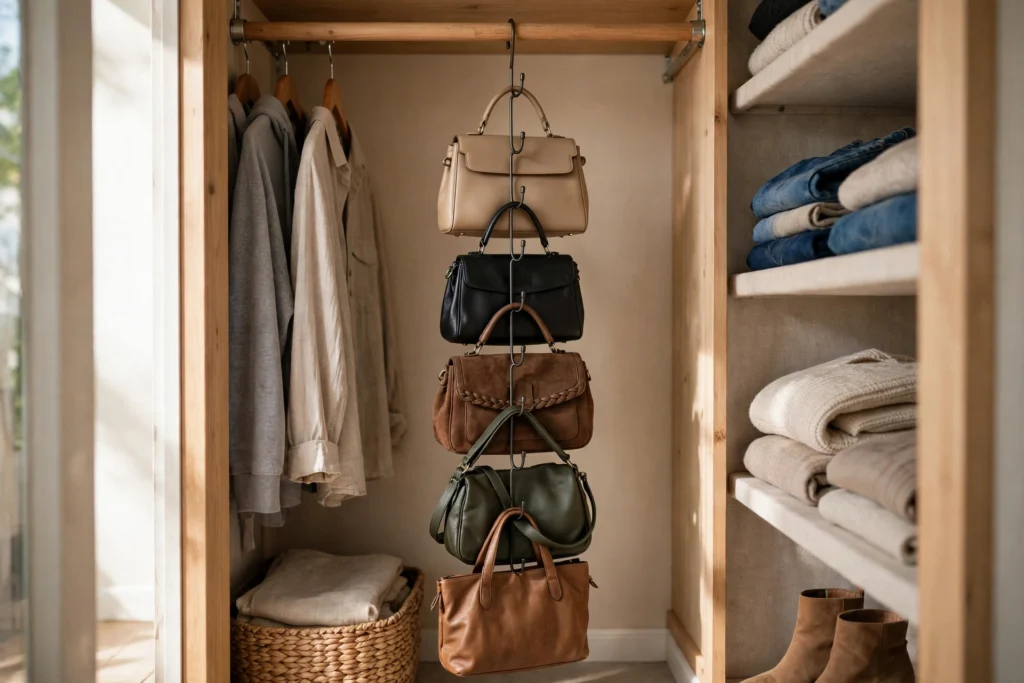
A multi-hook hanger hangs vertically from the rod, holding several bags in a neat column, one hook below the next. This suits narrow closets where shelf space is already taken by clothes, turning a few inches of rod into storage for a whole collection. Each bag hangs freely, so straps stay untangled and leather keeps its shape. Tip: alternate bag directions so clasps and hardware do not scratch the bag beside them.
5. Rotating Carousel Purse Hook
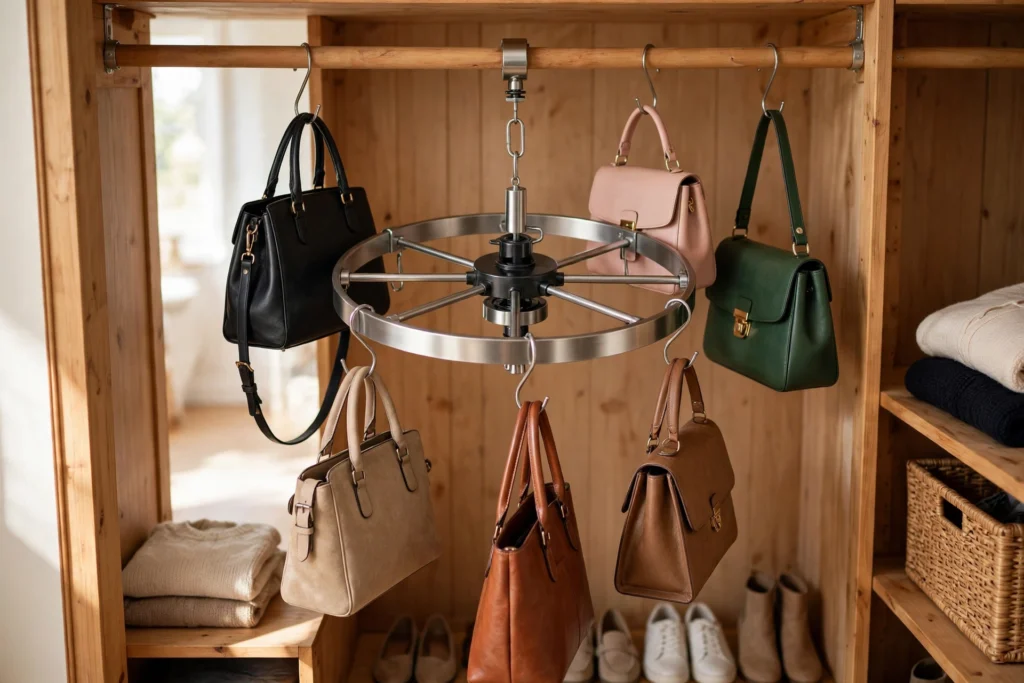
A rotating carousel hook lets you spin through your bags like a clothing rack, a small luxury that saves real time. Instead of pulling three bags out to reach the fourth, simply turn the hook until the one you want faces you. It suits medium bags with similar strap lengths, so the column hangs evenly. Tip: hang it where it can spin freely, away from the wall and from long coats that could block the turn.
6. Cascading Hooks for Clutches and Small Bags
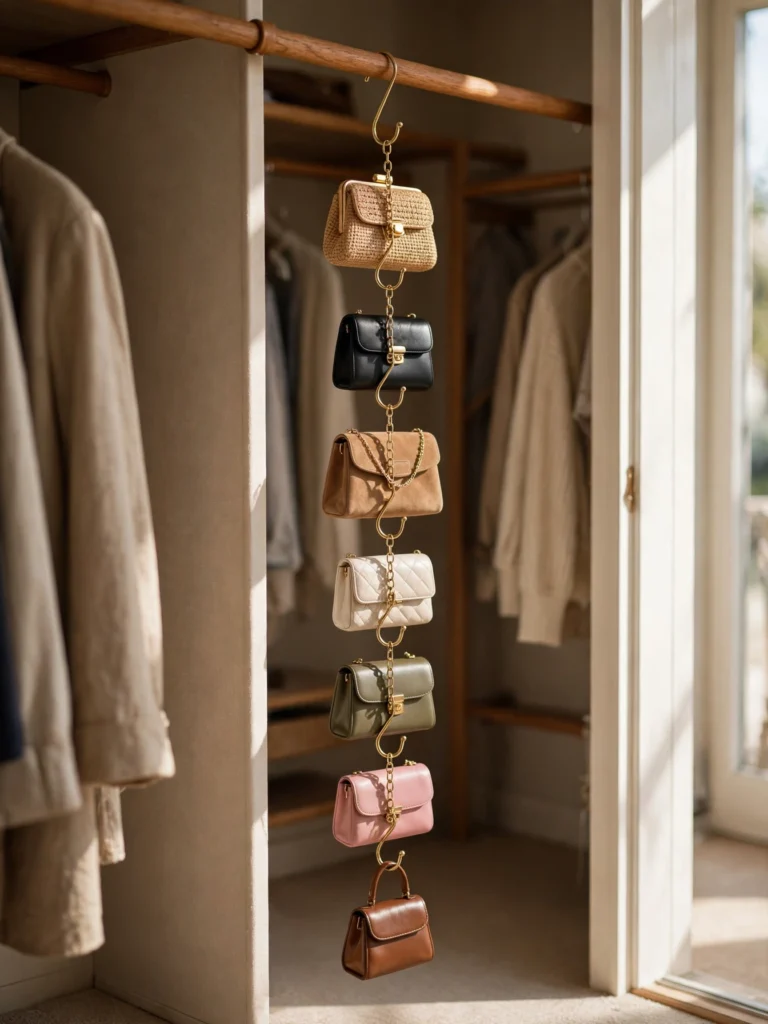
Cascading hooks link together in a chain, so one rod hook can hold a whole row of small bags stacked downward. Clutches, evening bags, and crossbody bags are the usual victims of drawer chaos, and this system gives each one a visible home without buying new furniture. Because the bags hang in a line, you can compare colors and sizes in seconds. Tip: keep the smallest, lightest bags at the bottom so the chain stays balanced and easy to lift.
Shelves, Cubbies, and Dividers
7. Shelf Dividers to Stand Bags Upright
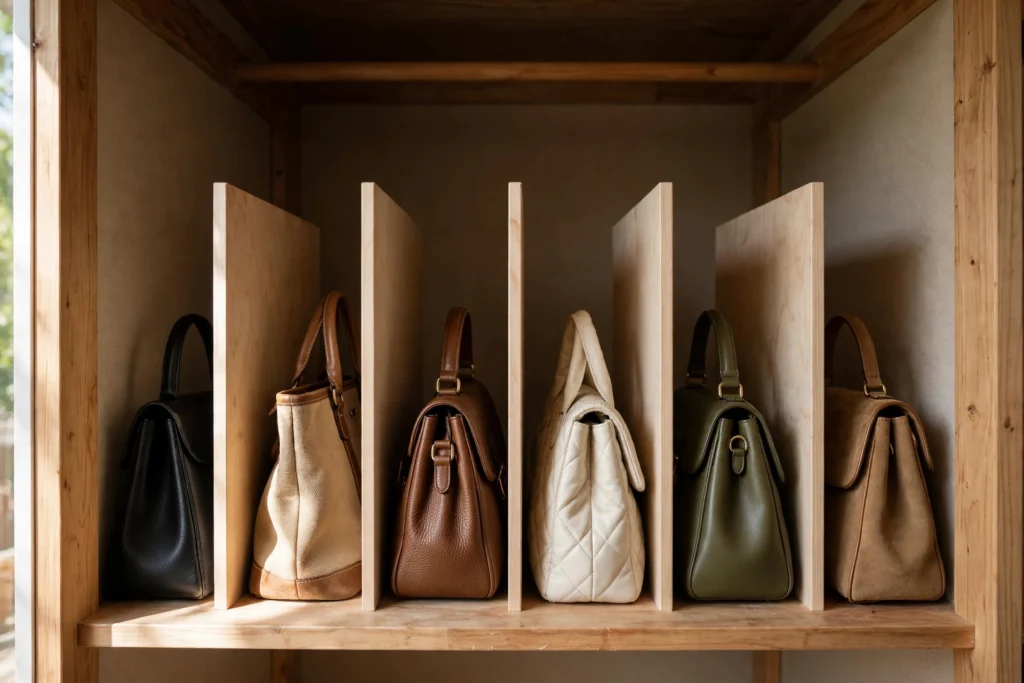
Metal or acrylic shelf dividers turn one long, messy shelf into tidy sections where each bag stands upright on its own. Without dividers, bags slowly lean, slide, and collapse into each other, creasing leather and hiding bags at the back. Dividers hold everything in place while still letting you slide one bag out without disturbing the rest. Tip: leave a little breathing room between bags, because overpacking a section defeats the whole purpose of the divider.
8. Cube Shelves for One Bag Per Cubby
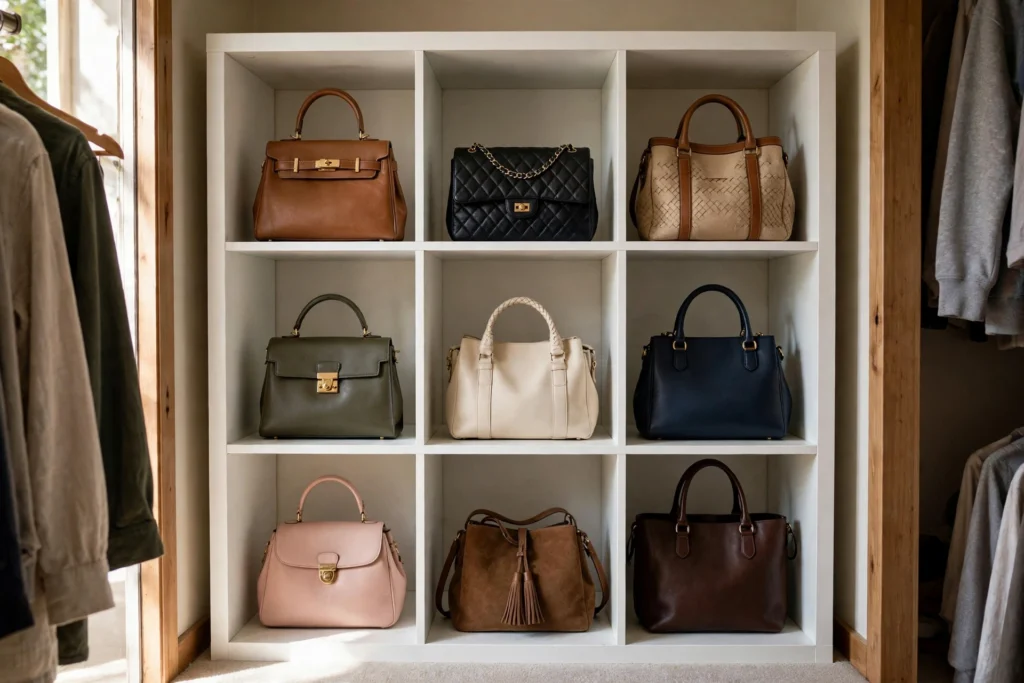
A cube shelf unit is one of the most satisfying purse storage ideas: one bag per cubby means no more stacking or guessing. You can see your whole collection at once, like a little boutique, and each bag keeps its shape because nothing heavy sits on top. Cube units also fit neatly into closet corners and under hanging clothes. Tip: measure your largest tote before buying, so every cubby is tall enough for it to stand upright.
9. Clear Bins on Closet Shelves
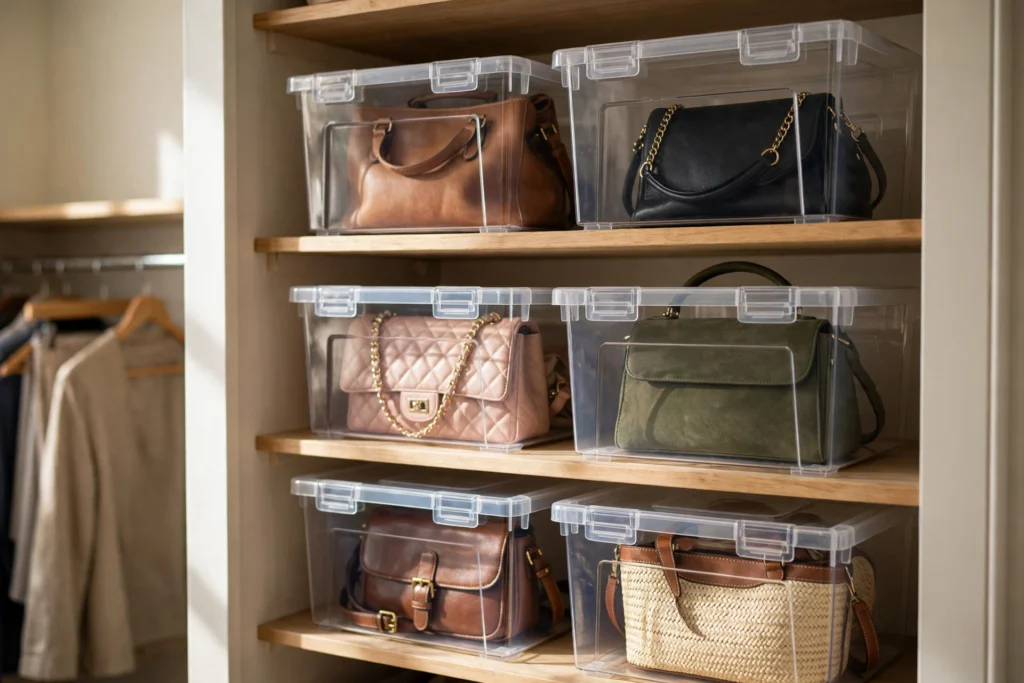
Clear bins corral small and medium bags into groups, such as everyday, evening, or color groups, while still letting you see inside. They suit high shelves, where you can pull down one labeled bin instead of reaching blindly for a single bag. Bins also protect bags from dust on open shelving. Tip: choose bins with handles and avoid overfilling them, so you can lift a bin down with one hand safely.
10. Magazine Holders Turned on Their Side
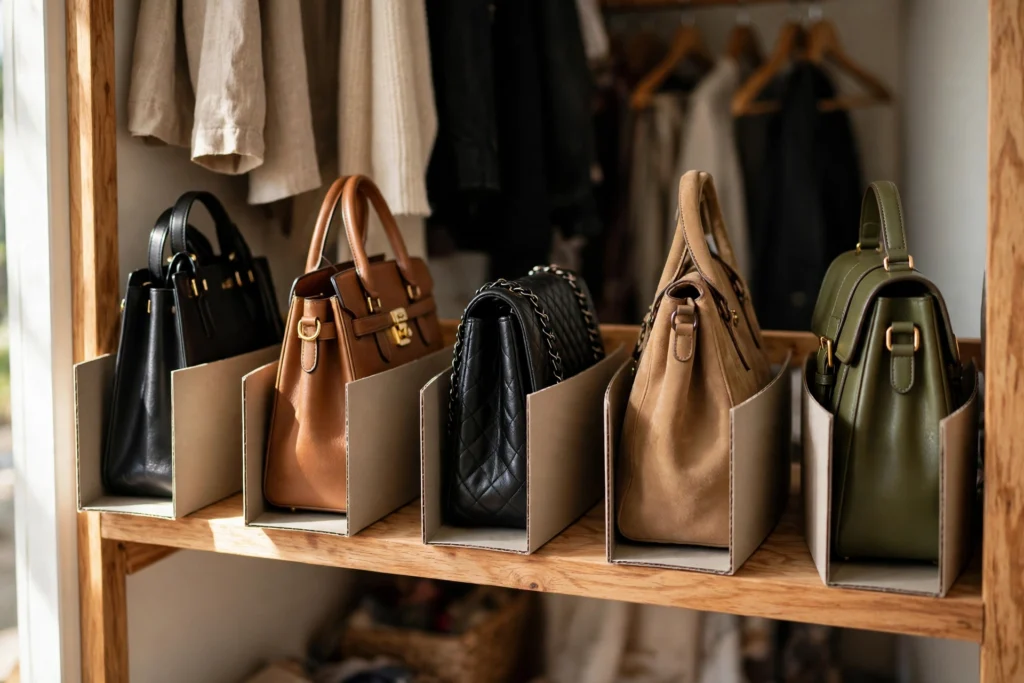
Sturdy magazine holders make brilliant clutch storage on a shelf, each cradling one or two slim bags upright in a neat row for easy grabbing. This idea is wonderfully cheap, rescuing clutches from drawer bottoms where they get scratched and forgotten. Holders also keep bags from flopping sideways, protecting clasps and delicate finishes. Tip: pick rigid holders, not flimsy cardboard, and line the bottom with felt if your bags have shiny hardware.
11. Bookends as Simple Bag Dividers
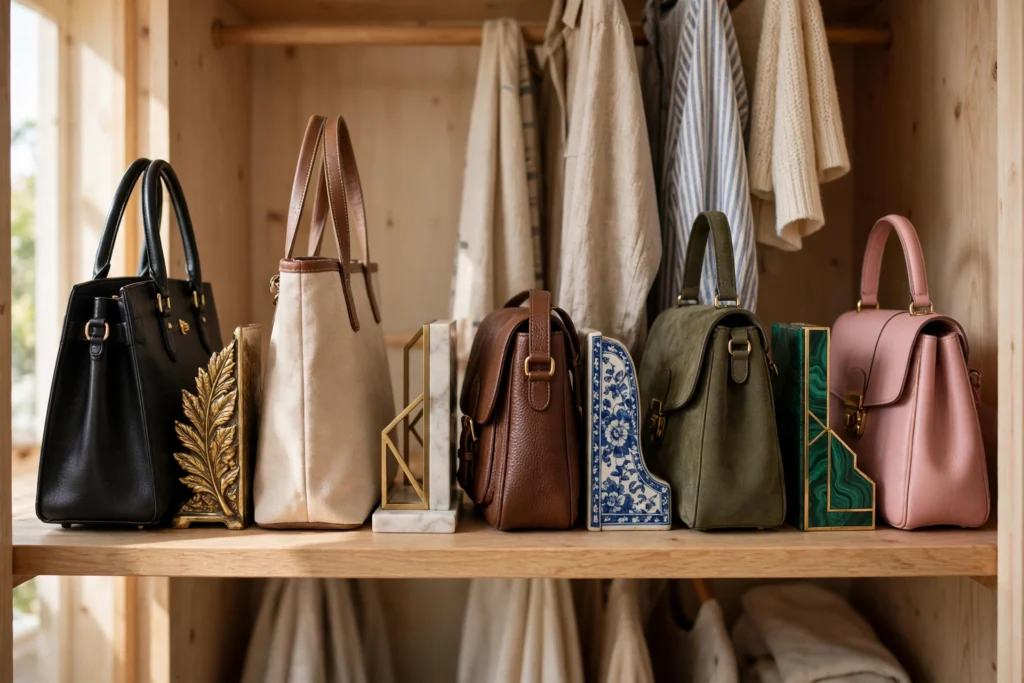
Heavy bookends do the same job as shelf dividers at a fraction of the price, moving in seconds when your collection changes. Place one at each end of a row of bags, and the row stays upright instead of slowly toppling like dominoes. Bookends are especially handy on deep shelves, where a full divider set may not fit. Tip: choose bookends with a non-slip base, and avoid sharp metal edges that could mark soft leather.
12. Adjustable Shelf Risers for Double Layers
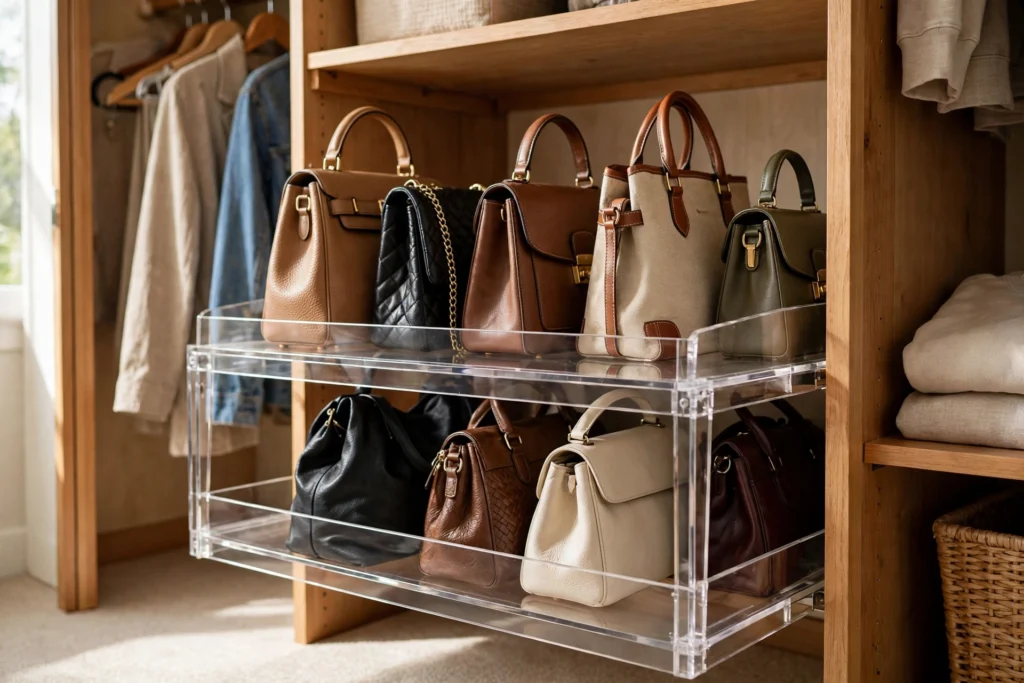
A shelf riser adds a second level inside a tall shelf, instantly doubling the bags you can store without stacking them. Shorter bags sit on top of the riser, taller bags stand underneath, and nothing gets buried. This is a smart fix for closets with only one or two high shelves, where vertical space is otherwise wasted. Tip: keep your most-used bags on the lower level, so you are not reaching up every morning.
13. Top-Shelf Display Row for Statement Bags
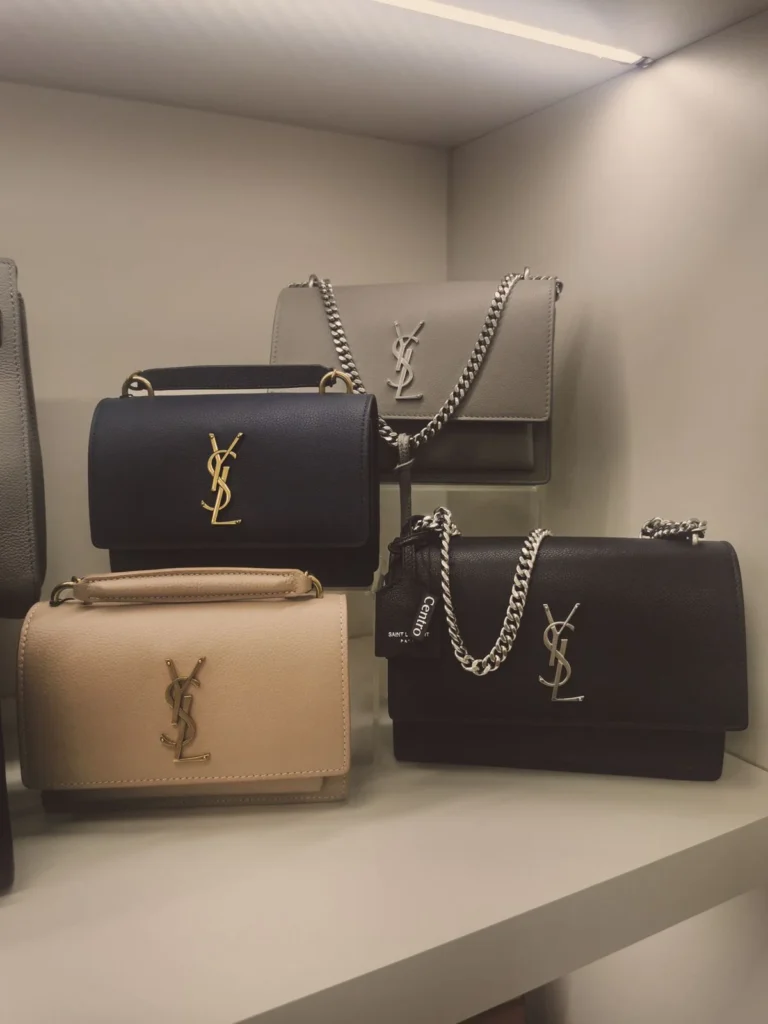
Reserve the top shelf for your prettiest, most-loved bags and display them in a single row, like a shop window. It turns storage into decoration, protects special bags from daily wear, and still keeps them visible enough that you remember to use them. A display row also stops you piling everyday items on top of favorites. Tip: stand bags upright, stuffed lightly, and leave gaps so each one gets its moment.
Doors, Walls, and Hidden Corners
14. Over-the-Door Clear Pocket Organizer
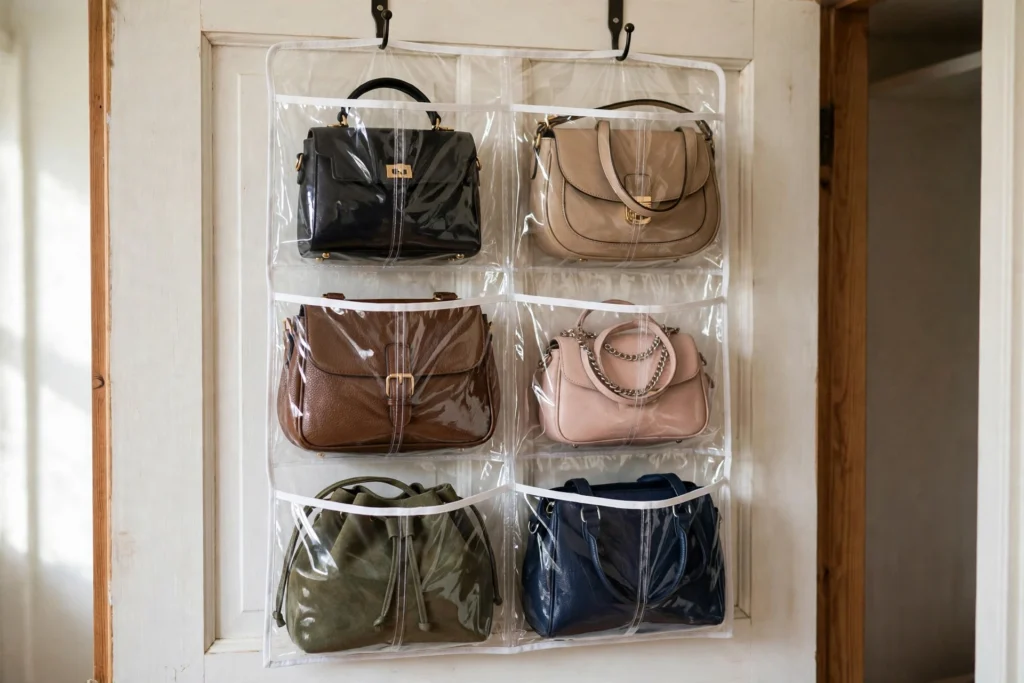
An over-the-door organizer with clear pockets is a renter-friendly way to store small bags, wallets, and clutches on space that is otherwise completely unused. It hangs in seconds, needs no tools, and turns the back of a door into a visible, grab-and-go collection. Clear pockets are key, because hidden pockets just become another place to lose things. Tip: check that the door still closes fully, and keep heavier bags in the lower pockets for balance.
15. Over-the-Door Hook Rail
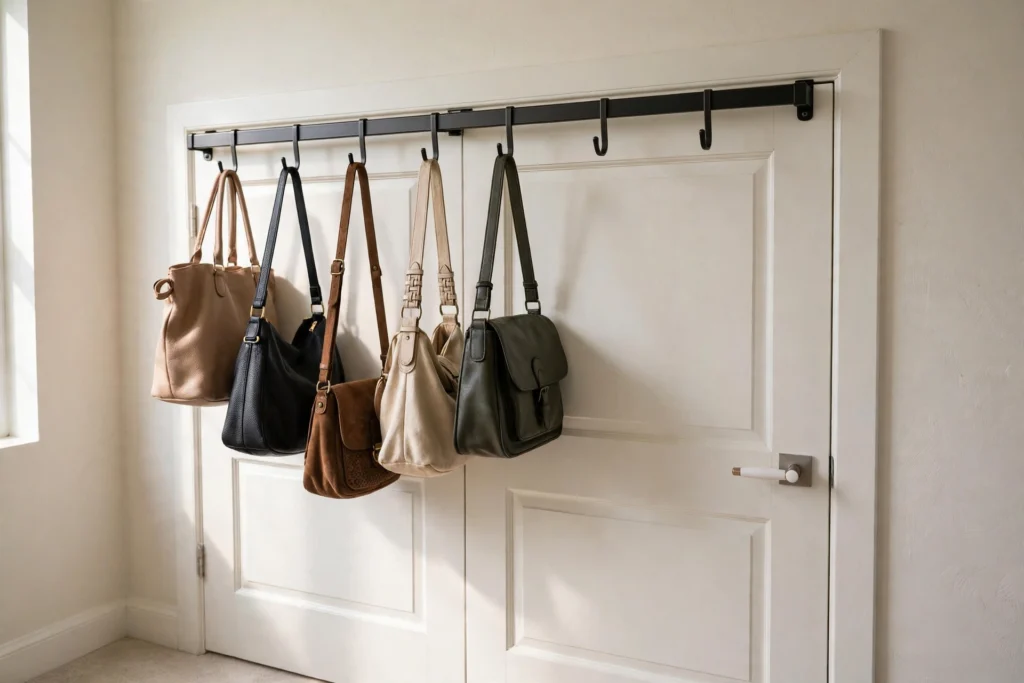
An over-the-door hook rail gives medium bags a home without taking a single inch of rod or shelf space. Hang it on the closet door itself, and your most-used bags wait the moment you open the closet. This works especially well in small bedrooms, where every surface counts and bags tend to end up on chairs. Tip: spread bags evenly across the hooks and avoid overloading one hook, which can strain the door hinges over time.
16. Wall-Mounted Peg Rail Inside the Closet
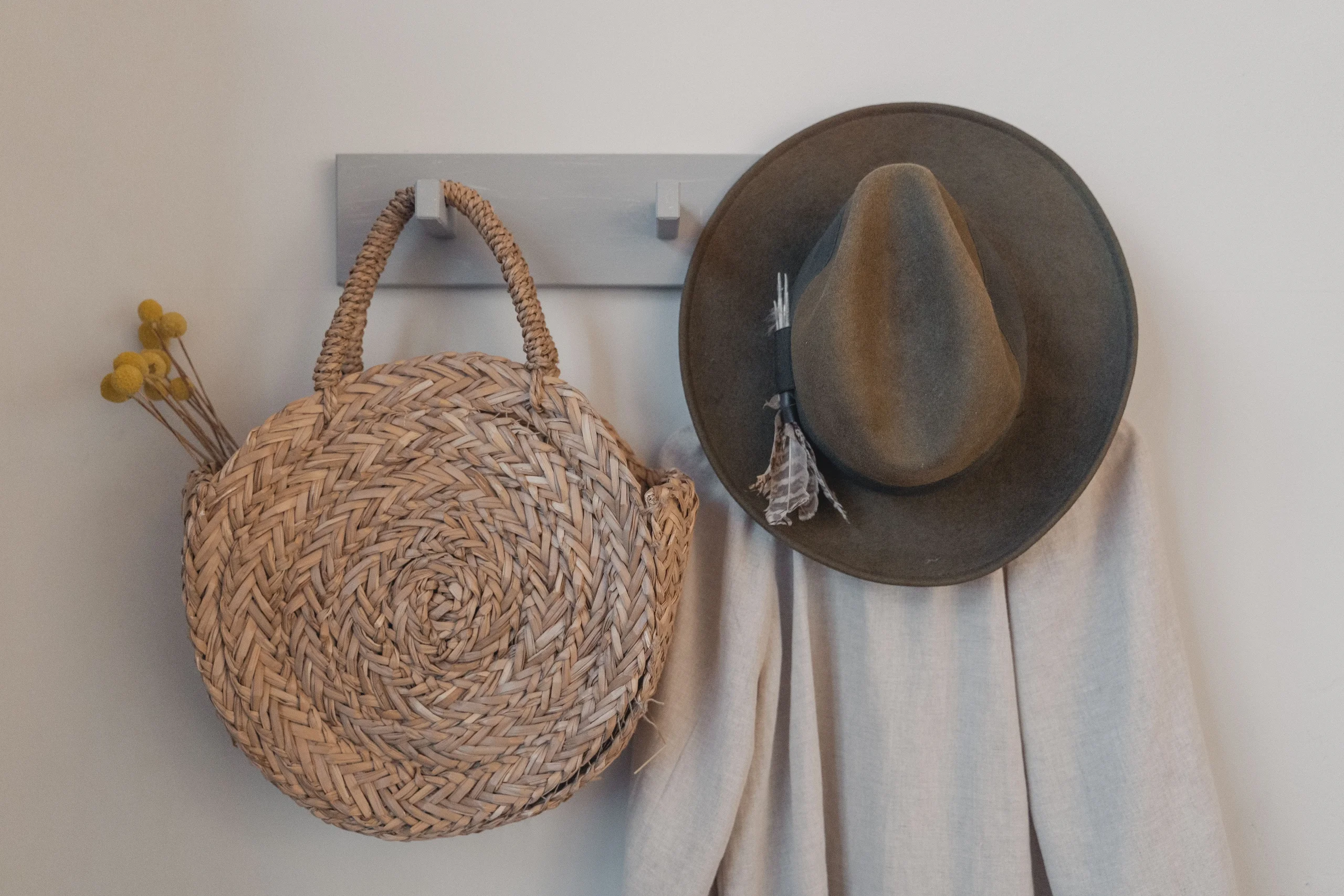
A simple peg rail screwed to an empty closet wall creates a beautiful row of hanging bags, almost like a boutique display. It uses wall space shelves cannot reach, keeps straps from tangling, and makes choosing a bag enjoyable rather than stressful. Peg rails also work brilliantly in walk-in closets with a spare stretch of wall. Tip: space the pegs widely enough that bags do not overlap, and anchor the rail into studs for heavier totes.
17. Floating Shelves on a Spare Closet Wall
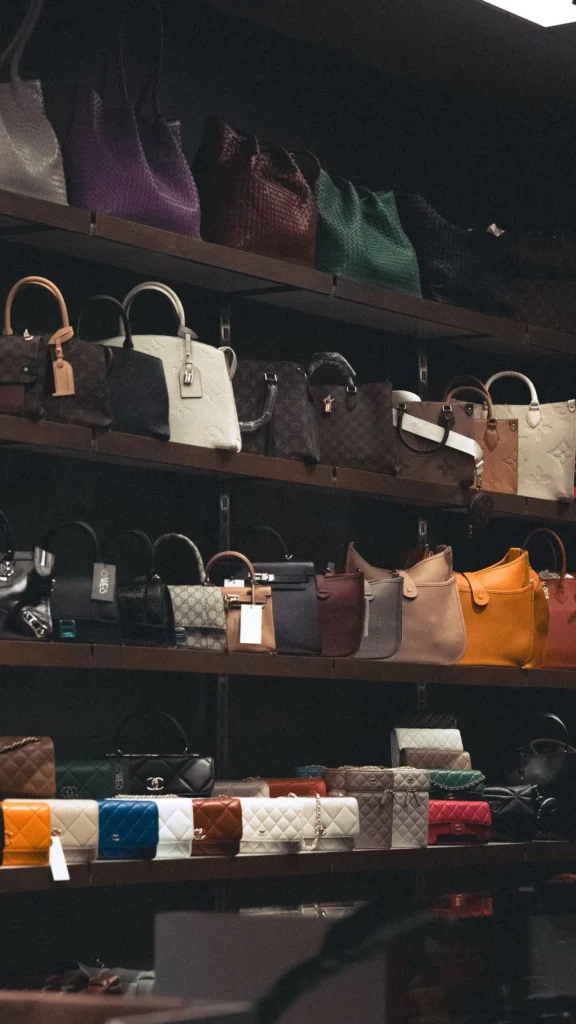
Two or three floating shelves on a spare closet wall turn a blank surface into a display for your favorite bags. Unlike a closed cabinet, open shelves keep everything visible, so you will reach for bags you had forgotten you owned. They also free rod space for clothes, solving two closet problems at once. Tip: install shelves at eye level for daily bags, and use the highest shelf for seasonal or special-occasion pieces.
18. Under-Shelf Hooks for Small Bags
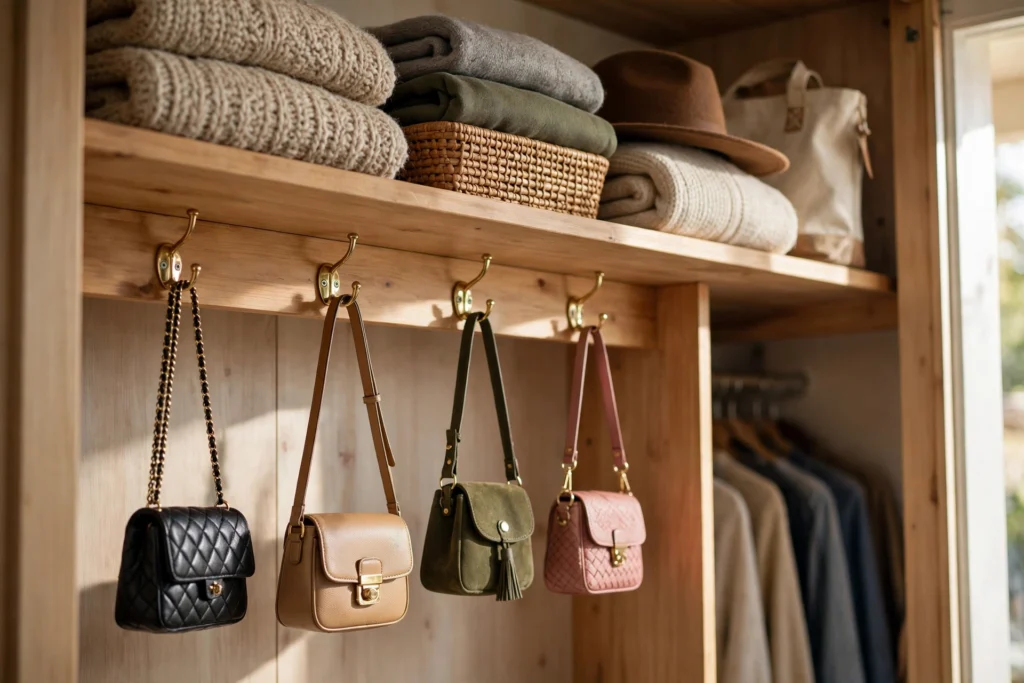
Screw-in or clip-on hooks under a shelf use the forgotten gap between the shelf above and the bags below. Small crossbody bags, wristlets, and pouches hang neatly in this gap instead of cluttering a drawer or getting crushed under bigger bags. It is a tiny change with an outsized payoff, especially where shelf space is already full. Tip: hang only light bags here, and keep them clear of the bags standing on the shelf below.
19. Hooks on the Inside of the Closet Door
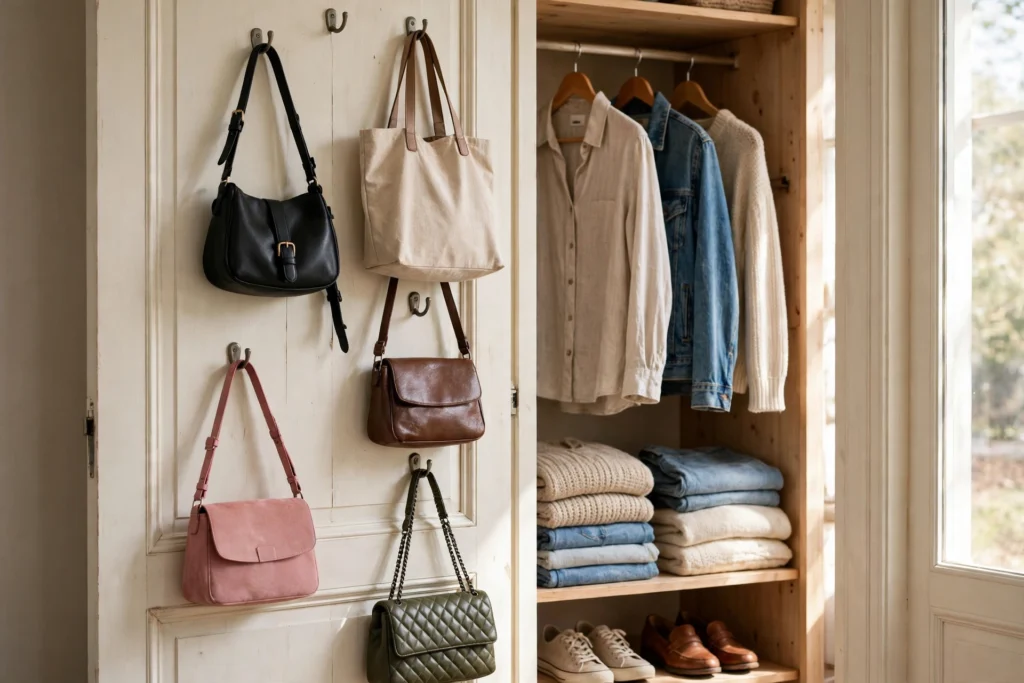
Adhesive or screw-in hooks on the inside of the closet door hide your bags when the door is closed and reveal them the moment you open it. This suits you if you prefer a calm, uncluttered closet look but still want bags within arm’s reach. Three or four hooks can hold your weekly rotation without any new furniture. Tip: use strong adhesive hooks rated for the bag’s weight, and test one hook overnight before trusting it with a favorite bag.
Boxes, Care, and Systems That Last
20. Dust Bags and Labeled Boxes for Precious Bags
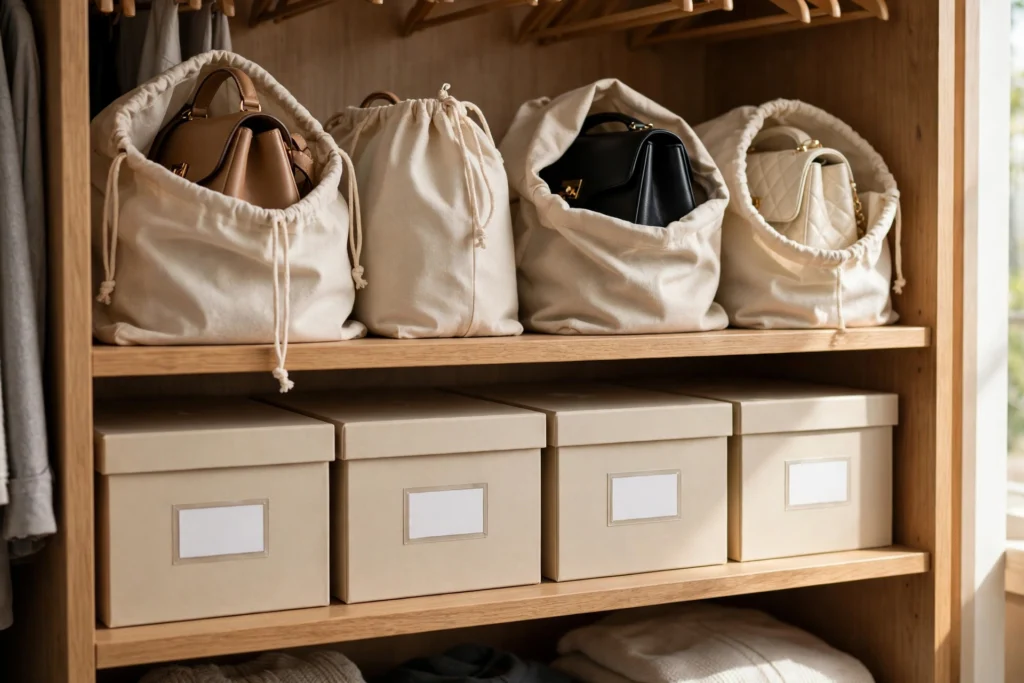
Your most precious bags deserve dust bags and sturdy boxes, especially leather and light-colored bags that mark easily. A dust bag keeps out dust and light, while a labeled box stops you opening five boxes to find one bag. This system is worth the effort for bags you rotate seasonally or save for special occasions. Tip: photograph each bag and tape the photo to its box, so you can find it instantly without unwrapping everything.
21. Clear Lidded Boxes You Can Stack
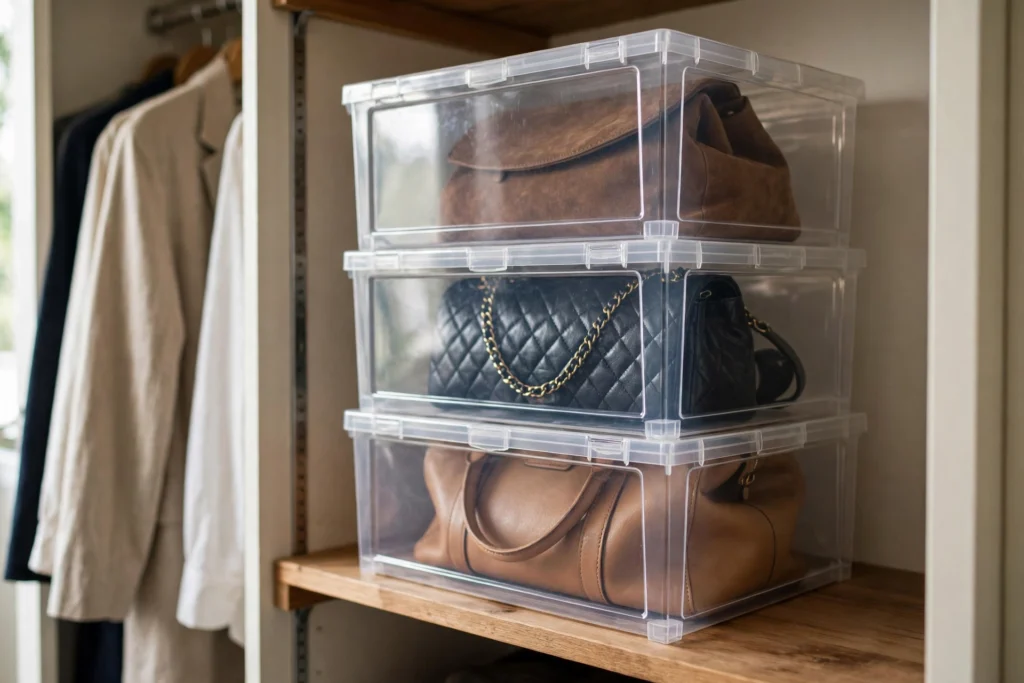
Clear, stackable boxes with lids protect bags from dust and closet clutter while still showing you exactly what is inside. They suit high shelves and bags you do not use every week, because you can stack them safely without squashing the bags within. A lid also keeps out dust in open or older closets. Tip: stack no more than three boxes high, and put the heaviest box at the bottom so the tower stays stable.
22. Acrylic Stands for a Boutique Look
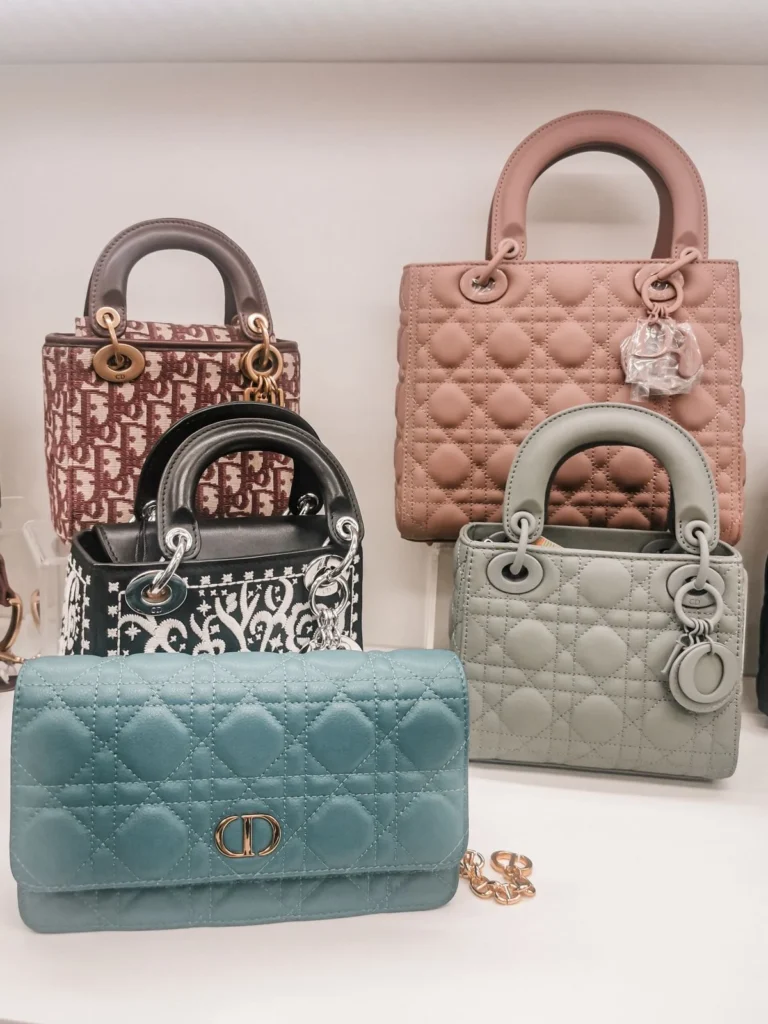
Clear acrylic stands hold a bag upright and slightly forward, so it looks like it is on display in a boutique. They suit structured bags that slump without support, and make a shelf look intentional rather than crowded. Because the stands are clear, they disappear visually and let the bag itself shine. Tip: use stands for your top five bags only, since filling every shelf with stands can look busy instead of beautiful.
23. Stuffing and Inserts to Hold Each Bag’s Shape
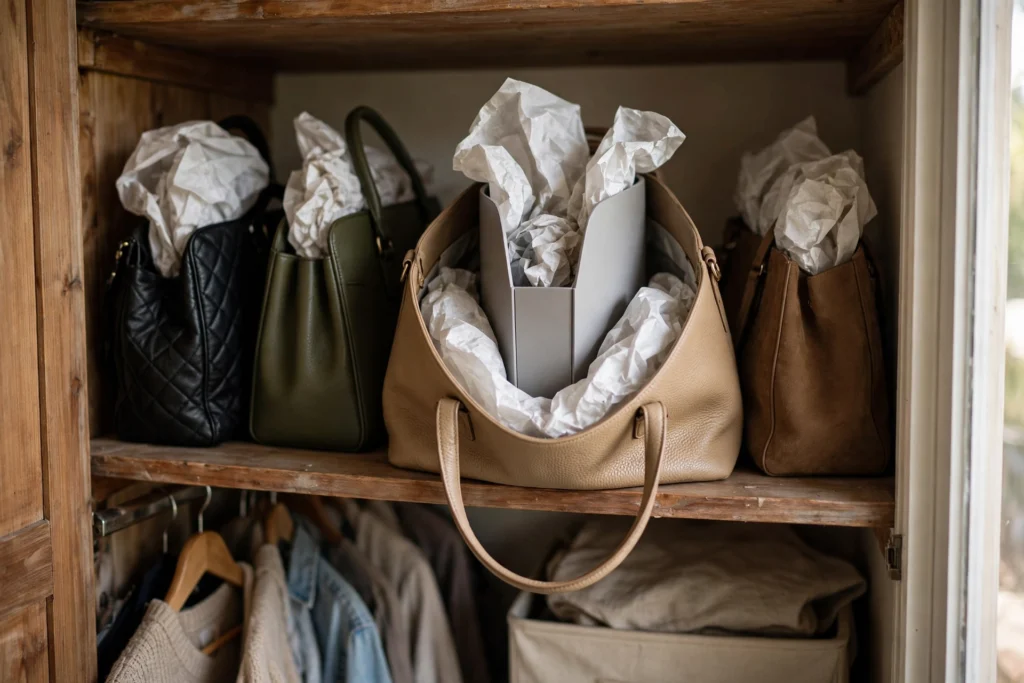
Soft bags lose their shape when stored empty, which is why stuffing matters more than most people realize. Use acid-free tissue, soft pillow inserts, or bag shapers to fill each bag lightly, so it stands upright and keeps its silhouette between uses. This simple habit prevents creases, sagging corners, and collapsed sides over time. Tip: never stuff a bag so tightly that it stretches, and remove any colored paper that could transfer dye to the lining.
24. Seasonal Rotation System
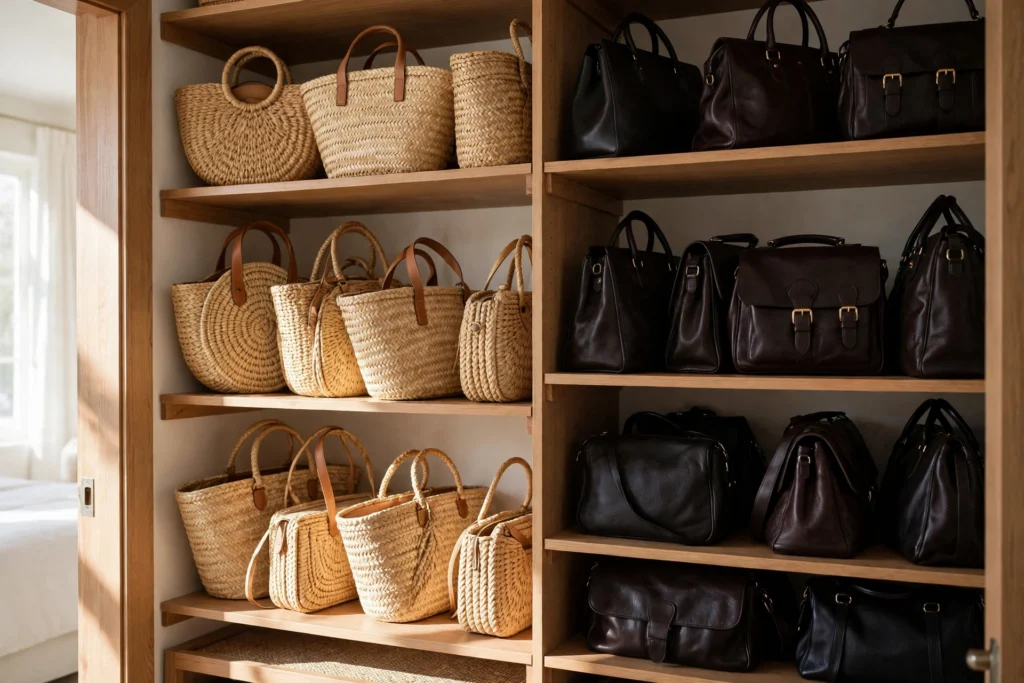
A seasonal rotation keeps only current-season bags in prime closet spots and moves the rest to labeled boxes on a higher shelf. A smaller, visible collection is easier to use than a huge, crowded one, and it gives you a delightful rediscovery moment each season. It also protects off-season bags from daily bumps and sunlight. Tip: set a calendar reminder each season, and clean each bag before it goes into storage.
25. Color-Coded Labels and a Quick Photo Inventory
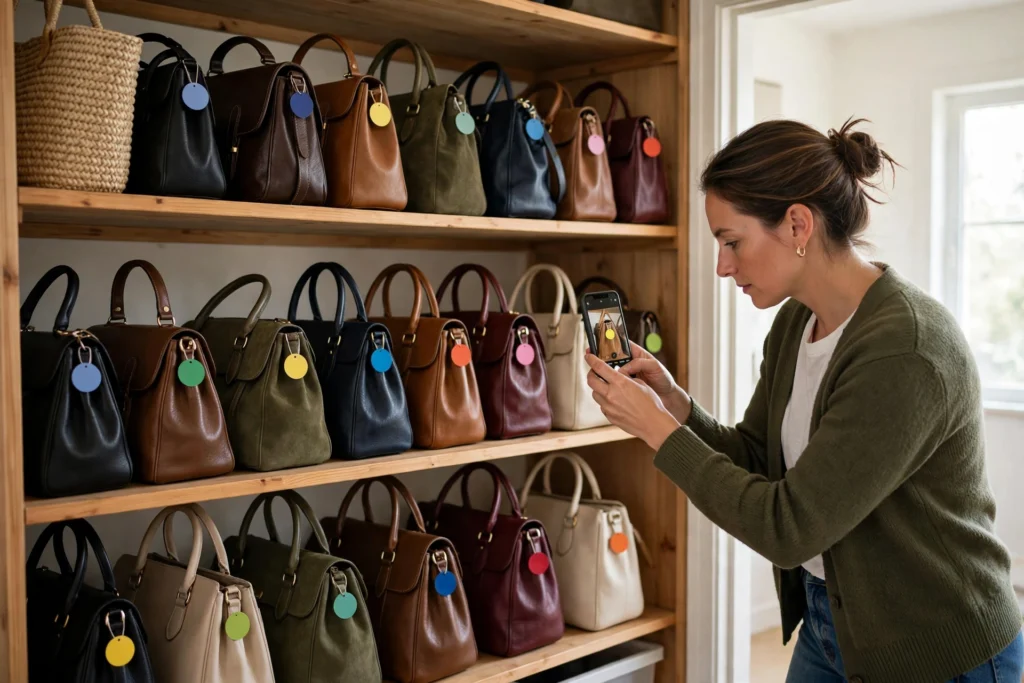
Finish your system with color-coded labels and a photo inventory on your phone, so you always know what you own and where it lives. Label bins and boxes by color, occasion, or owner, and snap a quick photo of each bag in its spot. This stops duplicate purchases, speeds up packing, and makes tidying after a busy week almost automatic. Tip: update the photos whenever a bag moves, or the inventory quietly stops matching reality.
How to Choose the Right Purse Storage for Your Closet
First count your bags and measure your closet; the best system fits your space. Small closets benefit most from hooks and over-the-door ideas, while walk-in closets shine with cubbies and display shelves. Sort bags by use: everyday bags deserve the easiest spots, occasion bags can live higher or in boxes. Store leather upright, stuffed, out of sunlight, straps untangled so hardware does not scratch.
Frequently Asked Questions About Purse Storage
Should purses be stored hanging or standing upright?
Standing upright is best for most bags, especially structured leather: hanging by a strap for months can stretch it. Hanging suits lighter bags short-term, if straps are not overloaded and bags do not rub together.
How do I stop my purses from losing their shape in the closet?
Stuff each bag lightly with tissue or an insert, stand it upright, and avoid stacking heavy bags on top. Dividers, cubbies, and stands help bags hold shape, while dust bags protect them from dust and light.
What is the best purse storage for a small closet?
Hooks are the best starting point for a small closet, using rod, door, and wall space shelves cannot reach. Add an over-the-door organizer for small bags and a few shelf dividers, and you can store a surprising collection without new furniture.
How can I protect expensive handbags in storage?
Keep expensive bags in dust bags, stuffed lightly, upright, and away from sunlight and damp. Store them in labeled boxes or on a dedicated shelf, keep hardware from touching other bags, and condition leather before long storage.
Your closet needs no renovation to feel organized, just one good system and a home for every bag. Try one idea today, then add another next weekend. Pin this post so you can find these 25 purse storage ideas for your closet whenever your collection grows.
Photos: Pexels (free to use).


