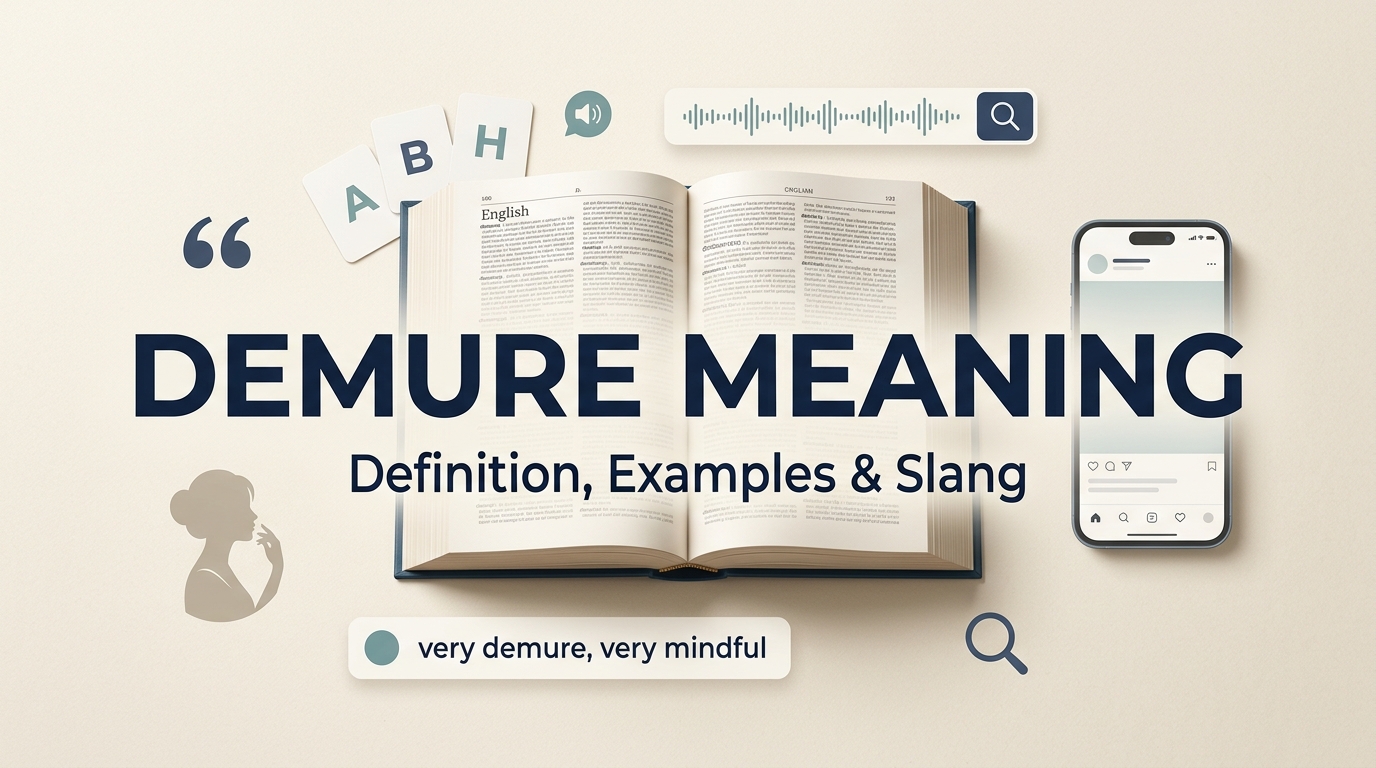
Demure Meaning: Definition, Examples, Pronunciation and Slang
The word demure describes someone or something that appears quiet, modest, reserved, and not attention-seeking. It is most often used for a person’s manner, expression, clothing, or overall style. For example, a person may give a demure smile, speak in a soft and controlled way, or wear a demure outfit with a simple design and more coverage.
The word is usually an adjective, so it describes a noun: a demure woman, a demure dress, or a demure manner.
In traditional English, demure often sounds approving because it suggests calmness, good manners, and tasteful restraint. However, context matters. It can sometimes sound old-fashioned, overly gendered, or slightly critical if it implies that someone is acting shy or proper on purpose.
On social media, especially after the phrase “very demure, very mindful” became popular, the word also developed a playful meaning linked with being neat, appropriate, polished, and self-aware. MeaningDict explains these traditional and modern meanings below with simple definitions, examples, pronunciation, synonyms, and common uses.
What Does Demure Mean in Simple Words?
In simple words, demure means quiet, modest, and reserved. A demure person does not try to attract too much attention through loud behavior, bold clothing, or dramatic expressions. The word often suggests a calm, gentle, and well-mannered appearance.
Major learner dictionaries describe demure as behaving quietly or shyly in a way that does not draw attention, especially when referring to a woman or girl. nition is:
Demure means politely quiet, modest, and not showy.
For example, imagine someone entering a room wearing a simple outfit, speaking softly, and smiling gently instead of trying to become the center of attention. That person may be described as demure.
The word can describe more than personality. A demure smile is small and restrained. A demure dress is modest and elegant rather than revealing or flashy.
Demure does not always mean nervous or afraid. A confident person can also choose a demure style because they prefer calm, tasteful, and understated behavior.
Demure Meaning in English With Examples
In English, demure is an adjective meaning modest, reserved, quiet, or shy in appearance and behavior. It is often used approvingly when someone seems gentle, proper, and composed.
Collins explains that the word commonly describes a person who is quiet and rather shy in a way the speaker finds appealing. clear examples:
- She looked demure in a simple blue dress.
Her appearance was modest and understated. - He noticed her demure smile.
Her smile was small, gentle, and restrained. - The actor appeared unusually demure during the interview.
The actor behaved quietly instead of being bold or expressive. - The blouse has a demure, classic design.
Its style is modest, neat, and not flashy. - She answered in a demure voice.
She spoke softly and with controlled politeness.
Although demure has traditionally been used more often for women, modern English can apply it to any person, expression, outfit, design, or behavior when the intended meaning is reserved, modest, and quietly elegant.
What Does Demure Mean in a Sentence?
The meaning of demure in a sentence depends on the noun it describes. Because demure is an adjective, it normally appears before a noun or after a linking verb such as is, looks, seems, or appears.
The central idea remains the same: quiet, modest, restrained, or not attention-seeking.
Consider these sentence patterns:
- A demure person: “Maya was demure at the formal dinner.”
- A demure expression: “She gave the camera a demure smile.”
- Demure clothing: “The collection includes demure dresses for formal events.”
- A demure style: “Her makeup looked soft and demure.”
- An ironic use: “I ate one biscuit—very demure, very mindful.”
In the first four examples, demure has its traditional meaning. It describes behavior or style that appears calm, modest, and controlled.
The final example uses current social media humor. The speaker jokingly presents a small everyday action as especially tasteful or self-controlled.
To understand the word correctly, look at the surrounding tone and decide whether the writer is being literal, playful, or sarcastic.
Demure Pronunciation and Meaning in English
Demure is pronounced dih-MYOOR. The stress falls on the second syllable: de-MURE. Cambridge gives the British pronunciation as /dɪˈmjʊə(r)/ and the American pronunciation as /dɪˈmjʊr/. unciation guide is:
| Form | Pronunciation |
|---|---|
| British English | dih-MYOOR |
| American English | dih-MYOOR |
| IPA | /dɪˈmjʊə(r)/ or /dɪˈmjʊr/ |
The word has two syllables:
de + mure
The ending sounds similar to “pure” in many accents. Avoid pronouncing it like demur because these are two different words.
- Demure is an adjective meaning modest or reserved.
- Demur is a verb meaning to object or express disagreement.
Merriam-Webster clearly separates these two forms and meanings. wore a demure outfit.”
Say it slowly as: “She wore a dih-MYOOR outfit.” Practising the word in a full sentence makes the stress and final sound easier to remember. Listen for the clear second-syllable stress rather than giving both syllables equal weight.
See Also: What Does HBU Mean in Text? Meaning, Uses & Replies
Demure Synonyms and Antonyms With Examples
Useful synonyms for demure include modest, reserved, shy, quiet, restrained, retiring, proper, unassuming, and coy. These words overlap, but they are not always exact replacements.
Modest focuses on avoiding display or pride. Reserved means not openly expressing feelings. Shy suggests discomfort with attention. Coy can imply deliberately playful or affected shyness.
Dictionaries commonly list words such as shy, reserved, modest, and retiring as close alternatives. ynonyms:
- “She wore a modest dress.”
- “He remained reserved during the meeting.”
- “Her demure smile looked gentle and controlled.”
Common antonyms of demure include:
- Bold
- Outgoing
- Loud
- Showy
- Expressive
- Flamboyant
- Attention-seeking
- Extroverted
Examples of antonyms:
- “Her demure daytime style became bold at the party.”
- “The design is flamboyant, not demure.”
- “Unlike his outgoing sister, he is quiet and reserved.”
Choose the synonym or antonym according to context. Demure often combines quiet behavior with modest appearance or proper conduct.
Is Demure a Compliment or an Insult?
Demure is usually a compliment, but tone and context can change how it feels. When used positively, it praises someone for appearing graceful, modest, calm, tasteful, or well-mannered.
A sentence such as “You look demure in that dress” normally suggests that the outfit appears elegant and understated. Oxford marks its common use as usually approving, while Collins describes the quality as quiet and shy in an appealing way. re can sound negative or patronizing in some situations. It may imply that a person is expected to be quiet, submissive, or traditionally “proper,” especially when directed only at women.
It can also suggest affected modesty, meaning someone is acting innocent or reserved rather than behaving naturally. Merriam-Webster notes that the word may refer to modesty that is sincere or more deliberately performed. demure about someone, consider your relationship and intended tone. For clothing, expressions, makeup, or design, it is generally safe and positive. For personality, make sure the person would appreciate being described as reserved.
Is Demure a Positive or Negative Word?
Demure is mainly a positive or neutral word. Its usual meaning—modest, quiet, reserved, and well-behaved—often carries approval. It can describe a calm personality, a gentle smile, tasteful makeup, or elegant clothing.
In these situations, the word suggests restraint without suggesting ugliness or dullness.
The word becomes negative when it is used sarcastically, critically, or with an old-fashioned expectation about how someone should behave. Calling a person “too demure” may suggest that they appear overly timid, stiff, distant, or unwilling to express themselves.
In another context, saying someone is “acting demure” may imply that their modest behavior seems fake or calculated. Dictionary sources recognize both sincere reserve and affected modesty among the word’s possible shades of meaning. is:
- Positive: Graceful, modest, polished, or quietly confident
- Neutral: Reserved, shy, calm, or understated
- Negative: Overly timid, prim, artificial, or performatively innocent
Therefore, demure has no fixed emotional label. The sentence, speaker’s tone, and social setting determine whether it sounds admiring, descriptive, teasing, or critical.
What Does Very Demure Mean on TikTok?
On TikTok, very demure usually means looking or behaving neat, modest, appropriate, polished, and pleasantly restrained. The phrase became widely popular in August 2024 through creator Jools Lebron’s humorous videos about being presentable and “mindful” in everyday situations, including workplace appearance. n expanded into jokes about doing almost anything in a controlled, tasteful, or supposedly proper way.
The TikTok meaning is not always literal. Users may say “very demure” sincerely about simple makeup, quiet manners, or modest clothing. They may also use it ironically after doing something ordinary, messy, excessive, or clearly not modest. That contrast creates the joke.
Examples include:
- Wearing soft makeup to work: “Very demure.”
- Taking only a small snack: “Very demure, very mindful.”
- Carefully organizing a desk: “See how neat this is? Very demure.”
- Posting a chaotic video and calling it demure: playful irony.
In social media use, the phrase often communicates self-awareness, humor, restraint, and attention to what is suitable for a particular situation.
Very Demure Very Mindful Meaning Explained
“Very demure, very mindful” means being modest, thoughtful, controlled, and aware of how your behavior fits the situation.
Demure adds the idea of quiet elegance or restraint, while mindful suggests paying attention to your choices and their effect. Together, the phrase presents someone as polished, considerate, and not excessive.
The expression became a viral catchphrase after Jools Lebron used it humorously while discussing workplace presentation. Dictionary.com later selected demure as its 2024 Word of the Year, reporting a major rise in online usage and search interest connected with the trend. n be used in three ways:
- Literal: “Her simple outfit is very demure, very mindful.”
- Playful: “I closed all my browser tabs—very demure, very mindful.”
- Ironic: “I ordered three desserts. Very demure, very mindful.”
The humor often comes from treating a small, ordinary, or ridiculous action as proof of perfect etiquette.
It is not a strict moral rule. It is a flexible internet expression used to praise, tease, exaggerate, or make everyday choices sound refined and carefully considered.
See Also: What Does IDEK Mean in Text? Meaning, Examples, and Best Replies
Demure Meaning in Social Media Slang
In social media slang, demure means more than simply shy or modest. It often describes an action, outfit, routine, or attitude that seems clean, tasteful, restrained, self-aware, and suitable for the moment.
The word can also be deliberately exaggerated for humor. Someone might call a carefully arranged lunch “demure” or describe a minor responsible choice as “very demure.”
This slang meaning still grows from the traditional definition. A reserved person does not do too much or demand attention. Online creators turned that idea into a playful formula: behave neatly, avoid excess, and show that you are “mindful.”
The viral usage was strongly associated with the 2024 TikTok trend and produced a sharp increase in attention to the word. media uses include:
- Approval: “That soft makeup is so demure.”
- Self-praise: “I arrived early—very demure.”
- Friendly teasing: “One dramatic post today? Very mindful.”
- Irony: Calling loud or chaotic behavior demure
Because internet slang changes according to context, pay attention to facial expressions, captions, emojis, and tone. The speaker may be sincere, joking, exaggerated, or sarcastic.
What Does a Demure Woman Mean?
A demure woman is a woman who appears quiet, modest, reserved, and composed. She may speak gently, avoid drawing unnecessary attention, dress in an understated way, or show calm and controlled manners.
Traditional dictionaries often use women and girls in their examples because the word has historically been applied more frequently to feminine behavior and appearance. on does not automatically mean weak, insecure, or lacking confidence. A woman can be confident and still choose a demure style. For example, she may prefer simple clothing, subtle makeup, thoughtful speech, and private behavior while remaining decisive and self-assured.
Still, use the label carefully. Some people may find it flattering because it suggests grace, elegance, and modesty. Others may consider it old-fashioned or limiting because it can carry traditional expectations that women should be quiet and unobtrusive.
A respectful interpretation is:
A woman whose manner or appearance is calmly modest and understated.
It is often better to describe a specific feature, such as a demure smile, voice, dress, or expression, when you do not know how someone feels about the broader personality label.
What Is a Demure Personality?
A demure personality is calm, reserved, modest, and low-key. Someone with this personality may listen more than they speak, avoid being the center of attention, express emotions carefully, and behave politely in social settings.
They may prefer quiet confidence over bold self-promotion.
Typical traits associated with a demure personality include:
- Soft or measured speech
- Modest behavior
- Controlled facial expressions
- Respect for social boundaries
- Discomfort with excessive attention
- A gentle and understated manner
Demure is not a formal psychological personality type. It is an everyday descriptive word, not a diagnosis or scientific category. It should also not be treated as a complete summary of a person.
Someone may seem demure at work but become lively and expressive with close friends. Another person may dress demurely while having a confident and outspoken personality.
The word can overlap with shy, introverted, reserved, and modest, but these terms are different. Introversion relates to how a person experiences social energy, while demure mainly describes visible manner and presentation. A demure person may be socially confident but intentionally restrained.
What Does Demure Dress Mean in Fashion?
In fashion, a demure dress is modest, refined, and understated rather than revealing, flashy, or heavily dramatic. It usually creates an elegant appearance through balanced coverage, clean lines, soft details, and controlled styling.
Oxford includes clothing examples such as a demure blouse, showing that the word can describe garments as well as people. s may include:
- A higher or moderate neckline
- Longer or softly structured sleeves
- A knee-length, midi, or maxi hem
- A comfortable, non-clinging shape
- Soft colors or classic prints
- Limited cutouts or sheer panels
- Simple and tasteful decoration
- Clean tailoring and balanced proportions
These features are common, not strict rules. A dress can be demure in a bright color if its overall shape and styling remain modest and polished.
Demure does not mean boring, outdated, or unfashionable. Modern demure fashion may use strong tailoring, premium fabric, creative layering, and elegant accessories.
Example: “She chose a demure navy midi dress for the ceremony.”
This means the dress looked appropriate, sophisticated, and modest without demanding excessive attention.
Difference Between Demure and Modest Meaning
Demure and modest are closely related, but they are not identical. Modest is the broader word. It can describe behavior, clothing, achievements, size, price, or claims.
A person may be modest about success, a house may be modest in size, and an outfit may provide modest coverage. Demure mainly describes a quiet, reserved, and properly restrained manner or appearance.
| Word | Main idea | Example |
| Demure | Quiet, reserved, and gently proper | “She gave a demure smile.” |
| Modest | Not boastful, excessive, or revealing | “He is modest about his success.” |
A demure person often appears modest, but a modest person is not necessarily demure. Someone may openly and confidently discuss a subject while remaining modest about personal achievements.
A modest dress focuses on coverage; a demure dress also suggests a soft, understated style.
Dictionary usage notes explain that demure can imply bashful quietness and decorum, while modest has a wider meaning related to restraint and proper behavior. * for manner or appearance and modest for the broader idea of avoiding display, pride, or excess.
Frequently Asked Questions About Demure
These quick answers cover the spelling, grammar, meaning, usage, and common confusion surrounding demure. Readers looking for more simple word meanings, examples, pronunciation guides, and modern slang explanations can explore MeaningDict, where English words are explained through clear definitions and practical examples.
Is demure only used for women?
No. Demure has traditionally been used more often for women and girls, but it can describe any person, expression, voice, outfit, design, or behavior. For example, a man may have a demure manner, or a room may have a demure and understated design.
Can a man be described as demure?
Yes, a man can be described as demure if he appears quiet, reserved, modest, or understated. However, the word is less commonly used for men. Depending on the context, words such as reserved, soft-spoken, restrained, or modest may sound more natural.
What part of speech is demure?
Demure is an adjective. It describes a person, manner, expression, outfit, or design. Examples include “a demure smile,” “a demure personality,” and “the dress looks demure.” The related adverb is demurely, as in “She smiled demurely.”
What is the difference between demure and demur?
Demure and demur have different meanings and pronunciations. Demure is an adjective meaning modest, reserved, or quietly proper. Demur is a verb meaning to object, disagree, or show reluctance. Example: “She looked demure, but she did not demur when asked to speak.”
Is demure the same as shy?
Not exactly. Shy usually suggests nervousness or discomfort around people or attention. Demure describes visible modesty, restraint, and quiet behavior. Someone can act demure without feeling shy. They may simply prefer an understated and controlled way of presenting themselves.
What does demurely mean?
Demurely is the adverb form of demure. It means doing something in a quiet, modest, reserved, or gently proper way. For example, “She smiled demurely” means she smiled softly and with controlled modesty rather than showing a wide or dramatic expression.
Can clothing be described as demure?
Yes. Clothing can be described as demure when it appears modest, refined, and understated. A demure outfit may have balanced coverage, a classic shape, simple decoration, and an elegant appearance. The word does not mean that the clothing must be plain or unfashionable.
What is the opposite of demure?
The opposite of demure may be bold, outgoing, loud, showy, flamboyant, expressive, or attention-seeking. The best antonym depends on the context. A bold personality is the opposite of a demure personality, while a flashy dress is the opposite of a demure dress.
Does demure mean innocent?
Demure can suggest an innocent, gentle, or proper appearance, but innocence is not its exact meaning. The main meaning is quiet, modest, and reserved. In some sentences, it may even imply that someone is deliberately creating an innocent or shy appearance.
What is an example of demure behavior?
An example of demure behavior is speaking calmly, listening politely, avoiding dramatic gestures, and not trying to dominate attention. However, demure behavior does not require silence or weakness. A person can express strong opinions while remaining calm, controlled, and respectful.

![HWY Meaning in Text — What It Really Means [2026]](https://meaningdict.com/wp-content/uploads/2026/05/HWY-Meaning-in-Text-—-What-It-Really-Means-2026-768x429.jpeg)

One Comment