
What Does JP Mean in Text? Meaning, Uses & Examples
You’re mid-conversation and someone just texted you “jp” — and you’re staring at your screen like, what does that even mean? Don’t worry, you’re not alone. JP stands for “Just Playing” — it’s a quick way to let someone know you were joking or being sarcastic, not serious. It’s the texting version of saying “I’m kidding!” after a joke lands the wrong way.
In this guide, you’ll learn exactly what JP means, how to use it, and how to reply.
What Does JP Mean?
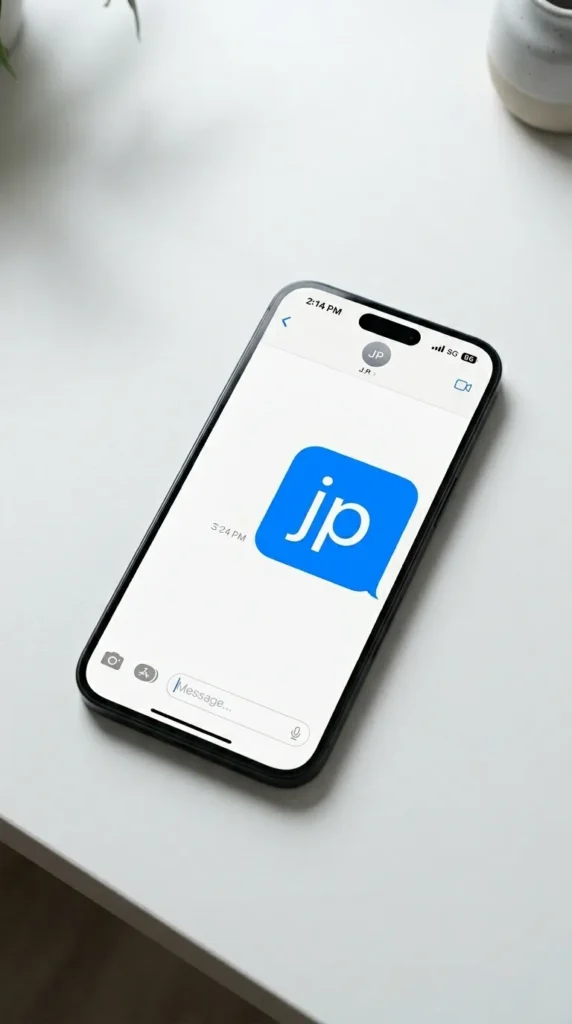
JP means “Just Playing” — a casual way to say you were joking or didn’t mean what you just said.
Each letter breaks down simply: J = Just, P = Playing. It signals that whatever came before it was said in jest, not as a genuine statement or attack.
The tone is almost always light and playful. It’s not aggressive, and it’s not passive-aggressive either — it’s basically the digital equivalent of grinning after a tease. That said, context always matters. If someone says something genuinely harsh and drops a “jp” at the end, it can come across as backpedaling rather than actual humor.
JP works in casual text conversations, DMs, and group chats. It’s not a term you’d ever see in a work email or school assignment — it lives entirely in the informal lane.
What Does JP Mean in Texting?
When you see JP in a text message, it almost always means the sender is softening or retracting something they said. It’s like a safety valve — the person made a bold or teasing statement, and now they’re letting you know it was all in good fun.
You’ll see it on iMessage, WhatsApp, Snapchat, Instagram DMs, and pretty much any messaging platform where casual conversation happens. It’s usually typed in lowercase (“jp”) rather than uppercase, though both versions show up regularly.
Here are four realistic text conversation examples:
Example 1 — Friendly Teasing
Alex: You looked SO tired in that photo lol Jamie: jp jp, you actually looked great though 😂 Alex: I was about to say…
Example 2 — Fake Threat
Alex: Tell me you didn’t eat my leftovers Jamie: I ate every single one of them jp 💀 Alex: You scared me for a second omg
Example 3 — Bold Claim
Alex: I’m literally your least favorite person huh Jamie: 100% jp you’re probably top 3 Alex: okay that’s more like it lol
Example 4 — Sarcastic Dig
Alex: Wow you’re SO punctual Jamie: haha jp, I know I’m late, on my way now Alex: hurry up!!
Common variations you’ll spot: jp lol, jp jp, jp 😂, and sometimes JP!! with extra punctuation for emphasis.
See Also: What Does WDYM Mean in Text? Full Slang Guide (2026)
What Does JP Mean From a Girl?
When a girl texts you JP, she’s almost always keeping things light and friendly. Girls tend to use JP as a way to soften a tease or a blunt comment — it’s a way of saying “don’t take me too seriously.”
Scenario 1: She says something like “You’re literally the worst at texting jp 😂” — she’s teasing you but wants to make sure you don’t actually feel bad. The JP is her way of keeping the vibe chill.
Scenario 2: She texts “I don’t even like you like that… jp 🙃” — this one gets a little more interesting. She may be using it to test reactions while hiding behind humor. That’s a classic playful-flirty move.
Overall, from a girl, JP signals comfort and playfulness. If she’s using it with you, she’s probably relaxed around you and not afraid to joke around.
What Does JP Mean From a Guy?
From a guy, JP usually follows a joke, a trash talk moment, or a sarcastic comment. Guys tend to use it in more of a “gotcha” or lighthearted ribbing context — think friends messing with each other.
Scenario 1: He texts “You’re benched for the fantasy team this week jp bro” — it’s playful competition energy. No hard feelings, just jokes.
Scenario 2: He texts “I’m never talking to you again jp, anyway what are you doing tonight?” — here, JP is used almost mid-sentence to immediately walk back the dramatics. It’s a quick tonal reset.
Guys are often less emotionally expressive in texts, so JP does a lot of heavy lifting — it signals humor without requiring much vulnerability or explanation. It’s simple, effective, and keeps things casual.
What Does JP Mean on Snapchat, Instagram, and TikTok?
On Snapchat, Instagram, TikTok, and other social media platforms, JP usually means “Just Playing.” People add it after a joke, sarcastic comment, playful insult, or exaggerated statement to show that they are not being serious.
For example, someone might message, “Your dancing was terrible, JP 😂.” In this sentence, JP softens the comment and lets the other person know it was only playful teasing. It works in a similar way to “JK,” which means “Just Kidding.”
The meaning of JP can still depend on the conversation. In gaming, travel, or international discussions, JP may refer to Japan. It could also represent someone’s initials. Therefore, readers should check the surrounding message, topic, emojis, and tone before deciding what JP means.
Examples of JP on Social Media
- “You are never beating me at this game, JP!”
- “I unfollowed you yesterday… JP 😂”
- “That outfit looks strange—JP, it actually looks great.”
- “We are traveling to JP next year.”
In the first three examples, JP means “Just Playing.” In the final example, JP most likely refers to Japan because the sentence discusses travel.
How to Use JP Correctly
JP is a pretty low-stakes piece of slang, but you can still use it wrong. Here’s when it works and when it doesn’t.
✅ 3 situations where JP fits perfectly:
- After teasing a friend — “You need like three more hours of sleep jp 😂” — totally fine between close friends who already joke around.
- When you said something bold and want to soften it — “That was the worst movie I’ve ever seen jp, it was kinda okay.”
- In a flirty text exchange — using JP to take the edge off a bold compliment or a playful dig keeps things fun without being too intense.
❌ 2 situations where you should NOT use JP:
- After something actually offensive — if your “joke” crossed a line, dropping a JP at the end doesn’t erase the damage. It can come across as dismissive or immature.
- In formal conversations — work Slack, school group chats with teachers, emails to professors. JP has zero place in professional settings. Keep it in your personal chats.
JP is most common on Snapchat, Instagram DMs, and text messaging between friends. You’ll also spot it in gaming chats and Discord servers where casual trash talk is the norm.
See Also: What Does FS Mean in Text? Full Slang Guide (2026)
How to Reply When Someone Texts JP
Someone just hit you with a “jp” — here’s exactly how you can respond depending on the vibe you’re going for:
- Casual / chill reply — “Lol okay good, had me for a sec 😂”
- Funny reply — “Sure jp, I see you 👀”
- Confused / ask-for-clarity reply — “Wait were you actually serious or nah?”
- Agreement reply — “Haha I knew you were jp, still funny tho”
- Short / one-word reply — “lmaoo” or “👀” or “facts”
- Emoji-only reply — 😂 or 💀 or 🙄 (depending on how the joke landed)
The key is matching energy. If they were clearly being playful, keep it light. If you’re not sure they were actually joking, it’s okay to ask — “wait were you fr or jp?” is a completely valid follow-up.
JP vs Similar Slang
| Slang | Full Form | Meaning | Tone | When to Use |
|---|---|---|---|---|
| JP | Just Playing | I was joking | Playful, light | After a tease or sarcastic comment |
| JK | Just Kidding | I was kidding | Similar to JP, slightly more universal | Same contexts; more widely recognized |
| LOL | Laughing Out Loud | This is funny | Positive, casual | To express amusement |
| FR | For Real | Seriously, no joke | Sincere, direct | When emphasizing you mean something |
The biggest difference between JP and JK? They’re almost identical in function, but JK is more widely recognized across all age groups. JP is a bit more niche — younger texters and Gen Z users tend to prefer JP in some circles, while JK remains the default for most people. If you’re texting someone older or less plugged into internet slang, JK is the safer bet.
See Also: What Does STTM Mean in Text? Full Slang Guide (2026)
Origin & History of JP
JP has been floating around texting and online chat culture since the early 2000s — right around the same era that gave us “lol,” “brb,” and “jk.” It emerged from AOL Instant Messenger (AIM) and early SMS culture, when people were first figuring out how to convey tone and humor through a screen with no facial expressions or vocal cues.
The phrase “just playing” itself has roots in African American Vernacular English (AAVE) and Black American cultural expression, where saying “I’m just playing” after a joke or tease has long been a common verbal habit. The abbreviation JP took that spoken phrase and compressed it for the texting era.
It spread steadily through texting and social media throughout the 2010s. Snapchat and Instagram DMs helped it gain a second wind with younger audiences, particularly Gen Z users who picked up older slang and kept it alive.
As of 2026, JP is still in active use — not trending wildly, but not fading out either. It’s the kind of slang that’s comfortably settled into everyday digital vocabulary. You’ll still see it daily in casual text conversations, especially among people in their teens through late 20s.
Frequently Asked Questions
What does JP mean in a text from a girl?
When a girl texts JP, she’s letting you know she was joking or being playful. It usually signals she’s comfortable around you and using humor to lighten a statement she just made. It’s rarely negative — it’s almost always friendly or flirty.
What does JP mean in a text from a guy?
From a guy, JP typically follows a joke, sarcastic comment, or trash talk moment. He’s using it to make sure you know he wasn’t being serious. It’s a classic guy move to say something bold and then add JP so things don’t get weird.
Is JP rude or offensive?
JP itself isn’t rude or offensive. It’s a neutral-to-positive slang term. The issue is if someone uses a genuinely hurtful comment and then hides behind JP to avoid accountability. The slang isn’t the problem — the intent behind the original message is what matters.
Can I use JP at work or school?
No, JP is not appropriate for professional or academic settings. It belongs in casual, personal conversations. If you use it in a work email or a school group chat with teachers, it’ll come across as unprofessional.
What is the full form of JP?
JP stands for “Just Playing.” It’s a shorthand way of saying you were joking or didn’t mean something seriously.
Is JP still used in 2026?
Yes, JP is still actively used in 2026. It’s not the newest slang on the block, but it’s comfortably embedded in everyday texting culture. You’ll regularly see it in casual conversations, DMs, and group chats — especially among younger users.
Conclusion
JP means “Just Playing” — a simple, casual way to signal that you were joking or didn’t mean something you said in a text. Whether it’s diffusing a bold tease, softening a sarcastic comment, or keeping the vibe light in a flirty conversation, JP is a useful tool in your texting vocabulary. Now that you know what JP means and when to use it, you can text with a little more confidence. Bookmark this page — next time you see confusing slang, we’ve got you covered.


![ATP Meaning in Text — What It Really Means [2026]](https://meaningdict.com/wp-content/uploads/2026/05/ATP-Meaning-in-Text-—-What-It-Really-Means-768x429.jpeg)


6 Comments