

22 Staircase Storage Ideas to Turn Dead Space Into Smart Storage in 2026
Staircase storage ideas can turn the most wasted space in your home into its hardest-working corner. That awkward triangle under the stairs usually collects dust, old boxes, and things nobody can find again, yet it is often the largest unused area in the house. With the right drawers, shelves, cupboards, or nooks, it can hold shoes, coats, books, wine, or even a whole home office. Below are 22 practical staircase storage ideas for every home and budget, so save your favourites and start planning your own under-stair transformation.
Under-Stair Cupboards and Shelving
1. Pull-Out Drawers Under the Stairs
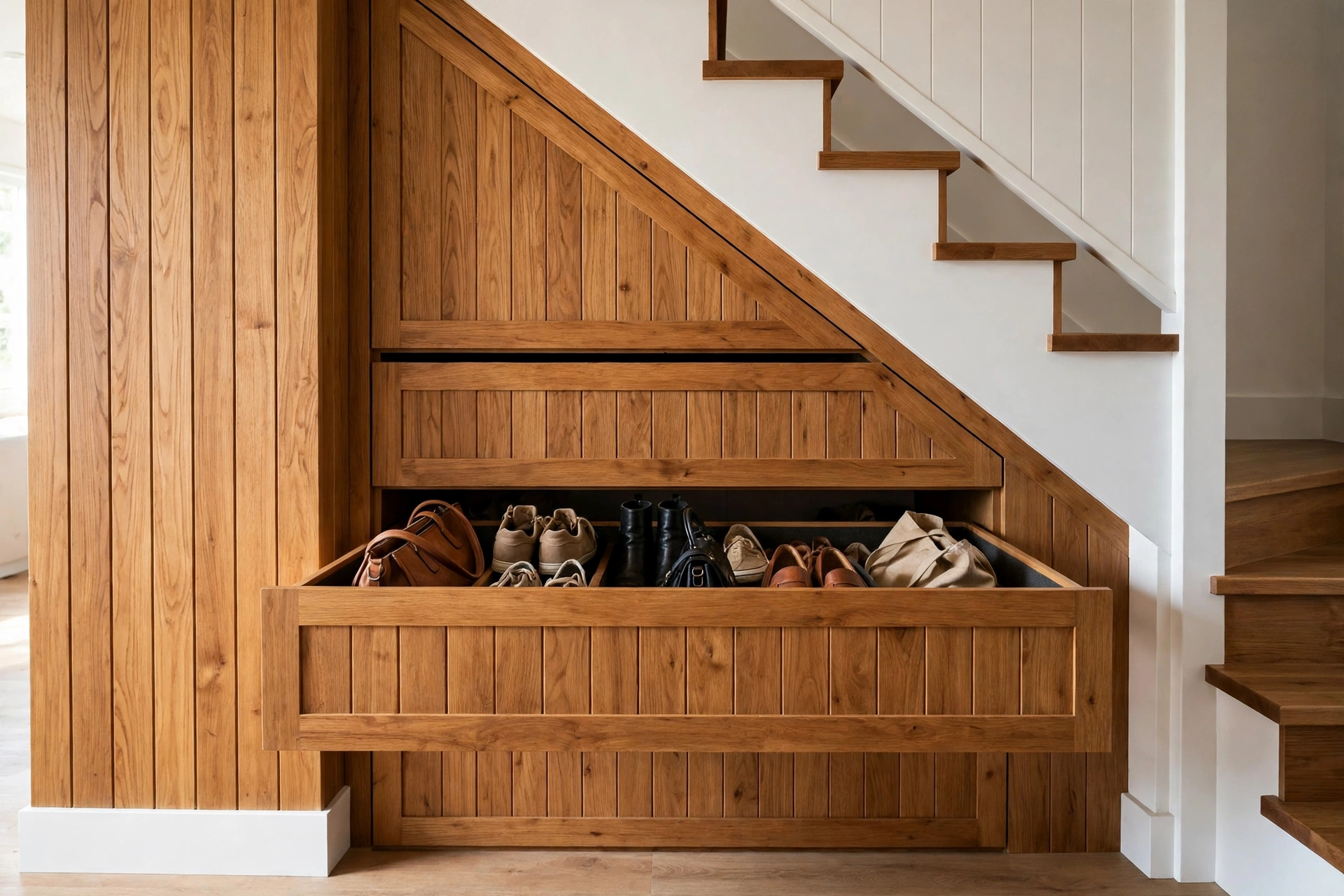
Deep pull-out drawers fitted under the stairs turn dead space into storage you can actually reach. Unlike a dark cupboard where things vanish at the back, a drawer glides fully out so you can see everything inside at a glance. Use shallow drawers near the low end for shoes and accessories, and deeper ones near the tall end for bags, board games, or cleaning supplies. Tip: fit soft-close runners so heavy drawers shut quietly, and label the fronts if several family members share the space.
For a typical straight staircase, budget for drawers about 60 centimetres deep at the tall end, narrowing to 30 centimetres near the lowest step, and use full-extension runners rated for at least 25 kilograms so loaded drawers still glide smoothly. A joiner can usually build a run of three or four drawers in a day or two, while a confident DIYer should allow a full weekend. The common mistake is forgetting skirting boards and pipework, so measure the clear internal depth before ordering any drawer boxes.
A practical variation is to mix one deep drawer for bulky items with two shallow drawers above it for keys, torches, and small tools, keeping daily items at hand height. Paint drawer fronts the same colour as the surrounding woodwork so the run reads as fitted furniture rather than a row of boxes, and add small recessed pulls if the hallway is narrow, since protruding handles catch bags and coats.
2. Under-Stair Open Shelving Nook
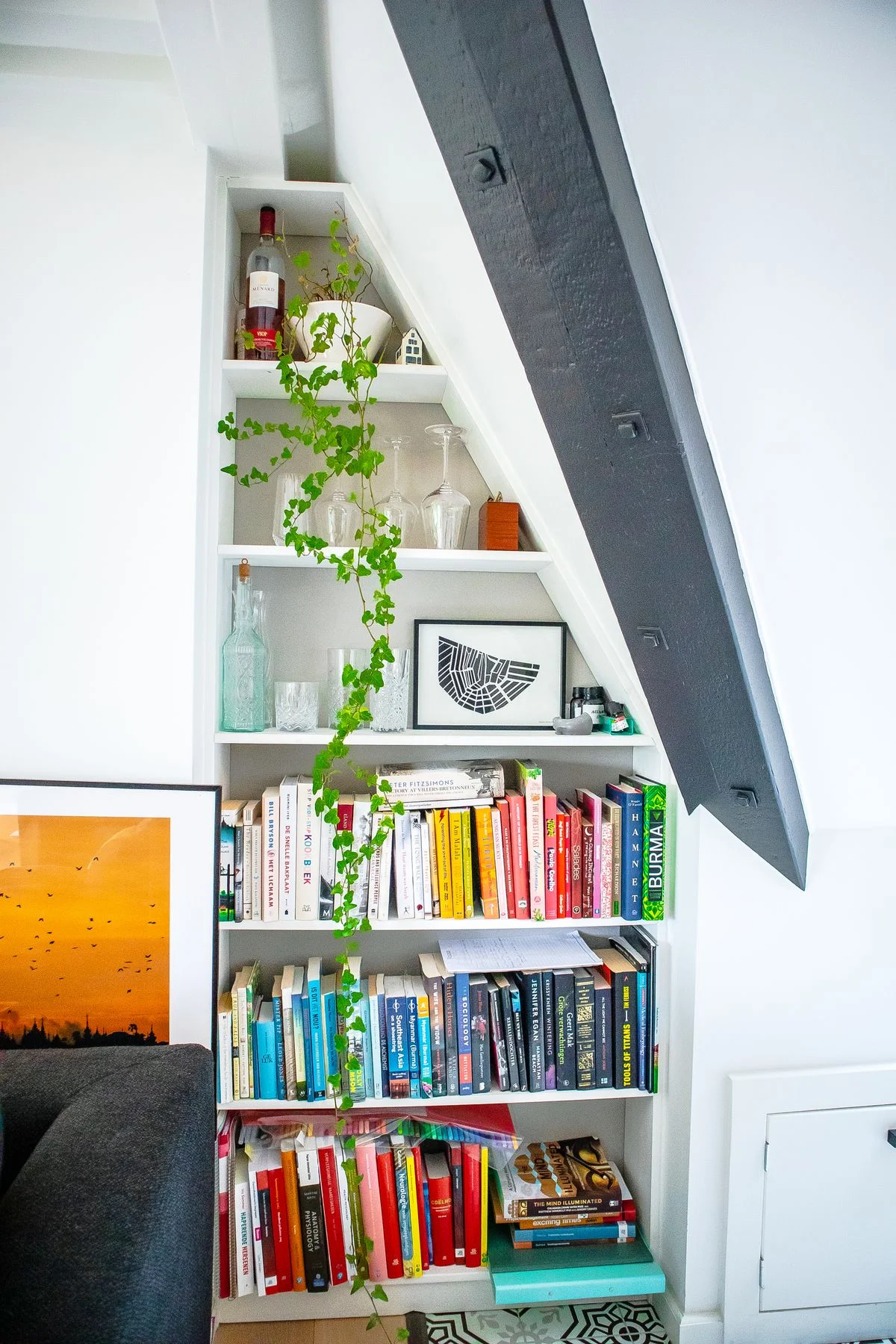
Open shelving under the stairs is a simple, affordable way to use the space without building doors or drawers. Rows of shelves follow the slope of the staircase and hold books, baskets, plants, and decorative boxes in plain sight. It works best in living rooms and hallways where you want storage that also looks good. Tip: mix closed baskets with open displays so everyday clutter stays hidden while your prettiest items earn their place on show.
Use shelves about 25 to 30 centimetres deep so books sit flush without wasting space, and space them 30 to 35 centimetres apart for standard paperbacks, with one taller gap for large art books or storage boxes. Sturdy brackets or a simple plywood carcass will carry far more weight than floating boards alone, which matters once books pile up. Leave the lowest shelf slightly higher than the skirting board to make cleaning underneath easy.
3. Under-Stair Closed Cupboard
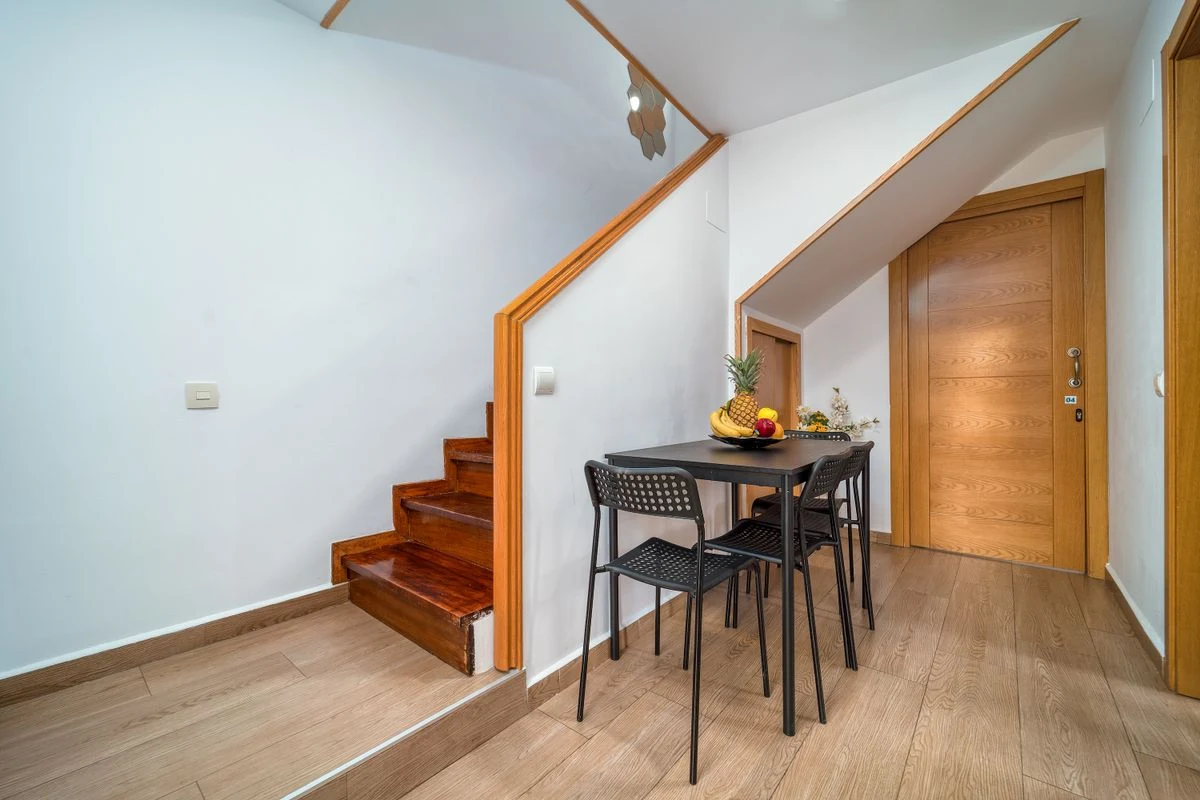
A closed cupboard under the stairs is the classic fix for hallway clutter, hiding everything from vacuum cleaners to winter coats behind neat, matching doors. Because the doors follow the angle of the stairs, the cupboard looks built in rather than improvised, and it keeps dust and visual noise out of the room. Tip: add an interior light and a couple of hooks on the inside of the doors for bags and umbrellas, so even the door space works hard.
Inside a closed cupboard, fit one adjustable shelf high up for rarely used items and leave the floor clear for a vacuum cleaner or a tall mop bucket, with a small shelf near the door for shoe polish and spare bulbs. If the cupboard is deeper than 80 centimetres, add a pull-out tray or a hanging rail near the front, otherwise the back third quickly becomes a forgotten dumping ground that nobody wants to reach into.
4. Under-Stair Wine Storage
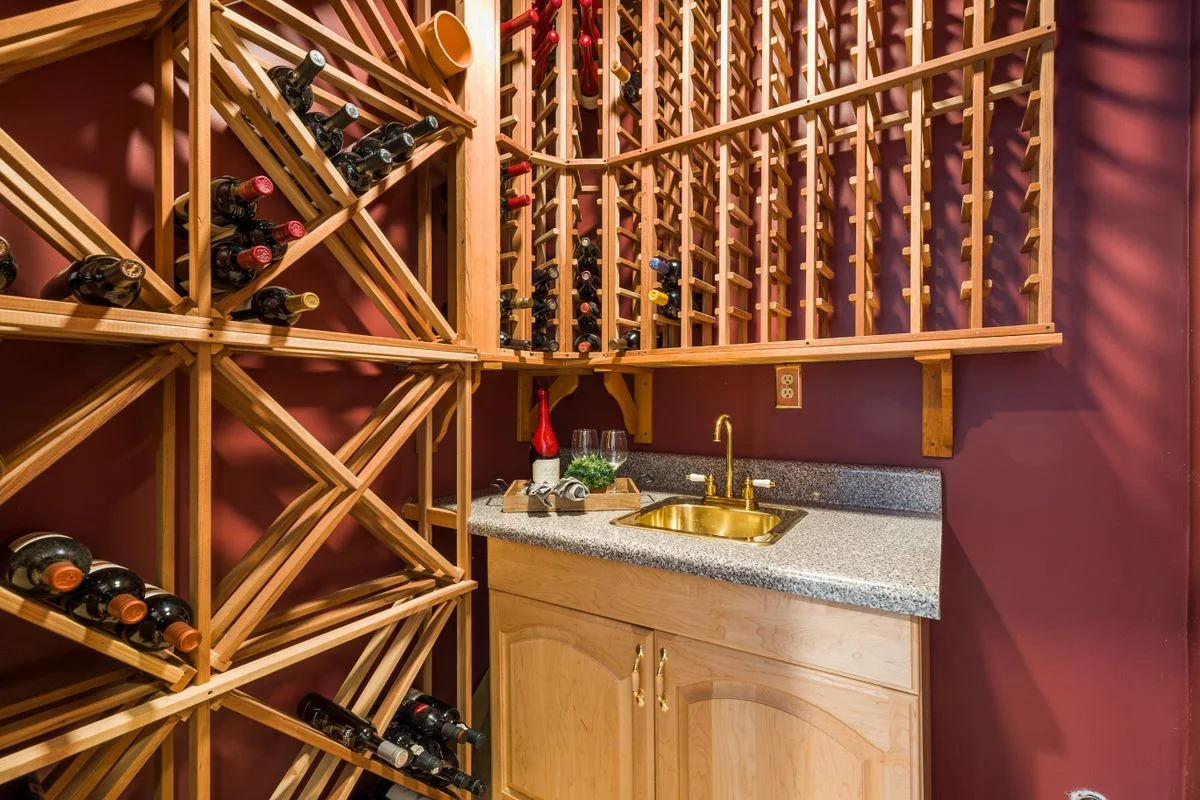
The cool, dark space under the stairs is naturally suited to wine storage, making it a favourite for collectors with limited room. Diamond cubbies, horizontal racks, or a small glass-fronted wine wall keep bottles stored on their sides at a steady temperature, away from direct sunlight. It also turns a forgotten corner into a talking point for guests. Tip: skip this spot if your stairs sit beside a radiator or a sunny window, since heat and light are the enemies of good wine.
A simple under-stair wine store needs a steady temperature roughly between 12 and 18 degrees Celsius, so check the spot through summer before investing in racking. Diamond cubbies hold about 12 bottles per square section, while horizontal rails suit mixed collections better because odd-sized bottles still slide in easily. Keep a small thermometer inside for the first month, and move the collection if readings swing widely between day and night.
5. Under-Stair Shoe Storage Cubbies
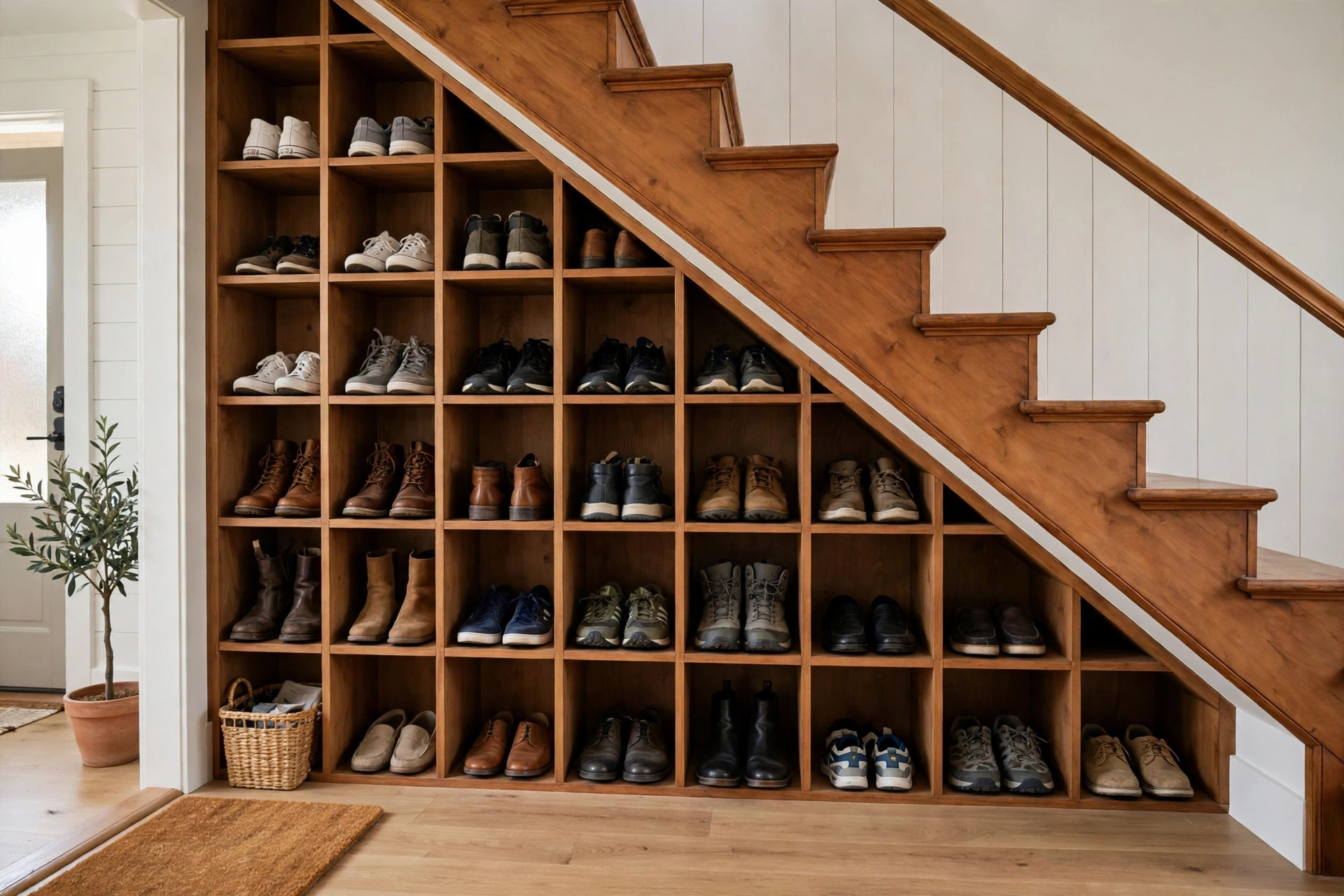
Shoe cubbies under the stairs solve the daily pile-up by the front door, giving every pair its own labelled slot. Low cubbies fit under the shallow end of the staircase, while taller boots can stand in the deeper section near the top of the slope. The result is a hallway that stays clear, even with a busy family coming and going. Tip: add a slatted or ventilated base so damp shoes dry out, and keep a small bench nearby for sitting down to change shoes.
Plan about 30 centimetres of width per adult pair and 20 centimetres per child’s pair, with shelf heights of 15 centimetres for flat shoes and 35 centimetres or more for boots. A drip tray or a washable mat under the lowest row protects the floor from wet winter shoes, and a small boot tray by the door catches the worst mud before it reaches the cubbies at all.
6. Under-Stair Reading Nook With Storage Bench
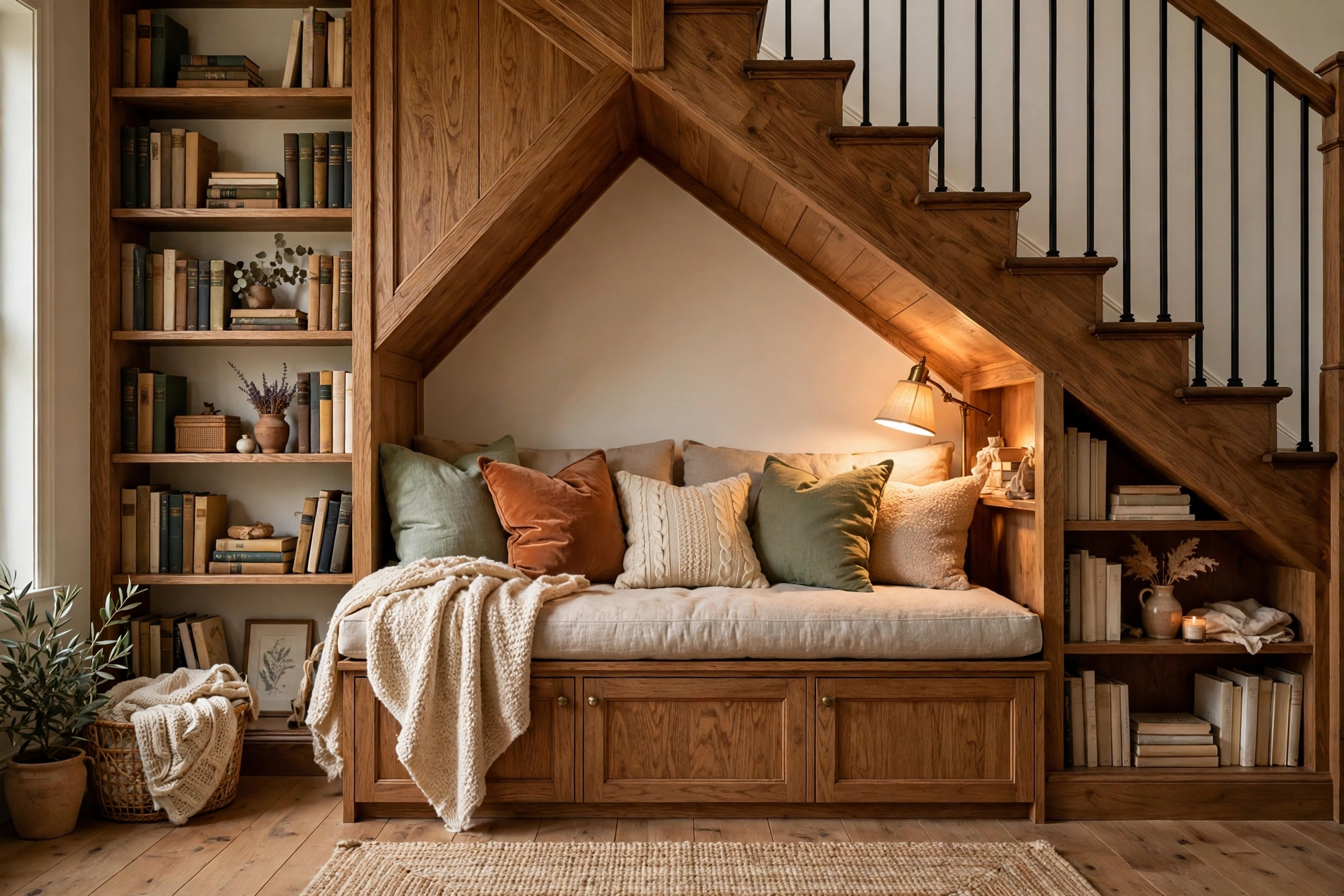
A reading nook under the stairs combines comfort with clever storage, tucking a cushioned bench, bookshelves, and a reading light into one cosy corner. The bench seat lifts to reveal storage for blankets, magazines, or children’s books, while shelves on either side keep favourites within arm’s reach. It is a lovely use of space in family homes where a quiet corner is rare. Tip: choose washable cushion covers and a warm, dimmable light so the nook stays inviting for both kids and adults.
For comfort, allow a bench depth of about 45 centimetres and a seat height near 45 centimetres, with a cushion at least 8 centimetres thick so the bench works for longer reads. A clip-on or wall-mounted light at shoulder height avoids glare on the page, and a small shelf within arm’s reach holds a drink without risking spills on the books stored below.
Storage Built Into the Steps Themselves
7. Hinged Stair Treads With Hidden Storage
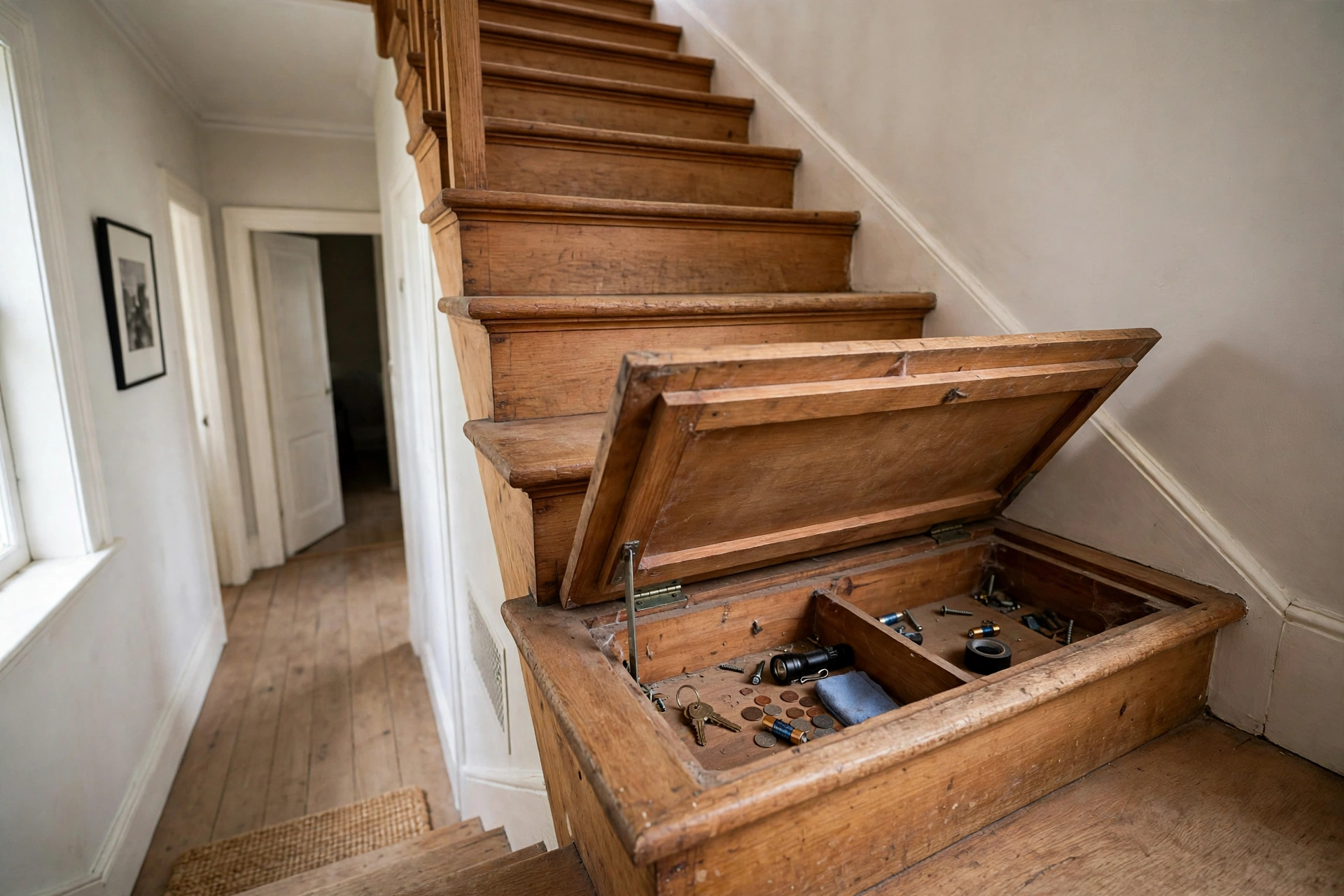
Hinged stair treads hide storage inside the steps themselves, with each tread lifting like a lid to reveal a compartment below. These shallow spaces are perfect for items you use often but rarely want to see, such as dog leads, chargers, small tools, or children’s toys. Because the storage is invisible when the treads are closed, the staircase keeps its clean, normal look. Tip: fit sturdy hinges and a soft-close stay so lids cannot slam on fingers, and keep heavier items in the lower steps.
Hinged treads only suit staircases with solid, well-supported steps, so have a carpenter check the structure before cutting into any tread, and never weaken a stair stringer. Each compartment is usually just 10 to 15 centimetres deep, which is ideal for flat items but useless for anything bulky. Add a finger pull recessed into the tread edge so the lid opens easily without a protruding handle underfoot.
8. Staircase Drawer Steps

Staircase drawer steps take hidden storage a step further, turning every tread into a proper pull-out drawer. Unlike hinged lids, drawers slide fully out, so nothing gets lost at the back of a dark compartment. They are brilliant for small homes, holding shoes, books, craft supplies, or seasonal accessories without needing any extra furniture. Tip: check the tread depth before you plan this, since very narrow steps leave little room for a useful drawer box.
Drawer steps need treads at least 25 centimetres deep to leave room for a usable drawer box once the front and runners are fitted, so measure carefully on narrow or steep stairs. Keep the drawer fronts flush with the risers and use the same tread material for the fronts, otherwise the staircase starts to look patched. Load lighter items up high and heavier ones low, since pulling a heavy drawer from a high step is awkward and tiring.
9. Vertical Pull-Out Cabinets Beside the Stairs
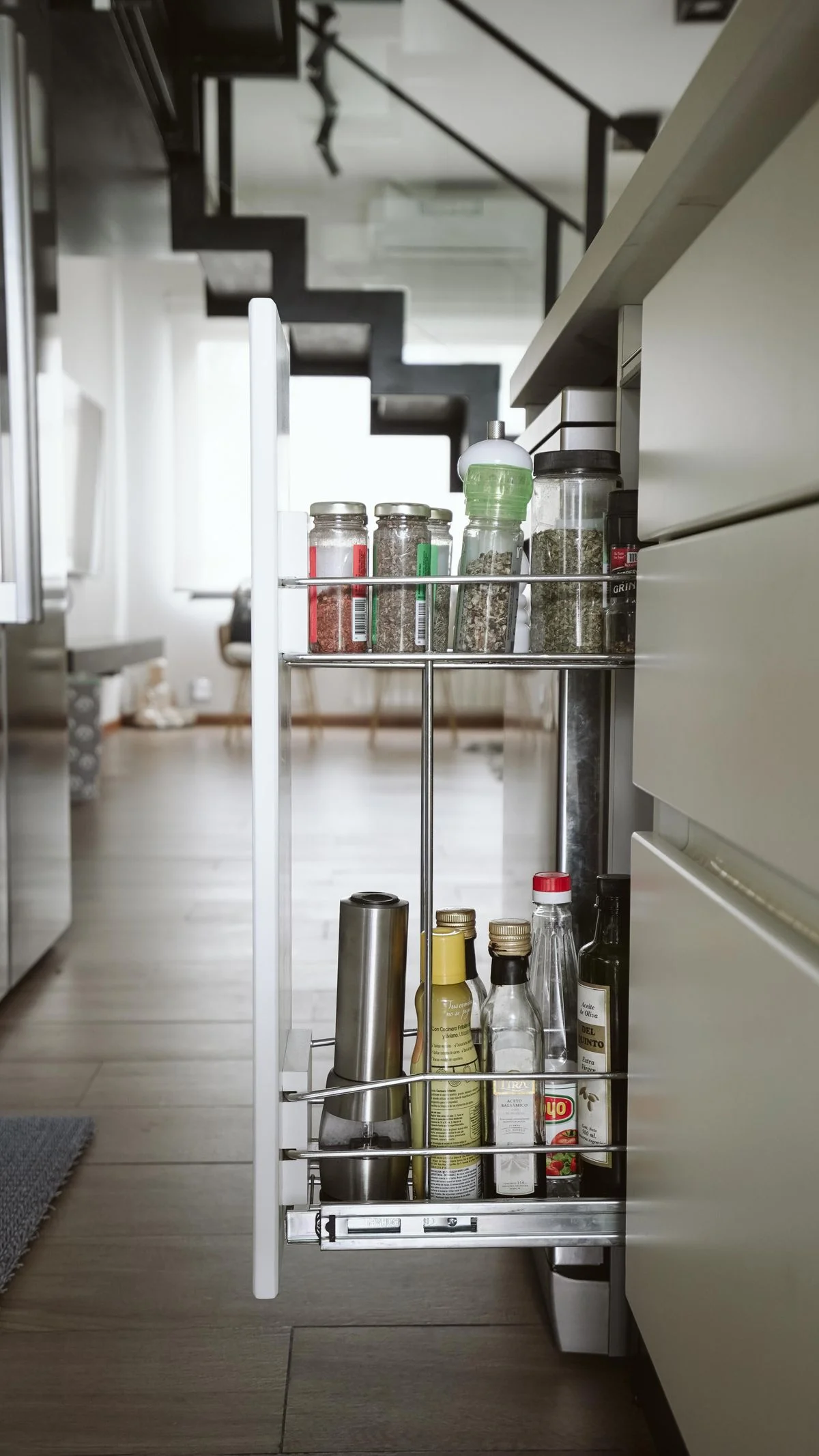
Tall, narrow pull-out cabinets fitted beside the staircase use the awkward vertical space that standard shelving cannot reach. Each unit slides out on runners to reveal shelves for pantry goods, cleaning products, books, or shoes, then pushes back flush with the wall. They are especially useful in galley hallways where swinging doors would block the walkway. Tip: measure your tallest items first, and make one unit taller than the rest for mops, brooms, or wrapping paper rolls.
Vertical pull-outs work best at widths between 15 and 30 centimetres, deep enough for tins, bottles, or shoes lined up in a row. Fit a full-length back panel so nothing topples out sideways, and add a small lip on each shelf for bottles. Because these units are tall and narrow, anchor the carcass firmly to the wall and test it fully loaded before calling the job done.
10. Stair Landing Storage Bench
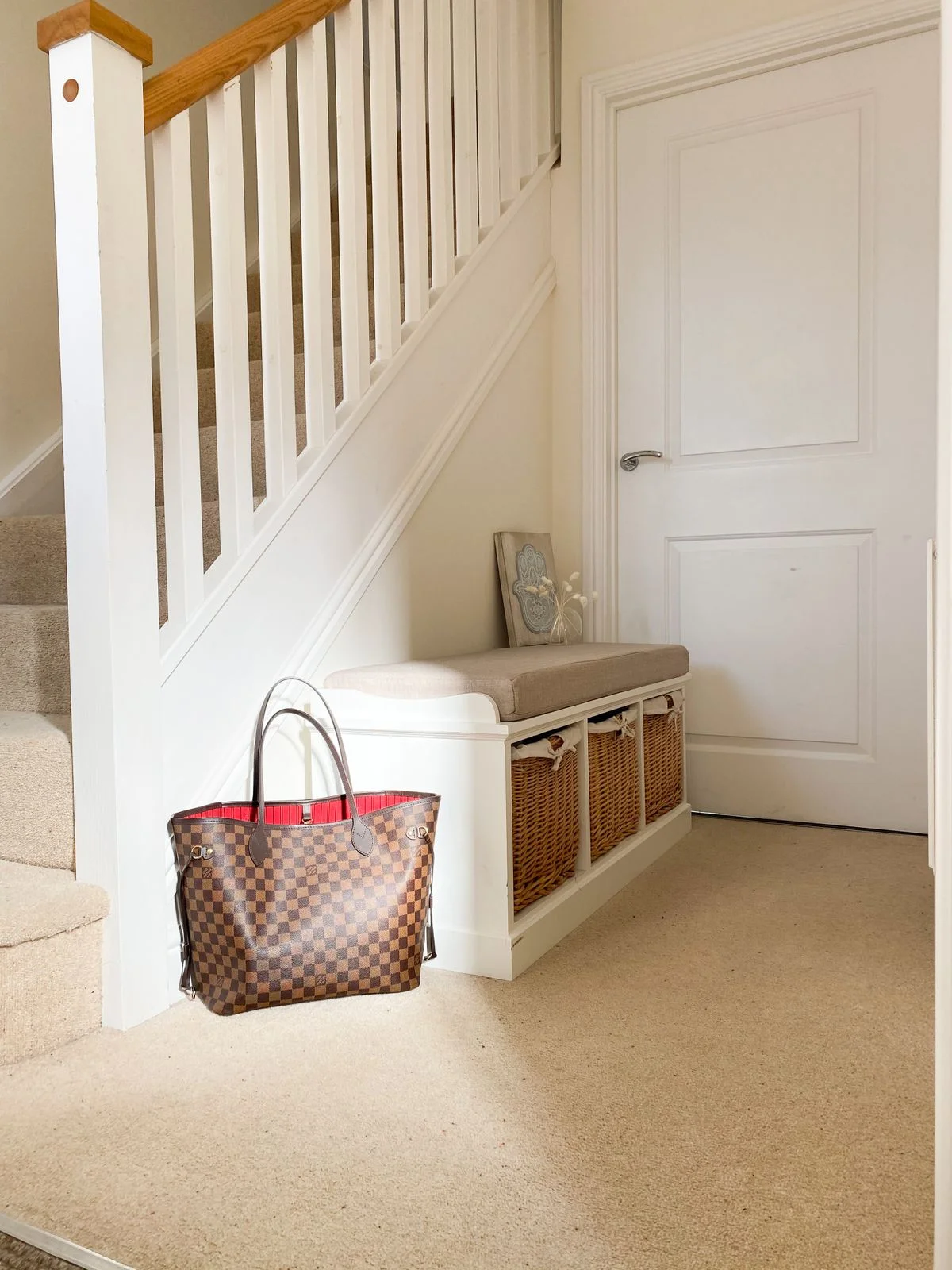
A storage bench on a staircase landing turns a pass-through space into a useful pause point, with a lift-up seat or baskets below for shoes, bags, and outdoor gear. It gives everyone a place to sit while putting shoes on, and it keeps landing clutter corralled instead of scattered across the steps. Tip: choose a bench with a washable top and rounded corners, since landings are high-traffic spots where people brush past in a hurry.
On a landing, keep the bench depth to 40 centimetres or less so the walkway stays clear, and choose a seat height that suits both adults and children, usually around 45 centimetres. Baskets below should slide out easily without lifting, so leave a finger gap above each basket. A non-slip pad under the bench stops it creeping across a hard floor every time someone sits down heavily.
11. Built-In Staircase Bookcase Along the Wall
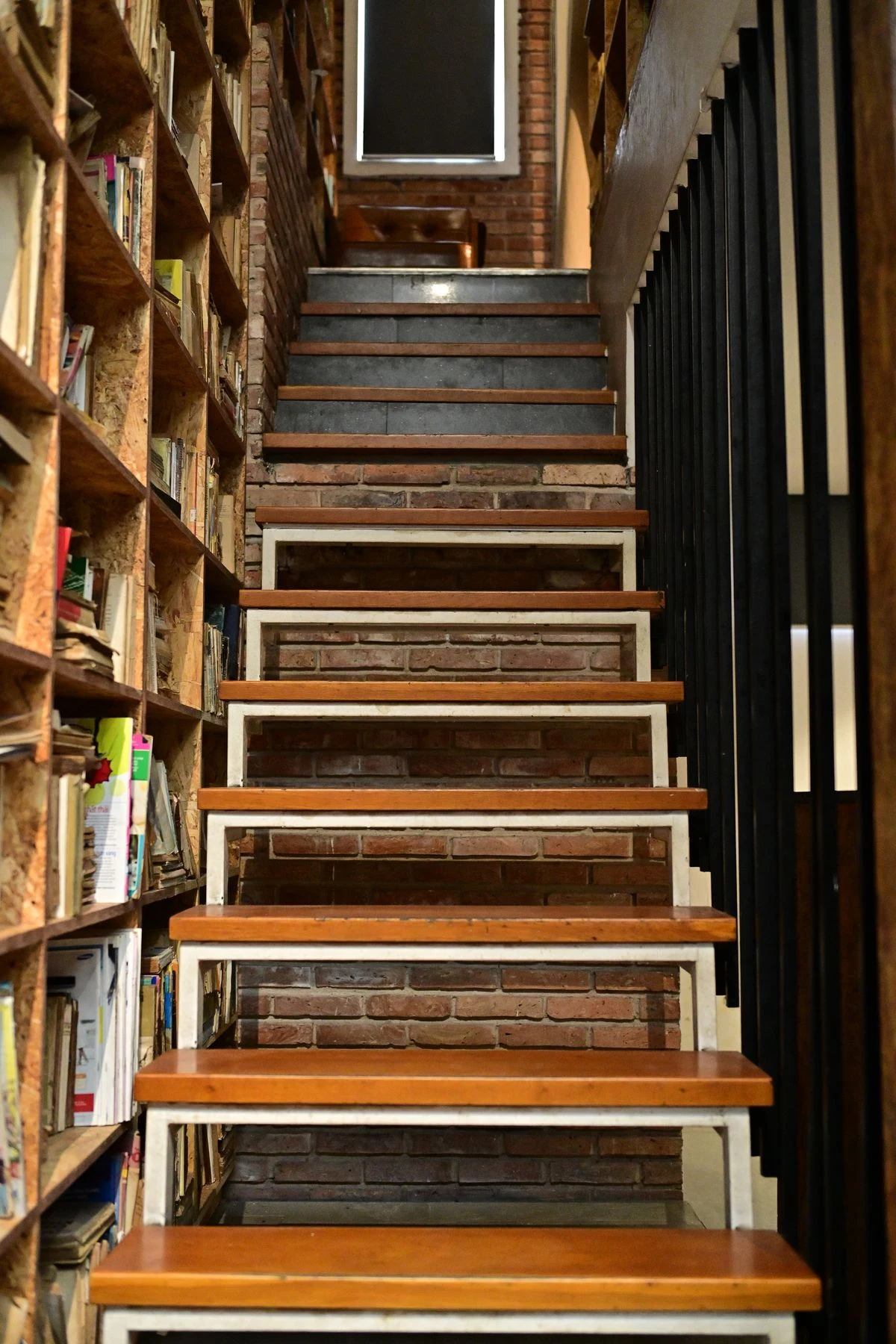
A bookcase built into the wall alongside the staircase follows the rising line of the steps and turns a blank wall into a library. Shelves can be sized for paperbacks, photo albums, or display pieces, and the stepped top edge looks intentional and architectural rather than improvised. It works beautifully in homes without a separate library. Tip: anchor tall shelving firmly to the wall, and leave one shelf empty near the top so the display can breathe instead of looking crammed.
When building along the wall, follow the stair pitch with a stepped top edge and use shelves 20 to 25 centimetres deep, which suits most paperbacks without jutting into the walkway. Anchor every upright into wall studs, not just plasterboard, because a fully loaded bookcase is extremely heavy. Leave the top run for display items only, since reaching books above head height on stairs is unsafe.
12. Stairwell Wall Niche Shelves
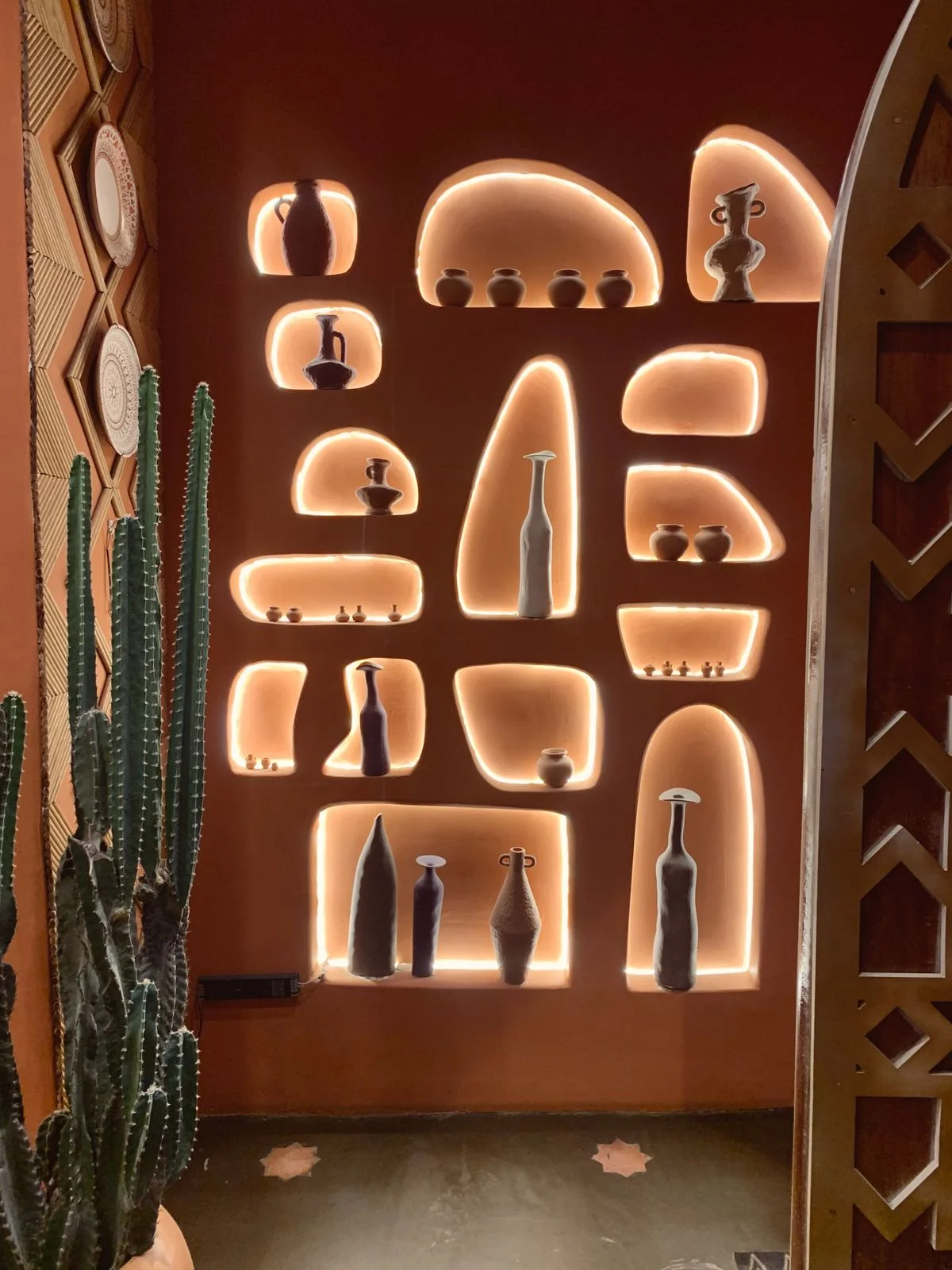
Recessed niche shelves carved into the stairwell wall add storage without stealing a single inch of floor space, which matters on narrow staircases. Small niches hold candles, plants, framed photos, or a few favourite books, and they can be lit with tiny LED strips for a warm glow at night. Tip: keep niches shallow and high enough to avoid knocks from passing shoulders, and use them for display rather than heavy storage.
Niches should be no deeper than about 12 centimetres on a stairwell wall, otherwise they intrude into the passage and collect dust. Line them with the same paint or timber as the wall so they look intentional, and use battery LED pucks if wiring is impractical. Keep the contents light and few, because a crowded niche on a slope reads as clutter rather than a considered display.
Stairwell Walls, Landings, and Entry Storage
13. Floating Shelves Up the Stairwell Wall
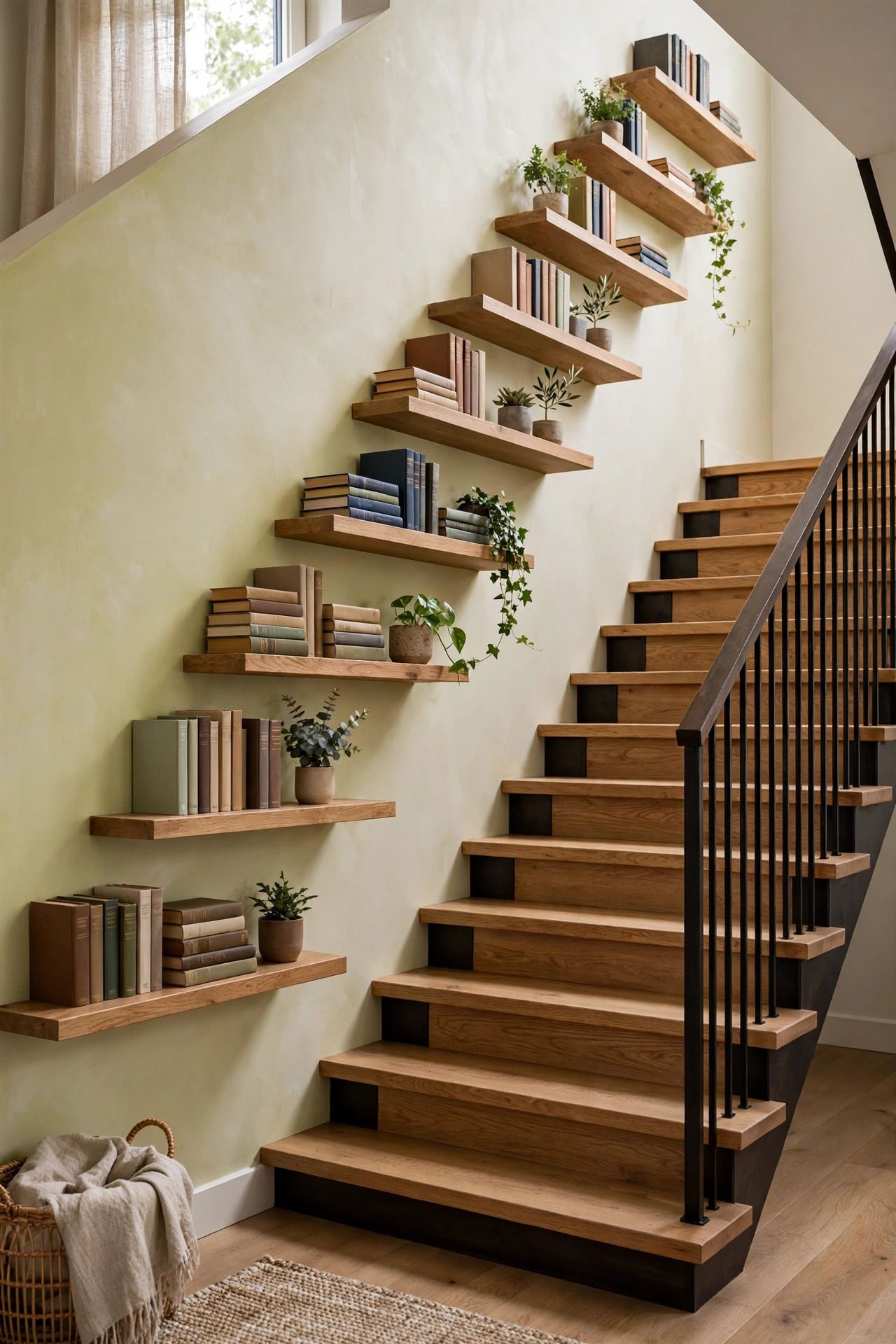
Floating shelves climbing the stairwell wall use vertical space that usually goes completely ignored. Staggered at step height, they hold books, plants, and decorative boxes, and they draw the eye upward, making a narrow stairwell feel taller and more interesting. Because they have no visible brackets, they look clean and modern. Tip: stagger the shelves to match the rise of the steps, and keep heavier items on the lowest shelves where they are easiest and safest to reach.
Floating shelves need solid fixings into studs or masonry, with brackets rated well above the expected load, since books are heavier than they look. Stagger shelves to follow the stair rise, roughly one shelf per two steps, and keep the depth to 20 centimetres so nobody brushes items off while passing. Place trailing plants only on the highest shelves, where drips from watering will not fall on books below.
14. Stairwell Picture Ledge Shelves

Picture ledge shelves on the stairwell wall combine family photos with small-scale storage, giving you a gallery that also holds tiny plants, candles, or keepsakes. The ledge lip keeps frames secure on the slope, and swapping photos is as simple as lifting one out and dropping another in, with no new nail holes. Tip: use two or three long ledges rather than many short ones, so the display reads as one calm line instead of a scattered collection.
Picture ledges about 8 centimetres deep hold most frames securely, and a length of 90 to 120 centimetres per ledge gives a calm, gallery-like run without too many joints. Space ledges at least 45 centimetres apart vertically so tall frames do not overlap the ledge above. Use matching frame colours or a single wood tone to keep the display unified, even when the photos themselves vary widely.
15. Under-Banister Basket Storage
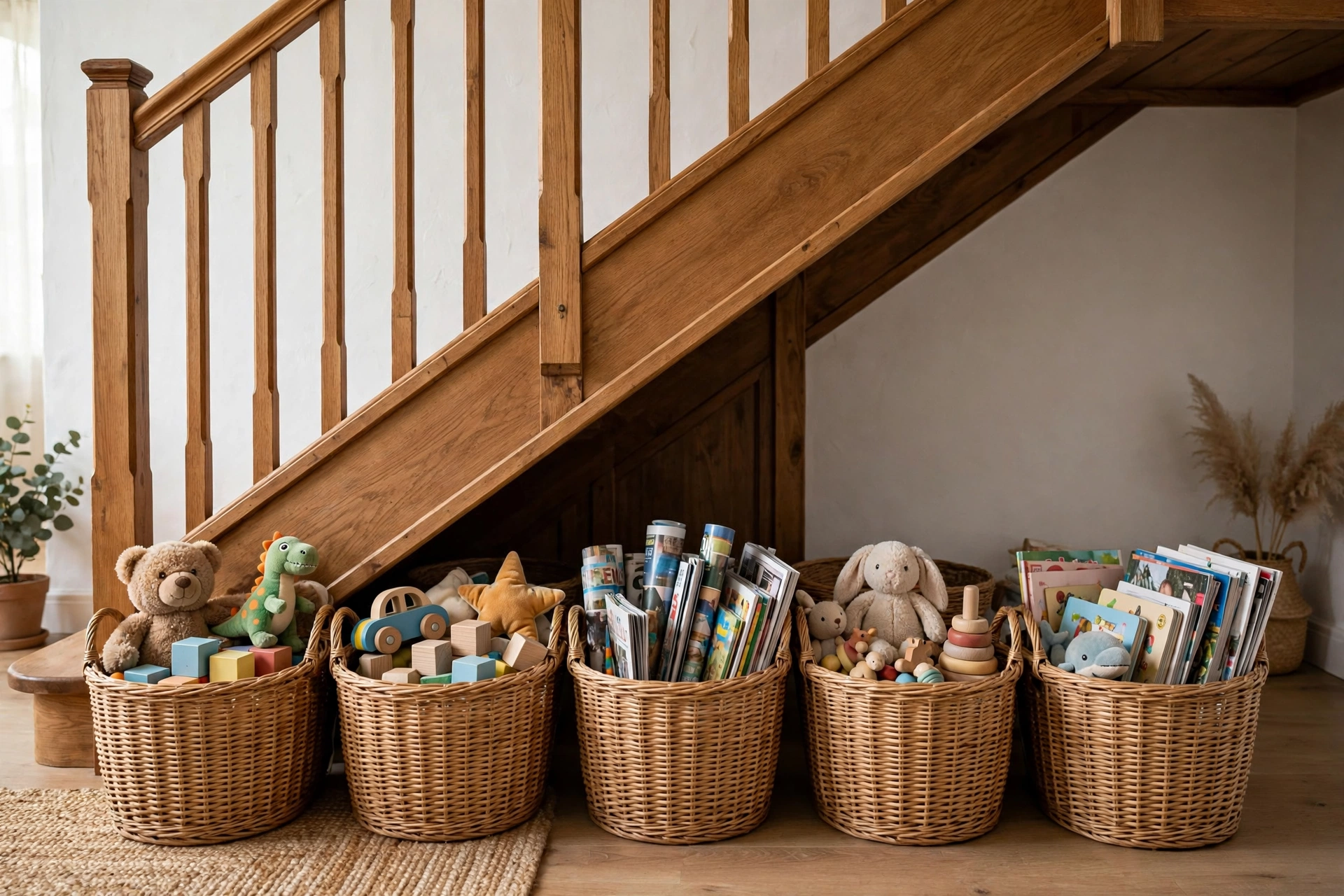
Baskets tucked under the banister or along the low side of the stairs are the quickest, cheapest staircase storage fix, needing no building work at all. Woven or fabric baskets hold toys, magazines, pet supplies, or winter accessories, and they can be carried to the room where they are needed. Tip: choose baskets with handles and labels, and stick to one matching set so the space looks tidy rather than like a jumble of random containers.
Choose baskets no wider than the space under the banister allows, and measure the lowest point first, since baskets bought for the tall end will not fit the shallow end. Natural seagrass suits toys and magazines, while washable cotton or felt liners work better for pet supplies and muddy accessories. Empty and shake out baskets monthly, because dust and crumbs collect quickly in open weave.
16. Coat Hooks and Entry Storage at the Stair Base
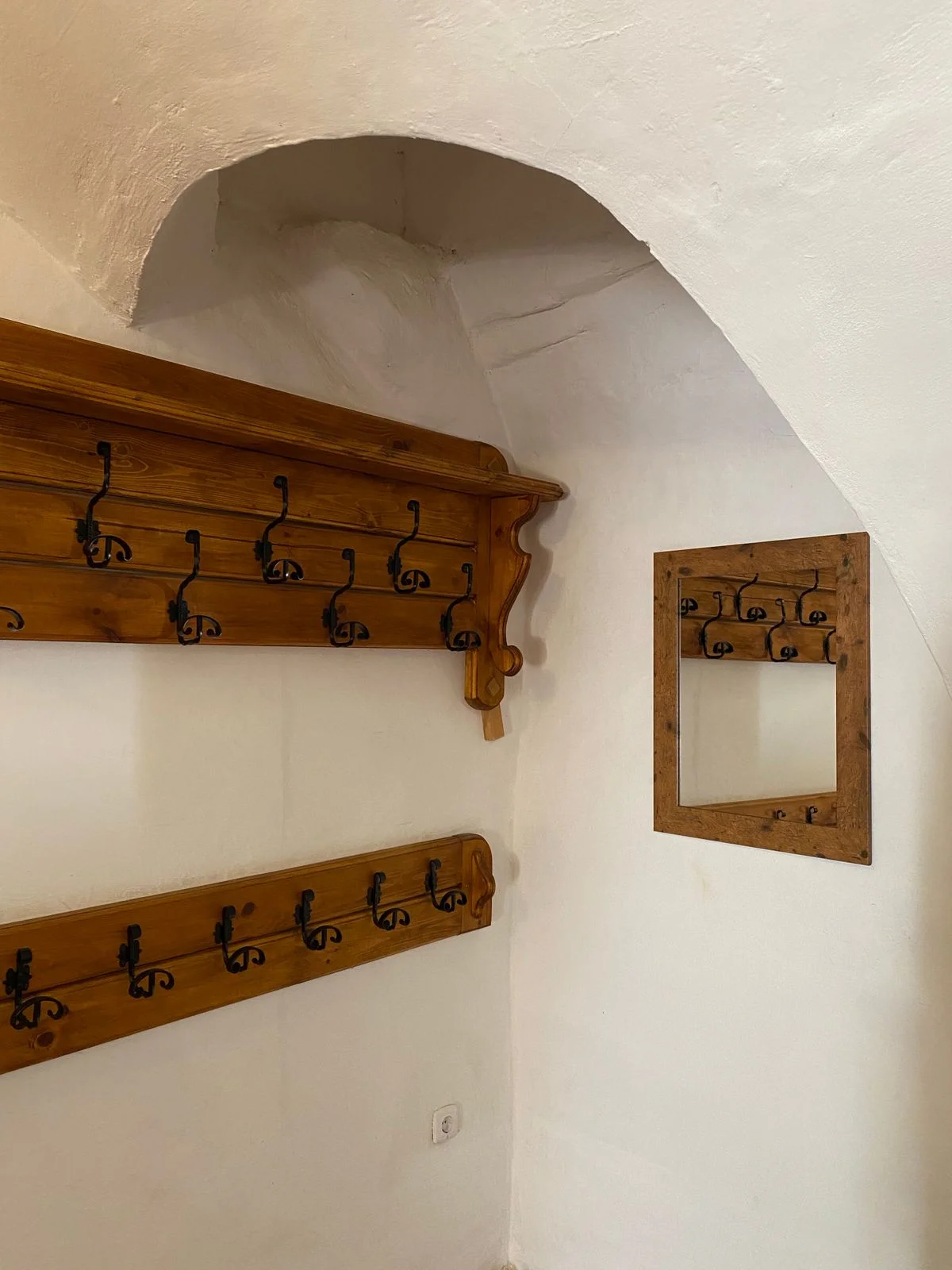
The wall at the base of the stairs is prime entryway real estate, and a row of sturdy hooks with a small shelf above turns it into a coat and bag station. Coats, school bags, and keys all land in one spot instead of draping over banisters and chairs, and the shelf above holds hats, sunglasses, and post. Tip: mount hooks into wall studs so they hold heavy winter coats, and leave one hook free for guests.
Space hooks about 20 centimetres apart so coats hang without bunching, and mount a small shelf 25 centimetres above the highest hook for hats and sunglasses. A narrow tray or a row of small pegs below holds keys and dog leads, keeping the whole going-out routine in one spot. Avoid adhesive hooks for heavy winter coats, since they peel paint and drop everything at the worst moment.
17. Landing Linen Cabinet
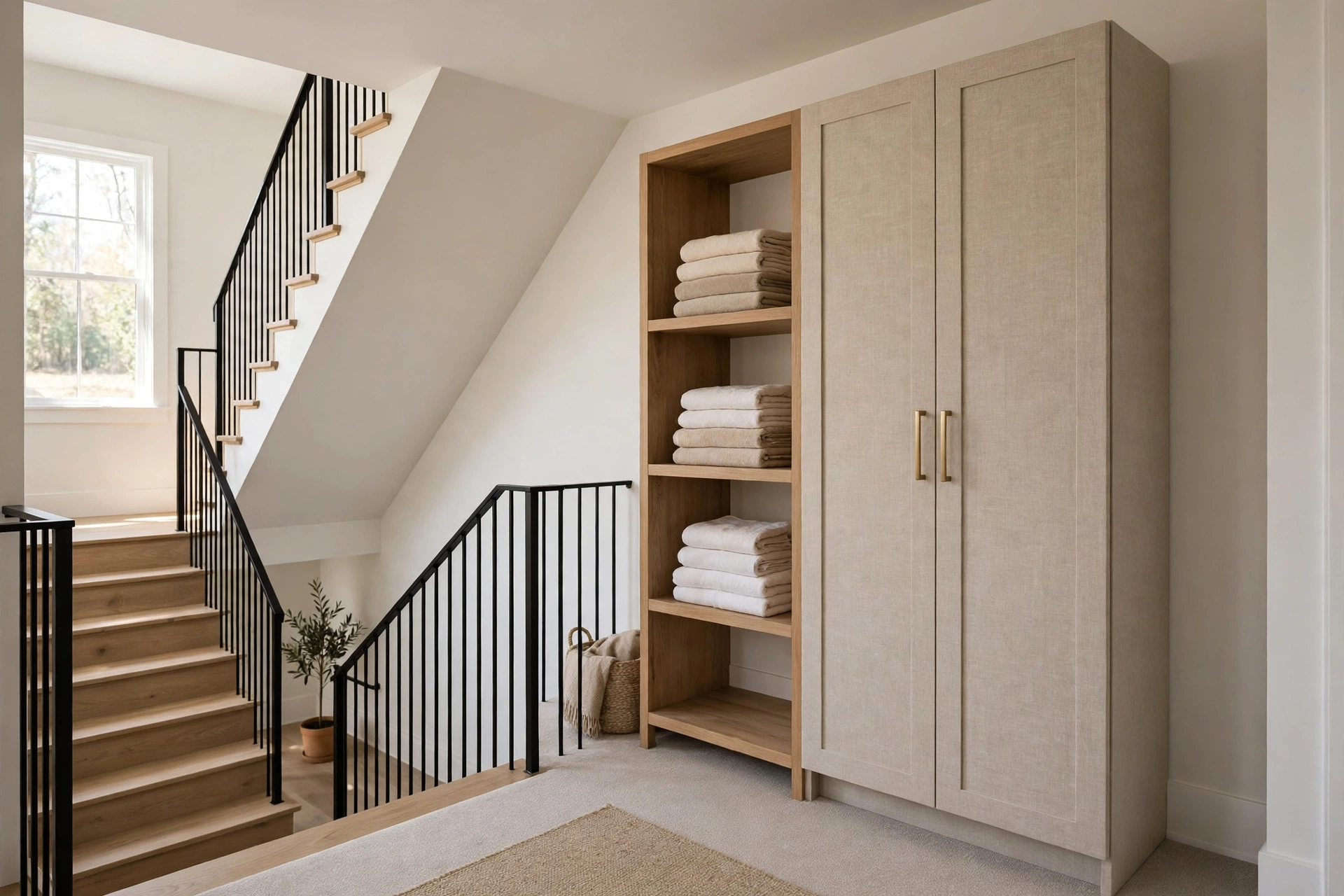
A slim linen cabinet on the landing puts towels, bedding, and toiletries exactly where they are needed, between bedrooms and bathrooms. Landing cabinets work because landings are often wide enough for a shallow unit but too small for full furniture, and a closed cabinet keeps everything dust-free. Tip: pick a cabinet no deeper than the landing allows, and keep everyday towels at arm height with guest bedding stored higher up.
A landing cabinet 30 to 35 centimetres deep usually fits without narrowing the walkway too much, and adjustable shelves inside let you switch between folded towels and taller bedding bundles. Keep a folded towel stack at waist height and spare duvets above, with a small basket on the lowest shelf for cleaning cloths. Add soft-close hinges so late-night trips for towels stay quiet.
18. Staircase Toy Storage Bins
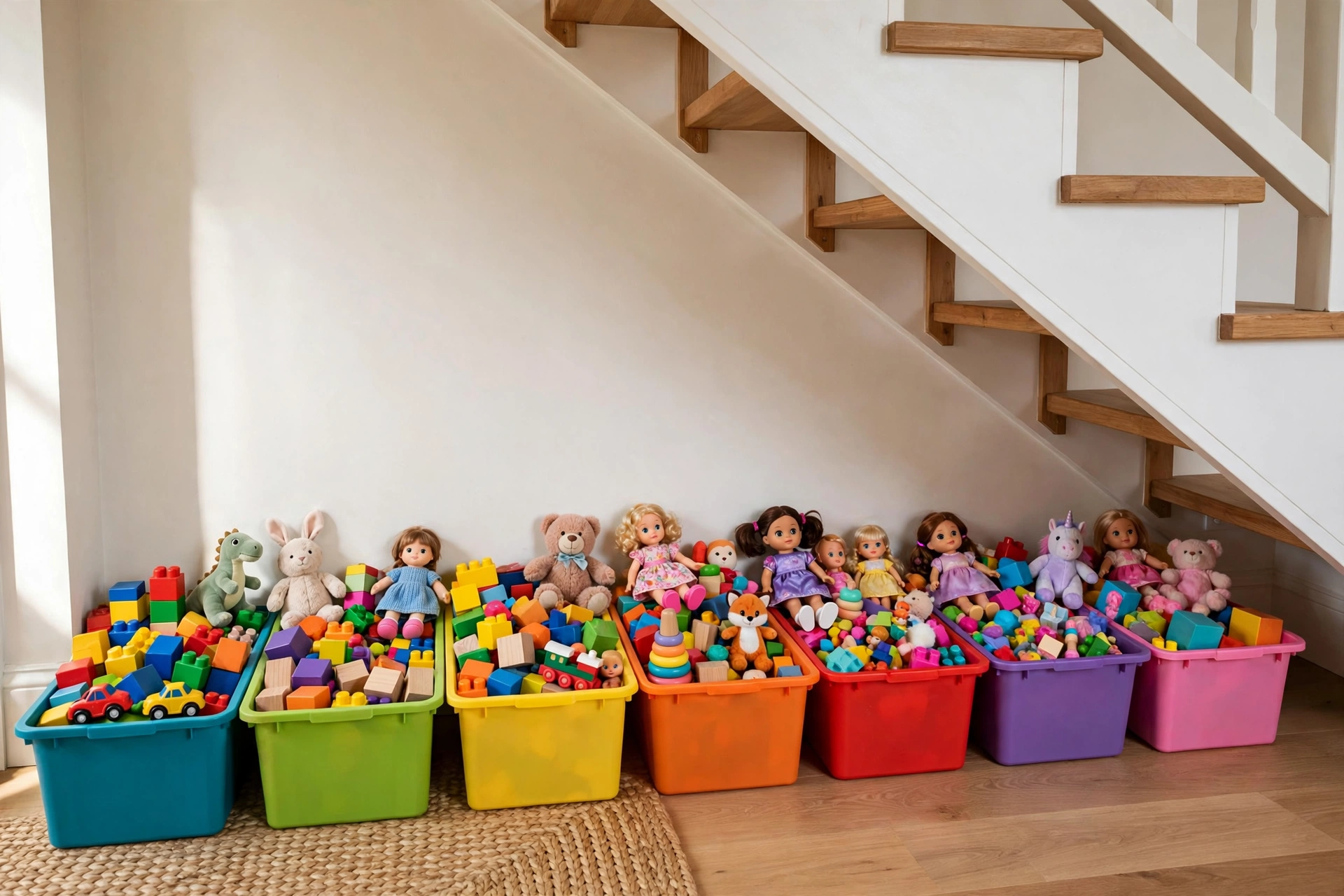
Toy storage bins under the stairs give children a clear, low place to tidy their own toys, with each bin assigned to a category such as blocks, dolls, or cars. Low, open bins are easy for small hands to reach, and a quick tidy means toys disappear from the living room in minutes. Tip: use picture labels instead of words for younger children, and rotate the bins monthly so forgotten toys feel new again.
Use bins about 30 centimetres wide so a child can lift and carry one comfortably, and keep the total height of any stack below waist height for small children. Clear or picture-labelled bins work best, since children tidy by picture long before they read words reliably. Rotate the contents every month or two, and donate outgrown toys during the same tidy so the bins never overflow.
Specialty Under-Stair Rooms and Cupboards
19. Under-Stair Pet Nook
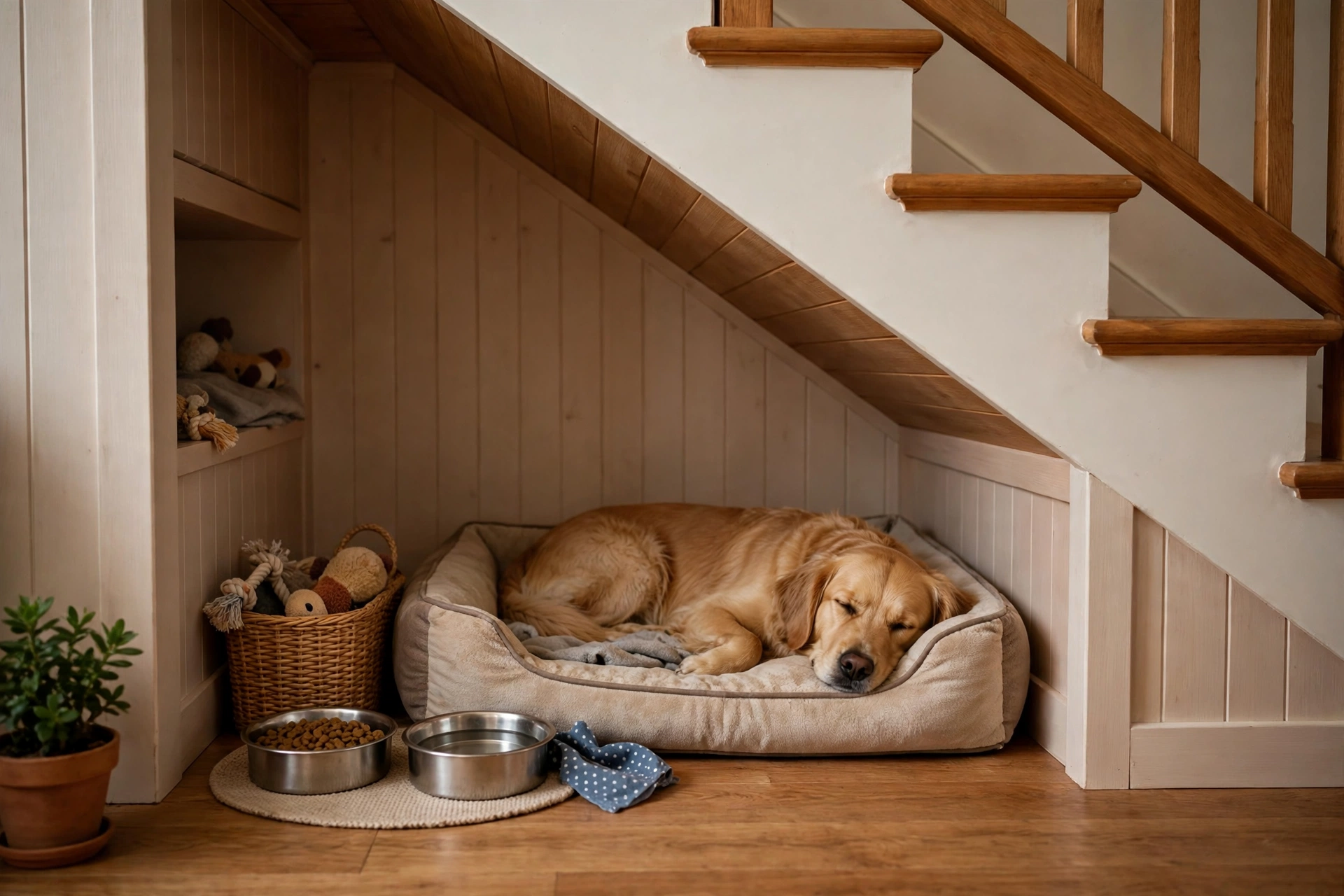
An under-stair pet nook gives dogs or cats their own den, with a bed, food bowls, and toy storage tucked into the space beneath the steps. Pets love the enclosed, den-like feel, and owners love that beds and bowls stop migrating around the house. A small gate or open arch keeps the nook accessible while defining it as the pet’s own territory. Tip: add washable bedding and a wipe-clean floor mat, since pet corners need frequent cleaning.
Size the pet nook to your animal, with enough room to stand, turn, and stretch, plus space for a water bowl that cannot be knocked over easily. Use a raised, washable bed base rather than bedding straight on the floor, which stays damp in draughty under-stair corners. Ventilation matters too, so leave a gap above the entrance or fit a small vent, especially if the nook has a door or gate.
20. Under-Stair Home Office Nook
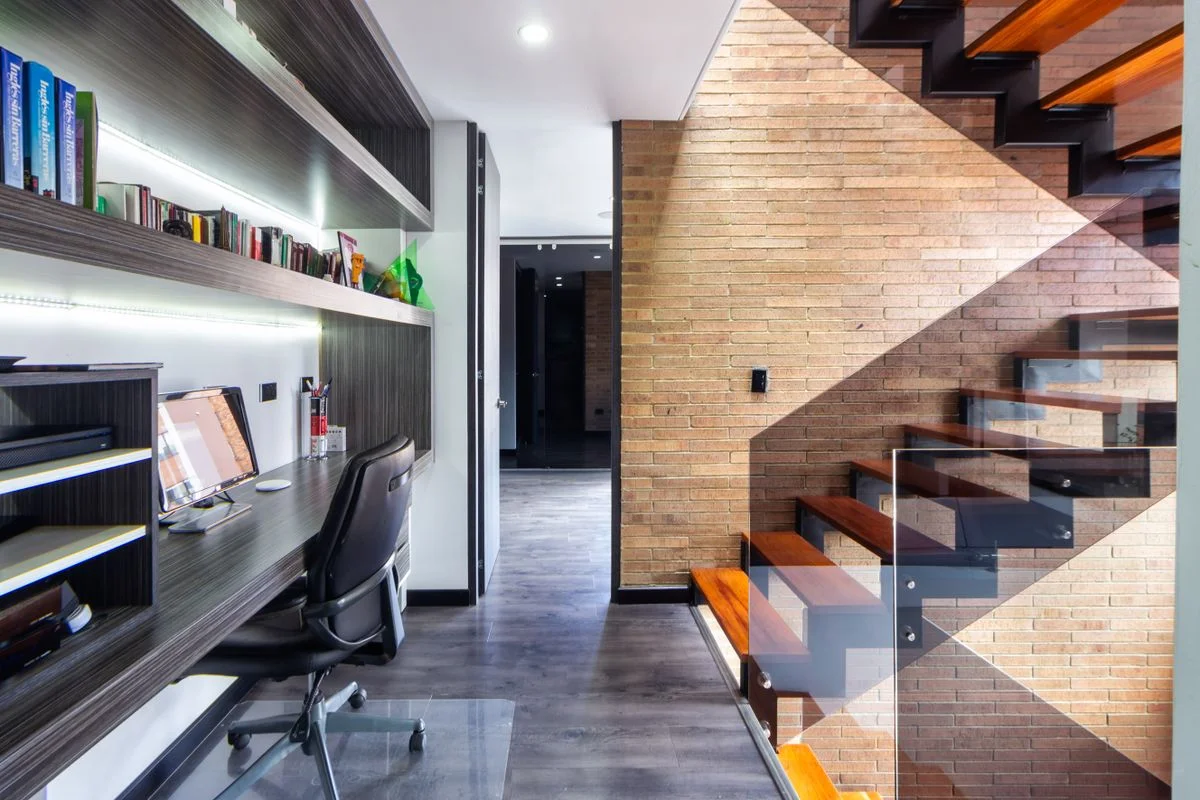
A home office nook under the stairs squeezes a desk, shelves, and a chair into space that would otherwise sit empty, making it ideal for small homes without a spare room. The sloping ceiling suits a desk against the tall wall, with shelves following the slope above for books and files. Tip: plan lighting and power first, since a dark corner with no outlets makes a miserable workspace, and choose a chair that slides fully under the desk.
A workable under-stair desk needs at least 60 centimetres of width and 50 centimetres of depth, with knee clearance of about 65 centimetres under the desktop. Run power from the nearest socket before fitting shelves, and add a small cable tray so chargers do not dangle across the walkway. If headroom is tight, place the desk against the tallest wall and keep the sloping side for low shelves rather than seating.
21. Under-Stair Cleaning and Utility Cupboard

A utility cupboard under the stairs keeps cleaning supplies, tools, and household essentials in one central spot, freeing kitchen and bathroom cabinets for daily items. Hooks inside the door hold dusters and cloths, shelves sort sprays and spare bulbs, and the tall section fits a vacuum or mop. Tip: add a childproof latch if you store chemicals, and keep a small caddy inside so you can grab everything for one room at a time.
Inside a utility cupboard, mount a rail or a set of hooks on the door for spray bottles and cloths, and keep chemicals in a high, latched box well away from children’s reach. A narrow shelf for spare bulbs, batteries, and fuses stops small essentials getting buried under cleaning products. Mop the cupboard floor occasionally, since leaks from cleaning bottles are easy to miss in a dark, closed space.
22. Glass-Front Under-Stair Display Cabinets
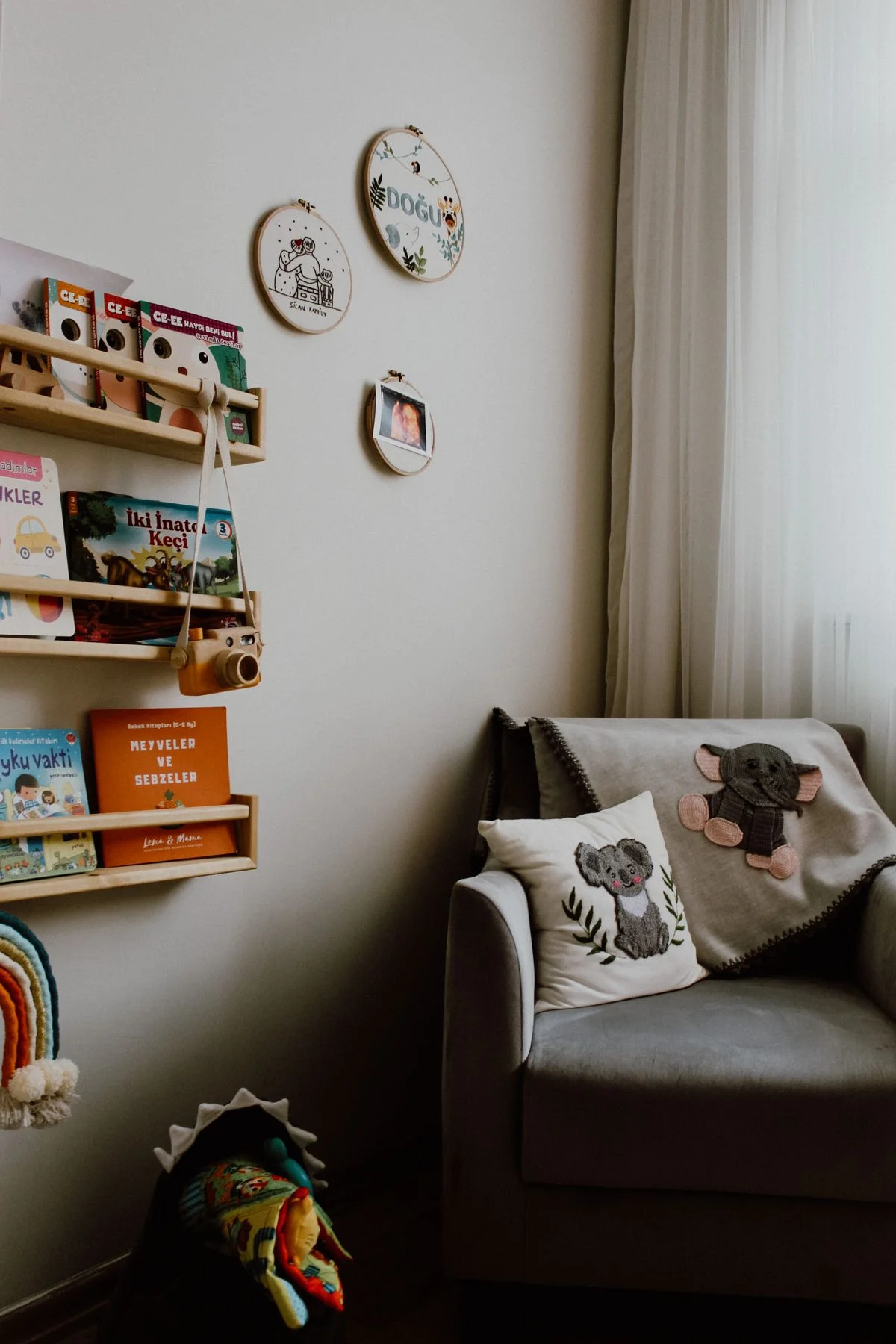
Glass-front display cabinets under the stairs turn storage into a showcase, perfect for collections, fine glassware, or treasured books you want to see rather than hide. The glass keeps dust out while letting the display shine, and interior lighting makes the whole staircase feel brighter and more elegant. Tip: keep the display edited to a few favourite pieces per shelf, since a crowded cabinet looks cluttered rather than curated.
For glass cabinets, use toughened glass and keep shelf loads modest, since glass doors add weight to hinges that must be adjusted occasionally. Interior LED strips mounted at the front edge of each shelf light objects without glare on the glass, while a dark backing board makes pale collections stand out. Dust the glass weekly, because fingerprints and dust show far more on glass than on solid doors.
How to Choose the Right Staircase Storage for Your Home
Start by measuring the space carefully, including the height at the tallest and lowest points, the depth, and any pipes, wires, or sloping ceilings in the way. Next, decide what problem you are solving: shoes by the door, books with no shelf, or a home office with no room all point to different solutions. Then choose between open storage, which is cheaper and easier to access, and closed storage, which hides clutter better. Finally, think about access: drawers and pull-outs beat deep cupboards for everyday items, while high shelves suit things you only need seasonally. The best staircase storage is the kind you will actually use every day.
Frequently Asked Questions About Staircase Storage
What can I store under the stairs?
Almost anything that fits the height and depth: shoes, coats, books, cleaning supplies, wine, toys, pet beds, or office gear. Avoid damp-sensitive items like photographs or electronics unless the space is dry and ventilated, and keep heavy items low for safety.
Is under-stair storage expensive to build?
It depends on the design. Baskets, freestanding shelves, and hooks cost very little and need no building work. Custom drawers, cupboards, and fitted cabinetry cost more but use the space far better and add value to the home. Start small and upgrade later if needed.
Do I need planning permission for under-stair storage?
In most homes, no. Fitting shelves, cupboards, or drawers inside your own home is normal interior work. Check local rules if you live in a listed building, a flat with shared staircases, or if the work affects fire escapes, wiring, or structural walls.
How do I keep under-stair storage from getting messy?
Give every category its own container, label it, and keep everyday items at the front. Pull-out drawers and baskets help because you can see everything at once. A quick five-minute tidy once a month stops the space sliding back into a dumping ground.
The space under your stairs is too valuable to waste on dust and forgotten boxes. Pick one idea from this list that solves your biggest daily frustration, whether that is shoes by the door, books with nowhere to go, or a hallway that never looks tidy. Measure your space this weekend and start with the simplest version that fits your budget. Found an idea you love? Pin this guide to your home organization board so you can find it again when you are ready to build.
Photos: Pexels (free to use).


