

19 Clever Scrap Wood Storage Ideas to Organize Offcuts and Reclaim Your Workshop
Scrap wood storage ideas can turn a workshop you trip over into one you love. If you have ever kept a “useful” offcut, only to lose it under three more piles, you do not need a bigger shop — you need a system that sorts wood by size, keeps it visible, and makes it easy to grab. Here are 19 practical, budget-friendly ways to store leftover boards, trim, dowels, and small cutoffs, whether you work in a garage, a spare room, or a tiny craft corner. Pick one idea today, and your next project will start with finding wood, not fighting it.
Wall and Vertical Storage for Small Workshops
Walls are the most underused storage in most workshops. These six ideas lift wood off the floor and keep long boards straight.
1. Wall-Mounted Lumber Rack

A wall-mounted lumber rack is the fastest way to turn a messy board pile into a tidy, visible library. Heavy-duty brackets hold full-length boards flat against the wall, so they stay straight, dry, and easy to sort by species or thickness. It works because gravity and air circulation do the hard work: boards do not warp under a heap, and you can see what you own at a glance. Tip: leave a small gap between layers, label each level, and keep your most-used boards at arm height so you never have to unload a whole stack for one piece.
2. French Cleat Offcut Wall
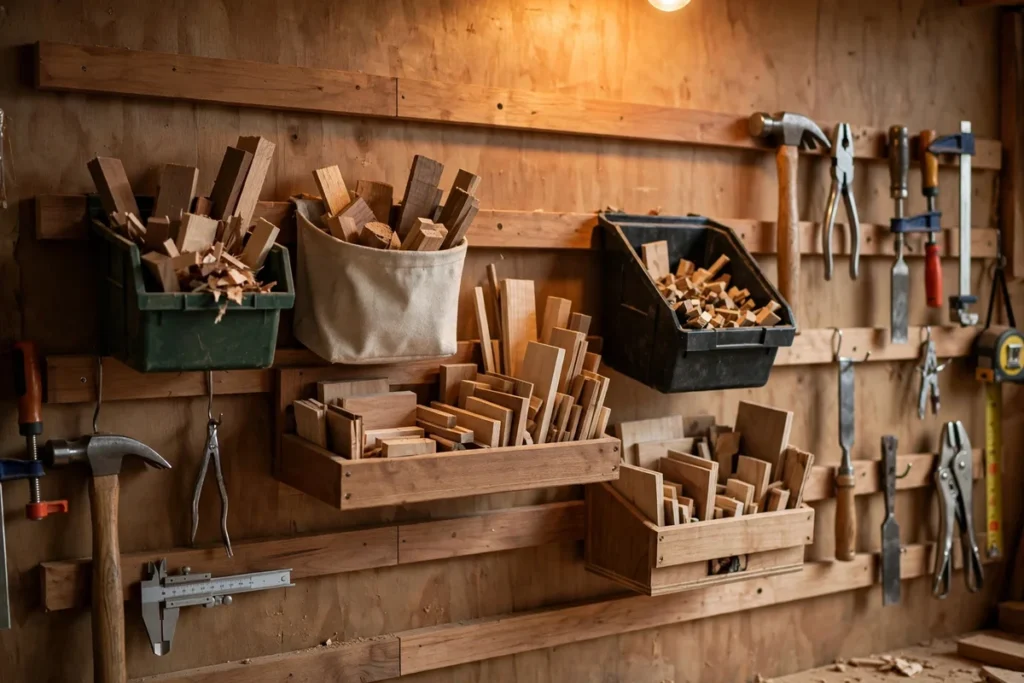
A French cleat wall uses angled wooden strips to hang bins, shelves, and holders that you can move whenever your stash changes. Small offcuts get their own labeled bins, while clamps, squares, and hand tools hang beside them, so everything for a quick project stays in one zone. It works because the system grows with you: add a bin for oak, move one for pine, and never rebuild the wall. Tip: cut all your cleats from one scrap board, keep the angle consistent, and test each holder with a full load before you trust it overhead.
3. Vertical Scrap Wood Bin

A vertical scrap wood bin is simply a tall, open box that lets boards stand upright, sorted by length. Short pieces go in front, longer pieces behind, and you can flip through them like books instead of digging through a horizontal pile. It works because upright storage uses a tiny footprint while keeping every board visible and reachable, which is ideal for narrow garage corners. Tip: add dividers every few inches, anchor the bin to the wall so it cannot tip, and trim any board that is too tall to stand safely.
4. Wall-Mounted Shelf Rack for Boards

A wall-mounted shelf rack gives each board size its own flat shelf, so medium boards, plywood strips, and trim no longer end up in one tangled stack. Sturdy shelves with a front lip stop boards from sliding off, while open sides let you slide a single piece out without disturbing the rest. It works because flat, separated storage prevents scratches, warping, and the dreaded avalanche when you pull from the bottom. Tip: size your shelves to your longest common offcut, add a label to the shelf edge, and keep heavy hardwood low for safety.
5. Overhead Garage Ceiling Rack
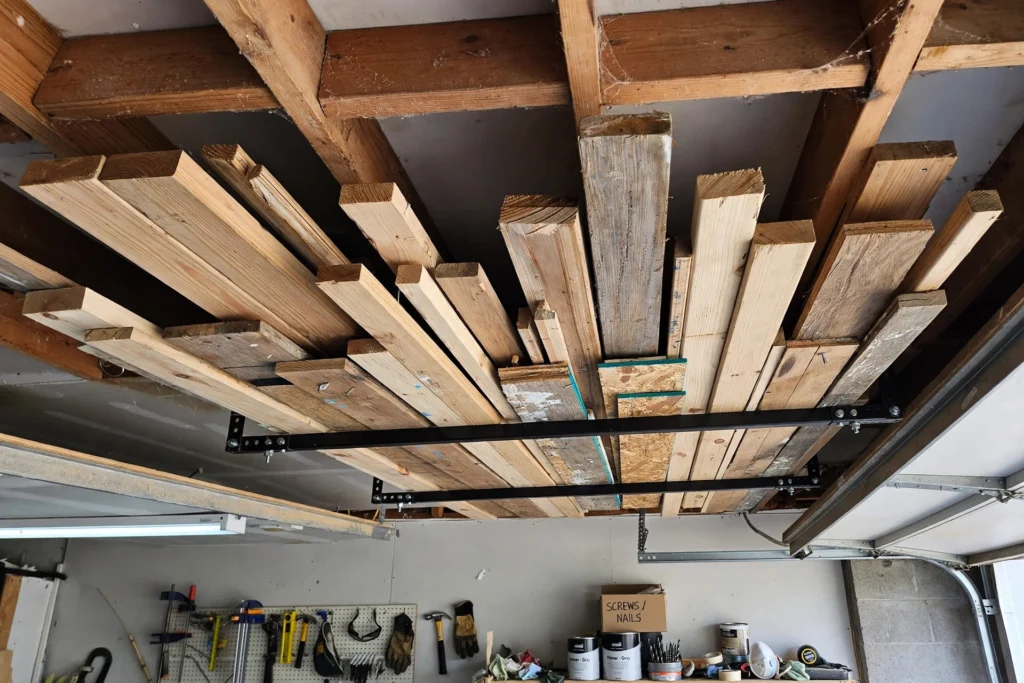
An overhead garage ceiling rack rescues long boards that would otherwise lean against walls for months. Mounted high on joists, it holds full-length lumber flat and out of the way, freeing floor and wall space for tools and daily work. It works because ceiling space is usually wasted, and long boards are exactly the pieces that cause the most clutter when stored at ground level. Tip: check your joist load rating first, use through-bolts rather than drywall anchors, and keep only straight, dry boards overhead so nothing sags or drops.
6. Wall-Mounted Dowel and Trim Rack
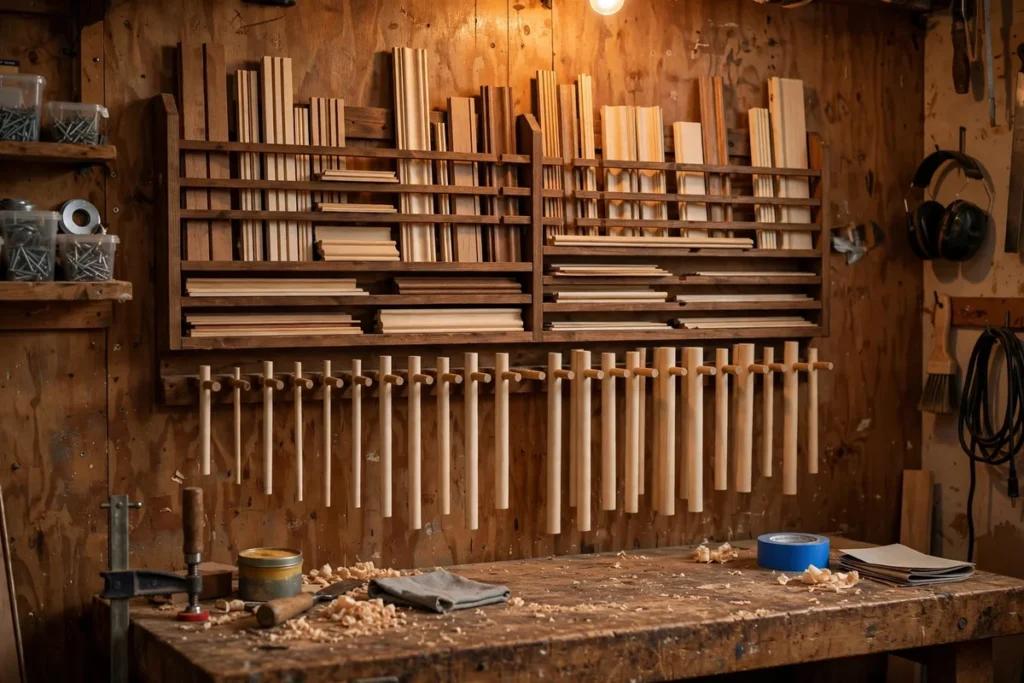
A wall-mounted dowel and trim rack solves the smallest, most annoying part of scrap storage: thin strips that roll, snap, or vanish. Short horizontal tubes, hooks, or slotted rails hold dowels, molding, and trim upright or flat by size, so you can grab one piece without untying a bundle. It works because tiny pieces need a different system from big boards, and a dedicated rack stops them from filling jars, drawers, and random corners. Tip: sort by diameter and length, cap open tube ends, and keep a “use first” slot for the shortest pieces.
Carts, Bins and Workbench Storage for Garages
If your workshop doubles as a garage, you need storage that moves, hides, or stacks. These ideas keep scraps mobile and ready to roll away.
7. Rolling Lumber Cart
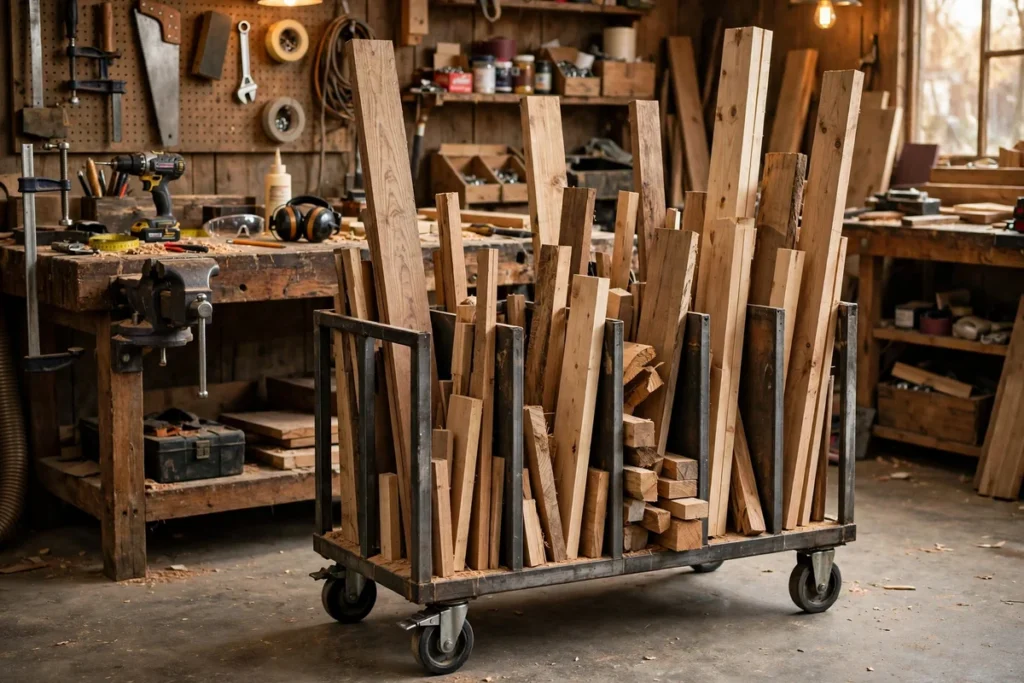
A rolling lumber cart puts your whole scrap collection on wheels, so you can pull it to the saw, the bench, or the driveway and push it back when you finish. Vertical slots hold long boards, while a lower tray catches short offcuts, keeping everything in one mobile unit. It works because you bring the wood to the work instead of carrying armfuls across the shop, which saves time and your back. Tip: choose locking casters, balance heavy boards low and centered, and measure your doorways before you build it wide.
8. Scrap Wood Sorting Bins

Scrap wood sorting bins turn one mixed pile into clear categories: hardwood, softwood, plywood, and “small but useful.” Open-top bins let you toss a cutoff in seconds, which means you will actually sort instead of promising to do it later. It works because sorting at the moment you cut is far easier than sorting a mountain at the end of the month, and labeled bins make the next project faster. Tip: start with just four bins, empty the smallest bin first on project days, and recycle anything cracked, warped, or smaller than your hand.
9. Pallet-Style Crate Storage

Pallet-style crate storage uses rough, sturdy crates — often built from scrap itself — to hold offcuts by project or wood type. Crates stack neatly, slide under benches, and can be carried to a job site, so your wood stays grouped instead of scattered. It works because crates are cheap, breathable, and easy to replace, and building them is a perfect first project for the very scraps you are storing. Tip: leave gaps between slats for airflow, stencil the contents on the end, and keep one empty crate ready for the next round of cuts.
10. Under-Workbench Scrap Storage
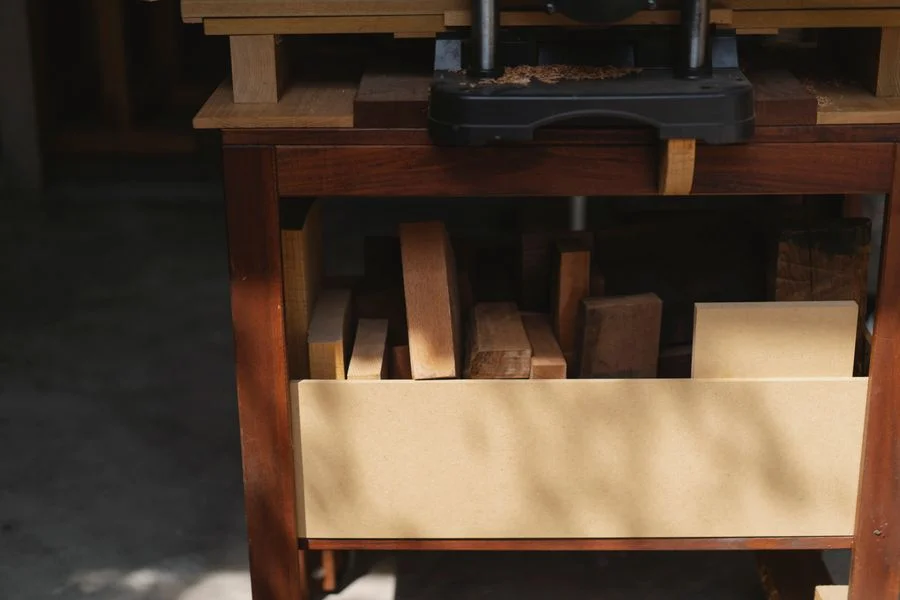
Under-workbench scrap storage hides offcuts in the dead space beneath your bench, using shallow drawers, sliding trays, or simple open cubbies. Boards stay dust-free, close at hand, and out of walkways, which keeps a small shop feeling calm and safe. It works because the space under a bench is often wasted, yet it is exactly where you stand when you need a small piece for a test cut or repair. Tip: use full-extension slides if you can, sort by length so trays slide freely, and keep sawdust out with a quick weekly sweep.
11. Mobile Cart with Dividers
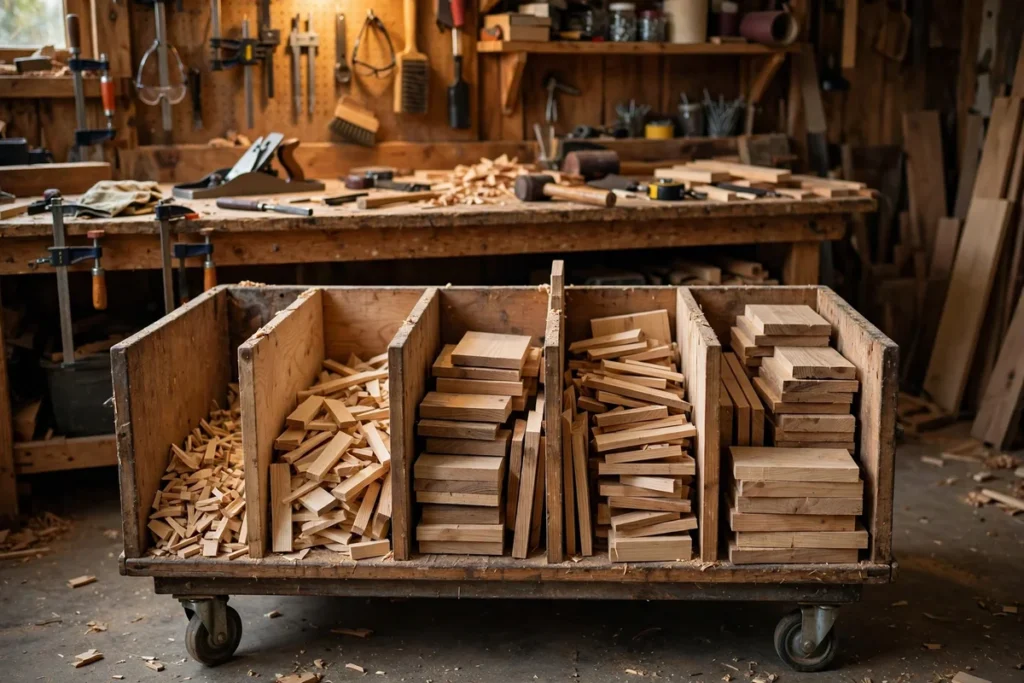
A mobile cart with dividers is the small-piece version of a lumber cart: narrow slots separate short boards, strips, and panels so nothing leans into a tangled mess. You can wheel it beside your saw for cutting days, then park it in a corner when the shop needs to breathe. It works because dividers stop the domino effect — pulling one board no longer drags five others with it — and the cart keeps every size visible. Tip: make dividers adjustable with slots or bolts, label each section, and leave one open bay for awkward, odd-shaped pieces.
12. Bucket Storage for Dowels and Short Offcuts

Bucket storage is the simplest scrap wood storage idea of all, and it works brilliantly for dowels, sticks, and short offcuts. Tall buckets, plant pots, or offcut tubes stand pieces upright, cost almost nothing, and fit into corners, under benches, or on shelves. It works because upright, open storage lets you see lengths at a glance and grab a single dowel without emptying a drawer. Tip: sort buckets by material and length, weigh the base if a bucket tips easily, and toss splintered or paint-covered pieces you will never actually reuse.
Small-Space and Indoor-Friendly Scrap Storage
Not everyone has a garage workshop. These ideas suit a craft room, apartment corner, or shared space, while keeping scraps sorted.
13. Craft-Room Scrap Shelves
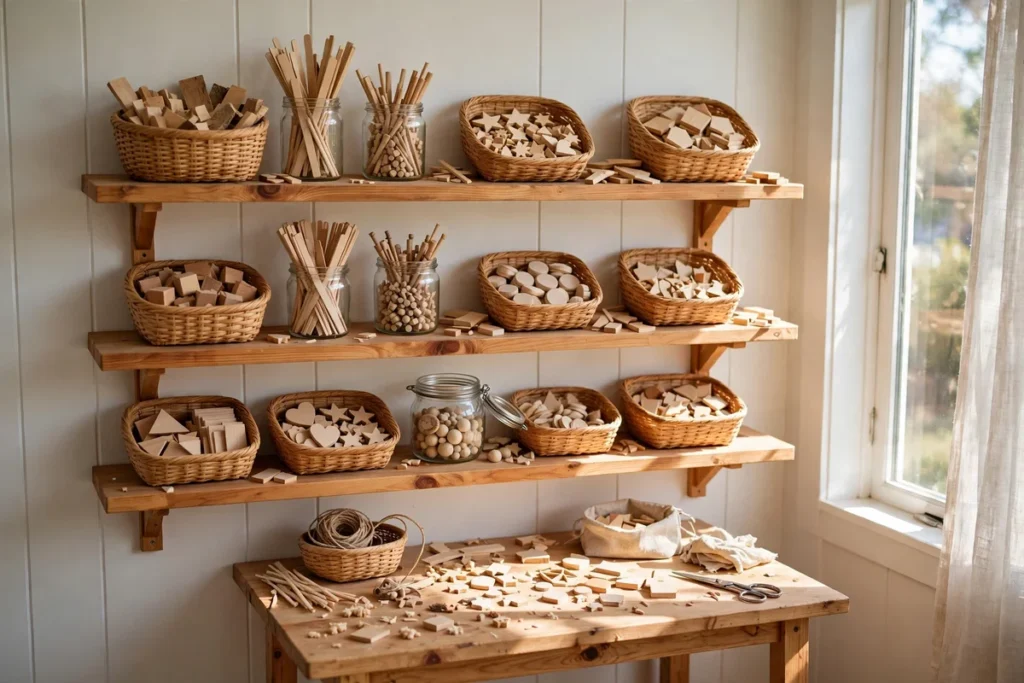
Craft-room scrap shelves turn small wood pieces into a tidy, display-worthy collection rather than a drawer of chaos. Shallow shelves hold thin boards, craft sticks, and small panels upright or flat, grouped by color, wood type, or project. It works because craft scraps are usually small and pretty, so visible, organized shelves double as inspiration — you see a piece and a project idea follows. Tip: use bookends or small boxes to stop pieces toppling, keep a “current project” shelf separate, and dust shelves monthly so pale woods stay bright.
14. Repurposed Bookshelf for Offcuts
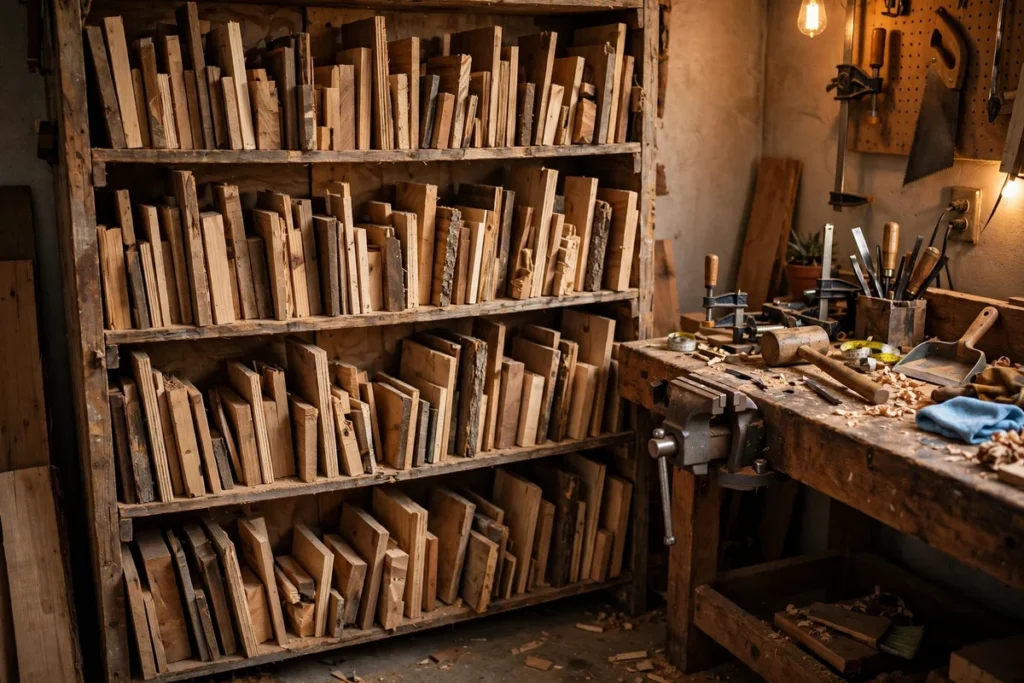
A repurposed bookshelf is one of the easiest scrap wood storage ideas because the shelves, sides, and back are already built. Stand boards upright like books, lay flat pieces on lower shelves, and use small baskets on top for dowels and tiny cutoffs. It works because bookshelves are cheap secondhand, fit against any wall, and make sorting feel natural: tall pieces left, short pieces right, project wood together. Tip: anchor the bookshelf to the wall, reinforce shelves that will hold hardwood, and add labels to the shelf edges for a clean, finished look.
15. Woven Baskets for Small Pieces

Woven baskets are perfect for the small pieces that do not deserve a lumber rack but still deserve a home. One basket for craft sticks, one for small hardwood offcuts, and one for pieces to paint or stain keeps tiny wood soft, visible, and portable. It works because baskets look warm and homely, so they suit living spaces and craft rooms where a metal rack would feel out of place. Tip: line baskets if pieces are rough or dusty, label the outside with a tag, and empty each basket once a season to remove pieces you have outgrown.
16. Stackable Crates for Cutoffs
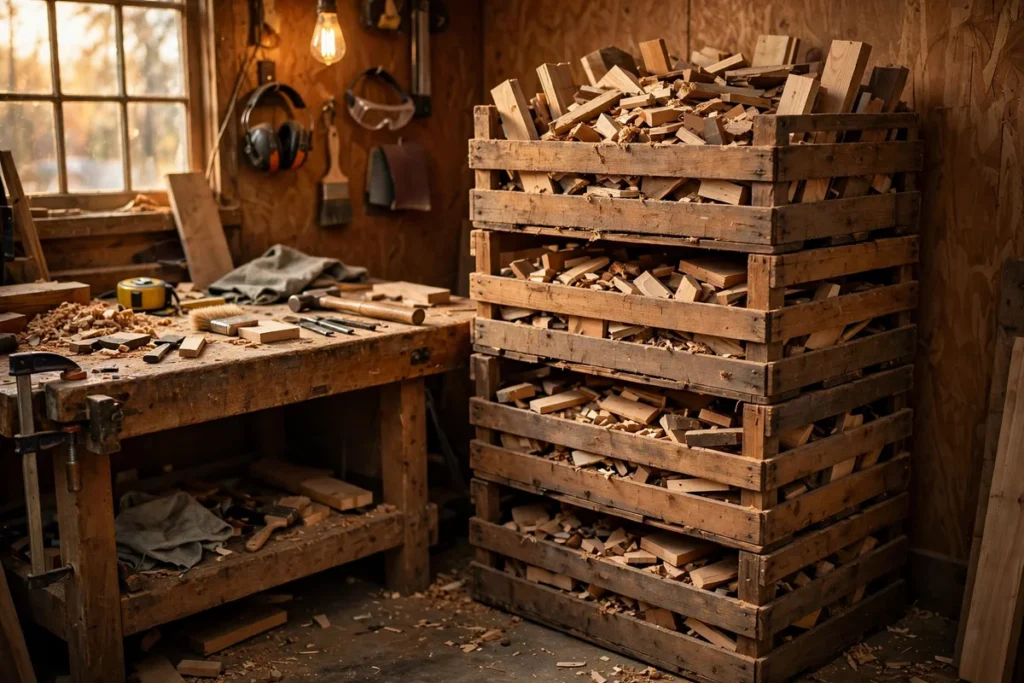
Stackable crates let you build storage upward instead of outward, which is gold in a small room. Each crate holds one category — pine strips, hardwood ends, plywood pieces — and you can lift one crate down without unpacking the whole tower. It works because crates are modular: add one when your stash grows, remove one when a project clears it out, and restack in seconds. Tip: choose crates with hand holes, stack heavy crates at the bottom, and never stack higher than you can safely lift down alone.
17. Storage Bench with Hidden Scrap Space

A storage bench with hidden scrap space does double duty: it is seating, a work surface, and a secret offcut store all at once. Lift the lid or open a drawer to find flat boards and small panels tucked away, while the room above stays neat and welcoming. It works because hidden storage suits shared spaces perfectly — guests see a bench, you see a ready supply of project wood. Tip: add dividers inside the bench, keep the heaviest boards at the bottom, and avoid overfilling it, or the lid will never close properly.
18. Corner Rack for Long Boards
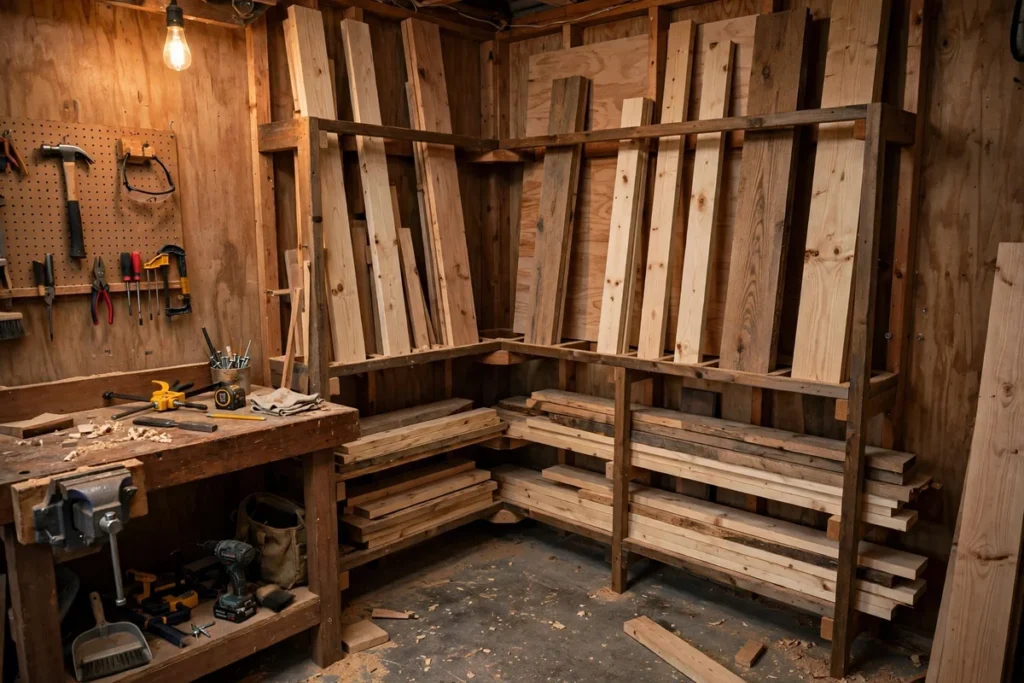
A corner rack for long boards turns an awkward, unused corner into prime storage for your tallest pieces. Two angled supports or a simple triangular frame hold boards upright, safely away from walkways, while keeping their full length visible. It works because corners are often dead space, yet they are tall, stable, and ideal for pieces that are too long for shelves or bins. Tip: pad the supports to prevent dents, sort boards longest at the back, and check that nothing leans into a door swing or light switch.
19. Labeled Bin System for Project Leftovers
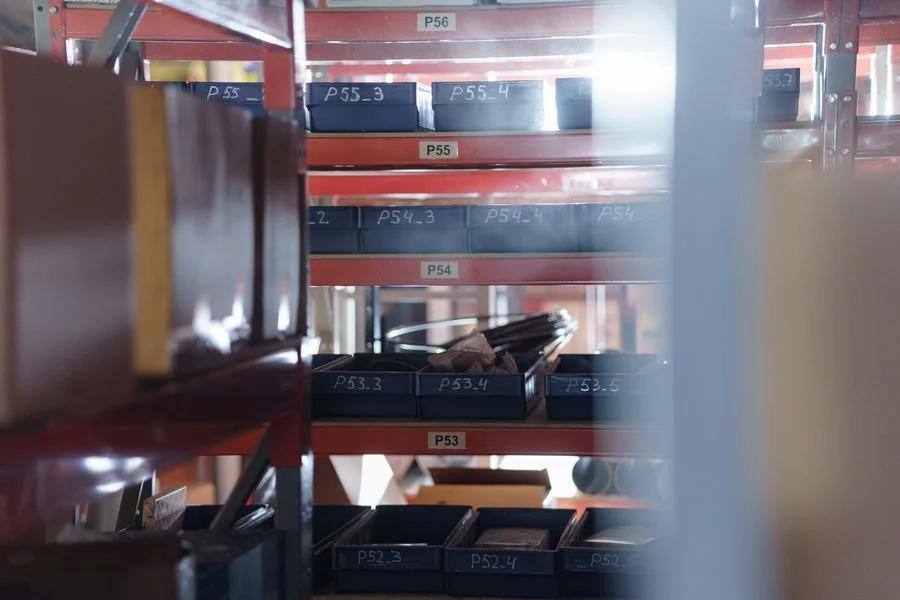
A labeled bin system is the finishing touch that makes every other scrap wood storage idea work long-term. Each bin gets a clear label — wood type, size range, or project name — so anyone in the household can put a piece away correctly and find it again later. It works because labels remove guessing, which is the real reason most systems collapse after a few busy weeks. Tip: use large, high-contrast labels, update them when a bin changes purpose, and keep a small “to sort” bin by the saw so labeling never slows you down.
How to Choose the Right Scrap Wood Storage for Your Space
Start with your longest board, not your prettiest idea. If you mostly keep full-length lumber, you need wall racks, a ceiling rack, or a corner rack. If your scraps are mostly short offcuts, bins, crates, and baskets will serve you better. Next, measure honestly: wall length, ceiling height, doorway width, and floor space you can truly spare. A system that blocks a walkway will be abandoned, no matter how clever it looks. Finally, sort before you build. Spend one hour grouping wood by size and type and recycling warped pieces. That sort tells you whether you need more vertical slots, more small bins, or simply better labels.
Frequently Asked Questions About Scrap Wood Storage
How do I store scrap wood so it does not warp?
Keep boards flat or fully supported, off damp floors, and out of direct sun. Stack them with small spacers for airflow, keep heavy boards low, and avoid leaning long boards at a sharp angle for months, which can bend them over time.
What size scrap wood is worth keeping?
Keep pieces you can realistically use: boards longer than your hand, usable hardwood offcuts, and clean plywood pieces. Recycle tiny, cracked, painted, or warped pieces unless you make small crafts, or your storage will fill with wood you never touch.
How do I organize scrap wood in a small garage?
Use the walls first, then the ceiling, then mobile carts. Wall racks and vertical bins use almost no floor space, an overhead rack handles long boards, and a rolling cart lets you move scraps aside when you need room to work or park.
Should I sort scrap wood by type or by size?
Sort by size first, then by type within each size. Size decides which rack or bin a piece fits, while type matters when you start a project. Label both on each bin or shelf, so you can find the right piece without emptying the whole system.
Your scrap pile does not have to be stressful — it can be the start of your next favorite project. Choose one idea, set it up this weekend, and enjoy a workshop where every offcut has a home. Pin this guide to your workshop board so you can find it again when your scrap pile grows, and save it for your next tidy-up day.
Photos: Pexels (free to use).


