19 Olive Green Bedroom Ideas for a Cozy, Stylish Retreat
Olive green has a particular kind of warmth that makes sense in a bedroom. It is richer and earthier than sage, less formal than emerald, and surprisingly easy to live with once you stop treating it as a color that has to cover every surface. Against cream linen it can feel relaxed and organic; beside walnut and brass it becomes darker and more tailored. Add terracotta, dusty rose, black, or muted navy and the mood shifts again.
That flexibility is what makes the best olive green bedroom ideas more interesting than simply choosing a green paint and calling the room finished. The shade has to work with the amount of daylight you receive, the size of the room, the color of the flooring, the visual weight of the furniture, and even the textures on the bed. A deep olive that feels beautifully cocooning in a large sunny bedroom may feel quite dense in a compact room with one small window. In that case, bedding, a headboard, paneling, or a carefully placed accent wall may be the smarter route.
For a cozy result, olive generally benefits from materials and colors that soften its slightly muted character: warm whites, flax linen, oak, walnut, woven fibers, aged metals, clay tones, and layered lighting all work beautifully. The 19 rooms below approach the color differently, so there is something here whether you are repainting an entire bedroom, updating a rental, or simply trying to make an existing olive wall look more intentional.
1. Wrap the Room in Deep Olive Green

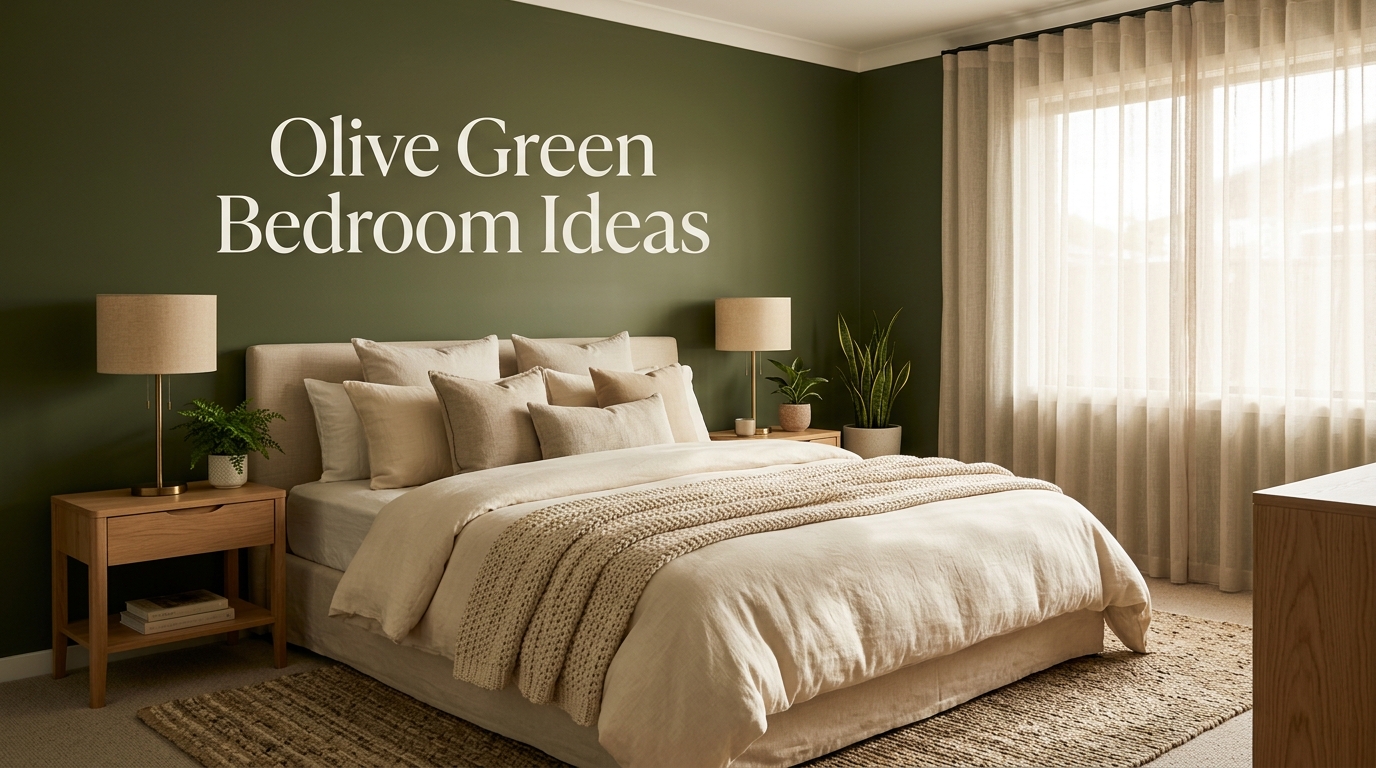
If you want the room to feel intimate rather than simply “green,” take olive across all four walls and let the ceiling stay a warm off-white. A medium-deep olive works especially well in bedrooms with decent daylight because the color changes gently from earthy in the morning to moodier at night.
Keep the bed visually lighter: ivory linen, oatmeal wool, and a cream upholstered headboard stop the walls from swallowing the furniture. Walnut or smoked oak nightstands add depth without introducing a competing color, while aged brass sconces create small pools of warm light after sunset.
This approach suits medium and large bedrooms best, where the darker perimeter can make the room feel wrapped and settled rather than cramped. In a small or north-facing room, test a large paint sample first; some olives can read brown or gray in weak light. The trick is contrast, not brightness—light bedding, reflective metal, and one pale rug are usually enough to keep the scheme balanced.
2. Use an Olive Accent Wall Behind the Bed

An olive green accent wall behind the bed gives you most of the color impact without asking the entire room to go dark. Treat that wall as the visual anchor, then keep the surrounding walls in cream, soft beige, or a warm white rather than a sharp blue-white. The warmer neutral makes olive look richer and less military.
A low oak bed, chunky knit throw, and stone-colored curtains create an easy layered palette that feels relaxed rather than staged. For a narrow bedroom, painting only the headboard wall can also help the eye settle on the shortest visual route instead of noticing every corner.
Keep large furniture close to the neutral side of the palette, then repeat olive once or twice through cushions or a bench so the accent wall does not feel isolated. If your headboard is already dark, choose an olive with enough tonal difference to outline it. Flat walls can look heavy, so add artwork, sconces, or subtle molding for dimension.
3. Warm Olive with Natural Oak or Walnut

Olive green and natural wood are an almost foolproof pairing when you want a bedroom that feels warm, grounded, and easy to live with. Instead of matching every timber finish, choose one dominant wood tone—light oak for a fresher look, walnut for more drama—and allow small variations elsewhere. Paint the walls olive, then bring in a slatted timber headboard, simple bedside tables, and a woven bench at the foot of the bed.
White or flax bedding gives the eye a quiet place to rest, while a rust or camel throw can add one warmer note without changing the character of the room. This combination is particularly useful in modern, Scandinavian, rustic, and mid-century spaces because the material contrast does most of the decorating.
Avoid filling the room with too many faux-wood finishes; olive can expose orange or overly glossy laminates quickly. Matte paint, visible grain, linen, wool, and woven fibers create a more convincing, tactile finish that photographs beautifully for Pinterest too.
4. Build a Renter-Friendly Olive Bedroom with Bedding

Renters can build an olive green bedroom without touching the walls at all. Start with the largest removable surface in the room: the bed. An olive linen or washed-cotton duvet immediately establishes the palette, especially against white, cream, greige, or pale taupe walls. Add two slightly different green cushions rather than a perfectly matched set, then soften the look with a natural throw in oatmeal or warm gray.
A framed textile, removable botanical print, or olive-toned curtain can carry the color upward so it does not sit only at mattress level. This strategy is also useful if you are unsure whether you want to commit to green paint, because textiles let you see how the shade behaves with your daylight and existing furniture.
Keep the rug neutral unless the room is very plain; too many green surfaces can make a temporary scheme feel accidental. For a more finished look, repeat one material—black metal, pale oak, or brushed brass—across lamps, frames, and small accessories.
5. Pair Olive Green with Warm White and Aged Brass

For a brighter olive green bedroom, combine the color with warm white and restrained brass rather than piling on dark accessories. Picture a soft olive wall, crisp-but-not-stark white bedding, a cream boucle or linen headboard, and two slender brass reading lights. The metal catches evening light and gives the palette a little polish, while the white keeps the room from becoming overly earthy.
This works especially well in compact bedrooms where you want character without sacrificing visual breathing room. Keep brass to a few deliberate points—sconces, drawer pulls, perhaps a narrow mirror frame—because too much shiny metal can push the room toward a themed “luxury” look.
Matte or aged finishes usually sit more comfortably beside olive than mirror-bright gold. If the room has cool gray flooring, add a warm rug under the bed to bridge the temperature gap. The result should feel soft first and elegant second, with olive as the quiet backdrop rather than every single object competing for attention.
6. Add Terracotta for Earthy Mediterranean Warmth

Terracotta brings out the sun-baked, earthy side of olive green, making this palette ideal for a bedroom that should feel cozy without turning beige. Use olive on the walls or headboard, then introduce terracotta in smaller, softer doses: a quilted throw, striped lumbar cushion, ceramic lamp, or one upholstered chair.
Keep the rest of the room in warm cream, sand, and natural wood so the two stronger colors have space to breathe. Because both olive and terracotta carry visual weight, the balance matters more in small bedrooms; one large terracotta bedspread against dark olive walls may feel dense unless the floor, curtains, and ceiling remain light.
In a sunny room, woven shades and pale oak can make the scheme feel almost Mediterranean. In lower light, choose dusty clay rather than bright orange. Black accents are useful in tiny amounts—perhaps a curtain rod or picture frame—to sharpen the palette and prevent all those earthy tones from blending into one muddy block.
7. Soften Olive with Dusty Rose

Dusty rose is a softer partner for olive green than bright pink, and it can make a bedroom feel layered, romantic, and grown-up without becoming sugary. Let olive carry the larger surfaces—walls, an upholstered headboard, or a duvet—then use muted rose through pillowcases, a velvet cushion, a small rug pattern, or artwork.
The key is choosing pinks with a gray, beige, or clay undertone; clear bubblegum shades create a much sharper contrast and change the mood completely. Warm white bedding is a useful buffer between the two colors, especially if the room is small. Dark wood furniture adds maturity, while pale oak makes the palette feel lighter and more contemporary.
Avoid matching every pink accessory precisely. Slight shifts from blush to dusty rose look more natural and help the room feel collected rather than color-coded. For nighttime lighting, warm bedside lamps flatter both shades; very cool bulbs can make the olive look dull and the pink unexpectedly bluish.
8. Create a Modern Olive-and-Black Bedroom

Olive green with black accents creates a cleaner, more architectural bedroom, especially if you prefer modern furniture over soft cottage styling. Start with a mid-tone olive wall and introduce black through narrow elements: metal bed legs, picture frames, a reading lamp, curtain rod, or one slim bedside table.
Keeping the black pieces visually light is important; a bulky black wardrobe against deep olive can dominate a modest room. Use pale bedding, natural wood, and a light-toned rug to create separation between the darker surfaces. This combination works particularly well in rooms with simple lines, minimal ornament, and good natural light.
If the bedroom feels too severe, add texture rather than more color—a bouclé cushion, linen curtains, woven basket, or ribbed ceramic lamp can soften the edges. Matte black generally looks calmer than glossy finishes beside olive. A small touch of off-white artwork or photography above the bed also gives the eye a bright pause and prevents the scheme from reading as overly heavy.
9. Mix Olive Green with Muted Navy

Pairing olive green with muted navy or inky blue gives a bedroom a sophisticated, slightly unexpected depth. The safest approach is to let one color dominate and use the other as an accent, rather than splitting the room fifty-fifty.
Olive walls with a navy upholstered headboard, for example, feel grounded when the bedding stays cream, flax, or pale gray-beige. If your room receives strong daylight, the richer combination can look wonderfully cocooning; in a dim bedroom, keep navy to smaller pieces such as a throw, striped cushion, or bedside lamp.
Warm timber is helpful because it sits between the coolness of blue and the earthiness of olive, giving the palette a more natural transition. Avoid highly saturated royal blue, which can make muted olive appear dull by comparison. A few warm-metal details—aged brass or bronze rather than bright chrome—can lift the darker colors at night. This scheme suits contemporary, tailored, and slightly masculine bedrooms without feeling cold or predictable.
10. Give the Walls an Olive Limewash Finish

A limewashed olive wall adds movement that flat paint cannot, which is useful when the bedroom has simple furniture and needs texture more than extra decoration. The cloudy shifts in tone create lighter and darker areas across the surface, so even one color feels layered. Use the finish behind a low timber bed, then keep bedding tactile and understated: wrinkled linen, a woven wool blanket, and a couple of cushions in cream or faded moss.
Because limewash and limewash-look finishes vary by product and substrate, check the manufacturer’s preparation instructions before committing; some walls need a compatible primer or mineral base.
This is not the best choice if you want perfectly uniform color or wipe-clean practicality in every spot. Visually, however, it works beautifully with old plaster, exposed beams, terracotta, oak, and handmade ceramics. Keep artwork sparse so the wall texture remains visible. In a small room, a single limewashed feature wall can deliver the effect without making every surface feel busy.
11. Add Depth with Olive Wall Paneling

Olive-painted paneling gives a bedroom more architectural presence than a plain accent wall, even when the room itself is fairly ordinary. Board-and-batten, slim rectangular molding, or tongue-and-groove can all work; the right choice depends on the style of the house and the scale of the bed.
Behind a tall headboard, use wider panels so the lines do not become visually fussy. In a smaller bedroom, half-height paneling painted olive with warm off-white above can keep the room feeling open while still adding depth around the bed. Paint the trim and panel surface the same olive for a cleaner result, then contrast it with cream bedding and wood furniture.
Dust tends to collect on horizontal ledges, so very intricate molding is not always the most practical option for allergy-sensitive spaces or people who prefer low-maintenance rooms. A pair of wall-mounted lights can emphasize the panel rhythm and free up nightstand space, making this idea attractive in narrow bedrooms as well as larger traditional ones.
12. Bring in Botanical Pattern Without Overcrowding

Botanical pattern can make olive green feel expressive rather than minimalist, but the room needs a clear hierarchy so the foliage does not take over. Choose wallpaper that includes olive as one of several muted tones—cream, charcoal, tan, faded rust, or soft blue—then use it on the headboard wall or inside a recessed nook.
Pull the olive from the pattern into a solid duvet, bed skirt, or painted nightstand, and let the remaining walls stay quiet. This approach works particularly well in vintage, cottage, grandmillennial, and eclectic bedrooms where a little pattern feels intentional. In a tiny room, choose a smaller-scale motif or use the wallpaper above wainscoting so the pattern has a defined boundary.
Large tropical leaves can look dramatic, but they tend to read bolder and more contemporary. Before ordering multiple rolls, view a full-size sample in both daylight and lamplight; green inks can shift noticeably against the room’s existing flooring and wood tones. Keep window treatments simple so the wallpaper remains the main visual story.
13. Make Olive Work in a Small Bedroom with Two-Tone Walls

Small bedrooms do not need to avoid olive green; they just benefit from more deliberate placement. Try a half-painted wall with olive on the lower portion and a warm cream above, using the division line slightly higher than the headboard. The darker base gives the room weight and coziness, while the pale upper wall keeps more light around eye level.
This technique is especially useful in rentals if you are allowed to paint but want a project that uses less product and is easier to reverse. Choose leggy bedside tables or wall shelves rather than solid cabinets, and keep the bed frame visually simple so the color blocking remains clean.
Repeating olive in one small textile—perhaps a cushion or throw—is enough; avoid adding a green rug, green curtains, and green bedding all at once in a tight footprint. If the ceiling is low, keeping it the same pale color as the upper wall can make the transition feel smoother and less chopped up.
14. Paint the Ceiling Olive for an Unexpected Focal Point

Painting the ceiling olive green is a strong option when you want the color to feel special but prefer lighter walls. It works best when the room has a clear ceiling line, decent height, and enough daylight to prevent the upper surface from feeling oppressive. Pair the olive ceiling with warm white or pale mushroom walls, then repeat the green once at bed level through a throw or patterned pillow.
Dark ceiling paint naturally draws attention upward, so keep pendant lights or a central fixture simple and sculptural rather than overly busy. In rooms with decorative cornices, painting the molding with the ceiling can make the effect feel more intentional; leaving it white creates a sharper frame.
This idea may not suit very low, poorly lit bedrooms unless you deliberately want a compact, cocooning mood. A lighter olive can give a gentler version of the look. Wood flooring, cream curtains, and a tan upholstered bed help connect the colored ceiling back to the rest of the room.
15. Let an Olive Upholstered Headboard Do the Heavy Lifting

If painting is off the table, an olive green upholstered headboard can become the room’s main statement with surprisingly little effort. Velvet gives the color a richer, moodier appearance, while linen or textured cotton feels softer and more casual. Scale matters here: a tall headboard can visually widen the bed wall and make a simple room feel designed, but it should not crowd low windows or overwhelm narrow nightstands.
Keep the walls warm white, plaster beige, or pale taupe, then use mostly neutral bedding so the headboard remains distinct. A single olive throw at the foot of the bed is enough to tie it into the textiles.
For a more tailored look, choose channel tufting or a simple framed shape; for relaxed interiors, a slipcovered or gently curved headboard feels less formal. Upholstery needs occasional vacuuming, particularly in dusty rooms, so very deep button tufting may require more maintenance. Wall-mounted sconces can frame the headboard cleanly and keep the composition balanced.
16. Layer Olive with Rattan, Jute, and Linen for a Boho Look

A bohemian olive bedroom looks most convincing when the green is paired with natural texture rather than overloaded with patterned accessories. Use a muted olive wall or duvet as the base, then bring in rattan, cane, jute, washed linen, and unfinished-looking wood. A woven headboard can be the focal point, with cream bedding and a fringed throw keeping the bed soft against the earthy background.
Add plants only where the room has suitable light and where you can maintain them; empty corners do not automatically need greenery. One or two leafy shapes are visually stronger than a crowded shelf of struggling pots. For pattern, choose a vintage-style rug or a single block-printed cushion rather than mixing five unrelated motifs.
This style works well in casual bedrooms and rentals because much of the look comes from portable pieces. Watch the yellow undertones, though: very golden rattan against a yellow-heavy olive can become overly warm, so balance it with off-white, charcoal, or cooler stone accents.
17. Keep It Calm with Scandinavian Olive Minimalism

For a Scandinavian take on olive green, keep the shade muted, the furniture pale, and the styling edited. A soft olive wall behind a light oak bed gives enough color to make the room feel warm, while white linen bedding, a wool throw, and simple paper or ceramic lighting maintain the calm visual rhythm.
Rather than adding many decorative objects, focus on proportion: one generous bedside lamp, one framed print, and a rug large enough to extend beyond the bed usually feels more intentional than several tiny accessories. This approach is especially effective in small bedrooms because the furniture can remain visually light and practical.
Built-in storage in warm white or pale wood prevents the green from competing with large dark cabinetry. If you want contrast, use charcoal sparingly in a frame or pendant cord. The room should not become sterile, though; visible wood grain, crumpled linen, boucle, and wool are what keep the pared-back palette tactile and comfortable rather than showroom-flat.
18. Lean into Vintage Olive with Walnut and Antique Brass

Olive green is particularly at home in a traditional or vintage-inspired bedroom because it sits comfortably beside walnut, antique brass, aged leather, and patterned textiles. Paint the walls a deep, muted olive, then introduce a dark wood bed or chest with visible grain rather than a glossy matching furniture suite.
A small floral, ticking stripe, or block-print fabric can bring pattern to the headboard or cushions without turning the room into a period set. Warm ivory sheets and a faded rug lighten the lower half of the space, while brass lamps add a gentle glow after dark.
This style benefits from a little asymmetry: a stack of books on one side, a framed sketch on the other, perhaps a ceramic vase that is not perfectly centered. If the room already has heavy furniture, choose a lighter olive so the walls do not intensify the weight. Mixing one or two contemporary pieces, such as a clean-lined lamp or simple bench, keeps the overall look collected rather than costume-like.
19. Build a Tonal Bedroom with Olive, Moss, and Sage

A layered green palette can make an olive bedroom feel unusually calm and cohesive, provided the shades are different enough to remain visible. Start with olive as the dominant tone, then add smaller amounts of moss, sage, lichen, or deep forest green through bedding, artwork, and upholstery.
Keep one neutral running through the entire room—warm white, flax, mushroom, or pale stone—so the greens have a consistent backdrop. Texture matters more than exact color matching here: matte painted walls, washed linen, velvet, wool, and glazed ceramics all reflect light differently, preventing a monochromatic scheme from looking flat.
This idea suits people who genuinely love green and want a more immersive room without relying on contrasting accent colors. In a small bedroom, use the darker greens below eye level and lighter tones higher up to maintain some visual lift. Avoid buying every accessory in nearly the same olive shade; slight tonal variation is what makes the palette look deliberate, dimensional, and comfortably lived-in.