18 Concrete Fireplace Ideas for a Cozy, Striking Focal Point
Concrete has a reputation for looking cool and architectural, but around a fireplace it can feel surprisingly warm. Much depends on what happens around it. Soft linen, oak, wool, warm lighting, earthy colors, and the glow of the fire can completely change how that gray surface reads in a room. That contrast is exactly why concrete fireplace ideas work across so many interiors, from minimal apartments to rustic cabins and relaxed organic-modern living rooms.
The trick is not simply covering a fireplace in cement and calling it finished. Scale matters. So do undertones, surrounding furniture, hearth depth, mantel style, ceiling height, and the amount of daylight the room receives. Some spaces benefit from a dramatic floor-to-ceiling feature, while others look better with a quiet flush surround that almost disappears into the wall. The following ideas explore both ends of that spectrum, with enough practical detail to help you picture how each one could actually work at home.
1. Stretch Warm Gray Concrete From Floor to Ceiling

A floor-to-ceiling concrete fireplace gives a living room instant architectural weight, especially when the ceiling is tall or the wall feels visually empty. Instead of choosing a cold blue-gray finish, lean toward warm gray with a faint taupe undertone so the concrete sits comfortably beside oak, linen, wool, and creamy upholstery.
Keep the firebox simple and dark, then let the vertical sweep of the surround do most of the work. In a double-height room, this treatment draws the eye upward and helps the fireplace feel correctly scaled rather than stranded in the middle of a huge wall.
For a softer look, place a low sofa and rounded lounge chairs nearby, then layer a thick neutral rug underfoot. Avoid filling the upper half with small decorative objects; they can make the wall look busy. A single oversized artwork, or nothing at all, often creates a calmer, more confident focal point without added clutter.
2. Warm Board-Formed Concrete With an Oak Mantel

Board-formed concrete brings visible grain and horizontal lines into the fireplace surface, which is useful when a smooth gray slab would feel too stark. Pair it with a thick natural-oak mantel and the contrast becomes especially inviting: rough against warm, cool against honeyed, architectural against familiar.
This combination suits modern rustic rooms, cabins, contemporary farmhouses, and living spaces with exposed ceiling beams. Let the wood mantel extend slightly beyond the firebox width so it reads as a deliberate horizontal break in the concrete. Then repeat the same wood tone once or twice elsewhere, perhaps in a coffee table, ceiling beam, or picture frame, rather than matching every piece of furniture.
Soft ivory seating keeps the room from becoming visually heavy. Because board-form texture already creates movement, mantel styling should stay restrained. A low ceramic vessel, one framed piece of art, and a small trailing branch are enough to make the whole wall feel finished without covering the texture that makes it special.
3. Choose Soft Greige Microcement for an Organic Look

For a softer take on a concrete fireplace, a greige microcement-style finish can create the same monolithic look without the visual heaviness of darker cement. The hand-troweled movement adds subtle clouding across the surface, which becomes especially beautiful in side light from a nearby window.
This idea works well in organic modern, Scandinavian, and quiet contemporary rooms where the palette is built from oatmeal, sand, mushroom, pale oak, and warm white. Keep the surround nearly flush with the wall and skip a chunky mantel if you want the finish to feel calm and seamless. Instead, let a slim floating hearth or low plinth create the only projection.
The best styling is tactile rather than colorful: boucle, washed linen, wool, matte ceramics, and a few dark accents to echo the fireplace opening. In rooms with limited natural light, choose a pale warm greige rather than mid-gray, otherwise the fireplace can absorb too much light and make the corner feel heavier than intended.
4. Add a Long Floating Concrete Hearth

A monolithic concrete fireplace with a long floating hearth has a sculptural quality that can make even a simply furnished living room feel custom. The key is proportion. Rather than stopping the hearth directly at the firebox edges, extend it across a generous portion of the wall so the composition feels intentional and grounded.
In a wide room, that horizontal line can visually connect the fireplace to a reading chair, built-in cabinet, or stack of books without adding another bulky piece of furniture. Choose a smooth or lightly mottled concrete finish and keep the hearth thickness visually substantial enough to hold its own against the wall above.
Warm the scheme with walnut, caramel leather, rust-colored cushions, or a vintage wool rug. If the room is narrow, reduce the projection of the hearth so it does not interrupt the walking path. This idea looks strongest when the rest of the furniture sits low, allowing the fireplace wall to feel expansive while the seating zone remains relaxed and intimate.
5. Go Moody With Charcoal Concrete and a Linear Fire

Charcoal concrete creates a moodier fireplace without relying on glossy black stone. It is particularly striking around a wide linear insert, where the dark opening almost disappears into the surround and the flame becomes the brightest element in the room.
To keep the scheme cozy rather than severe, surround the fireplace with warm materials: smoked oak, cognac leather, camel wool, aged brass, or a soft brown rug. Pale walls and generous natural light also help the charcoal finish feel dramatic without shrinking the space. This approach works best in medium to large rooms where there is enough visual breathing room for a deep-toned focal wall.
In a small or north-facing living room, use charcoal only on the central fireplace mass and keep adjacent walls much lighter. Avoid adding a television, dark shelving, and heavy art all on the same wall unless the scale truly supports it. The strongest version is edited, allowing the concrete, flame, and a few warm textures to carry the atmosphere.
6. Build a Firewood Niche Into the Concrete Wall

Integrating a firewood niche beside a concrete fireplace turns practical storage into part of the architecture. The stacked logs introduce color, circular end grain, and irregular texture, which naturally softens a clean cement surface. An asymmetrical layout often looks more contemporary than matching niches on both sides: place the firebox toward one side and create a tall recessed wood bay beside it.
Keep the niche opening crisp and deep enough that the logs sit visually inside the wall rather than spilling into the room. This treatment is especially effective in rustic modern spaces, mountain homes, and open-plan rooms where the fireplace needs more personality than a plain rectangle can provide. If you use a gas or electric insert, the same recess can hold baskets, books, or sculptural objects instead of logs.
Repeat the wood tone elsewhere in the room so the niche feels connected to the decor. A pale concrete finish works beautifully here because the warm cut wood becomes the contrast rather than another dark architectural feature.
7. Make an Off-Center Fireplace Feel Intentional

An off-center concrete fireplace can solve an awkward wall while making the room feel more designed, not less symmetrical. Place the firebox on one side of a broad concrete plane, then balance the opposite side with open shelving, a low cabinet, or a single large artwork. The empty space between those elements matters; it keeps the wall from turning into a crowded media unit.
This layout is particularly useful when a doorway, window, or circulation path prevents a perfectly centered fireplace. Use the furniture arrangement to restore balance rather than forcing architecture that fights the room. A sectional can face the firebox at a slight angle, while one accent chair closes the conversation area from the side.
Choose shelving in oak or dark metal to create contrast with the concrete, and keep accessories limited to larger shapes that can hold their own. The result feels relaxed and architectural, with enough asymmetry to be interesting but enough visual weight on both sides to feel intentional.
8. Soften the Architecture With a Curved Concrete Fireplace

Curved concrete takes the material in a completely different direction, replacing the usual hard-edged chimney breast with a softer, almost sculptural form. A rounded fireplace wall works beautifully in rooms that already include arches, curved sofas, globe lighting, or gentle transitions between spaces.
The curve can wrap around one side of the firebox or continue into a built-in niche, creating a seamless feature that looks especially rich in warm beige or putty-colored microcement. Keep the firebox itself simple and rectangular so the contrast between straight flame opening and rounded wall feels deliberate. This is not the easiest idea for a quick weekend makeover, so it makes the most sense during a renovation or when a new fireplace surround is already being constructed.
Styling should follow the architecture: choose a rounded coffee table, soft-edged lounge chair, and large textured rug rather than sharp, boxy pieces everywhere. In strong afternoon light, the curved surface produces gradual shadows that make the finish feel deeper and more tactile.
9. Give Concrete a Mediterranean Feel With an Arch

An arched firebox surround finished in warm concrete can bring a subtle Mediterranean or adobe influence into a room without becoming theme-heavy. The arch softens the industrial association of concrete and gives the fireplace a more handmade, settled-in character. Use a sandy beige, pale clay-gray, or warm stone tone rather than a cool cement color, then pair it with limewashed-looking walls, aged wood, woven baskets, and relaxed linen upholstery.
The opening can be a true architectural arch or a decorative outer shape framing a standard rectangular insert, depending on the fireplace system and construction method. Keep the mantel minimal or omit it entirely so the curve remains the defining feature.
This idea works especially well in rooms with lower ceilings because the arch creates a vertical gesture without requiring a massive floor-to-ceiling slab. Avoid adding lots of ornate accessories; a simple branch, earthenware vessel, or low bench nearby is enough. The goal is warmth and softness, not a literal rustic revival.
10. Keep a Small Living Room Fireplace Slim and Quiet

In a small living room, the best concrete fireplace is often the quietest one. A slim, flush surround in a pale warm gray can give the wall texture and presence without taking up valuable visual or physical space. Keep the firebox compact, avoid an oversized projecting hearth, and let the concrete stop at a clean architectural boundary rather than wrapping every nearby wall.
If storage is needed, add one shallow cabinet or floating shelf on the adjacent side instead of building heavy units around the entire fireplace. Light oak flooring, warm white walls, and a modest sofa help the concrete read as a refined accent rather than a looming block. A round coffee table is useful here because it eases circulation in tighter seating arrangements.
For decor, choose one medium-to-large artwork above the fireplace rather than a cluster of frames. The simplicity is what makes this version work: a restrained concrete surface can give a compact room a focal point while preserving the sense of openness that small spaces need.
11. Use a Double-Sided Concrete Fireplace as a Room Divider

A double-sided concrete fireplace can act as both focal point and room divider in an open-plan home. Instead of building a full solid wall between the living and dining zones, a central concrete volume creates separation while preserving sightlines around the flame. This arrangement works best when the fireplace mass is positioned where furniture naturally wants to divide: the sofa can face one side, while the dining table or reading area relates to the other.
Keep the concrete finish consistent on every visible face so the structure reads as one architectural object. A three-sided or see-through firebox adds extra visual connection, but the exact insert must suit the room layout and installation requirements. Because the fireplace is already dramatic, surrounding furniture should be calmer and lower in profile.
Warm wood dining chairs, an oatmeal sofa, and simple black lighting provide enough contrast. Avoid crowding the concrete with shelves on every side; leaving some uninterrupted surface makes the divider feel deliberate and gives the fire room to command attention.
12. Sharpen the Look With Blackened Steel Details

Concrete and blackened steel make a strong pairing when you want the fireplace to feel modern, slightly industrial, but still refined. Use concrete for the larger surround, then frame the firebox with a thin steel reveal or add a narrow metal mantel that appears almost like a dark line drawn across the wall.
The steel sharpens the softer mottling of the cement and gives the opening a crisp finish. This scheme is especially effective in loft-like rooms, contemporary cabins, and homes with black window frames or metal stair details. Keep the rest of the palette warmer than the fireplace itself: walnut cabinetry, tan leather, cream wool, or a vintage rug can prevent the room from feeling overly hard.
If black metal already appears throughout the space, resist repeating it in every lamp and table base. A few echoes are enough. The fireplace should read as an anchor, not part of a matching set. Soft evening lighting will bring out the depth of both materials without needing extra decoration.
13. Layer Concrete With Soft Natural Stone

Layering concrete with natural stone creates a fireplace that feels collected rather than one-note. One balanced approach is to use concrete for the tall chimney breast and introduce travertine, limestone, or another softly patterned stone only at the hearth or immediate firebox surround. The shift in texture is subtle but effective: concrete gives the wall calm mass, while stone adds movement and a slightly more polished finish near eye level.
This combination works well in transitional and organic modern interiors where too much raw cement might feel unfinished, yet a full stone fireplace would be more formal than desired. Keep both materials within a close color family so the design reads as layered, not striped.
Warm beige concrete with creamy honed stone is especially easy to pair with oak and flax-colored upholstery. Avoid adding a third strong masonry finish nearby. Instead, bring contrast through wood, textiles, and metal. The fireplace then feels substantial and detailed without becoming a sample board of competing surfaces.
14. Brighten the Room With Chalky White Concrete

White concrete can make a fireplace feel almost plaster-like while still retaining the slight movement and mineral character that gives cement finishes depth. This is a smart direction for coastal, Scandinavian, or light organic rooms where standard gray would interrupt an airy palette. Choose an off-white or chalky bone tone rather than a bright paper white; the softer shade sits more comfortably beside pale oak, natural linen, cane, and creamy wool.
A black firebox provides enough definition, so the rest of the wall can stay simple. If you want more architecture, extend the surround to the ceiling and add a low matching plinth that reads like part of the same sculpted form. The trade-off is that pale surfaces show soot, dust, and marks more readily, so overly fussy styling near the opening can make maintenance feel constant. Keep the hearth area visually clean and use washable textiles nearby. The final effect is quiet and luminous, with the flame supplying most of the color and contrast.
15. Integrate a TV Without Losing the Fireplace Focal Point

If a television needs to share the fireplace wall, the most polished solution is to make it visually secondary rather than pretending it is not there. A wide concrete surround can help by creating one calm background for both elements, but proportion matters. Keep the TV close to the width of the firebox or slightly narrower, and avoid stacking a tiny firebox beneath a huge screen.
A recessed dark niche around the television can reduce the contrast between the black screen and pale concrete, while a slim wood shelf between the two adds warmth and gives the composition a clear horizontal break. This idea suits family rooms where media use is part of daily life and a separate TV wall is unrealistic.
Before finalizing the layout, confirm the fireplace manufacturer’s guidance and the requirements for the specific equipment rather than relying on a decorative photo alone. Style the adjacent furniture for comfortable viewing, then keep mantel decor low and minimal so it does not compete with the screen.
16. Extend the Hearth Into a Low Architectural Bench

An extended concrete hearth can become a low architectural bench that stretches well beyond the fireplace opening, giving the entire wall a grounded, built-in look. In a long living room, the ledge might run beneath a window, stop under a piece of art, or meet a side cabinet, visually tying separate features together.
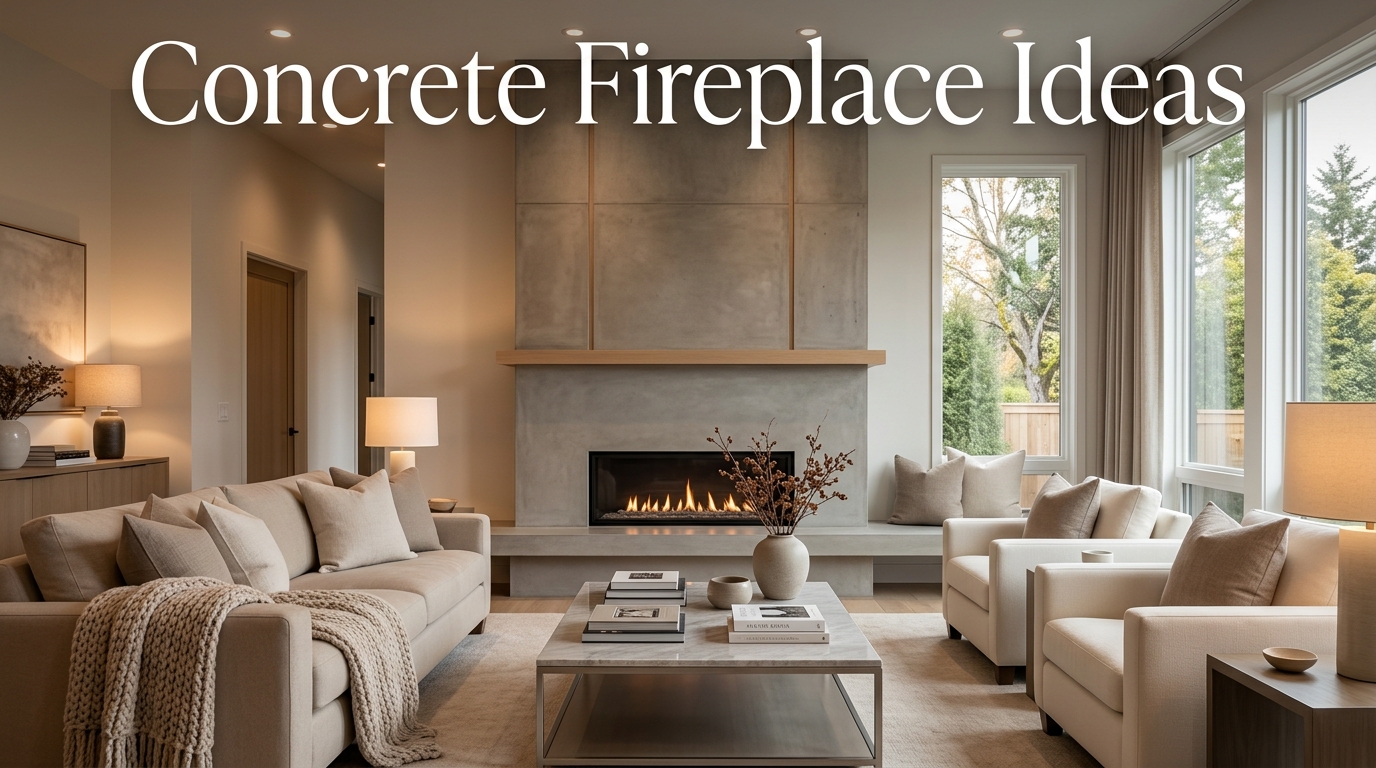
It is particularly useful when you want a focal wall without adding a traditional mantel. Choose a smooth warm-gray or taupe finish and soften the composition with a thick rug, rounded upholstery, and warm wood nearby. The ledge is best treated as a display surface or occasional perch only where the fireplace design and required clearances allow; the active fire area should remain uncluttered.
Place books, a low ceramic bowl, or a sculptural object toward the far ends rather than lining the whole hearth with accessories. In a smaller room, shorten the bench and reduce its depth. The beauty of this idea comes from the long horizontal line, so restraint makes it feel architectural instead of bulky.
17. Pair Concrete With Reclaimed Ceiling Beams

Concrete becomes much cozier when it is placed beneath reclaimed or richly grained ceiling beams. The contrast works because the fireplace supplies clean modern mass while the timber introduces age, warmth, and visual irregularity overhead. For a modern rustic living room, use a medium-gray or mushroom concrete surround that reaches toward the ceiling, then let dark or honey-toned beams cross above it.
Keep the furniture simpler than the architecture: a generous linen sofa, leather club chair, wool rug, and solid wood coffee table are enough. If the room already has several wood finishes, choose one dominant tone and let the others remain subtle; too many competing stains can make the fireplace feel disconnected.
A thick mantel is optional here. Skipping it often allows the relationship between vertical concrete and horizontal beams to feel stronger. This approach is especially effective in vaulted rooms, where a plain fireplace might otherwise look undersized. The materials do the decorating, so small accessories should stay sparse and grounded.
18. Create a Calm Japandi Concrete Fireplace

A Japandi-inspired concrete fireplace relies on quiet proportion, low furniture, and a restrained palette rather than dramatic ornament. Start with a smooth warm-gray or sand-toned surround, then pair it with pale oak, black accents, woven natural fiber, and upholstery in cream or soft mushroom.
A low linear firebox works well because it mirrors the horizontal lines of a platform sofa, long coffee table, or floating hearth. Leave generous blank space above the opening; that negative space is part of the design and keeps the room feeling calm. Instead of mantel decor, place one sculptural branch in a floor vessel nearby or hang a single abstract artwork off to one side.
This idea suits rooms where clutter is kept under control and storage can live elsewhere. In a busy family space, add closed cabinetry in the same wood tone so everyday items can disappear quickly. The concrete should feel like a quiet backdrop for firelight, texture, and shadow, giving the room warmth without visual noise.