

23 Closet Organizer Ideas to Make Getting Dressed Easier Every Day in 2026
Closet organizer ideas can turn a chaotic closet into a calm, easy-to-use space where getting dressed takes minutes, not a frantic search. Most closets fail not because they are too small, but because they lack the right mix of rods, shelves, drawers, and small organizers for the clothes and accessories inside them. The good news is that most fixes are cheap, quick, and renter-friendly. Below are 23 closet organizer ideas for every closet size and budget, so save your favourites and start with the one that solves your biggest daily frustration.
Rods, Shelves, and Drawers: The Closet Basics
1. Double-Hang Closet Rods
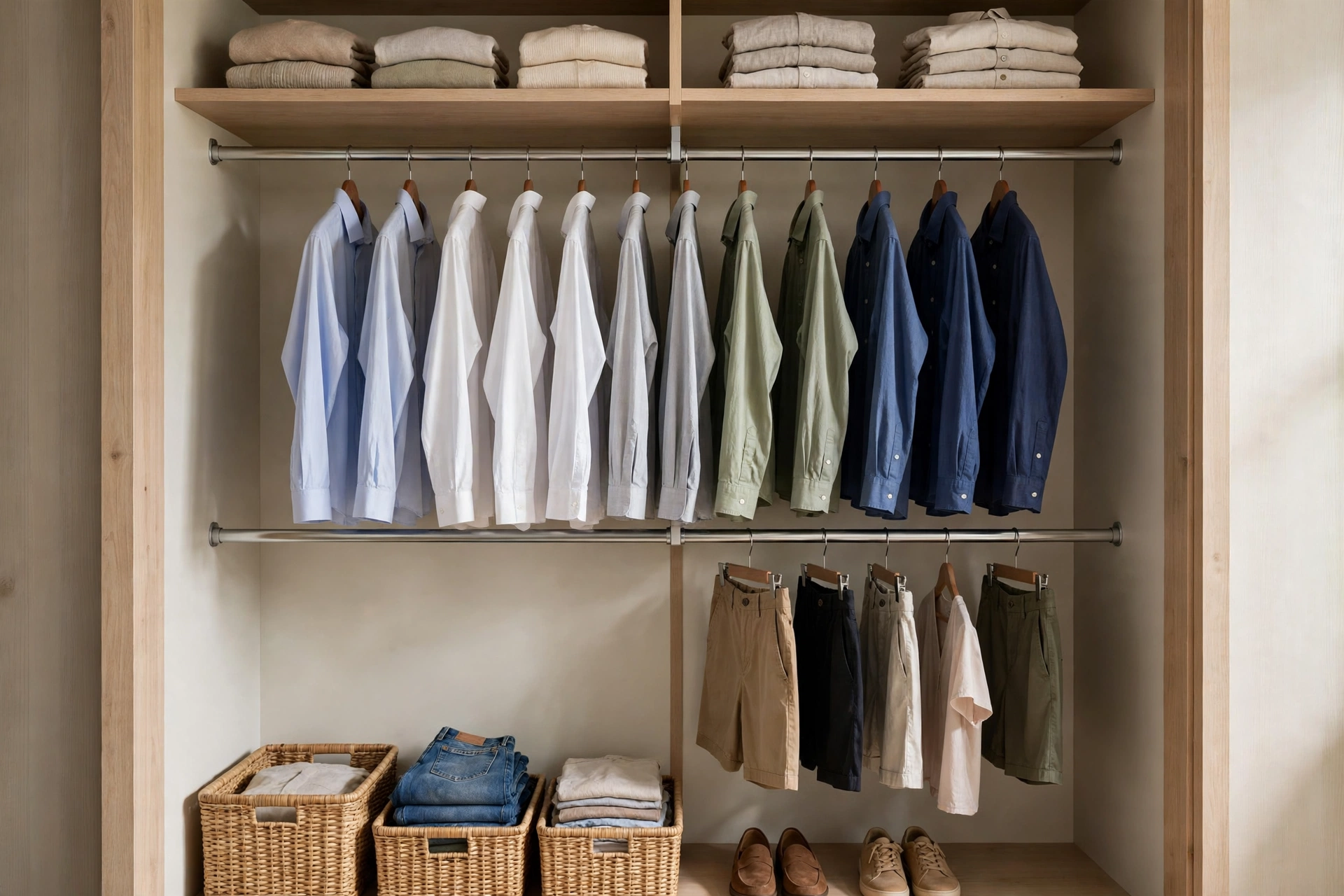
Double hanging rods instantly double the hanging space in any closet, with one rod at the top for shirts and jackets and a second rod below for trousers and skirts. This simple change is the single most effective upgrade for a standard reach-in closet, because it uses the vertical space that usually sits empty below long garments. Tip: keep one section of single hanging space for dresses and long coats, so nothing drags on the floor or creases.
Measure your hanging lengths before adding a second rod, since shirts need about 100 centimetres of drop and trousers about 90 centimetres when hung by the waistband. Leave roughly 5 centimetres between hangers so clothes do not crush each other, and keep the lower rod at least 90 centimetres above the floor for shoes or a basket below. A simple tension rod can test the layout before you commit to drilling.
2. Adjustable Closet Shelving System

An adjustable closet shelving system lets you move shelves and rods as your wardrobe changes, rather than living with fixed layouts that no longer fit. You can raise a shelf when you buy tall boots, lower a rod for children’s clothes, or add a drawer unit later. Tip: choose a system with standard-sized components, so you can add matching pieces over time instead of replacing everything when your needs change.
Standard components in 30, 45, and 60 centimetre widths make future additions easy, so avoid unusual sizes that lock you into one brand. When reconfiguring, start from the top and work down, since upper shelves set the height for everything below. Keep a small step stool nearby if you raise shelves high, because a shelf you cannot reach safely quickly becomes dead space.
3. Closet Drawer Tower Unit
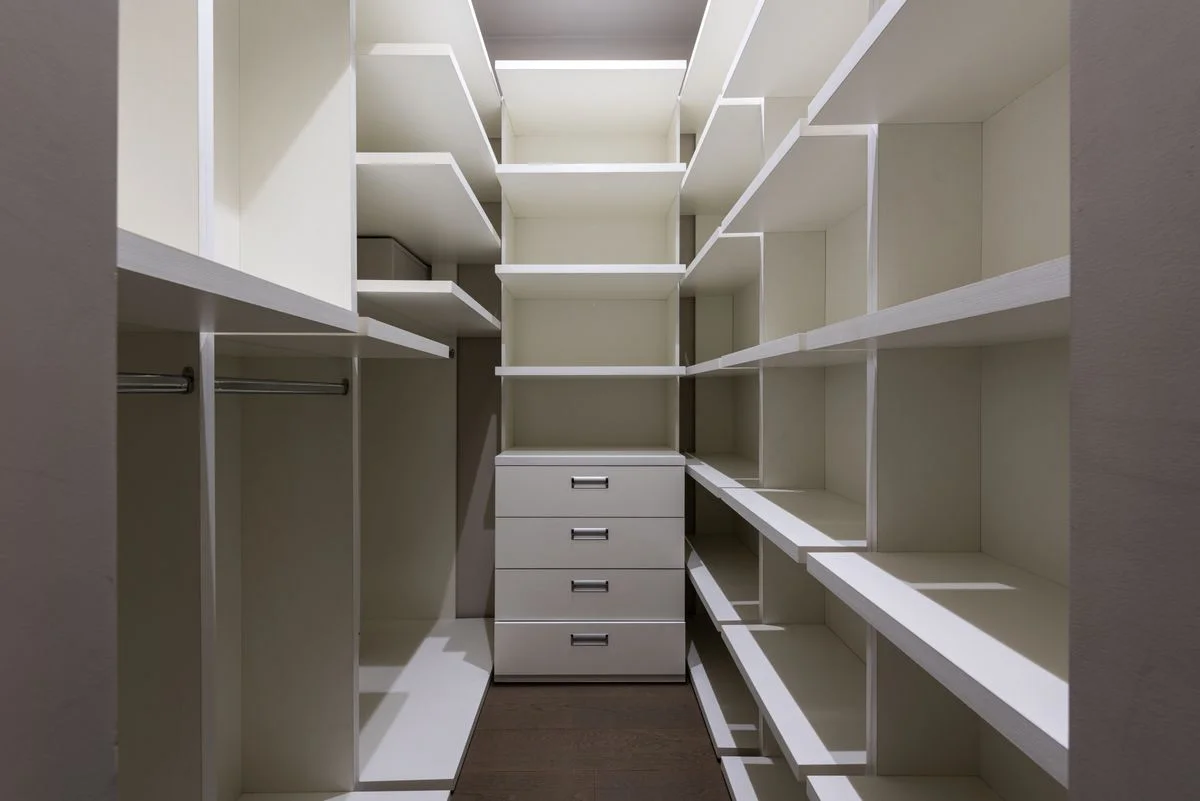
A drawer unit inside the closet gives folded clothes, underwear, and accessories a proper home, instead of stacking them in wobbly piles on shelves. Drawers keep items dust-free and hidden, and they make it easy to find a specific item without disturbing the whole stack. Tip: use shallow drawers for accessories and deeper ones for jeans and jumpers, and add drawer dividers so small items stay sorted.
Drawer depths of 35 to 45 centimetres suit most closets, while depths beyond 50 centimetres make items at the back hard to reach without a full-extension runner. Use dividers to split wide drawers into two or three zones, one for underwear, one for socks, and one for accessories, so a single drawer does not become a mixed jumble. Line drawers with non-slip matting to stop dividers sliding.
4. Shoe Shelves and Racks
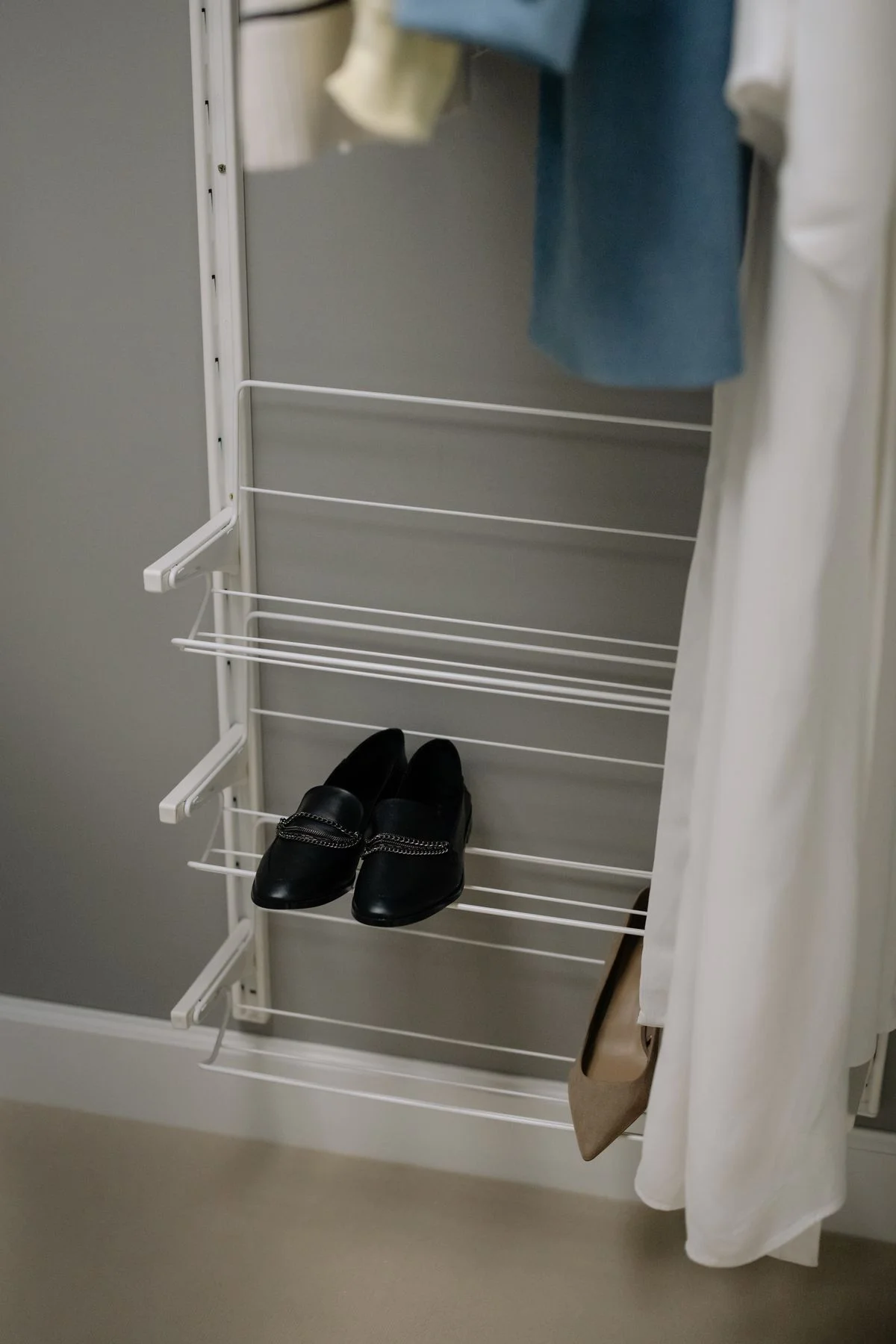
Dedicated shoe shelves or racks end the jumbled pile on the closet floor, giving every pair a visible, accessible slot. Angled shelves show shoes clearly, while flat shelves suit boots and trainers. Keeping shoes off the floor also frees space for baskets and bags below. Tip: store shoes heel-to-toe to fit more pairs per shelf, and keep everyday pairs at eye level with occasion shoes higher up.
Count your shoes before choosing shelves, since a collection of 20 pairs needs roughly 120 centimetres of shelf width if stored heel-to-toe. Slanted shelves display shoes beautifully but suit heels and smart shoes best, while flat shelves suit trainers and boots. Keep a small brush and a cloth on the lowest shelf so muddy shoes get a quick clean before they go back.
5. Hanging Shoe Organizer
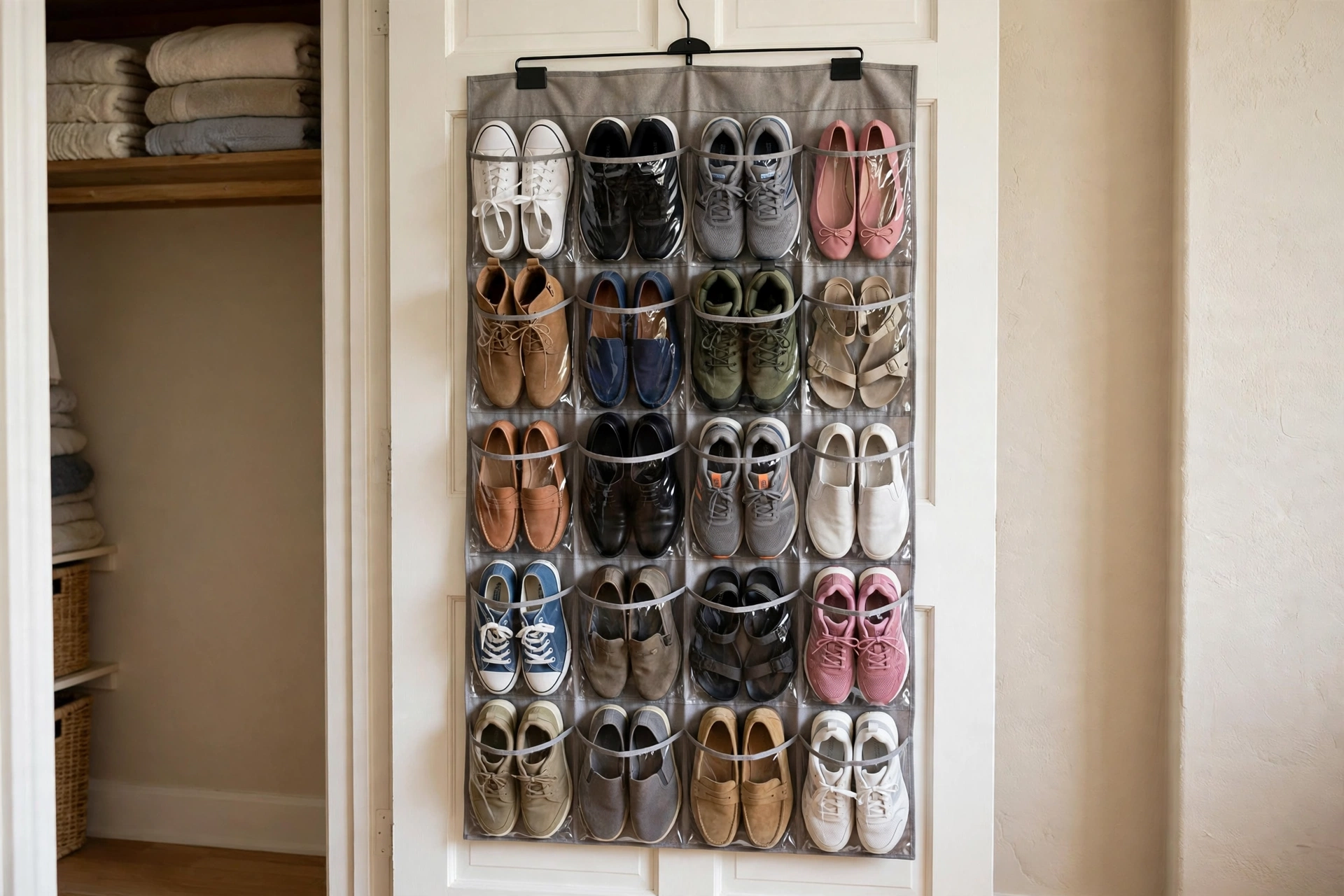
A hanging shoe organizer with clear pockets turns the back of a closet door into storage for shoes, accessories, or small items, using space that would otherwise go to waste. It is cheap, needs no installation, and moves easily if you rearrange. Tip: use clear pockets so you can see each pair at a glance, and reserve the bottom pockets for heavier items so the organizer hangs straight.
Clear pocket organizers hold about one pair of flat shoes per pocket, so count pairs before buying, and avoid forcing boots into pockets that will stretch and sag. Hang the organizer from a sturdy over-door hook rated for the loaded weight, and check the door still latches fully. Use the top pockets for light accessories like scarves and belts, keeping heavy shoes low for stability.
6. Over-the-Door Closet Organizer

Over-the-door hooks and organizers add instant storage to any closet door, holding bags, scarves, belts, hats, and tomorrow’s outfit without a single screw. They are ideal for renters and small closets where every inch counts. Tip: check that the door still closes fully with the organizer in place, and avoid overloading it, since a heavy door can strain its hinges over time.
Over-door organizers add weight to the door, so check hinges after a few weeks and tighten screws before they loosen and drop the door. Avoid hanging heavy bags on a hollow-core door, which can warp, and distribute weight evenly across hooks rather than loading one side. If the door sticks, trim the organizer thickness or switch to slimmer hooks.
Shelves, Bins, and Accessory Organizers
7. Closet Shelf Dividers
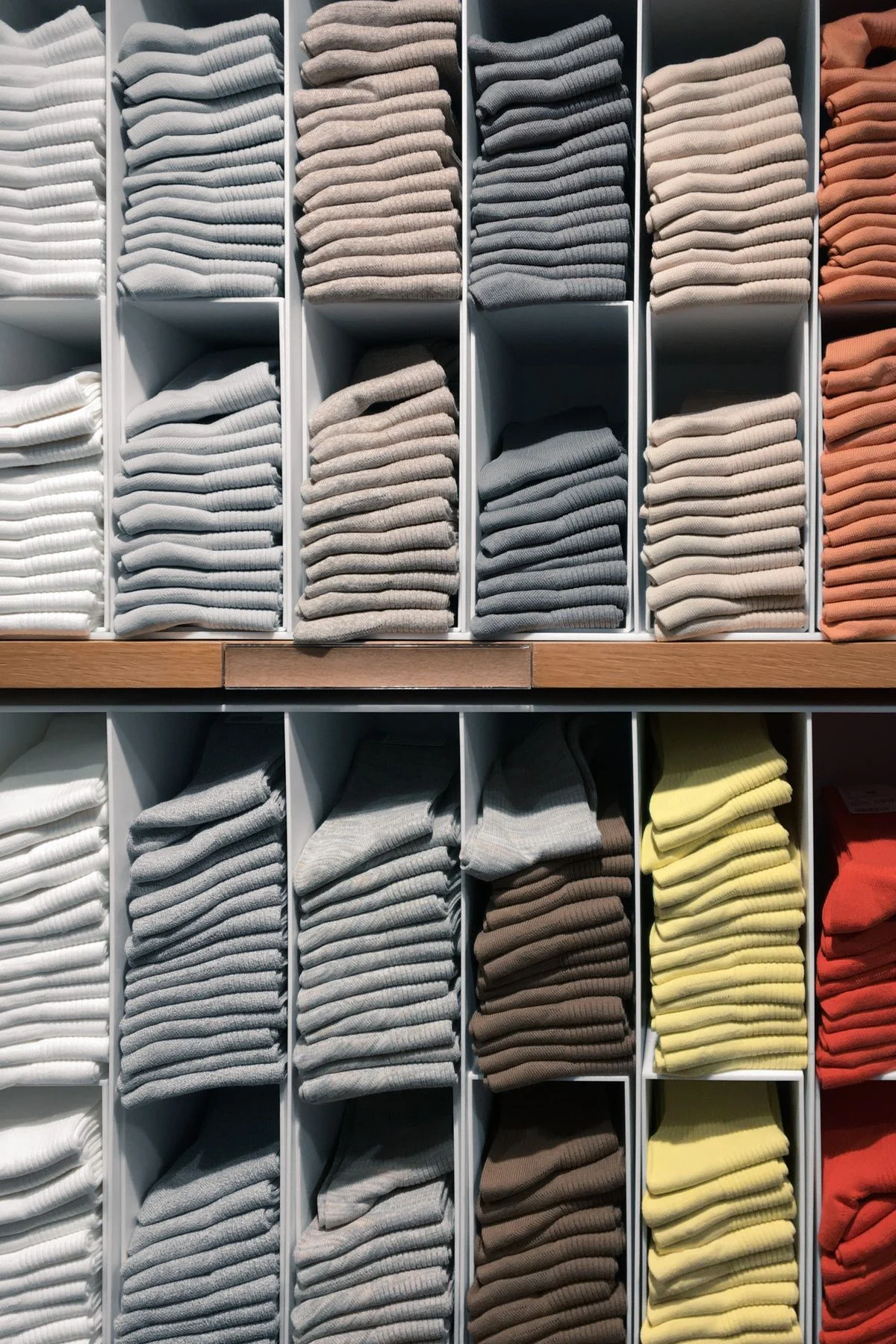
Shelf dividers are simple vertical panels that stop stacks of folded clothes from toppling sideways, keeping sweaters, jeans, and t-shirts in neat, separate columns. They cost very little, need no installation, and instantly make open shelves look intentional. Tip: group clothes by type and colour within each divided section, so getting dressed becomes a quick visual choice rather than a morning dig.
Dividers work best when each section holds one category and no more than eight to ten folded items, since taller stacks topple as soon as you pull one item out. Use dividers at least 25 centimetres tall for sweaters, and place heavier items like jeans at the bottom of each stack. File-folding knitwear vertically inside divided sections makes every item visible without disturbing the stack.
8. Stackable Storage Bins for Closet Shelves

Stackable storage bins on closet shelves corral small items, seasonal clothes, and accessories into labelled containers that slide out like drawers. Bins stop shelves from becoming a jumble, and they make it easy to pull down one category without disturbing the rest. Tip: choose bins that fit your shelf depth exactly, and label the short end so you can read labels even when bins are stacked.
Measure shelf depth and height before buying bins, leaving at least 3 centimetres of clearance above each bin so it slides out without scraping. Open-front bins suit everyday items you grab daily, while lidded bins suit seasonal storage on high shelves. Choose bins in one colour family, since matching containers instantly make a mismatched closet look planned.
9. Pull-Out Closet Baskets
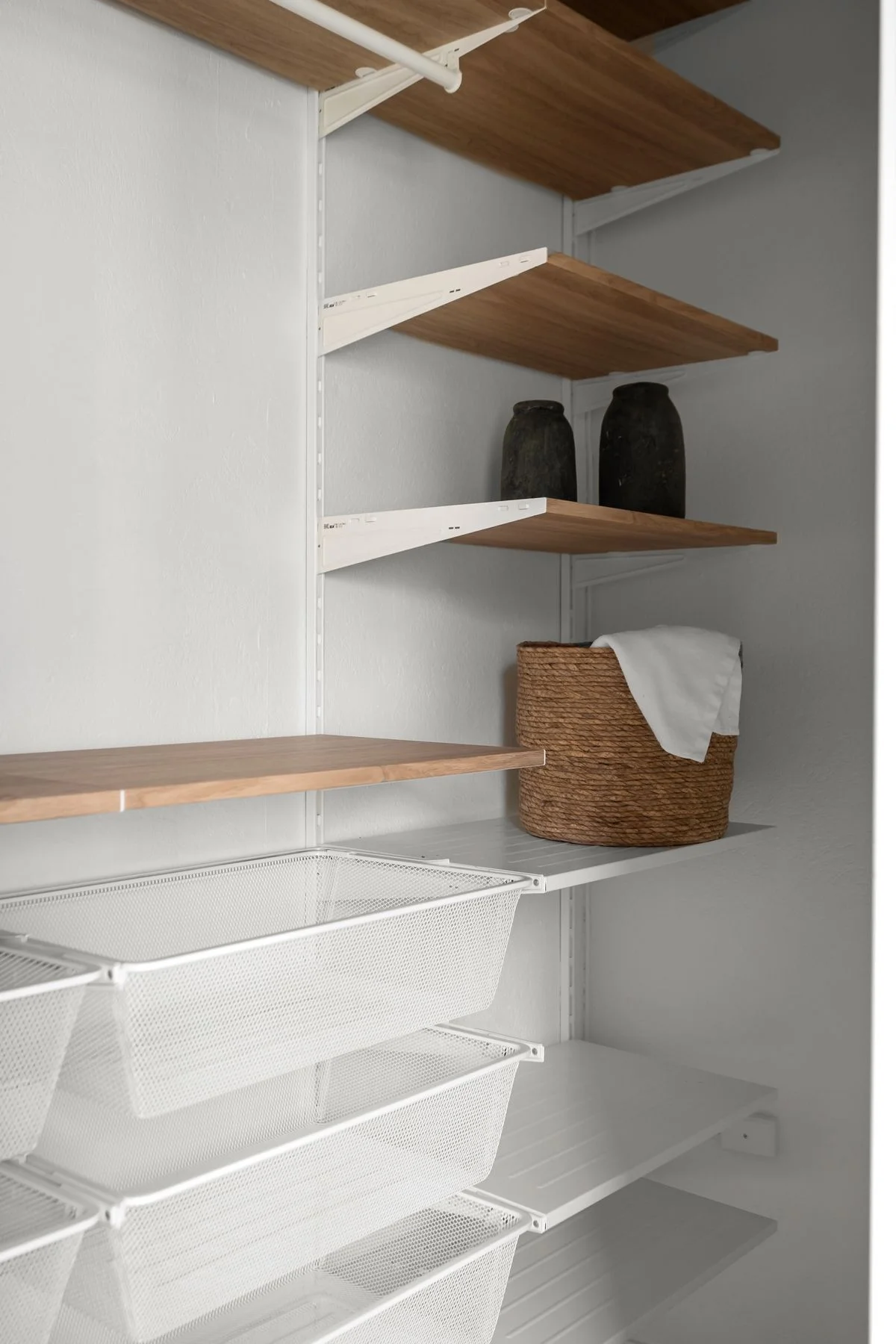
Pull-out baskets in a closet work like drawers but with better airflow, making them ideal for knitwear, gym clothes, and accessories that need to breathe. Because the basket slides fully out, you can see and reach everything inside without emptying the shelf. Tip: use wire or woven baskets for items that need ventilation, and solid bins for small accessories that might slip through gaps.
Wire baskets suit gym clothes and knitwear that benefit from airflow, while fabric-lined baskets suit delicates that snag on wire. Keep basket loads light enough to pull out with one hand, and label the front edge so you can find a category without pulling every basket out. Wipe wire baskets occasionally, since dust settles on the mesh and transfers to clean clothes.
10. Belt and Tie Racks

A belt and tie rack keeps accessories visible, untangled, and easy to choose, replacing the drawer tangle or the hook pile where belts and ties end up knotted together. Pull-out racks mount inside the closet and slide out for selection, while rotating racks suit larger closets. Tip: hang belts by their buckles and roll ties loosely if space is tight, since tight rolling can crease silk ties over time.
Pull-out belt racks need about 30 centimetres of clear space in front of the closet to slide out fully, so check the door swing before installing. Hang belts by the buckle with the strap hanging straight, which prevents curling and creasing over time. For ties, use wide, smooth hooks rather than narrow wire ones, which can leave marks on silk after months of hanging.
11. Jewelry Drawer Organizer
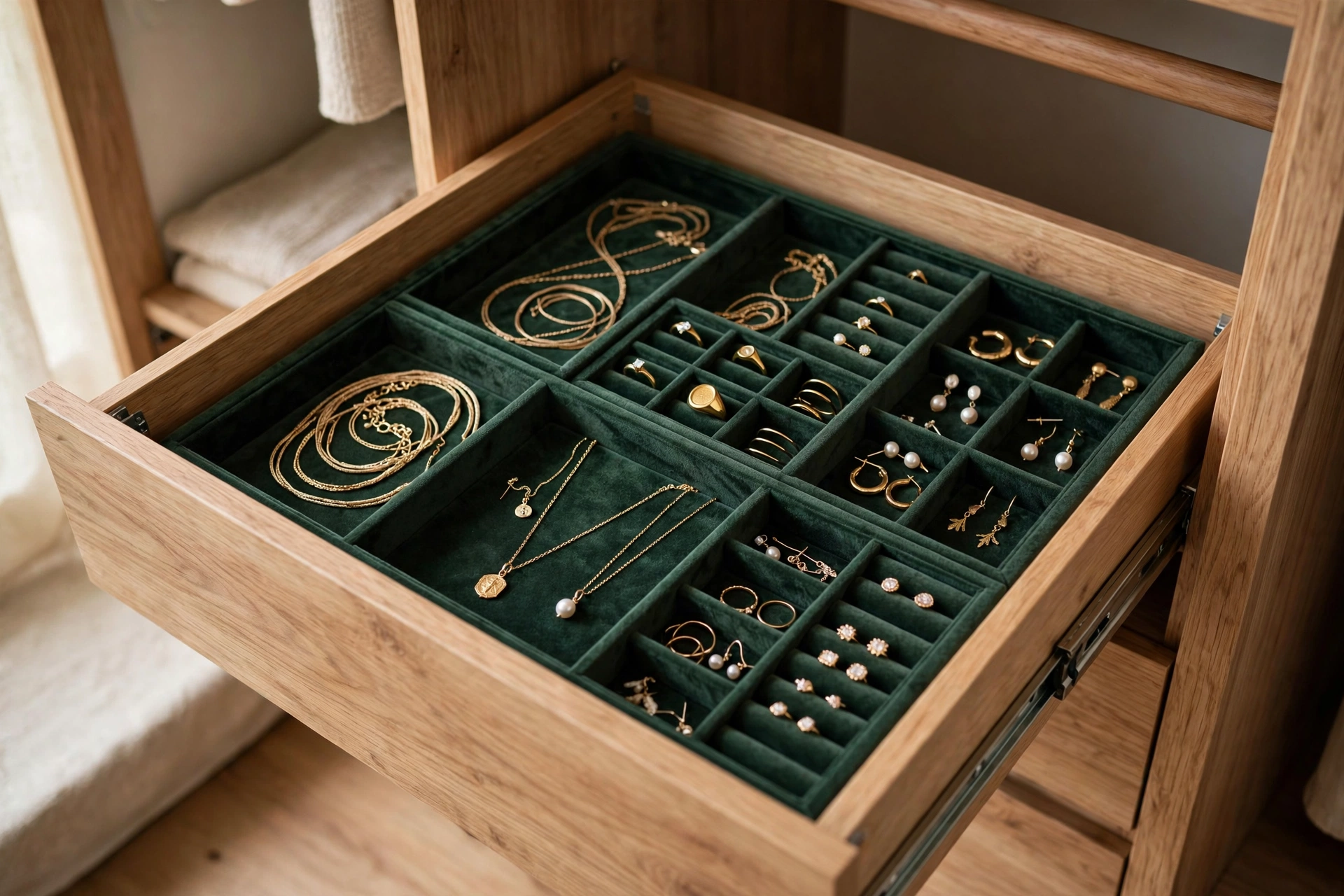
A jewelry drawer organizer with velvet trays protects necklaces, earrings, and watches from scratches and tangles, while keeping your collection visible at a glance. Compartments of different sizes suit rings, bracelets, and watches, and the soft lining stops pieces sliding around. Tip: keep everyday pieces in the top drawer for quick access, and store fine jewelry in a separate, lockable tray for extra security.
Velvet trays in different compartment sizes suit rings, studs, and watches, while deeper trays suit chunky bracelets and necklaces laid flat rather than hung. Keep a small dish on top of the dresser for the pieces you wear daily, so you are not opening the organizer drawer every morning. Store silver with anti-tarnish strips, and keep perfume away from jewelry drawers, since fragrance can damage some stones and metals.
12. Handbag Storage With Dividers and Hooks
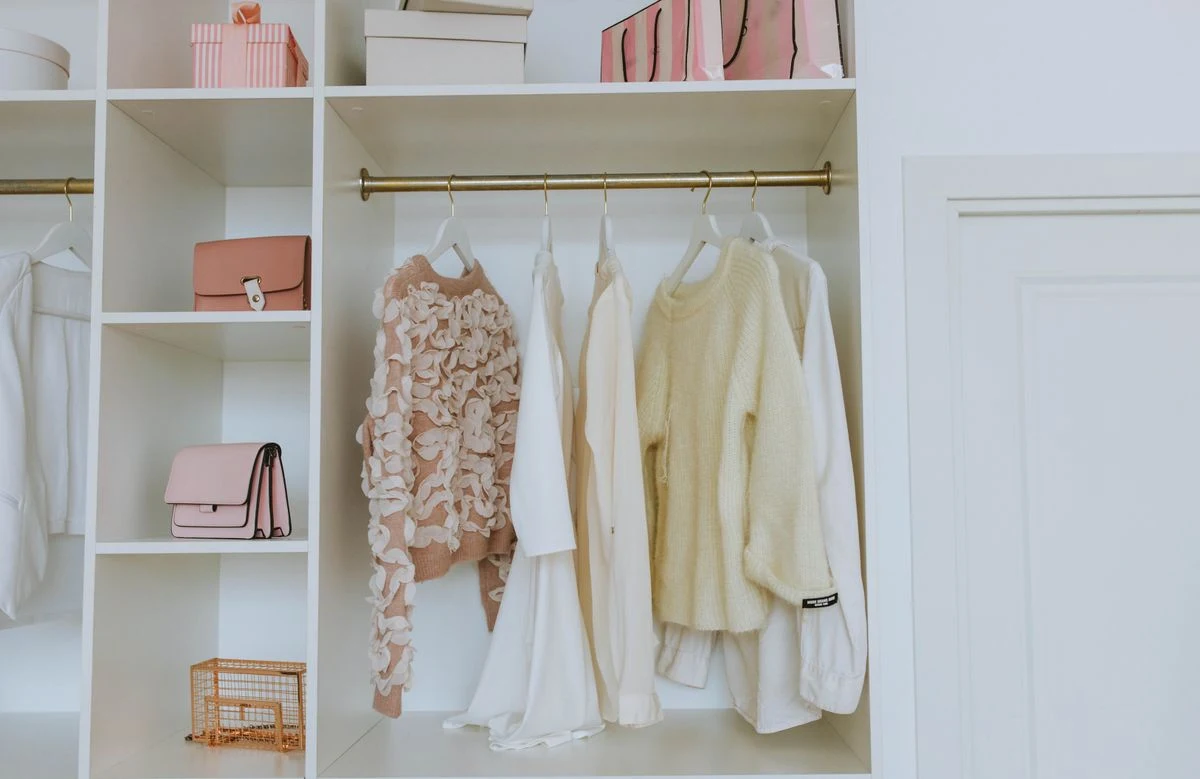
Handbag storage with shelf dividers or dedicated hooks stops bags from slumping, scratching, and piling on the closet floor. Upright dividers keep structured bags standing tall, while hooks suit slouchy totes and crossbody bags. Tip: stuff soft bags with tissue paper to hold their shape, and keep the bags you use most at arm height so you reach for them first.
Structured bags need upright dividers spaced about 15 to 20 centimetres apart, while slouchy bags hang better from wide, padded hooks that do not dent straps. Stuff soft bags with acid-free tissue when not in use, and keep dust bags on for light-coloured leather, which marks easily. Rotate bags seasonally so the same two favourites do not wear out while others sit untouched.
Specialty Closets and Seasonal Storage
13. Scarf and Accessory Hangers
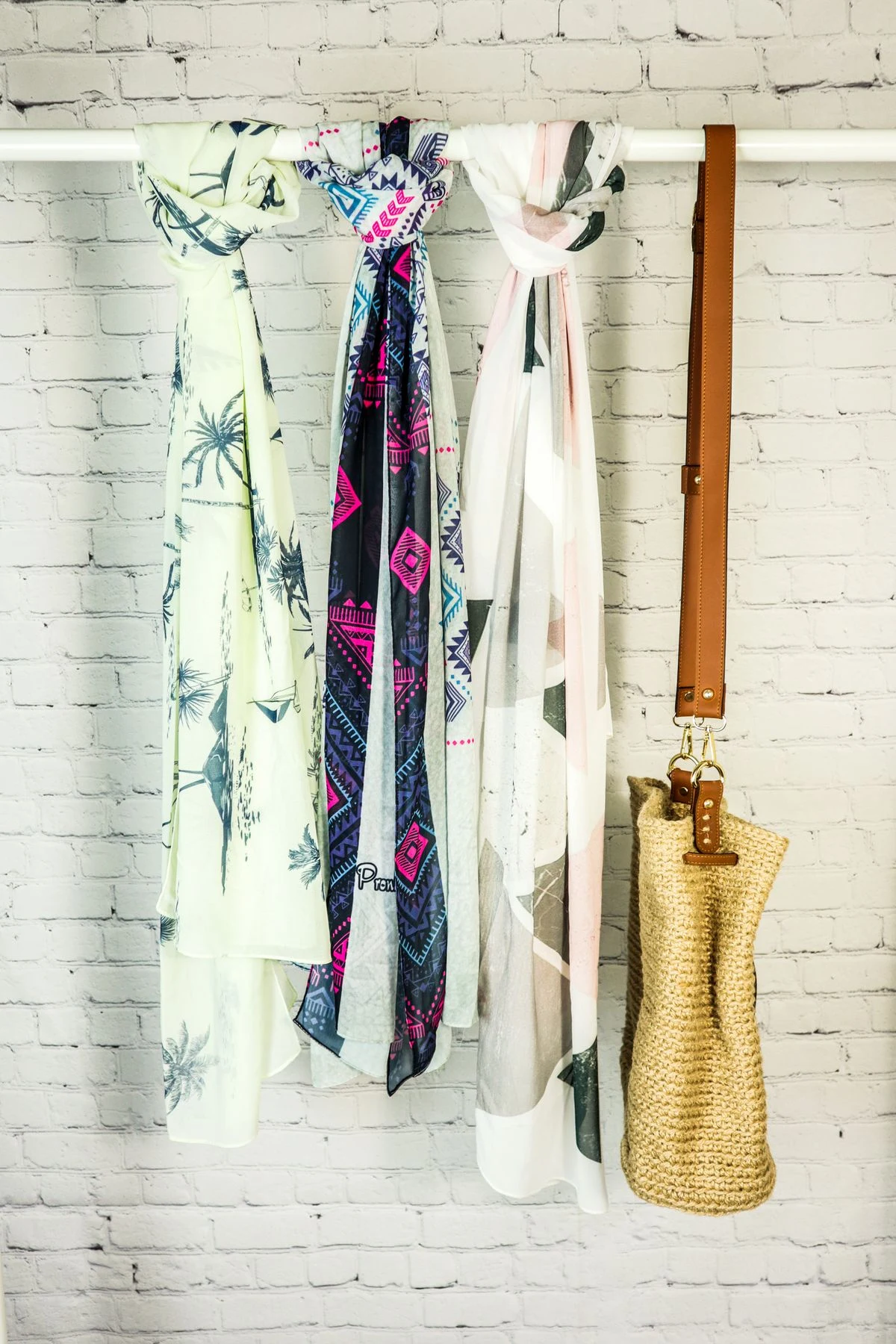
Scarf hangers with multiple loops or rings keep scarves visible, wrinkle-free, and easy to choose, ending the tangled drawer or the hook pile where scarves get lost. One hanger can hold a dozen scarves in the space of a single garment, which is a huge win for small closets. Tip: sort scarves by colour or season on the hanger, and keep delicate silk scarves on padded loops to avoid snags.
Multi-loop scarf hangers hold roughly ten to twelve scarves in the space of one garment, but heavy wool scarves need sturdier hangers than lightweight silk ones. Sort by colour from light to dark so you can spot a scarf quickly in the morning, and keep a separate hanger for winter wool scarves, which are bulkier. Shake scarves out occasionally, since dust settles in folds on rarely worn pieces.
14. Linen Closet Shelf Organizers
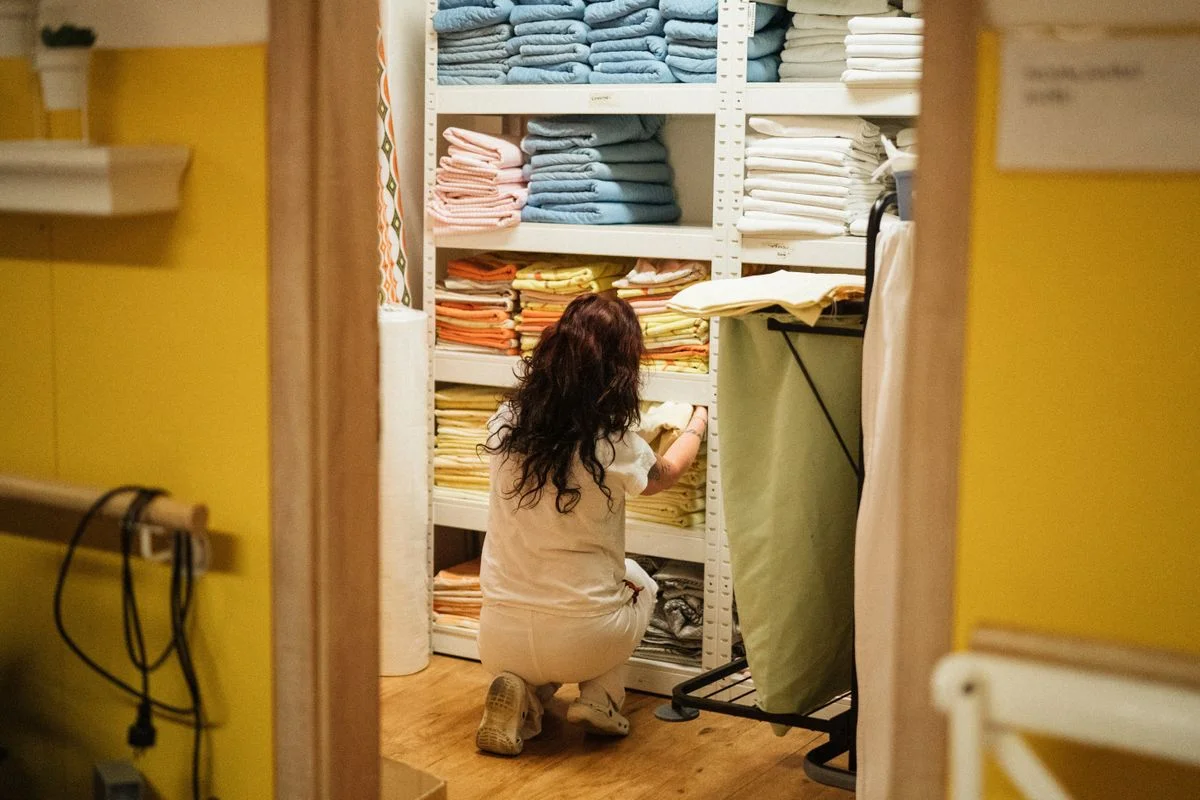
Linen closet organizers use labelled baskets, shelf dividers, and rolled towels to turn a chaotic cupboard into a tidy supply station. Rolling towels saves space and makes it obvious when supplies run low, while baskets group medicines, cleaning products, and spare bedding by category. Tip: label each shelf by room or person, so family members put clean linen back in the right place without being asked.
Rolling towels rather than folding them saves about a third of shelf space and makes it obvious at a glance when you are running low. Group linen by room in labelled baskets, one for the main bathroom, one for guests, and one for the kitchen, so nobody borrows from the wrong stash. Keep a small basket for single socks and orphaned pillowcases, which otherwise drift to the back of every linen shelf.
15. Coat Closet Hooks and Cubbies
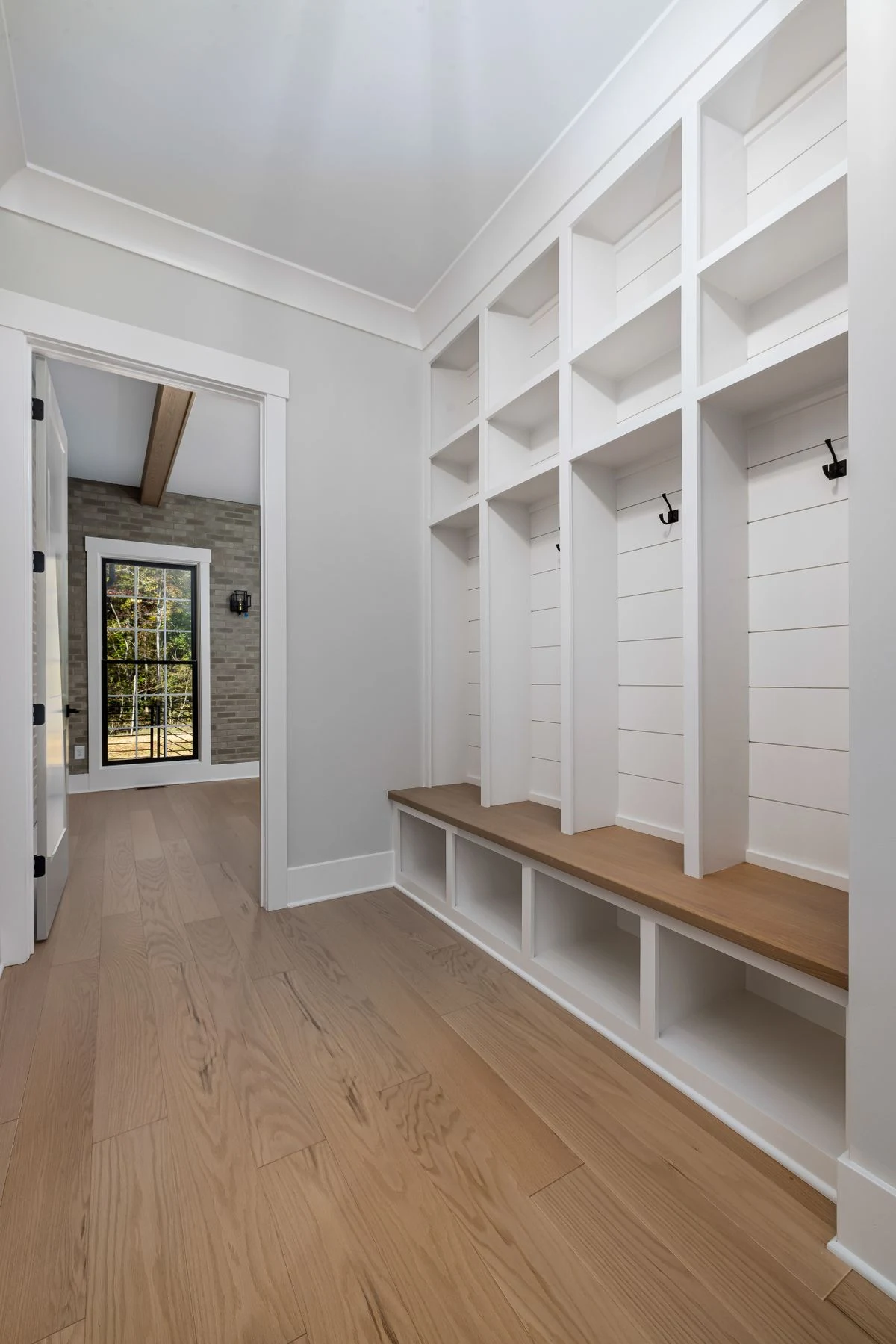
A coat closet organizer with hooks, cubbies, and a shoe tray turns the entry closet into a proper mudroom station, giving coats, bags, and shoes a defined home. Hooks suit daily coats, cubbies hold bags and hats, and a tray catches wet shoes. Tip: give each family member one hook and one cubby, so nobody’s things spill into someone else’s space, and keep a small basket for gloves and keys.
Give each person a hook at their own height, with children’s hooks around 100 centimetres from the floor, and a cubby about 30 centimetres wide per person for bags and hats. A boot tray at the base catches wet shoes, and a small wall-mounted basket holds gloves, keys, and dog leads. Clear the coat closet at the change of seasons, since outgrown coats quietly reclaim the space.
16. Kids’ Closet Organizer
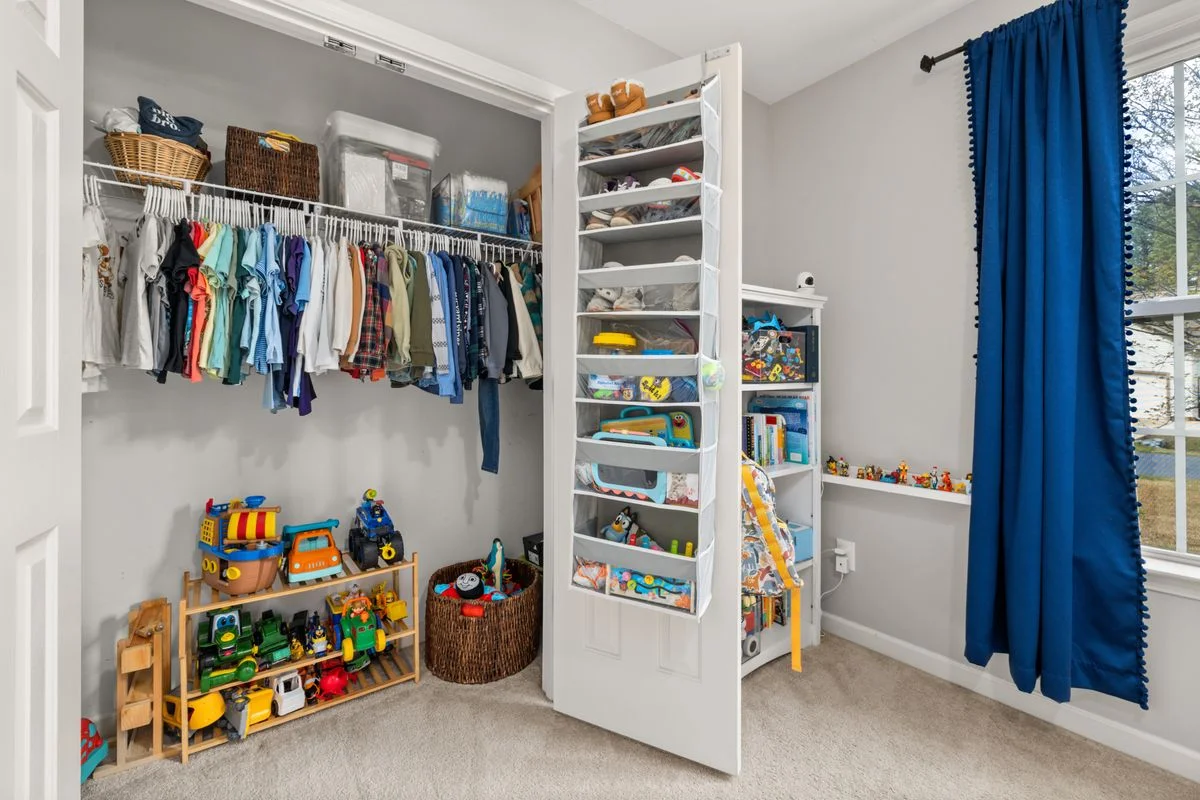
A kids’ closet organizer with low rods, reachable bins, and picture labels lets children dress themselves and tidy up independently. Lowering the rod to child height means clothes are actually reachable, while open bins suit toys, shoes, and sports gear. Tip: leave room to raise rods and shelves as children grow, and choose sturdy, wipe-clean bins that survive daily use.
Low rods should sit about 90 centimetres from the floor for younger children, rising to 120 centimetres as they grow, so plan adjustable rods from the start. Use open bins at floor level for shoes and sports gear, and picture labels on every bin so pre-readers can tidy independently. Keep a small laundry basket inside the closet for dirty clothes, which otherwise end up on the bedroom floor.
17. Seasonal Rotation Bins
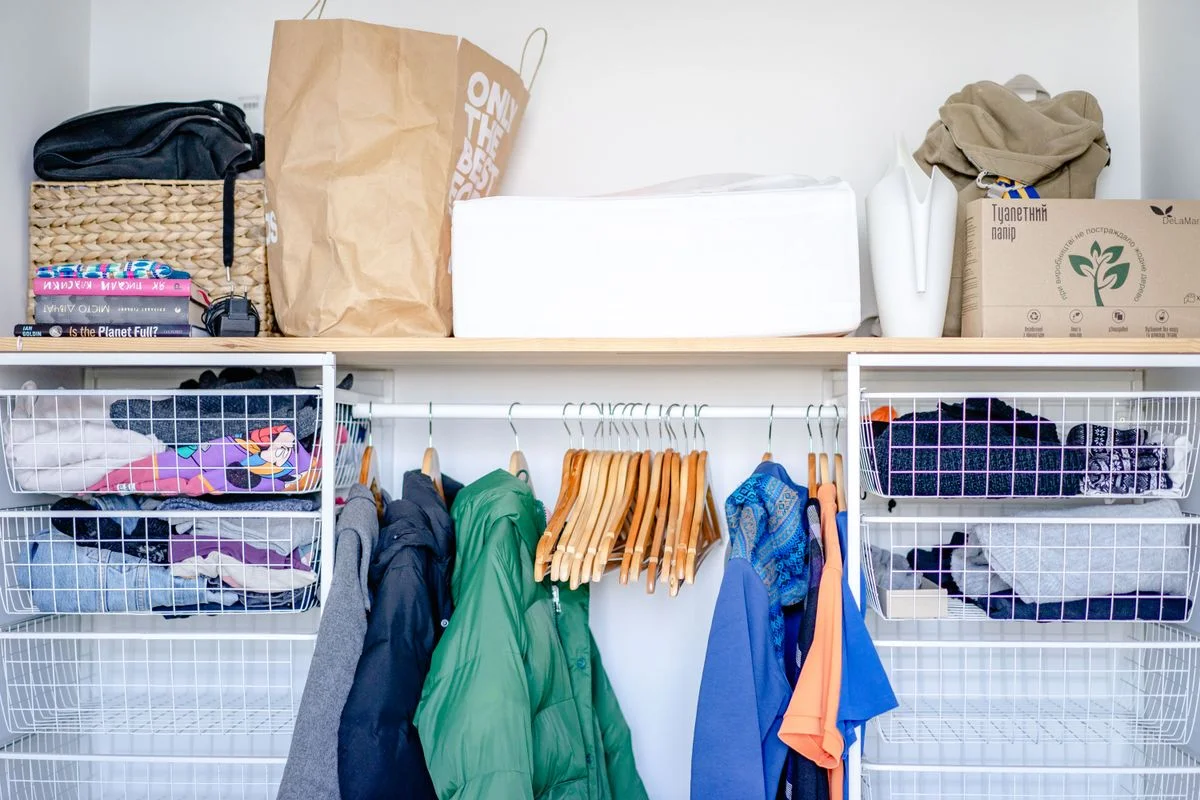
Seasonal rotation bins on the top shelf keep off-season clothes out of the way but still accessible, freeing prime closet space for what you wear now. Clear or labelled bins hold winter coats in summer and swimwear in winter, and a twice-yearly swap keeps the closet feeling fresh. Tip: add a cedar block or lavender sachet to each bin to protect clothes from moths and keep them smelling fresh.
Clear bins let you see off-season clothes without opening every box, while opaque bins look tidier on open top shelves, so choose based on your closet style. Label bins with both contents and season, for example winter coats 2026, so a future swap takes minutes. Wash or air clothes before boxing them away, since stains and odours set in during months of storage.
18. Labelled Closet Bins
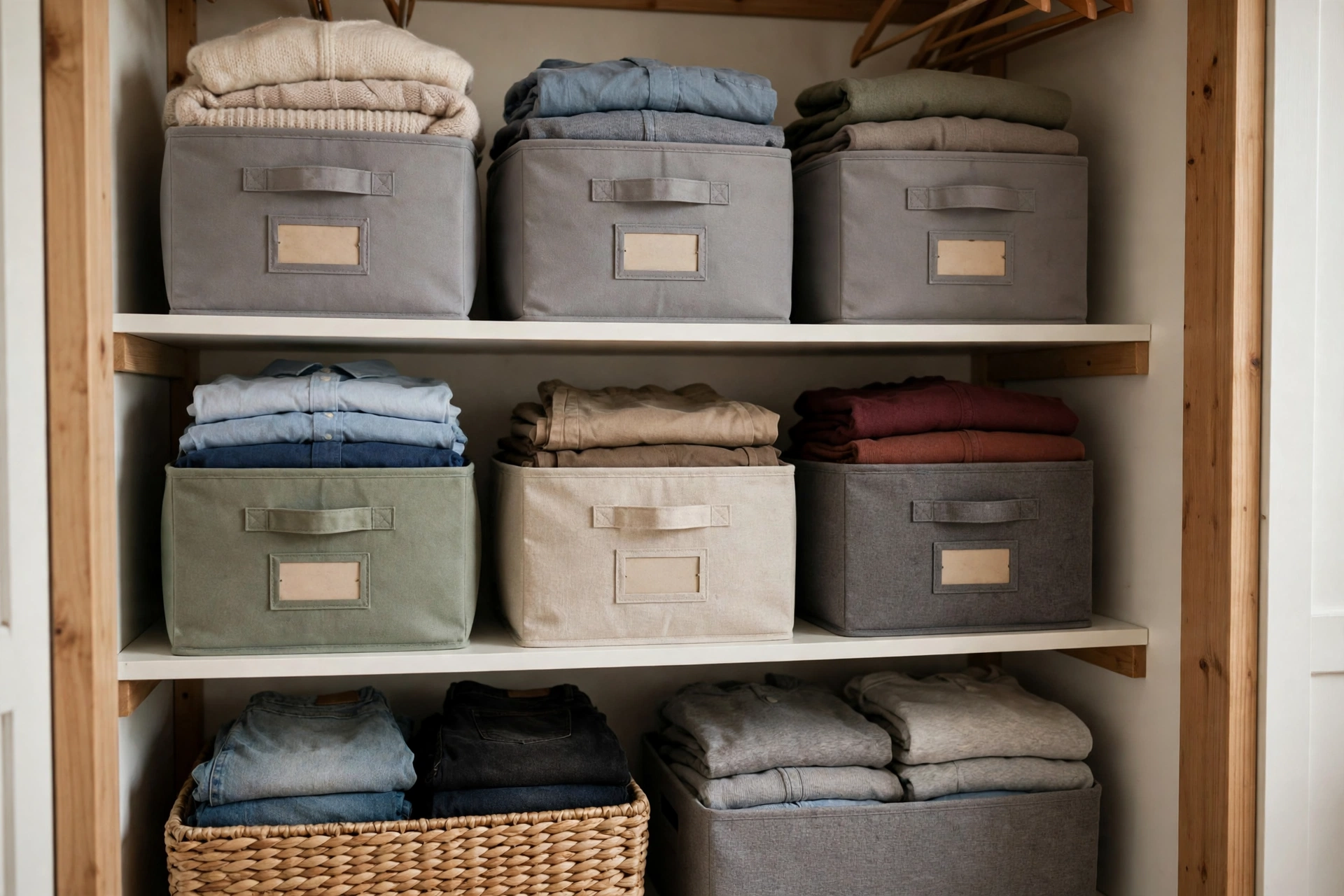
Labelled bins are the simplest way to make a closet stay organized, because everyone in the household can see where things belong. Labels remove the guesswork from tidying, and matching bins make even a basic closet look intentional and calm. Tip: use a label maker or chalk labels you can update, since categories change with seasons and lifestyles, and keep labels short and specific.
Chalk labels or reusable label holders beat permanent labels, since closet categories change with seasons, jobs, and hobbies. Keep labels to two or three words, such as gym clothes or winter hats, so they stay readable at a glance. Place labels on the short end of bins that face outward, and update them during each seasonal rotation rather than letting old labels mislead everyone.
Small-Space Tricks That Make a Big Difference
19. Slim Velvet Hangers
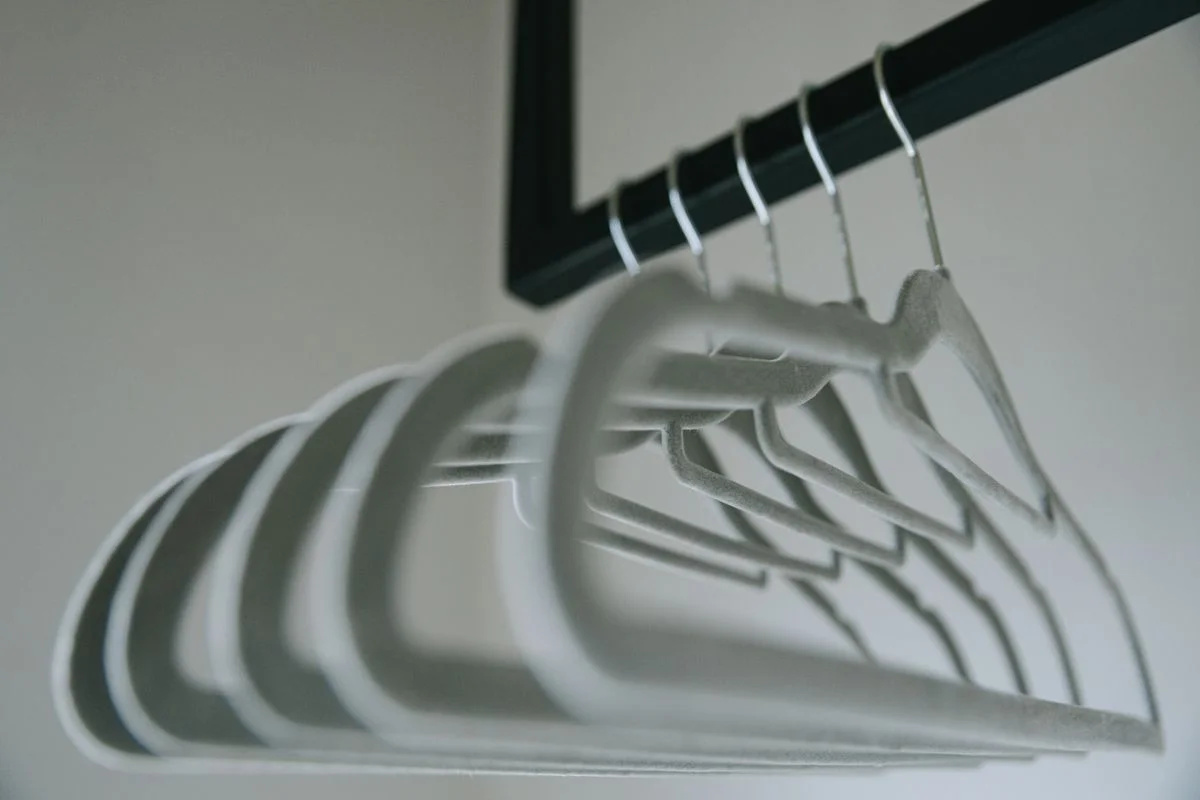
Slim velvet hangers save surprising amounts of closet space, since their thin profile and non-slip surface let clothes hang closer together without sliding off. Switching from bulky plastic or wooden hangers can free up to a third of your rod space, which is often enough to end closet overflow. Tip: switch hangers gradually, starting with one section, and keep sturdy wooden hangers only for heavy coats that need extra support.
Slim velvet hangers are about 0.5 centimetres thick compared with 2 centimetres or more for wooden hangers, which is why switching a full rod can free a surprising amount of space. Keep wooden hangers for heavy coats and structured jackets, which need shoulder support to hold their shape. Replace hangers in batches, starting with the most crowded section, so the cost stays manageable.
20. Under-Shelf Hanging Baskets
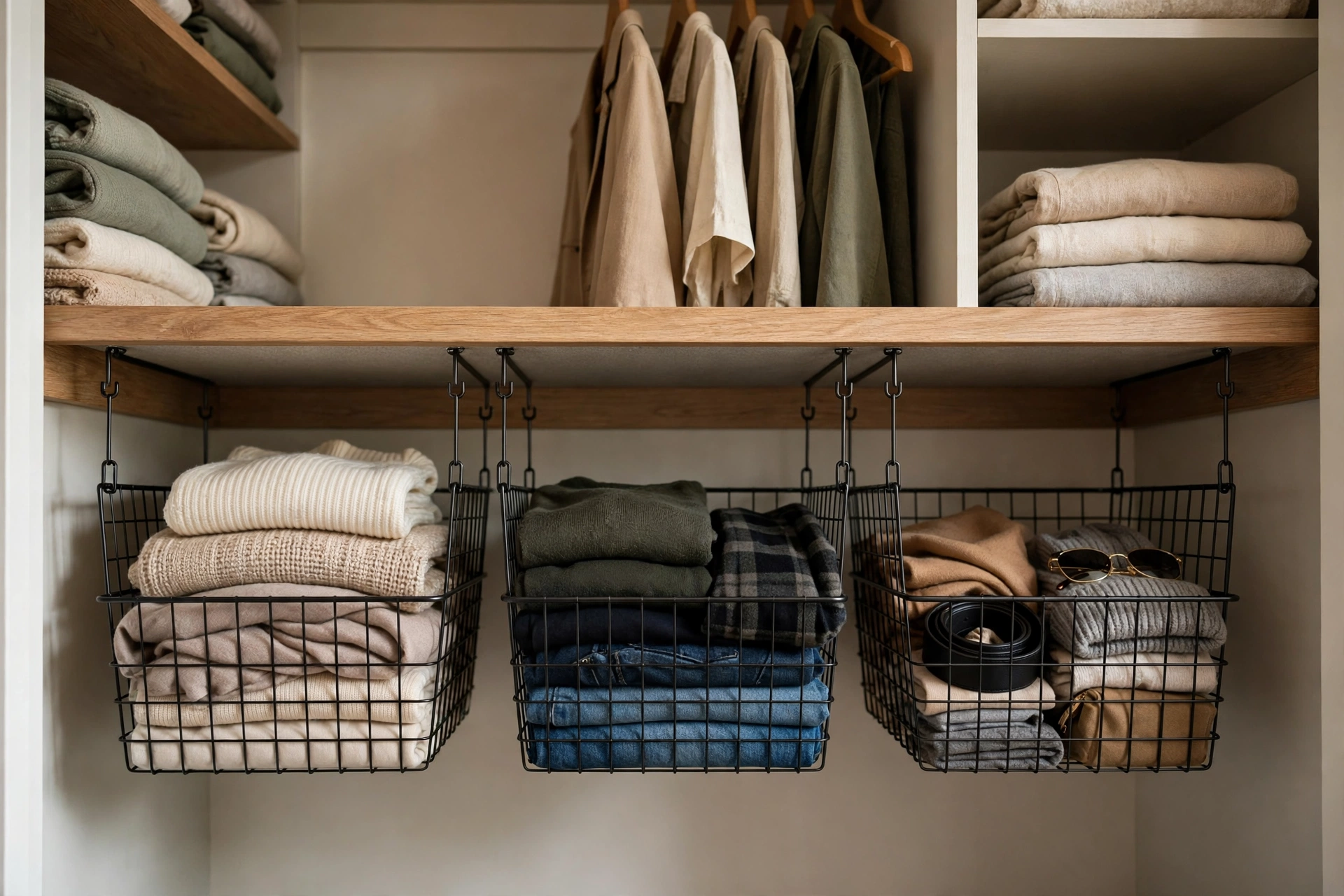
Under-shelf hanging baskets clip beneath existing shelves to create a bonus layer of storage for small items like scarves, gloves, or accessories. They use the dead air below a shelf, cost very little, and install in seconds without tools. Tip: keep these baskets light, since overloaded baskets can slide off the shelf edge, and use them for items you grab often.
Under-shelf baskets suit light items under about 2 kilograms each, since heavier loads slide off or bend the shelf above. Use them for scarves, gloves, and small accessories you reach for often, and keep the basket depth shorter than the shelf so it does not jut into the walkway. Check the clip fit on your shelf thickness before buying, since baskets sized for wire shelves often slip on solid wood shelves.
21. Closet Shelf Stackers for Sweaters
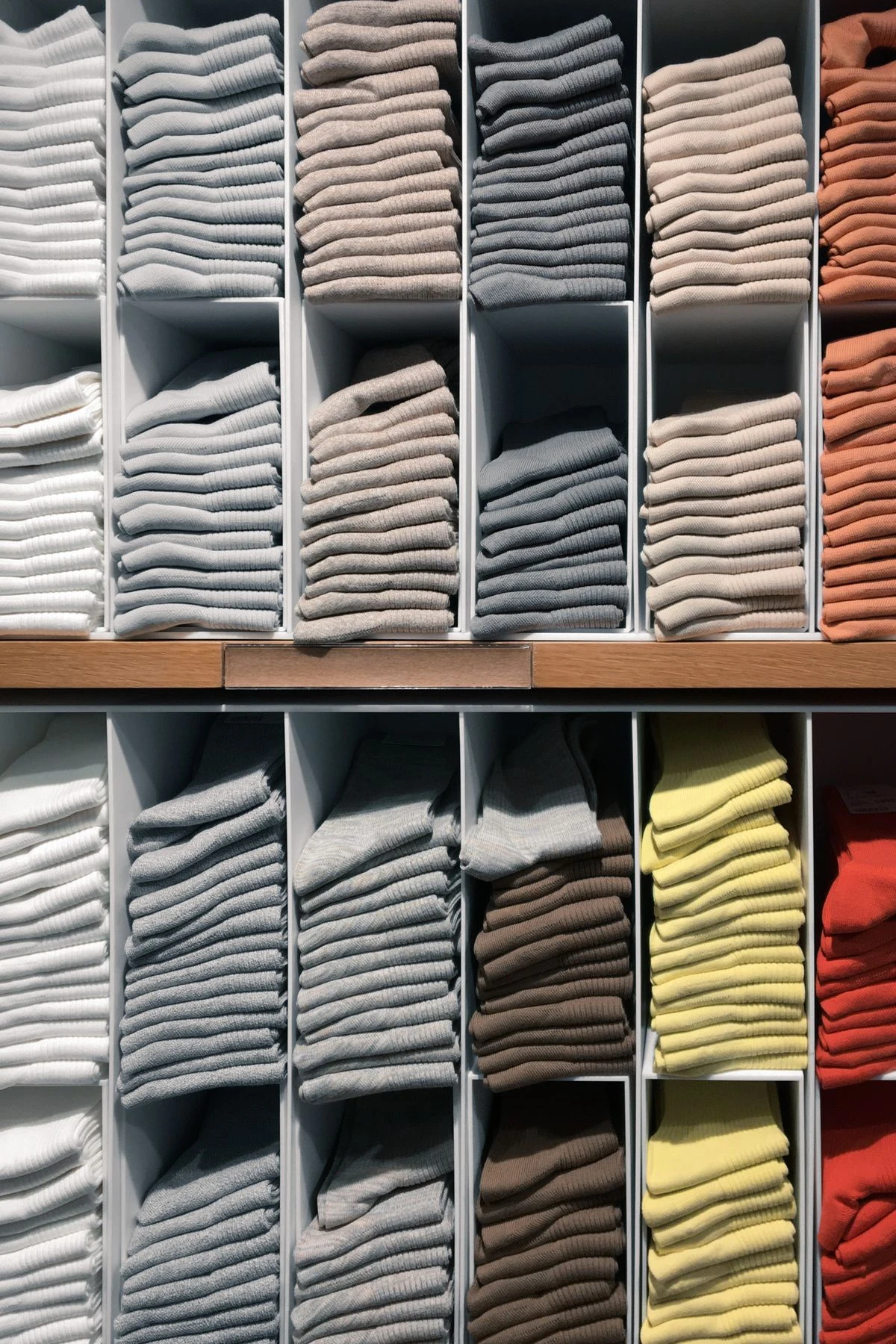
Shelf stackers create a second level inside tall closet shelves, doubling the usable space for sweaters, jeans, and folded clothes without any installation. They stop tall stacks from toppling, and they make it easy to lift out one category at a time. Tip: use stackers for lighter folded items rather than heavy books or bags, and leave a finger-width gap so you can slide items out easily.
Stackers work best when the lower level holds heavier folded items like jeans and the upper level holds lighter sweaters, keeping the centre of gravity low. Leave a finger-width gap at the front of each level so you can slide items out without lifting the stacker. Avoid stacking more than two levels high, since tall stacks become unstable and hard to reach safely.
22. Rolling Closet Cart
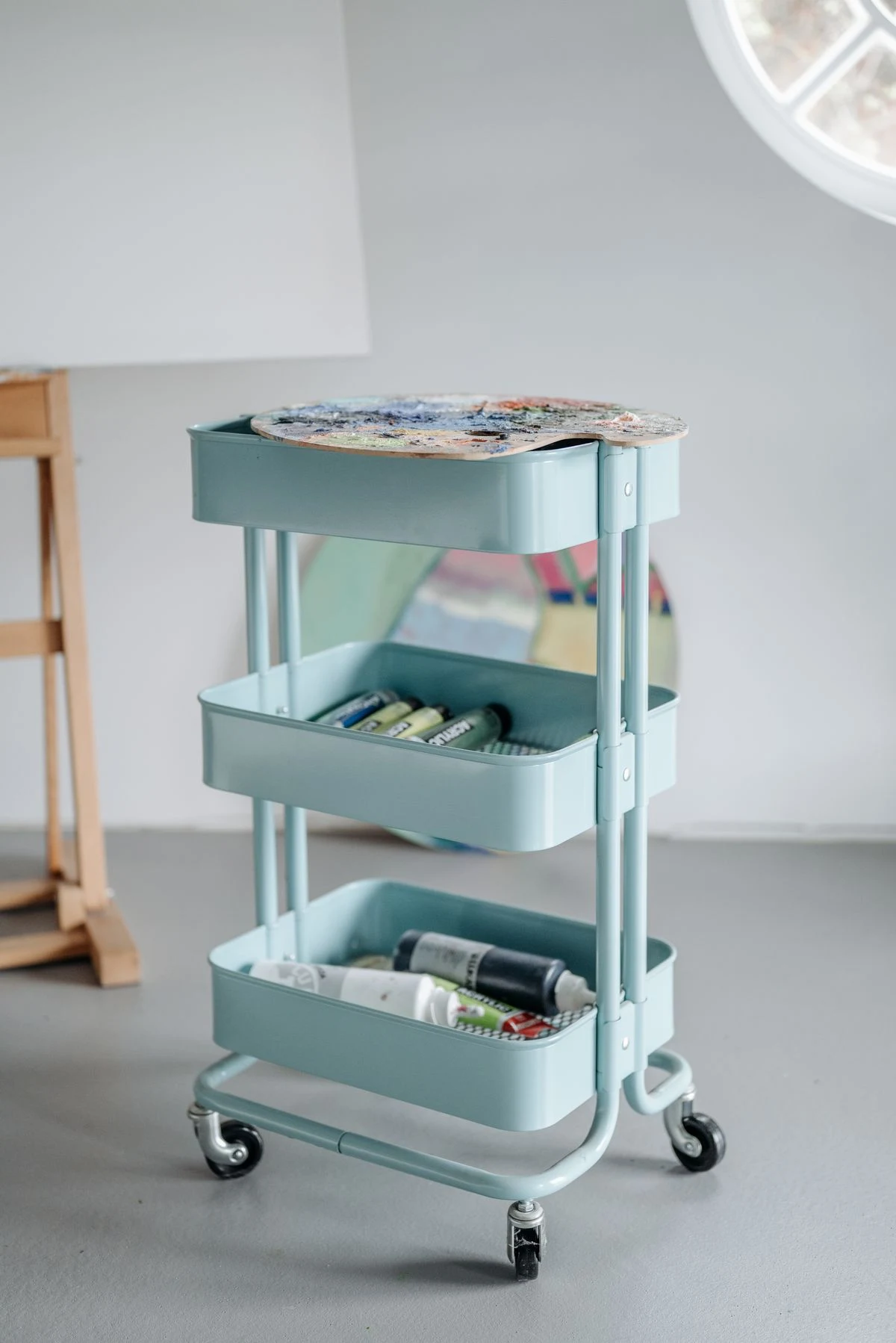
A slim rolling cart beside or inside a closet adds flexible storage for shoes, accessories, or laundry supplies, and it can roll out when you need full access. Rolling carts suit small closets and renters, since they need no installation and move between rooms. Tip: choose a cart narrower than your closet doorway, and use its top tier for items you reach for daily.
Measure doorways and gaps before buying a rolling cart, since a cart wider than the closet opening becomes a hallway obstacle rather than closet storage. Use the top tier for daily items like tomorrow’s outfit or laundry supplies, and lower tiers for shoes or accessories. Lock the wheels when the cart sits inside the closet, otherwise it rolls forward every time you pull a drawer nearby.
23. Closet Door Jewelry Organizer
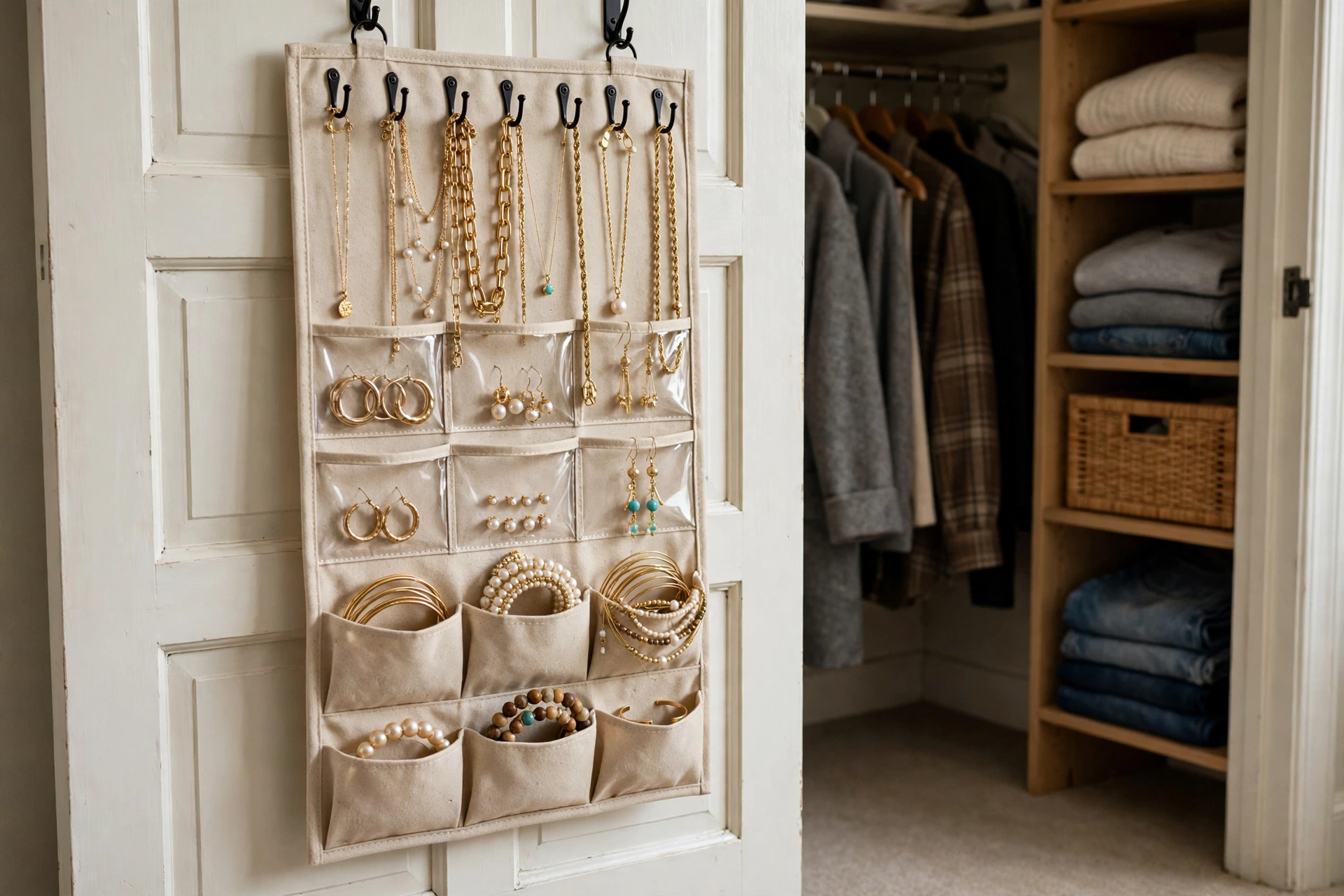
A jewelry organizer mounted on the inside of a closet door turns wasted door space into a display for necklaces, earrings, and bracelets, keeping pieces untangled and visible. Door organizers suit renters and small closets, since they need no wall holes and keep jewelry out of drawers. Tip: hang necklaces with space between them to prevent tangling, and keep the organizer away from direct sunlight, which can fade some stones and fabrics.
Door-mounted jewelry organizers need a door that closes without the organizer pressing against clothes inside, so measure the clearance before buying. Use felt-lined pockets for delicate pieces and separate hooks for necklaces, spacing them at least 5 centimetres apart to prevent tangling. Keep the organizer out of direct sunlight from a nearby window, which fades fabrics and can damage some stones over time.
How to Choose the Right Closet Organizers for Your Closet
Start by emptying the closet completely and sorting everything into keep, donate, and discard piles, since no organizer fixes an overstuffed closet. Next, measure the rod length, shelf depth, and floor space, and note what you actually own: long dresses need different space than folded sweaters. Then choose organizers that match those needs, starting with the basics like double rods and shelf dividers before adding specialty pieces. Finally, label everything and keep everyday items at eye level, with seasonal and rarely used things higher up. Revisit the closet twice a year to declutter and adjust, so the system grows with your wardrobe.
Frequently Asked Questions About Closet Organizers
What is the first step to organizing a closet?
Start by emptying the closet completely and sorting everything into keep, donate, and discard piles. Only organize what you actually wear, then measure the space and choose organizers that fit your real clothes, not an ideal wardrobe.
Do I need to install a fitted system to organize my closet?
No. Most closet organizers, such as hanging shelves, shelf dividers, bins, and over-door racks, install without tools or drilling. Fitted systems cost more and need installation, but they are worth it for large or awkward closets.
How can I fit more into a small closet?
Use matching slim hangers, which save surprising amounts of rod space, and add a second rod for shirts and trousers. Shelf dividers stop stacks from toppling, and a shoe rack on the floor frees the shelf above for bags.
How do I keep my closet organized long-term?
Rotate seasonal clothes twice a year, keeping only the current season within easy reach. Store off-season pieces in labelled bins on the top shelf or elsewhere, and declutter briefly each season so the closet never creeps back to chaos.
A well-organized closet saves you time every single morning, and it does not require a renovation to achieve. Pick two or three ideas from this list that solve your biggest frustration, whether that is shoes on the floor, sweaters toppling over, or accessories you can never find. Start this weekend with the simplest fix, and build from there. Found an idea you love? Pin this guide to your home organization board so you can find it again when you are ready to organize.
Photos: Pexels (free to use).


