
IIRC Meaning in Text: What It Really Stands For and How to Use It Like a Native
IIRC stands for “if I recall correctly,” a short way to flag that you are sharing something from memory rather than a verified source. You will see it in texts, group chats, Reddit threads, Discord servers, and comment sections, usually sitting at the start or end of a sentence like “IIRC, the game starts at seven.”
I have watched people read IIRC three completely different ways in the same week: as honest uncertainty, as a polite dodge while correcting someone, and as pure sarcasm. The same four letters carried all three moods. That range is exactly why this little acronym deserves a proper guide, so let us break it down from the letters up.
Table of Contents
- What Does IIRC Stand For?
- Where Did IIRC Come From?
- How to Use IIRC in a Text
- When IIRC Helps You and When It Hurts You
- IIRC vs AFAIK vs IMO: Picking the Right One
- The IIRC Tone Decoder: How It Actually Reads
- Common Mix-Ups and Small Mistakes
- How to Reply When Someone Sends You IIRC
- Your Questions About IIRC, Answered
- Sources
What Does IIRC Stand For?
IIRC stands for “if I recall correctly.” It works as a memory hedge, a four-letter way of saying “this is what I remember, but I could be wrong.” Cambridge Dictionary lists it as a written abbreviation of “if I remember correctly,” which is used in emails and online messages, and both versions mean the same thing.
The letters break down cleanly:
| Letter | Stands for |
|---|---|
| I | If |
| I | I |
| R | Recall |
| C | Correctly |
You will sometimes see the phrase spelled out as “if I remember correctly” instead of “if I recall correctly.” Nobody online will correct you for choosing one over the other, and Mental Floss treats both readings as standard. The point of the acronym is the hedge, not the exact verb.
Here is the nuance most guides rush past. IIRC is not always about genuine uncertainty. How-To Geek points out that people use it to inject politeness, uncertainty, or even sarcasm into a sentence. Often the writer does remember correctly, and IIRC is just there to keep things pleasant, like saying “correct me if I am wrong” without typing all of that out.
Where Did IIRC Come From?
IIRC was born in the early internet, in IRC chatrooms and Usenet newsgroups in the late 1980s and early 1990s, where fast-moving typed conversations made short acronyms essential. It was never invented by one person. It spread organically as people copied each other’s shorthand, and it still means exactly what it meant then.
To picture the environment that created it, think about Internet Relay Chat, which launched in 1988 and became one of the main places people gathered online to talk in real time. Conversations scrolled by fast, connections were slow, and typing a full sentence took long enough that the thread had often moved on. Shortcuts like IIRC, AFAIK, IMHO, BRB, and LOL all grew out of the same pressure.
Network World’s history of net shorthand shows just how deep this tradition goes, tracing acronyms like AFAIK to Usenet posts from around 1988. One internet acronym guide places IIRC’s recorded online use in the early 1990s, often in technical discussion groups where people were debating facts or software behavior and wanted to flag “I think this is right, but I am working from memory here.”
Web forums in the early 2000s carried it into gaming and hobby communities, AIM and MSN Messenger brought it to a much wider audience, and smartphones made shorthand useful all over again on tiny keyboards. Today it is standard across Reddit, Slack, Discord, TikTok comments, and group chats, and it still means exactly what it meant in 1993. The need never went away: people will always want a fast way to say “I think this is true, but check me on it.”
How to Use IIRC in a Text
Using IIRC is simple: place it at the start or end of a sentence that shares a fact you are recalling from memory, and keep the rest of the message casual. “IIRC, the party starts at eight” and “The party starts at eight, IIRC” are both correct, and the meaning is identical.
Placement does shift the feel a little. Opening with IIRC front-loads the uncertainty, so the reader knows from the first word to take the detail with a grain of salt. Putting it at the end reads more like an afterthought. Middle placement, like “the party, IIRC, starts at eight,” shows up in longer forum posts but feels clunky in a quick text, so most people skip it. A couple of small rules keep it clean: comma after IIRC when it opens a sentence, none needed at the end, and never stack qualifiers like “IIRC I think maybe.” One softener per message is plenty.
Here is how it sounds in real chats:
- Making plans: “iirc the game starts at 7, I’ll double-check the tickets”
- Shared memory: “We went to that beach two summers ago, iirc”
- Correcting someone gently: “IIRC, the concert starts at 8, not 9”
- Gaming chat: “IIRC that boss has a fire weakness”
- Fandom debate: “IIRC, that scene was cut from the theatrical release”
Across platforms the flavor stays the same but the casing shifts. Lowercase “iirc” is the default in texting and DMs, since most people do not bother capitalizing much on their phones. All-caps “IIRC” shows up more on Reddit and forums. Neither is wrong, so match the tone of wherever you are posting. People even say it out loud now, letter by letter, “eye-eye-are-see,” the way they say FYI or ASAP.
When IIRC Helps You and When It Hurts You
IIRC helps in low-stakes, casual conversations where you are sharing a recalled detail and want to stay humble about it. It hurts wherever being wrong carries real consequences, or wherever shorthand reads as sloppy. The table below is the quick gut-check I run before typing it.
| Situation | Verdict | Say this instead |
|---|---|---|
| Texting a friend | Use it | No swap needed |
| Group chat with friends | Use it | No swap needed |
| Reddit, TikTok, Discord comments | Use it | No swap needed |
| Dating app banter | Use it, casually | No swap needed |
| Slack message to a close teammate | Usually fine | “If I remember correctly” if unsure |
| Email to a client or your boss | Skip it | “If I recall correctly, we discussed…” |
| Formal reports or documentation | Skip it | Avoid acronyms like this entirely |
| Resumes and cover letters | Skip it | Project precision, not hedging |
| Legal or medical details | Skip it | Confirm the fact first, state it plainly |
| Instructions or directions | Skip it | Hedging makes people doubt the steps |
| First-time professional contacts | Skip it | Plain English until rapport exists |
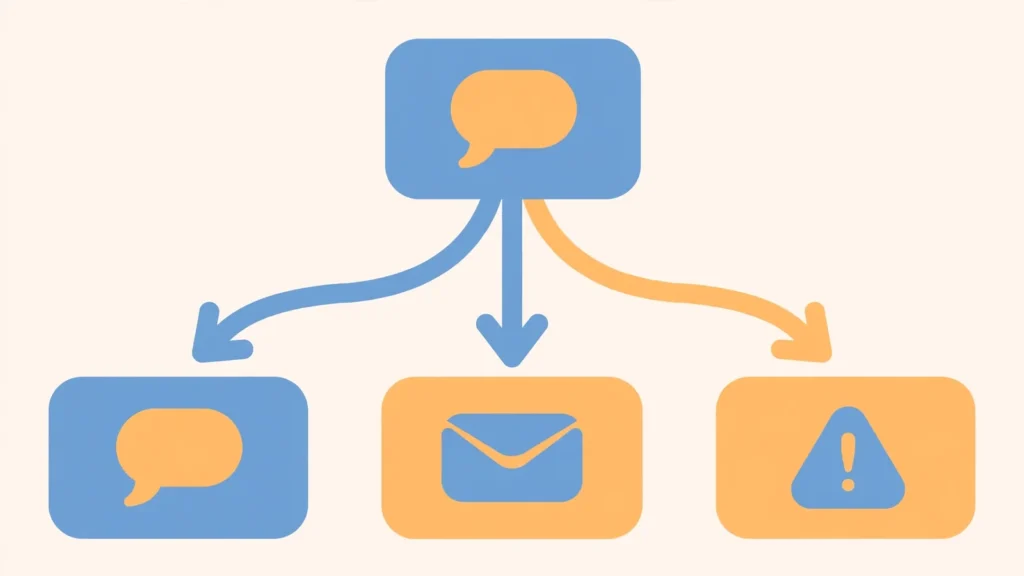
The professional rewrite is worth seeing side by side. “IIRC the invoice was due Friday” reads casual in a message to a coworker you chat with daily. “If I recall correctly, the invoice was due Friday. I will confirm with accounting” says the same thing with work-appropriate polish. The rule is simple: the more formal the audience or the higher the stakes of being wrong, the less appropriate the acronym becomes. If accuracy matters, pair it with a follow-up instead of guessing blind: “IIRC it is Thursday, but I will confirm.”
IIRC vs AFAIK vs IMO: Picking the Right One
IIRC is about recollection, AFAIK is about current knowledge, and IMO is about opinion. Mixing them up changes what your message claims, so pick the one that matches your source: memory, knowledge, or judgment.
| Acronym | Full meaning | What it signals | Use when |
|---|---|---|---|
| IIRC | If I recall correctly | Uncertain memory of a fact | You are pulling from something you remember: “IIRC, the movie came out in 2019” |
| AFAIK | As far as I know | Current belief, not necessarily memory-based | You are describing the state of things now: “AFAIK, the store is still open” |
| IMO | In my opinion | Subjective judgment | Nobody can be “correct” because it is a take: “IMO, the movie was overrated” |
| IMHO | In my humble opinion | Same judgment, softened or sarcastic | You want the take to land gently, or you are being theatrical |
| TBH | To be honest | Candor incoming | You are about to say something blunt, not about memory accuracy |
| FWIW | For what it is worth | Low-stakes offering | You are sharing info while admitting it may not carry much weight |
| IDK | I don’t know | Admits lack of knowledge outright | You cannot even guess; stronger than a hedge |
| FYI | For your information | Confident fact-sharing | You are certain: “FYI, the meeting moved to 3pm” |
The IIRC vs AFAIK line deserves a closer look because it confuses people the most. Say “IIRC” when the information comes from something you recall: a past conversation, an event you attended, a detail you read somewhere. Say “AFAIK” when you are describing your current understanding of a situation, which might be incomplete for reasons that have nothing to do with memory. “IIRC we agreed on Thursday” points backward at a memory. “AFAIK the office is open today” points at the present.
And IMO is a different animal entirely. IIRC hedges a factual claim you might be misremembering, while IMO marks a sentence as pure opinion from the start, like “IMO the finale was perfect.” There is nothing to “recall correctly” about a preference, so the two never substitute. If you are still deciding, ask one question: am I unsure about a fact, or am I sharing a view? Fact goes to IIRC or AFAIK, view goes to IMO.
The IIRC Tone Decoder: How It Actually Reads
IIRC has no fixed tone. The words around it, the casing, the punctuation, and the relationship with the reader decide whether it sounds polite, uncertain, or sarcastic. Read the clues around the four letters before you decide how someone meant it.
| The line | The vibe | The clue that gives it away |
|---|---|---|
| “iirc your birthday’s the 15th, right?” | Warm, thoughtful | Lowercase, a question at the end, shows they remembered something about you |
| “IIRC, the meeting starts at 3pm” | Neutral, helpful | Caps, comma, front position, plain factual claim |
| “IIRC, I was the last one to clean out the fridge” | Pointed, slightly smug | The claim assigns blame; the hedge makes it deniable |
| “IIRC you promised to never mention that karaoke video” | Sarcastic, joking | Obviously remembers perfectly; the hedge is the joke |
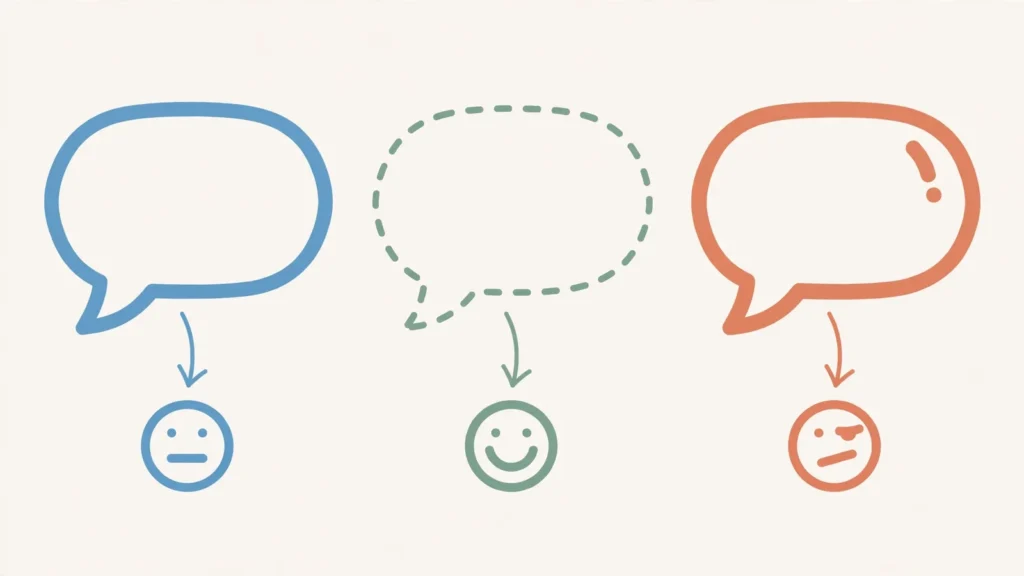
The honest bit most guides skip: IIRC softens a sentence, but it cannot rescue a rude one. “IIRC, you’re terrible at this” is still an insult wearing a four-letter costume. And sarcastic IIRC only lands with people who already know your voice, so save the snark for friends, not strangers in a group chat.
Common Mix-Ups and Small Mistakes
Most IIRC mistakes are small, but they stack up fast. Run through this list before you hit send.
- Thinking it is a question. “IIRC, the meeting is at 2pm” is a statement with a hedge, not a question. If you are actually asking, drop the acronym and use a question mark.
- Reading too much into the casing. “IIRC” and “iirc” mean the exact same thing. Caps read slightly more deliberate, lowercase reads chattier, but the definition never changes.
- Stacking hedges. “IIRC, I think maybe the store closes at nine” sounds like you are unsure of your own name. One softener per message.
- Using it for opinions. “IIRC, pizza is the best food” is nonsense, because taste is not something you recall. Opinions belong to IMO, facts belong to IIRC.
- Assuming the reader knows it. Some readers will read “iirc” as a typo. With a slang-skeptical audience, write the phrase out: “if I recall correctly.”
How to Reply When Someone Sends You IIRC
When someone writes IIRC, they are sharing information while admitting it might be off, which is really an invitation to confirm, correct, or add your own memory. The right reply depends on what you actually know.
| Your situation | Sample reply |
|---|---|
| You can confirm it | “Yep, that’s right.” / “Correct, it’s at 8.” |
| You think they are wrong | “I actually think it was 9, let me check.” |
| You have no idea either | “Not sure tbh, let me look it up.” |
| You want to verify together | “I’ll double-check and confirm.” |
| It was clearly a joke | Play along: “Oh you remember that perfectly, nice try.” |
One reply to avoid: “Are you sure??” with double question marks. They already told you they are not sure. That is what the acronym means. Meet the hedge with curiosity or a quick check, not an interrogation.
Your Questions About IIRC, Answered
What does IIRC mean in text?
IIRC means “if I recall correctly” (or “if I remember correctly”). It is a shorthand people use in texts and online chats to show they are sharing something from memory and might be slightly wrong. Example: “iirc the party starts at 8.”
Is IIRC formal or informal?
Informal. It fits texts, group chats, Reddit, Discord, TikTok comments, and casual work chat. Keep it out of formal emails, reports, cover letters, and client-facing writing, where the full phrase “if I recall correctly” or plain language works better.
What is the difference between IIRC and AFAIK?
IIRC points backward at a memory: “IIRC we agreed on Thursday.” AFAIK describes current knowledge: “AFAIK the store is still open.” Use IIRC when recalling something that happened, AFAIK when describing how things stand now.
Does lowercase “iirc” mean the same as “IIRC”?
Yes. Capitalization does not change the meaning at all. Lowercase “iirc” is the default in texting and DMs, while all-caps “IIRC” is more common in forums and Reddit. Match the tone of where you are posting.
How do you pronounce IIRC?
Say it letter by letter: “eye-eye-are-see,” like FYI or ASAP. It is not pronounced as one blended word. Some people skip the acronym entirely in speech and just say “if I recall correctly.”
Can I use IIRC at work?
In casual Slack or Teams messages with teammates, usually yes: “iirc the meeting moved to 2pm.” In emails to clients, your boss, or anyone new, write the phrase out instead. In formal documents, skip it entirely and confirm the fact.
When should I avoid using IIRC?
Skip it anywhere precision matters: legal or medical details, safety instructions, formal writing, and first-time professional contacts. Also skip it when you could just verify the fact in ten seconds, since guessing with a hedge is worse than checking.
Sources
- How-To Geek’s guide to what IIRC means and how to use it
- Punslush’s IIRC meaning guide, with origin and platform breakdowns
- Cambridge Dictionary’s entry for IIRC
- Network World’s history of internet shorthand origins
- Mental Floss’s guide to common internet acronyms including IIRC
Related:
Masochist Meaning: Definition, Examples, and Masochist vs Sadist Explained
Rizz Meaning: What “Rizz” Means in Texting + Examples
What Does IMO Mean in Text? Meaning & Examples
TLDR Meaning: Full Form, Use in Texts & Social Media