

19 Dorm Living Room Ideas for Small, Shared Student Spaces That Feel Like Home in 2026
A dorm living room is a special kind of challenge: it is small, shared, usually on a student budget, and it has to work for studying, hanging out, movie nights and the occasional group project. These 19 dorm living room ideas are made for exactly that reality — compact seating, furniture that does two jobs, and cozy styling that does not need a big spend or a landlord’s permission. Whether you share with one roommate or five, you will find ideas here that make your shared space feel like home.
Smart Small-Space Seating
1. A Compact Futon for Sitting and Sleeping
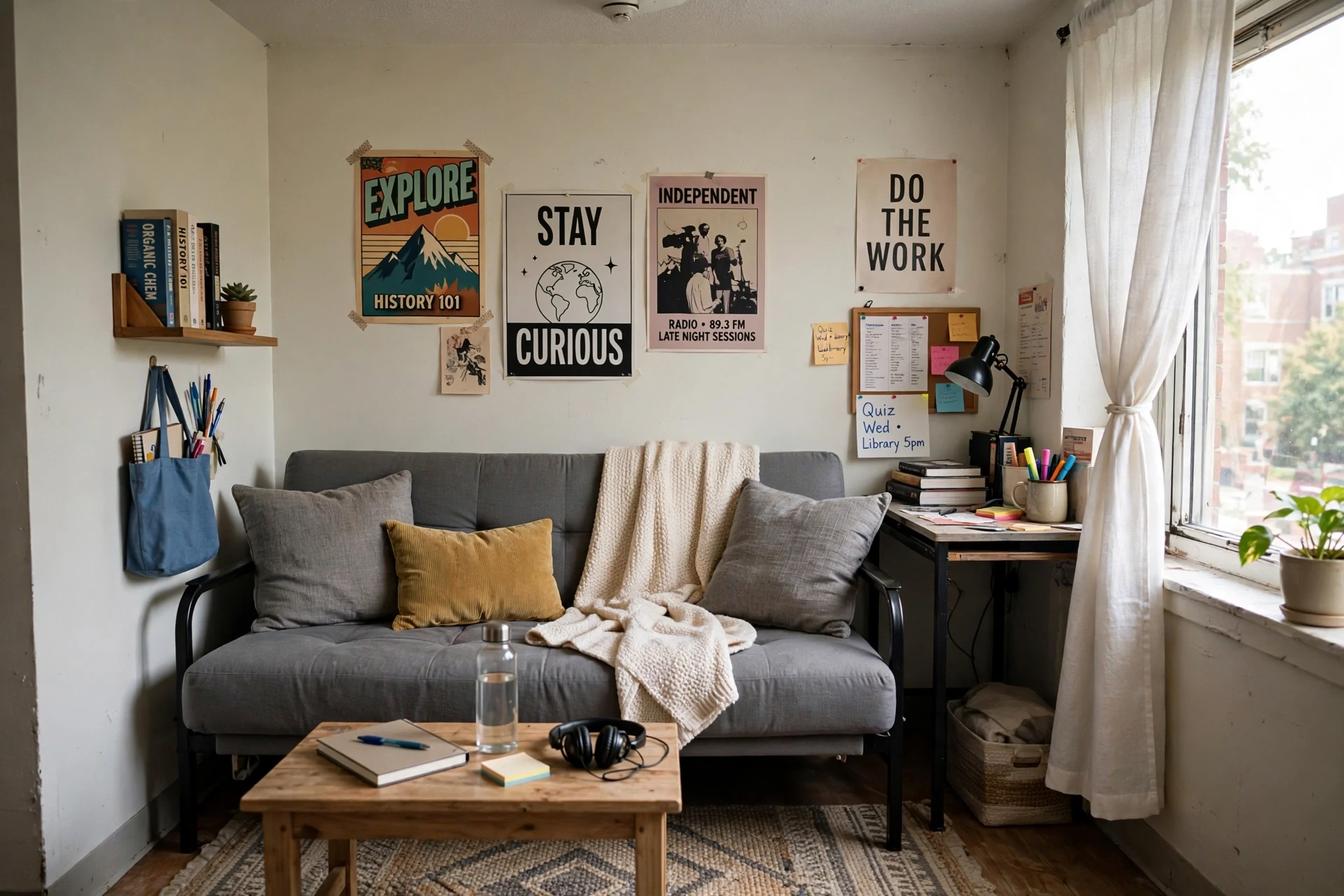
A compact futon is the classic dorm living room solution, working as a sofa by day and a spare bed when a friend stays over. Choose a simple frame with a firm mattress and a washable cover so it survives daily student life. It works because one piece of furniture covers the two biggest needs in a dorm — seating and sleeping — without taking the space of two. Tip: add a few firm cushions as a backrest, since futons sit low, and keep a folded blanket nearby for instant guest-bed mode.
Measure the futon both flat and folded, since a flat futon can be six inches longer than its sofa form and block a door. Choose a frame with locking hinges, which stops the back collapsing when someone leans on it, and keep the mattress cover washable, since dorm futons take food and drink spills.
Add a mattress topper to a firm futon if guests sleep on it often, since a thin futon mattress leaves hips sore by morning. Fold the topper with the futon or store it rolled behind the sofa, so guest-bed mode stays quick rather than a bedding hunt at midnight when a friend has already arrived.
2. Floor Cushions and Bean Bags
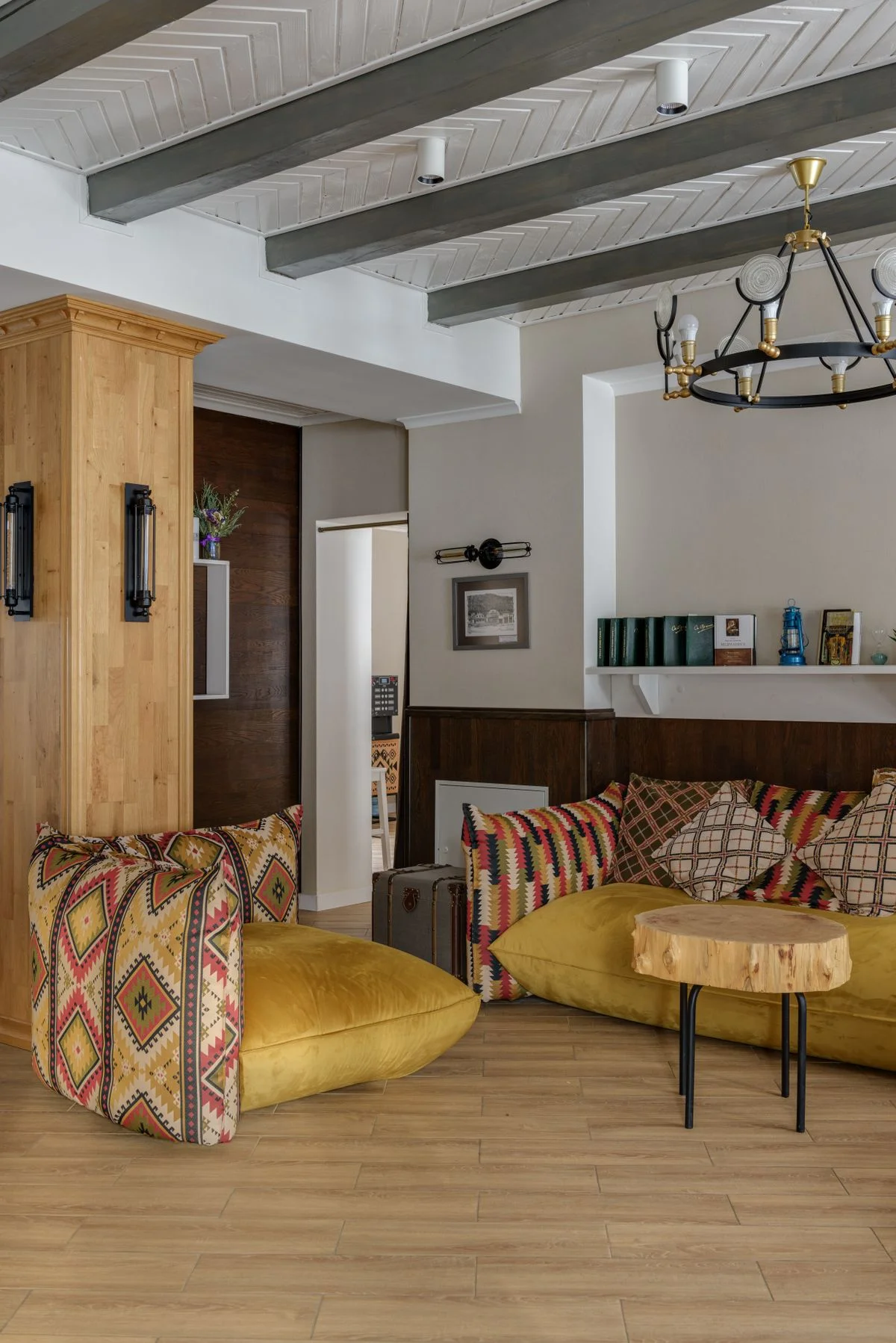
Floor cushions and bean bags are the most flexible seating for a dorm living room, since they can be stacked in a corner when you need floor space and spread out when friends come over. They are cheap, light and easy to move. They work because dorm life is informal — most hangouts happen low, around a coffee table or a laptop, rather than in formal armchairs. Tip: choose cushions with removable, washable covers in a shared space, and add a low tray table so floor seating still has somewhere for drinks.
Stack cushions in a tall basket or against a wall when not in use, so the floor stays clear for studying. Choose inserts that hold shape, shredded foam rather than loose polyester, since flat cushions get ignored and end up as floor clutter that everyone steps over and nobody puts away.
3. Foldable Lounge Chairs

Foldable lounge chairs give everyone a proper seat without permanently filling a small dorm living room. They fold flat for storage behind a door or under a bed, and unfold in seconds for movie nights. They work because dorm rooms need seating that appears when friends visit and disappears when you need to study. Tip: look for padded, sturdy folding chairs rather than the cheapest metal ones, since comfort decides whether they actually get used.
Test a folding chair by sitting and shifting weight, since cheap hinges wobble and pinch fingers. Look for a weight rating above your needs and rubber feet, which stop chairs sliding on smooth dorm floors and protect the flooring from scratches, which can cost part of a dorm deposit at move-out.
4. A Cozy Corner Seating Nook
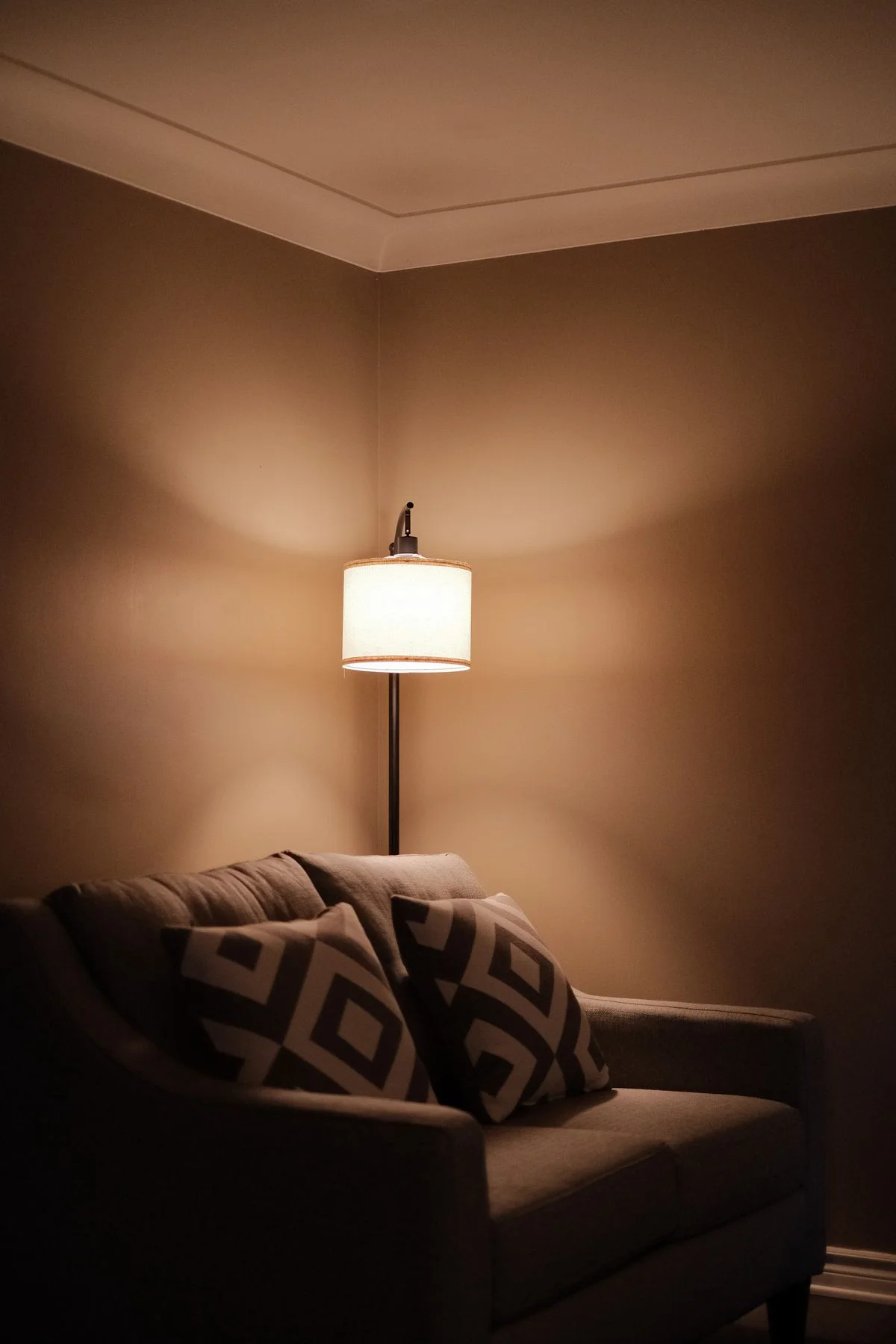
Turning an empty corner into a seating nook — a small loveseat or floor cushions, a reading lamp and a side table — gives a dorm living room a destination instead of just a walk-through space. Corners are often wasted, so claiming one adds seating without blocking the room. It works because a defined nook feels like a place to settle, even in a room shared with several people. Tip: add a small shelf above the nook for books and a phone charger, so the corner works for studying as well as relaxing.
Add a clip-on or wall-mounted light to the nook, since a corner is often the darkest spot in a dorm room. Keep the nook footprint small, about four feet square, so it adds seating without blocking the main walkway to the door or kitchen, the two routes that must stay clear in a shared room.
5. Poufs and Ottomans as Extra Seats

Poufs and ottomans are the dorm living room’s secret extra seats: light enough to move with one hand, sturdy enough to sit on, and easy to tuck under a table when not needed. They also work as footrests and side tables with a tray on top. They work because shared spaces need seating that scales up for a group and scales down for one person studying alone. Tip: pick poufs in a wipe-clean fabric or dark color, since shared seating takes more wear than a single-person chair.
Choose poufs with a firm core and a removable cover, since soft poufs sag under an adult and stain quickly in shared use. Store poufs under a console table or bench when the room is in study mode, so they do not become permanent trip hazards, especially at night when the room is dark and people are barefoot.
6. A Modular Floor Sofa

A modular floor sofa — low, backless or low-backed sections you can rearrange — suits dorm living perfectly, since it fits awkward rooms and adapts to different layouts. Push sections together for a sofa, or split them for individual seats. It works because dorm rooms change constantly: roommates move, layouts shift, and modular pieces shift with them. Tip: buy sections with washable covers and non-slip bases so they stay put on smooth dorm floors.
Buy sections with connecting clips if possible, since unclipped sections drift apart on smooth floors during movie nights. Check that covers are machine-washable and zips are sturdy, since dorm sections are moved and rearranged far more than normal sofas, often weekly, as roommates rearrange for study groups and movie nights.
Multifunctional and Shared-Space Furniture
7. A Storage Ottoman Coffee Table
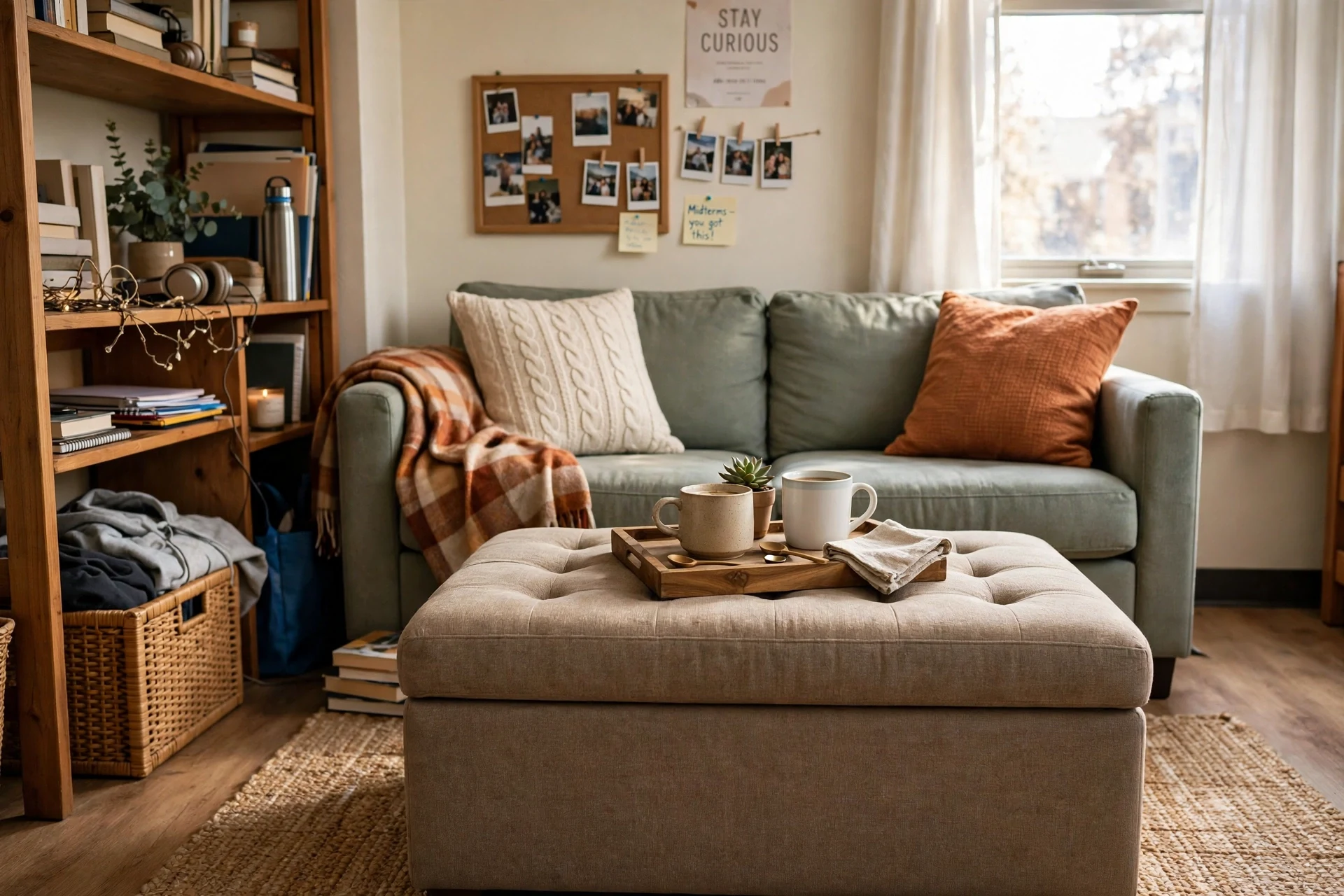
A storage ottoman as a coffee table is a dorm essential, hiding blankets, chargers, board games and snacks inside while serving as a table, footrest and extra seat. With a tray on top, it holds drinks just as well as a hard table. It works because dorm living rooms have almost no hidden storage, so furniture that stores things is worth twice its footprint. Tip: choose a firm-topped ottoman so drinks stay stable, and keep the tray on top permanently as a reminder to use it as a table.
Measure the ottoman against your sofa height, since a table much higher or lower than the seat is awkward for drinks. Sort storage into small pouches inside, one for chargers, one for games, so the ottoman does not become a single jumbled box nobody opens, since digging through a mixed pile is slower than fetching a charger elsewhere.
8. A Fold-Down Wall Desk
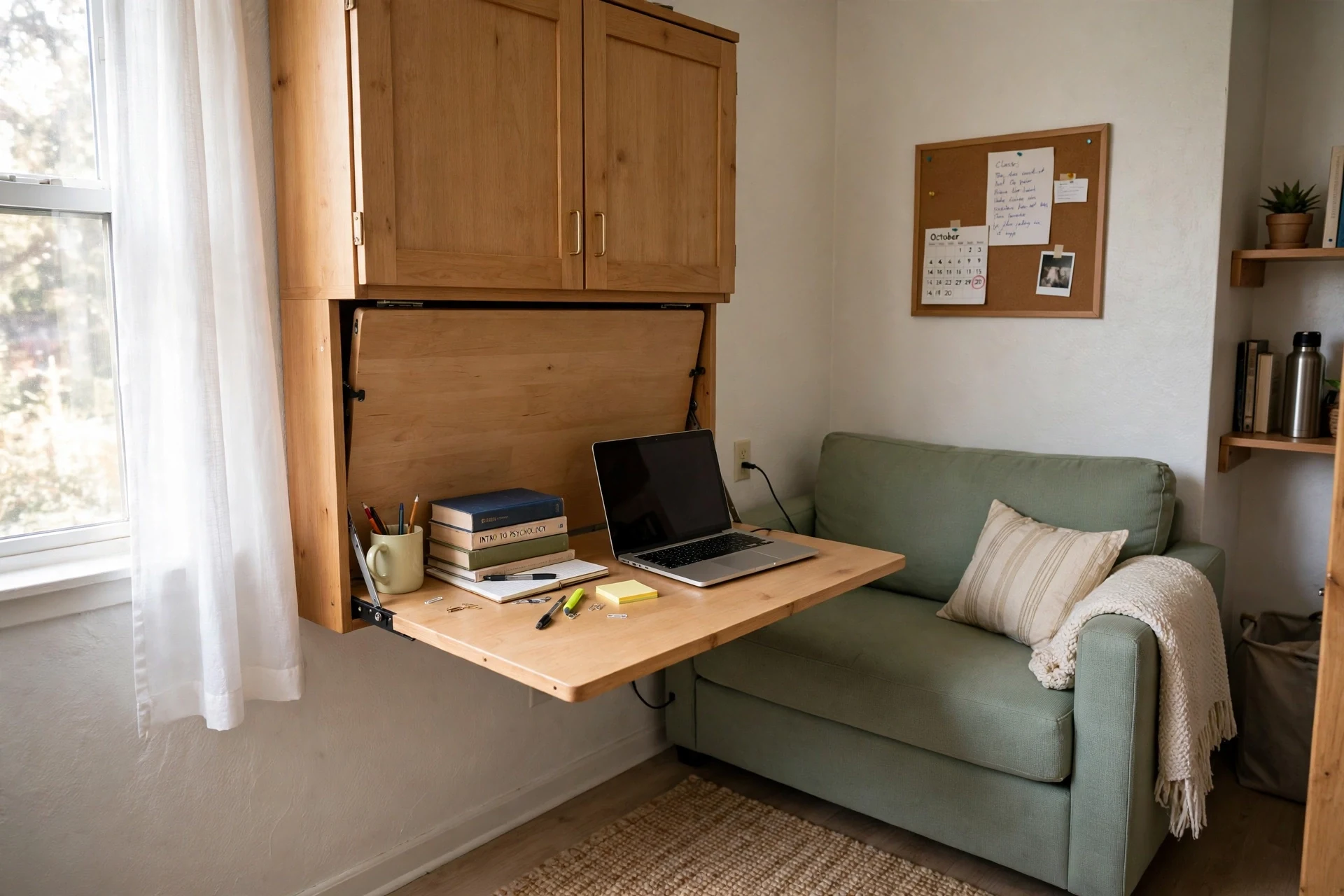
A fold-down wall desk gives a dorm living room a study spot that vanishes when study time ends — fold it up and the wall is free for seating and socializing again. It works because shared living rooms must switch between work and relaxation many times a day, and a permanent desk eats space the rest of the time. Tip: mount it at proper desk height, add a small wall shelf above for books, and keep a folding chair nearby so the study station is complete.
Check the wall type before mounting, since a fold-down desk needs solid fixings into studs or masonry, not just plasterboard plugs. Keep the desk surface clear of heavy books when folded up, and test the latch, since a desk that drops open on its own is a hazard in a small room.
Add a small LED task light above the fold-down desk, since overhead dorm lighting rarely reaches a wall desk well. Keep cables in a clip along the wall, so folding the desk up does not trap a charger cable in the hinge and damage it, a frayed cable that can then fail or overheat during charging.
9. A Rolling Cart Side Table
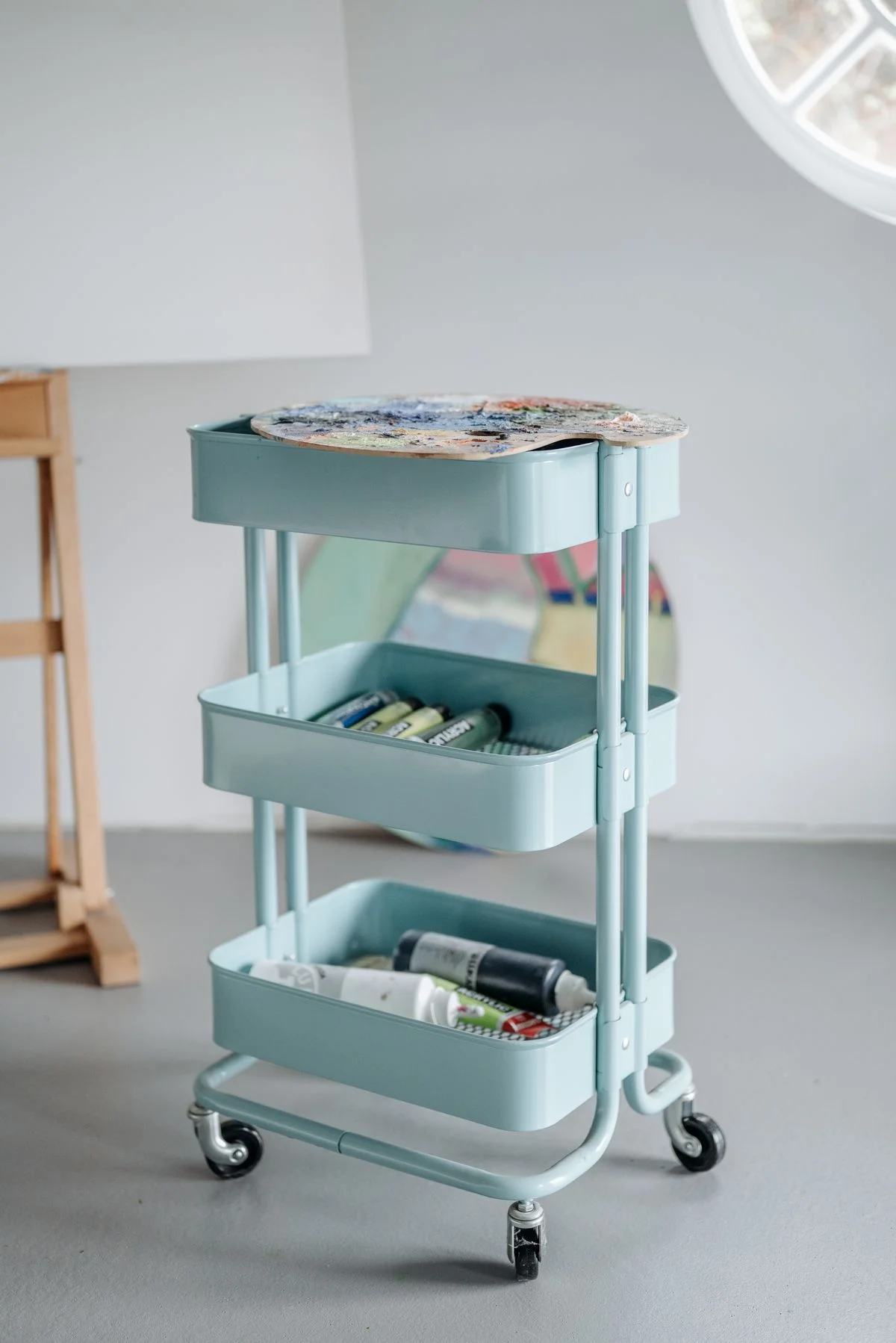
A rolling cart as a side table is ideal for a shared dorm living room, since it moves wherever it is needed — beside the sofa for movie night, beside a chair for studying, or into the kitchen for snack prep. It works because shared spaces have shifting needs, and wheels let one piece of furniture serve the whole room. Tip: choose a cart with a lower shelf for storage and a lip on the top shelf so drinks and snacks do not slide off when it rolls.
Lock the casters when the cart is in use as a table, since an unlocked cart rolls when someone leans on it. Choose a cart narrow enough to pass through doorways, usually under 18 inches wide, so it can actually move between rooms as intended, including through a bathroom doorway if it serves snacks there.
10. Room Divider Shelving

An open shelving unit used as a room divider creates zones in a shared dorm living room without building walls — one side for lounging, the other for studying or sleeping. It also adds much-needed storage and display space. It works because open shelves divide space while still letting light through, so the room feels zoned rather than cramped. Tip: keep the shelves partly open and styled with books and plants, and anchor the unit to the wall if your dorm rules allow it, since tall shelves can tip.
Anchor a tall divider to the wall with a strap, even if it feels stable, since a bump from behind can topple it onto seating. Keep heavy books low and light decor high, which lowers the center of gravity and keeps the divider safe in a shared room, where someone may lean on it without realizing it is freestanding.
Leave some shelf cubes empty and face a few books outward, so the divider looks like furniture rather than a solid wall. If dorm rules forbid wall anchors, choose a shorter, wider unit, which is far more stable than a tall narrow shelf without fixing, and a wider base also gives more usable storage per foot of height.
11. A Shared TV and Gaming Corner

A shared TV and gaming corner gives roommates a natural hangout spot: a small TV on a stand or wall mount, a console, and floor cushions or a small sofa facing it. It becomes the social heart of the dorm living room. It works because a shared screen gives everyone a reason to gather, and a defined corner keeps cables and controllers contained. Tip: use a cable organizer and a small basket for controllers, and agree on a simple rota for who chooses what to watch, which avoids the classic roommate argument.
Mount the TV or use a stable stand with a strap, since a TV on a wobbly table is a risk in a room where people sit on the floor nearby. Agree a volume and late-night rule early, and keep controllers in one basket, which stops the classic search before every game night.
12. Under-Seat Storage Benches
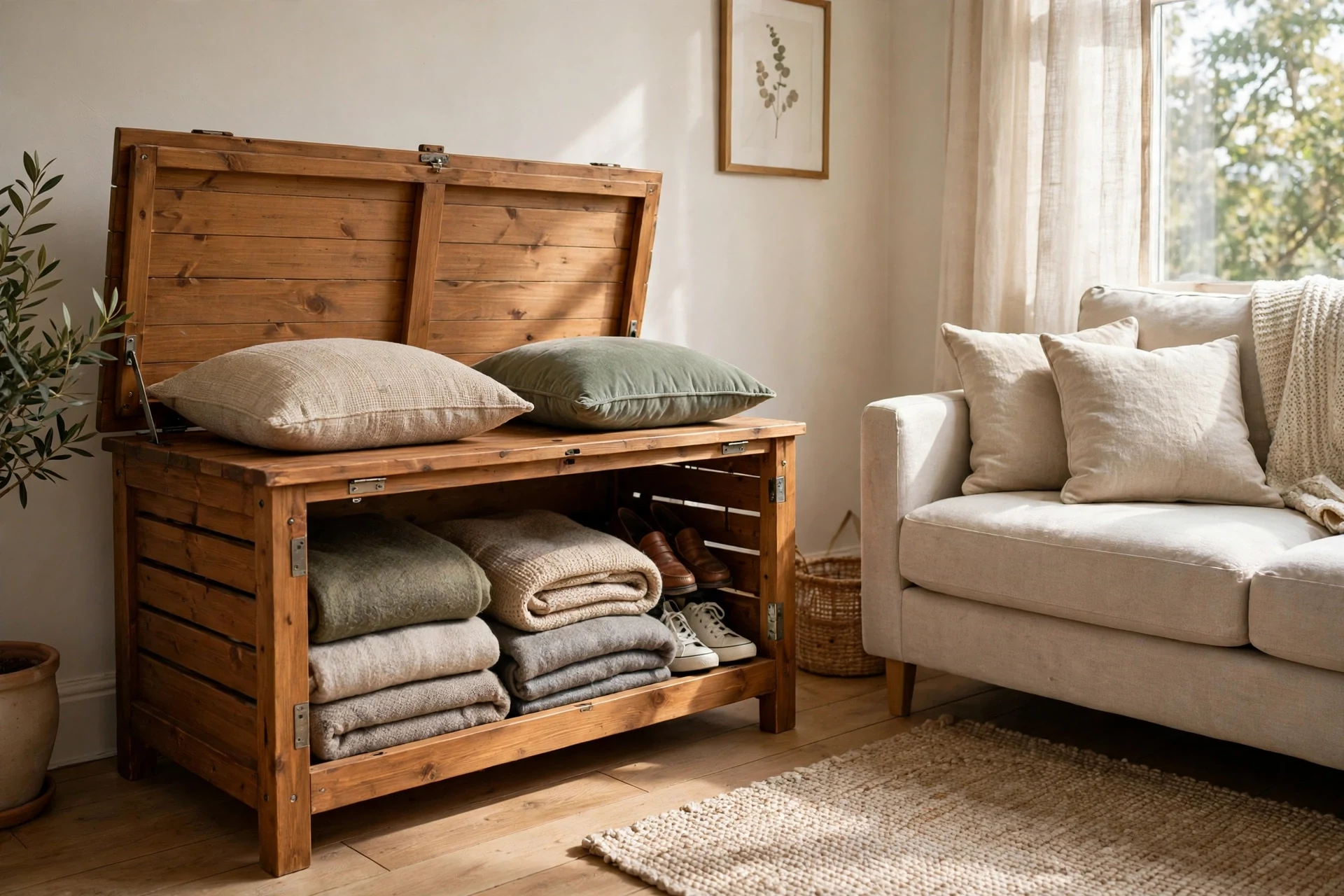
A storage bench along one wall provides seating, a surface for bags and books, and hidden storage for shoes, blankets and games all at once. It is one of the highest-value pieces for a small shared space. It works because dorm living rooms need every piece of furniture to earn its floor space, and a bench earns it three ways. Tip: add a cushion on top for comfort and a few baskets inside to keep the storage organized by person, which matters a lot in a shared room.
Choose a bench with a hinged lid that stays open on its own, so you are not holding it with one hand while sorting shoes. Label baskets inside by person, since shared storage without labels quickly becomes one person’s mess that nobody owns, which is how shared storage arguments usually start in a dorm.
Cozy, Budget-Friendly Dorm Styling
13. String Lights for Instant Coziness
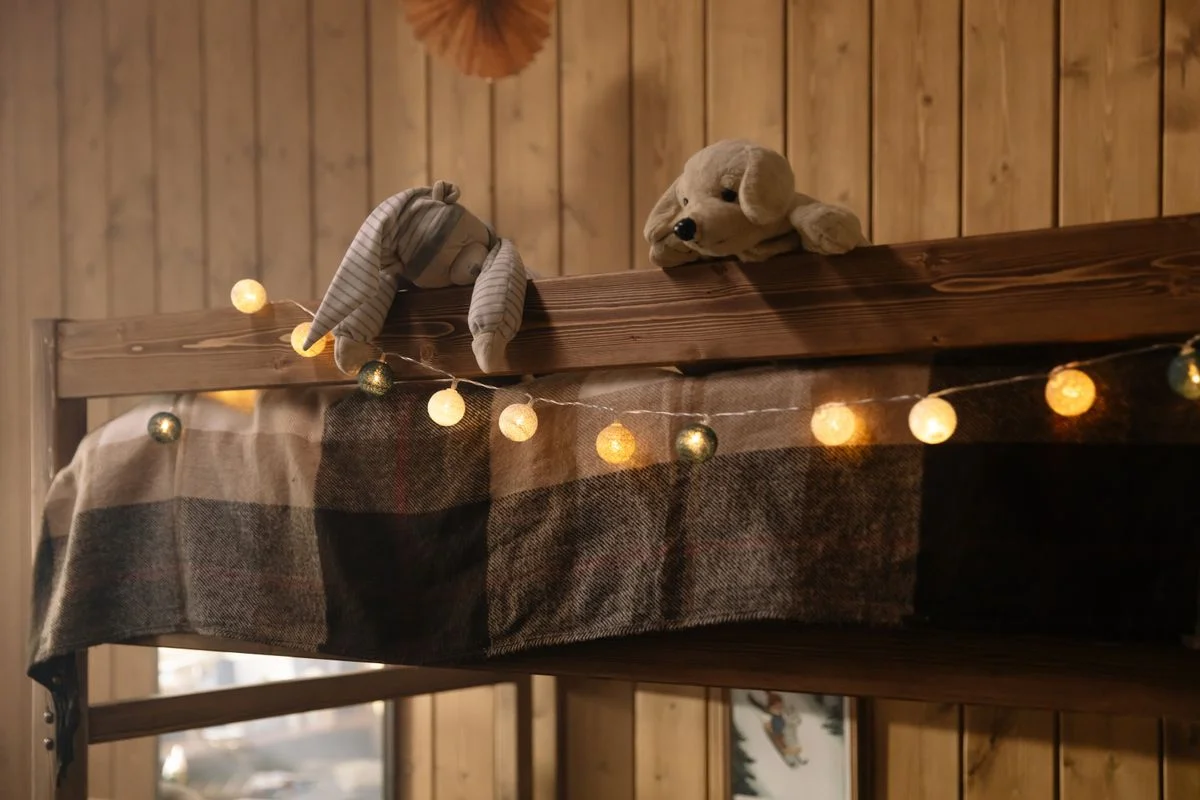
String lights are the fastest, cheapest way to make a dorm living room feel cozy, turning harsh overhead lighting into a warm glow for evenings and movie nights. Drape them along a shelf, around a window or across a wall. They work because warm, low light changes the whole mood of a room, and string lights are renter-friendly since they hang with small hooks or clips. Tip: choose warm-white lights rather than colored ones for everyday use, and put them on a timer so they switch on automatically in the evening.
Use LED string lights, which stay cool and use little power, and avoid overloading one socket with multiple strands. Check dorm rules first, since some halls ban lights near curtains or bedding, and use a timer so lights do not stay on all night, wasting power and disturbing roommates who sleep in the same room.
Choose warm-white LEDs for everyday use, since colored lights look fun for a party but tiring for studying. Drape lights along a shelf edge rather than across a walkway, where a loose strand becomes a trip hazard in a dark room, where a falling guest can pull the whole strand down.
14. A Tapestry Wall Feature
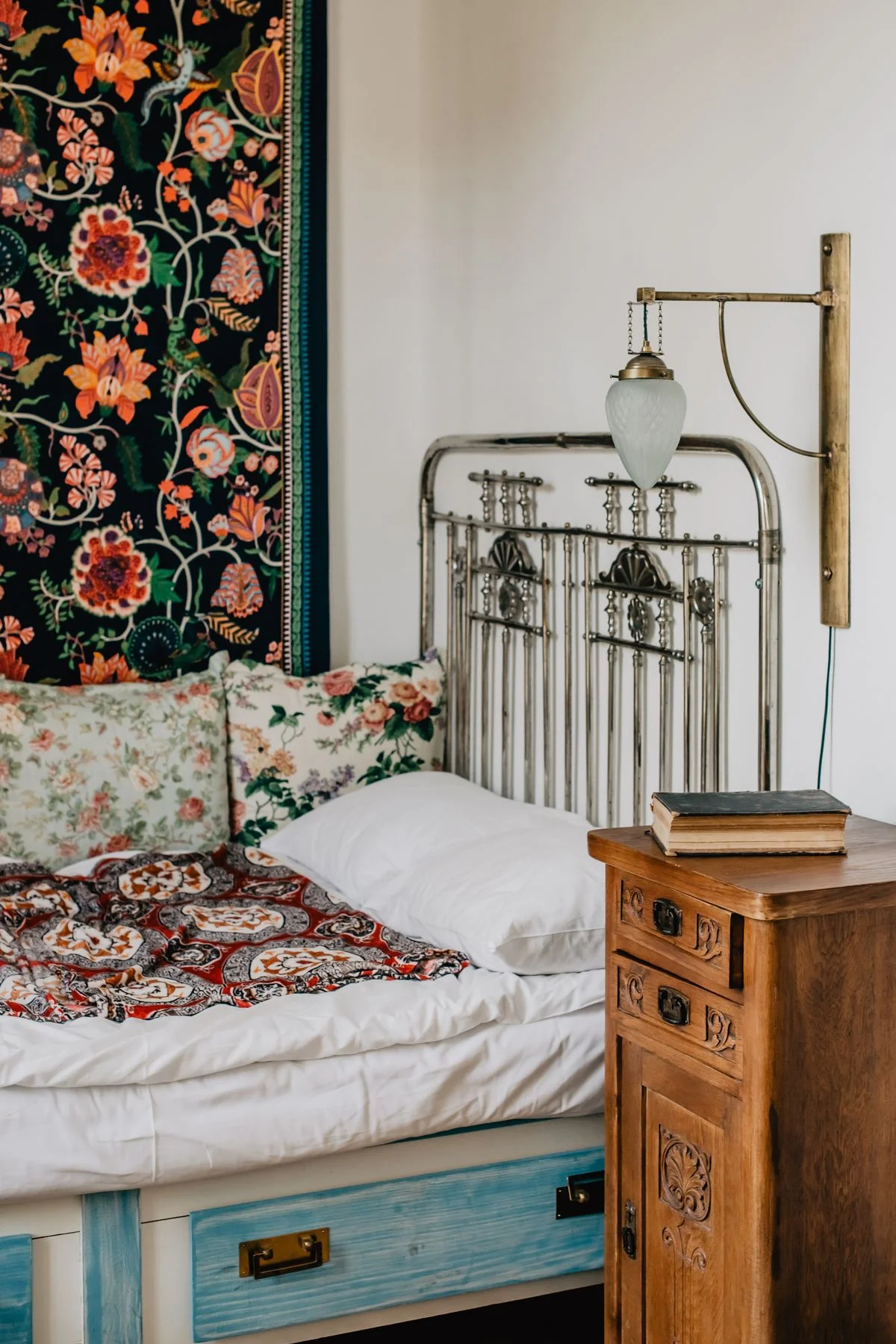
A tapestry is the classic dorm wall decoration: one large piece of fabric covers a boring wall, adds color and pattern, and comes down without damage when you move out. It also softens echoes in a bare room. It works because a tapestry gives maximum visual impact for minimum cost and effort, which is exactly what student decorating needs. Tip: hang it with removable adhesive clips rather than nails, and choose a design you will still like in a year, since it will dominate the wall.
Hang a tapestry with adhesive clips rated for fabric weight, and test one clip on a hidden wall spot first, since some adhesives peel paint. Wash the tapestry before hanging if it smells of dye, and keep it away from a radiator, which can scorch fabric over time, leaving a brown mark that no wash will remove.
15. Removable Wall Decals and Posters
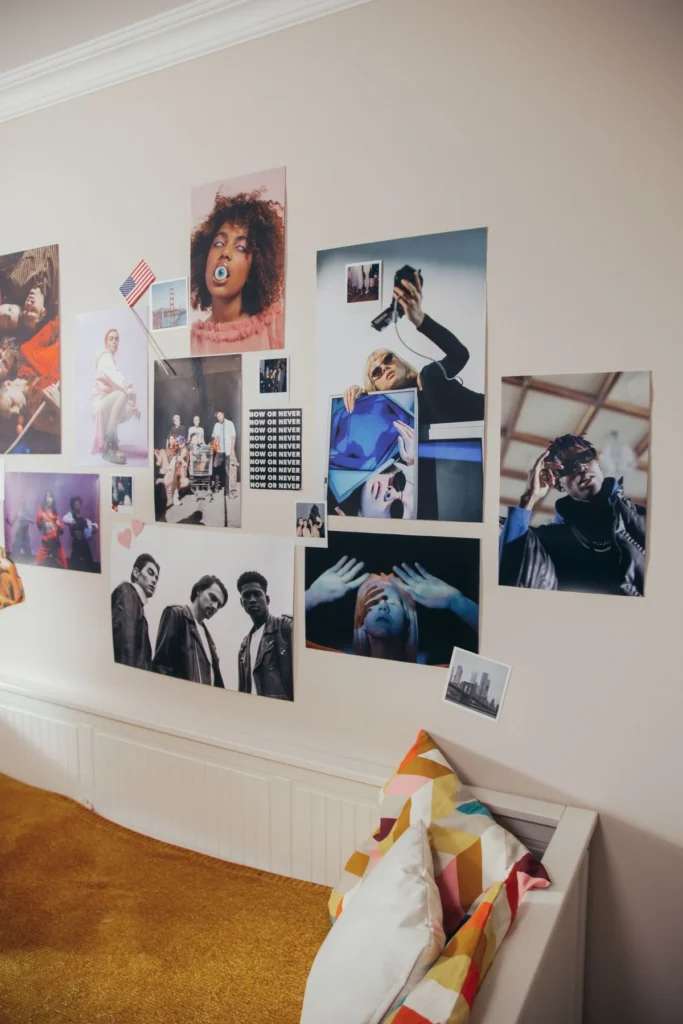
Removable wall decals, posters and washi-tape frames let roommates personalize a shared dorm living room without risking the deposit. Everyone can claim a section of wall for their own taste. It works because shared spaces feel like home only when everyone sees themselves in them, and removable decor makes that possible without arguments about paint. Tip: agree on a shared style for the main wall and let each person decorate their own corner freely, which balances togetherness and individuality.
Test a decal on a small hidden area first, since cheap decals can peel paint on older walls. Use washi tape frames for posters, which remove cleanly, and agree who owns each wall section, so move-out day does not become a dispute about damage, when everyone remembers the wall agreement differently at move-out.
16. A Shared Snack and Drinks Station

A small shared snack station — a tray or cart with a kettle, mugs, tea, coffee and a few snacks — turns a corner of the dorm living room into a welcoming social spot. It is the dorm equivalent of a kitchen island gathering point. It works because food and drink bring people together, and a dedicated station keeps mugs and snacks from spreading across every surface. Tip: keep it simple and shared: everyone contributes one item, and a small tray contains the clutter to one spot.
Keep the station to one tray or cart, and include a small bin nearby, since snack clutter spreads fast without one. Agree a simple kitty or rota for milk, tea and coffee, so one roommate does not end up funding the whole station, a resentment that builds quietly over a term.
17. Indoor Plants for a Lived-In Feel
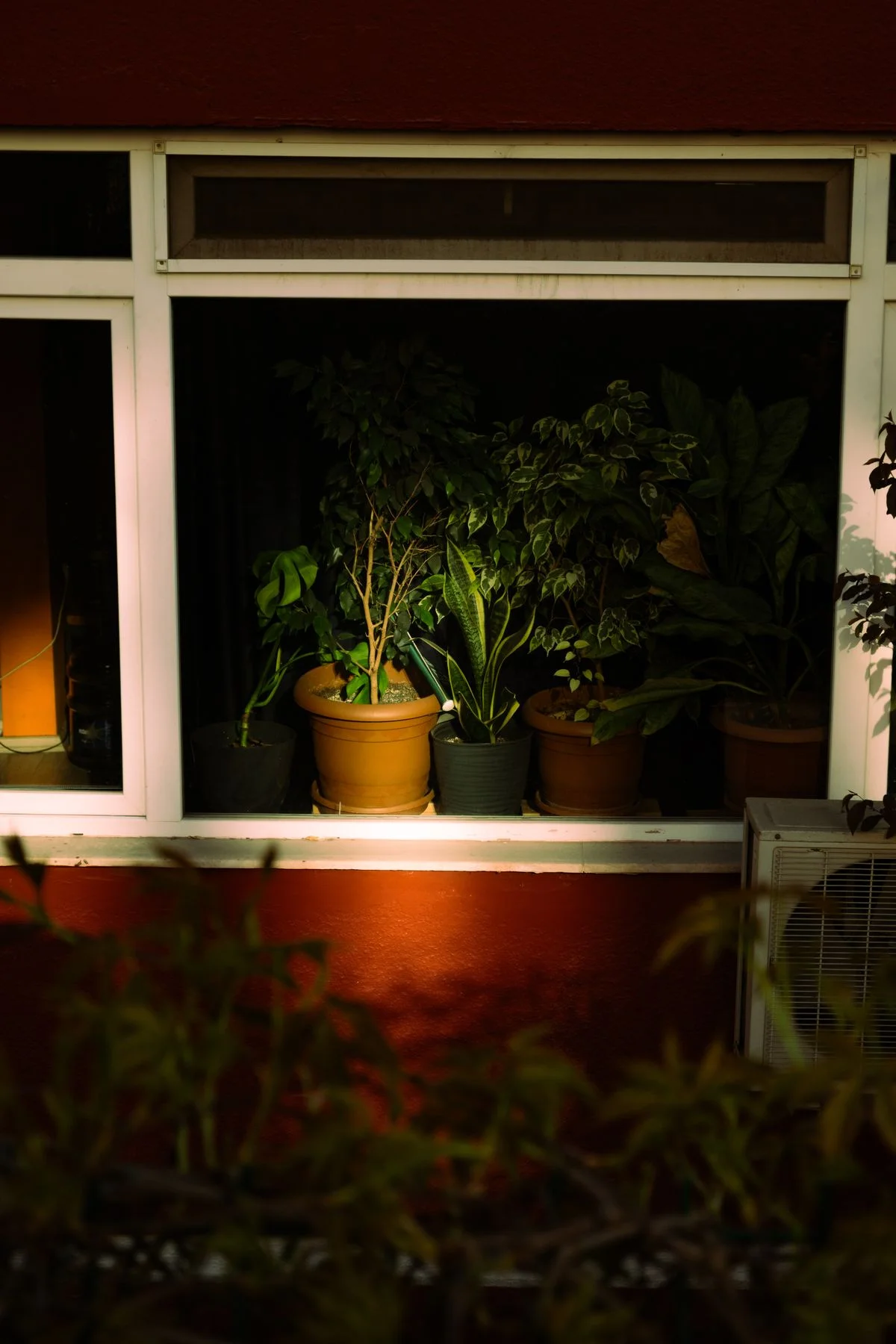
A few hardy indoor plants — pothos, snake plants or succulents — make a dorm living room feel lived-in and cared for rather than temporary. They add green, soften hard furniture and even improve the air a little. They work because plants signal that a space is a home, not just a place to sleep, which matters when you are far from your family home. Tip: choose plants that survive low light and occasional neglect, and use a shared watering rota so they do not depend on one person’s memory.
Choose snake plants and pothos for low light, and water only when the top inch of soil is dry, since overwatering kills more dorm plants than neglect. Put a saucer under every pot, and keep plants off radiators, where heat dries soil in a day, stressing roots and dropping leaves across the floor.
18. Budget Throws and Pillows
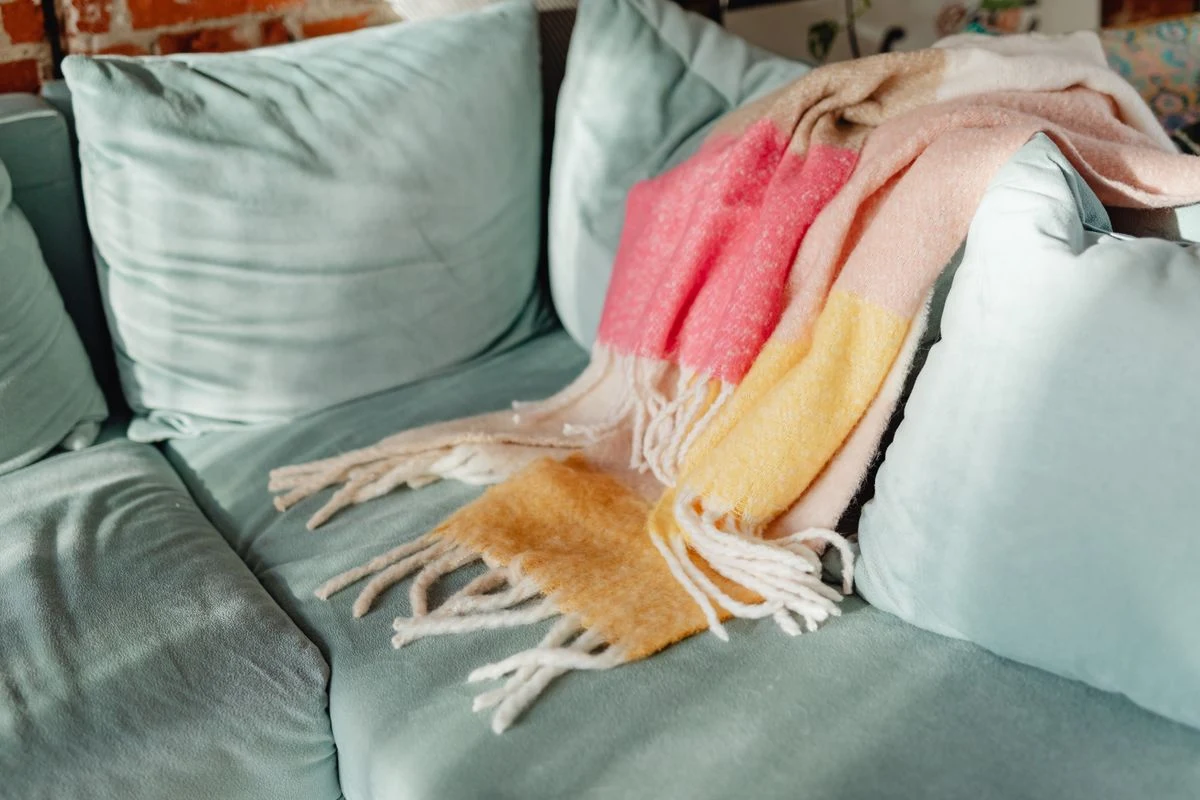
Budget throws and pillows in coordinating colors are the cheapest way to make a dorm sofa look intentional rather than inherited. Charity shops, sales and flat-pack stores all offer good options for very little money. They work because soft furnishings carry most of a room’s color, so a few well-chosen pillows can transform even the plainest dorm sofa. Tip: pick a simple color scheme — for example navy and cream, or sage and white — and buy pillows and a throw within it, so the sofa looks styled rather than random.
Buy pillow inserts slightly larger than the covers, usually two inches bigger, so pillows look plump rather than flat. Wash throws on cold and skip fabric softener on fleece, which reduces its softness over time, and keep a spare set for guests, so a visitor does not end up with the flat everyday pillows.
19. A Study-Lounge Combo Zone
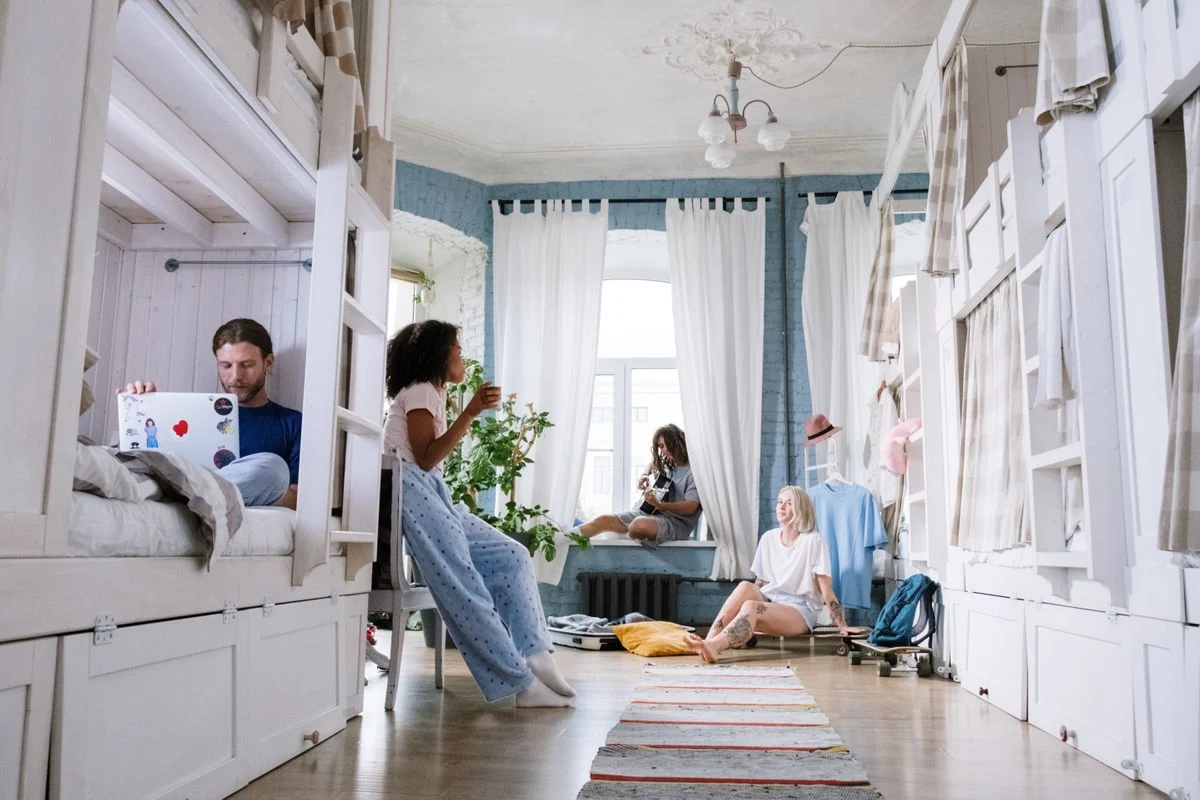
A study-lounge combo zone pairs a small desk or lap-desk area with comfortable seating, so one corner of the dorm living room works for both focused work and relaxed hanging out. A good lamp and a phone charger make it complete. It works because dorm living rooms cannot afford separate study and lounge rooms, so the smartest layout lets one zone do both jobs well. Tip: keep study supplies in a single basket or caddy so you can clear the lounge zone in seconds when friends arrive, and the room switches modes without a full tidy-up.
Use a lap desk with a firm base if floor seating doubles as study space, since a soft surface makes laptops overheat and wobble. Keep a small caddy with pens, chargers and notebooks, so switching from lounge to study mode takes one basket, not a full tidy, which is the only way the switch actually happens on a busy evening.
How to Choose the Right Ideas for Your Living Room
- Measure first and buy second: dorm living rooms are small, so a tape measure prevents the classic mistake of a sofa that blocks the door.
- Choose furniture that does two jobs — storage ottomans, futons, benches — since every piece must earn its floor space in a shared room.
- Agree on a shared color scheme and a shared tidiness system with roommates early, so the room stays welcoming instead of becoming a source of arguments.
- Use renter-friendly decor: removable hooks, tapestries, string lights and decals give personality without risking your deposit.
- Keep one clear zone for studying and one for relaxing, even if they overlap, so the room supports both parts of student life.
Frequently Asked Questions
How do I decorate a dorm living room on a small budget?
Focus on lighting, textiles and wall decor: string lights, a few coordinating pillows and a throw, and a tapestry or posters transform a room for very little money. Buy multifunctional furniture secondhand when possible, since dorm furniture takes hard wear.
How can roommates share a small living room fairly?
Agree early on a simple system: shared zones for TV and seating, personal corners for individual taste, and a rota for tidying and plant-watering. Furniture that moves, like poufs and rolling carts, also helps, since the layout can adapt to whoever is using the room.
What furniture is essential for a dorm living room?
A compact sofa or futon, a coffee table with storage, flexible extra seating like poufs or floor cushions, and good lighting are the essentials. Everything else — shelves, a TV corner, plants — builds on that base.
Can I make a dorm living room feel cozy without damaging the walls?
Yes: string lights on removable hooks, tapestries hung with clips, removable decals and freestanding shelves all add coziness without nails or paint. Always check your dorm’s rules first, and keep the original condition in mind when you move out.
A great dorm living room is not about having the most furniture or the biggest budget — it is about smart pieces, shared agreements and a few cozy touches that make everyone feel at home. Start with seating and storage, add warm light and something green, and let the room grow with your friendships. Save this guide to Pinterest for your next dorm refresh, and pin your favorite idea to your dorm decor board.
Photos: Pexels (free to use).


