
Debauchery Meaning: Definition, Origin, and How to Use It
Debauchery means excessive indulgence in sensual pleasures, especially sex, drugs, and alcohol. This guide covers its definition, Old French roots, its playful versus serious uses, and the near-synonyms people confuse it with.
Debauchery means excessive indulgence in sensual pleasures, especially sex, drugs, and alcohol, in a way that most people would call morally objectionable. It’s a noun with an old-fashioned ring to it, and it lives a double life: in sermons and scripture it’s deadly serious, while among friends it’s often a joke. Say it in church and everyone goes quiet; say it after finals week and everyone laughs.
What Does “Debauchery” Mean?
Debauchery is a noun that means extreme indulgence in bodily pleasures, especially sexual pleasures, plus behavior involving drugs, alcohol, and other excesses that many people consider immoral. Merriam-Webster frames it around behavior that some find morally objectionable, and Cambridge’s dictionary calls it too much indulgence in pleasures usually considered immoral.
Two things sit at the heart of the definition. First, the excess. Nobody calls one glass of wine debauchery. Second, the moral judgment. Debauchery isn’t just excess; it’s excess the speaker disapproves of, at least a little. That’s why the same weekend can be “an amazing trip” to the people who went and “pure debauchery” to their grandparents. The word carries the speaker’s verdict inside it.
Where Did “Debauchery” Come From?
The word entered English in the early 1600s, built from the older verb debauch plus the suffix -ery. Merriam-Webster traces it to the beginning of the 17th century, and Etymonline dates the noun form to the 1640s, noting that 17th-century spellings varied wildly: debaush, deboich, debosh.
Go one layer deeper and you land in France. The verb debauch comes from the French débaucher, meaning to entice someone away from work or duty, which itself comes from the Old French desbaucher, meaning to lead astray. Both Merriam-Webster and Etymonline agree on this much. What happens before that is genuinely uncertain. Etymonline lays out the competing theories, one linking the root to bauch, meaning “beam” (from a Germanic word related to English balk, with a supposed image of trimming wood), another to a word meaning “workshop” (luring someone off the job), and says plainly that the sense evolution is unclear.
That uncertainty is worth stating, since some popular articles present a settled pre-French origin as fact. The “lead astray” core, though, is solid, and it explains why the earliest English sense of debauch was simply leading someone astray from allegiance or duty, and why the noun debauch, around 1600, often meant a single bout of overeating or overdrinking before it hardened into the general sense we use today.
How Do You Pronounce “Debauchery”?
Say it as dih-BAW-chuh-ree, which Merriam-Webster renders as di-ˈbȯ-chə-rē. The stress lands hard on the second syllable, BAW, and the ending is a quick “chuh-ree.” The same French-derived stress runs through the family: debauch is dih-BAWCH, debauched is dih-BAWCHT, and the debauchee is deb-aw-SHEE.
Serious or Playful? It Depends on the Room
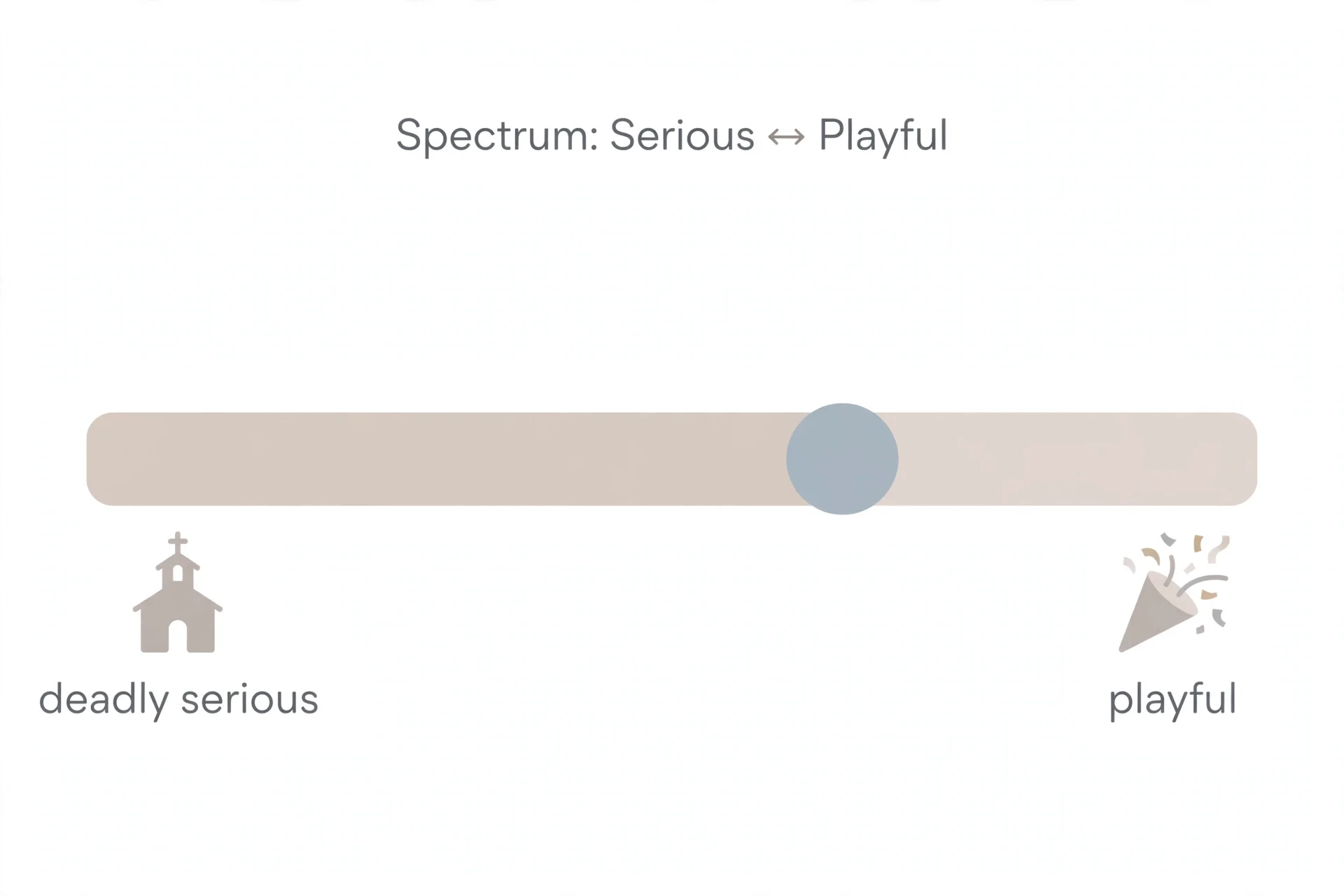
Debauchery always involves morally questionable excess, but its tone swings wildly with context. Merriam-Webster draws the line explicitly: in biblical and spiritual contexts the word is deadly serious, but in everyday use it often has a playful connotation, as when a group of friends goes out for a “night of debauchery.”
The biblical use is the serious anchor. Ephesians 5:18, in the New International Version, reads “Do not get drunk on wine, which leads to debauchery.” The King James Version renders the same Greek word as “excess,” and the American Standard Version as “riot.” When the word appears in sermons, moral essays, or discussions of addiction, it carries full weight. Nobody is joking.
The playful use is the modern everyday one. “A night of debauchery” with friends usually means staying out too late, drinking too much, and eating breakfast food at 3 a.m. It’s self-deprecating humor: everyone knows no one is actually ruined. The joke only works because the word sounds like it should be describing something much worse.
Here’s a quick way to read the room:
| If the situation is… | “Debauchery” sounds… | Example |
|---|---|---|
| A sermon, scripture study, or moral essay | Deadly serious | “Do not get drunk on wine, which leads to debauchery.” |
| A biography of a fallen celebrity or politician | Serious, judgmental | “His years of debauchery finally caught up with him.” |
| Literary fiction or historical writing | Formal, old-fashioned | “The court was famous for its debauchery.” |
| Friends planning a night out | Playful, self-mocking | “Saturday is our night of debauchery.” |
| A legal or historical document | Formal and grave | “…to seduce and debauch any unmarried woman” |
Debauchery vs. Depravity vs. Dissipation vs. Dissolution
These four words get swapped around constantly, but they point at different things. Merriam-Webster’s thesaurus groups them all as synonyms of debauchery, yet sorts them into distinct senses: corruption, degradation, and sensuality. That sorting is the key to telling them apart.
| Term | What it focuses on | Typical scope | Example |
|---|---|---|---|
| Debauchery | Excessive indulgence in sensual pleasures, sex, drugs, alcohol | Acts and behavior | “The fraternity brothers indulged in shameless debauchery all weekend.” |
| Depravity | Moral corruption or wickedness in a person’s character | Character or state of being | “The film was criticized for its moral depravity.” |
| Dissipation | Wasteful overindulgence; squandering health, money, or energy on pleasure | A lifestyle of waste | “He spent his inheritance in dissipation.” |
| Dissolution | The breaking apart of moral restraint; loose living | A process or condition | “The dissolution of the old court shocked the country.” |
In plain terms: debauchery is what you do, depravity is what you are, dissipation is what you waste, and dissolution is what falls apart. Debauchery is the most concrete of the four, tied to specific pleasures and often to specific episodes, while depravity is a darker, broader judgment about someone’s character.
The Debauchery Word Family
English built a whole family around this root, and knowing the relatives saves you from mix-ups. The adjective comes with a tone warning: dictionaries mark debauched as old-fashioned and disapproving, so calling someone debauched is a judgment, not a description.
| Word | Part of speech | Meaning |
|---|---|---|
| Debauch | Verb | To lead astray; to corrupt with sensual indulgence. As a noun (around 1600), a single bout of overindulgence. Etymonline dates the verb to the 1590s. |
| Debauchery | Noun | Excessive indulgence in sensual pleasures. Plural: debaucheries. |
| Debauched | Adjective | Morally corrupted by indulgence. Cambridge defines it as inclined to debauchery, as in “a debauched lifestyle.” |
| Debauchee | Noun | A person who habitually indulges in debauchery or dissipation; a libertine. |
| Debaucher | Noun | One who debauches or corrupts others (less common, listed among the word’s relatives by Grammarist). |
Confusions People Run Into
Debauchery vs. hedonism. Hedonism is a philosophy that treats pleasure as the highest good. Debauchery is excessive indulgence that the speaker judges as immoral. A hedonist might defend their choices with an argument; nobody defends debauchery with one, because the word already contains the condemnation.
Debauchery vs. orgy or bacchanal. An orgy, a bacchanal, or a saturnalia is an event: a wild gathering involving excessive drinking and promiscuity, as Princeton’s WordNet defines it. Debauchery is the behavior that happens at such events, or the general practice. Etymonline notes the Roman Bacchanalia festivals became so notorious for excess that the Senate banned them in 186 BCE.
“To debauch” in old legal language. You’ll occasionally meet the verb in phrases like “seduce and debauch,” which appeared in an old Michigan law about corrupting minors. Here debauch keeps its oldest sense: to lead astray or corrupt someone’s morals. This usage is archaic; outside of legal history or old novels you can treat it as a fossil.
Debauchery vs. partying. People sometimes use debauchery as a dramatic synonym for partying, but the word is stronger than that. A birthday dinner isn’t debauchery, even a rowdy one. The word needs its two ingredients: real excess and a real sense of moral objection, even if only mock-serious. If neither is present, “celebration” or “a wild night” is the honest word.
Debauchery in Literature and Culture
Few words have been worked as hard by writers as this one. Samuel Johnson’s dictionary defined debauchery as “the practice of excess; intemperance; lewdness” and quoted Thomas Sprat’s sermon line: oppose “debauchery by temperance.” Jonathan Swift used it to scold magistrates who, he claimed, occasioned twice as much debauchery as would exist without them.
The word’s confessional history runs through St. Augustine, who described carousing his student days away in fourth-century Carthage. H. L. Mencken used it with dry comic precision in 1940, calling a scene of boys smoking cigarettes and reading dime novels “a scene of inspiring debauchery,” and Bernard Shaw, writing in 1948, turned it back on the moralists, joking about people who regard all music and everything pleasant as forms of debauchery.
That literary weight is why the word still sounds formal and slightly theatrical. When a modern writer reaches for debauchery instead of “partying,” they’re usually borrowing a little of that gravity, whether they mean it seriously or as a joke.
Examples of “Debauchery” in Sentences
Seeing the word in natural sentences is the fastest way to get a feel for its range:
- “After the exams, we planned a night of harmless debauchery: cheap pizza, bad movies, and staying up far too late.” (playful)
- “The novel paints him as a charming rake slowly undone by years of debauchery.” (literary, serious)
- “She left the debauchery of her youth behind when she started teaching.” (reflective, serious)
- “The exposé described a culture of quiet debauchery behind the company’s glossy image.” (journalistic, judgmental)
- Merriam-Webster’s own example: “The fraternity brothers indulged in shameless debauchery all weekend.”
Notice how the word almost always travels with company: a night of it, a life of it, years of it, shameless or quiet or harmless. The adjectives around it tell you which register you’re in.
FAQs
Is “debauchery” a noun or a verb? It’s a noun. The verb in the family is “debauch,” meaning to lead astray or corrupt, and the adjective is “debauched.”
What is the biblical meaning of debauchery? In Ephesians 5:18, several modern Bible translations use “debauchery” where the King James Version says “excess” and the American Standard Version says “riot.” The meaning is indulgence in drink and sensual pleasure taken too far, and in scripture the word is deadly serious.
What do you call someone who engages in debauchery? A debauchee: a person who habitually indulges in debauchery or dissipation. Libertine and profligate are close alternatives.
Can “debauchery” be used playfully? Yes. “A night of debauchery” among friends usually means staying out late and overdoing it a little, said with a wink.
What’s the difference between debauchery and hedonism? Hedonism is a philosophy that puts pleasure first. Debauchery is excessive, morally judged indulgence in sensual pleasures. Hedonism argues for itself; debauchery never does.
What is the opposite of debauchery? Virtue or temperance. The pairing goes back centuries: Samuel Johnson’s dictionary quotes a sermon urging readers to oppose “debauchery by temperance.”
What does “debauched” mean? It’s the adjective form: morally corrupted by indulgence, or inclined to debauchery. Dictionaries mark it as old-fashioned and disapproving, so it lands as a judgment.
Where This Guide’s Definitions Come From
The definitions and history above were checked against the sources below, all opened and read for this article. Merriam-Webster’s dictionary entry gives the core definition, the Ephesians 5:18 biblical usage, the early-17th-century dating, and the pronunciation. Etymonline supplies the 1640s noun dating, the French débaucher and Old French desbaucher roots, and the account of the uncertain deeper origin. Cambridge’s French-English dictionary confirms the French connection, Grammarist covers usage notes and the word’s relatives, Merriam-Webster’s thesaurus entry organizes the synonym senses used in the comparison table, and Dictozo’s entry provided the literary quotations from Mencken and Shaw.
Related:
What Does ENM Mean in Text? (Ethical Non-Monogamy, Explained)
Ennui Meaning: What It Means, How to Say It, and Why It’s Not Just Boredom



One Comment