

24 Blue Living Room Ideas: Stunning Blue Rooms, Color Schemes and Looks to Copy in 2026
Blue is the most loved living room color in the world, and for good reason: it can feel calm or dramatic, coastal or luxurious, depending on the shade you choose. This guide is all about blue living rooms themselves — real room looks and color schemes you can copy, from a breezy navy-and-white coastal room to a moody midnight-blue evening space. Browse these 24 blue living room ideas, find the shade that matches your home, and steal the scheme you love.
Classic Blue Room Schemes
1. A Navy and White Coastal Room
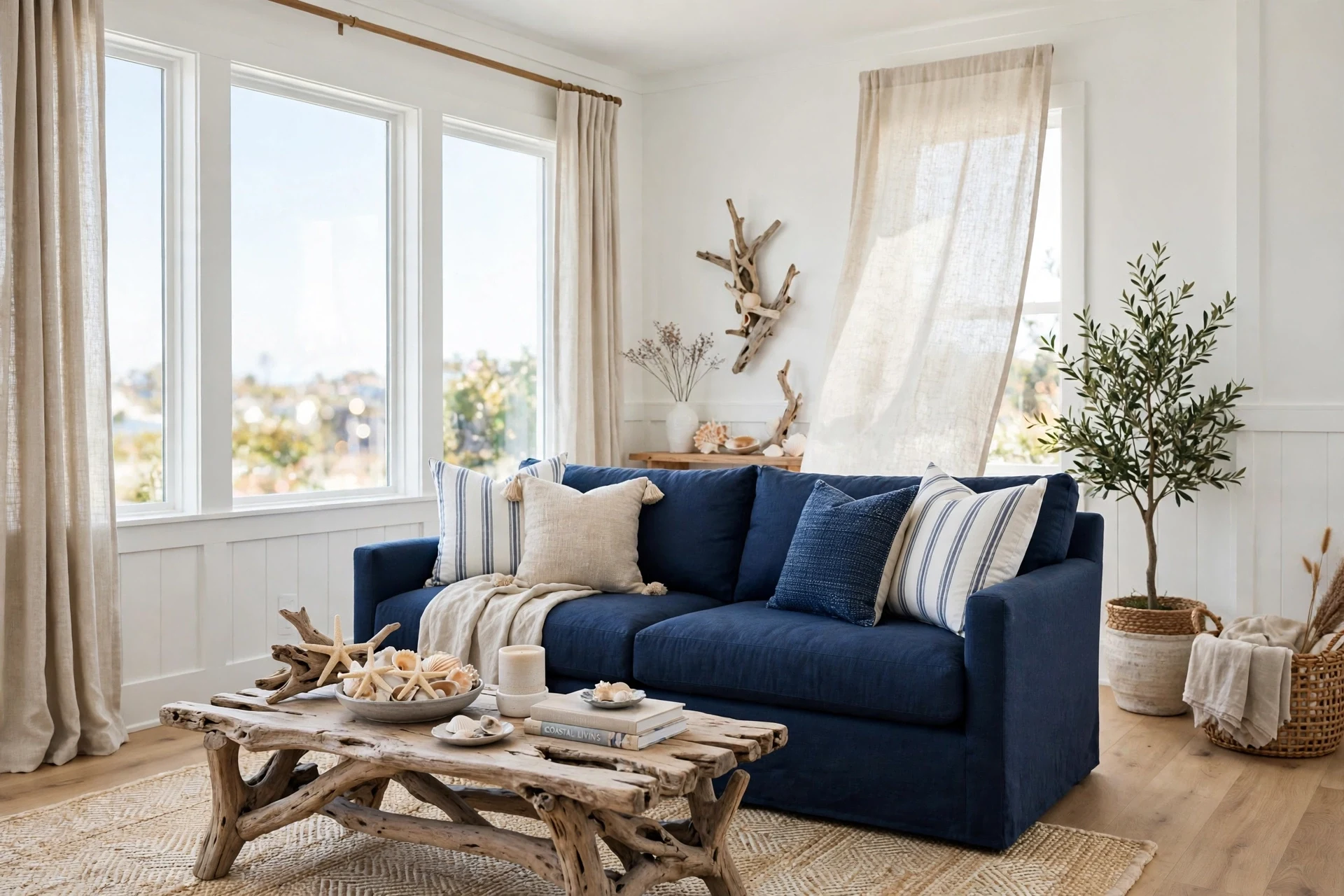
A navy and white living room is the classic coastal scheme: navy sofa or accent chairs, crisp white walls, natural wood and striped cushions. It feels fresh, clean and timeless, like a seaside house all year round. It works because navy gives the room depth while white keeps it bright, so the space never feels dark. Tip: add rope, rattan or light oak details to complete the coastal feeling, and keep patterns simple — stripes and solids work best.
Keep navy to about a third of the room, usually the sofa or chairs, so white walls and light floors keep it bright. Wash striped cushions separately first, since navy dye bleeds onto white stripes, and choose indoor-outdoor fabric for cushions near an open door to the garden, where salt air and sun fade ordinary cotton within a season.
2. A Light Blue Serene Room
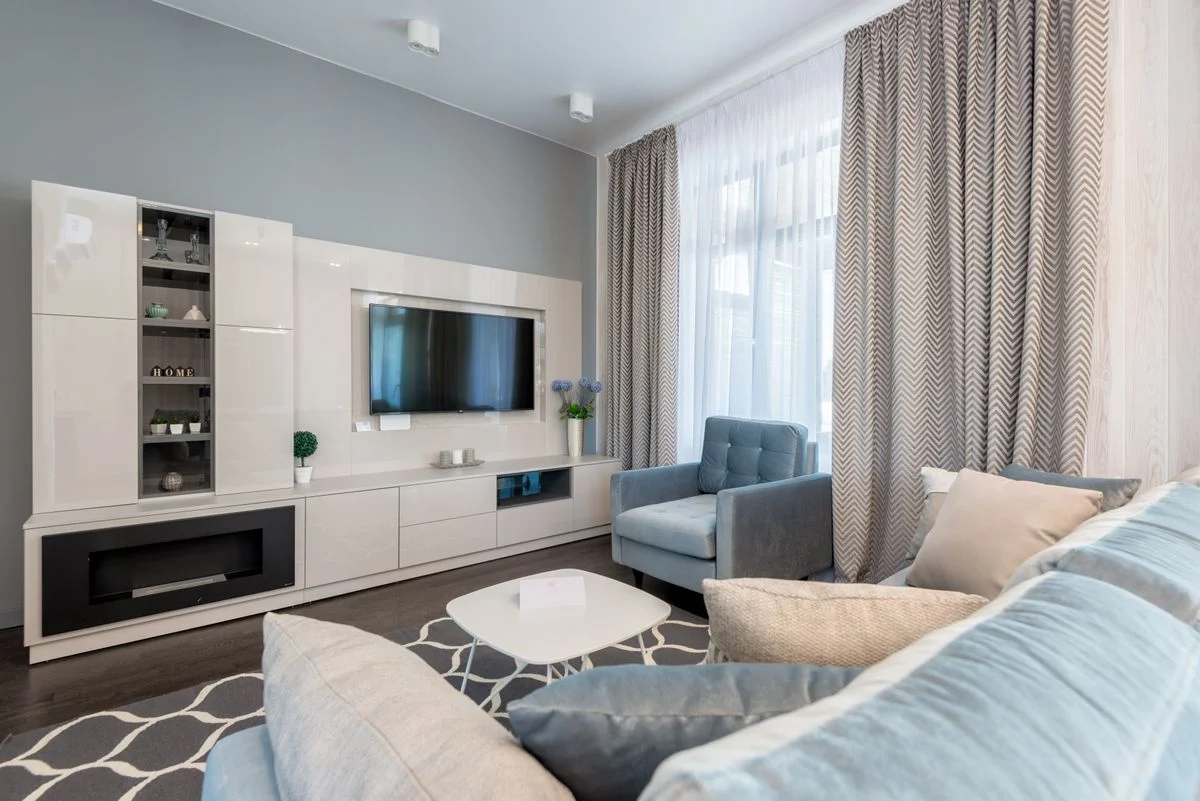
A light blue living room feels calm, airy and restful, making it perfect for a room where you unwind after a long day. Pale blue walls, a light blue sofa or curtains, and white trim create a soft, cloud-like space. It works because light blue lowers visual tension and reflects daylight beautifully, so the room feels bigger. Tip: layer several pale blues rather than one flat shade, and add white and light wood so the room stays bright.
Layer pale blues in different textures, linen curtains, a wool throw and a painted wall, so the room does not look like one flat wash. Test paint in the morning, since pale blue can look grey before noon in a north-facing room and needs a warmer white trim to stay soft.
3. A Royal Blue Statement Room
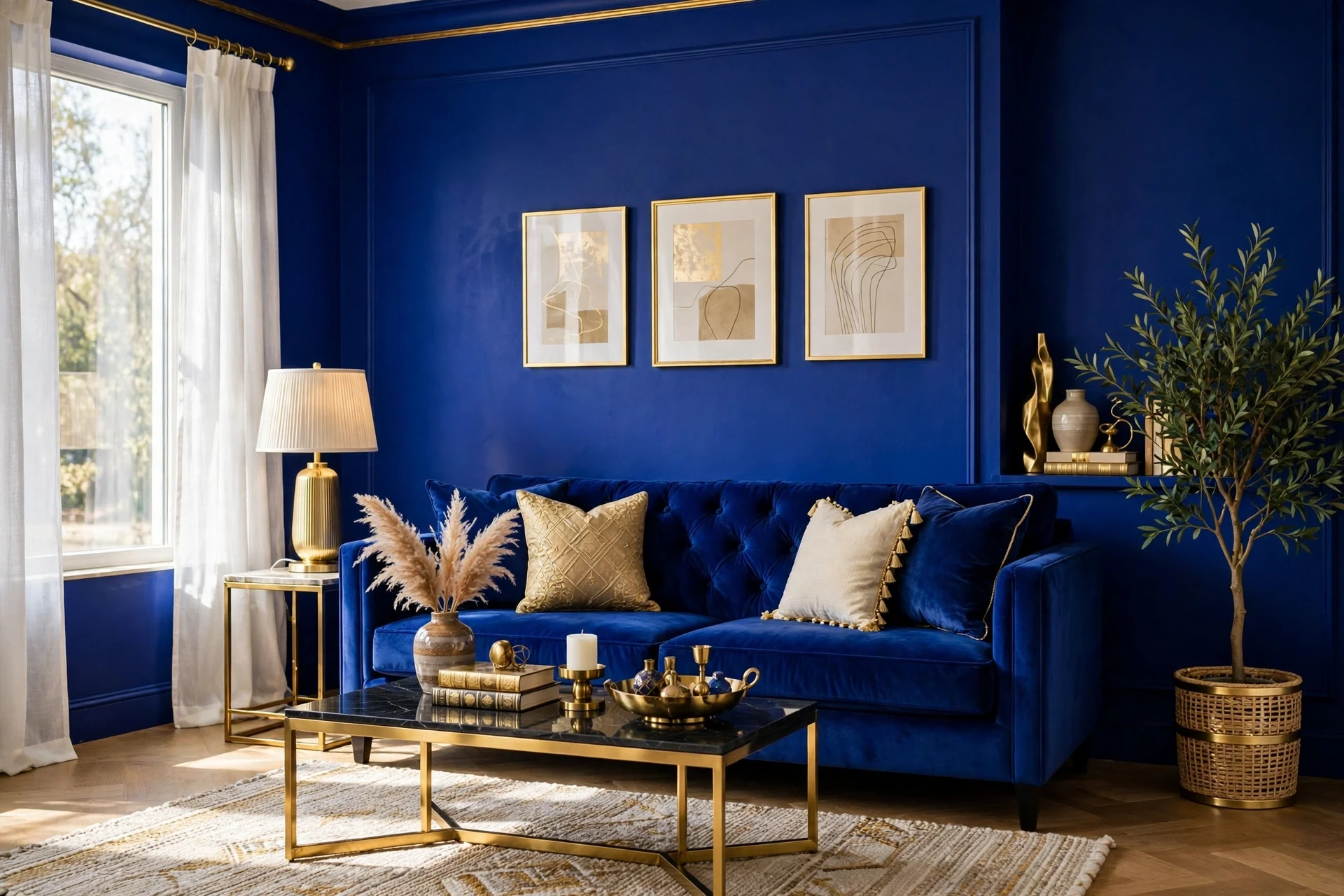
A royal blue living room makes a confident statement, with a rich, jewel-toned sofa or feature wall as the star. Pair it with white, cream or gold so the bold blue has room to shine. It works because royal blue is vivid without being loud, giving a room energy and elegance at the same time. Tip: use royal blue on one hero piece, like the sofa, and keep the walls light so the room feels dramatic rather than overwhelming.
Balance royal blue with a large neutral area, like a cream rug or pale walls, so the jewel tone stays a statement rather than a flood. Check the dye lot if buying two royal pieces separately, since royal blue varies sharply between brands and a mismatch shows immediately, even in a photograph, so compare swatches side by side first.
4. A Sky Blue Airy Room
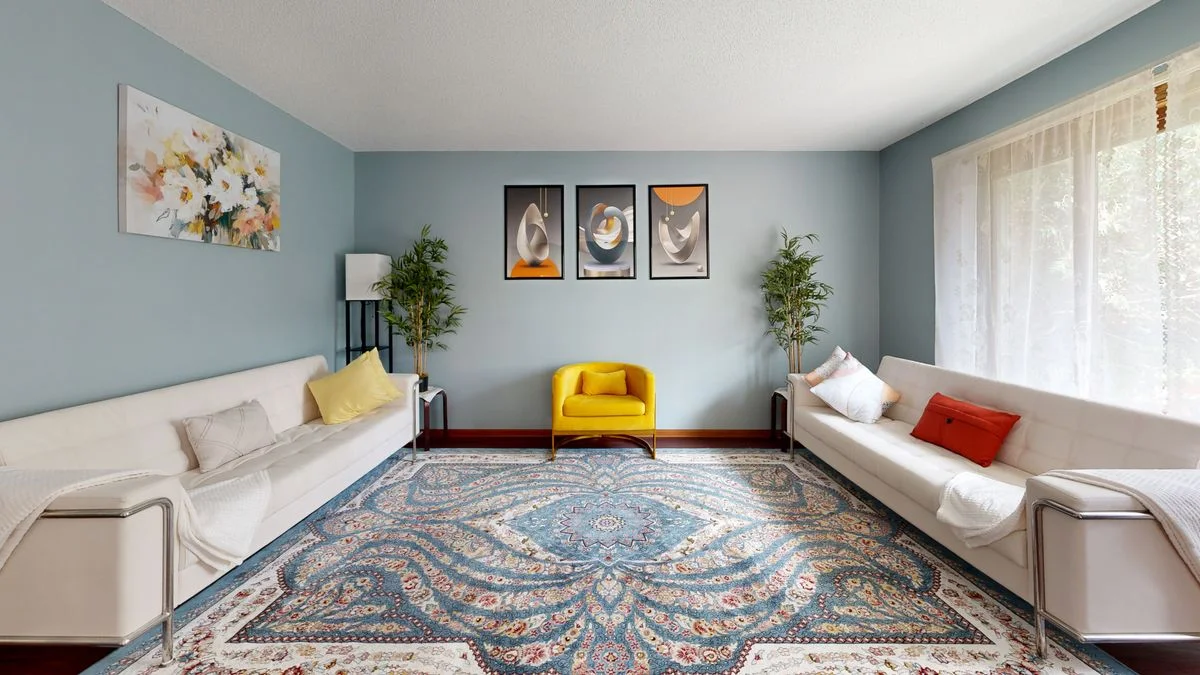
A sky blue living room feels like an open window: bright, cheerful and full of air. Sky blue walls or curtains plus white furniture and plenty of daylight create a room that lifts your mood the moment you walk in. It works because sky blue is the color of daylight itself, so it makes even a north-facing room feel sunnier. Tip: pair sky blue with white and a touch of yellow or natural wood for a sunny, optimistic scheme.
Pair sky blue with white ceilings and trim, and avoid painting the ceiling blue, which makes the room feel lower. Add one sunny accent, like a yellow cushion or oak tray, to stop sky blue feeling cold on grey days, when a north-facing room gets almost no direct sun at all and the pale walls can look washed out without it.
5. A Blue and Cream Classic Room
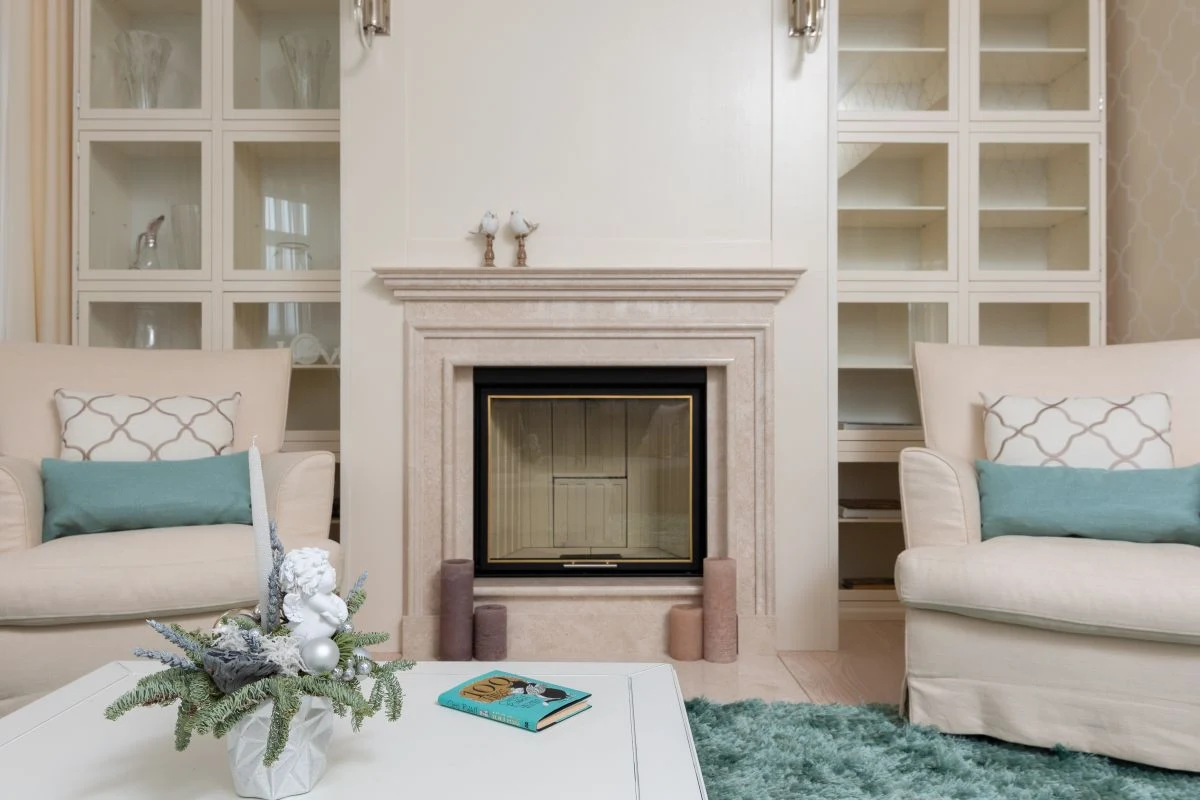
Blue and cream is the traditional way to do a blue living room, and it suits almost any style from cottage to formal. Cream walls and upholstery keep the room warm, while blue in the sofa, rug or curtains adds color and character. It works because cream softens blue’s coolness, so the room feels inviting rather than chilly. Tip: choose warm creams rather than stark whites if your blue leans navy, since the warmth balances the depth.
Choose cream with a warm yellow undertone if your blue is navy, and a cooler cream if your blue is sky, since the wrong cream can make blue look dirty. Keep cream in large areas, walls and sofa, and blue in mid-size pieces, so the scheme stays balanced, with cream doing the quiet work and blue providing the color interest.
6. A Powder Blue Cottage Room
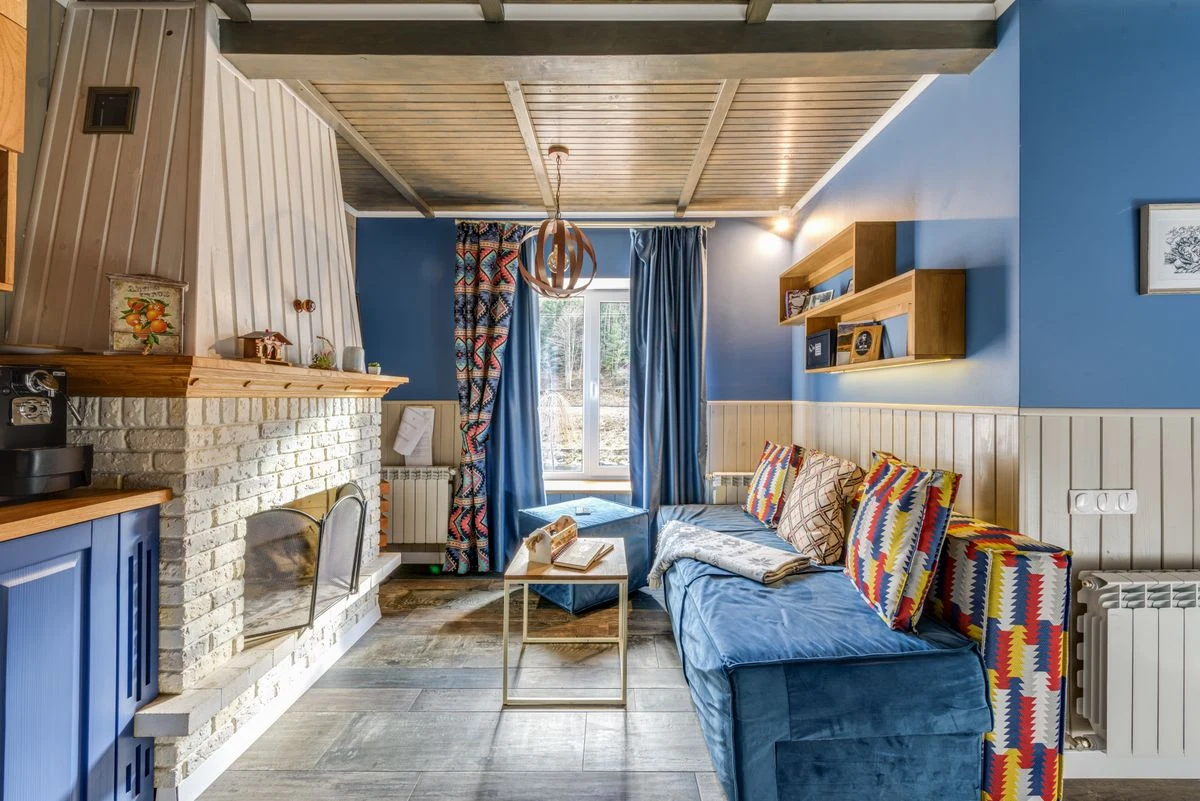
A powder blue cottage living room feels soft, nostalgic and charming, with painted furniture, floral cushions and light wood floors. It is the blue of vintage china and country cottages. It works because powder blue is gentle and romantic, making a small or cozy room feel like a retreat. Tip: add white slipcovers, a floral cushion or two, and a distressed wood coffee table to complete the cottage look.
Distress painted furniture lightly and seal it with clear wax, so the powder blue does not chip within months of daily use. Pair powder blue with white slipcovers that can be washed, since cottage rooms are meant to be lived in, not kept pristine, and washable covers mean a spill is a laundry job, not a disaster.
Deep and Moody Blue Rooms
7. A Dark Navy Evening Room
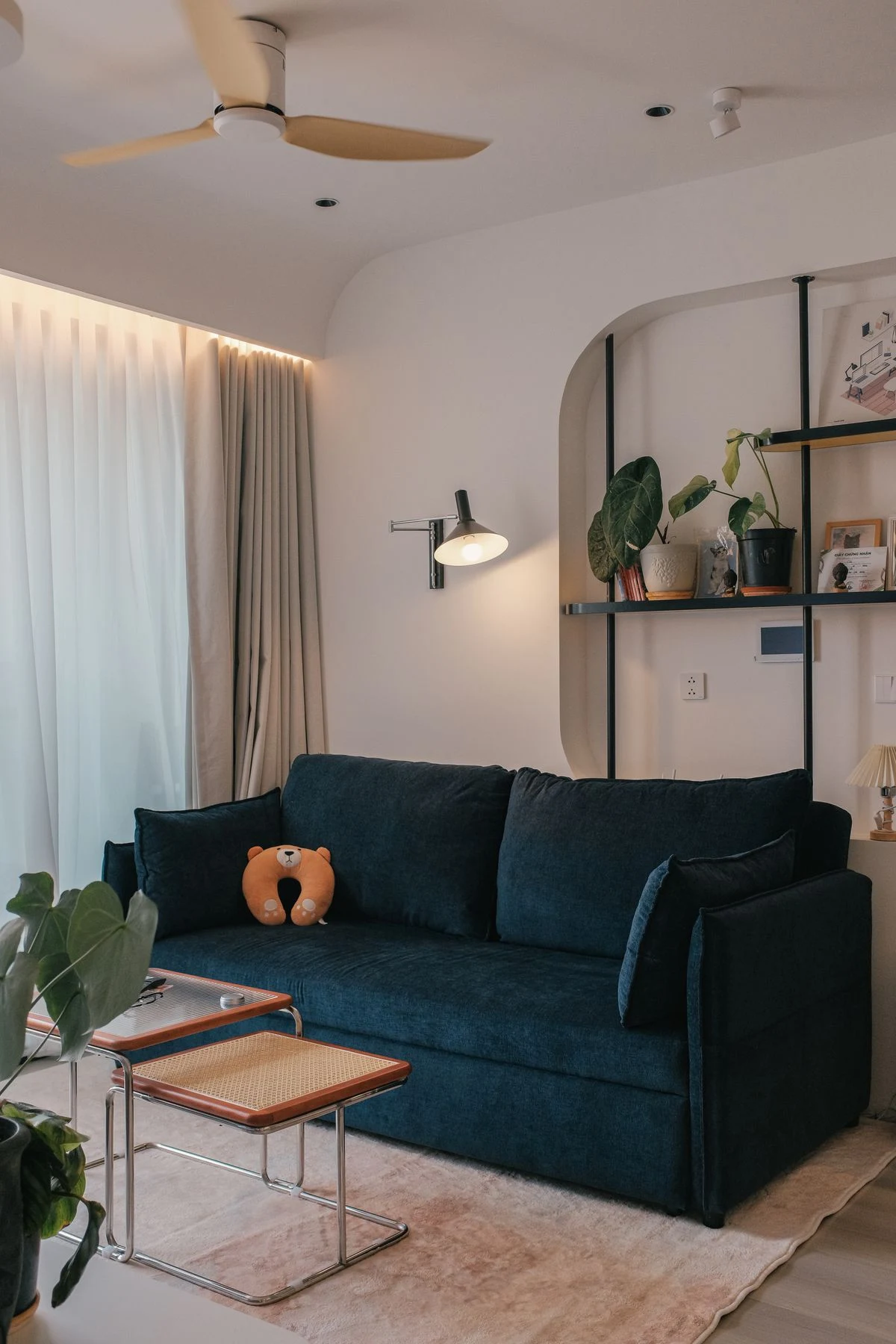
A dark navy living room comes alive in the evening, when low lamplight makes the deep blue walls feel cozy and cocooning rather than dark. It is perfect for a room used mostly for relaxing, reading and movie nights. It works because dark colors recede, making the walls feel further away, while warm light and soft textures pull you in. Tip: use warm-white bulbs, plenty of lamps and light-colored art so the room glows instead of closing in.
Use at least three light sources, table lamps, a floor lamp and a picture light, so dark walls glow instead of swallowing light. Put lamps on dimmers and use warm-white bulbs around 2700K, since cool white bulbs make navy walls look grey and harsh at night, when the room should feel warm and inviting rather than cold and flat.
In a dark navy room, hang art with light mats and pale frames, since dark frames disappear into dark walls. Keep the floor light, pale wood or a light rug, so the room has a bright base and the navy walls feel like a wrap rather than a cave, which is the risk when dark walls meet a dark floor.
8. A Midnight Blue Walls Room
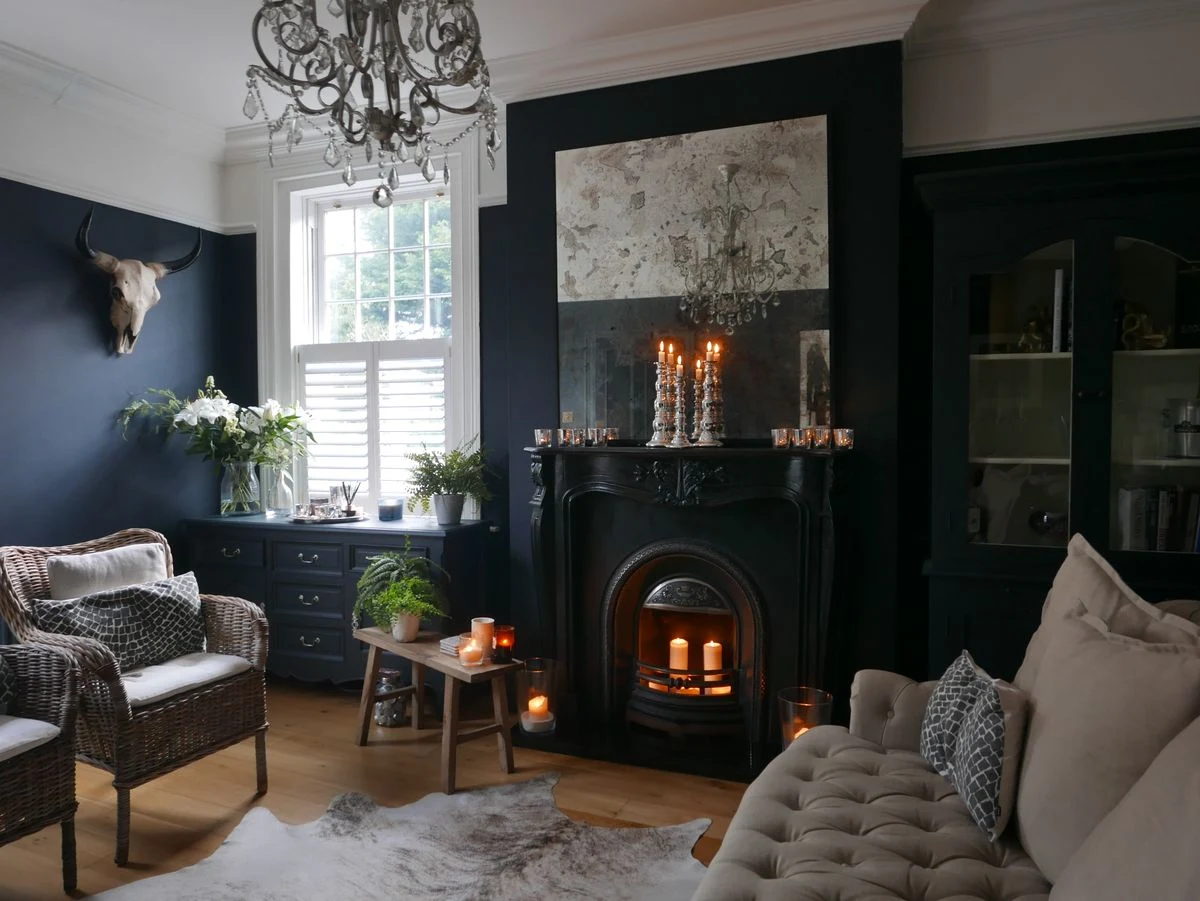
Painting all four walls midnight blue is a bold move that pays off with a dramatic, enveloping room that feels like a private club or library. Keep the ceiling and trim white for contrast, and add brass and leather for warmth. It works because a fully enveloping color creates a sense of occasion — the room feels special every time you enter it. Tip: try the color on one wall first for a week, and only commit to all four walls once you love living with the depth.
Paint a test patch and live with it for a week, checking it at night under lamps, since midnight blue looks almost black after dark. Keep woodwork and ceiling bright white, and use a satin finish on trim so it reflects light and outlines the dark walls cleanly and stops the room feeling like a painted box.
9. A Teal Blue Jewel Room
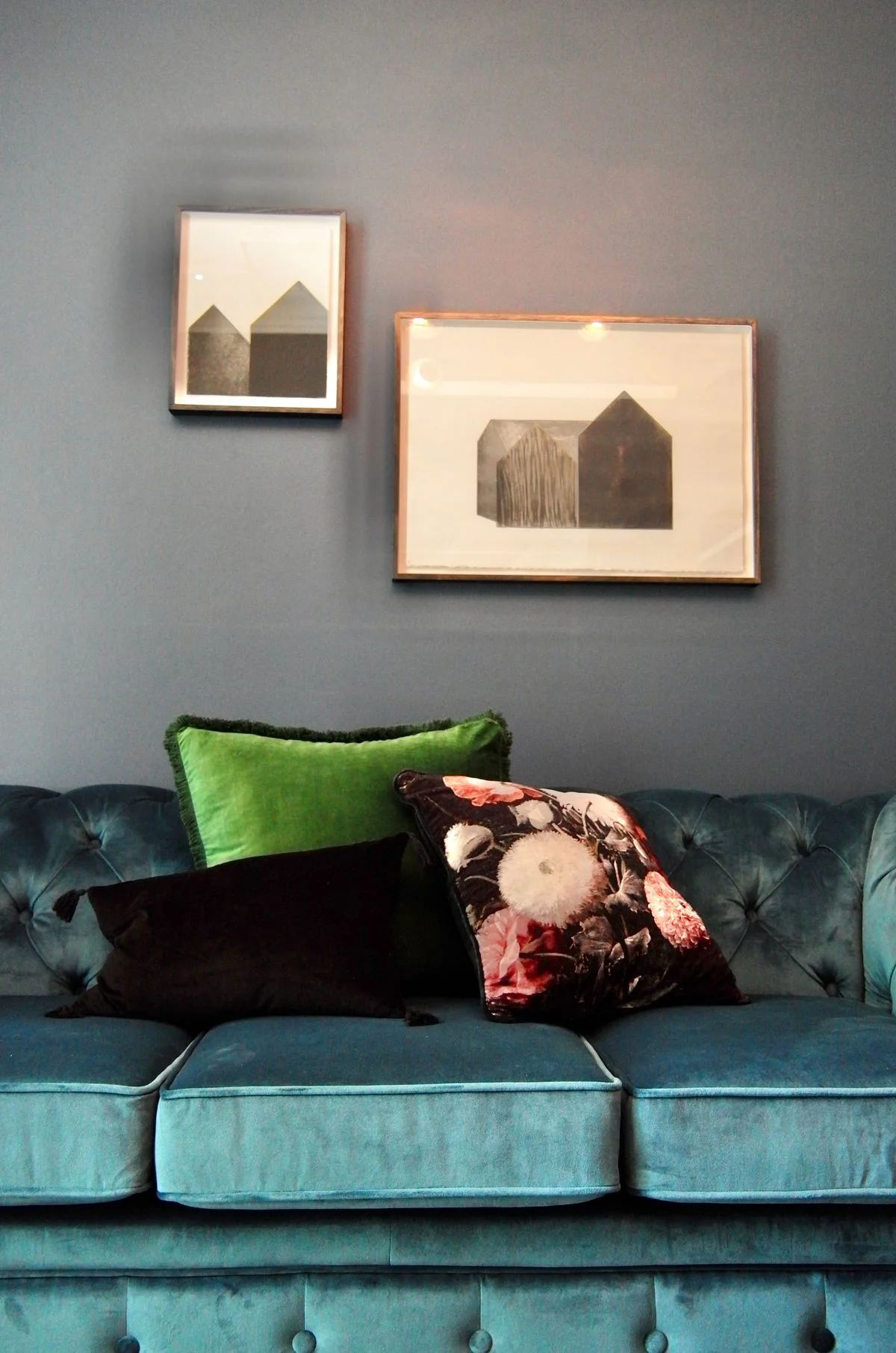
A teal living room sits beautifully between blue and green, giving a jewel-toned room that feels rich and a little exotic. Teal sofas, velvet chairs or a teal feature wall pair wonderfully with gold, brass and dark wood. It works because teal has the calm of blue and the life of green, so it feels both relaxing and interesting. Tip: use teal as the hero color and gold as the accent, since metallics make jewel tones look even more luxurious.
Pair teal with gold in small doses, frames and lamp bases, and keep walls pale if the teal sofa is the hero, so the jewel tone does not darken the room. Test teal fabric in daylight, since teal shifts green under warm lamps and blue under cool daylight, so a sample viewed only in the shop can mislead you badly.
10. A Blue and Charcoal Modern Room
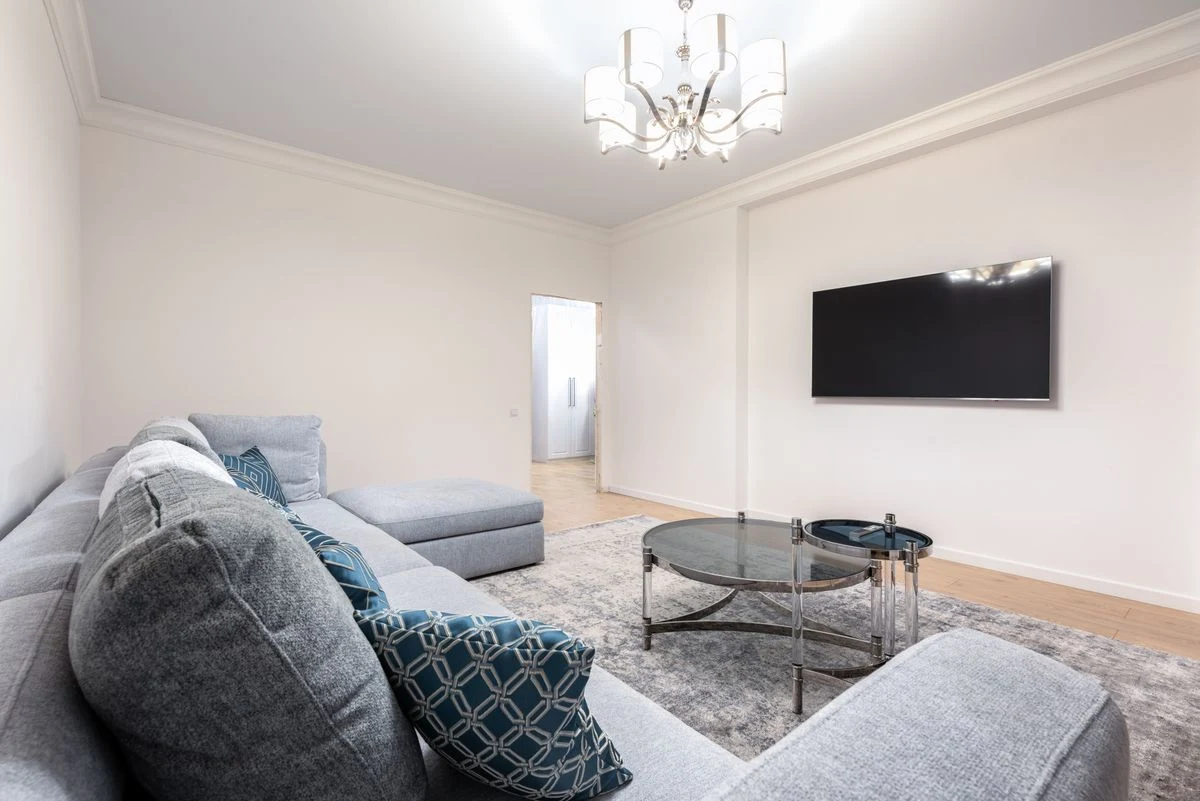
A blue and charcoal living room feels modern, sleek and grown-up, with deep blue upholstery against charcoal walls or a grey sofa with navy accents. It suits contemporary homes and apartments. It works because the two dark, cool tones create a sophisticated layered effect, while lighter cushions and art keep it from feeling flat. Tip: add one warm element, like wood or brass, so the cool palette still feels welcoming.
Break up two dark tones with a pale rug or light art, otherwise the room can feel like one dark block. Add a warm wood coffee table, since wood is the fastest way to stop a blue and charcoal scheme feeling like an office, since bare dark walls and a dark sofa with no warm break look corporate.
11. An Indigo Accent Room
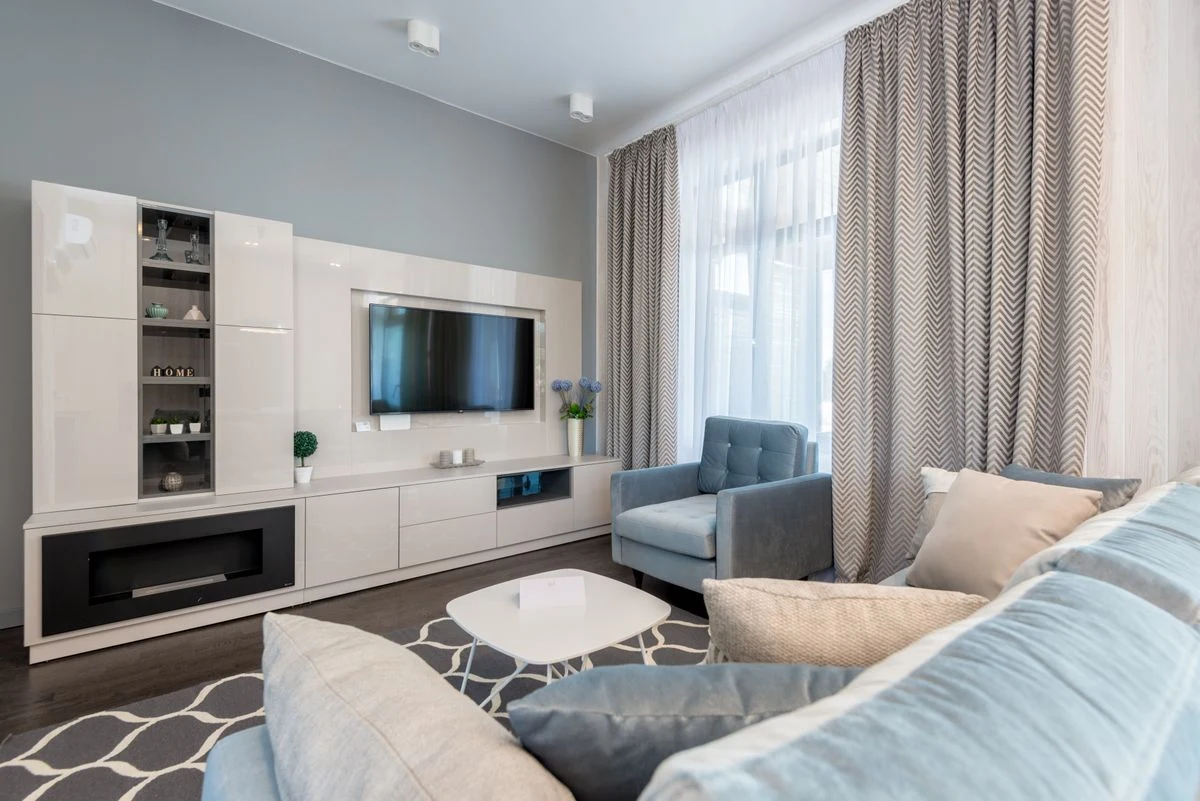
An indigo living room uses the deepest, richest blue as an accent — indigo cushions, throws, art and a rug against a neutral grey or white room. It is an easy way to enjoy deep blue without painting walls. It works because indigo is so saturated that even small amounts make a strong impression, giving a neutral room instant depth. Tip: repeat indigo in at least three places, such as cushions, a throw and a vase, so it reads as a scheme rather than a random touch.
Repeat indigo in cushions, a throw and a vase or art print, so it reads as a scheme, not a single stray cushion. Keep the base room warm white or light grey, since indigo against stark white can look harsh and against beige can look muddy, especially under warm lamps, where beige and indigo blur into each other.
12. A Blue Velvet Luxe Room
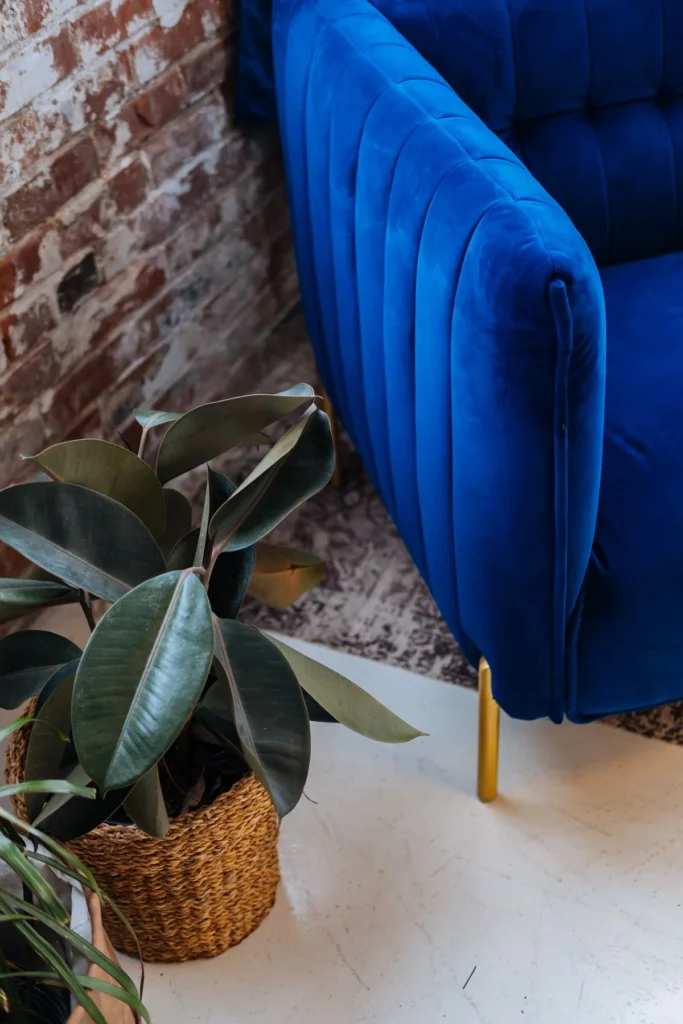
A blue velvet sofa is the centerpiece of a luxe blue living room, with the fabric’s sheen making navy, teal or royal blue look incredibly rich. Pair it with brass lamps, a marble coffee table and cream walls for a hotel-lounge feel. It works because velvet changes shade as the light moves across it, so the blue looks alive and multidimensional. Tip: keep pets’ claws and rough fabrics away from velvet, and brush it occasionally to keep the pile looking fresh.
Brush velvet weekly and keep it away from direct sun, which fades navy velvet to purple at the edges first. Choose a velvet with a high rub count if the sofa is used daily, since low-grade velvet flattens in the seat within a year, leaving shiny worn patches on the seat and arms that are hard to restore.
Protect a velvet sofa with a throw on the favorite seat, and deal with spills by blotting with a clean, dry cloth, never rubbing, which crushes the pile. If velvet gets wet, let it dry naturally away from heat, since a hairdryer can leave a permanent mark in the nap.
Blue Paired with Warm Accents
13. A Blue and Gold Room
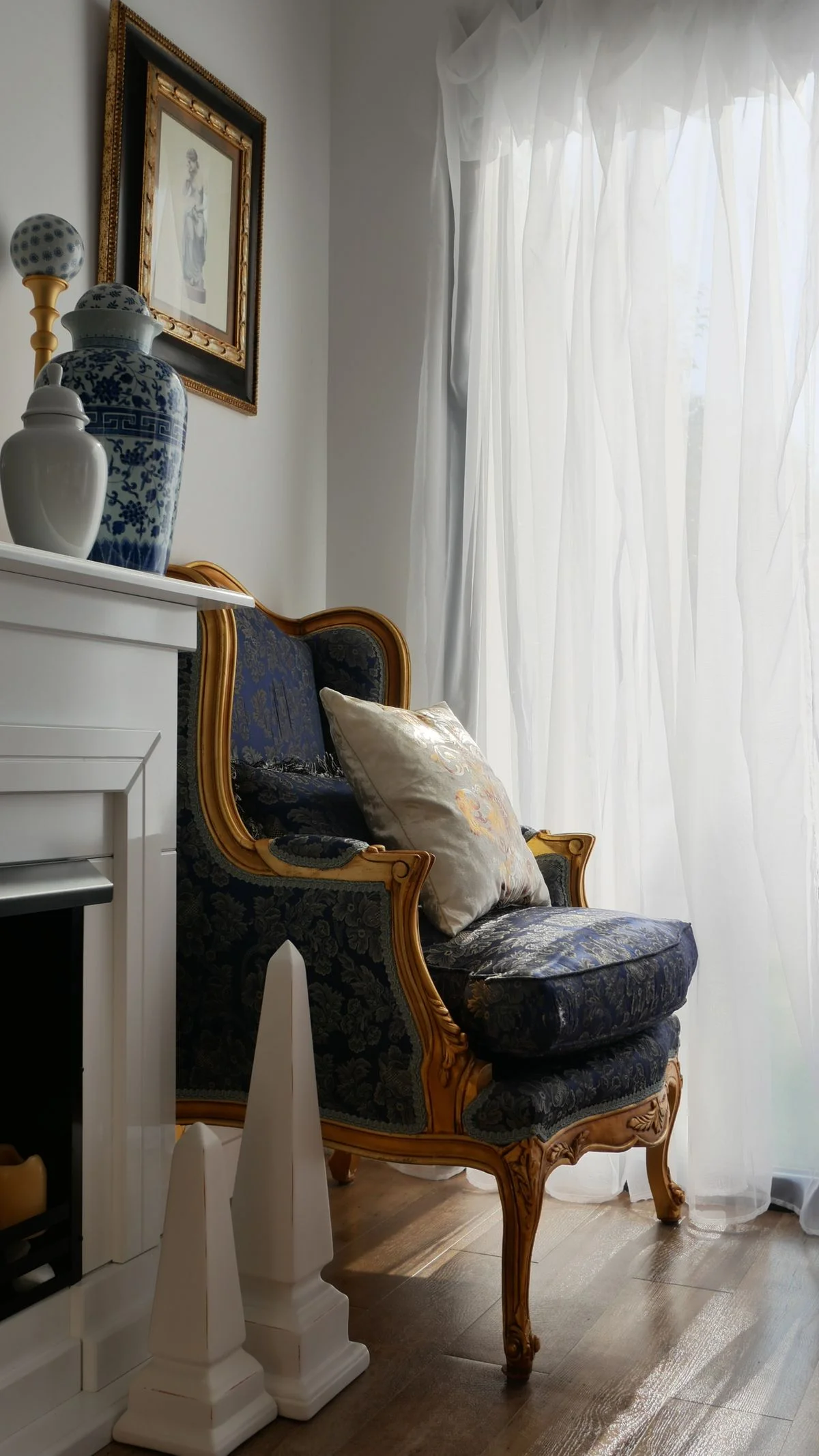
Blue and gold is a regal combination that has decorated palaces and grand hotels for centuries. Navy or royal blue with gold frames, brass lamps and metallic cushions feels luxurious and timeless. It works because gold warms up blue’s coolness and adds a celebratory sparkle that plain blue lacks. Tip: use gold sparingly — mirror frames, lamp bases, cushion trim — so it reads as jewelry, not as a theme.
Use gold as jewelry, mirror frames, lamp bases and cushion piping, and keep it to one gold finish throughout. Too much gold beside royal blue quickly looks like a hotel lobby, so stop at three or four gold touches in a normal living room, since each extra gold piece pushes the scheme closer to a themed set.
14. A Blue and Wood Warm Room
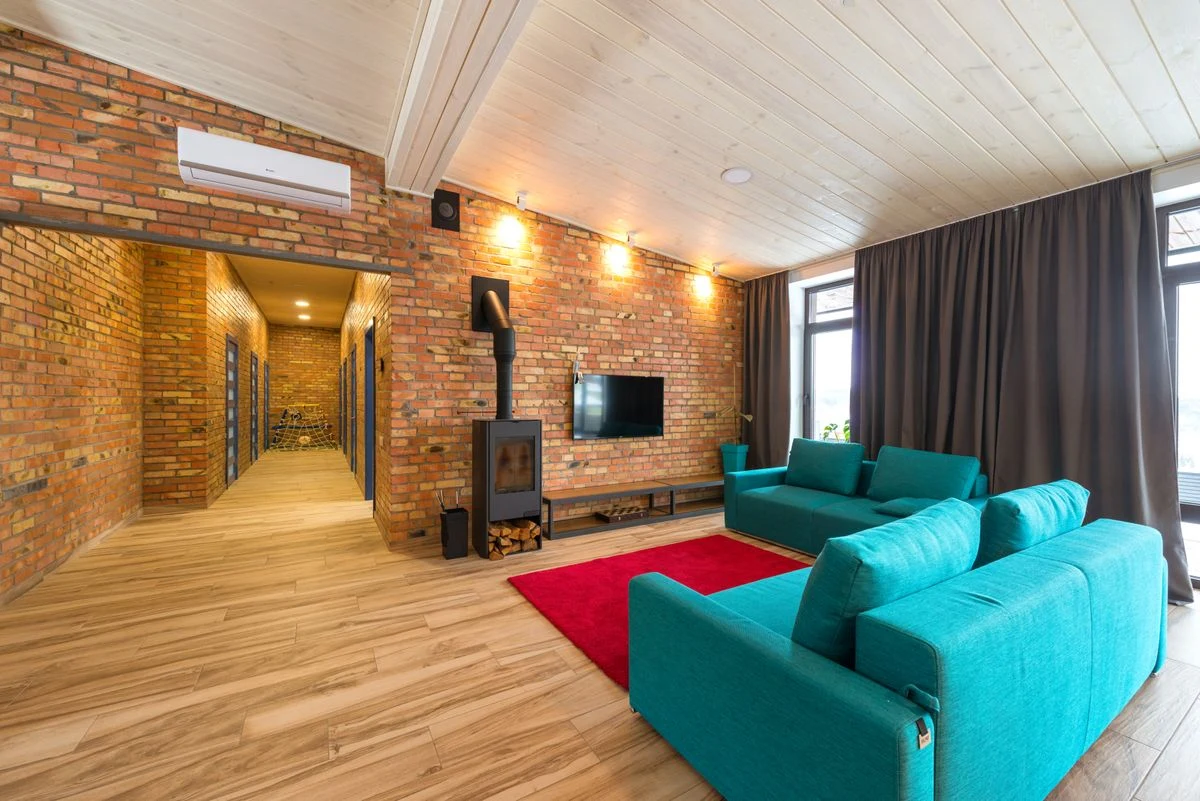
Blue walls or upholstery paired with warm wood furniture is one of the most livable blue schemes, since wood’s honey tones balance blue’s coolness perfectly. Oak floors, a walnut coffee table and wooden shelves make a blue room feel like home. It works because natural wood adds organic warmth that stops blue from feeling cold or formal. Tip: choose medium wood tones rather than very dark ones, so the room stays bright and the blue remains the star.
Match wood tones to the blue’s depth: honey oak suits pale blue, while walnut suits navy, since very dark wood beside pale blue can look top-heavy. Oil wooden tables twice a year to keep the honey tone from greying, especially near a sunny window, where dry air and light bleach the finish faster than elsewhere.
15. A Blue and Brass Room
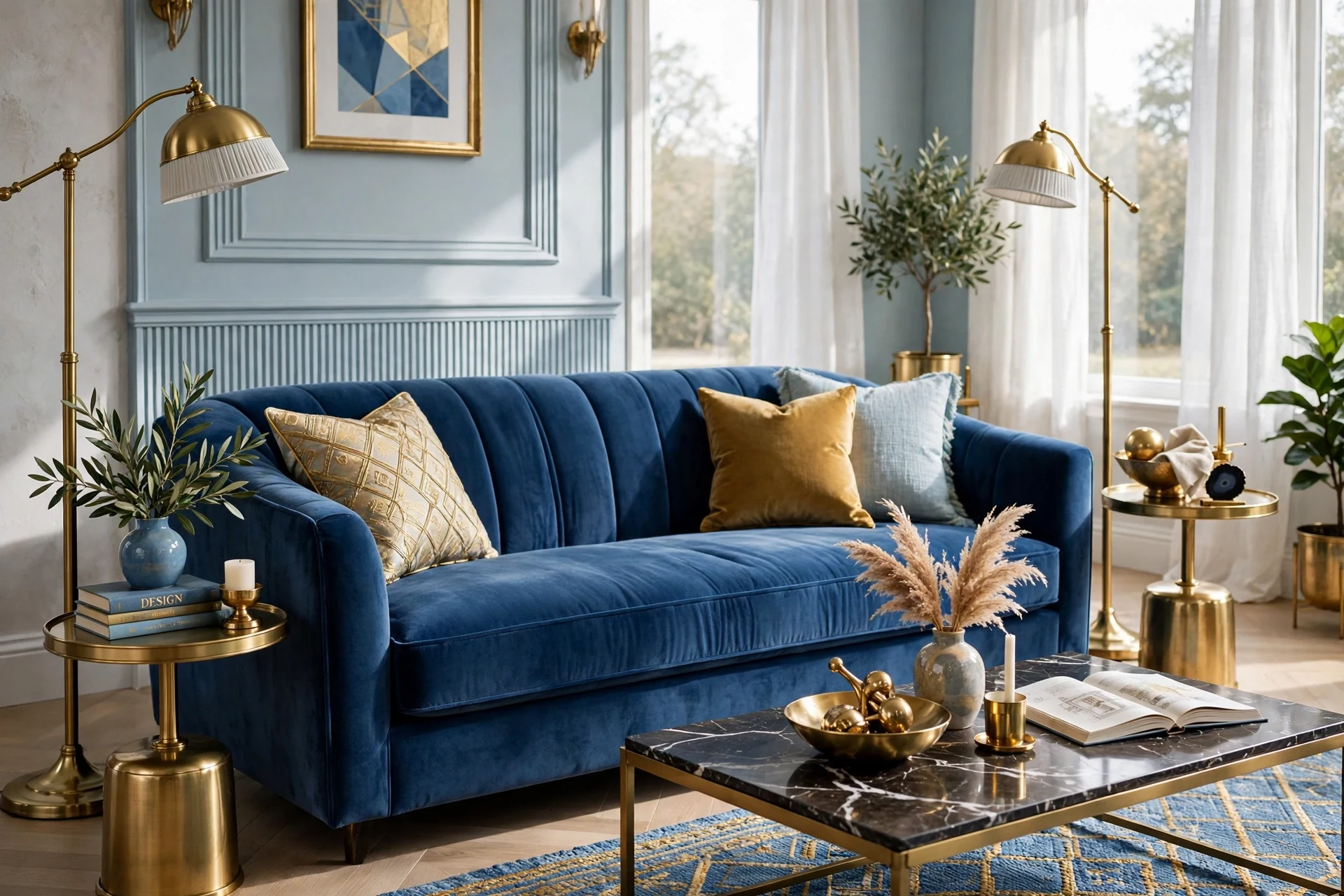
Brass details — a brass floor lamp, side table or picture frames — give a blue living room a warm, vintage glow. Brass suits every shade of blue, from pale sky to deep navy. It works because brass is a warm metal, so it creates a pleasing temperature contrast with cool blue, much like sunlight on water. Tip: mix brass with one other warm material, like leather or wood, so the metallics feel part of a layered room rather than isolated.
Let brass age naturally or polish it regularly, but do not mix polished and aged brass in one room, since the mismatch reads as accidental. Keep brass away from harsh cleaners, which strip the lacquer and leave patchy tarnish that is hard to even out, so gentle cleaning with a soft cloth is safer than a strong polish.
16. A Blue and Terracotta Room
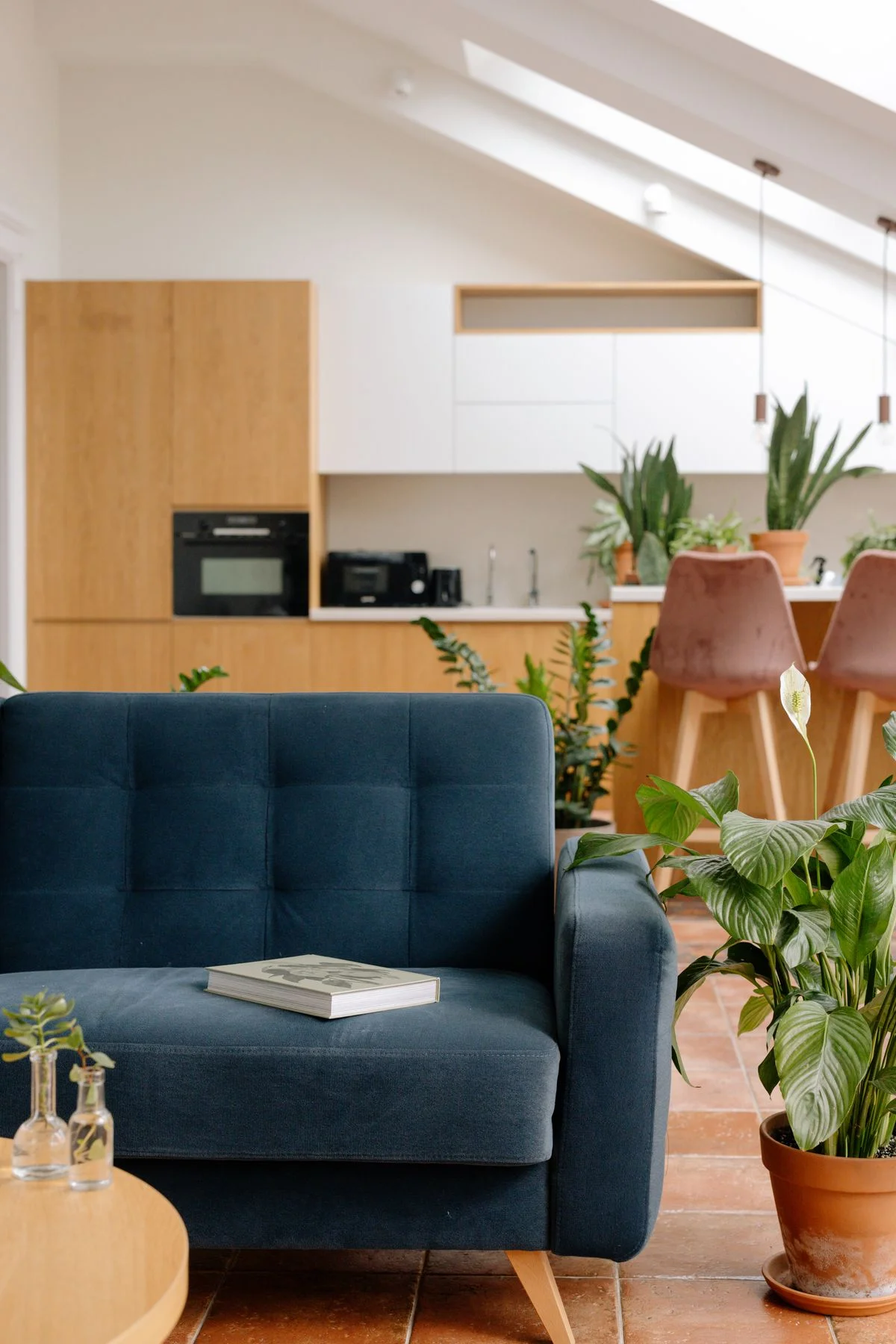
Blue and terracotta is a Mediterranean-inspired pairing that feels sunny and earthy at once: blue walls or a blue sofa with terracotta pots, cushions or tiles. It works because the two colors sit opposite each other in warmth, creating a vibrant, natural contrast like sea and clay. Tip: use terracotta as an accent through pots, cushions and throws rather than a main color, so the blue room keeps its calm base.
Use terracotta in pots, cushions and a throw, not in large furniture, so the blue room keeps its calm base. Seal unglazed terracotta pots before placing them on wood, since they absorb water and can leave a damp ring on a table or floor, a stain that can take weeks to fade from bare wood.
17. A Blue and Beige Neutral Room
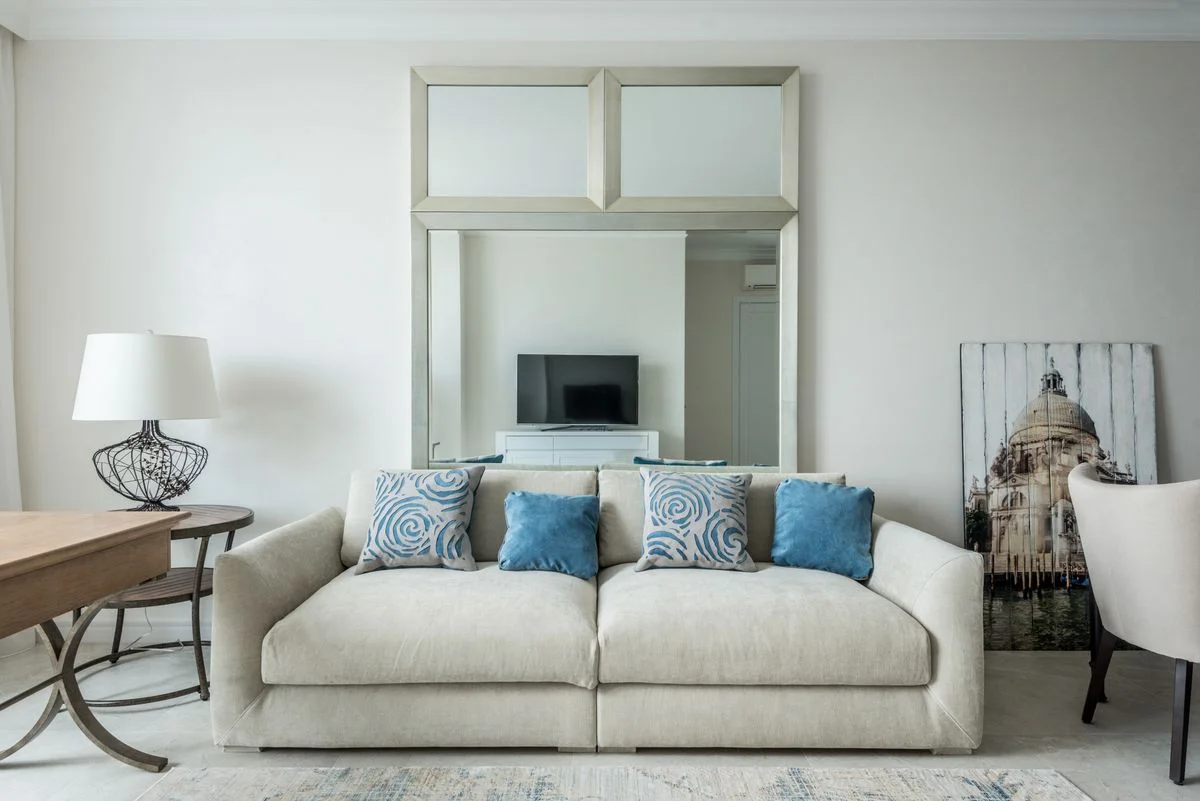
Blue and beige is the calmest way to live with blue, pairing a blue sofa or feature wall with beige walls, carpet and curtains. It suits anyone who loves blue but wants a soft, neutral room. It works because beige warms and quiets blue, creating a space that feels restful and easy to decorate around. Tip: add texture — linen, wool, woven baskets — so the neutral palette feels rich rather than bland.
Add texture to stop beige and blue feeling flat: linen curtains, a wool rug and woven baskets each add a layer without adding color. Keep beige warm, not grey, if the room gets little sun, since a cool beige beside blue can feel chilly, particularly in the evening when natural light has gone and lamps take over.
18. A Blue and White Patterned Room
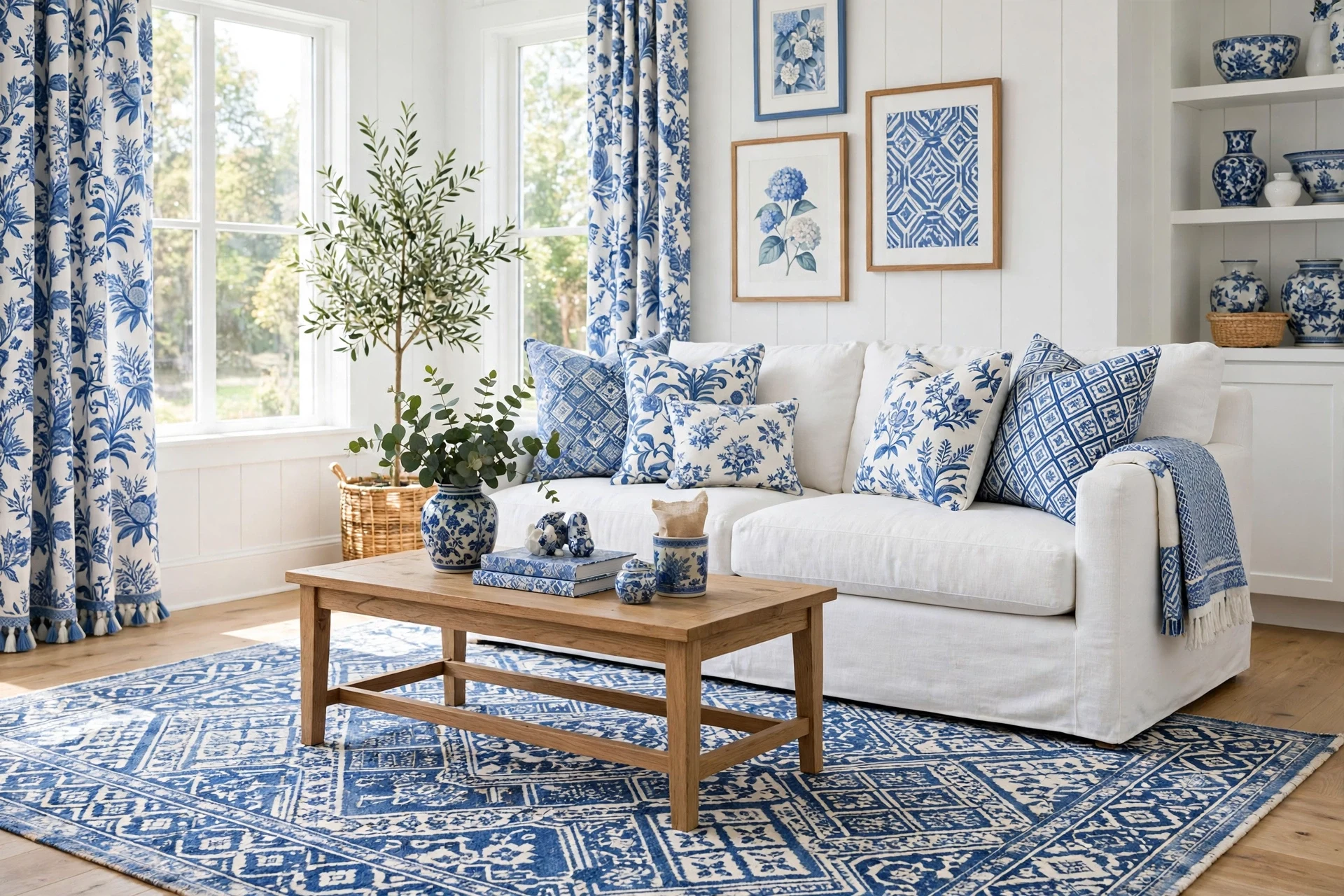
A blue and white patterned room layers chinoiserie, ikat or geometric prints in blue and white across cushions, curtains and rugs. It feels collected and classic, with roots in porcelain and coastal design. It works because a two-color pattern palette looks coordinated even when the patterns themselves are different, so mixing prints feels safe. Tip: vary the scale — one large pattern, one medium, one small — so the prints complement rather than compete.
Vary pattern scale, one large print on curtains, a medium print on cushions and a small print on a rug border, so patterns complement rather than fight. Keep all patterns in the same two blues, navy and white or sky and white, to hold the mix together, even when the prints themselves come from different shops or eras.
Fresh and Coastal Blue Rooms
19. A Coastal Blue and Sand Room
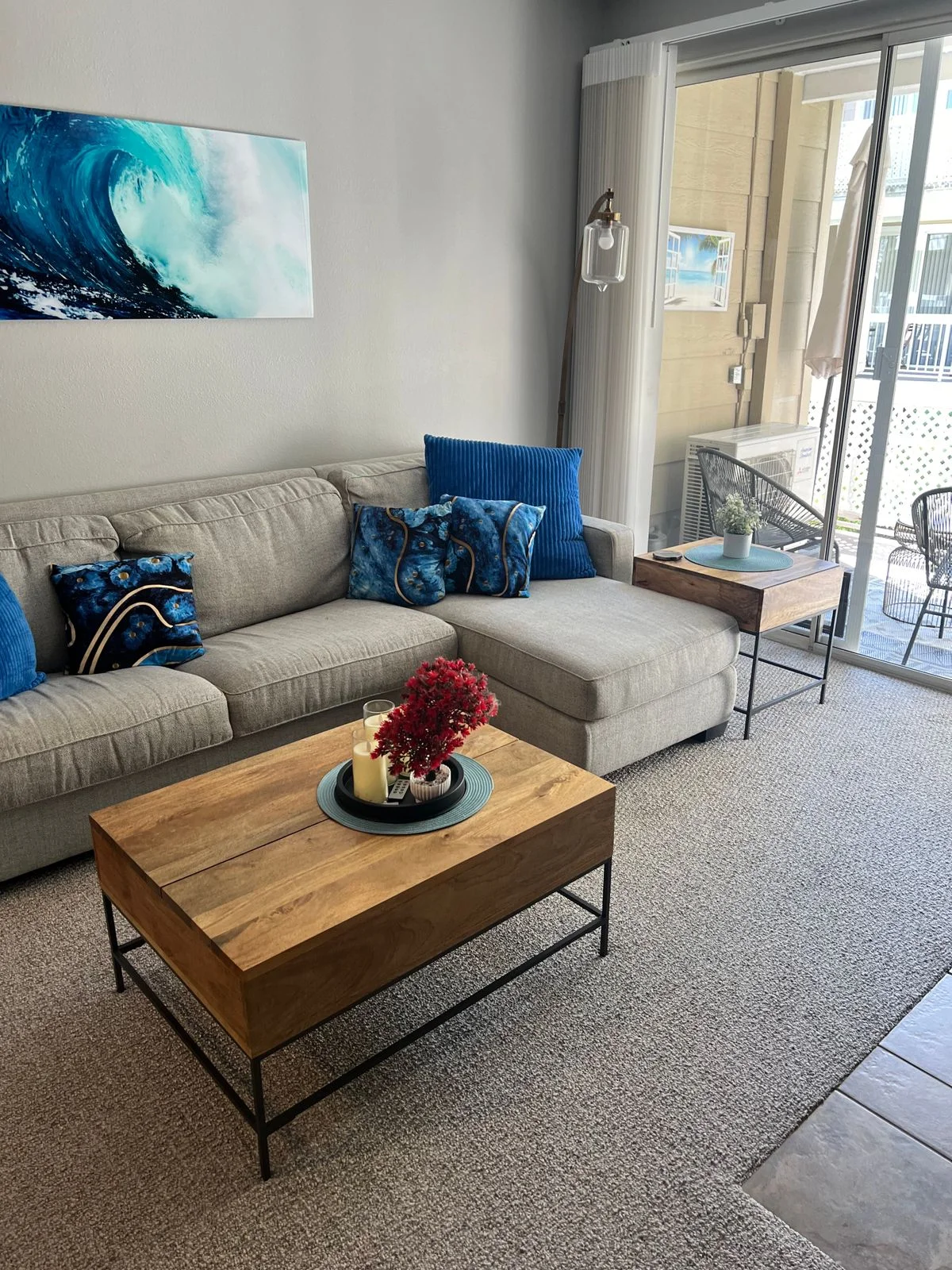
A coastal blue and sand room combines ocean blues with sandy beiges, driftwood and natural textures for a beach-house feeling that works far from the sea. It is relaxed, light and endlessly calming. It works because the palette copies nature — sea, sand and sky — so it feels instinctively restful. Tip: add jute, linen and driftwood textures, and keep the styling loose and uncluttered, like a real beach house.
Choose washable linen and cotton for a coastal room, since sand and salt air soil fabric faster than an inland home. Keep styling loose, a jute rug, a driftwood bowl and linen throws, rather than filling every shelf, which kills the beach-house ease, which depends on empty space and light more than on any single object.
Use a doormat and a shoe tray by the living room door if the coastal look comes with real beach trips, since sand grinds into jute and linen quickly. Shake rugs outside weekly, and choose a jute rug with a bound edge, which frays far less than a raw edge in high traffic.
20. A Turquoise Bright Room
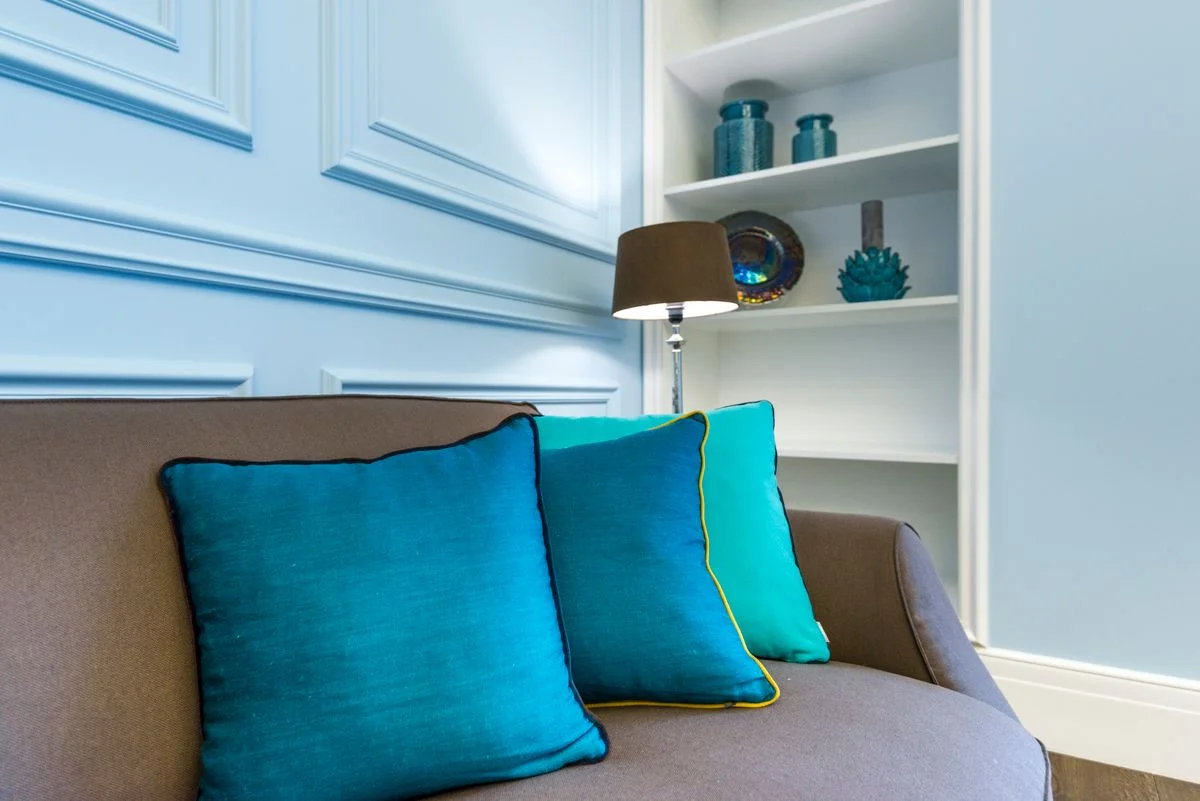
A turquoise living room is the brightest, most joyful blue room you can create, with turquoise walls, a turquoise sofa or vivid turquoise accents against white. It feels like a tropical holiday at home. It works because turquoise is an energizing blue-green that lifts the mood and makes a room feel sunny even on grey days. Tip: balance turquoise with plenty of white and one natural texture, like wood or rattan, so the brightness stays cheerful rather than chaotic.
Balance turquoise with plenty of white and one natural texture, rattan or light wood, so brightness stays cheerful. Test turquoise paint at midday, since it looks greener in sun and bluer under lamps, and the shift can surprise you after painting, when repainting means two more coats and a weekend lost.
21. A Blue and Green Botanical Room
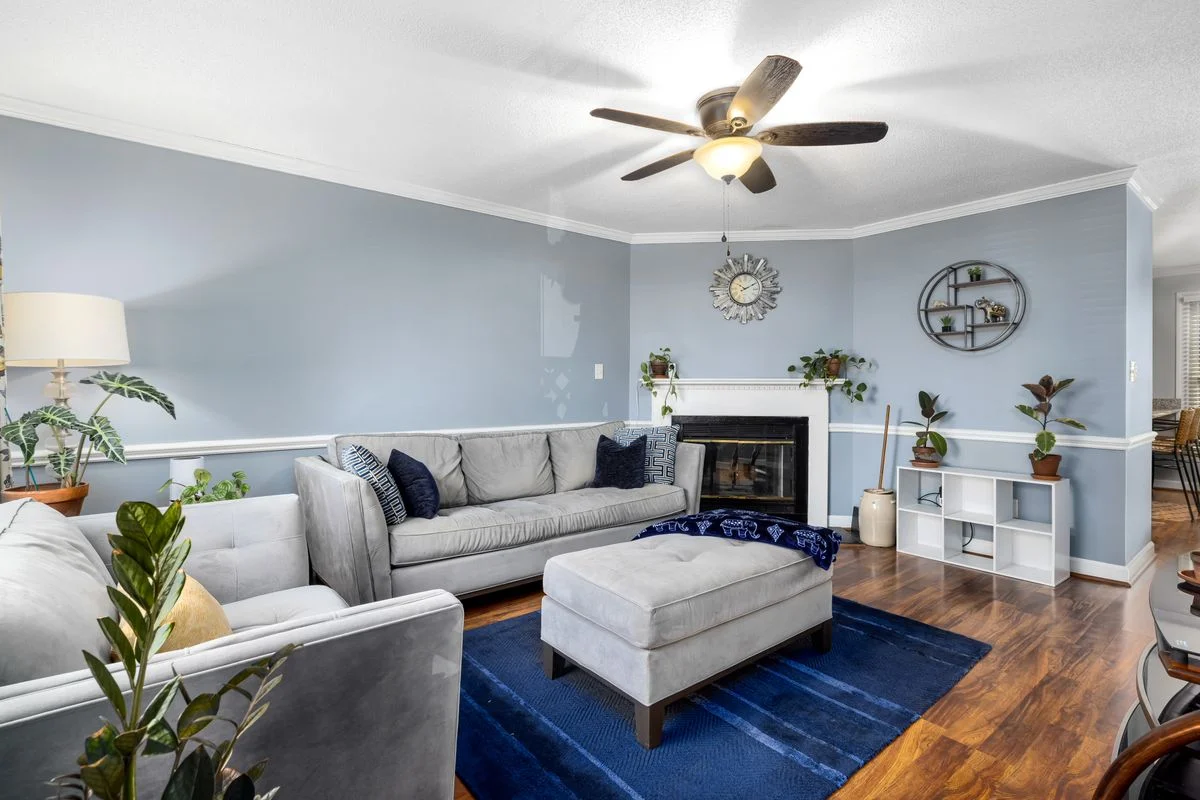
A blue room filled with green plants is a fresh, botanical scheme where the blue acts as a calm backdrop for lush leaves. Navy or pale blue walls make green foliage pop beautifully. It works because blue and green sit next to each other in nature — sky and leaves, sea and shore — so the combination feels organic and restful. Tip: use large plants like monstera, palms or fiddle-leaf figs for drama, and white pots so the green and blue stay the focus.
Group plants by light needs near the window, and keep large plants in white pots so foliage stays the focus. Wipe monstera leaves monthly and rotate pots weekly, since plants lean toward light and a lopsided plant spoils the calm blue backdrop, since one leaning plant draws the eye away from the whole scheme.
22. A Blue Grey Relaxing Room
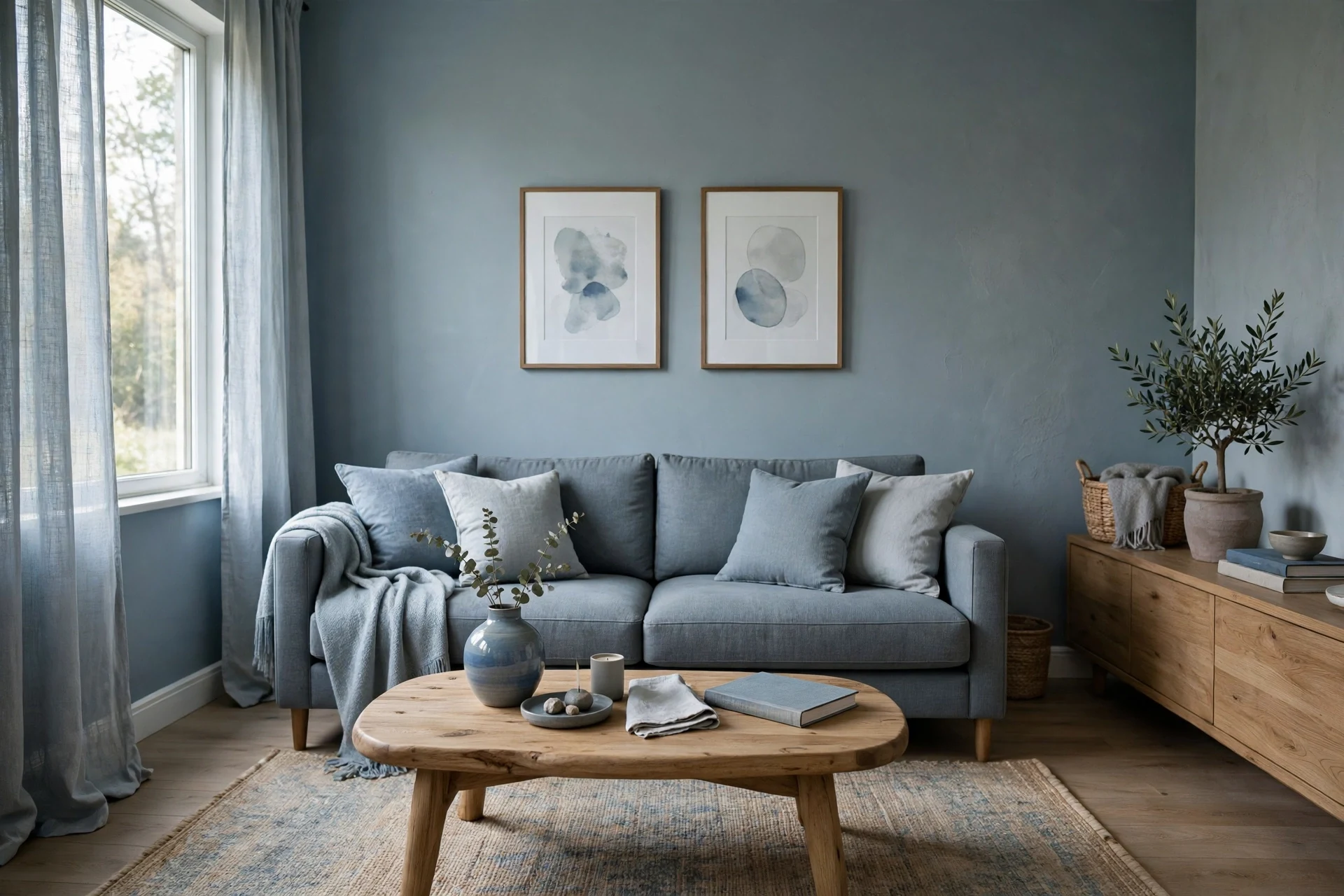
A blue-grey living room is the ultimate relaxing room, with a grey-blue sofa, soft grey walls and blue-grey cushions blending into one calm, misty palette. It suits bedrooms that open into living spaces and anyone who finds strong color tiring. It works because blue-grey is muted and low-contrast, so the eye rests and the mind unwinds. Tip: add white and light wood accents to keep the misty palette from turning gloomy, especially in a room with little daylight.
Add white and light wood to a blue-grey room, especially if daylight is limited, since blue-grey turns gloomy without contrast. Use warm-white lamps in the evening, which lift blue-grey from misty to cozy, while cool bulbs make it look flat, draining the soft grey-blue of the depth that makes it relaxing.
23. A Blue Feature Wall Room
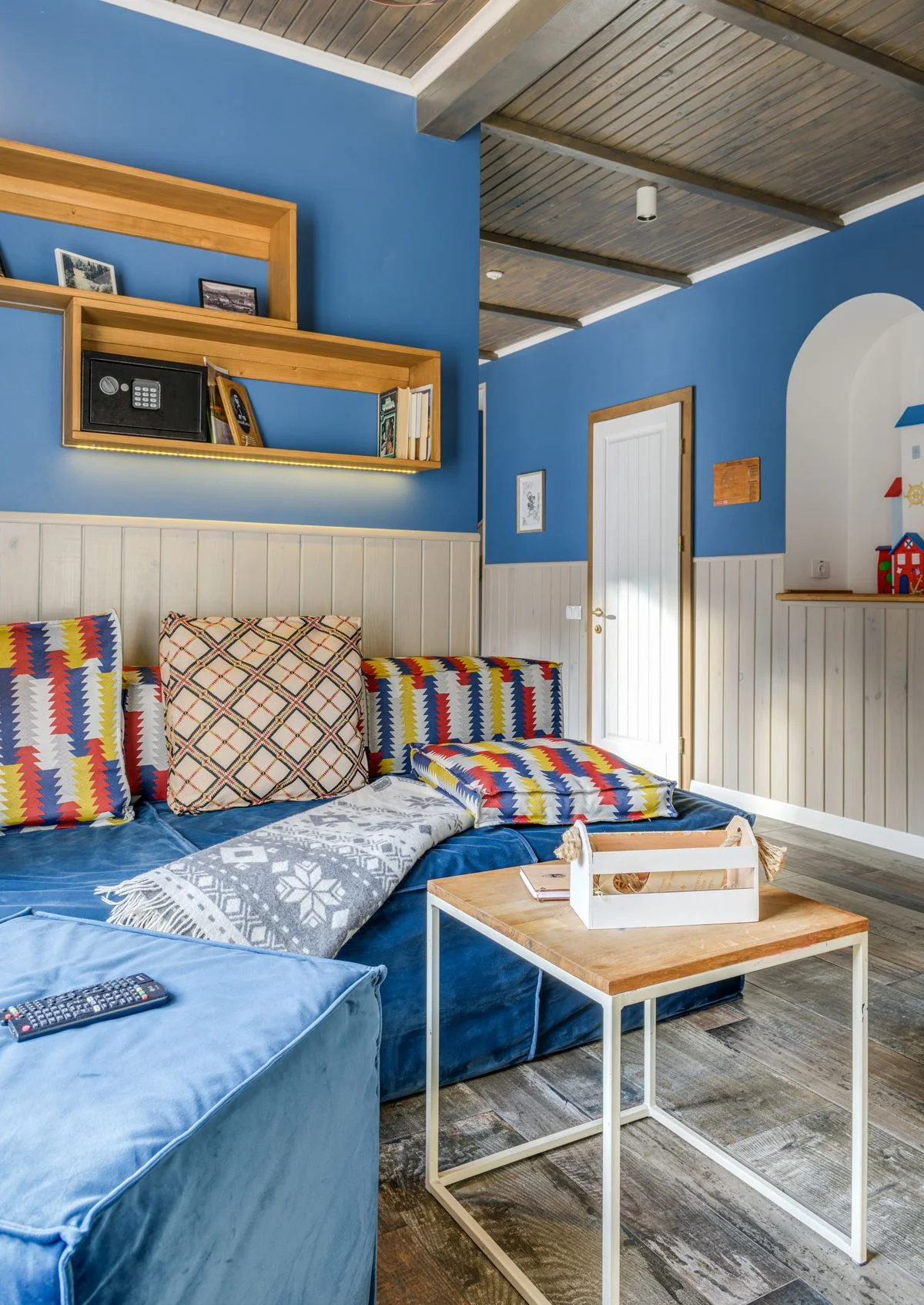
A single blue feature wall gives you the drama of a blue room with the safety of neutral walls elsewhere. Choose the wall behind the sofa or fireplace, and pick a shade that matches your cushions and rug. It works because one strong wall creates a focal point and makes the seating area feel anchored and intentional. Tip: paint the feature wall in a flat or eggshell finish, and repeat the same blue in at least two accessories so the wall feels connected to the room.
Paint the wall behind the sofa or fireplace, and repeat the same blue in cushions and a throw, so the wall connects to the room. Use a flat or eggshell finish, since gloss on a feature wall shows every roller mark and wall bump, and a roller mark across a dark feature wall catches light from every angle.
24. An All-Blue Monochrome Room
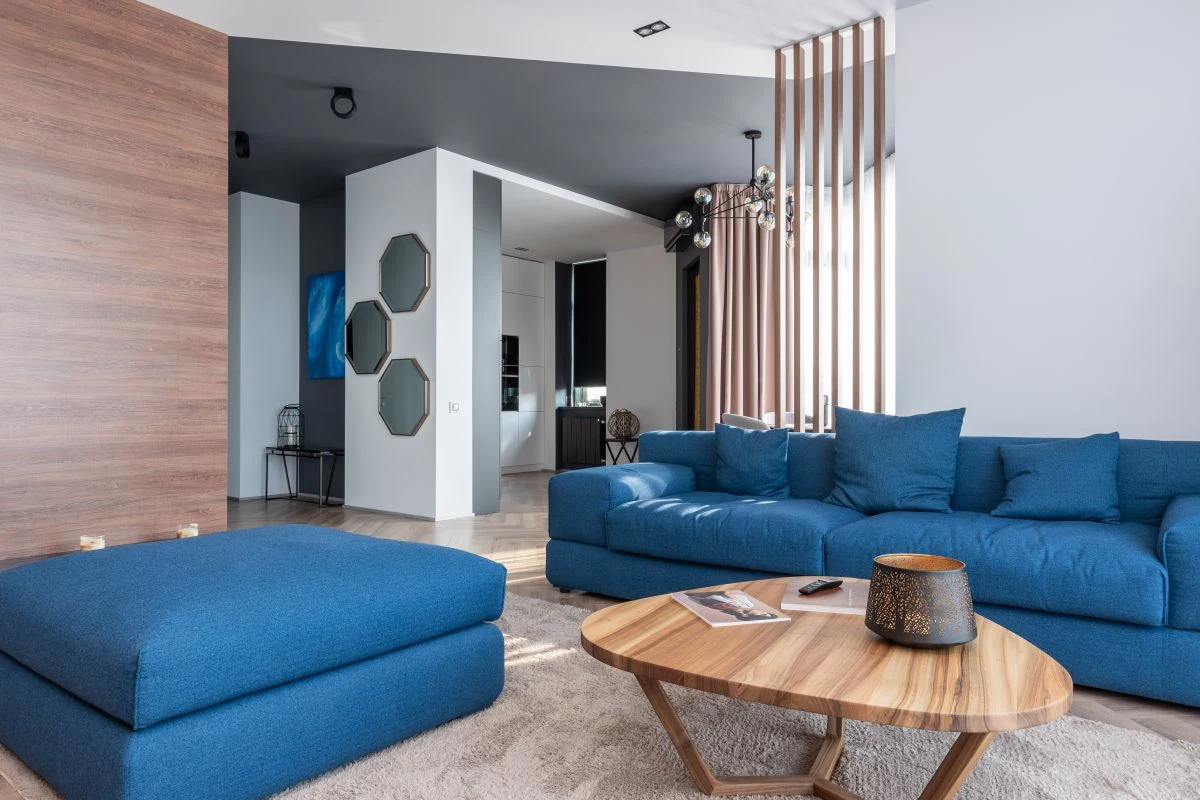
An all-blue monochrome room layers many shades of blue — pale walls, mid-blue sofa, navy cushions, blue art — into one harmonious, enveloping space. It is bold, but because every color is in the same family, it feels calm rather than busy. It works because a single-color palette is naturally harmonious, and varying the shades adds all the depth and interest you need. Tip: include different textures — velvet, linen, wool, gloss — so the monochrome scheme stays rich and three-dimensional.
Vary texture, velvet cushions, linen curtains, a wool rug and a gloss vase, so one color still feels rich. Keep the darkest blue for small accents and the palest for walls, which stops the monochrome scheme feeling heavy or flat, since one texture alone makes a single color look like a paint sample.
Test the full blue range together on one board, wall paint, sofa fabric, cushion and art, before committing, since blues from different brands can clash in undertone. If one blue leans purple and another leans green, the monochrome scheme will look mismatched rather than layered, a clash that shows most where two blues meet on cushions.
How to Choose the Right Ideas for Your Living Room
- Pick your blue family first: pale blues for calm and light, navy for drama, teal for luxury, turquoise for energy — then build the room around that one shade.
- Always pair blue with a warm partner — wood, brass, gold, beige or terracotta — so the room feels inviting rather than cold.
- Repeat your chosen blue at least three times in the room, for example in the sofa, rug and art, so the scheme looks deliberate.
- Use white ceilings and trim with any dark blue, since the contrast keeps deep blue rooms bright and prevents them from closing in.
- Test paint in your own light before committing: blue changes dramatically between morning daylight and evening lamplight.
Frequently Asked Questions
What is the best blue for a living room?
It depends on the feeling you want: light blue and sky blue for calm and brightness, navy for drama and coziness, teal for luxury, and blue-grey for a soft, relaxing room. Pale blues suit small or dark rooms best, while navy suits larger rooms or evening spaces.
Does a blue living room feel cold?
Blue can feel cold if it is used alone, but pairing it with warm wood, brass, beige or terracotta completely changes the feeling. Warm lighting also matters — warm-white bulbs make a blue room glow instead of feeling chilly.
What color sofa goes with blue walls?
A cream, beige, grey or white sofa works beautifully with blue walls, since a light sofa contrasts with the wall color and keeps the room bright. A navy sofa can also work on a pale blue wall for a layered, tonal look.
Can I mix different shades of blue in one room?
Yes, and it usually looks better than a single flat blue. Layer pale, mid and dark blues in walls, upholstery and accessories, and vary the textures so the room feels rich and intentional rather than mismatched.
From coastal navy-and-white to moody midnight blue, there is a blue living room for every home. Choose your shade, add one warm partner like wood or brass, and build the room around it. Save this guide to Pinterest and pin your favorite blue room!
Photos: Pexels (free to use).


