
18 Traditional Living Room Design Ideas for a Timeless, Elegant Home in 2026
Traditional living room design never really goes out of style, because it is built on comfort, craftsmanship and rooms that feel collected over time rather than bought in one weekend. If your living room feels cold, flat or a little too trendy, these 18 traditional living room design ideas will help you bring back warmth, symmetry and character. From a Chesterfield sofa to crown molding and brass lamps, each idea below is easy to mix into a real home, whatever your budget.
Classic Furniture That Anchors the Room
1. A Chesterfield Sofa as the Room’s Centerpiece
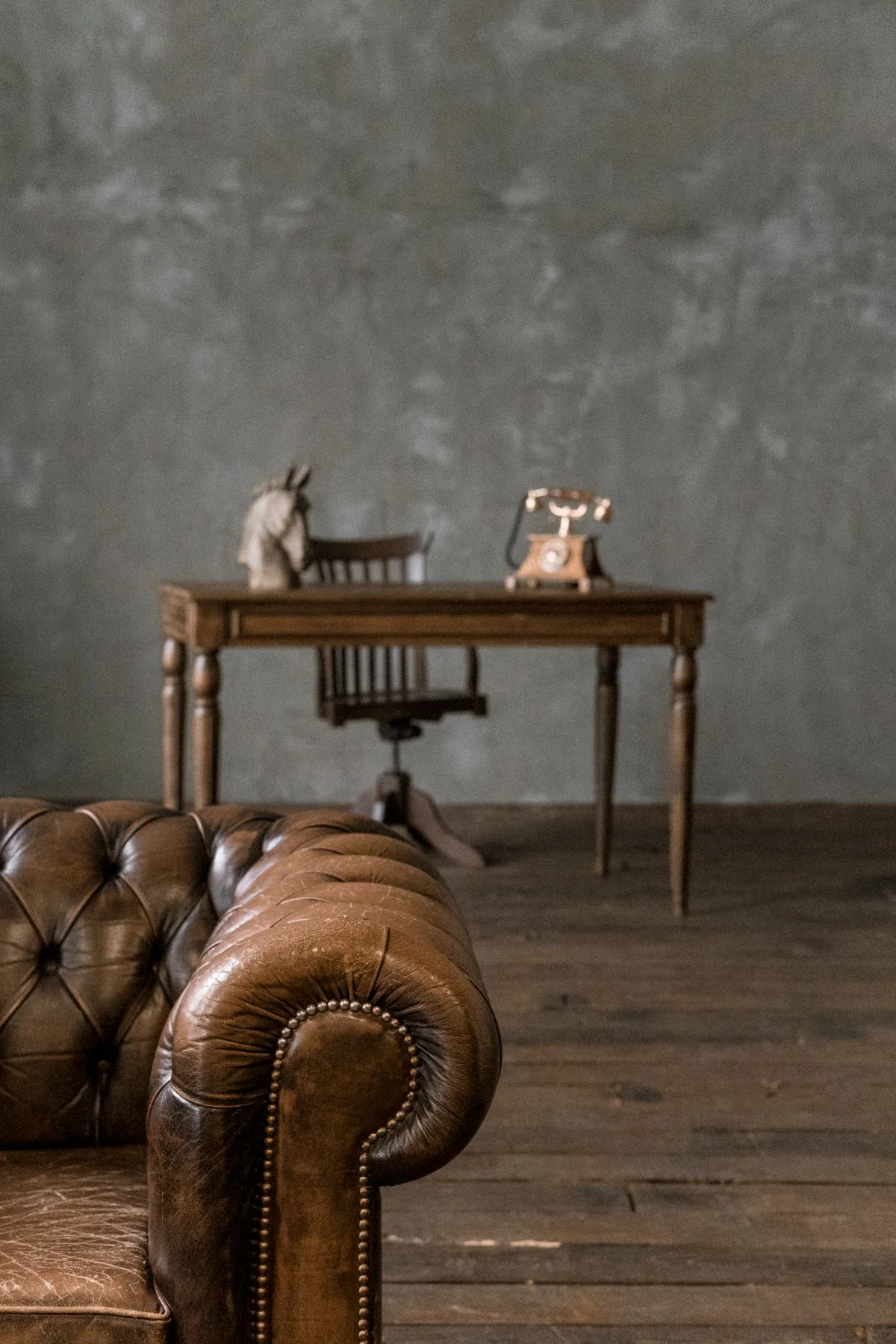
A Chesterfield sofa is the ultimate traditional living room anchor, with its deep button tufting, rolled arms and low back giving instant old-world character. Choose leather for a library feel or velvet for a softer, more formal look, and keep the rest of the room calm so the sofa can shine. It works because the shape is so familiar and balanced that it makes even a plain room feel finished. Tip: pick a neutral shade like cognac, oxblood or sage so the sofa stays timeless for decades.
For size, measure your wall before ordering: a standard three-seat Chesterfield runs about 84 inches wide, so leave at least 18 inches of walkway around it and 14 to 18 inches between the sofa and coffee table. In a smaller room, a two-seat version keeps the same rolled-arm look without crowding the fireplace or blocking a doorway.
Leather versions need a wipe-down every few weeks and a conditioner every six to twelve months, while velvet benefits from a weekly brush or vacuum with an upholstery head to keep the nap even. Rotate loose cushions monthly and keep the sofa out of direct sun, which fades both leather and velvet and dries leather over time.
2. Wingback Armchairs by the Fireplace
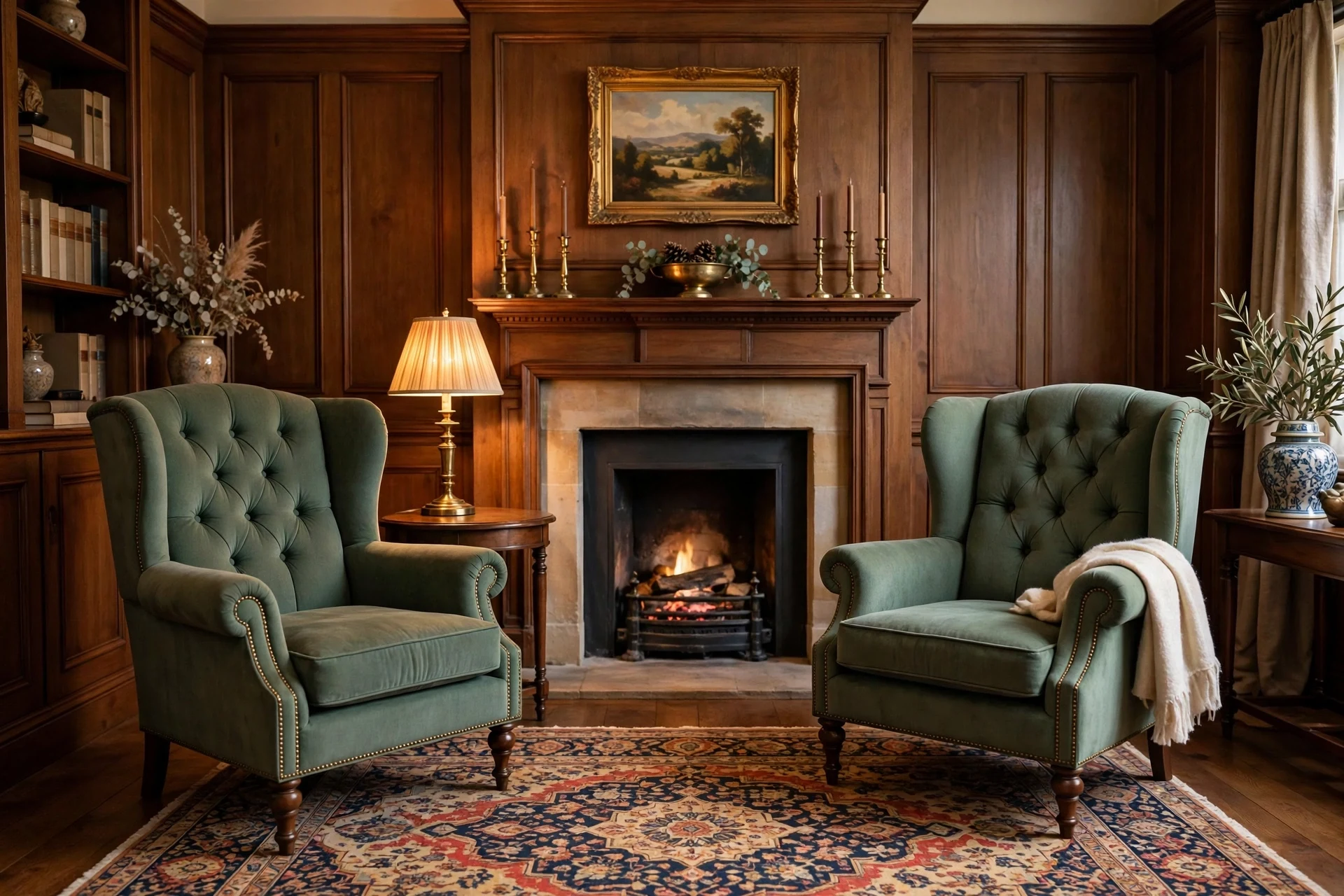
Wingback chairs were made for fireside conversations, and their high, sheltering backs still make a living room feel intimate today. Place a pair facing each other across a coffee table, or flank the fireplace with them for perfect traditional symmetry. They work because they frame a seating area and give everyone a proper, comfortable chair of their own. Tip: try a subtle stripe, plaid or solid linen so the chairs pair easily with a patterned rug or curtains.
Size matters here: a typical wingback is about 30 inches wide and 40 inches tall, so allow roughly 36 inches of space in front of it for a footrest or small side table. Angle the pair slightly toward each other rather than lining them up dead straight, which makes conversation easier and stops the arrangement looking like a waiting room.
3. A Solid Mahogany Coffee Table
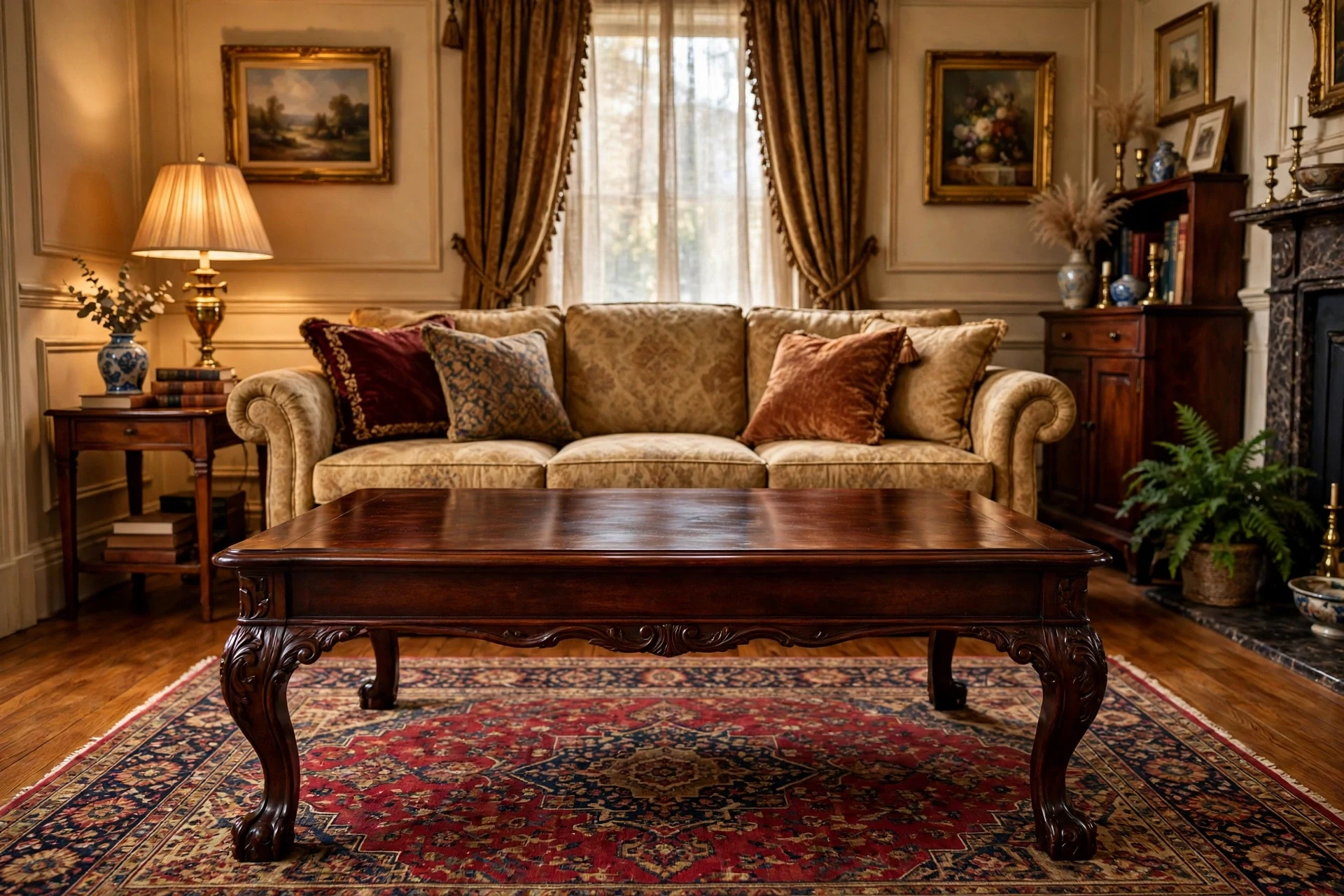
A heavy, dark-wood coffee table grounds a traditional living room in a way glass or metal rarely can. Look for turned legs, a lower shelf and a rich mahogany or walnut finish that echoes other wood tones in the room. It works because the weight and warmth of real wood balance soft upholstery and patterned textiles. Tip: style it simply with a stack of books, a small tray and one candle, and leave plenty of empty surface so the room still feels calm.
When shopping, check the construction, not just the finish: solid mahogany or walnut, dovetail drawers if it has any, and legs joined rather than simply screwed on will last decades. Keep a coaster habit for drinks and a soft cloth for dusting, and avoid placing the table directly beside a radiator, where heat can crack the finish over time.
4. A Tufted Ottoman That Does Double Duty
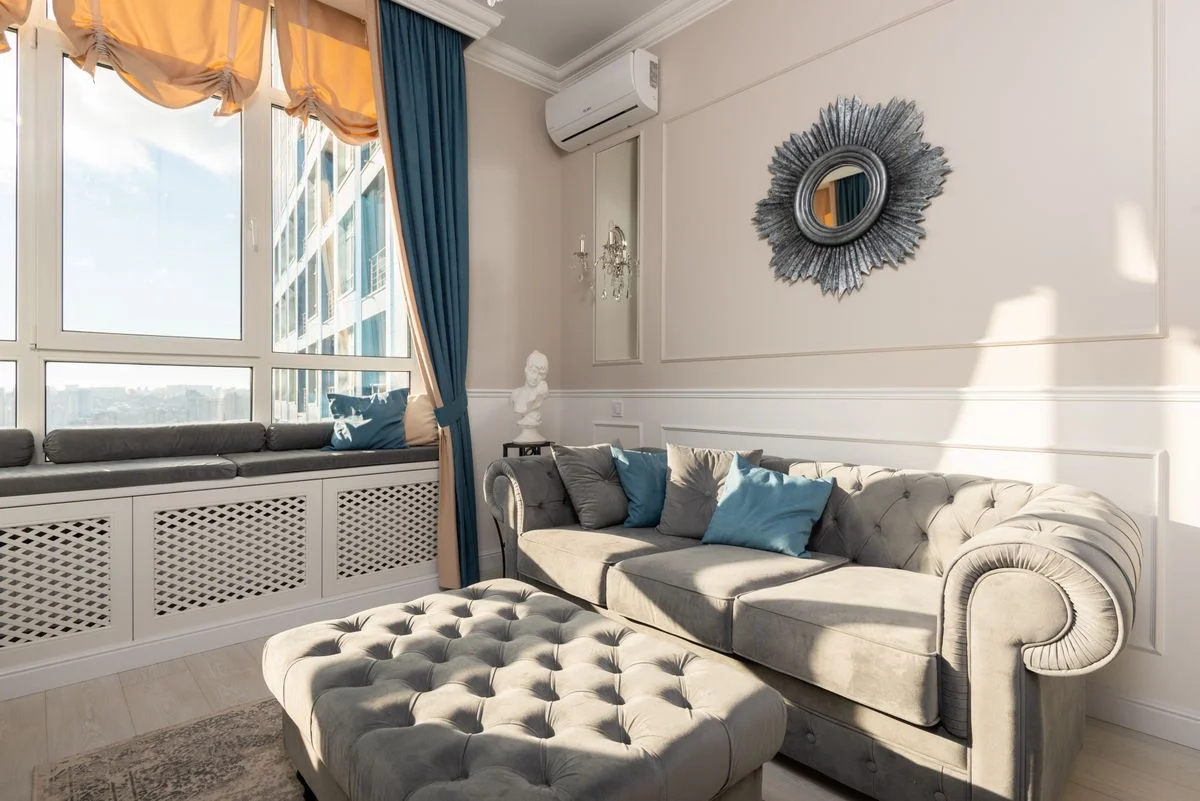
A tufted ottoman is the traditional living room’s hardest worker: footrest, extra seat, coffee table and storage in one piece. Choose button-tufted leather or a sturdy woven fabric, and add a tray on top when you want a stable surface for drinks. It works because it softens the hard lines of wooden furniture while keeping the room practical for everyday family life. Tip: pick an ottoman slightly lower than your sofa seat height so it stays comfortable as a footrest.
Measure before buying: an ottoman about two-thirds the width of your sofa looks balanced, and a height within two inches of the seat keeps it comfortable. For storage versions, test the lid or drawer in the shop, since a stiff hinge quickly becomes annoying, and choose a fabric that can be spot-cleaned if pets or children use it daily.
5. An Antique Wooden Sideboard for Storage
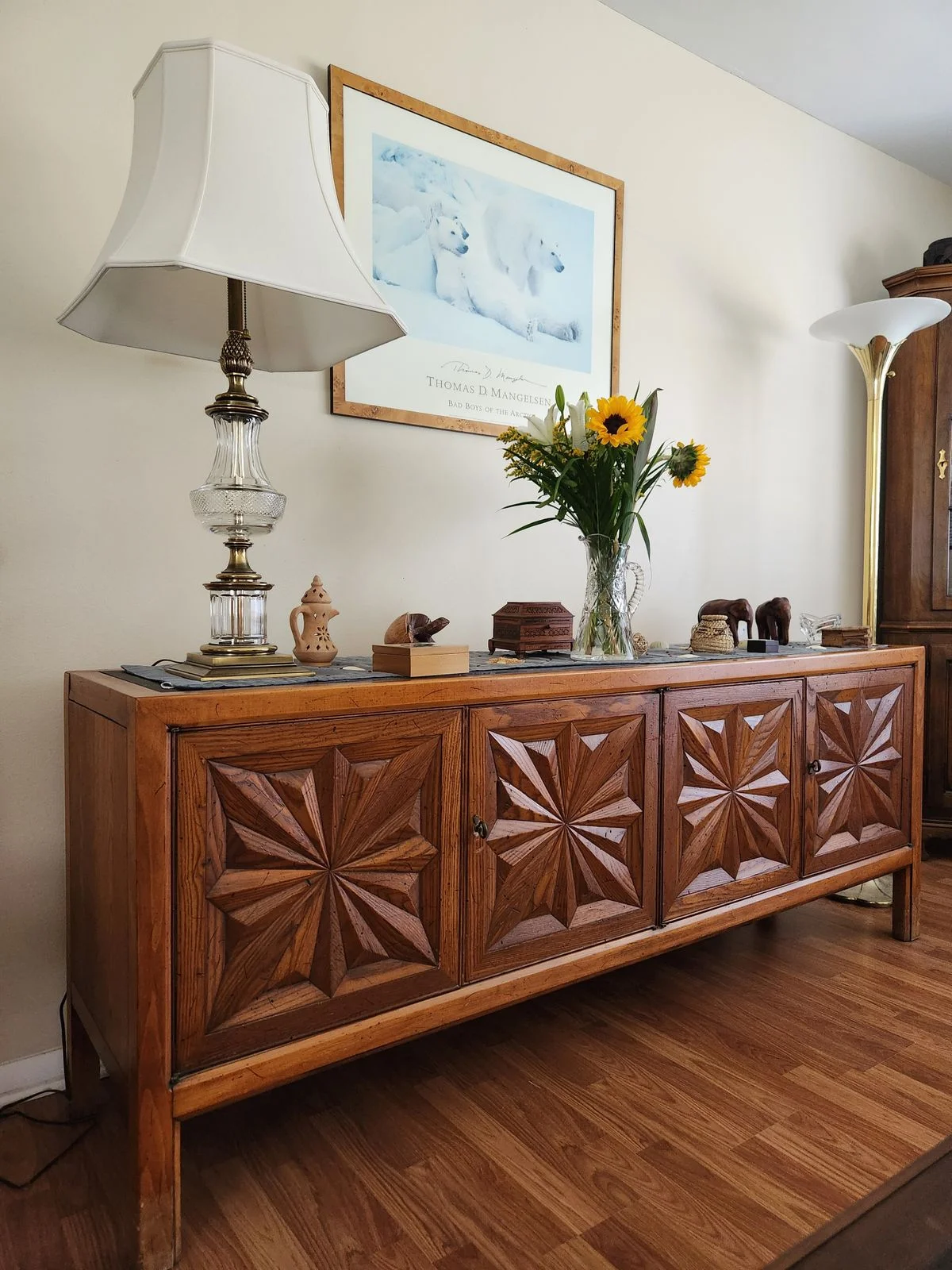
An antique or antique-style sideboard adds instant history to a traditional living room while hiding board games, blankets and chargers behind closed doors. Place it against the longest empty wall and top it with a pair of lamps or a mirror for a classic vignette. It works because traditional rooms look best when storage looks like furniture, not like boxes. Tip: if a true antique is out of budget, a well-made reproduction in walnut or oak gives the same look for far less.
Before buying, list what the sideboard must hide, then check interior depth: board games and blankets need at least 14 inches, while a printer or large serving dishes need more. Leave a few inches of clearance behind it for cables, and fit felt pads under the feet so a heavy piece does not scratch wood floors when it is moved for cleaning.
Timeless Colors, Fabrics and Patterns
6. A Classic Oriental Area Rug
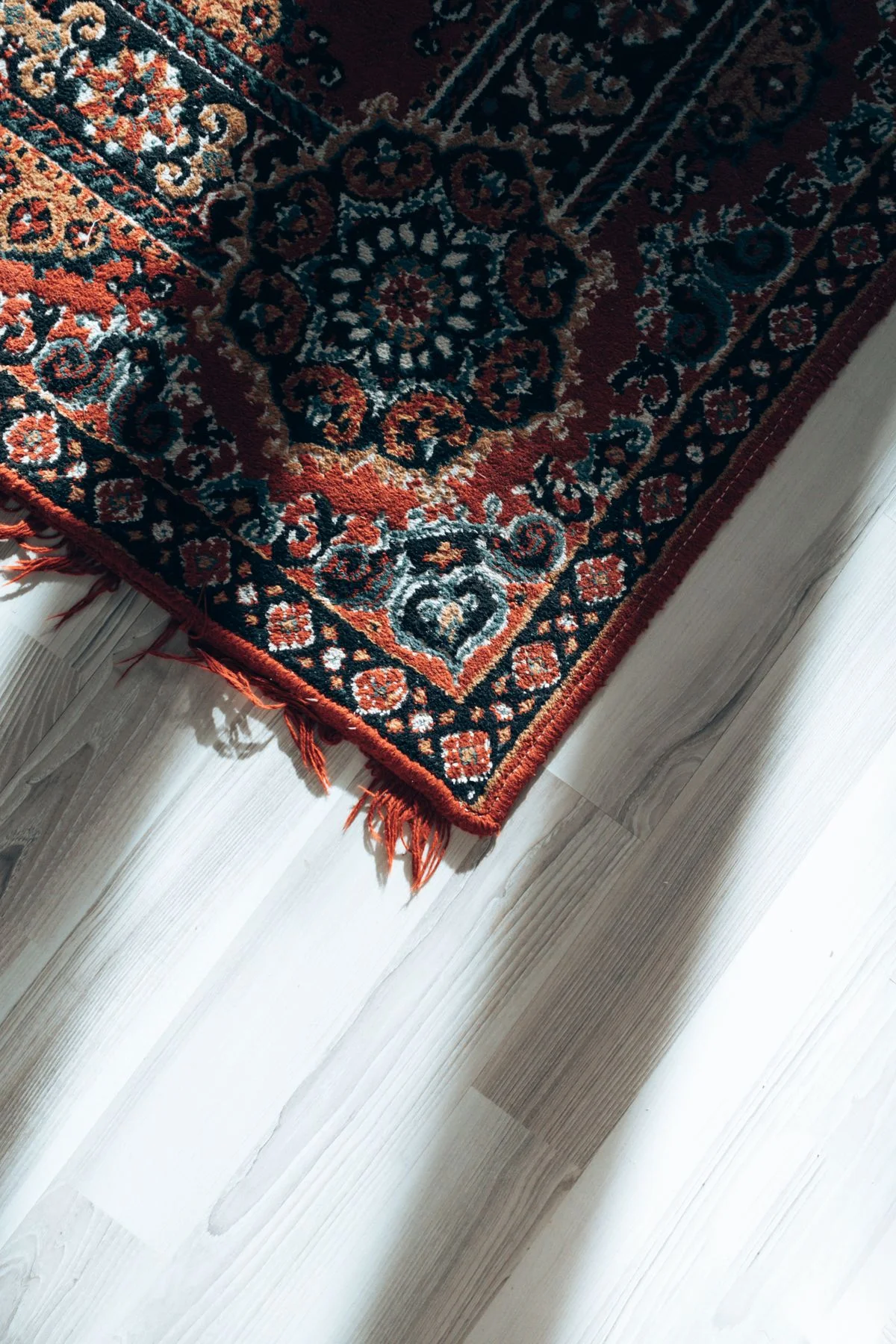
An Oriental or Persian-style rug is the fastest way to make a living room feel traditional, pulling the furniture together into one warm, layered zone. Choose a pattern with reds, blues and creams that picks up your sofa and curtain colors, and size it so the front legs of the sofa and chairs sit on it. It works because the intricate pattern hides everyday wear and adds a sense of age and craft. Tip: layer a smaller rug over a large neutral jute base if your dream rug is too small for the room.
Size is the common mistake: an 8 by 10 foot rug suits most three-seat sofas, while a 5 by 8 often looks like a mat floating in the middle of the floor. If a quality rug is out of budget, a good machine-washable reproduction in wool-look fibers gives the same layered pattern and is far easier to live with around pets.
Vacuum without a beater bar on delicate knots, rotate the rug every six months so wear and sunlight fall evenly, and use a rug pad underneath to stop slipping and add cushioning. Blot spills at once with a clean cloth rather than scrubbing, which can spread dye and damage the pile.
7. Elegant Damask Curtains
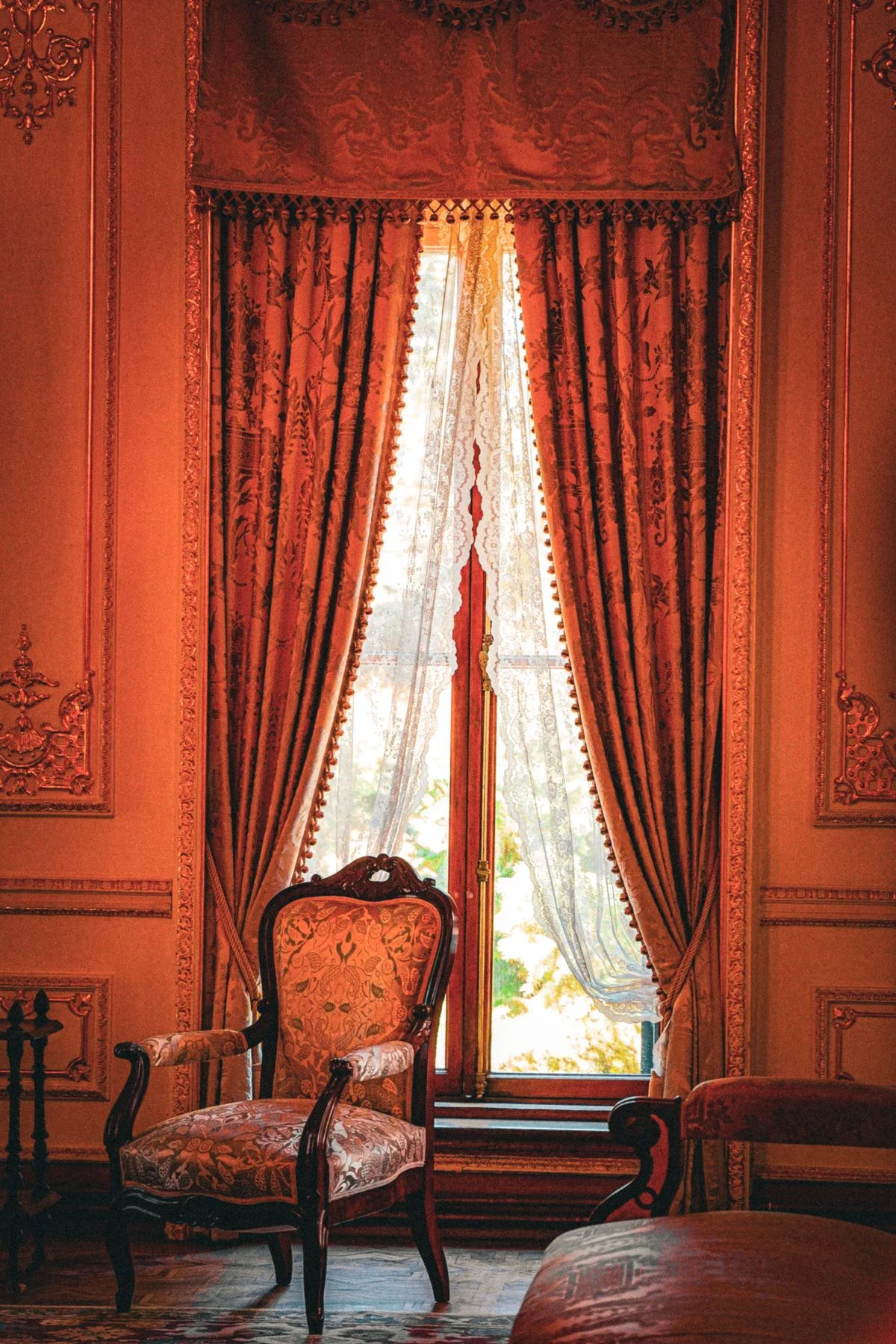
Floor-length damask or jacquard curtains frame windows beautifully and are a hallmark of traditional living room design. Hang the rod close to the ceiling and let the fabric pool just slightly on the floor for a tailored, generous look. They work because heavy, patterned fabric adds softness and formality that blinds alone can never achieve. Tip: line the curtains for a fuller drape and better insulation, and choose a tone that matches your rug rather than competing with it.
Measure the drop before ordering: the rod should sit 4 to 6 inches above the window frame, and panels should be about 1.5 to 2 times the window width for a full drape. In a room with a radiator under the window, choose a length that ends just below the sill rather than pooling, so heat still circulates and fabric stays clean.
8. Plaid and Tartan Accent Pieces
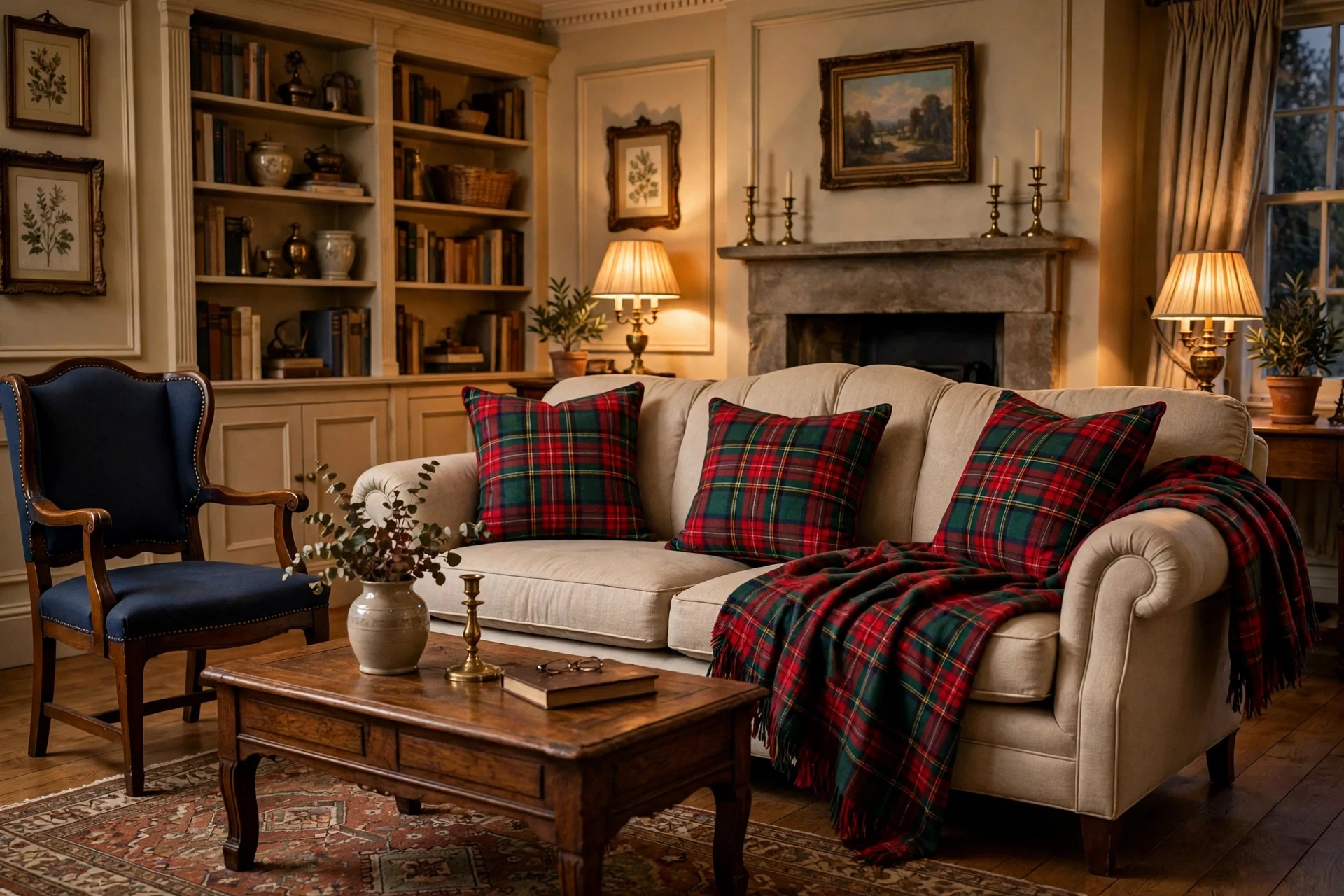
A touch of plaid or tartan, on throw pillows, a blanket or a single chair, brings cozy, country-house warmth to a traditional living room. It is a pattern with real heritage, so it reads as classic rather than trendy. It works because a small checked pattern breaks up large blocks of solid upholstery without overwhelming the room. Tip: limit plaid to two or three pieces and keep the scale small on pillows if your rug already has a large pattern.
Pick one plaid family and repeat it, for example a muted green and navy tartan on a throw plus a smaller check on one cushion, rather than mixing three unrelated plaids. Wash throws separately the first time, since darker tartan dyes can bleed, and fold a plaid throw over one arm only so the pattern reads as an accent, not a theme.
9. A Rich Burgundy and Navy Color Palette
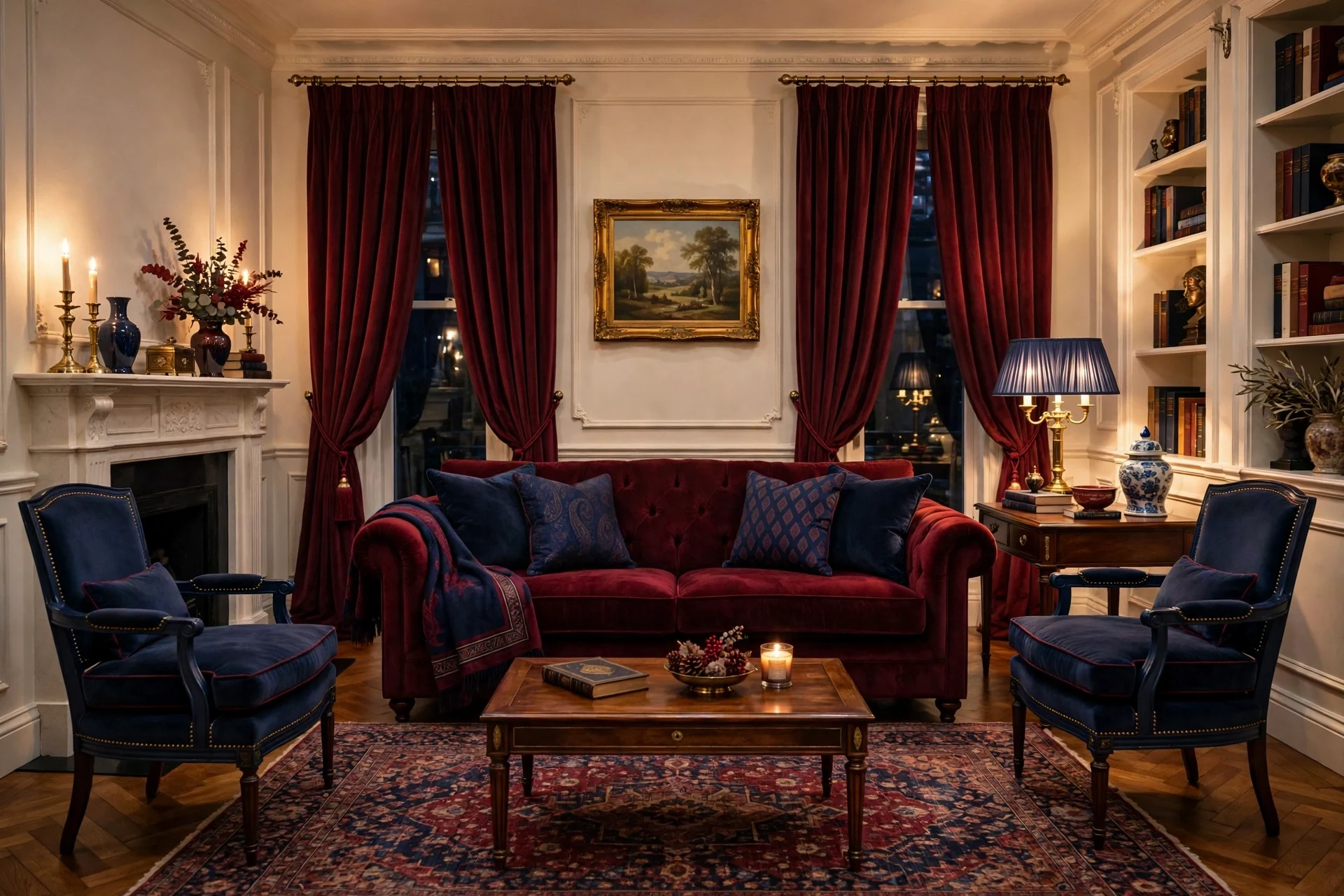
Burgundy, navy, forest green and warm cream are the backbone colors of traditional living rooms, and they create a room that feels rich without being dark. Use the deepest shade on one or two pieces, like an armchair or curtains, and balance it with plenty of cream walls and warm wood. It works because these colors have been paired in classic interiors for centuries, so the combination always feels settled. Tip: repeat each color at least twice around the room so the palette looks intentional, not accidental.
Test the palette at night as well as by day, because burgundy and navy both darken sharply under warm lamps. Paint a large swatch card or hold fabric samples against the wall in the evening before committing, and add one warm metallic, like brass, so deep colors do not make the room feel flat after dark.
10. Floral Upholstery on One Statement Piece
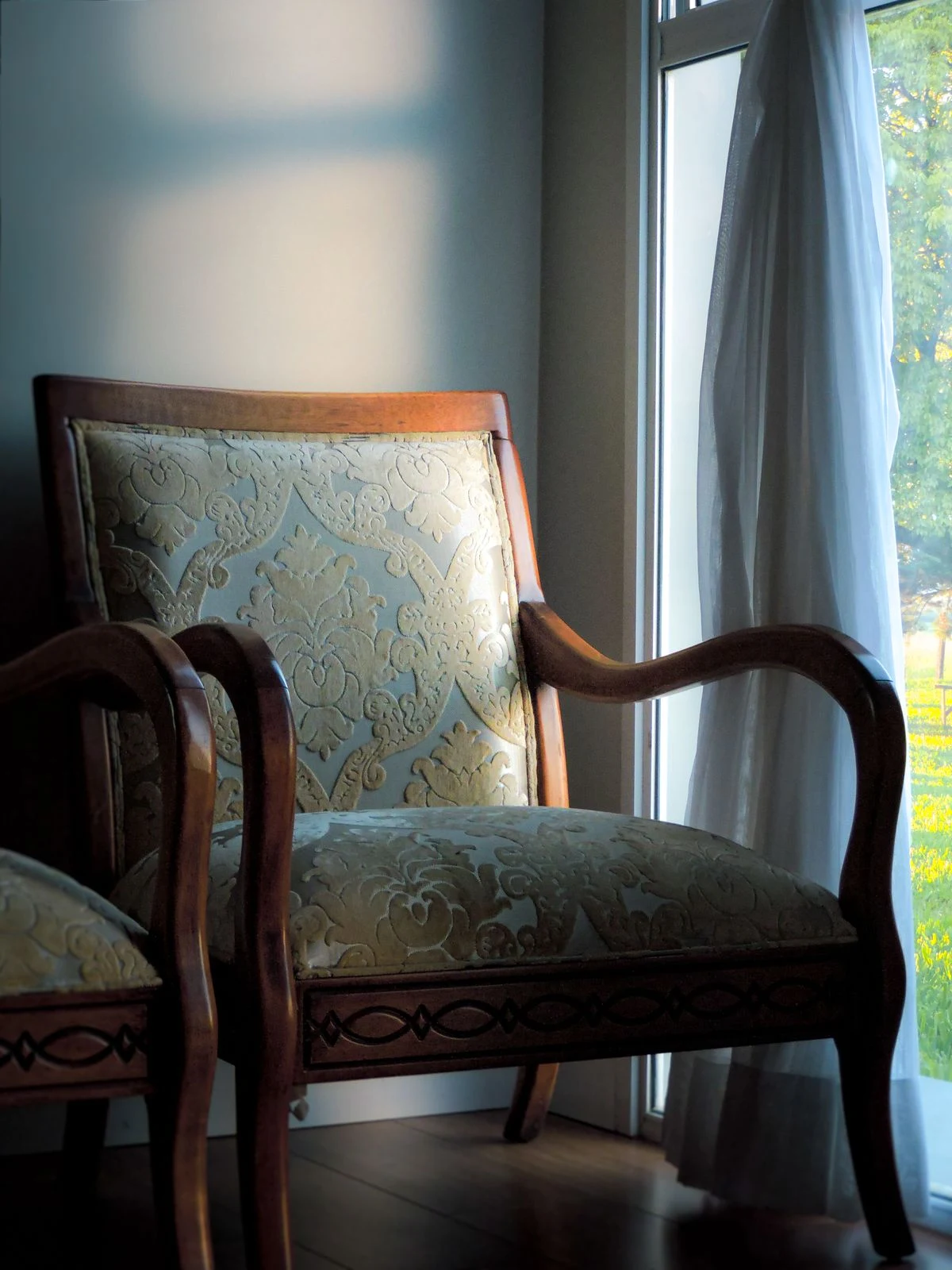
One floral-upholstered chair or loveseat can carry the whole traditional character of a room, especially in a classic English or cottage style. Keep the floral large-scale and muted rather than bright, and pair it with solid cushions pulled from the print’s colors. It works because florals soften straight lines and connect the room to the garden outside. Tip: if a floral sofa feels too bold, start with a floral armchair and keep the main sofa in a solid fabric.
Check the repeat before buying: a large floral repeat needs a wide chair back to show the pattern properly, while a small print can look busy on a loveseat. If you tire of bold florals, a loose cover in the same print lets you change the look later without reupholstering the whole chair.
Architectural Details and Finishing Touches
11. A Styled Fireplace Mantel Display
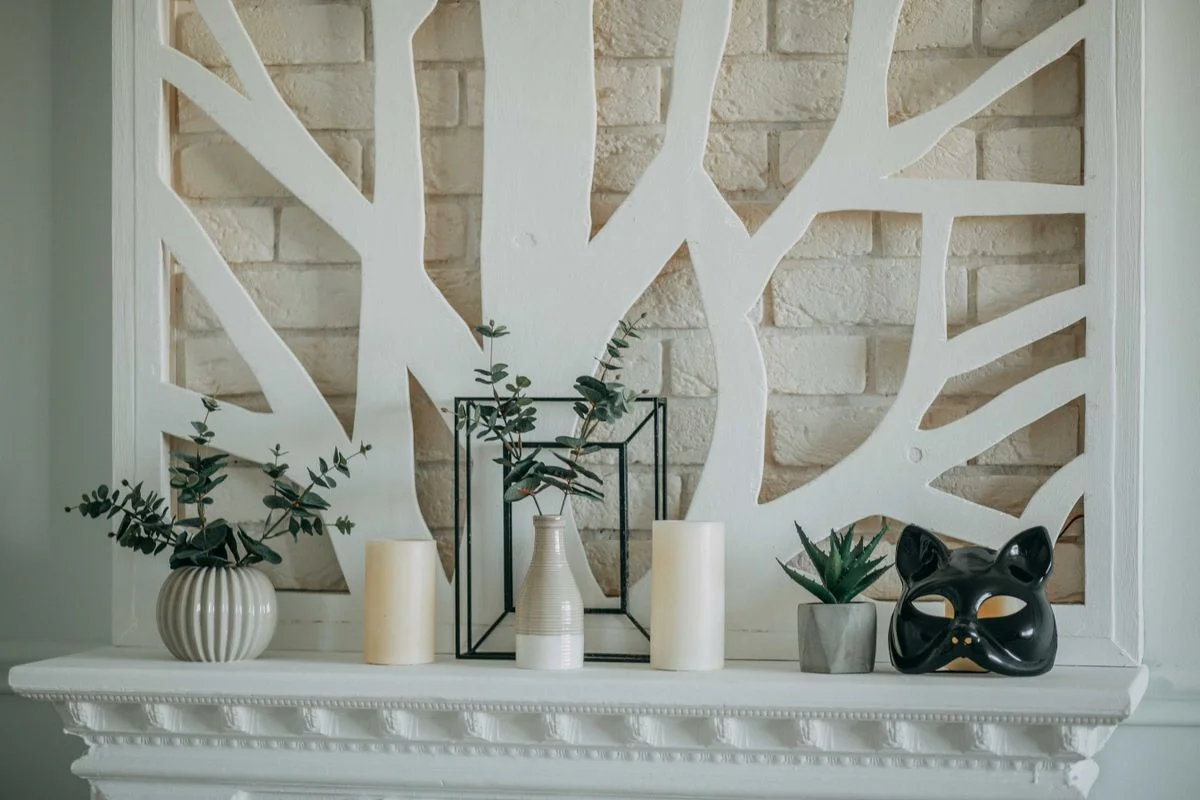
The fireplace mantel is the natural focal point of a traditional living room, and styling it symmetrically instantly reads as classic. Hang a mirror or framed art above it, then mirror the arrangement with matching candlesticks, vases or topiary on each side. It works because symmetry feels calm and formal, which is exactly the mood traditional design aims for. Tip: change only the middle of the display with the seasons, and keep the matching outer pieces constant so the mantel always looks composed.
Build the display in layers: a tall central piece first, then matched pairs stepping down toward the ends, and leave at least a hand’s width of empty mantel between groups. Avoid lining objects up like soldiers in a row; varying heights by two or three inches keeps the symmetry formal but still natural.
Dust the mantel weekly and keep candles at least a foot from curtains or dried greenery, a common fire risk people overlook. If the fireplace is working, use heat-safe materials on the mantel itself and move fresh flowers away from the heat, since they wilt within a day above a lit fire.
12. Crown Molding and Wainscoting
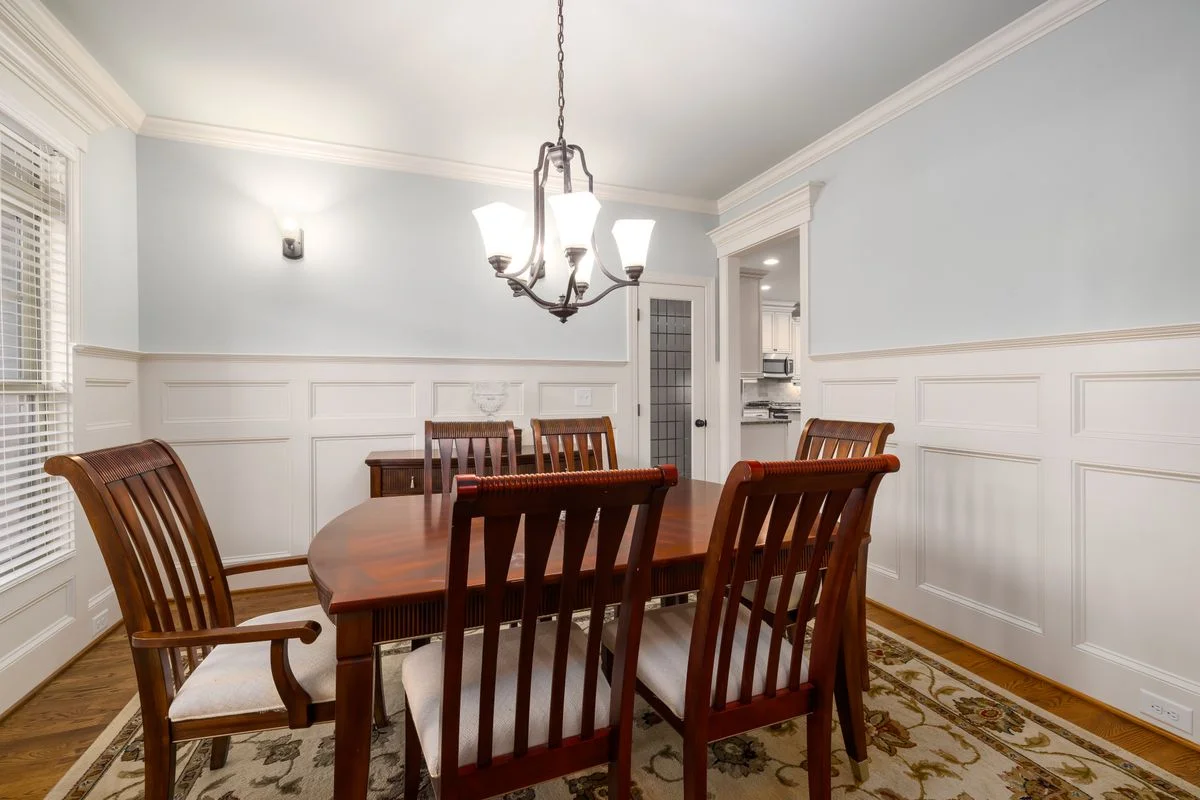
Crown molding and wainscoting add architectural detail that makes even a plain modern room feel like a traditional home. Painted in the same warm white as the trim, wainscoting protects lower walls and gives the room a finished, tailored edge. It works because these details add shadow lines and depth that flat drywall simply cannot provide. Tip: keep wainscoting to about one-third of wall height in a standard room so the proportions stay elegant rather than heavy.
In older homes, check walls are straight before ordering long lengths, since wavy plaster leaves gaps behind rigid molding. A carpenter can scribe and caulk small gaps, but a gap wider than a quarter inch usually needs the wall skimmed first, a step worth doing carefully before any painting begins at all.
13. A Crystal or Brass Chandelier
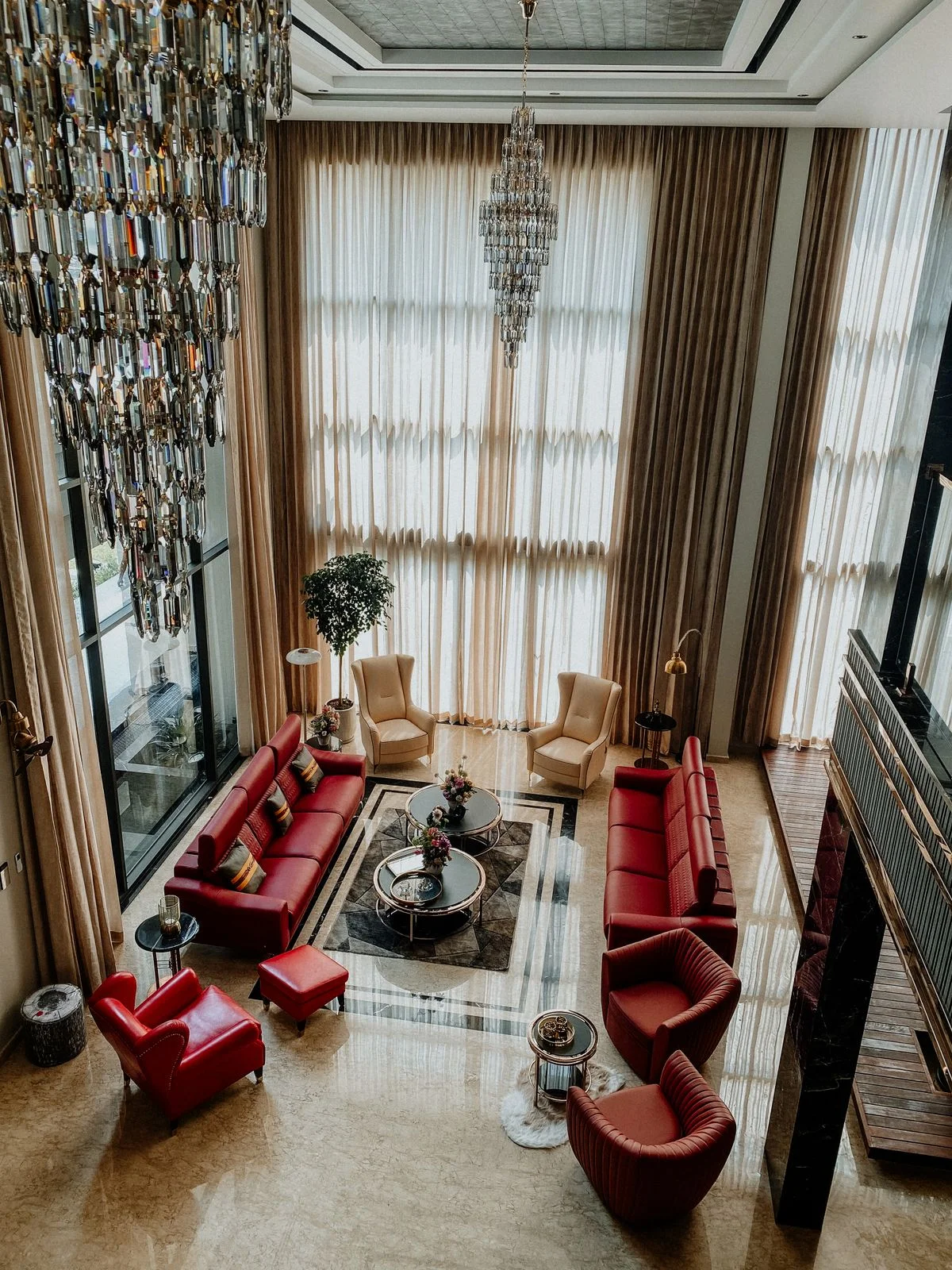
A chandelier is the jewelry of a traditional living room, casting warm, sparkling light that table lamps alone cannot match. Crystal suits a formal room, while brass or candle-style fixtures suit a cozier, country-traditional space. It works because a central statement light draws the eye up and makes the whole room feel considered. Tip: hang it so the bottom sits about seven feet above the floor in a walk-through area, and always put it on a dimmer.
Check ceiling height and weight before buying: a chandelier needs a ceiling rose and joist fixing rated for its weight, not just a plasterboard screw, and in rooms under eight feet, a flush or semi-flush version is safer than a long drop. Budget for an electrician if the wiring is old, since many traditional fixtures need a proper earth connection.
Clean crystal with a damp microfiber cloth a few times a year, working arm by arm, and replace bulbs with matching warm-white LEDs so the light stays even across the whole fixture. Avoid mixing bulb colors in one fixture, a mistake that makes crystal look patchy and cheap rather than sparkling.
14. Built-In Bookshelves Around the Sofa or Fireplace
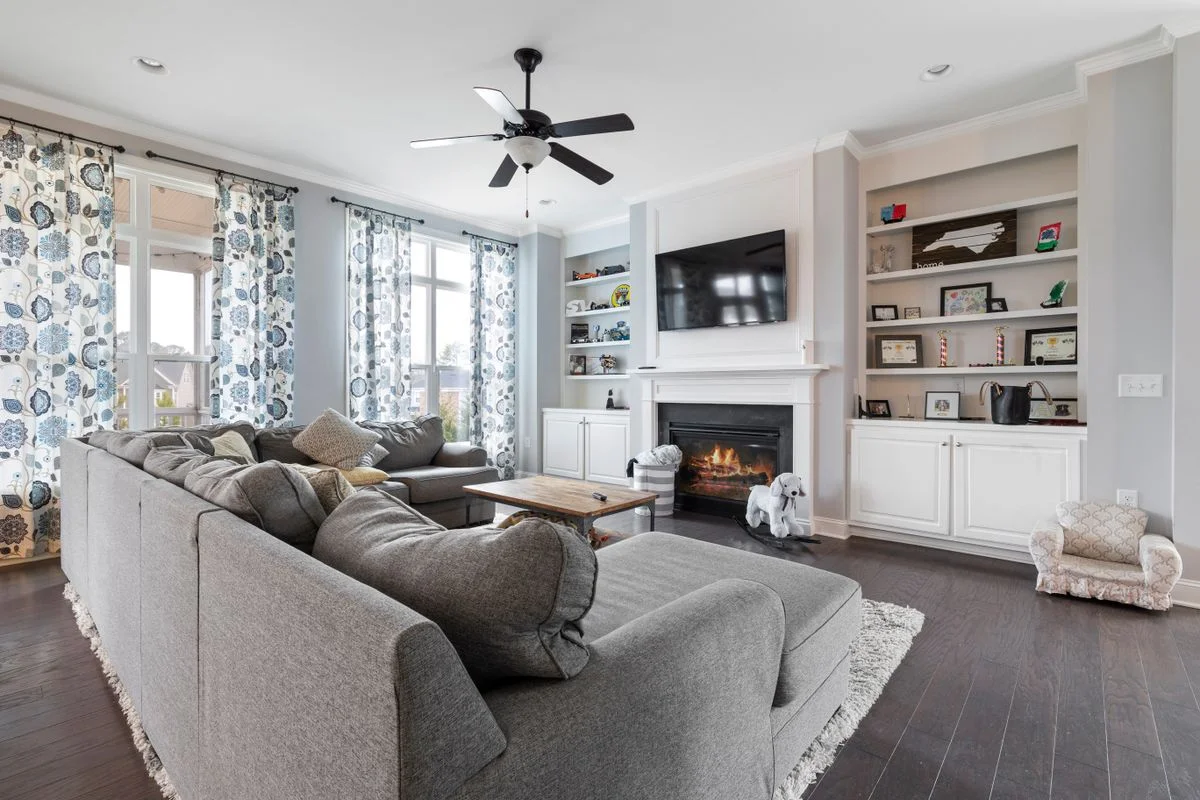
Built-in bookshelves give a traditional living room its library soul, turning a blank wall into a display of books, collections and family pieces. Flanking a fireplace or filling an entire wall, they look permanent and purposeful rather than improvised. They work because they add texture, color and personal history in one move. Tip: arrange books both vertically and in short horizontal stacks, and leave some shelves partly empty so the display breathes instead of looking cluttered.
Plan the shelf depth first: 10 to 12 inches suits most books, while deeper shelves waste space and let books fall backward. Leave one shelf at a taller height for art books or a vase, and include a mix of closed cupboards at the bottom for games and cables that would otherwise clutter the display.
If built-ins are too costly, two tall bookcases joined with a top cornice and side trim can read as built-in for a fraction of the price. Paint them the same color as the wall trim so the join disappears, and anchor both units to the wall for safety, especially in homes with children.
Classic Decor and Everyday Warmth
15. Oil Paintings and Classic Framed Art
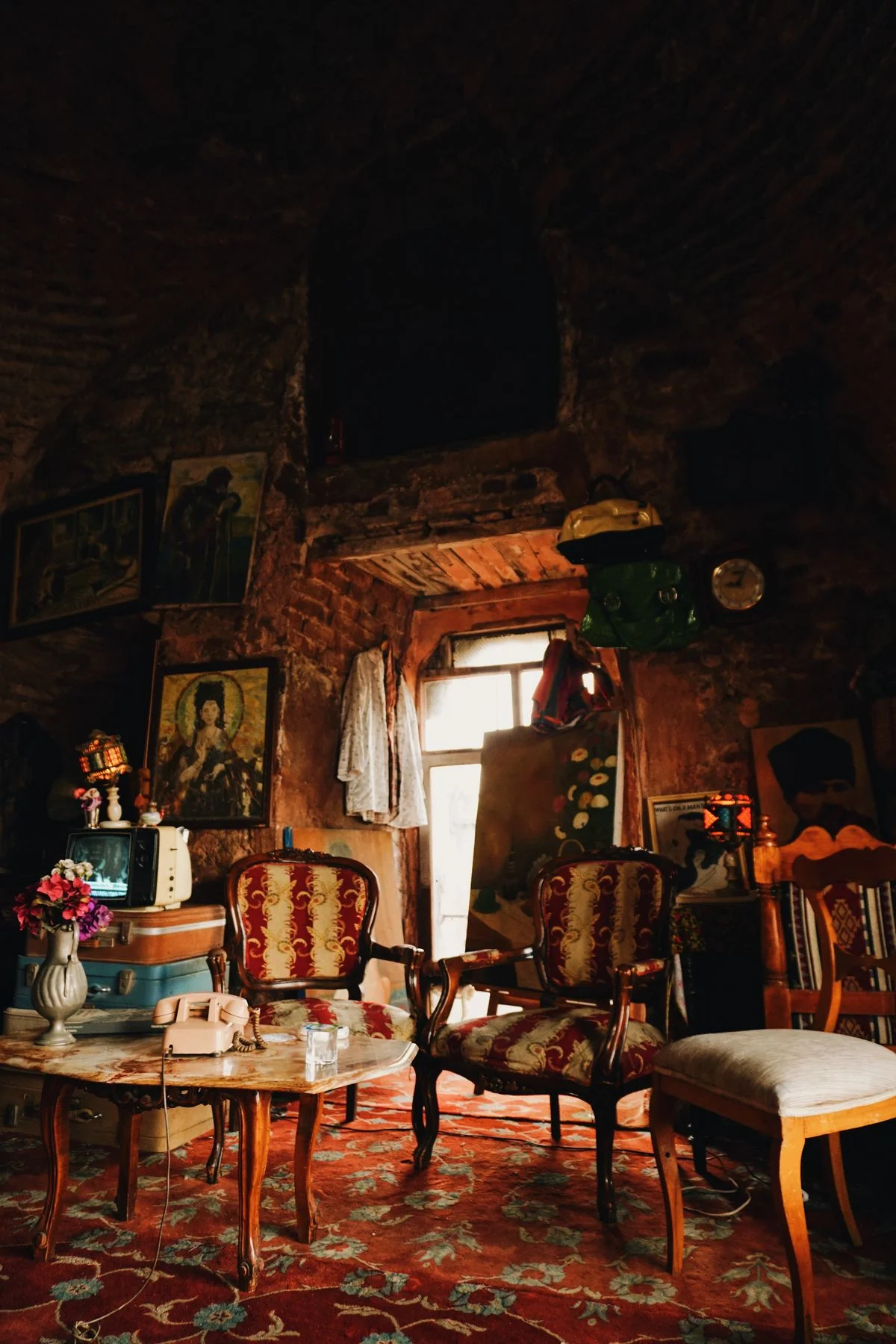
Landscape oil paintings, portraits or botanical prints in gilded or dark-wood frames are the classic wall decor of traditional living rooms. Hang one larger piece over the sofa or mantel, or group smaller frames in a symmetrical arrangement. They work because traditional art adds depth, color and a sense of story that mass-produced prints rarely achieve. Tip: hang art at eye level, with the center about 57 inches from the floor, and use warm picture lights if you want a gallery feel.
When grouping frames, keep the spacing consistent, usually two to three inches between frames, and hang the group as one unit with its center at eye level. Mixing gold and dark wood frames works if the art shares a tone, but mixing more than two frame finishes in one wall usually looks scattered.
16. Brass Table Lamps for Warm Light
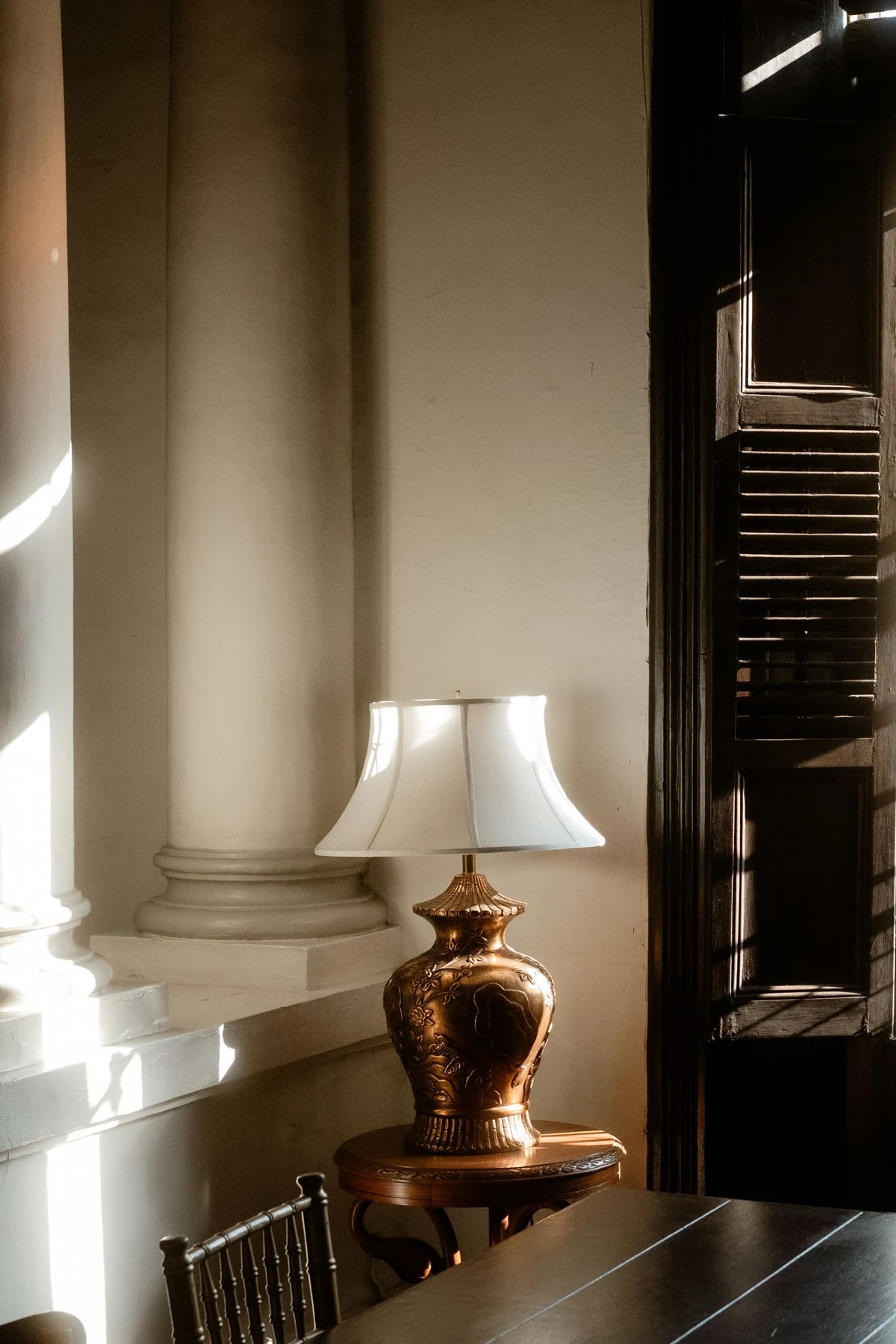
Matching brass table lamps on either side of a sofa are a traditional living room signature, giving warm, low light that flatters everyone in the evening. Choose fabric shades in cream or linen for a soft glow rather than harsh white light. They work because pairs of lamps create symmetry and make the room feel balanced even before you switch them on. Tip: use warm-white bulbs and put both lamps on one switch or smart plug so the room lights up evenly every night.
Shade size changes the light completely: a shade about two-thirds the height of the lamp base looks balanced, and a drum shade spreads light wider than a tapered one. Place lamps so the bottom of the shade sits at about shoulder height when seated, which avoids glare in the eyes during evening reading.
17. A Wood Paneling Accent Wall
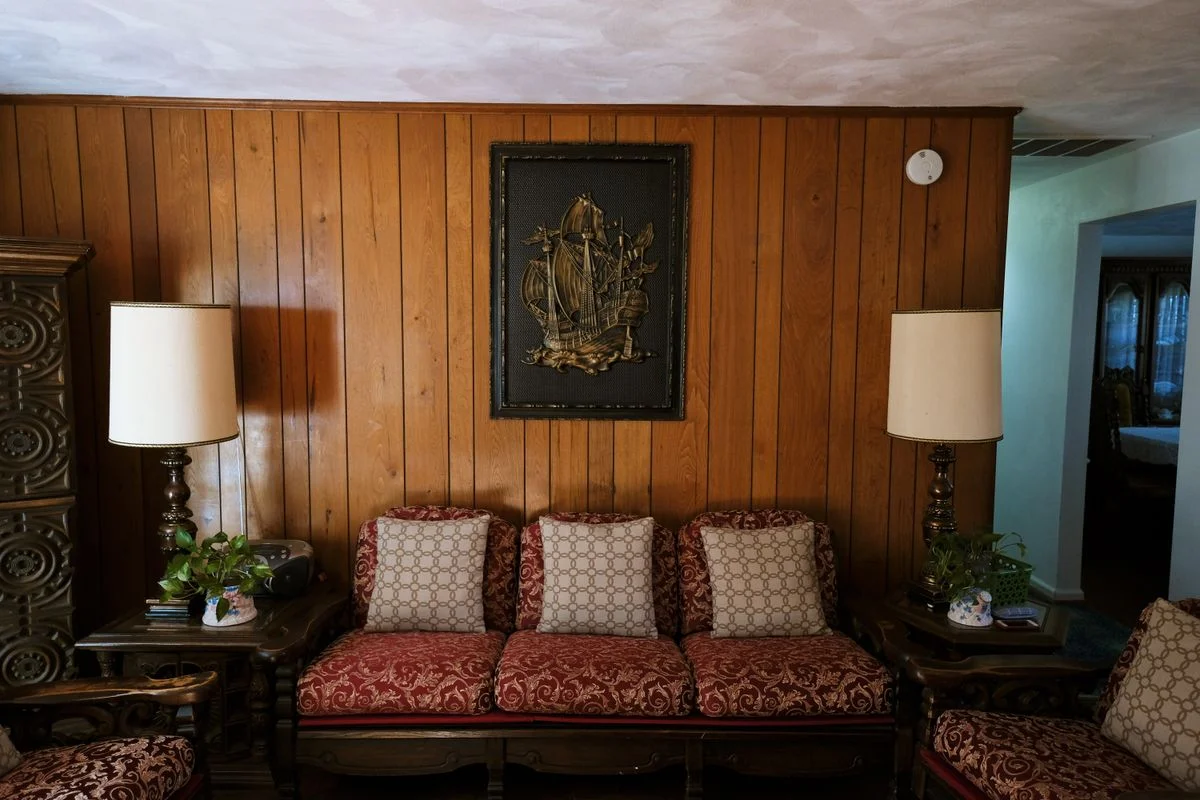
A wood-paneled accent wall, whether full-height planks or applied picture-frame molding, adds instant traditional warmth behind a sofa or fireplace. Stained wood feels rustic and rich, while painted panels in cream or sage feel refined and bright. It works because paneling adds texture and rhythm to a flat wall, making the room feel crafted. Tip: keep the other walls plain and let the paneling be the star, and echo its tone in a coffee table or sideboard.
Measure the wall and mark the panel layout with painter’s tape before fixing anything, since uneven spacing is obvious once painted. Panels about 24 to 30 inches wide suit most living rooms, and painting the panels the same shade as the trim, rather than a contrasting color, keeps the effect refined.
18. Traditional Throws and Layered Pillows
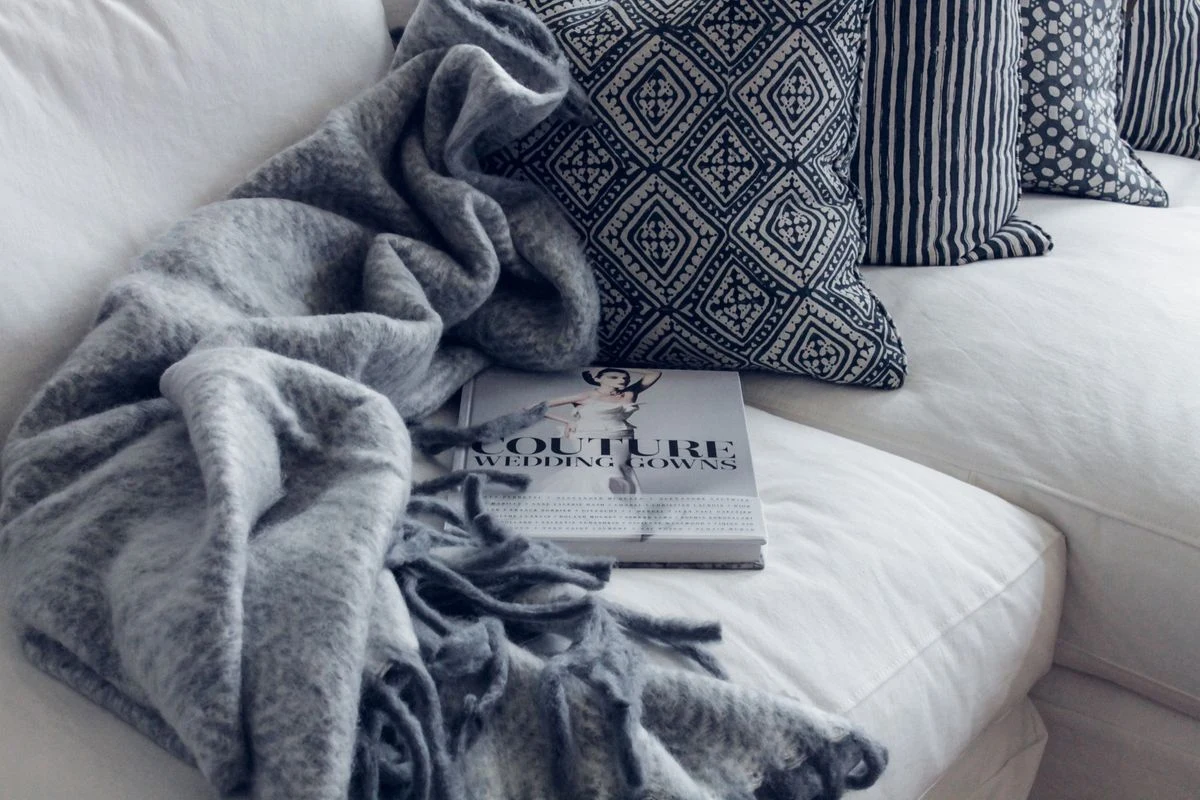
The final layer of a traditional living room is soft: a wool throw draped over a chair arm, a mix of velvet, linen and patterned pillows on the sofa, and a folded blanket in a basket. This layering is what makes a formal-looking room still feel inviting to actually sit in. It works because texture invites touch, and a room that invites touch gets used. Tip: stick to three or four colors from your rug and curtains, and mix one pattern, one solid and one texture so the sofa looks collected, not matched.
Wash throws separately and avoid fabric softener on wool, which coats the fibers and reduces warmth over time. Rotate pillows weekly so the same two are not always crushed in the favorite seat, and store spare throws in a basket by the sofa so layering stays easy rather than becoming a cupboard chore.
How to Choose the Right Ideas for Your Living Room
- Start with one anchor piece, usually the sofa or the rug, and build the rest of the room around its colors and scale rather than buying everything at once.
- Use symmetry as your shortcut to a traditional feel: matching lamps, matching chairs and a centered fireplace arrangement instantly read as classic.
- Mix wood tones, but keep them in the same family — warm walnuts and mahoganies together, or lighter oaks together — so the room feels collected rather than random.
- Keep the palette restrained: two main colors, one accent and plenty of cream or warm white will always look more traditional than a rainbow of brights.
- Add age gradually with secondhand finds, worn leather and real books; a traditional room should look lived in, not like a showroom set.
Frequently Asked Questions
What defines a traditional living room?
A traditional living room is defined by classic furniture shapes like rolled-arm sofas and wingback chairs, symmetrical layouts, rich colors, patterned fabrics and natural materials like wood, leather and brass. The overall feeling is warm, formal and timeless rather than trendy or minimal.
Can I mix traditional and modern pieces?
Yes, and it usually looks better than a purely period room. Keep the big pieces traditional, like the sofa and rug, then add one or two clean-lined modern items such as a simple floor lamp or abstract art. The mix keeps the room feeling current while the traditional bones keep it warm.
What colors work best in a traditional living room?
Warm neutrals like cream, beige and taupe work as a base, layered with rich tones such as burgundy, navy, forest green and gold. These colors have been used in classic interiors for generations, so they feel settled and elegant together.
How do I make a small living room look traditional?
Focus on scale: choose a smaller rolled-arm loveseat instead of a huge sofa, use a rug that fits the seating area, and add traditional character through curtains, lamps and art rather than bulky furniture. Symmetry and warm colors do most of the work, even in a small space.
Traditional design is really about choosing pieces you will still love in twenty years, and these 18 ideas are a great place to start. Pick one anchor, add a layer of pattern and warm light, and let the room grow over time — that slow, collected feeling is exactly what makes a traditional living room so welcoming. Save this guide to Pinterest so you can come back to it when you are ready for your next update, and pin your favorite idea to your home decor board.
Photos: Pexels (free to use).


