

22 Farmhouse Living Room Decor Ideas for a Warm and Inviting Home in 2026
Farmhouse living room decor ideas never really go out of style, because they are built on warmth, comfort, and natural materials. Think shiplap walls, cozy slipcovered sofas, chunky throws, and wooden beams overhead, all in a soft neutral palette that feels welcoming the moment you walk in. Modern farmhouse style keeps the charm of the classic look while skipping the clutter, so rooms feel fresh rather than fussy. Here are 22 farmhouse living room decor ideas to help you create a space that is warm, inviting, and made for real life.
Farmhouse Walls and Architectural Ideas
Farmhouse character starts with the bones of the room. These architectural touches give instant farmhouse feeling before you add a single accessory.
1. Shiplap Accent Wall
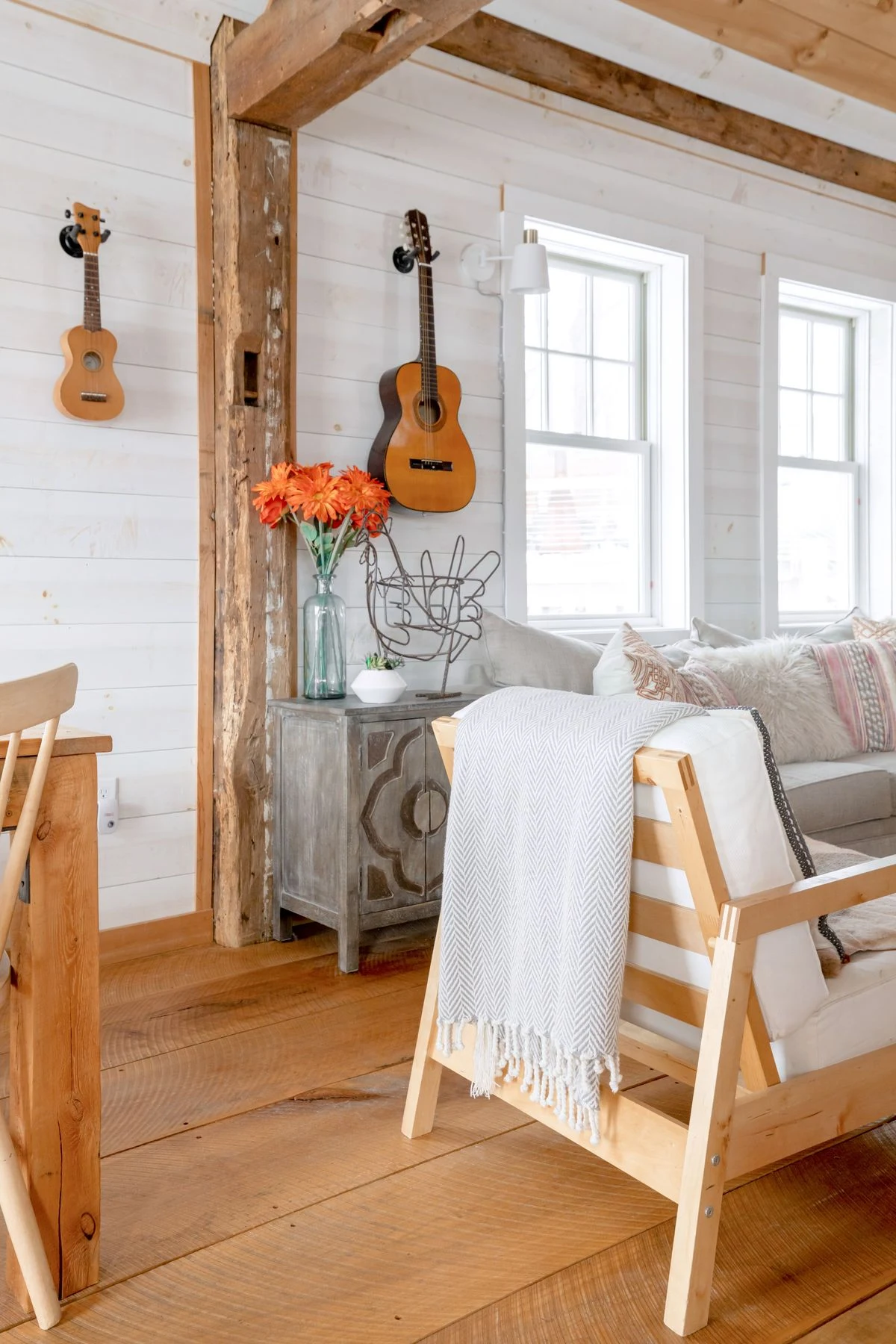
A shiplap accent wall is the defining feature of modern farmhouse style, adding texture and cottage charm to a plain room. White shiplap brightens the space and pairs with almost any furniture, while a natural wood shiplap wall adds rustic warmth. One wall is usually enough to get the effect. Tip: run shiplap horizontally to make a room feel wider, or vertically to make ceilings feel taller, and paint it the same white as your trim for a seamless look.
Shiplap comes in real wood boards and MDF panels, and the choice matters: real wood suits rooms where the wall gets knocked, while MDF is cheaper and smoother for painting but swells if it gets wet. Leave a small expansion gap at the corners and around outlets, and use a level on every third board, because a slight slope early on becomes obvious by the top of the wall. Caulk the seams lightly for a finished look, but avoid heavy caulk that fills the shadow gaps.
2. Exposed Wooden Ceiling Beams
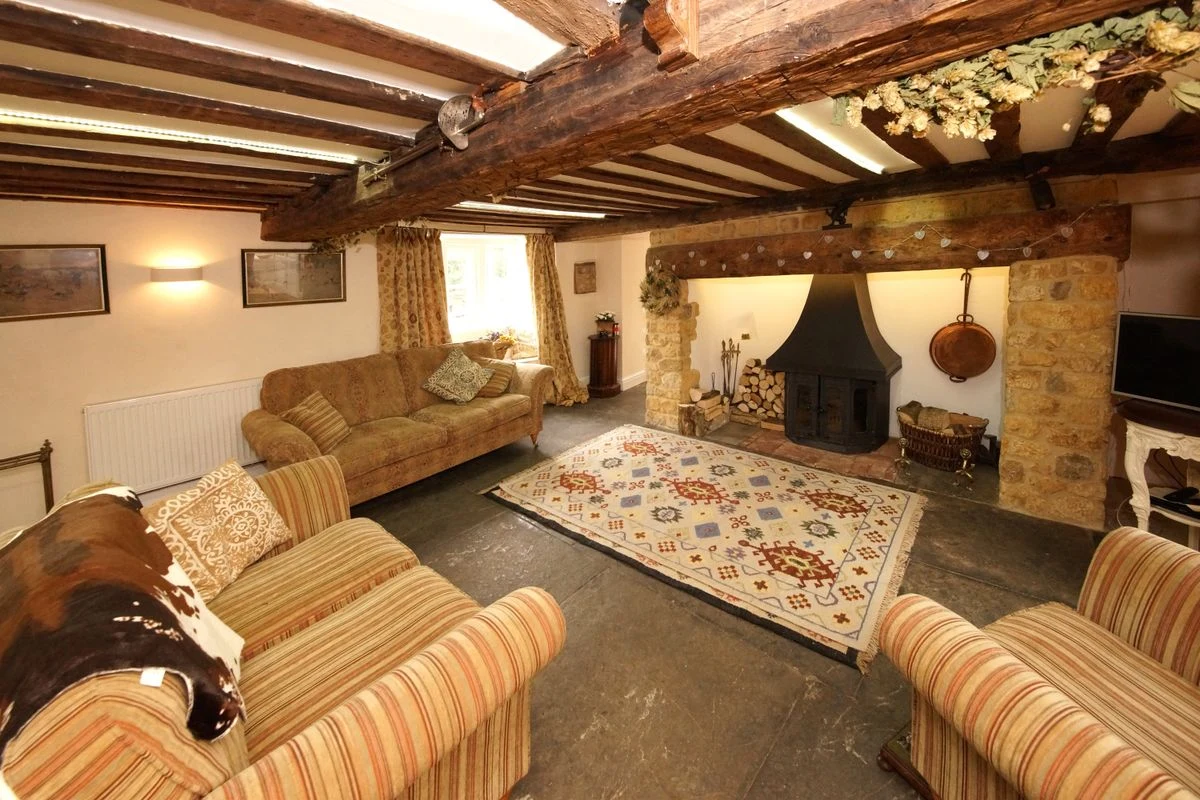
Exposed wooden beams bring instant farmhouse authenticity overhead, adding warmth and architectural interest to an otherwise plain ceiling. Real reclaimed beams are beautiful, but lightweight faux beams give the same look for less money and weight. Dark beams contrast beautifully with white walls. Tip: keep beam spacing even and run them in the direction that suits the room’s proportions, and check ceiling height first, since beams in a very low room can feel heavy.
Faux beams in polyurethane or hollow wood boxes weigh far less than solid beams, so they can be mounted with screws into joists without extra structural support. Space beams evenly, usually 4 to 6 feet apart, and run them across the shorter dimension of the room to make the ceiling feel higher. Stain faux beams to match existing woodwork, and test the stain on a spare piece first, since faux materials absorb stain differently from real wood.
3. Brick or Stone Fireplace
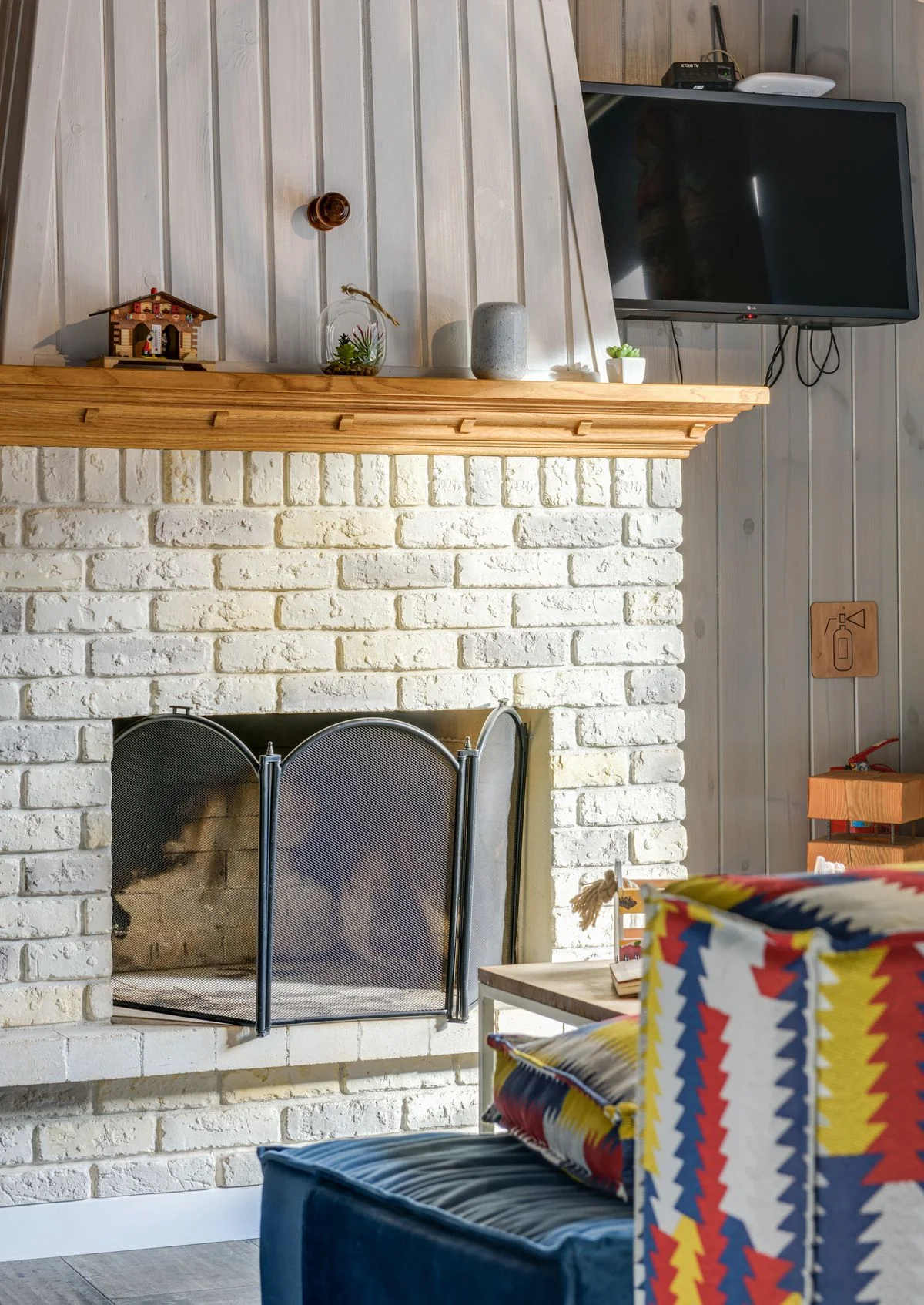
A brick or stone fireplace is the natural heart of a farmhouse living room, offering texture, warmth, and a gathering spot all at once. Whitewashed brick softens a traditional fireplace for the modern farmhouse look, while natural stone feels more rustic and rugged. Either way, the fireplace anchors the whole seating arrangement. Tip: keep mantel decor simple and seasonal, because an overstyled mantel fights with the fireplace itself.
Whitewashing brick is a weekend project: thin white paint with water, brush it on, and wipe some off while it is still wet for a soft, aged effect. Test the wash on a hidden brick first, because brick absorbs paint unevenly and a wash that looks subtle on one brick can look heavy on another. Keep the fireplace opening clear of decor, and use a heat-resistant paint on any surface close to the firebox.
4. Sliding Barn Door Feature
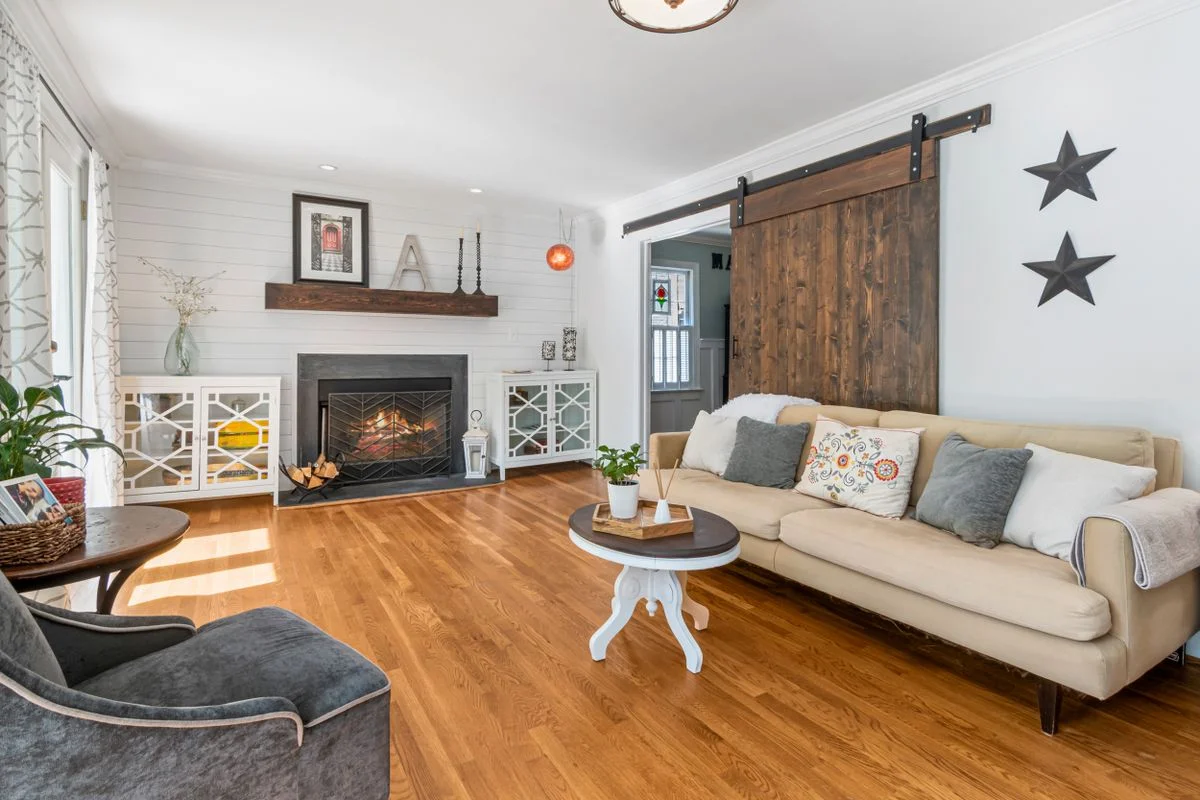
A sliding barn door adds farmhouse character and saves floor space, since it slides along the wall instead of swinging into the room. Use it for a pantry, a home office nook, or a closet, and choose a door in reclaimed wood or painted white to match your scheme. Tip: install the track hardware into wall studs for safety, and leave clearance so the door slides freely without scraping the trim.
A barn door needs a track rated for the door’s weight, with a soft-close mechanism if the door will be used daily, since a heavy door slamming into its stop wears out the hardware. Leave at least 2 centimeters of clearance above the floor so the door slides over rugs and thresholds, and add a floor guide to stop the door swinging outward. Check that the wall beside the opening is clear of light switches and vents, which the open door would cover.
5. Reclaimed Wood Fireplace Mantel
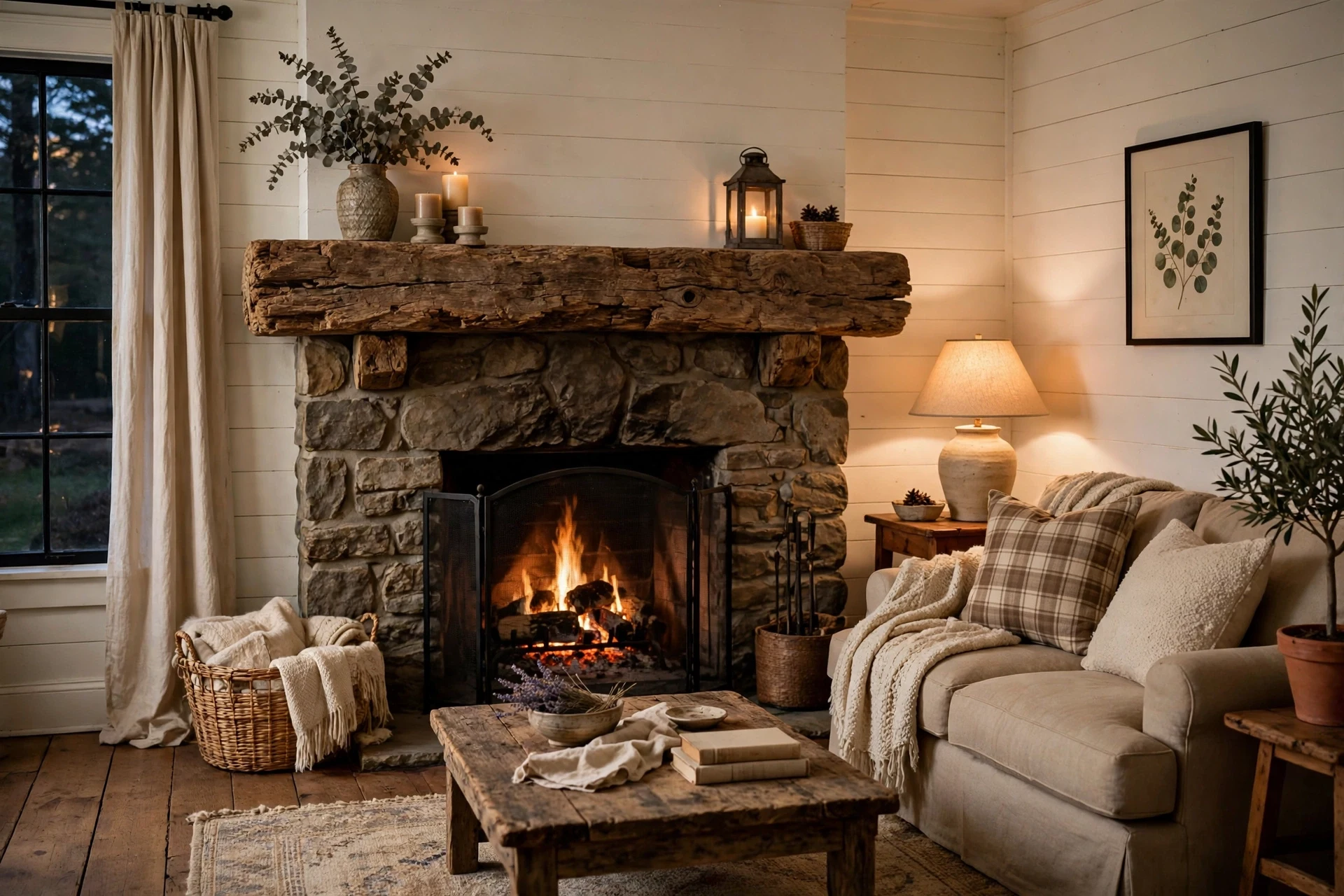
A thick reclaimed wood mantel turns a plain fireplace into a farmhouse centerpiece. The weathered grain and chunky profile contrast beautifully with a painted or brick surround, and the mantel shelf gives you a place for candles, greenery, and seasonal decor. Tip: seal reclaimed wood to prevent splinters and dust, and check that the beam is properly supported before placing heavy decor on it.
A reclaimed mantel beam should be at least 15 centimeters deep to look chunky rather than like a shelf, and it needs solid support brackets or corbels rated for its weight plus decor. Sand rough edges lightly to remove splinters while keeping the weathered character, and seal the beam with a matte wax or polyurethane so dust does not settle into the grain. Keep candles and greenery at least 30 centimeters from the firebox opening for safety.
6. Wainscoting and Board-and-Batten Walls
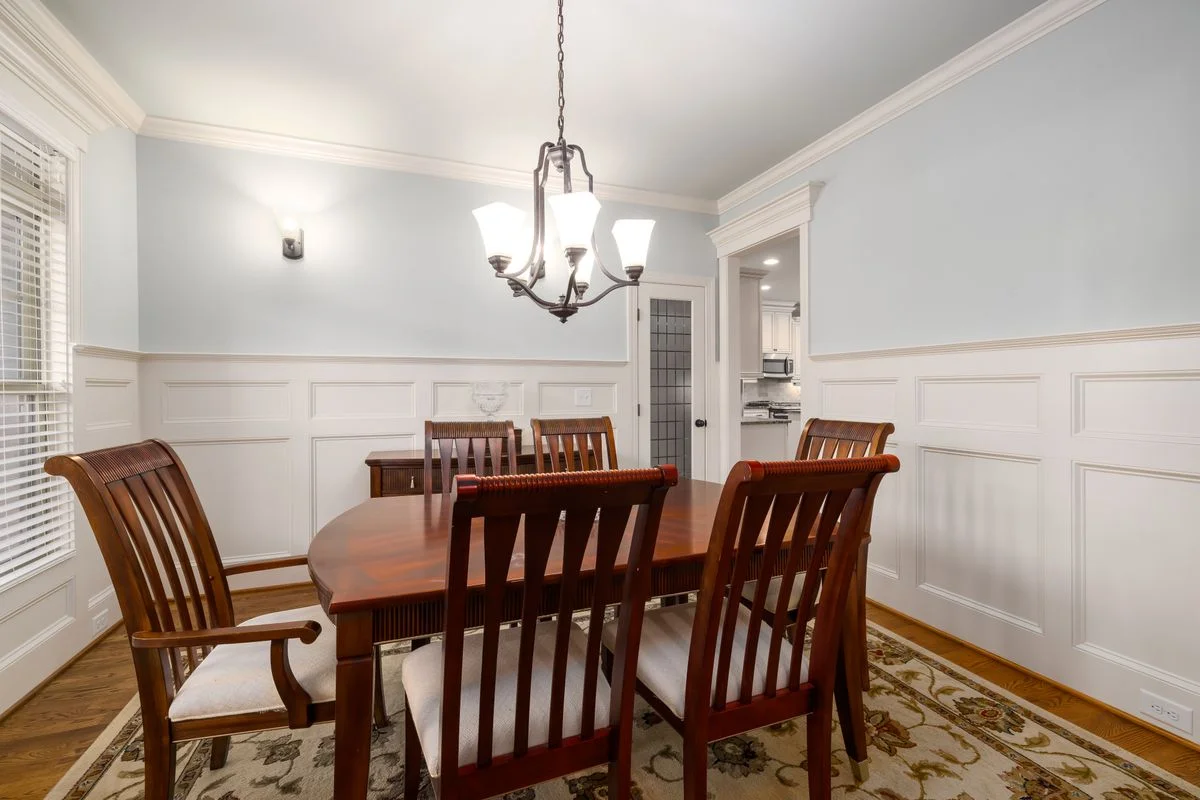
Wainscoting and board-and-batten add classic farmhouse detail to the lower half of walls, giving a room structure and charm without a full renovation. Painted white, they brighten the space and protect walls from scuffs in busy family rooms. They work especially well in entryways and dining areas that open into the living room. Tip: keep the panel height around one third of the wall for the most pleasing proportions.
Board-and-batten works best on walls that are fairly flat, since uneven plaster shows through the battens and makes the lines look wobbly. Use a stud finder to fix battens into studs where possible, and use construction adhesive plus nails for battens that fall between studs. Paint the wall and battens in the same white for a seamless look, and use a semi-gloss finish on the lower wall, which wipes clean more easily than matte paint.
Farmhouse Living Room Furniture Ideas
Farmhouse furniture is comfortable, sturdy, and unfussy. Choose pieces that invite you to sit down and stay a while.
7. Slipcovered Sofa in a Neutral Linen
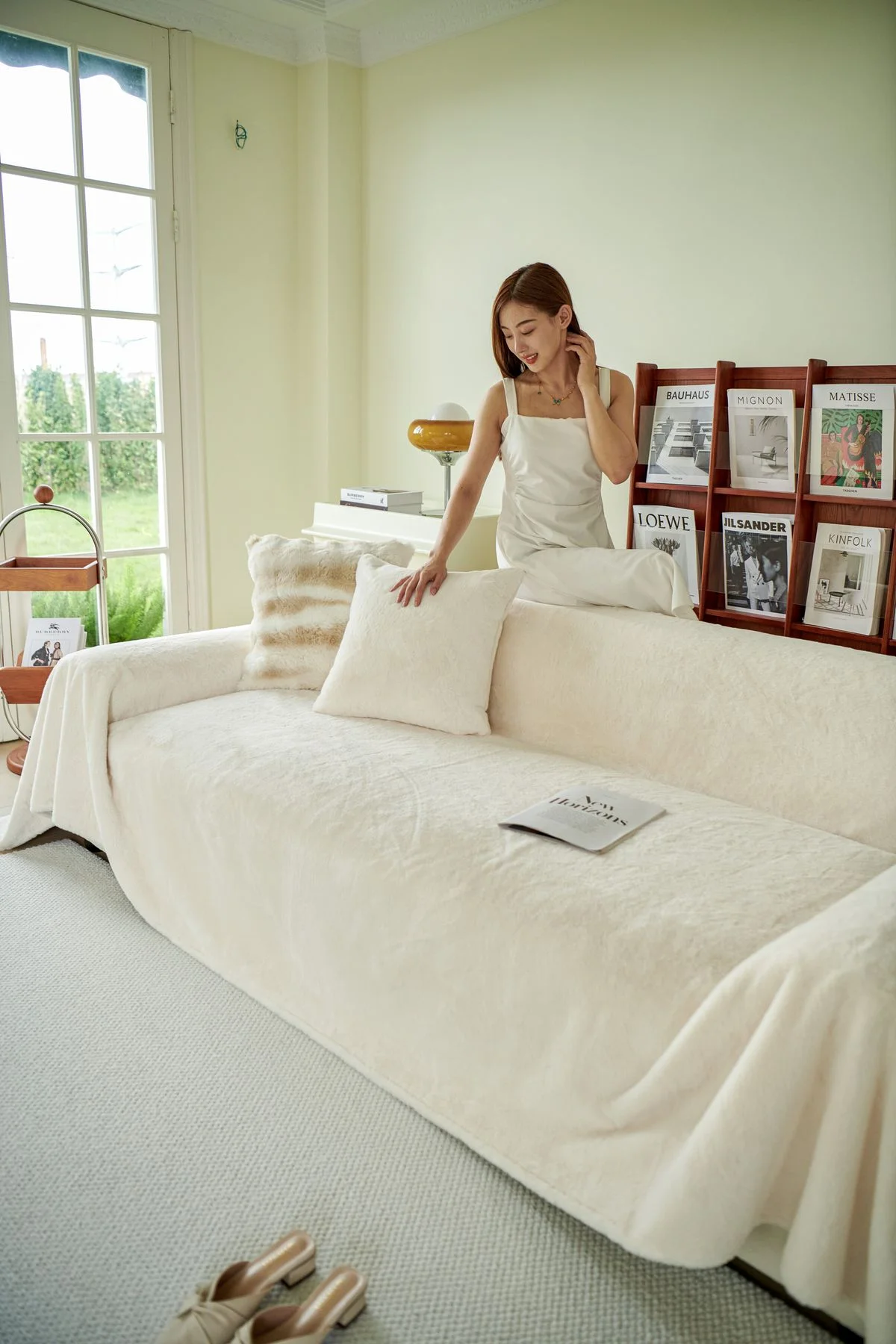
A slipcovered sofa in white or cream linen is the ultimate farmhouse seating: relaxed, comfortable, and washable, which matters in a home with kids or pets. The loose, casual fit looks intentionally unfussy rather than sloppy, and slipcovers can be removed and laundered when life happens. Tip: buy a spare slipcover if you can, so the sofa never has to sit naked while one cover is in the wash.
Slipcover fabric matters: cotton twill is affordable and washable, while linen looks more relaxed but wrinkles more, so choose based on how much ironing you will tolerate. Wash slipcovers in cold water and dry them slightly damp, then put them back on the sofa to finish drying, which keeps the fit snug. Keep pets’ claws trimmed, since a single snag can run through a loose linen weave, and keep a throw over the seat most used.
8. Leather Armchair for Warmth and Contrast
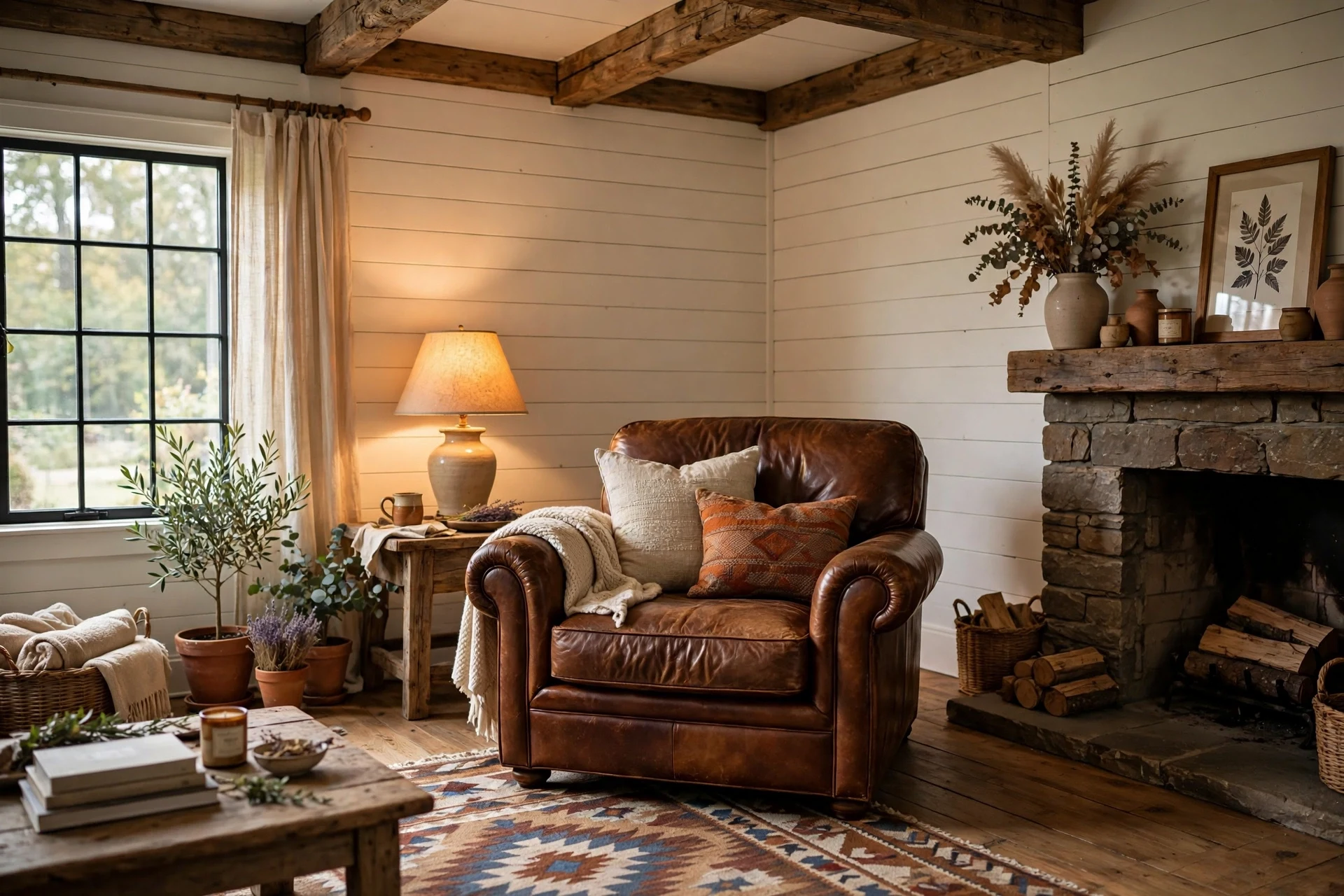
A leather armchair adds warmth and a touch of ruggedness that balances all the soft linen and white paint in a farmhouse room. Cognac or saddle brown leather ages beautifully, developing character over time, and it pairs perfectly with wood and neutral textiles. Tip: condition leather every six months to keep it supple, and keep the chair out of direct sunlight so the color does not fade unevenly.
Leather softens and darkens with use, especially in the seat and armrests, which is part of its charm, but uneven sun exposure creates pale patches that look like damage. Rotate cushions if they are removable, and keep the chair at least a meter from a fireplace or radiator, since dry heat cracks leather over time. Clean spills with a damp cloth immediately, and avoid household cleaners, which strip the leather’s natural oils.
9. Reclaimed Wood Coffee Table
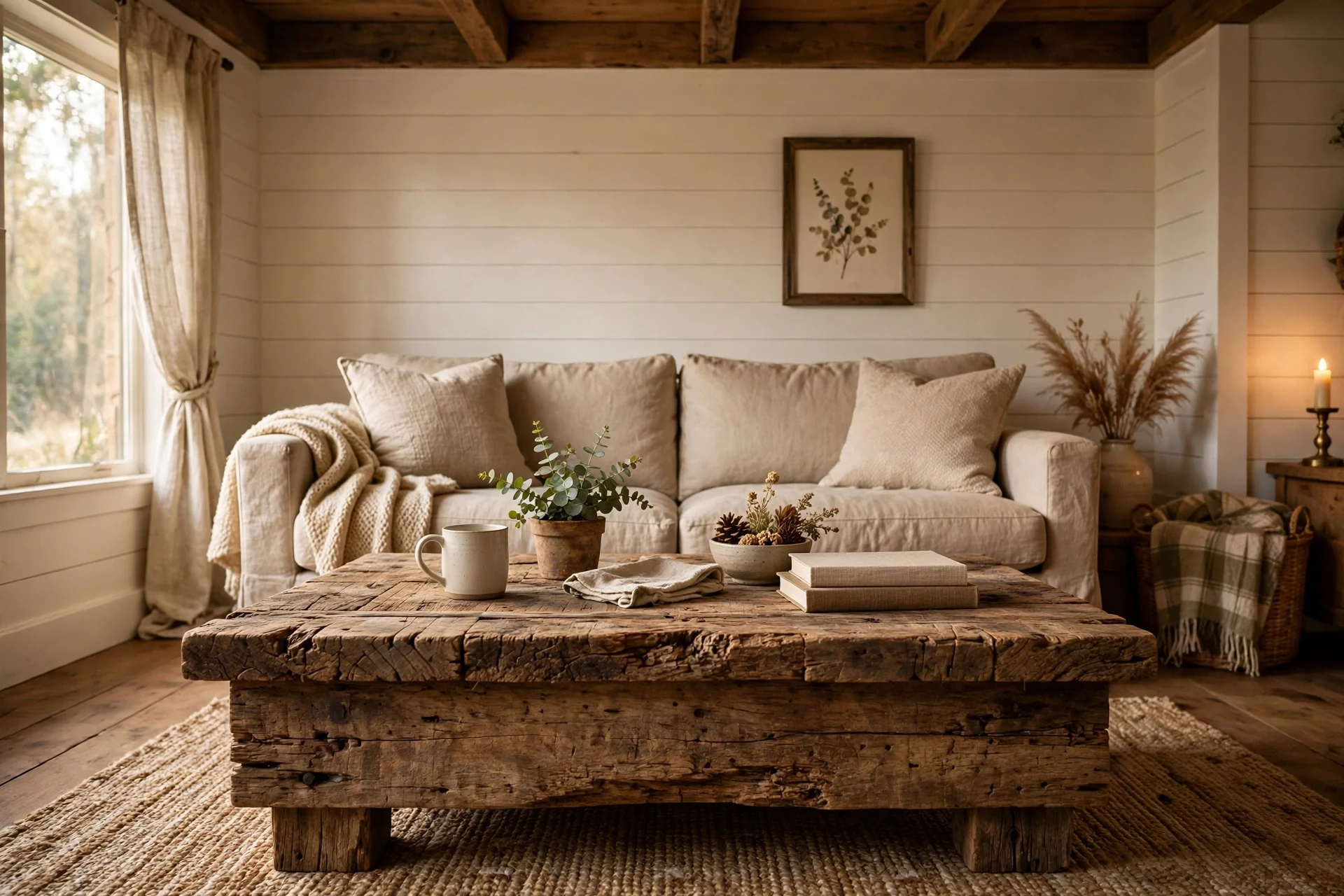
A reclaimed wood coffee table is the workhorse of a farmhouse living room: sturdy enough for feet, board games, and coffee cups, with grain and knots that tell a story. Its natural imperfections are the point, so do not worry about every scratch. Tip: choose a table with a lower shelf for books and baskets, which adds storage without another piece of furniture.
Reclaimed wood tables vary in finish, so check whether the top is sealed with wax, oil, or polyurethane, because each needs different care: wax needs reapplying, oil needs feeding, and polyurethane wipes clean but shows scratches. Use coasters under hot drinks, since heat rings stain an unsealed top permanently. If the table has a lower shelf, keep it for books and baskets rather than shoes, which scuff the wood.
10. Distressed Wood Console Table
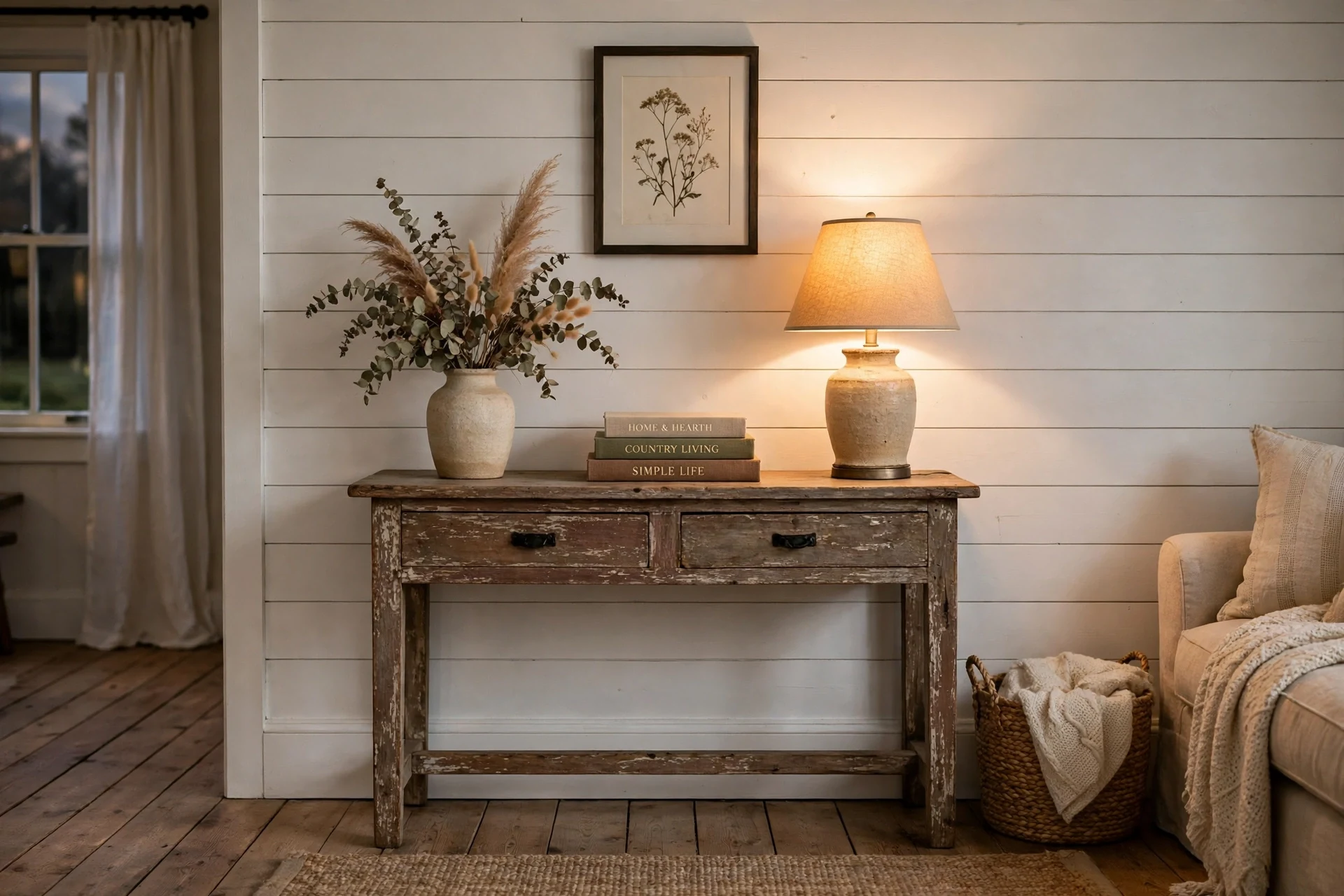
A distressed wood console table behind the sofa or against an entry wall gives you a display surface and storage without visual weight. Style it with a lamp, a stack of books, and a small plant, and use baskets underneath for hidden storage. Tip: keep the styling to three items at most, because a console crowded with decor looks cluttered rather than curated.
A console table should be about the same height as the sofa back if it sits behind a sofa, or slightly lower than eye level if it stands against a wall. Keep the tabletop styling simple: a lamp at one end, a stack of two or three books in the middle, and a small plant or candle at the other end gives balance without clutter. Use baskets underneath for items you need often, and closed boxes for items you want hidden.
11. Ladder Shelf for Decor and Books
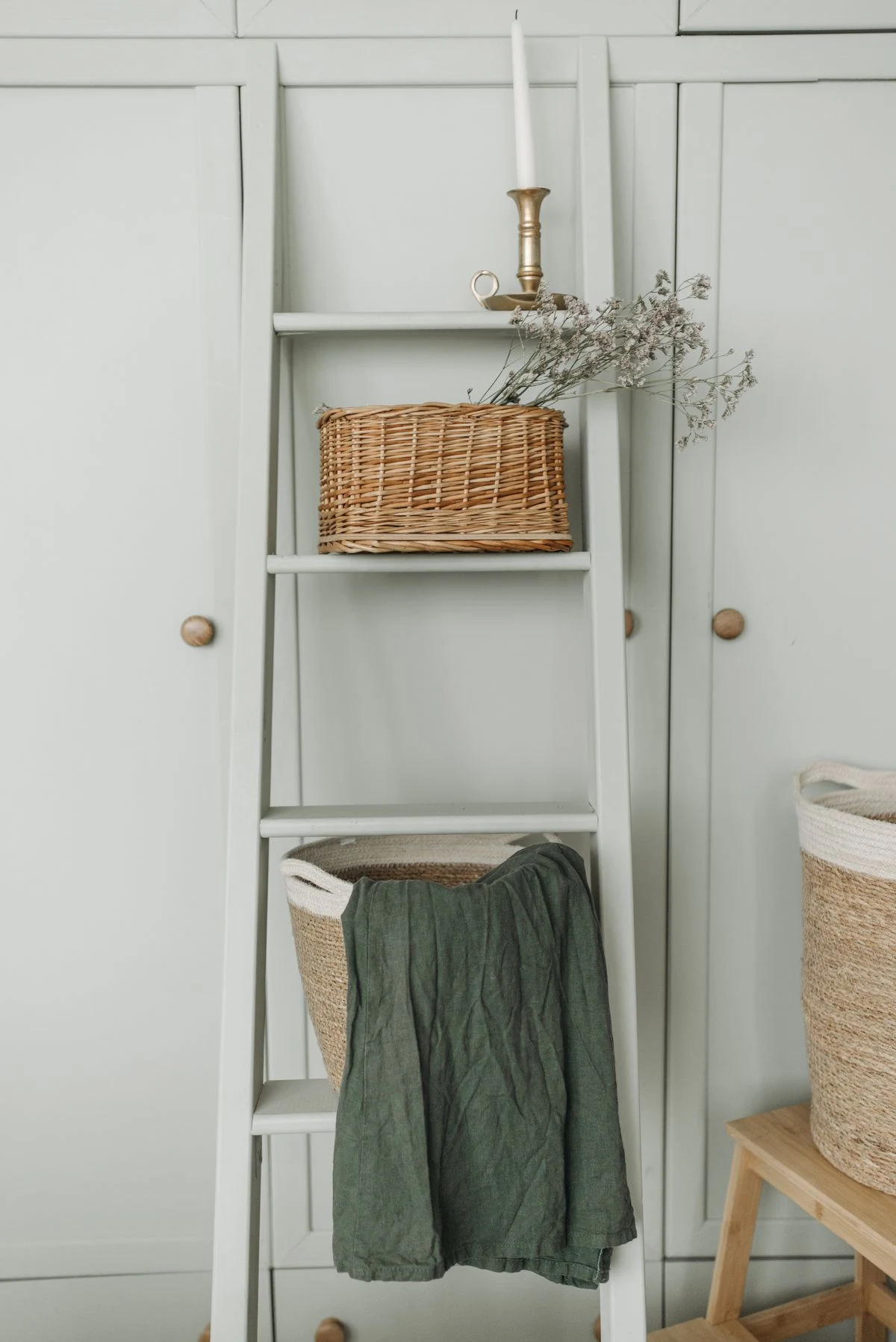
A ladder shelf leans against the wall and offers open shelving that feels light and casual, perfect for farmhouse decor. Use it for books, plants, framed photos, and a few favorite objects, leaving some shelves partly empty so the display breathes. Tip: anchor the ladder shelf to the wall for safety, especially in homes with children who might climb it.
A ladder shelf leans at a slight angle, so the top rests against the wall and the bottom feet sit a few centimeters out, which means it needs a flat wall and a clear floor area. Anchor the top to the wall with a strap, and place heavier items on the lower shelves, since the top shelves of a leaning ladder are narrower and less stable. Keep the shelf’s depth in mind: most ladder shelves are 25 to 30 centimeters deep, too shallow for large books.
12. Wooden Rocking Chair by the Fireplace
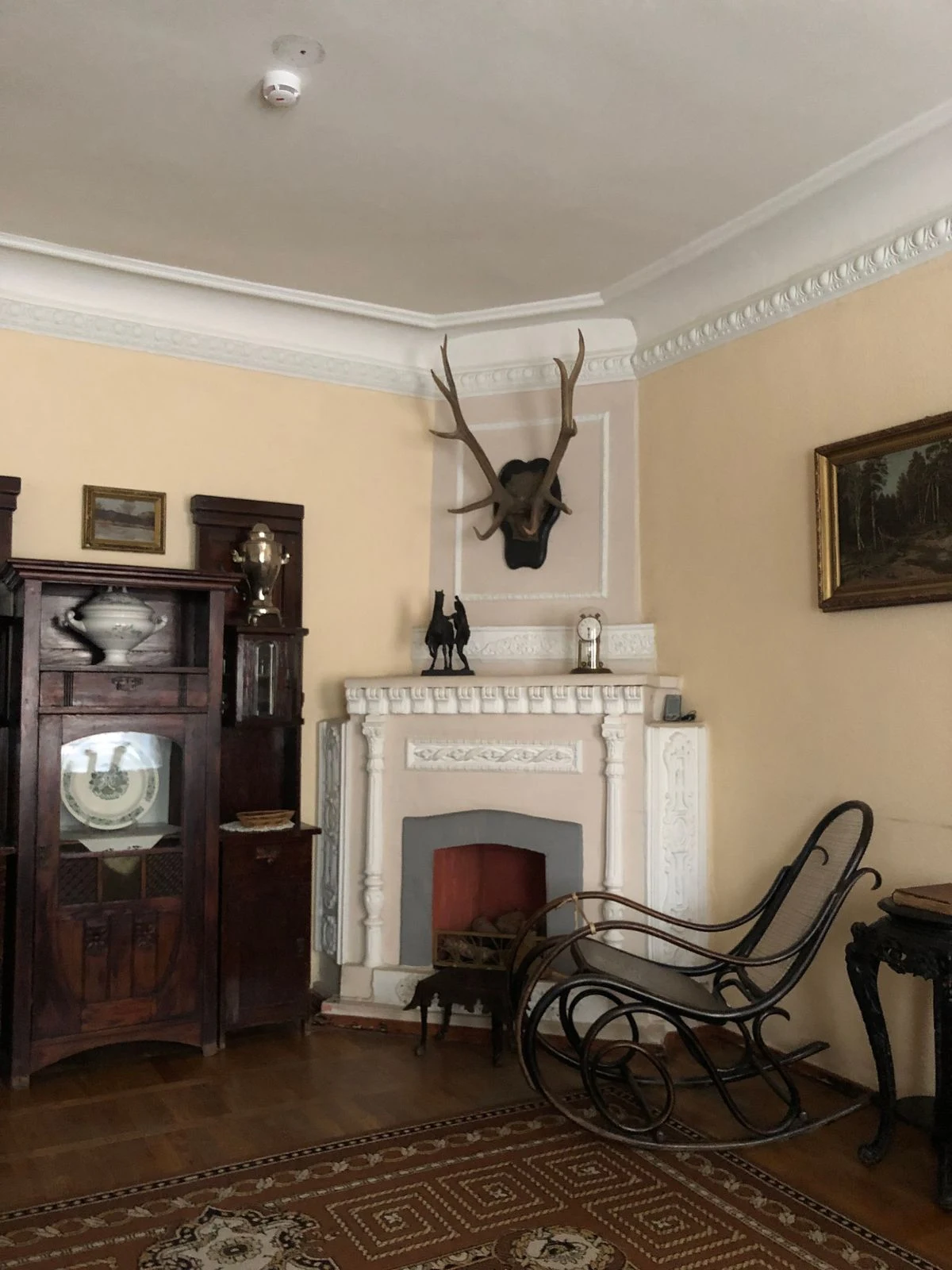
A wooden rocking chair by the fireplace is farmhouse nostalgia at its best: a cozy spot for reading, chatting, or rocking a baby to sleep. Its gentle motion and classic shape make it a favorite seat in any farmhouse living room. Add a cushion and a throw for comfort. Tip: place a small rug under the rockers to protect wooden floors from wear, and check that the chair rocks smoothly without tipping.
A rocking chair needs a smooth, level floor to rock safely, so test it on your actual floor before buying, not just on a shop carpet. Wooden rockers wear faster on hard floors, so a flat rug underneath protects both the floor and the rockers. Check the chair’s joints regularly, since rocking loosens joints over time, and tighten any bolts as soon as the chair starts to creak or wobble.
Farmhouse Textiles and Cozy Layers
Textiles are what make a farmhouse room feel soft and lived-in rather than just rustic. Layer them generously.
13. Buffalo Check Throw Pillows
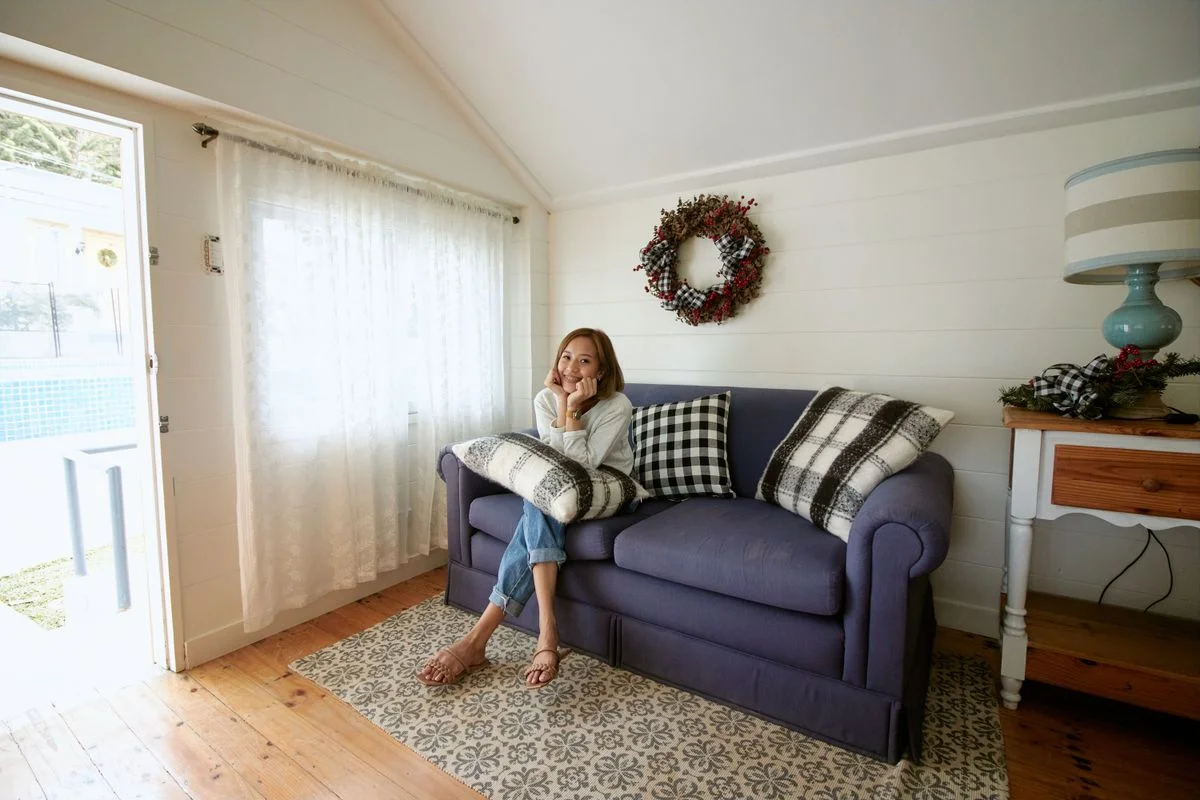
Buffalo check pillows in black and white or red and black are a farmhouse classic, adding bold pattern without leaving the neutral palette. Mix buffalo check with solid pillows and a subtle stripe so the pattern feels layered rather than loud. Tip: use buffalo check in just one or two pillows, because a whole sofa of check can feel more cabin-themed than farmhouse.
Buffalo check reads boldest in black and white, which suits a modern farmhouse room, while red and black suits a cozier, cabin-style room, so choose the color for the room’s overall feel. Pair check pillows with solid pillows in cream or gray, and avoid pairing check with another large-scale pattern, which competes for attention. Wash check pillows separately the first time, since dark dyes can bleed onto lighter fabrics.
14. Chunky Knit Throw Blankets
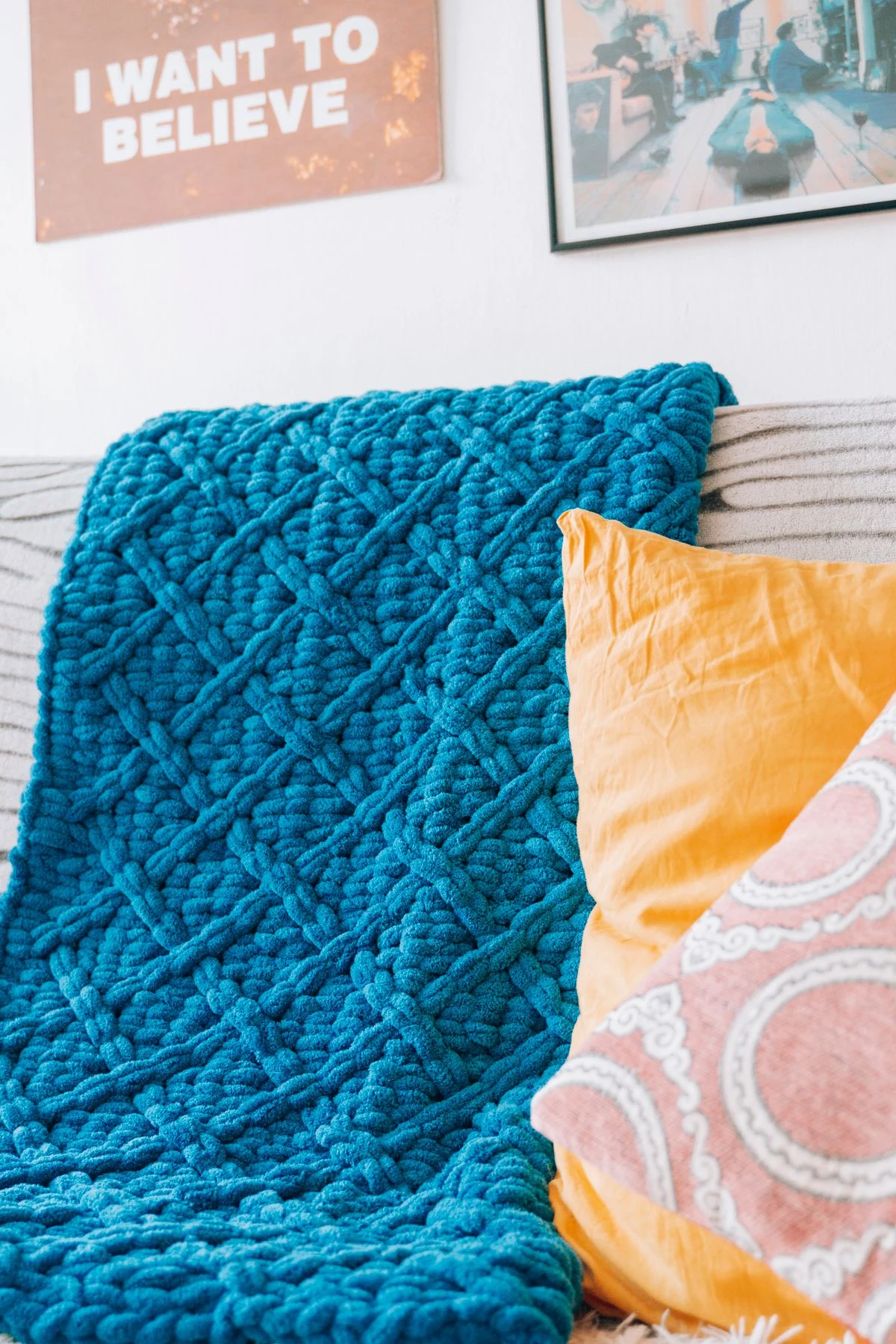
Chunky knit throws draped over sofa arms and chair backs are the farmhouse answer to coziness. Their thick texture invites you to curl up, and they look beautiful in cream, oatmeal, and soft gray. Keep one in a basket by the sofa so it is always within reach. Tip: choose machine-washable knits for everyday throws, because hand-wash-only blankets rarely get used in a busy family room.
Chunky knits in cotton are easier to wash than wool knits, which felt in hot water, so check the label before buying a throw for a busy family room. A throw about 130 by 180 centimeters covers a sofa arm and a lap comfortably, while a smaller throw suits a single chair. Store throws in a basket by the sofa rather than folded on a shelf, because a throw in a basket gets used, while a throw on a shelf gets forgotten.
15. Neutral Linen Curtains
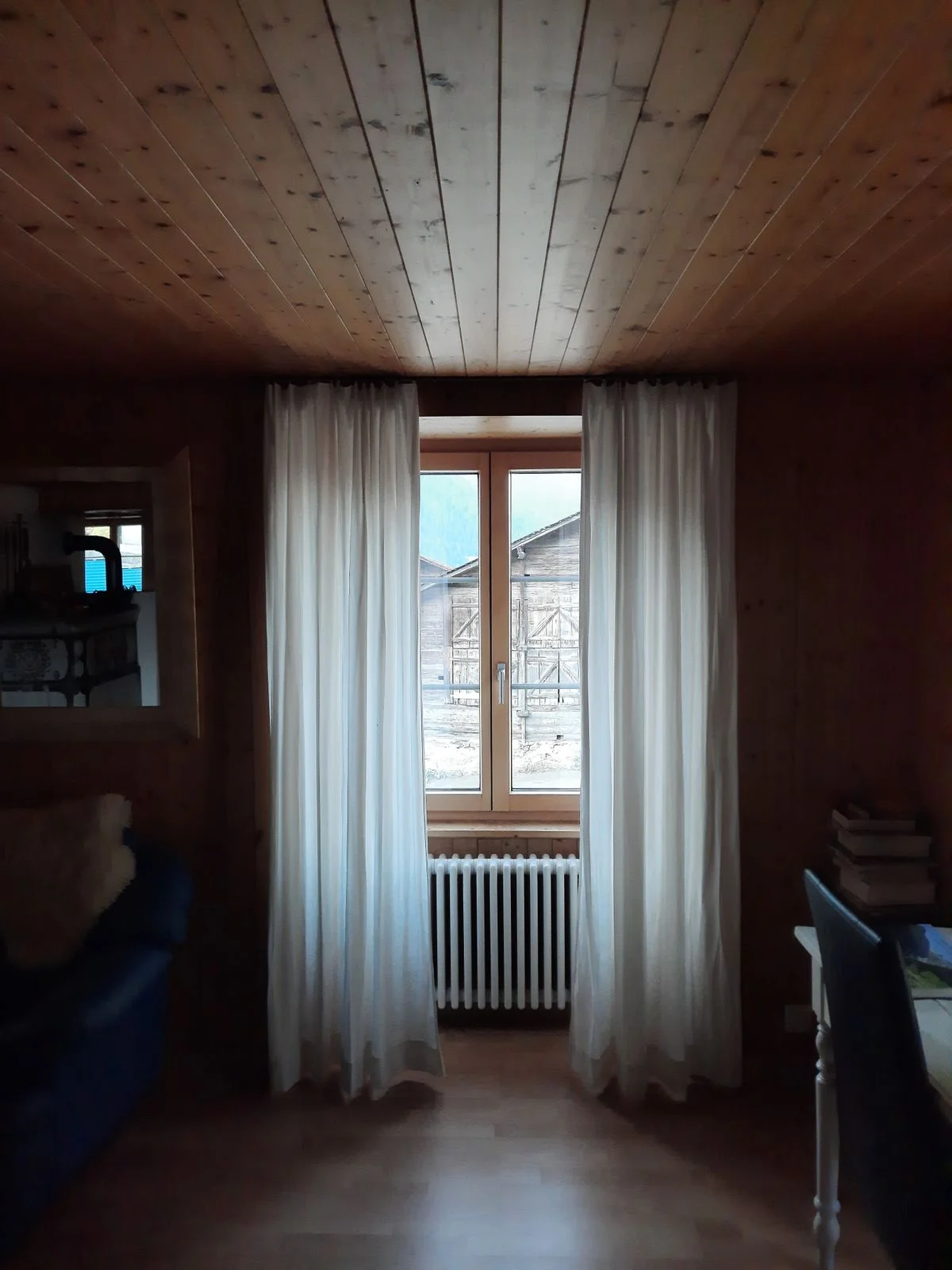
Neutral linen curtains soften windows and filter light beautifully, which is exactly what a farmhouse living room needs. Their natural texture and slight wrinkles look relaxed rather than messy, and cream or oatmeal linen works with every farmhouse palette. Tip: hang linen curtains high and wide so windows look larger, and let them just brush the floor for a tailored finish.
Linen curtains wrinkle naturally, and that relaxed look suits farmhouse style, but if wrinkles bother you, choose a linen-cotton blend, which drapes similarly with fewer creases. Wash linen curtains on a gentle cycle and hang them damp to dry, which reduces ironing. For privacy at night, add a simple roller blind behind the linen, since linen alone is too sheer to block the view into a lit room after dark.
16. Natural Jute Area Rug
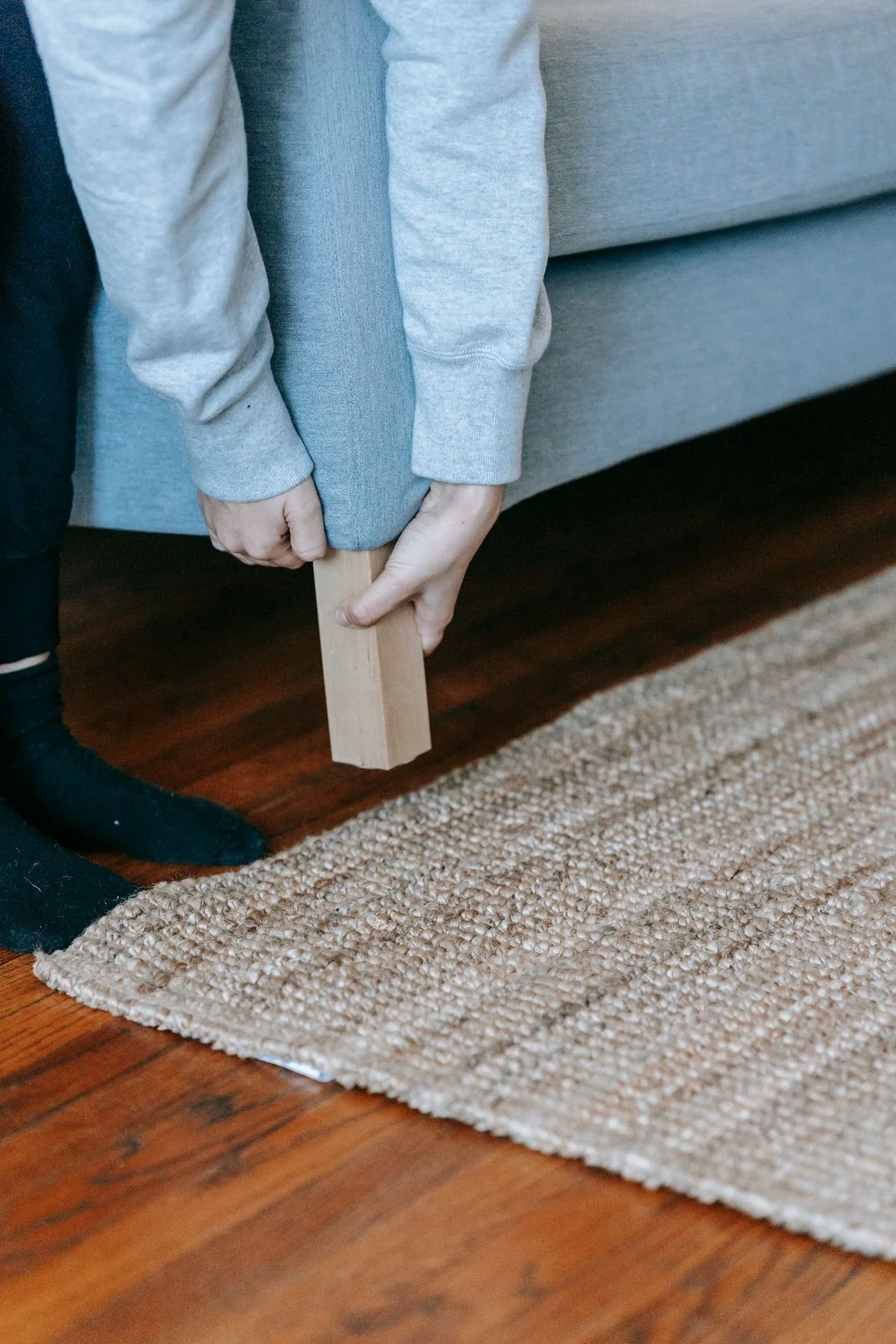
A natural jute rug grounds a farmhouse living room with earthy texture underfoot. Its neutral tone works with any sofa color, and its durability handles high traffic well. Layer a smaller patterned rug on top if you want extra softness. Tip: use a thick rug pad under jute, because jute alone can feel rough and it tends to shed fibers in its first months.
Jute rugs shed for the first few months, so vacuum them twice a week initially and expect loose fibers around the edges. A thick rug pad, at least 6 millimeters, makes a jute rug comfortable underfoot and stops it sliding on hard floors. Avoid placing jute in damp areas or near exterior doors where rain blows in, since jute absorbs moisture and can develop a musty smell if it stays wet.
Farmhouse Decor Accents and Finishing Touches
These small accents are what turn a neutral room into a farmhouse room. Use them sparingly for the best effect.
17. Galvanized Metal Accents

Galvanized metal accents, from buckets and trays to wall planters, add industrial farmhouse edge that balances all the soft wood and linen. A galvanized bucket holding firewood or a metal tray on the coffee table gives the room authentic farm character. Tip: use galvanized pieces in small doses, because too much metal can make a living room feel like a barn rather than a home.
Galvanized metal has a slightly rough, matte finish that suits farmhouse style, but sharp edges on cheap buckets and trays can snag fabric, so check edges before use. Use galvanized pieces for dry storage, such as firewood or blankets, rather than for wet plants, since standing water rusts the finish. Wipe galvanized metal with a dry cloth, because harsh cleaners strip the zinc coating that gives it its characteristic look.
18. Mason Jar Decor and Candle Holders

Mason jars are the most versatile farmhouse accessory: use them as candle holders, vases for wildflowers, or storage for small items on a shelf. Their simple glass shape suits the farmhouse love of honest, everyday materials. Group three jars of different heights for a styled look. Tip: use battery candles inside jars on mantels and shelves, which gives you the glow without the fire risk near curtains and wood.
Mason jars in different sizes suit different uses: small jars hold tea lights, medium jars hold flowers, and large jars hold pantry items or bathroom supplies. Use wide-mouth jars for flowers, since narrow mouths crush stems and make arranging difficult. For candle use, keep the jar clear of curtains and never leave a burning candle unattended, and trim wicks to about 6 millimeters so candles burn evenly without smoking.
19. Vintage Farmhouse Wall Signs
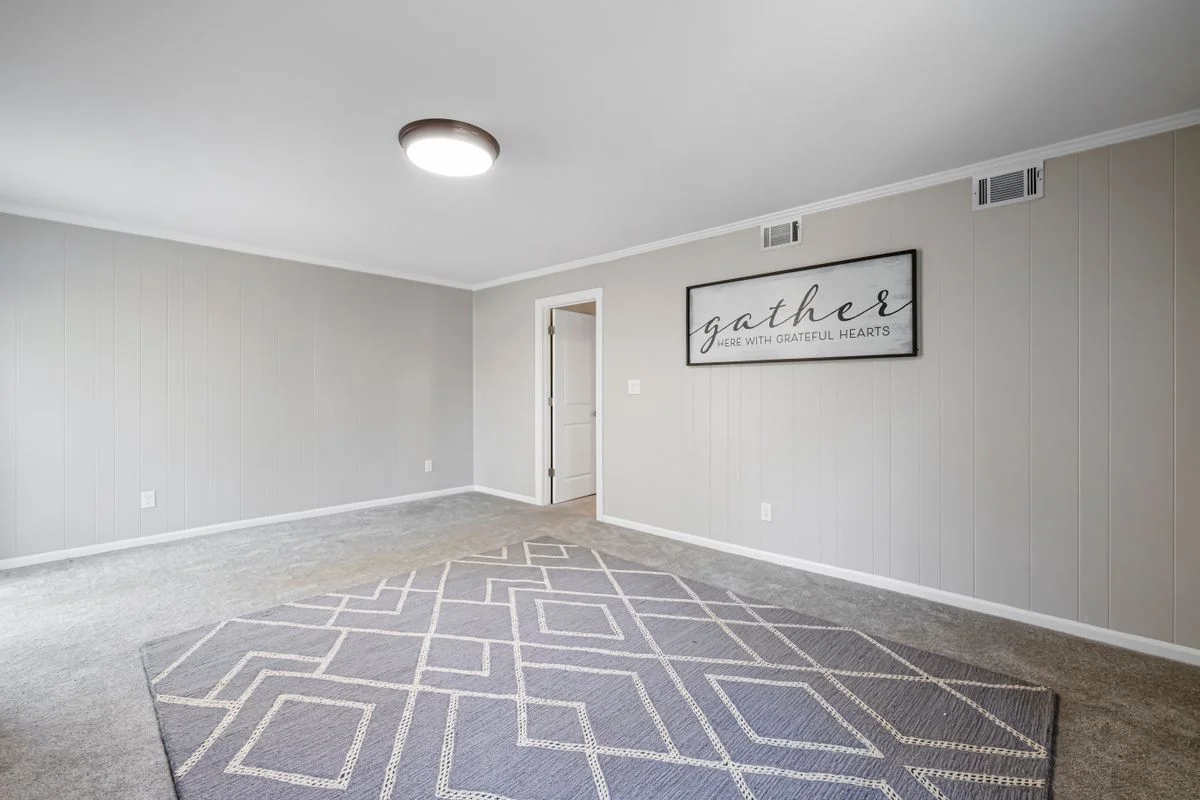
A vintage-style farmhouse wall sign with a warm saying or a family name adds personality and a personal touch to the room. One well-chosen sign above a console or mantel is charming; a wall full of signs quickly feels like a gift shop. Tip: choose signs in wood or distressed metal that match your room’s tones, and hang just one as a focal point.
A farmhouse sign should be sized to its wall: a sign about 60 centimeters wide suits a console table, while a larger sign suits a mantel or a blank wall. Hang the sign at eye level, about 145 centimeters from the floor to its center, and center it over the furniture below rather than over the whole wall. Choose a saying that means something to your family, since a generic sign reads as decor, while a personal one reads as home.
20. Cotton Stems and Greenery in Crocks
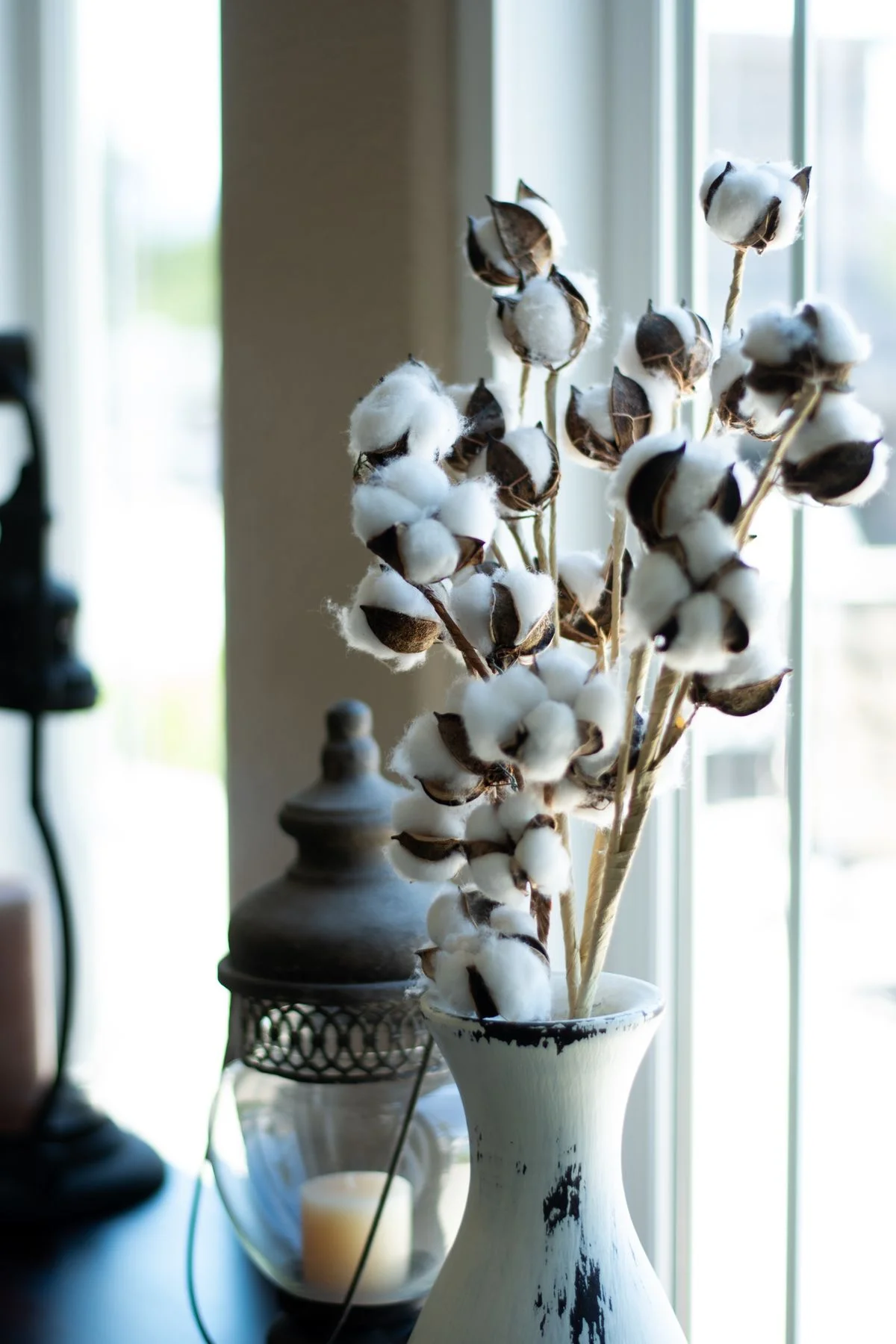
Cotton stems arranged in an old crock or stoneware jug are a farmhouse signature: soft, neutral, and effortlessly pretty. They last indefinitely, need no water, and suit mantels, consoles, and side tables alike. Mix in a little eucalyptus for softness and scent. Tip: trim stems to different heights so the arrangement looks natural rather than flat, and dust them occasionally to keep them fresh.
Cotton stems last longest when kept out of direct sun, which fades the white bolls to yellow over time, and away from humid rooms, where they can develop a musty smell. Dust stems with a soft brush or a quick shake outside, rather than washing them, which mats the fibers. Mix cotton with dried eucalyptus or lavender for color and scent, but keep the arrangement simple, since too many stem types look busy rather than farmhouse.
21. Candle Lanterns for Warm Light

Candle lanterns on the mantel, hearth, or coffee table cast the warm, flickering light that makes farmhouse evenings feel special. Black metal or wooden lanterns suit the style, and grouping two or three at different heights looks intentional. Tip: use real candles only where they are supervised and away from curtains, and battery candles inside lanterns placed on the floor or near fabric.
Lanterns in different sizes group best in odd numbers, such as three lanterns on a hearth, with the tallest at the back and the smallest at the front. Use pillar candles inside large lanterns and tea lights inside small ones, so the flame height suits the lantern’s scale. Clean lantern glass monthly, since soot and dust dull the glow, and keep lanterns clear of curtains, throws, and other flammable items.
22. Farmhouse Gallery Wall With Family Photos
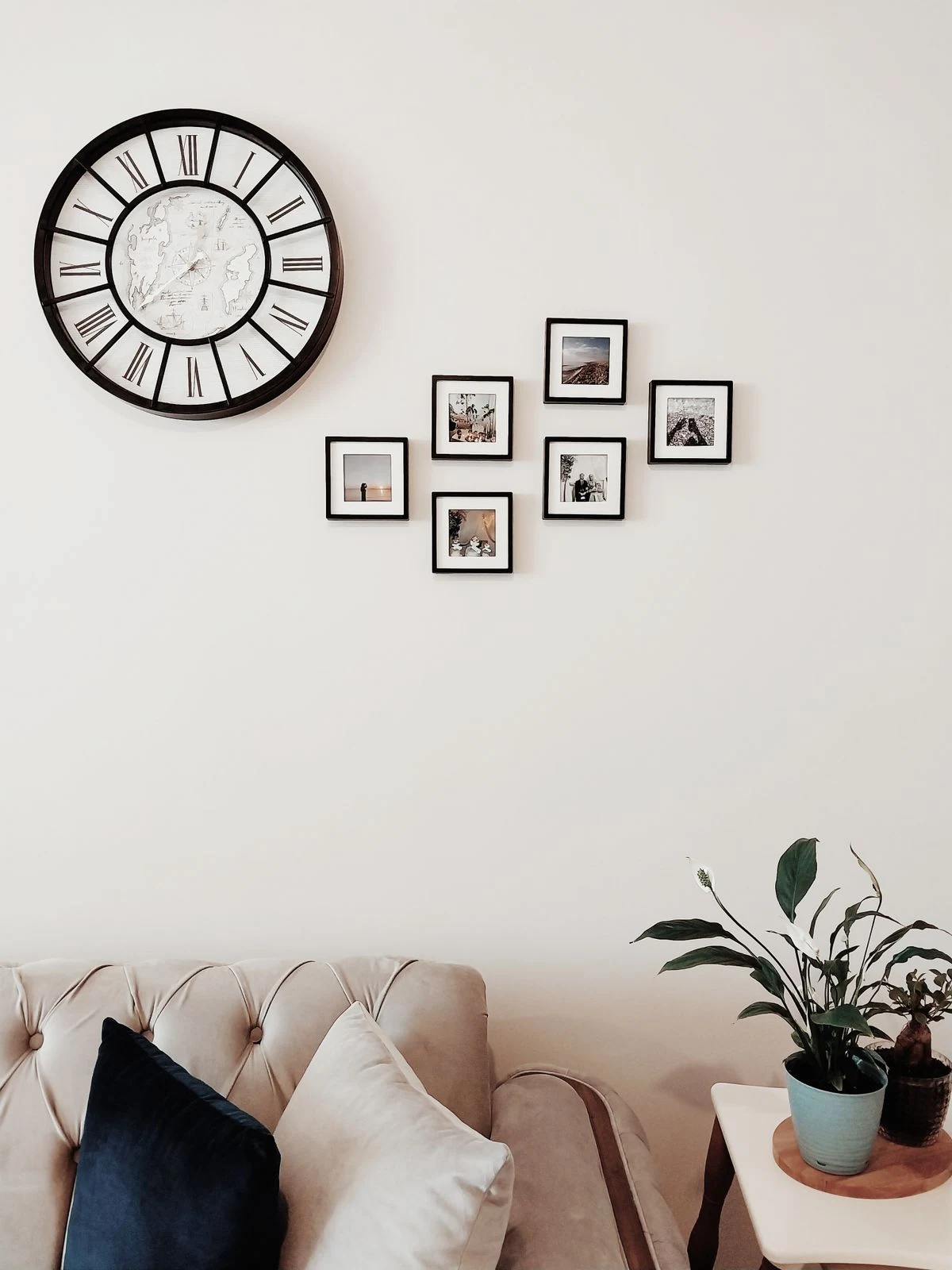
A farmhouse gallery wall of family photos in matching wood or black frames turns a blank wall into the story of your home. Mixing photo sizes with a few simple art prints keeps it personal without feeling random. Tip: lay the frames on the floor first to plan the layout, start with the largest frame in the center, and keep spacing even for a tidy, farmhouse-polished finish.
Mixing photo sizes in a gallery wall works best when the frames share one finish and one mat color, which ties different photos together. Use black-and-white prints for older photos and color prints for recent ones, or convert all prints to the same style for a more polished look. Hang the gallery at eye level with even spacing of about 5 centimeters, and step back often while hanging to check that the overall shape stays balanced.
How to Choose the Right Farmhouse Decor Ideas for Your Home
Start with a neutral base of white walls, natural wood, and comfortable seating, then add farmhouse character in layers: one architectural feature like shiplap, a few wood and metal accents, and cozy textiles. Avoid buying every farmhouse accessory at once, because the style works best when it grows over time and reflects your family. Keep the palette to whites, creams, grays, and natural wood, with one warm accent color repeated in small doses.
Frequently Asked Questions About Farmhouse Living Room Decor
What is the difference between farmhouse and modern farmhouse style?
Classic farmhouse leans rustic, with distressed wood, vintage finds, and lots of texture, while modern farmhouse keeps the warmth but adds cleaner lines, fewer accessories, and more white and neutral tones. Modern farmhouse feels fresh and uncluttered, while classic farmhouse feels cozier and more collected. Most homes today mix the two.
What colors are used in farmhouse living rooms?
Farmhouse living rooms use whites, creams, soft grays, and natural wood tones as the base, with muted accents like sage green, dusty blue, or warm terracotta. Black is used sparingly in hardware, frames, and light fixtures for contrast. The overall palette stays soft and natural rather than bright or bold.
How do I make a farmhouse living room cozy without clutter?
Layer textiles like throws and pillows, use warm lighting from lamps and candles, and choose a few meaningful decor pieces instead of filling every surface. Baskets hide everyday clutter, and closed storage keeps the room calm. Coziness in farmhouse style comes from texture and warmth, not from the number of objects.
Can farmhouse decor work in a small living room?
Yes, farmhouse decor suits small rooms well because its light palette and natural materials make spaces feel open. Choose a slipcovered loveseat instead of a large sofa, use a ladder shelf rather than a bulky bookcase, and keep decor to a few well-chosen pieces. White shiplap or wainscoting on one wall adds character without shrinking the room.
Farmhouse style is really about making a house feel like a home: comfortable, warm, and welcoming to everyone who walks in. Start with the ideas that fit your room and your budget, whether that is a shiplap wall, a slipcovered sofa, or simply a basket of chunky throws. Pin this guide to your farmhouse decor board so you can find it when you are ready to decorate, and save the ideas that feel most like home to you!
Photos: Pexels (free to use).


