

21 Small Living Room Ideas That Make Tiny Spaces Feel Bigger and Brighter in 2026
Small living room ideas are all about making a little space live large. A tiny living room can still feel comfortable, stylish, and welcoming, but only if every piece of furniture earns its place. The secret is not owning less for the sake of it; it is choosing smarter layouts, furniture that does more than one job, and visual tricks that open the room up. Whether you live in a studio apartment or a cozy cottage, these 21 small living room ideas will help you fit everything you need into the space you have, without it feeling cramped.
Small Living Room Layout Ideas
Layout comes first in a small room. Moving furniture a few inches can change how big the whole space feels.
1. Float the Sofa Away From the Wall
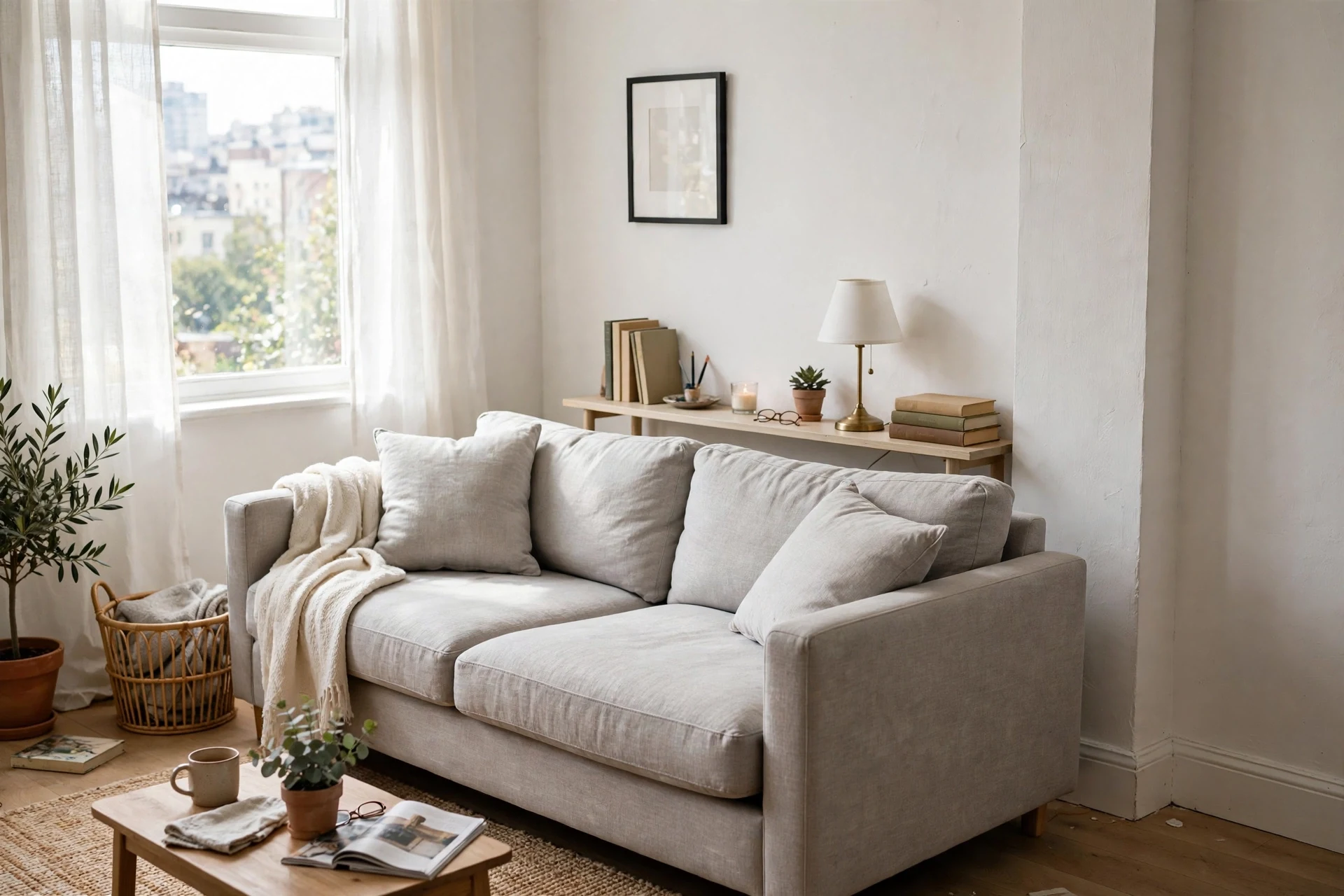
Floating the sofa a few inches away from the wall sounds counterintuitive, but it actually makes a small living room feel larger. The gap creates a sense of depth, lets light flow around the furniture, and stops the room from feeling like everything is pushed to the edges. It also creates space behind the sofa for a narrow console or a floor lamp. Tip: leave at least 75 centimeters of walking space in front of the sofa so the arrangement still feels comfortable to move around.
The gap behind a floated sofa also solves a practical problem: it gives you access to skirting boards, radiators, and power sockets that a sofa pushed flat against the wall would block. A slim console table, no deeper than 25 centimeters, fits in that gap and holds lamps, books, or a charging station without widening the arrangement. Keep the gap consistent along the sofa’s length, because a sofa angled away from the wall wastes the very floor space you are trying to save.
2. Use a Corner Seating Arrangement
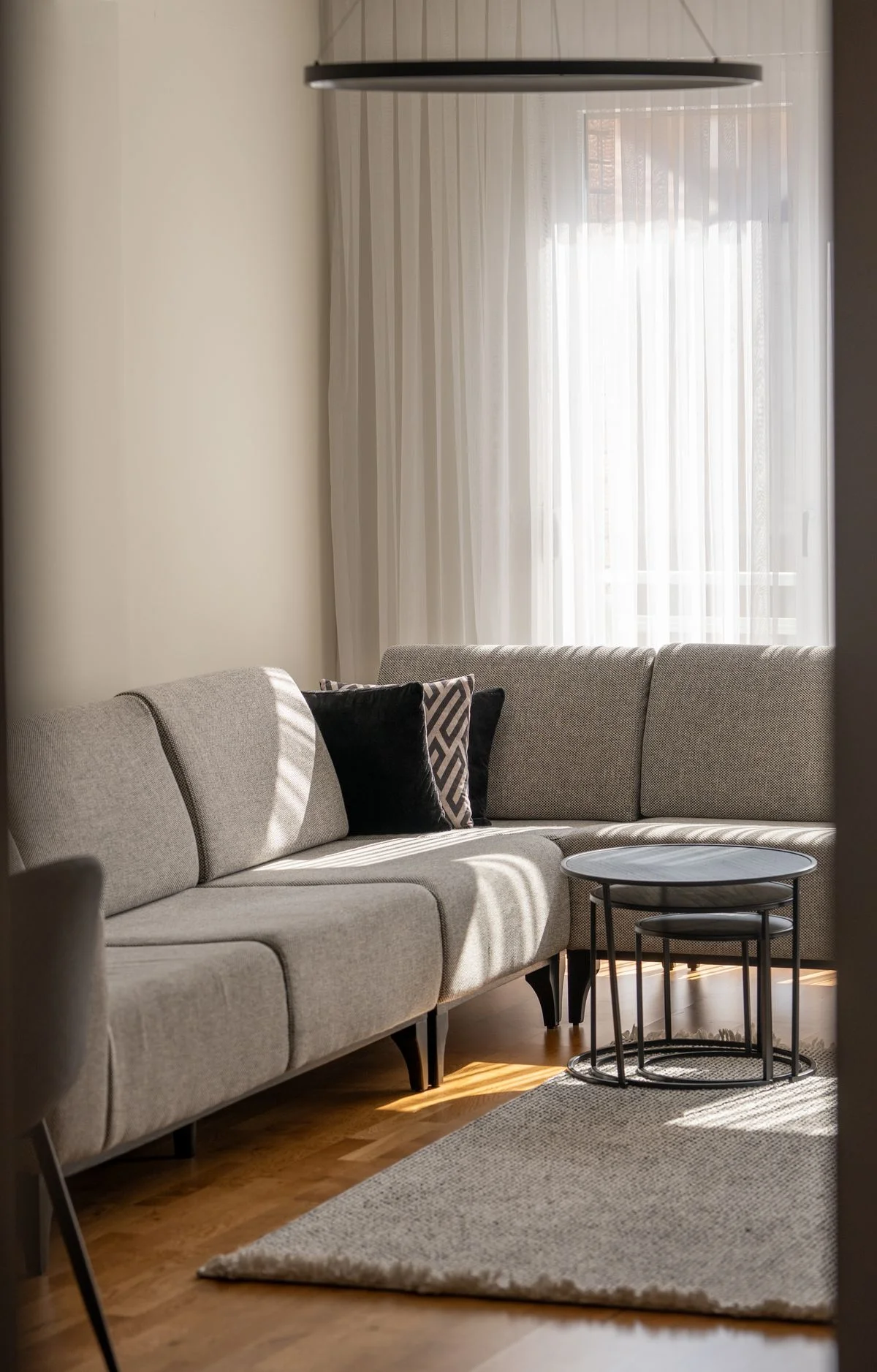
A corner arrangement tucks seating into the least useful part of the room and leaves the center open. An L-shaped sofa or a sofa plus a chair angled into the corner seats more people than a straight row, while using the same amount of floor. Corners are often dead space anyway, so putting seating there is pure gain. Tip: add a small side table in the corner itself, because that awkward triangle behind the sofa is perfect for a lamp or a plant.
A corner sofa with a chaise needs careful measuring, because the chaise side cannot be swapped once it is delivered unless the model is modular. Check the door swing and radiator position on the chaise side, and leave room to open any nearby cupboard doors. If the corner has a window, keep the sofa back below the sill so daylight still reaches the room, and use a light-colored sofa to stop the corner from feeling like a dark cave.
3. Choose a Slim-Profile Sofa
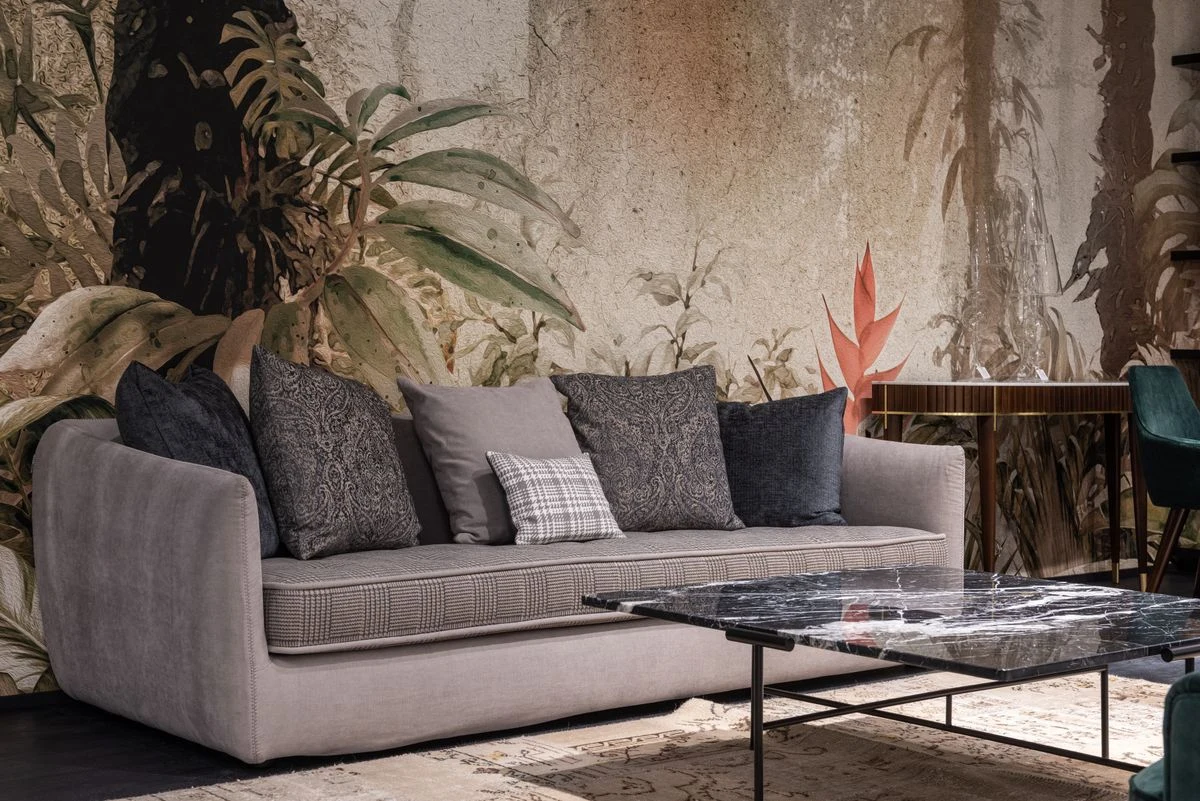
A slim-profile sofa with narrow arms and raised legs can save 30 centimeters or more compared with a bulky overstuffed model, and in a small room that is a lot. Raised legs also let you see floor underneath the sofa, which tricks the eye into thinking the room is bigger. Look for clean lines and a seat depth that suits your height. Tip: measure your doorway, hallway, and stairwell before buying, because a sofa that cannot get into the room helps no one.
Seat depth matters as much as width in a small room: a depth of 55 to 60 centimeters suits most adults for sitting upright, while deeper seats around 70 centimeters suit lounging but eat floor space. Test the sofa in person if possible, sitting as you normally would, because online dimensions never show how a sofa feels. Raised legs should be sturdy, not decorative, since a sofa that wobbles when someone sits down quickly feels cheap.
4. Try Nesting Coffee Tables
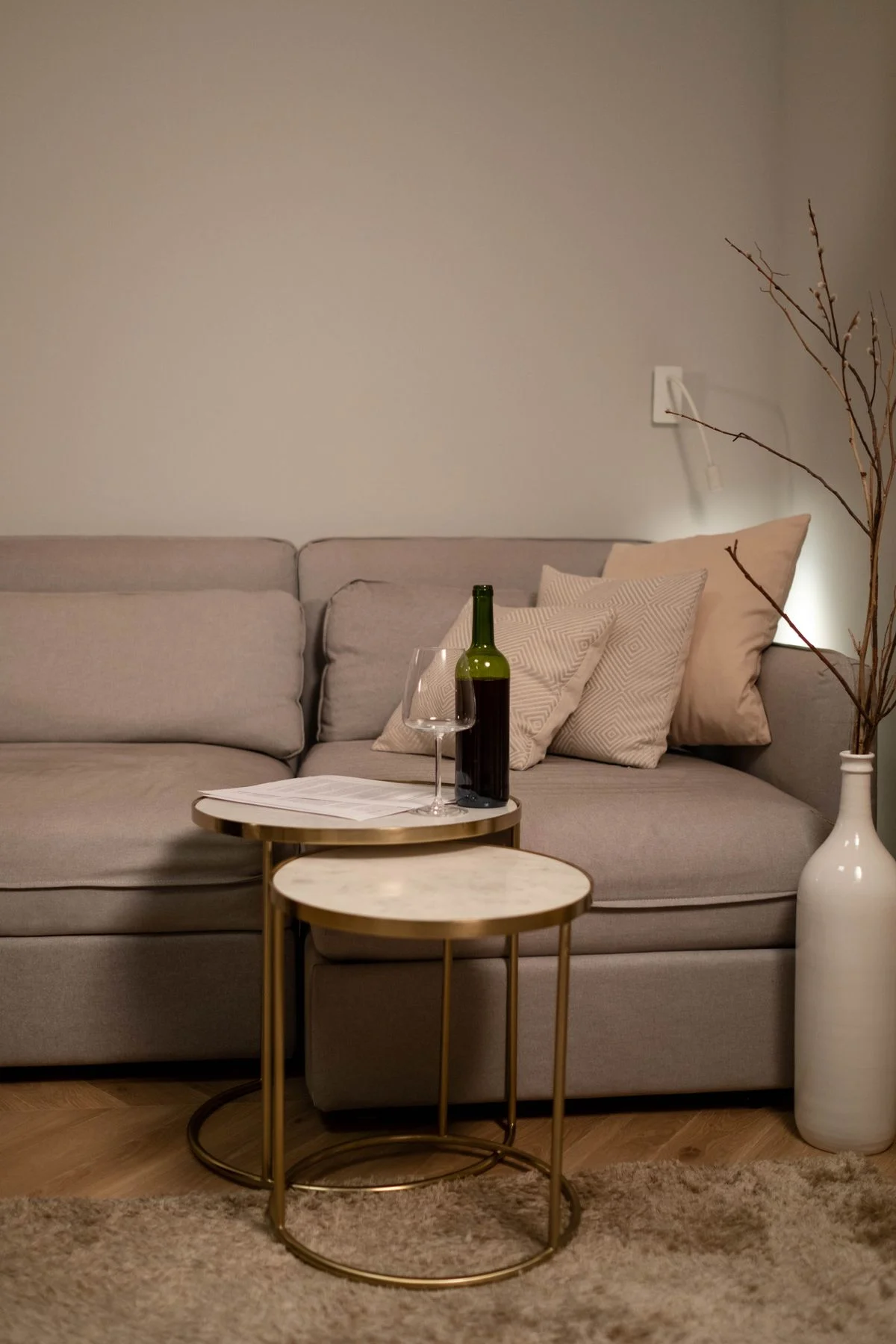
Nesting coffee tables are two or three tables that slide together into one footprint and pull apart when you need extra surface space. They are ideal for small living rooms because you get a full coffee table for everyday use and bonus tables for guests, without permanently giving up floor space. Tip: choose nesting tables in different heights so they look intentional when separated, not like a matching set that got split up.
Nesting tables work best when the smaller table is genuinely useful on its own, not just a miniature copy of the larger one. Look for a small table tall enough to sit beside an armchair, so it can double as a side table when pulled out. Keep the tables’ combined footprint in mind: if they are wider than your sofa’s seating area, they will dominate the room even when nested together.
5. Mount the TV on the Wall
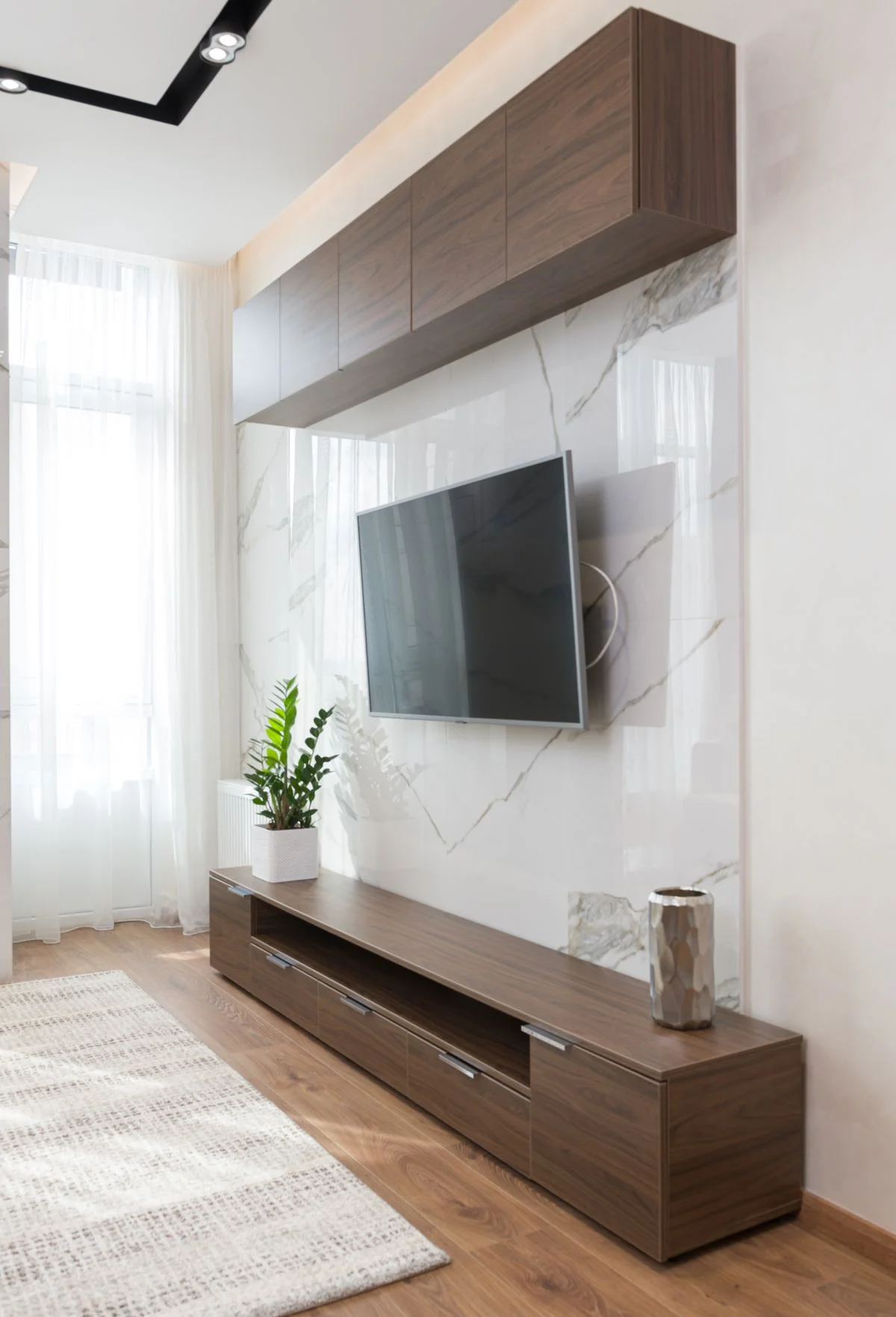
Wall-mounting the TV frees up the entire footprint of a TV stand, which in a small room can be the difference between a cramped layout and a comfortable one. Mounted at eye level from the sofa, the TV also looks cleaner and more modern. Hide cables in a cord cover painted to match the wall. Tip: sit on your sofa and check the viewing height before drilling, because a TV mounted too high causes neck strain during long movie nights.
Choose a wall mount that tilts slightly, because a fixed mount locks the TV at one angle and glare from a window can ruin the picture at certain times of day. A tilting mount also makes it easier to reach cables behind the TV later. Mount a small floating shelf below the TV for a streaming box or soundbar, but keep it shallow so it does not recreate the bulk of the TV stand you just removed.
6. Create a Conversation Nook With Two Chairs
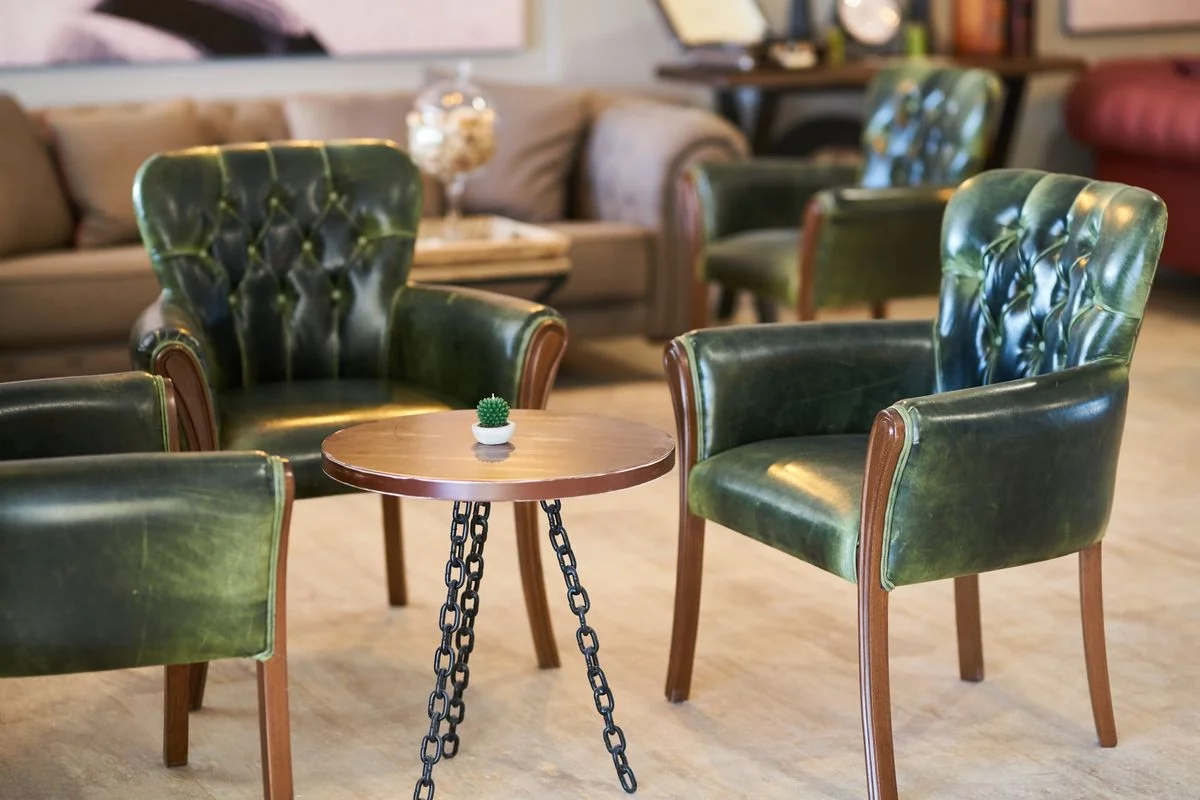
Two chairs angled toward each other with a small table between them create a conversation nook that feels intimate without needing a large sofa. This works beautifully in awkward corners, bay windows, or the far end of an open-plan space. Armless or slim chairs keep the nook light and easy to move. Tip: add a floor lamp behind one chair, which defines the nook as its own zone and gives you a reading spot in the evening.
Two chairs work best when they face each other at a slight angle rather than directly opposite, which feels less formal and leaves a clear path into the nook. A round side table suits a two-chair nook better than a square one, because there are no corners to bump into in a tight space. Keep the chairs lightweight enough to move, so the nook can be rearranged when guests arrive and the room needs a different layout.
Space-Saving Furniture Ideas for Small Living Rooms
In a small room, furniture should work twice as hard. Every piece here does at least two jobs or takes up less space than its traditional alternative.
7. Multifunctional Storage Ottoman
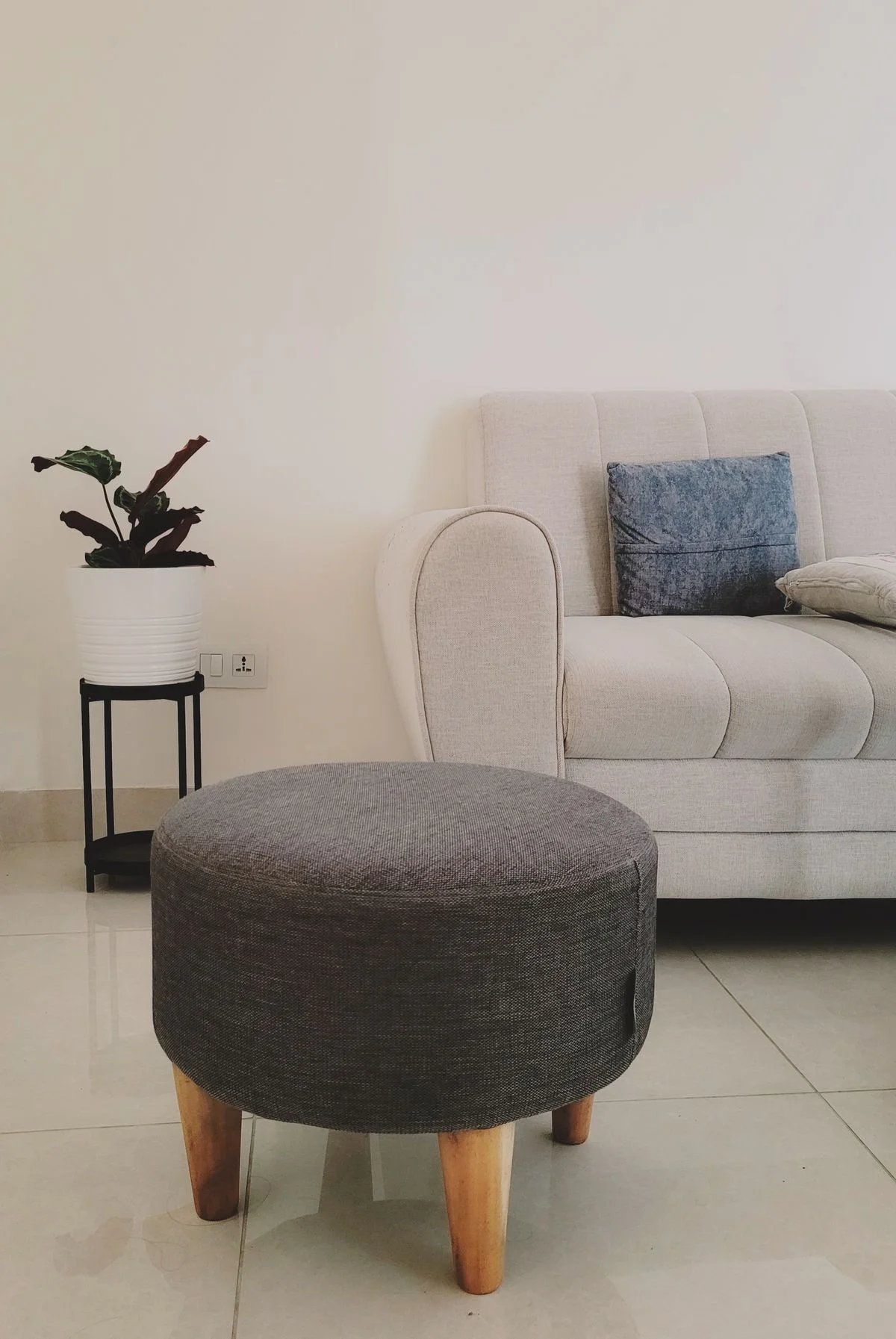
A storage ottoman is a footrest, an extra seat, a coffee table with a tray on top, and a storage box all in one. Inside you can hide throws, remote controls, magazines, and board games that would otherwise clutter surfaces. Choose one that matches your sofa so it reads as part of the seating rather than an extra piece. Tip: pick an ottoman with a firm, flat top if you plan to use it as a table, because soft, rounded ottomans will not hold a tray steady.
Check the ottoman’s internal depth before buying: a deep box holds throws and board games, but a shallow one suits remotes and magazines better, and a divided interior stops everything sliding into one corner. The lid should stay open on its own while you reach inside, and hinges should close softly rather than slamming. If the ottoman will be used as a table, choose a flat, firm lid and a tray that fits it exactly.
8. Sofa Bed for Overnight Guests
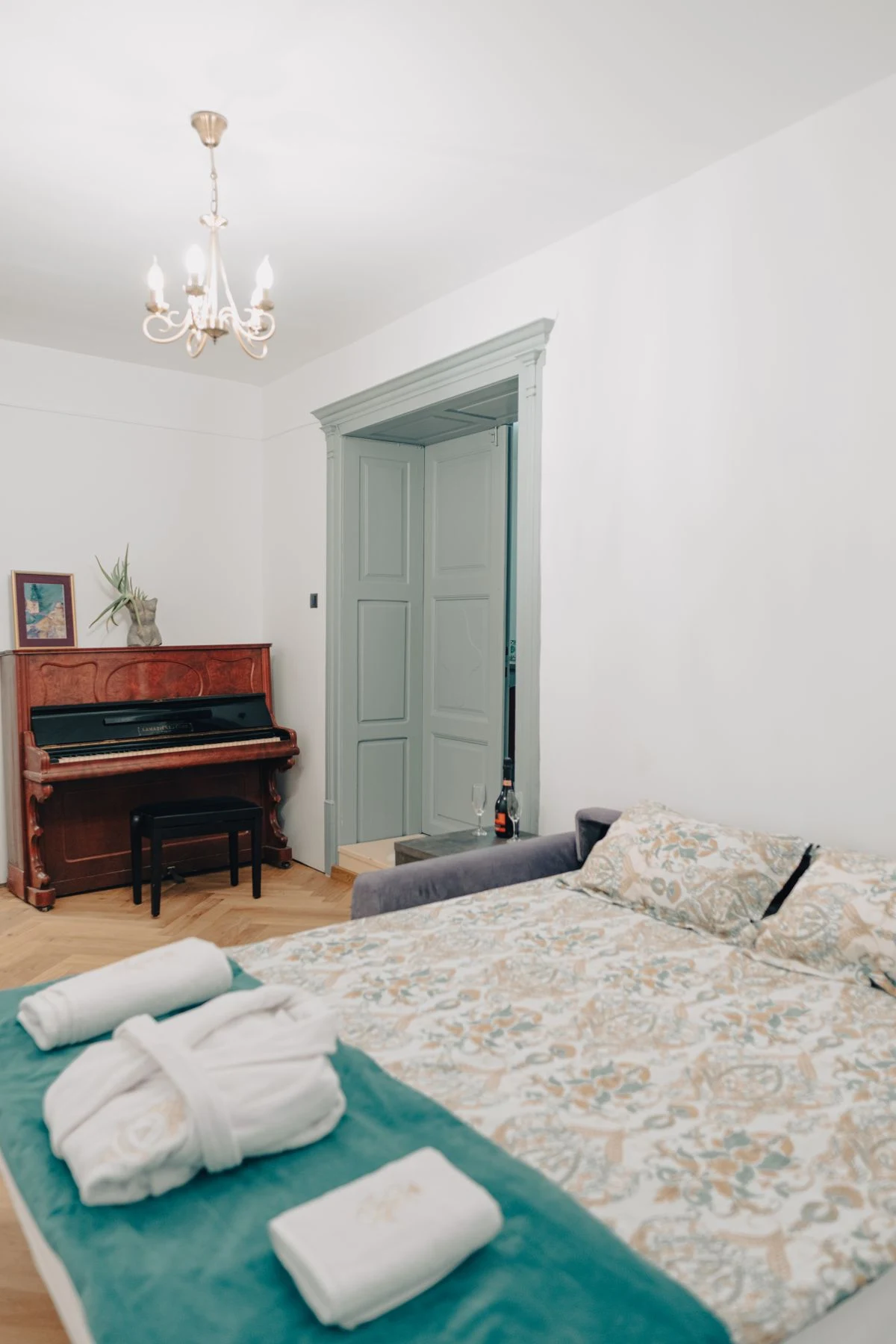
A sofa bed lets a small living room double as a guest room without a spare bedroom. Modern sofa beds are far more comfortable than the old bar-and-spring versions, and many look exactly like regular sofas. This is one of the most practical small living room ideas for apartment dwellers who host friends and family. Tip: test the fold-out mechanism in the store and check the mattress thickness, because a guest bed you dread opening will never get used.
A sofa bed’s folded size is what matters most in a small room: measure the full length when open, including the space a sleeper needs to get in and out of bed, not just the sofa’s footprint. Keep bedding in a nearby ottoman or a vacuum bag on a high shelf, so making the bed does not mean a trip to another room. If guests stay often, a pull-out bed with a real mattress beats a click-clack model, which is fine for occasional naps but tiring for a full night.
9. Foldable or Stackable Side Tables
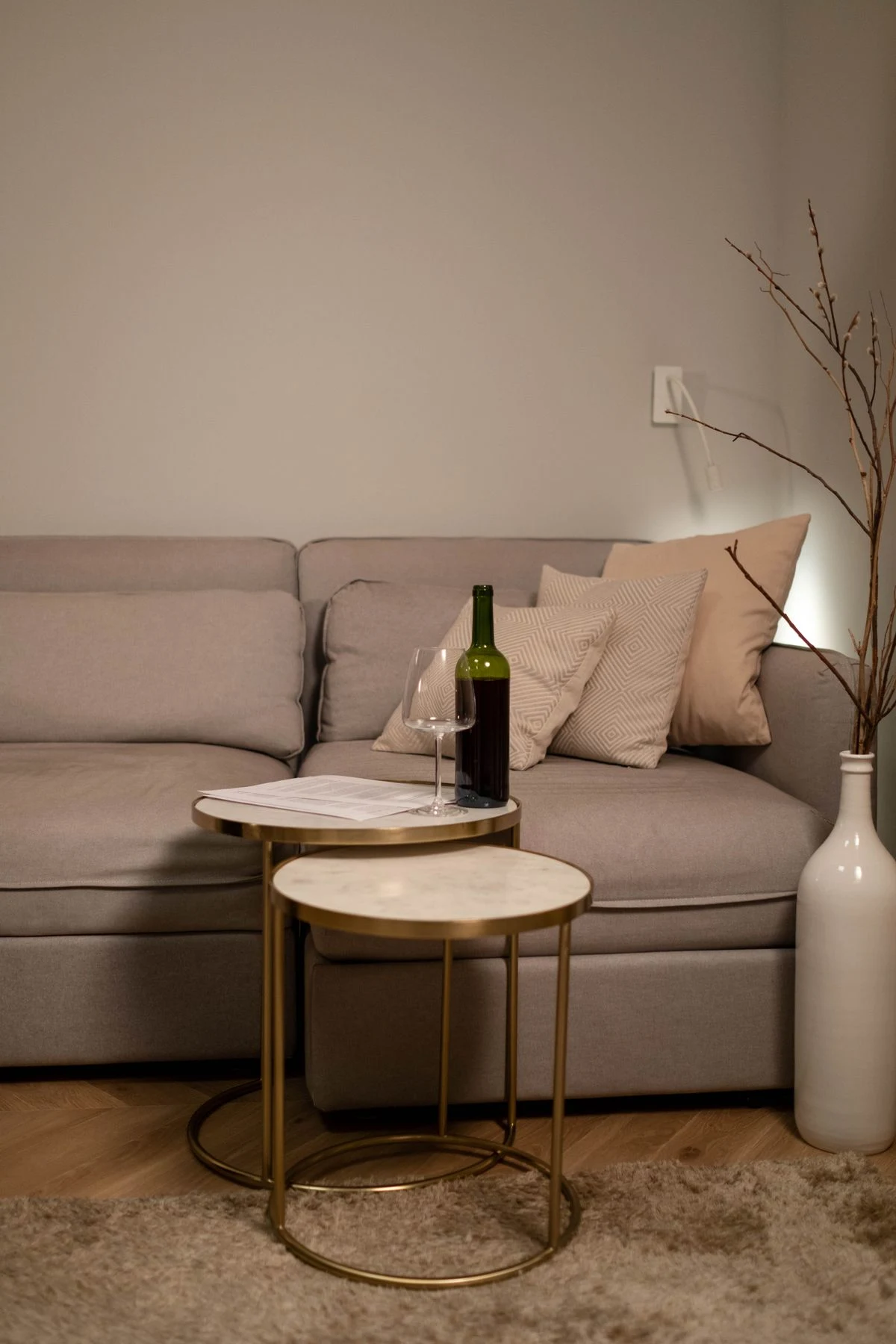
Foldable or stackable side tables give you a surface exactly when you need one and disappear when you do not. Keep one beside the sofa for coffee and books, and bring out extras only when guests arrive. Lightweight tables are easy to carry to another room, which matters when every room is small. Tip: choose tables with a small footprint but a stable base, since top-heavy designs tip over easily in tight spaces.
Stackable tables should stack without wobbling, so test the stack in the store by pressing down on the top table. Look for tables with a lip or a recess that locks each table in place, because smooth tops slide apart when bumped. A set of three small tables in different heights can also serve as a plant stand, a bedside table, or a laptop table in another room, which makes them more useful than a single-purpose side table.
10. Floating Shelves Instead of a Bookcase

Floating shelves hold books, plants, and decor without the bulky box of a bookcase eating into your floor space. They draw the eye upward, which makes the room feel taller, and you can install exactly as many as you need. Stagger them for a casual look or line them up for a cleaner one. Tip: anchor shelves into wall studs, not just drywall, because books are heavy and a falling shelf damages both the wall and everything on it.
Floating shelves need to suit what they hold: books need shelves at least 20 centimeters deep, while plants and small decor suit shallower shelves. Space shelves about 35 centimeters apart vertically if books will stand on them, and leave one shelf partly empty for a plant or a framed photo, which stops a wall of books from feeling heavy. Use a spirit level for every shelf, because even a slight slope is obvious when books lean.
11. Built-In Window Seat With Storage

A window seat turns an underused window wall into seating and hidden storage at the same time. The bench base holds out-of-season blankets, board games, or rarely used items, while the seat itself adds a cozy reading spot bathed in natural light. Add cushions and a throw to make it inviting. Tip: if a built-in is not possible, a low storage bench pushed under the window gives you almost the same benefit for a fraction of the cost.
A window seat cushion should be at least 10 centimeters thick with a firm foam core, or it will flatten quickly and feel like sitting on a hard bench. Choose a washable cover in a fabric that suits the light, since a sunny window fades pale fabrics over time. Add a row of back cushions against the wall for comfort, and keep the seat clear of clutter, because a window seat piled with laundry stops being a seat at all.
12. Tall Vertical Bookshelf Tower
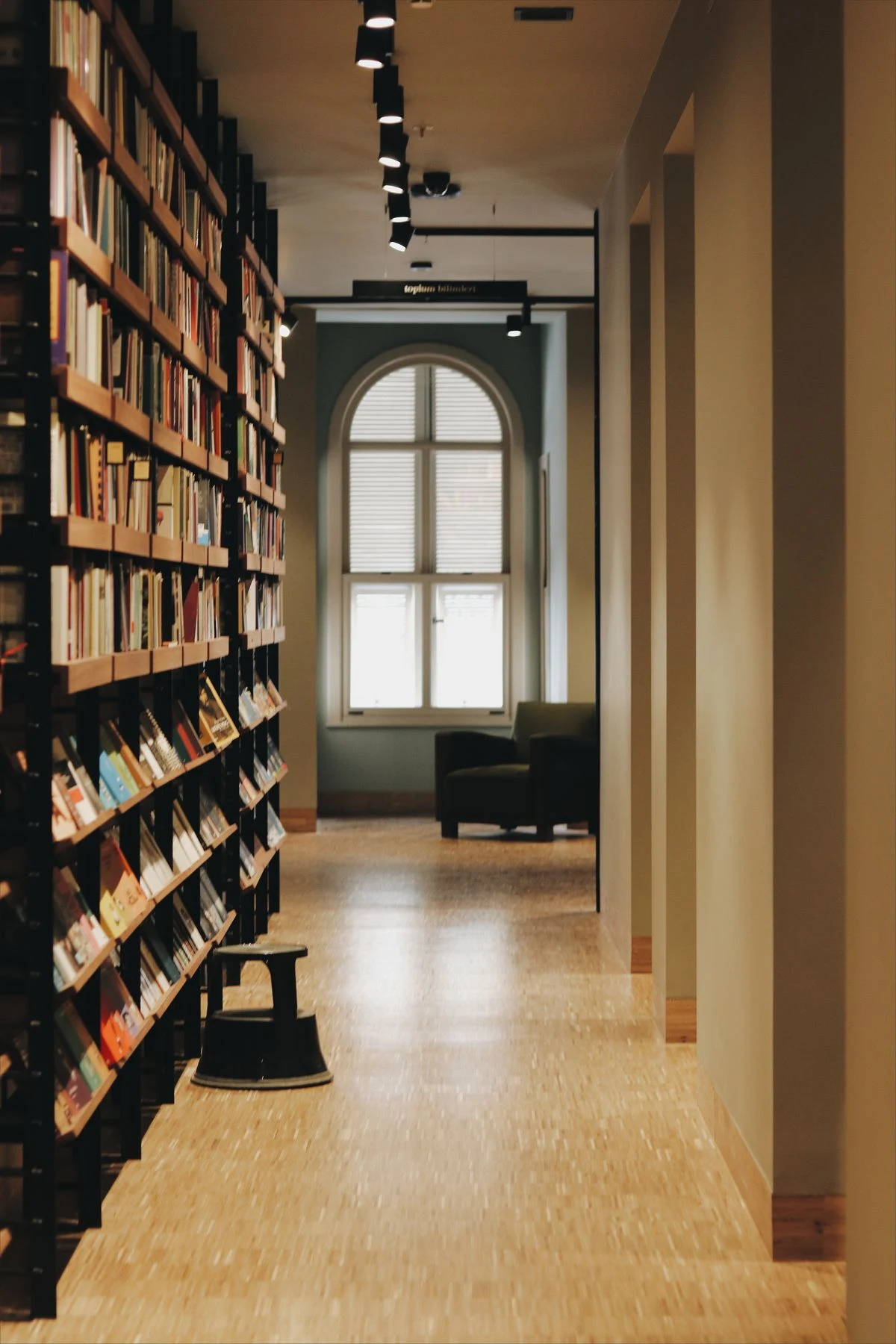
A tall, narrow bookshelf tower uses vertical space that would otherwise go to waste, storing as much as a wide bookcase in a fraction of the floor area. Place it beside the sofa or in a corner where a wide unit would never fit. The height also draws the eye up and makes ceilings feel taller. Tip: put heavier books on the lower shelves and lighter decor up high, both for stability and for a balanced look.
Anchor a tall bookshelf to the wall with an anti-tip strap, because a narrow tower is easier to topple than a wide bookcase, especially in homes with children or pets. Place the tallest, heaviest books at the bottom and lighter paperbacks higher up, which lowers the center of gravity. Leave the top shelf for a trailing plant or a light decorative object, since reaching the very top shelf for books you use often quickly becomes a chore.
Storage, Light and Visual Tricks for Small Living Rooms
Once layout and furniture are sorted, these tricks make the room feel brighter, calmer, and bigger than it is.
13. Basket Storage Under a Console

Baskets under a console table turn an empty gap into hidden storage for toys, cables, magazines, and chargers. They look warm and natural, they are easy to pull out and carry, and they hide clutter without a single door or drawer. Label the baskets if several people share the room. Tip: measure the gap before buying baskets, because baskets that stick out past the console edge look messy instead of tidy.
Choose baskets with handles strong enough to carry a full load, because a basket that tears when lifted is worse than no storage at all. Woven baskets suit a relaxed room, while fabric boxes with lids suit a tidier look and keep dust off their contents. Measure both the width and the height of the console gap, and remember that baskets with a rigid frame keep their shape when pulled out, while soft baskets sag and look messy.
14. Add a Large Mirror to Double the Light
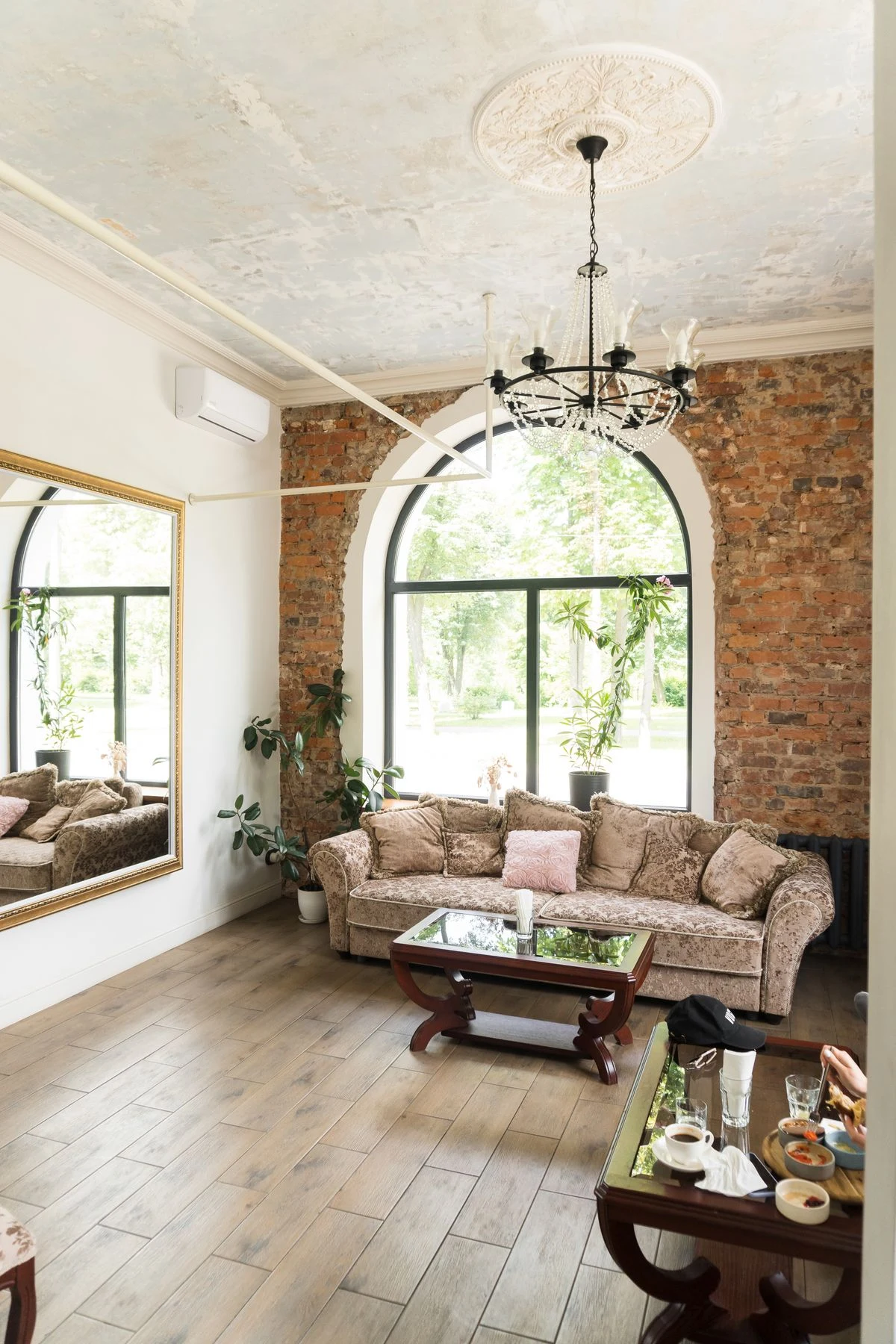
A large mirror is the oldest small-room trick because it genuinely works: it reflects light and the view, making the room feel twice as deep. Place it opposite or beside a window for the maximum effect, and choose a simple frame so the mirror itself does not add visual clutter. Tip: a leaning floor mirror works well behind a sofa or in a corner, and it avoids drilling into the wall altogether.
A mirror’s frame should suit the room, not fight it: a slim black or natural wood frame disappears, while an ornate gold frame becomes a feature in its own right. If the mirror faces a window, check what it reflects at different times of day, because a mirror reflecting a blank wall or a messy corner doubles the clutter instead of the light. Clean the mirror weekly in a small room, since smudges show up immediately when the mirror is a focal point.
15. Keep a Light Neutral Palette

A light neutral palette of whites, creams, and soft grays makes walls recede and the room feel open, which is exactly what a small living room needs. That does not mean boring: layer different textures like linen, wool, and wood to keep the room warm and interesting. Add color through cushions and art that are easy to change. Tip: use one neutral on walls and trim alike, because eliminating the contrast line between them makes the room feel taller.
Warm whites with a hint of cream suit rooms with little natural light, while cooler whites suit bright, sunny rooms, so test paint in your own light rather than trusting a shop card. Keep the same neutral across walls, ceiling, and woodwork to blur the edges of the room, and add contrast through furniture and art instead. If the room feels flat, add texture rather than color: a wool throw, a linen cushion, and a wooden bowl do more than another shade of paint.
16. Use Sheer Curtains, Not Heavy Drapes
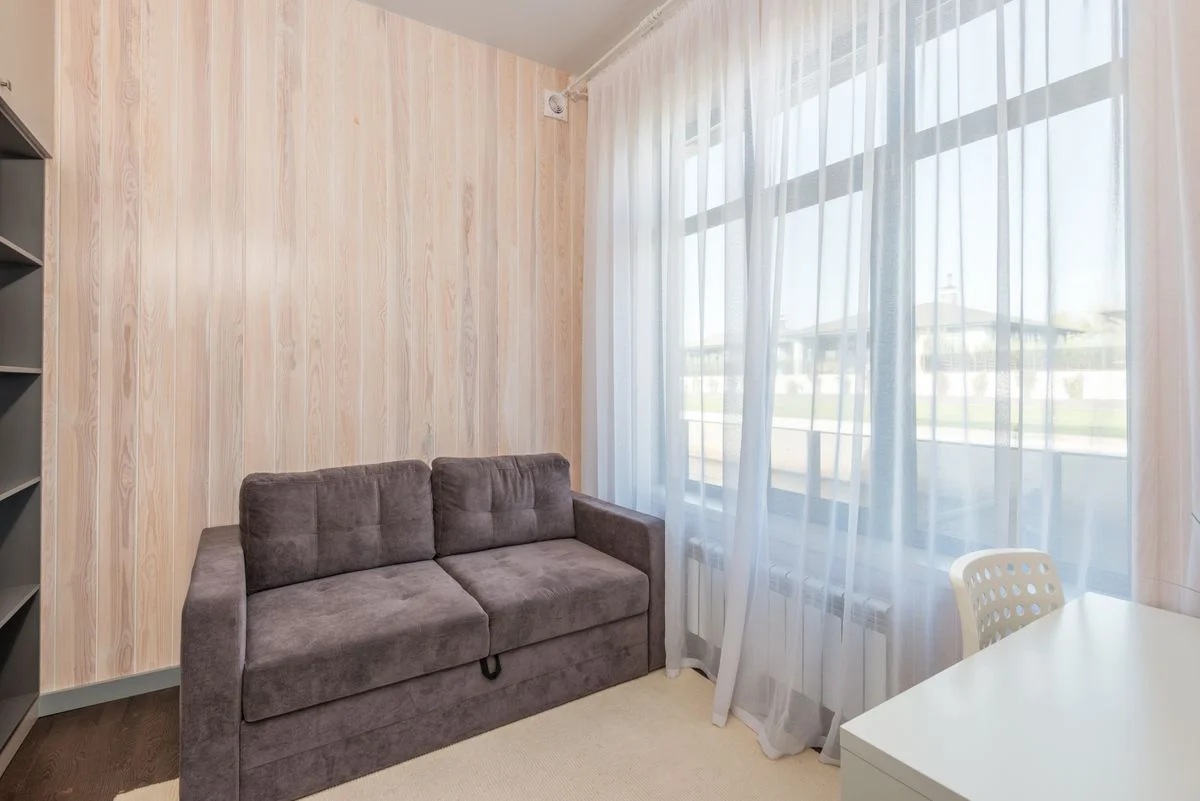
Sheer curtains filter daylight beautifully while keeping the room bright, whereas heavy drapes can swallow a small window and darken the whole space. Sheers also take up less visual weight, so the window wall feels open rather than dressed up. Layer them with a blind if you need privacy at night. Tip: hang sheers from ceiling to floor, which makes the window and the room both look taller.
Sheer curtains need a rod or track that runs smoothly, because sheers snag easily on rough or bent tracks. Choose a fabric with a slight texture, such as linen-look voile, which filters light more evenly than plain polyester voile. For night privacy, add a roller blind behind the sheers that disappears during the day, rather than heavy curtains that would undo the light, airy effect the sheers create.
17. Choose a Glass or Acrylic Coffee Table
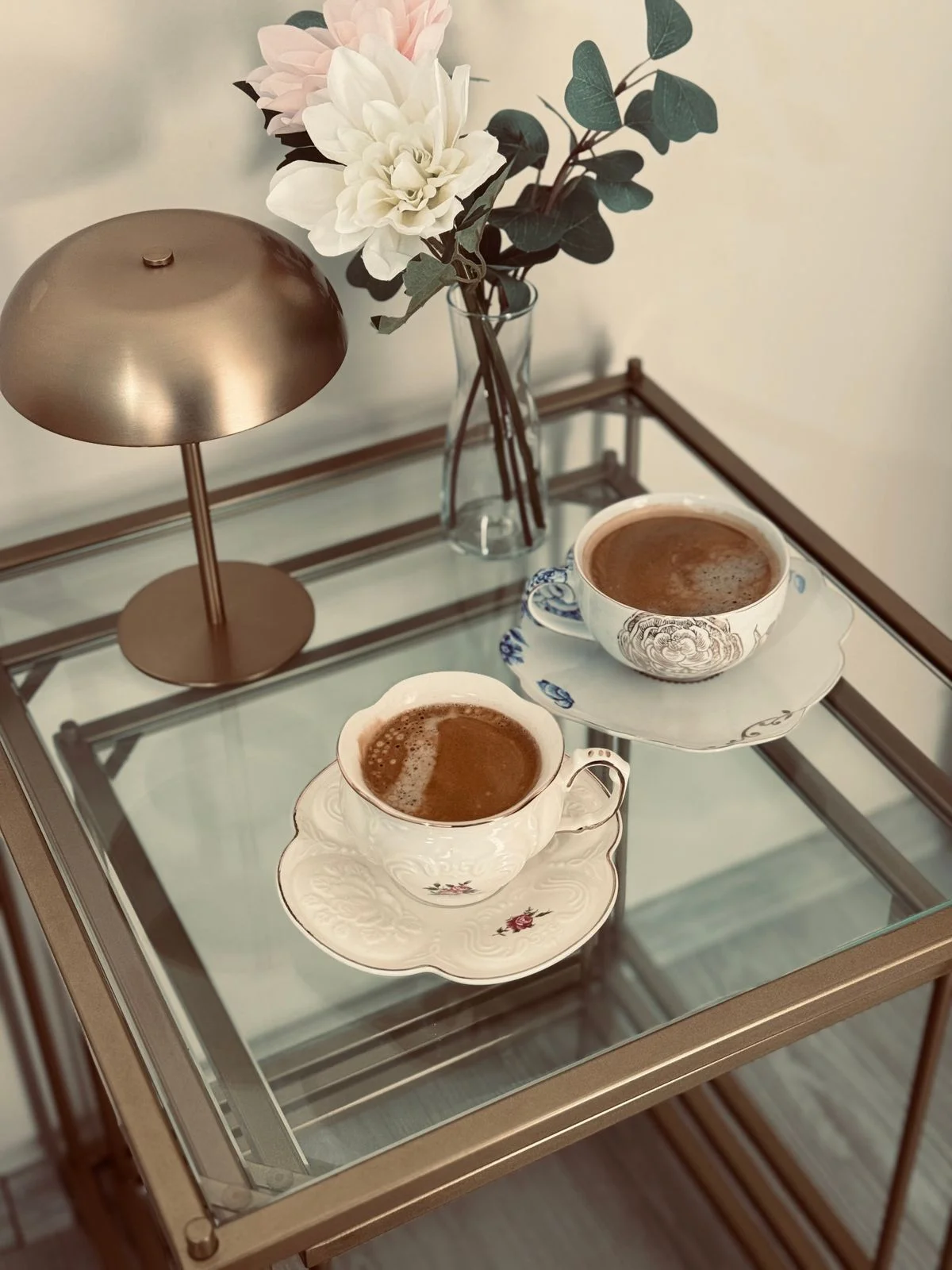
A glass or acrylic coffee table gives you a full-size surface without the visual bulk of a solid table, because you can see the floor and rug right through it. This see-through effect is powerful in a small room, where every solid object adds to the feeling of crowding. Tip: keep the tabletop fairly clear, since a cluttered glass table looks messier than a cluttered wooden one, and wipe it often to keep it invisible.
Glass tables show every fingerprint and dust mark, so keep a microfiber cloth nearby and wipe the top daily if the table sits in a bright spot. Rounded corners suit small rooms better than sharp square corners, which catch hips and shins in tight walkways. If you have small children, a tempered glass top is essential, and an acrylic table is a safer, lighter alternative that gives the same see-through effect without the weight.
18. Define the Zone With a Rug
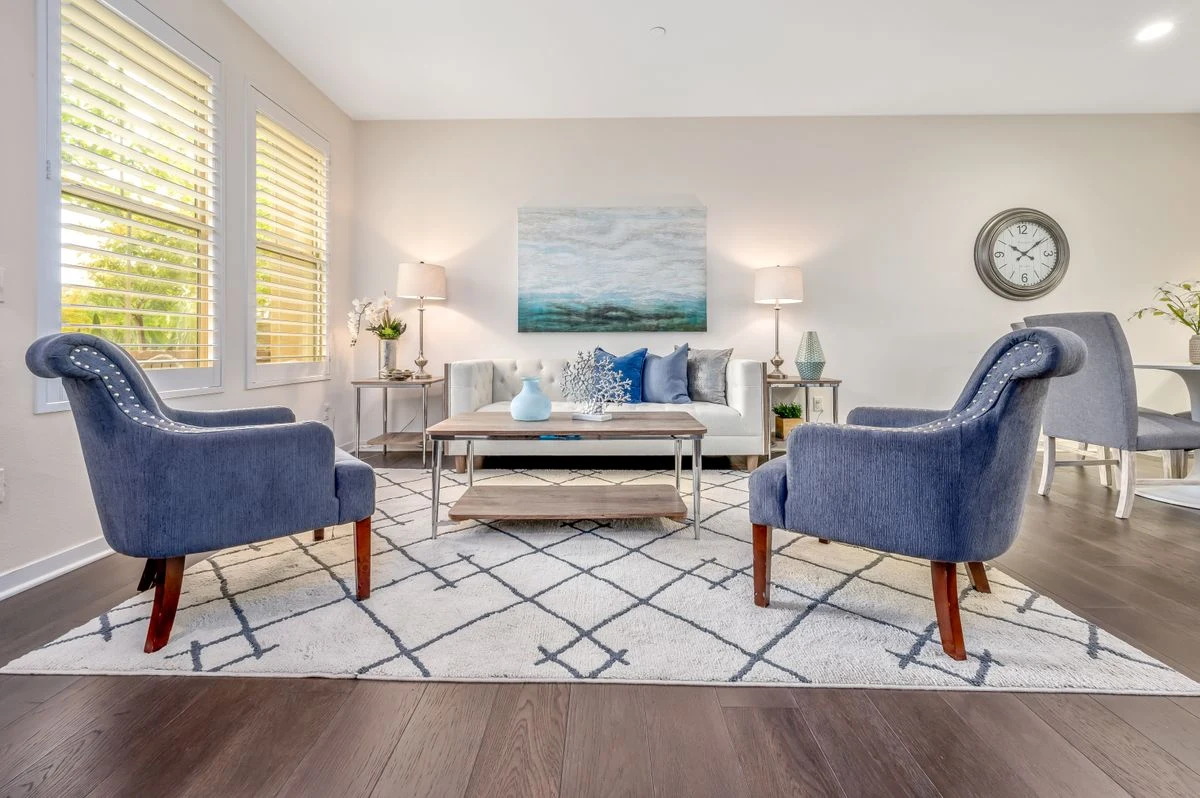
A rug defines the living zone in an open-plan or multipurpose room, telling the eye where the living room starts and ends. Without a rug, small rooms can feel like one undefined space where furniture floats randomly. Choose a rug large enough for the front legs of your seating, and keep the pattern simple. Tip: a rug with a border or subtle pattern adds structure without shrinking the room the way a bold, busy pattern can.
In a studio or open-plan room, the rug should sit under the front legs of the sofa and chairs, but not extend under a dining table or a desk, or the zones will blur again. A low-pile rug is easier to vacuum and to move furniture across than a thick pile rug, and it is less likely to bunch up at the edges in a busy walkway. Choose a rug color close to your floor tone to keep the room feeling open, with pattern in cushions and art instead.
19. Hang Curtains High and Wide

Hanging curtains high and wide, close to the ceiling and well beyond the window frame, makes windows look much larger than they are. The eye follows the curtain line upward, which makes the ceiling feel higher and the whole room feel grander. This trick costs nothing extra, just a longer curtain rod. Tip: use curtains that just kiss the floor, because puddling fabric eats floor space and collects dust in a small room.
Curtain length matters as much as height: curtains that just brush the floor look tailored, while curtains that stop at the sill make the window look short. Use a rod that extends at least 15 centimeters beyond each side of the window frame, so the curtains can be pulled fully clear of the glass during the day. If the room has radiators under the windows, keep curtains clear of them for safety and to let heat circulate.
20. Keep Walkways Open and Clutter-Free

An open walkway is the single biggest factor in whether a small living room feels comfortable or cramped. Map the path from the door to the sofa and to the kitchen, then keep that route completely clear of furniture, baskets, and shoes. Even a narrow clear path makes the room feel easy to move through. Tip: do a weekly five-minute reset of the walkway, because clutter creeps back into paths faster than anywhere else in the house.
Mark walkways with tape on the floor when rearranging, and walk the route carrying something bulky, like a laundry basket, to test whether the path is truly clear. Furniture corners should sit at least 10 centimeters clear of the walkway, because a corner that just grazes a passing hip will get bumped daily. Keep a small basket by the door for shoes and bags, so the walkway does not become the household’s dumping ground overnight.
21. Put Plants on Shelves, Not the Floor
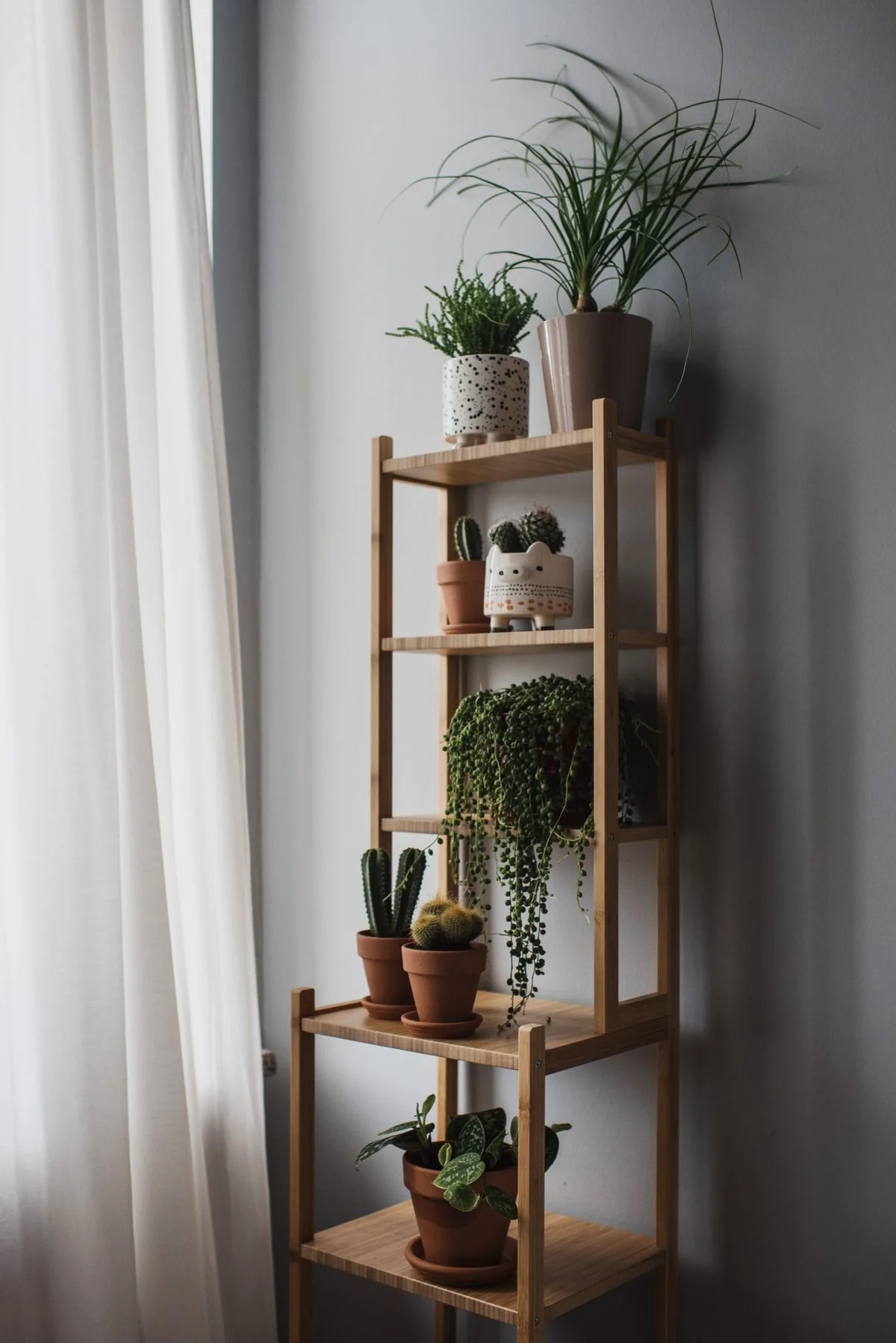
Plants bring life to a small living room, but floor plants eat precious square footage. Putting plants on shelves, hanging them, or trailing them from high perches gives you all the greenery with none of the floor cost. Trailing pothos and small potted herbs are perfect for shelves. Tip: group plants at different heights rather than lining them up, which looks more natural and keeps the display from feeling like a plant shop shelf.
Watering shelf plants needs care, since spills run onto books and furniture below, so use pots with drainage holes and a saucer, and water plants over the sink when possible. Choose trailing plants for high shelves, where their leaves can cascade without blocking light, and upright plants for eye-level shelves. Check that shelves are strong enough for wet soil, which is much heavier than dry soil, and rotate plants monthly so they grow evenly.
How to Choose the Right Small Living Room Ideas for Your Home
Start by measuring the room and sketching the layout on paper, including doorways and walkways, before buying anything. Then list what the room must do: watch TV, host guests, hold books, or all three. Choose multifunctional furniture for the jobs that matter most, and use light colors, mirrors, and sheer curtains to open the space visually. Finally, edit ruthlessly: in a small room, every object should be useful or beautiful, and preferably both.
Frequently Asked Questions About Small Living Rooms
What is the best sofa size for a small living room?
Look for a sofa around 180 centimeters wide or less, with slim arms and raised legs. Measure your room first and leave at least 75 centimeters of walking space around the seating. An apartment-size sofa or a loveseat paired with chairs often fits better than a full three-seater.
How do I make a small living room look bigger?
Use light colors, a large mirror, sheer curtains, and furniture with visible legs so you can see more floor. Keep the layout open, avoid oversized furniture, and choose a rug that defines the seating zone without covering the whole floor. Good lighting, especially layered lamps, also makes a small room feel larger.
Should a small living room have a coffee table?
Yes, but choose the right one: a small, round, or nesting table, or a glass table that does not add visual bulk. An ottoman with a tray can double as a table and storage. Avoid large, dark, rectangular tables that dominate the center of a small room.
How much furniture is too much in a small living room?
If you cannot walk comfortably around the furniture or reach your seat without squeezing past something, there is too much. Aim for one sofa, one or two chairs, one table, and one storage piece as a baseline, then add only pieces that serve a clear purpose. Fewer, better-chosen pieces always beat a crowded room.
Your small living room does not need to be bigger; it needs to be smarter. Pick the ideas from this list that solve your room’s biggest problem, whether that is seating, storage, or light, and start there. Small changes add up fast in a small space. Pin this guide to your small home ideas board so you can find it when you are ready to rearrange, and save your favorite ideas for your next weekend refresh!
Photos: Pexels (free to use).


