

20 RV Storage Ideas That Make Small Spaces Feel Huge on Every Road Trip
RV life is freedom — until you cannot find the coffee mugs, the camp chairs slide around in the back, and every cabinet explodes when you open it. The good news? A small space does not have to feel small. With a few clever RV storage ideas, every inch of your rig can work harder, from hidden compartments under the bed to organizers hanging on the back of a door. Below you will find 20 practical, road-tested ideas that real RVers use to keep their campers tidy, calm, and ready for the next stop.
RV Kitchen and Pantry Storage
1. Overhead Cabinet Organizers
Overhead cabinets are the biggest storage zone in most RVs, but deep cabinets swallow small items. Add stackable wire shelves or small bins inside each cabinet so you can use the full height instead of piling things on top of each other. Group items by use — breakfast things together, cooking things together — and label the front of each bin. The result is simple: you open a cabinet and see everything at a glance instead of digging to the back.

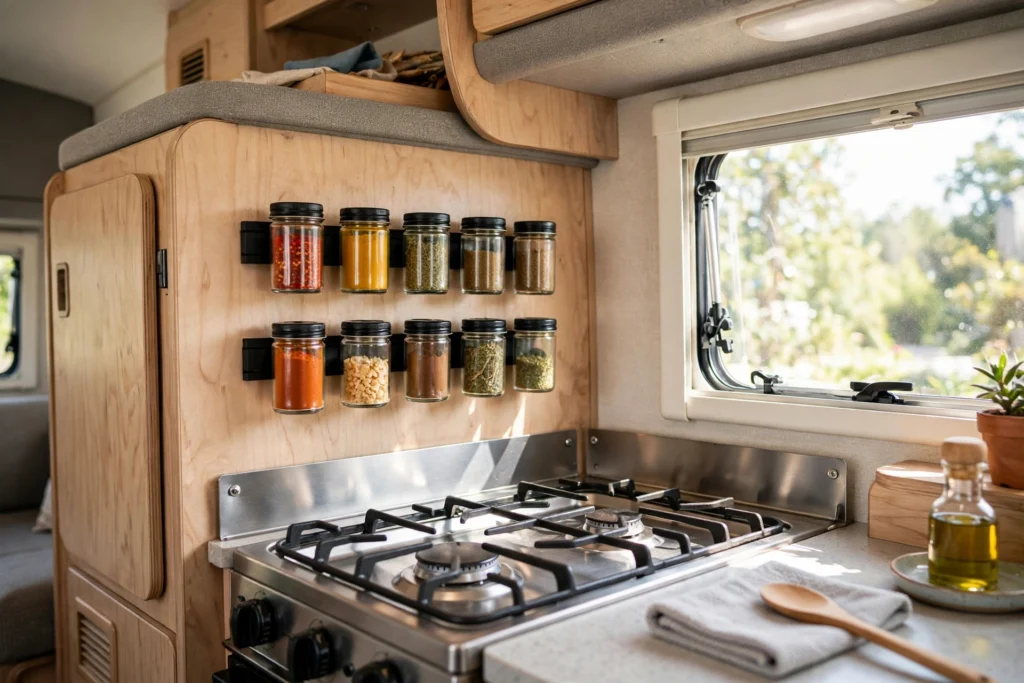
2. Magnetic Spice Rack on the Wall
Spice jars take over a whole cabinet in a small RV kitchen, and they always fall over on bumpy roads. A magnetic strip mounted on the wall or the side of a cabinet holds small metal spice tins neatly in a row, right where you cook. It frees an entire shelf, keeps spices visible, and nothing slides around while you drive. Choose tins with clear lids so you can spot the paprika without pulling every jar down.
3. Collapsible Pantry Bins
Collapsible silicone bins are a quiet hero of RV pantry storage. They hold snacks, rice, pasta, and baking supplies in neat rows, and when a bin empties, it folds flat until you need it again. That flexibility matters in a camper, where the amount of food you carry changes with every trip. Pick bins with handles so you can pull a whole category out at once, and measure your shelves first so nothing sticks out past the door.

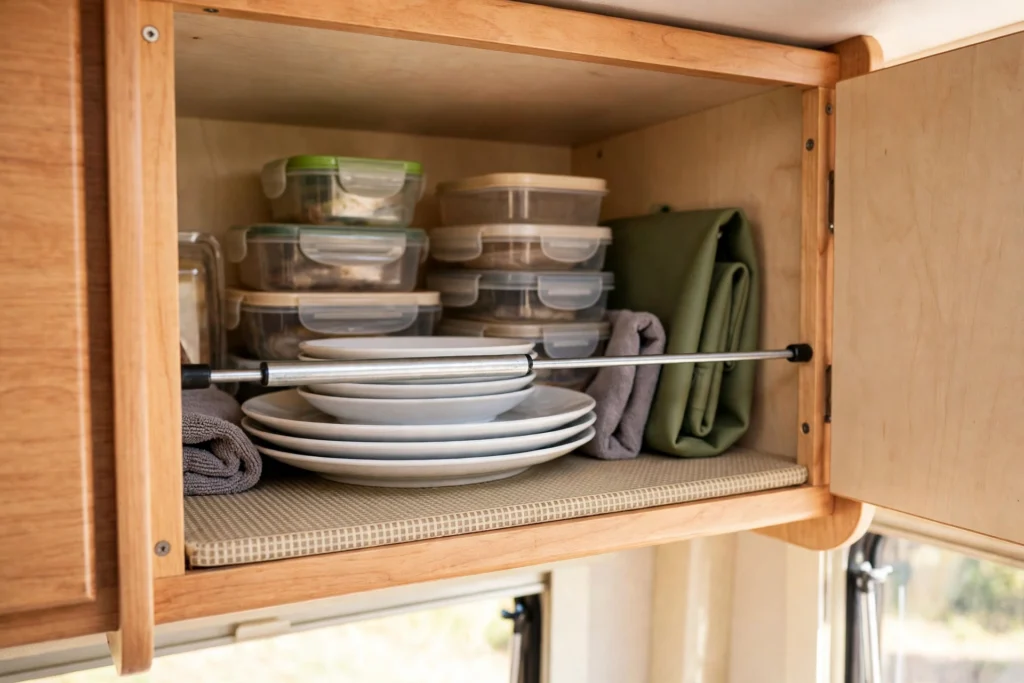
4. Tension Rods to Stop Sliding
Nothing is more annoying than opening a cabinet after a drive and finding everything on the floor. Cheap spring tension rods, placed vertically inside cabinets and the fridge, act like little fences that hold bottles and boxes in place. They cost almost nothing, need no tools, and can be moved in seconds when your layout changes. Use two rods per shelf for tall items, and keep a spare rod or two in a drawer for the day one goes missing.
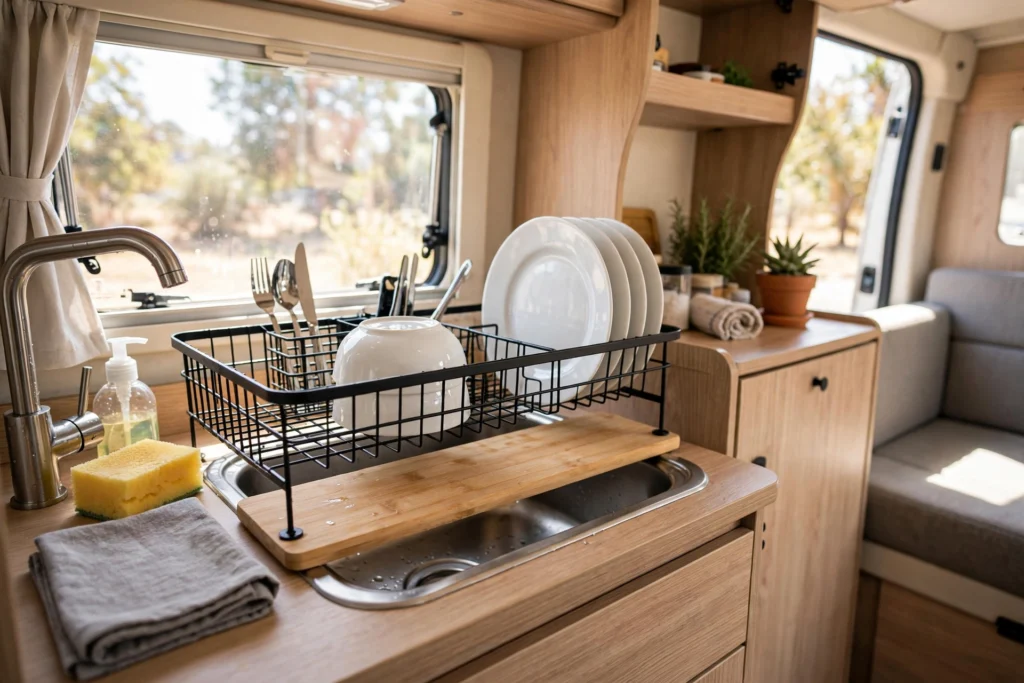
5. Over-Sink Dish Rack and Cutting Board
Counter space is the scarcest thing in an RV kitchen, so anything that uses the sink area is gold. An over-sink dish rack lets washed dishes drip straight into the sink, and a cutting board that fits over the sink adds a whole extra work surface when you prep meals. Together they free the counter for cooking instead of drying. Look for a roll-up rack that stores flat, so it disappears completely when you are done.
RV Bedroom and Closet Storage
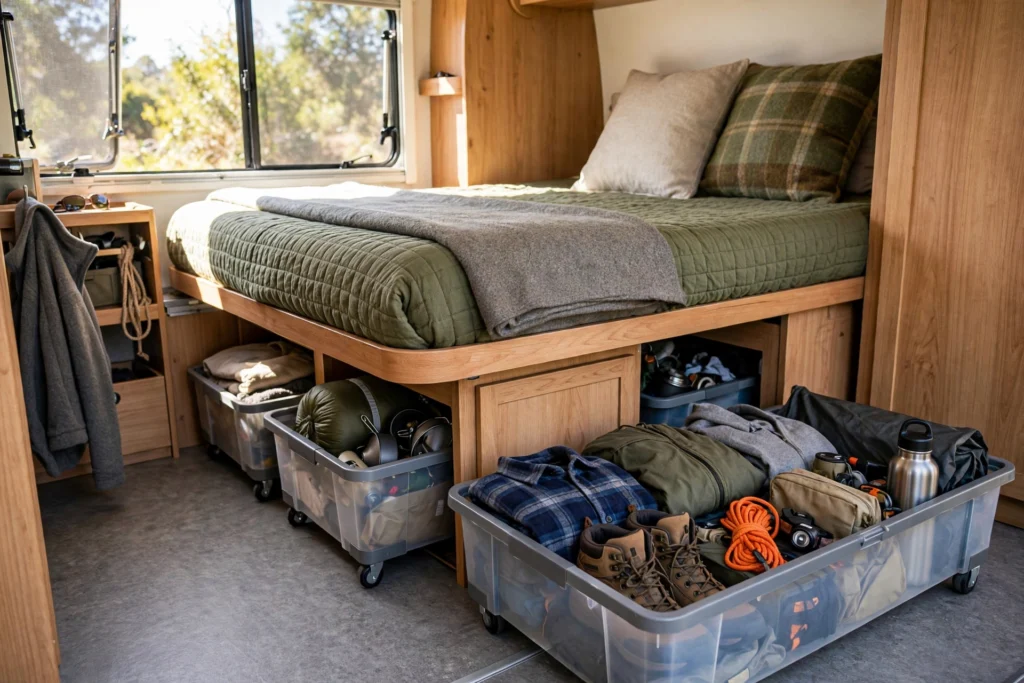
6. Under-Bed Rolling Bins
The space under an RV bed is often the largest single storage area in the whole rig, and it is usually wasted. Low rolling bins turn it into easy-access storage for off-season clothes, extra bedding, and shoes. Because they roll out, you never have to lift the mattress or crawl halfway under the bed to reach something. Measure the clearance carefully, and choose bins with lids so dust from the road stays out of your things.
7. Hanging Shoe Organizer on the Door
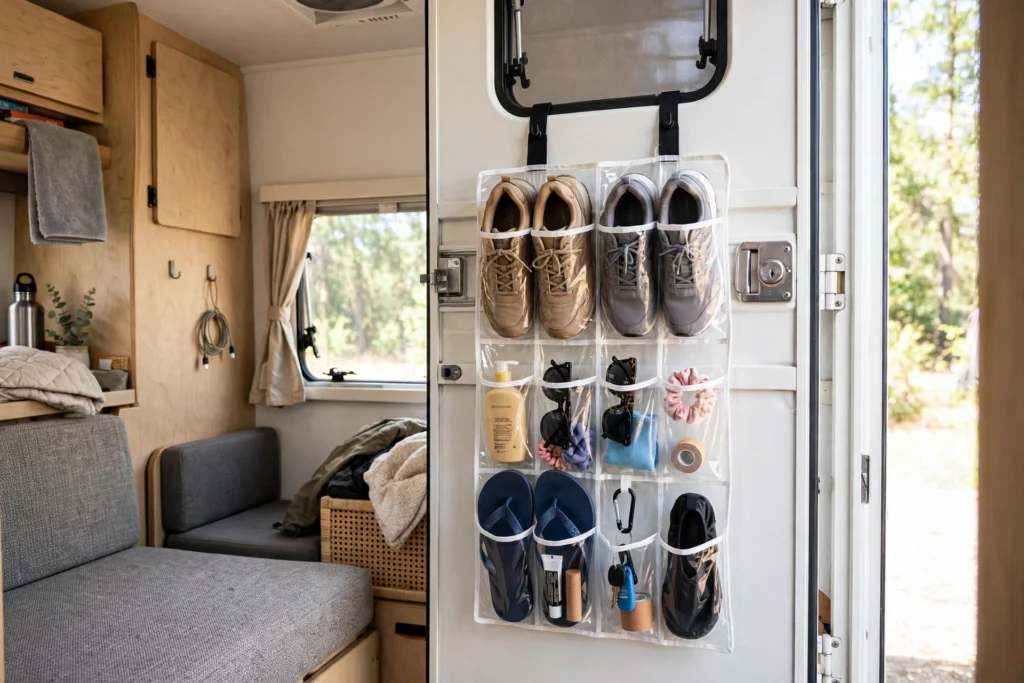
A clear over-the-door shoe organizer is one of the most versatile RV storage ideas ever, and it is not just for shoes. Hang one on the bedroom or bathroom door and its pockets hold toiletries, chargers, sunscreen, tools, and snacks — dozens of small things that otherwise pile up on counters. Clear pockets mean you can see everything instantly. Cut the organizer to fit the door if it is too long, and hang it on the inside so it stays out of sight.
8. Vacuum Bags for Off-Season Bedding
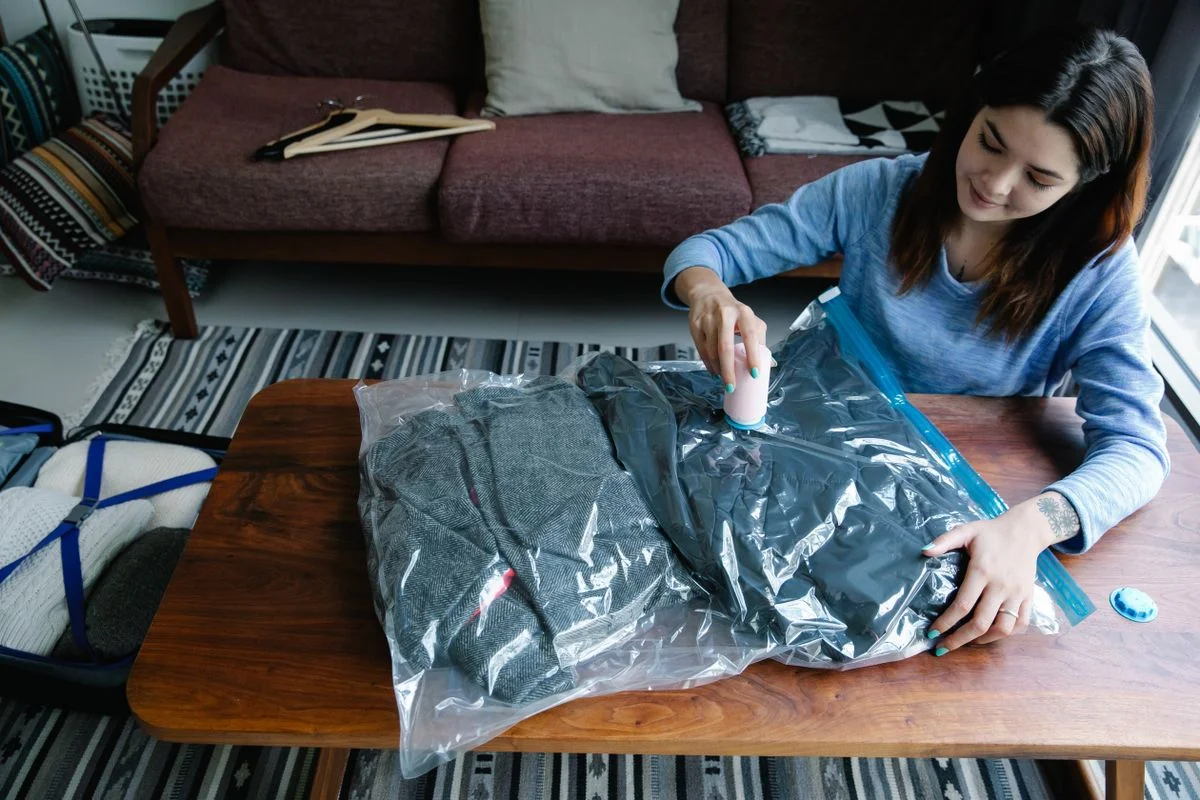
Bulky blankets and winter jackets eat closet space fast, especially on long trips that cross seasons. Vacuum storage bags shrink them to a fraction of their size, so a whole winter blanket fits in a slim flat package under the bed or on a high shelf. They also protect against moisture and dust on the road. Keep one bag for dirty laundry too — it keeps smells sealed until wash day at the campground.
9. Slide-Out Closet Drawers
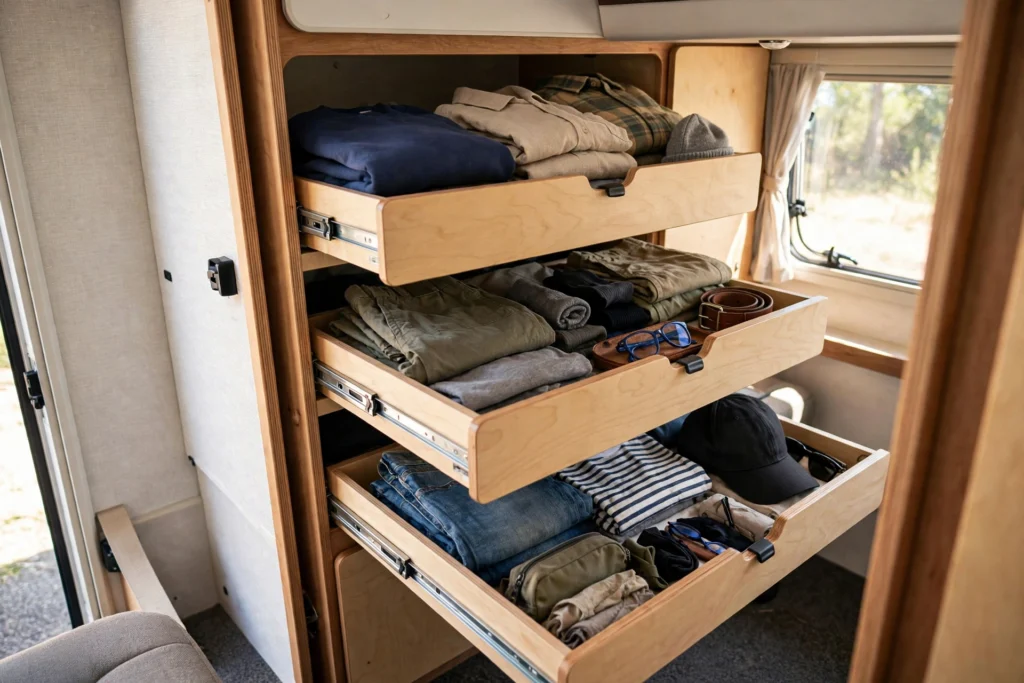
RV closets are deep, narrow, and dark, which means clothes at the back are basically lost. Slide-out drawers or pull-out baskets change that completely: pull the drawer out and every item is visible and reachable. Stack two or three drawers in one closet to separate shirts, pants, and accessories. If your closet has a hanging rod you barely use, replacing the lower half with drawers doubles the usable space overnight.
10. Bedside Caddy for Night Essentials
RV bedrooms rarely have room for a real nightstand, so phones, books, glasses, and water bottles end up on the bed or the floor. A bedside caddy that hangs on the side of the bed or tucks between the mattress and the wall gives all of it a home. Pick one with a few pockets of different sizes, and keep a small flashlight in it too — it is the thing you always reach for at 2 a.m. in a dark campground.

RV Bathroom and Laundry Storage
11. Suction Shelves and Shower Caddy
RV bathrooms are tiny, and drilling holes in thin walls is risky. Suction shelves and a good shower caddy solve the problem without a single screw: they stick to tile or fiberglass, hold shampoo, soap, and razors, and can be moved whenever you want. Choose suction cups rated for wet walls, and press them onto a clean, dry surface for the strongest hold. A mesh caddy also lets everything drip-dry, which keeps mildew away.

12. Laundry Hamper That Fits a Nook
Dirty laundry in an RV has a way of taking over the whole floor. A slim, tall hamper that slides into an unused nook — beside the bed, under a bench, or in a closet corner — keeps it contained and out of sight. A hamper with a removable bag is ideal: on laundry day you just lift the bag out and carry it to the campground machines. If space is really tight, a hanging hamper on the bathroom door works just as well.

13. Towel Bars on Every Door
Towels are bulky, and RV bathrooms have almost no wall space for racks. The fix is simple: mount a towel bar on the back of every door — bathroom, bedroom, even a closet door. Each bar holds one or two towels, spread out so they actually dry instead of staying damp in a pile. Use over-door hooks if you do not want to drill, and assign one bar per person so nobody wonders whose towel is whose.

14. Medicine Cabinet Organizers
An RV medicine cabinet is small, and one bump can turn it into a pile of bottles. Small acrylic bins or a tiny turntable inside the cabinet keep medicines, first aid, and toiletries upright and sorted. A turntable is especially handy in a deep cabinet — spin it and the thing you need comes to you. Keep daily items at the front and rarely used ones at the back, and check expiry dates every few months.

15. Fold-Down Laundry Drying Rack
Drying clothes on the road is a puzzle: campground dryers cost money, and hanging clothes inside a small rig feels impossible. A fold-down rack mounted on a wall or the bathroom door gives you drying space that disappears when you are done — just fold it flat against the wall. Hang it near a vent or window so air moves across the clothes, and use it for swimwear and hand-wash items that should never go in a dryer.

RV Living Area, Garage and Outdoor Storage
16. Dinette Seat Storage
Most RV dinette benches are hollow boxes hiding a surprising amount of space. Lift the seat and you have room for board games, extra blankets, tools, or pantry overflow. Add small bins inside so things do not slide around, and put the items you use least at the bottom. If your dinette seats are hard to lift, add a simple hinge or gas strut — it turns a two-person wrestling match into a one-hand job.

17. Seat-Back Organizers
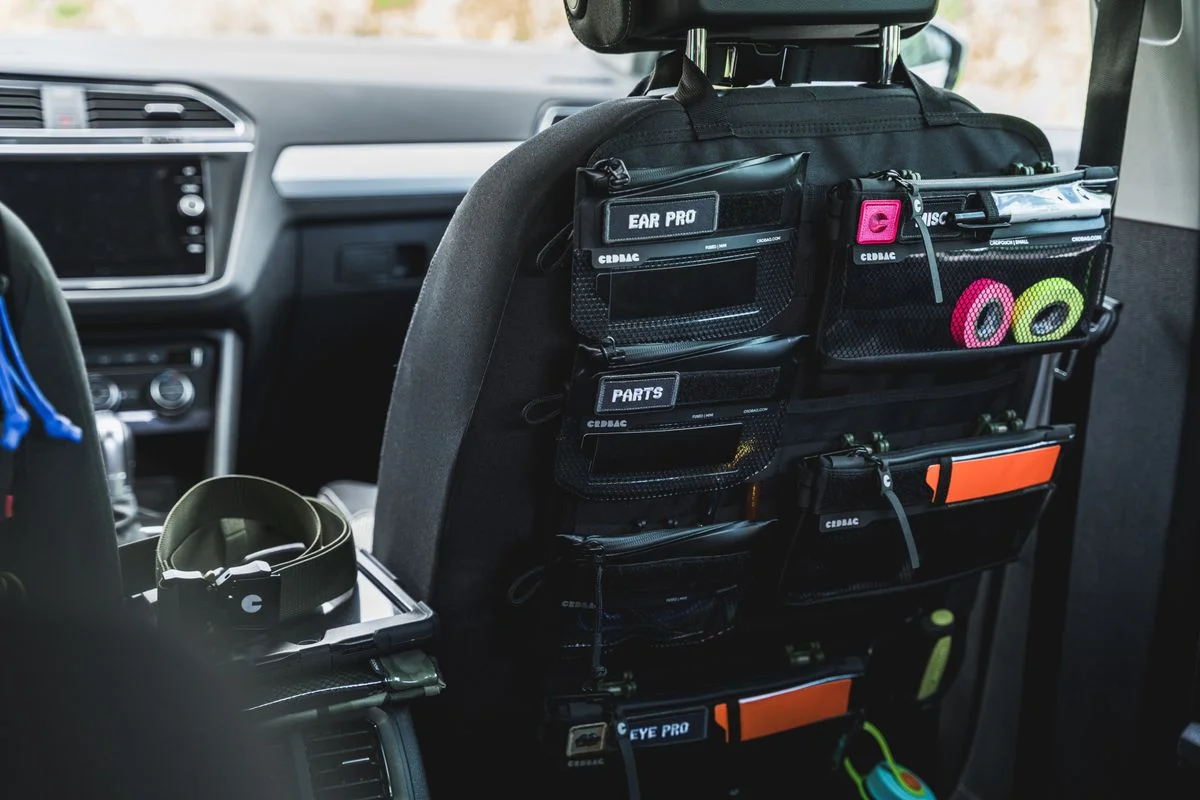
The backs of the driver and passenger seats are dead space in most rigs, but a seat-back organizer turns them into storage for maps, tablets, snacks, water bottles, and kids’ entertainment. They are perfect for road-trip days when everyone wants their things within arm’s reach. Choose one with a mix of big and small pockets, and keep a trash bag in one pocket — it is the easiest way to stop clutter building up on long drives.
18. Pegboard in the Exterior Bay
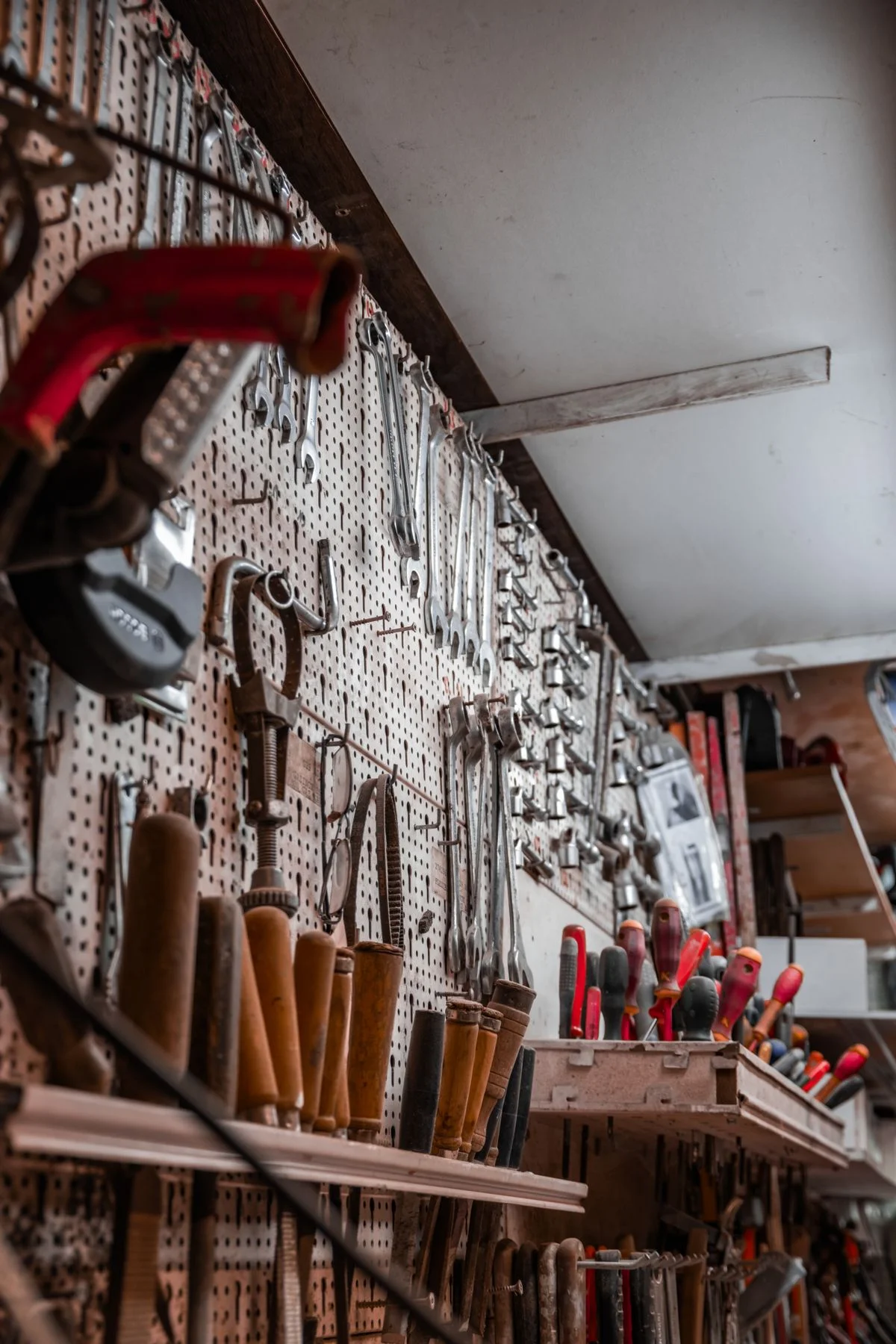
Exterior storage bays become black holes for hoses, tools, and camping gear. A sheet of pegboard on the bay wall, fitted with hooks and small baskets, lets you hang everything in plain sight. You can see what you have, grab it fast, and spot what is missing before you leave a campsite. Pegboard is cheap, light, and easy to cut to fit odd-shaped bays — and it keeps heavy tools from sliding around and damaging the bay.
19. Roof Cargo Box for Bulky Gear
When the inside of the rig is full, the roof is your next storage zone. A lockable roof cargo box holds bulky, light gear — camp chairs, sleeping pads, fishing rods, and seasonal clothes — that would otherwise crowd the living space. Keep heavy items low and inside the rig for safety, and use the roof box only for light things. A waterproof box also protects gear from rain on travel days, which is a real bonus.

20. Rolling Cart Between the Seats
A narrow rolling cart that fits between the cab seats or beside the bed is one of the easiest RV storage upgrades. It holds drinks, snacks, books, and chargers, rolls out when you need it, and tucks away when you do not. Pick a cart with a top tray so small things do not fall off while driving, and measure the gap before you buy — RV aisles vary by an inch or two, and a cart that is slightly too wide is useless.

How to Choose the Right RV Storage for Your Rig
Before you buy a single bin, measure everything: cabinet height, drawer depth, door width, and the clearance under the bed. RV sizes vary wildly, and a perfect organizer for one rig will not fit another. Start with your biggest pain point — the cabinet that explodes, the closet you avoid — and fix that first, then move on. Prefer lightweight, multi-use items over single-purpose gadgets, because every pound matters for fuel and handling. And test your setup on a short drive before a long trip: if something slides, rattles, or falls, you want to find out ten minutes from home, not ten hours.
Frequently Asked Questions
What is the best way to keep RV cabinets from opening while driving?
Use a mix of small fixes: child-proof latches or magnetic catches on cabinet doors, tension rods inside cabinets to hold items in place, and non-slip shelf liners under everything. Together they stop both the doors and the contents from moving, even on rough roads.
How do I store food in a small RV pantry?
Decant dry goods into square, stackable, airtight containers — squares waste less space than round jars. Group food by meal type, label everything, and keep a small “use first” bin for items near their date. Restock at every major stop instead of carrying weeks of food at once.
Can I add storage to an RV without drilling holes?
Yes, plenty of it. Over-door hooks and organizers, suction shelves, tension rods, adhesive hooks rated for the weight, and freestanding carts all add storage with zero drilling. That matters if you rent your RV or want to protect thin walls and resale value.
Where should heavy items go in an RV?
Always low and centered, close to the floor and between the axles. Heavy items stored high up raise the center of gravity and make handling worse, and they become dangerous projectiles in a sudden stop. Keep roof boxes and high shelves for light, bulky gear only.
Small-space living gets easier the moment everything has a place. Pick three ideas from this list, try them on your next trip, and notice how much calmer the rig feels. And if you found an idea you want to try, save this post to your RV board on Pinterest so it is waiting for you when you start organizing — your future self, mid-road-trip, will be very glad you did.
Photos: Pexels (free to use).


