18 Nature Themed Nursery Ideas for a Calm, Beautiful Baby Room
A nature themed nursery can be soft and minimal, dark and woodland-inspired, sunny like a wildflower meadow, or surprisingly modern. That flexibility is part of the appeal. You are not limited to putting a few animal prints above the dresser and calling the room finished. Forests, coastlines, mountain ranges, changing skies, desert landscapes, botanical gardens, and even the colors of a favorite local trail can all become thoughtful starting points.
The most convincing rooms usually borrow more than imagery from nature. They use texture, proportion, light, wood grain, muted color, and organic shapes to create atmosphere. A sage wall feels very different beside pale oak than it does beside dark walnut. A dramatic forest mural can make a wide room feel wonderfully immersive, yet overwhelm a tiny nursery if every remaining surface is equally busy. Those small design decisions matter.
The ideas below approach nature from 18 distinct directions, with practical ways to adjust each concept for different room sizes, lighting conditions, budgets, and decorating styles.
1. Create Depth With a Misty Woodland Mural

A forest mural gives a nature themed nursery an immediate sense of place, but the room feels more sophisticated when the mural is treated as scenery rather than decoration. Choose a misty landscape with softened pine, cedar, or oak silhouettes instead of a cartoon-heavy print, then let the rest of the room stay quiet.
A light oak crib, oatmeal rug, warm white curtains, and one deep moss accent create enough contrast without competing with the wall. In a small nursery, place the mural on the wall you see first from the doorway; keeping the remaining walls pale prevents the trees from visually closing in.
Larger rooms can handle a darker, more immersive forest scene, especially if there is strong daylight. Repeat only two or three mural colors elsewhere through storage baskets, a washable rug, or framed art. The restraint matters. Too many foxes, bears, branches, and woodland signs can turn a calm forest concept into a themed gift shop.
2. Let a Wildflower Meadow Keep the Room Light

A meadow-inspired nursery works beautifully when you want nature without the heaviness of a full forest palette. Start with a warm cream or pale butter wall color and bring in wildflowers through one oversized artwork, a removable wall decal, or a softly illustrated wallpaper panel.
Dusty lavender, muted cornflower blue, faded apricot, and leaf green can appear in tiny amounts against a mostly neutral room, creating the feeling of flowers scattered through grass rather than a rainbow of competing accents. Light-toned wood furniture keeps the palette airy, while a flatwoven wool-look rug or washable cotton rug adds grounded texture.
This idea is especially useful for compact rooms because the visual elements can stay delicate and open. If the nursery receives little natural light, avoid muddy olive walls; they can make the space feel dim. Instead, keep the envelope light and use deeper green on a dresser, basket, or lamp base. The final mood should feel breezy, sunlit, and slightly imperfect, like a meadow rather than a floral showroom.
3. Build a Modern Botanical Nursery Around Sage Green

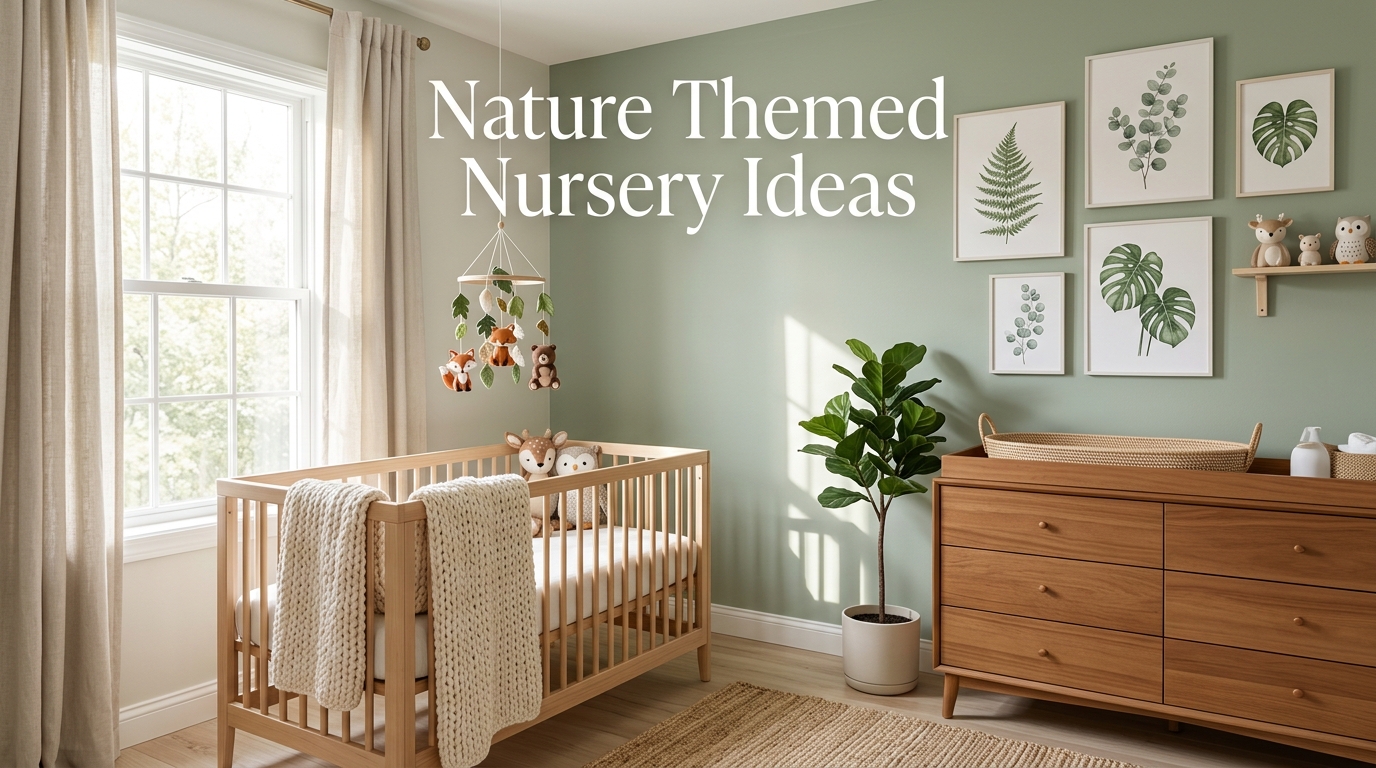
For a nursery that feels organic but still modern, build the room around sage green and restrained botanical details. Sage works best when it is paired with materials that have visible texture: pale ash or oak, woven cane, linen-look curtains, boucle upholstery, and baskets with a natural fiber appearance. Instead of covering every wall in leaves, choose one botanical focal point, such as a large-scale fern print behind the dresser or a set of pressed-leaf-style illustrations on an adjacent wall.
Keep the crib wall quieter so the room does not become visually busy around the sleep zone. In narrow nurseries, painting only the lower portion of the walls sage can make the space feel grounded without reducing brightness; a warm off-white above it lifts the eye. Brass, aged bronze, or matte black hardware can sharpen the otherwise soft palette. The trick is avoiding too many greens at once. One muted sage, one deeper forest note, and natural wood usually create more depth than five slightly different green accessories.
4. Stretch the Room Visually With Mountains and Sunrise Tones

A mountain-and-sunrise nursery brings outdoor adventure into the room without relying on animal motifs. Use layered peaks in muted clay, dusty blue, soft taupe, and foggy green, then add a simple sun shape in ochre or warm beige. A painted mural can look especially good on a wide wall because the horizontal mountain lines visually stretch the room; removable decals offer a less permanent version for renters.
Pair the landscape with a medium-tone wood crib and a dresser that has clean, unfussy lines so the scenery remains the focal point. Textiles should echo the terrain rather than literally illustrate it: think a nubby cream rug, a rust throw over the parent chair, or subtle striped curtains.
In rooms with low ceilings, keep the highest peak below the ceiling line and leave breathing room above it, which makes the wall feel taller. Avoid stacking mountain shelves, mountain lamps, mountain bedding, and mountain prints together. The landscape already tells the story. Everything else only needs to support its color, texture, and quiet sense of distance.
5. Borrow the Soft Colors of Coastal Dunes

Coastal nature does not have to mean anchors, whales, and bright nautical stripes. A softer dune-inspired nursery can feel calm for years by borrowing its palette from sand, sea grass, weathered wood, and pale water. Begin with warm ivory walls, a natural or whitewashed crib, and linen-look curtains in flax or soft stone.
Add muted blue-green through a rug, a small dresser, or one panoramic print of dunes and horizon. Woven baskets and a cane-front cabinet bring in the dry, fibrous texture of beach grasses without making the room feel overtly themed. This palette is particularly effective in bright rooms, where natural light can give pale neutrals more dimension; in darker rooms, introduce a little extra contrast with driftwood brown or deep teal.
Keep shell collections and tiny decorative objects on adult-height shelving rather than scattering them across accessible surfaces. The best version feels like an early walk by the water: hazy, quiet, textural, and much more relaxed than a conventional blue-and-white seaside nursery.
6. Warm Things Up With a Desert Landscape Nursery

A desert nursery offers a warmer take on nature, using sun-baked color instead of woodland green. Terracotta, muted adobe, sand, camel, dusty rose, and a small amount of cactus green create a grounded palette that works with both modern and bohemian furniture. Rather than covering the room with cactus prints, make one desert landscape the hero: a painted horizon, an arched removable decal, or a framed photograph-style illustration of distant mesas.
A walnut or honey-toned crib works especially well because richer wood holds its own against warm walls. Balance all those earthy shades with cream upholstery and a pale rug so the room still feels fresh. In very small nurseries, choose one terracotta accent wall instead of wrapping the entire room in a mid-tone color.
Curved shapes—an arched mirror over the dresser, rounded baskets, a globe lamp—soften the sharper geometry of desert imagery. Skip overly literal cowboy accessories unless that is the intended theme; the desert landscape is stronger when it stays quiet, sculptural, and sun-washed.
7. Take the Nature Theme Onto the Ceiling

Looking upward can create the most memorable nature moment in a nursery. A pale canopy of painted branches, drifting leaves, or soft cloudlike treetops on the ceiling gives the room an immersive feeling while leaving the walls relatively calm. This approach suits nurseries where the furniture already fills much of the wall space, because the decorative surface is overhead rather than competing with storage, windows, and a dresser.
Keep the ceiling design lighter than the wall color if the room is small or has standard-height ceilings; dense dark foliage can make the ceiling feel lower. In a larger, bright room, a deeper olive or blue-green canopy can be dramatic, especially when the walls remain warm white. Repeat the ceiling pattern subtly with one rug color or a small piece of artwork instead of matching it everywhere.
For renters, peel-and-stick ceiling decals can create a similar effect with less commitment. Visually, the room gains depth without needing lots of objects, which is useful when you want a nature theme that feels enveloping but uncluttered.
8. Try a Quiet Pond-and-Reed Nursery

A pond-and-reed nursery is a less predictable nature theme, and that is exactly why it can feel special. Build the palette from watery blue-gray, muted green, cream, and a touch of warm brown, then use reeds, lily pads, dragonflies, ducks, or frogs sparingly as supporting details. A low, horizontal artwork above a dresser can suggest the edge of a pond, while a textured rug in a soft ripple or abstract organic pattern brings movement to the floor. Pale oak furniture keeps the room light; darker walnut creates a moodier, storybook version.
This concept works especially well in rooms with soft northern light because the cooler colors already suit that atmosphere, but add warm lamps and natural woven textures so the room does not become chilly. Storage can stay practical with lidded baskets and low drawers rather than open displays full of small themed objects. Avoid making every accessory an animal character. A few tiny creatures feel charming; too many can overwhelm the quieter water-and-grass mood that makes this nursery direction distinctive.
9. Keep It Airy With a Scandinavian Birch Forest

Birch trees are a natural fit for a Scandinavian-leaning nursery because their pale trunks introduce pattern without making the room visually heavy. Use a simple birch-grove wallpaper or hand-painted vertical trunks on one wall, then keep the furniture clean-lined in white, pale oak, or a combination of both.
The repeated vertical lines can make a low-ceiling room feel taller, particularly when the pattern starts at the baseboard and continues almost to the ceiling. Layer in oatmeal, stone, and soft gray textiles, then add a tiny amount of charcoal for definition through frames, a floor lamp, or cabinet pulls.
This is a useful nature theme for parents who prefer minimal rooms but still want more character than plain neutral walls provide. Warm lighting matters, since too much cool gray can flatten the birch palette and make it feel sterile. Bring softness through a thick rug beside the glider and a tactile basket near the changing area. The result should feel crisp but not cold—quiet woodland scenery filtered through a simple Nordic lens.
10. Give Botanical Decor a Vintage, Collected Feeling

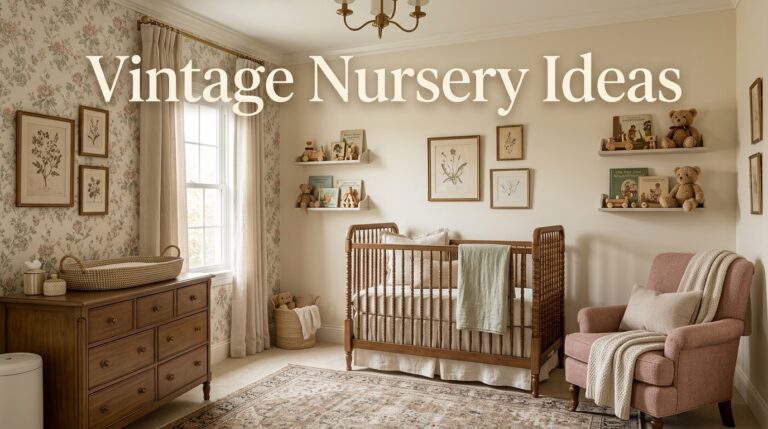
A vintage botanical nursery feels collected rather than themed, which makes it especially easy to carry into the toddler years. Start with warm ivory, muted olive, tobacco brown, and faded floral tones, then layer in botanical prints that resemble old field-guide illustrations. Frames in dark wood or antique-brass finishes add age and contrast, while a spindle crib or traditional dresser gives the room a slightly nostalgic shape.
If wallpaper is part of the plan, choose a small or medium botanical repeat and use it on one wall, inside a closet, or above simple wall paneling so the pattern has structure around it. This style works well in older homes with trim and architectural detail, but a plain modern room can handle it too if the furniture remains streamlined.
Avoid making the nursery look like a formal sitting room; one playful element, such as a mushroom-shaped lamp or a soft animal illustration, keeps it young. The appeal comes from the mix of leafy detail, worn-looking color, warm wood, and a little storybook charm.
11. Go Moody With an Enchanted Forest Palette

For a darker, cocooning nursery, an enchanted-forest palette can be striking without becoming gloomy. Deep pine, blue-green, charcoal, and warm walnut create the background, while cream upholstery, pale bedding on the parent chair, and light flooring keep the room from feeling closed in.
Use the darkest color on one or two walls rather than automatically painting every surface, especially if the nursery has a small window. A mural with layered trees disappearing into mist can add depth; the distant, softened imagery keeps a dark wall from reading as a flat block of color.
This look suits medium or larger rooms particularly well, but a compact nursery can borrow the same mood through a dark dresser, forest-green curtains, and moody artwork against lighter walls. Add metal sparingly—aged brass or bronze feels warmer than bright chrome here. Decorative mushrooms, moths, or woodland creatures can appear in one or two places for a magical note. What makes the room successful is contrast: shadowy forest color balanced by enough pale, touchable texture to feel comforting.
12. Make a Safari Nursery Feel Earthy, Not Cartoonish

A safari-inspired nursery can still belong in a nature-focused scheme when the emphasis stays on landscape, texture, and wildlife rather than cartoon characters. Build the room around dry-grass beige, acacia green, warm brown, and sun-faded clay. Choose one large wildlife artwork or a subtle savanna mural with distant trees, then use animal references more quietly through a single woven wall piece, a book collection, or storage basket.
Rattan, cane, light wood, and tightly woven textiles reinforce the earthy environment while keeping the palette coherent. In a small nursery, leave at least one major wall mostly plain so large animal imagery does not crowd the space. A simple cream glider and pale rug can also break up the browns.
This theme adapts easily to gender-neutral decor because the color story comes from landscape rather than traditional nursery hues. Avoid faux-fur overload and too many competing animal prints. Zebra, leopard, giraffe, elephant, and lion motifs all at once can feel chaotic; one or two species create a stronger visual narrative.
13. Combine Mountain Freshness With Alpine Cabin Warmth

An alpine nursery combines the freshness of mountain scenery with the warmth of a small cabin. Start with a restrained palette of pine green, creamy white, warm oak, and muted red-brown, then use one scenic feature—perhaps a watercolor-style mountain range or framed vintage ski-landscape art—to establish the setting.
Wood is important here, but balance it carefully. A wood crib, wood dresser, wood shelves, and wood-clad wall can become visually heavy, so mix solid timber tones with painted furniture or pale walls. A wool-look rug, checked or striped curtain fabric, and a soft upholstered chair provide the cozy side of the cabin idea without relying on novelty decor.
This approach works especially well in colder climates or rooms with limited winter light, where warm finishes prevent the greens from feeling stark. If the room is narrow, run the mountain artwork horizontally to emphasize width. Keep antlers, ski signs, and lodge slogans to a minimum. The nursery should suggest crisp air and timber warmth, not a miniature themed resort.
14. Look Down to the Ferns, Moss and Forest Floor

A forest-floor nursery looks at nature from a lower, more intimate angle: ferns, moss, mushrooms, acorns, tiny woodland flowers, and textured earth tones. The palette can stay surprisingly sophisticated with mushroom beige, moss green, bark brown, and creamy white. Use a detailed fern or mushroom print on the dresser wall, then choose plain surrounding walls so the smaller-scale imagery has somewhere to breathe.
Rounded furniture and low woven baskets echo the soft organic shapes of the theme, while a nubby rug adds the feeling of texture without requiring literal moss-green everything. This direction is particularly good for a cozy nursery with average or low light because the colors can feel intentionally earthy rather than accidentally dim. Still, include pale surfaces around the window and ceiling to reflect available light.
For a more minimal version, skip character-style mushrooms and use scientific botanical illustrations instead. For a whimsical version, add one sculptural mushroom lamp or felted decorative piece on an adult-managed shelf. The charm comes from detail, but editing keeps that detail from becoming clutter.
15. Open Up a Small Nursery With a Soft Sky Theme

Sky-inspired nature decor can make a nursery feel expansive, especially when floor space is limited. Instead of a bright cartoon-blue ceiling, use washed blue-gray, warm white, and pale sand with softly painted clouds or a subtle horizon effect. A ceiling treatment is especially effective because it draws the eye upward while keeping the walls free for storage and practical furniture.
If painting overhead feels too permanent, framed cloud studies, watercolor rain artwork, or removable decals can carry the same idea. Pair the cooler palette with light oak, natural baskets, and a warm cream rug so the room does not feel icy. In a north-facing nursery, choose a blue with a muted warm undertone rather than a sharp, saturated aqua.
A small touch of ochre or muted peach can suggest sunlight and bring life to the scheme. Resist adding every weather symbol at once. Clouds, rainbows, moons, stars, and suns can quickly blur the concept. Keeping the focus on clouds, rain, and changing light gives the room a quieter, more natural atmosphere.
16. Use Autumn Color Without Making It Seasonal

An autumn woodland nursery brings in richer nature colors without locking the room into obvious seasonal decor. Think rust, muted ochre, olive, chestnut, and cream rather than bright pumpkin orange. A warm neutral wall color creates the base, while a single tree or falling-leaf mural can carry the seasonal reference in a way that still feels appropriate year-round.
Medium and dark woods are particularly attractive with this palette because they echo bark and fallen leaves, but use a pale rug and light curtains to stop the room becoming too brown. This scheme is practical for rooms with strong afternoon light, which naturally intensifies terracotta and golden tones.
In smaller nurseries, keep rust to movable accents such as a washable rug, chair cushion, framed print, or painted dresser so the room remains flexible. Woodland animal details can work here, but they are not essential. The color story alone is enough. When the tones are slightly dusty and layered with linen, wood, and woven textures, autumn feels cozy rather than holiday-themed.
17. Strip the Theme Back to Natural Materials

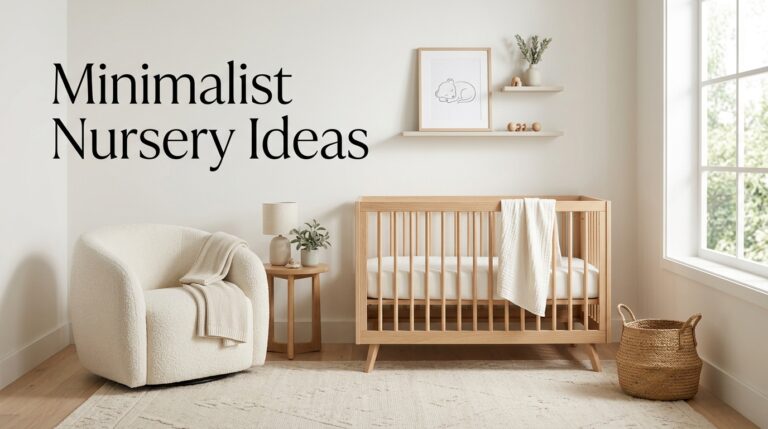
A minimalist nature nursery proves that the theme does not need murals, animal prints, or patterned wallpaper at all. Build the room from materials and colors that suggest the outdoors: warm white walls, pale wood, stone beige, muted moss, clay, linen, and woven texture. Choose furniture with simple silhouettes and let visible wood grain do some of the decorating.
One large landscape print, a sculptural branch-like lamp placed safely away from the crib, or a pair of abstract leaf artworks can establish the nature connection without filling every surface. This direction works especially well in small rooms because the reduced visual noise makes storage and furniture feel less crowded.
Closed drawers, lidded baskets, and a few larger accessories usually look calmer than many tiny objects. If the room feels too plain, add contrast through texture before adding more color: a looped rug, linen-look curtain, cane drawer front, or chunky knit on the adult chair can be enough. The goal is not emptiness; it is a quieter interpretation of nature through material, shape, and tone.
18. Base the Nursery on a Landscape That Means Something

The most personal nature themed nursery may come from a real landscape that matters to the family—a nearby coastline, a mountain range, desert terrain, woodland trail, prairie, or national-park-style view. Use the place as a design reference rather than reproducing it literally. Pull three or four colors from photographs of the landscape, then repeat them across walls, furniture, textiles, and artwork.
A framed topographic-style print, simplified landscape mural, or vintage travel-poster-inspired artwork can become the focal point, while natural wood and tactile neutral fabrics keep the room grounded. This approach is especially useful when generic woodland or safari themes feel too familiar, and it gives the nursery a story that can mature with the child.
For renters, framed landscape art and painted furniture can create the effect without permanent wall changes. Keep memorabilia edited; several maps, signs, coordinates, trail markers, and souvenirs can make the room feel like a travel display. A single strong landscape reference, supported by its authentic colors and textures, feels much more intentional.