17 Minimalist Nursery Ideas for a Calm, Beautiful Baby Room
A minimalist nursery should feel calm, but it should never feel cold, empty, or as though someone simply stopped decorating halfway through. The rooms that get this style right have a sense of softness and intention: enough storage to contain the less-photogenic baby essentials, furniture that fits the room instead of swallowing it, and a restrained mix of color, texture, and meaningful detail.
These 17 minimalist nursery ideas explore several versions of the look, from warm neutral and Scandinavian baby rooms to sage green, organic modern, rental-friendly, budget-conscious, and genuinely small nursery layouts. The goal is not to remove personality. It is to give every visible element a reason to be there.
That might mean letting the grain of an oak crib provide the warmth, using one beautiful wall treatment instead of ten little decorations, or choosing a dresser that handles two jobs at once. And because real nurseries have diapers, laundry, late-night feeds, changing supplies, and rapidly outgrown clothes, practicality matters just as much as the Pinterest picture.
1. Pair Warm White Walls With Natural Oak

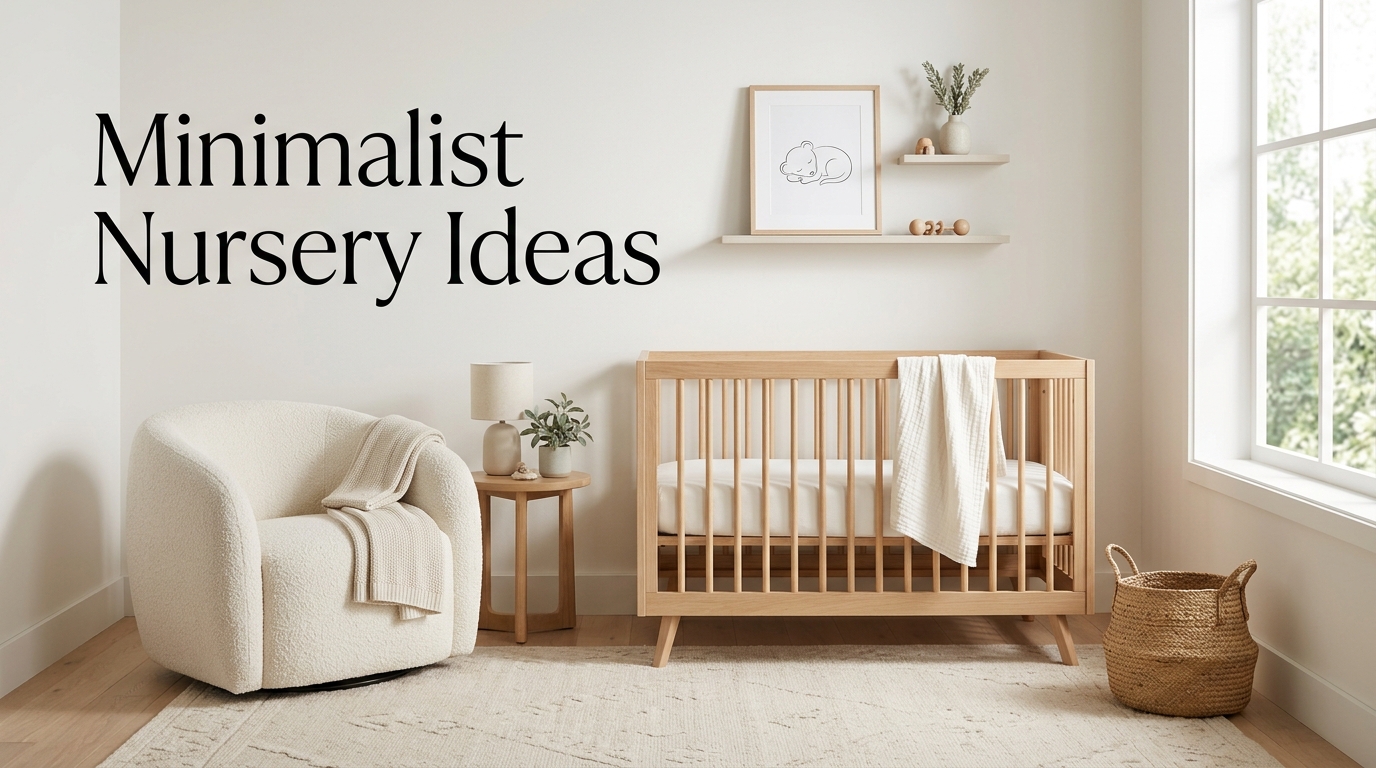
A warm white nursery is minimalist without feeling sterile when the room gets its character from wood grain rather than extra decoration. Choose a soft white with a slightly creamy or chalky undertone, then anchor the space with a natural oak or birch crib, a simple dresser, and one comfortable upholstered chair.
This combination works especially well in small or north-facing rooms because the pale envelope keeps the visual weight low while the timber adds enough warmth to stop the room looking flat. Keep the wood tones reasonably consistent; mixing orange pine, gray-washed oak, walnut, and blond birch in one compact nursery can quickly make a pared-back scheme feel accidental.
A woven rug, linen-look curtains, and one framed print are usually enough texture. Leave some wall and floor space visibly empty. That breathing room is not unfinished space—it is part of the design, and it gives the practical baby gear somewhere to exist without overwhelming the room.
2. Build the Room Around Soft Sage Green

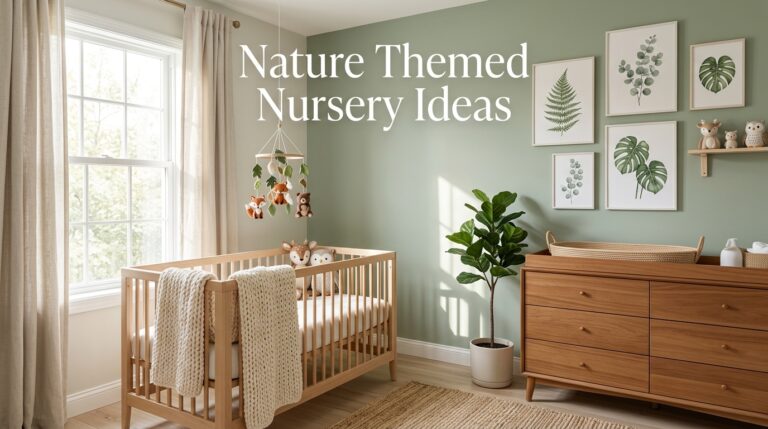
Sage green gives a minimalist nursery color without turning the room into a strong theme. Use a muted, gray-leaning sage on all four walls for a cocooning look, or paint only the lower half if the room is narrow and you want to preserve more visual brightness. Pair it with warm white trim, pale wood furniture, oatmeal upholstery, and small touches of aged brass or matte black.
The reason this palette works is restraint: the green becomes the main decorative element, so the room needs very little additional wall art. In a tiny nursery, choose a crib with slender rails rather than a bulky paneled silhouette, and keep the dresser close in tone to the walls or floor so it does not read as another large block.
If natural light is limited, sample the green at different times of day before committing; some shades become much cooler after sunset. Finish with one tactile rug and a simple shade or curtain, not several competing patterns.
3. Make a Neutral Nursery Interesting Through Texture

An all-neutral nursery needs more than beige paint to look finished. The most convincing minimalist version builds depth through texture: creamy plaster-like walls, a nubby wool-look rug, smooth pale timber, softly woven curtains, and a boucle or linen-covered chair. Keep the palette within a narrow family of ivory, sand, mushroom, oatmeal, and light oak, but vary the surfaces so the eye still has something to notice.
This approach suits rooms with attractive natural light because sunlight reveals subtle texture beautifully, although it can also make a windowless nursery feel more considered when layered artificial light is added. The common mistake is filling every neutral surface with another neutral accessory until the space becomes visually busy despite the limited color.
Instead, choose fewer pieces at a larger scale: one generous rug, one substantial basket, one framed artwork, one lamp. For everyday practicality, favor washable or wipeable textiles in high-contact areas; minimalism feels much easier to maintain when the materials are forgiving.
4. Add Scandinavian Contrast With Small Black Details

A Scandinavian-inspired nursery feels especially natural within minimalist design because its visual interest comes from proportion, craftsmanship, and useful objects rather than ornament. Start with white or very pale walls, a light wood crib, and a compact dresser with clean fronts. Then introduce a few controlled black accents—a slim picture frame, a small wall sconce, simple drawer pulls, or a graphic line print—to sharpen the room without making it harsh.
Black works best here as punctuation, not as a second dominant color. Keep storage practical and visible only where it adds something: a short row of picture ledges for books can look intentional, while overflowing open shelves usually undermine the calm effect.
If the nursery has dark flooring, soften the contrast with a large light rug that extends beyond the crib and chair zones. The style is particularly useful for apartments because ordinary, affordable furniture can create the look; what matters most is disciplined editing, consistent finishes, and enough empty space around each major piece.
5. Zone a Small Minimalist Nursery Before Decorating It

In a small minimalist nursery, layout matters more than decorative style. Divide the room into three working zones: sleep, changing and storage, and feeding or sitting. The crib usually deserves the least interrupted wall, while a dresser can handle both clothing storage and a changing surface, eliminating a separate changing table.
A compact chair should sit where it can be reached without squeezing past furniture, ideally with a tiny wall-mounted shelf or narrow side table nearby. Before buying anything, tape the furniture footprints onto the floor; a dresser that looks modest online can block a door swing or make a narrow walkway awkward in real life.
Keep the center of the room as open as possible because clear floor area makes a tiny nursery feel calmer and later becomes useful for play. Vertical storage can take over where floor space ends, but avoid filling every wall. A small room benefits from one quiet wall almost more than a large one does, because uninterrupted space creates visual depth.
6. Let a Dresser Double as the Changing Station

Replacing a dedicated changing table with a sturdy dresser is one of the most useful minimalist nursery moves because a single footprint handles two jobs and remains relevant long after the diaper stage.
Choose a dresser with a broad, stable top and drawers that open easily with one hand, then organize the upper drawers by task rather than by clothing category: everyday changing supplies closest to reach, backup items below, and less frequently used pieces farther away. Visually, flat-front drawers or subtle pulls keep the furniture quiet, especially in a room where the crib already has strong vertical lines.
A wall-mounted light or small nearby lamp can free the top from extra clutter, while a simple tray helps contain the few items used constantly. Measure the dresser carefully before purchase and follow the changing pad and furniture manufacturers’ guidance for safe setup. Also plan for anchoring storage furniture securely. The goal is not merely to own less furniture; it is to make each piece work harder without making daily routines more complicated.
7. Take Nursery Storage Up the Wall

Minimalism becomes far more realistic when the nursery uses wall height intelligently. Instead of adding another floor cabinet, consider a tall closed wardrobe, built-in shelves with doors, or a narrow storage tower that draws the eye upward. In rooms with high ceilings, taking storage close to the ceiling reduces the temptation to spread bins, baskets, and spare supplies across every visible surface.
Keep frequently used items between waist and shoulder height, with seasonal clothing or unopened packages higher up. Open shelves can still belong in a minimalist nursery, but treat them as display plus light storage rather than a warehouse: a few forward-facing books, one basket, and perhaps a small framed piece are enough.
If you use wall-mounted shelving, install it according to the hardware and wall type, and keep the crib area free from hanging objects that could become reachable. Visually, paint tall storage the same or a closely related color as the wall so it recedes. That single move can make substantial storage feel surprisingly quiet.
8. Hide the Everyday Clutter Behind Closed Storage

A nursery can contain plenty of baby gear and still look minimalist if most of the storage is visually closed. Drawers, lidded baskets, cabinet doors, and closet bins reduce the number of shapes and labels the eye has to process, which is why concealed storage often makes more difference than simply owning fewer things.
Start by identifying what needs to stay accessible every day and what can disappear behind a door. Diapers, wipes, burp cloths, and sleepwear belong near the changing area; next-size clothing, extra linens, and sentimental pieces can live deeper in the closet. Use matching containers only where they genuinely improve organization—buying dozens of decorative bins can become clutter in its own right.
For a renter or budget nursery, inexpensive drawer dividers and plain fabric boxes can create the same visual order as custom cabinetry. Leave the dresser top mostly clear, and resist using the crib rail, chair arms, or floor as temporary storage. A calm room usually depends on convenient reset points more than perfect styling.
9. Use One Feature Wall Instead of Lots of Small Decor

Minimalist does not have to mean blank walls. One restrained feature wall can give the nursery a clear identity while allowing everything else to remain simple. Consider a softly painted arch behind a dresser, subtle grasscloth-look wallpaper, a low-contrast mural, vertical timber detailing, or a limewash-style finish in a muted clay, blue, or olive tone.
The key is choosing a treatment with enough presence to replace several smaller decorative objects. In a compact room, position the feature where it is visible from the doorway rather than automatically behind the crib; this can make a dresser wall or reading corner feel intentional without crowding the sleep area. Keep adjoining walls quiet and repeat only one or two colors from the feature in textiles or artwork.
If the room already has strong architectural details, such as paneling or a beautiful window, skip the extra feature entirely and let that element lead. Minimalism works best when there is a clear focal point—and just as importantly, when the rest of the room agrees to stay in the background.
10. Create a Renter-Friendly Minimalist Nursery

Renters can create a minimalist nursery without relying on permanent paint, built-ins, or heavy wall treatments. Begin with a neutral room envelope and create the design through removable layers: a large washable rug, full-length curtains hung with approved hardware, peel-and-stick accents where suitable for the wall finish, and a small group of lightweight framed prints.
Furniture should carry more of the visual identity, so a warm wood crib, compact cream chair, and simple dresser can establish the palette even in a plain white rental. Avoid trying to compensate for unchangeable walls by adding decor everywhere; that usually produces the opposite of a minimalist result.
A single removable wall decal or textile hanging can be more effective than a scattered gallery. Before using adhesive products, test them in an inconspicuous spot and follow the manufacturer’s removal instructions, since paint finishes vary. When the lease ends, the same portable pieces can move to another room or home, which makes this version of minimalist nursery decor practical as well as visually clean.
11. Layer the Lighting Instead of Relying on One Ceiling Light

Good lighting is one of the easiest ways to make a sparse nursery feel warm rather than empty. Instead of asking one bright ceiling fixture to do everything, build a simple three-level scheme: general overhead light, a softer lamp or wall light near the chair, and low illumination for nighttime movement. Dimmable fixtures are useful where compatible, but the bigger design principle is direction—light that comes from more than one height creates softer shadows and gives pale walls more depth.
For a minimalist look, keep fixture shapes uncomplicated and repeat the same finish once or twice rather than introducing several metals. Linen, opal glass, pale ceramic, and matte finishes tend to sit quietly within neutral rooms. Window treatments matter too. Sheer curtains can soften strong daylight, while a separate light-blocking layer offers greater control when needed.
Keep cords and window-covering hardware arranged with child safety in mind. If the room is tiny, wall-mounted lighting beside the feeding chair can save the floor space a lamp would otherwise occupy.
12. Use Negative Space as Part of the Nursery Design

Negative space is a real design tool in a minimalist nursery, especially around the crib, dresser, and chair. Rather than pushing furniture into every available gap, leave visible stretches of wall and floor so the important pieces can be read individually. This is easiest when you choose fewer items at the correct scale: one wider dresser may look calmer than two narrow storage units, and one generous rug often feels more settled than several small mats.
Softness can then come from textiles instead of additional objects. Think full-length curtains, a textured rug, an upholstered chair, and perhaps a washable cover or cushion used outside the infant sleep space. Keep the crib itself visually simple.
Current AAP safe-sleep guidance recommends a firm, flat sleep surface with a fitted sheet and no loose blankets, pillows, bumpers, or stuffed toys in the sleep space. That practical rule actually aligns well with minimalist styling: decorative softness can live around the room while the crib remains purposefully bare and uncluttered.
13. Give a Woodland Nursery a Minimalist Twist

A woodland nursery can still feel minimalist when nature is treated as a material story rather than a literal theme. Skip the collection of foxes, bears, trees, and slogan signs, and instead use earthy cues: medium oak, moss or olive accents, woolly texture, woven cane, a landscape print, and perhaps a simple branch-shaped motif in one piece of art.
Keep the walls warm white, stone, or muted green so the room feels grounded rather than themed. This approach is especially effective for gender-neutral nurseries because the palette can evolve easily as the child grows. If the room is small, choose only one noticeably rustic texture—such as a cane-front dresser or chunky woven rug—then keep the crib and lighting cleaner in shape.
Too many rough, woven, or handcrafted finishes together can make a compact room feel visually dense. The successful version suggests woods and fields without recreating them. It gives Pinterest-friendly atmosphere while preserving the clarity and flexibility that make minimalist nursery ideas useful in everyday homes.
14. Soften Clean Lines With Curved Furniture and Decor

Curved forms are a subtle way to soften a minimalist nursery that relies on straight-lined furniture. An arched mirror secured appropriately, rounded dresser corners, a globe pendant, an oval rug, or a gently curved chair can break up the geometry without adding pattern or clutter. Choose two or three curves and repeat them loosely rather than buying an entire matching set; the room will feel more collected and less showroom-like.
This strategy works particularly well with modern organic interiors, where plastered walls, pale timber, linen, and warm stone colors already create a quiet backdrop. In a narrow room, a rounded chair or oval rug can also improve visual flow because the eye does not stop at hard corners, although physical clearances still matter more than appearance.
Avoid oversized sculptural furniture simply because it photographs well. Nursery seating needs to fit the actual floor plan and leave usable circulation. The design payoff comes from contrast: clean architecture provides structure, while a few curved silhouettes make the space feel gentler, warmer, and more welcoming.
15. Design a Beautiful Minimalist Nursery on a Budget

A minimalist nursery can be genuinely budget-friendly when the design begins with a short furniture list rather than a shopping list of accessories. Prioritize the crib or approved sleep space, useful clothing storage, comfortable seating if the room allows it, and a practical changing setup. Then pause before buying decorative extras.
A secondhand dresser, repainted in a soft neutral, can look more intentional than an inexpensive matching nursery suite, and existing household baskets or lamps may work perfectly once the palette is simplified. Spend where durability or safety matters, and check current product requirements or recalls when considering used baby furniture or sleep products.
For decor, one large downloadable print in a simple frame often has more visual impact than six small pieces. Curtains can add height if hung close to the ceiling, while an affordable oversized rug can visually connect mismatched furniture. The trick is consistency rather than cost: repeat two or three materials and a limited color palette, and budget pieces begin to feel like deliberate design decisions instead of compromises.
16. Choose Furniture That Can Grow Beyond the Baby Years

The most sustainable-looking minimalist nurseries are often designed beyond the newborn stage from the beginning. Choose a dresser that could later live in a child’s bedroom, guest room, or hallway; select a chair that does not look exclusively like nursery furniture; and keep major finishes neutral enough to work with changing interests.
Convertible furniture may be useful when it genuinely suits your space and the manufacturer’s conversion system makes sense, but it is not automatically the best choice for every room. Sometimes a standard, well-proportioned dresser and simple crib create more flexibility than a large multi-stage unit.
Keep permanent elements—paint, curtains, main rug, storage—quiet, then let easily changed pieces carry age-specific personality. Today that might be a mobile used outside the sleep space, a few board books, or abstract animal art; later it can become framed drawings or brighter bedding appropriate to the child’s age. This approach protects the minimalist look from feeling temporary and can reduce the urge to redesign the entire room every couple of years.
17. Create a Minimalist Nursery Nook in a Shared Room

Not every baby needs a dedicated room for a minimalist nursery setup to work. A nursery nook in the parents’ bedroom, a guest room, or a shared space can feel coherent when it is treated as one compact zone rather than a miniature version of a full nursery. Use the crib or bassinet area as the anchor, then add only the storage required nearby—a narrow dresser, one drawer section, or a rolling cart that can be moved out of sight.
A small rug, wall color block, or single framed print can define the baby zone visually without constructing a physical divider. Match the nursery finishes to the larger room so the space feels integrated; introducing a completely separate palette usually makes a shared room look more crowded.
Wall-mounted storage can help, but keep the sleep area free of loose or hanging objects within reach. The advantage of this arrangement is focus: every item has to earn its footprint, which naturally leads to the clean, intentional character people are usually seeking from minimalist nursery design.