18 Vintage Nursery Ideas That Feel Timeless, Collected, and Cozy
There is something especially lovely about a nursery that does not look as though every piece arrived in the same delivery truck. Vintage rooms have texture. They have quieter colors, imperfect wood, old-looking patterns, little objects that seem to carry a story, and that comfortable sense that the room could have existed twenty or fifty years ago.
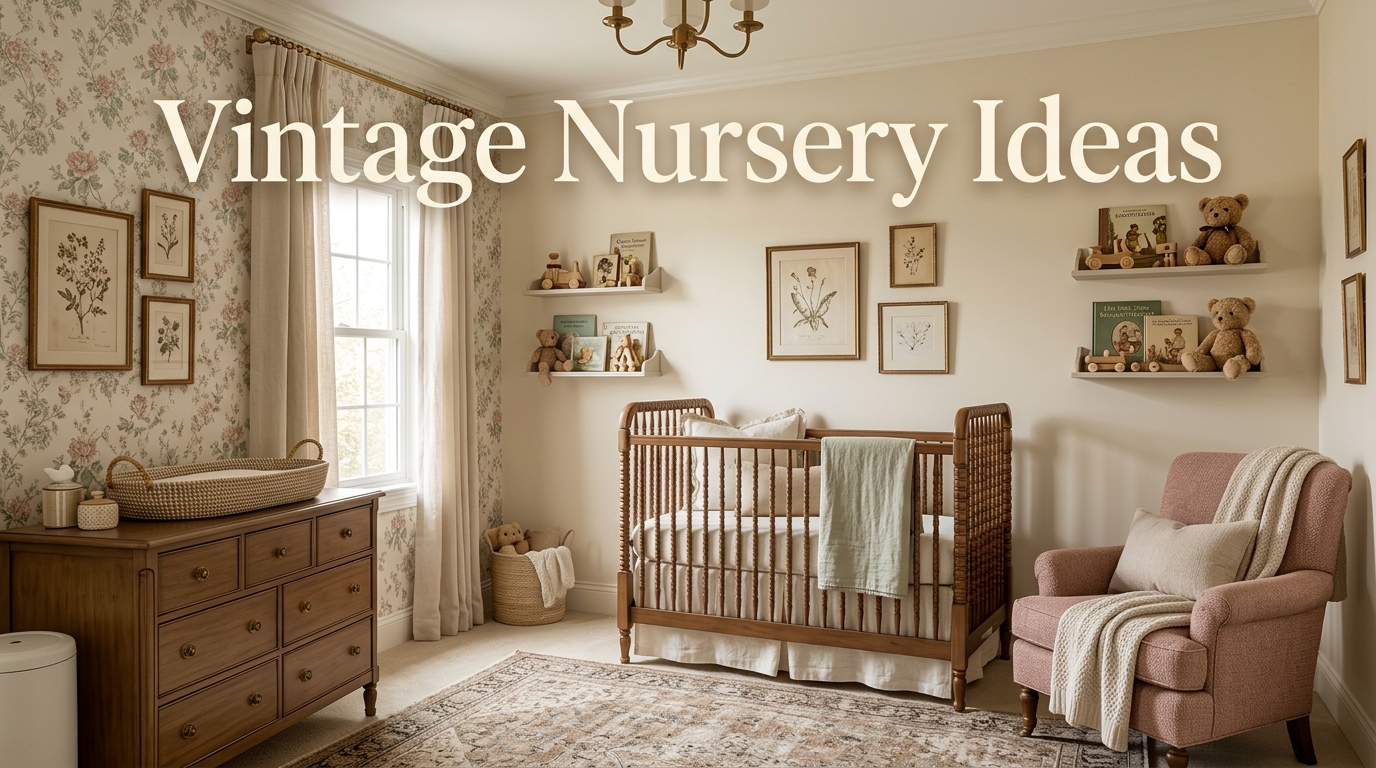
That does not mean filling a baby’s room with fragile antiques. In fact, some of the most successful vintage nursery ideas combine modern necessities with nostalgic materials and shapes: a new spindle crib beside an old dresser, faded floral wallpaper behind contemporary furniture, or a practical glider beneath a pleated shade and a cluster of botanical prints. The contrast is usually what makes the room interesting.
Scale matters too. Dark furniture behaves differently in a tiny nursery than in a large bedroom, heavily patterned wallpaper needs visual breathing space, and charming thrift-store pieces still have to earn their place when storage is limited. The ideas below focus on those practical details as much as appearance.
One important distinction is worth making before decorating: use vintage style freely, but be cautious about genuinely old infant sleep products. The CPSC recommends sleep products that meet current federal requirements and advises keeping the sleep space bare apart from a fitted sheet; AAP guidance similarly recommends keeping loose bedding, pillows, toys, and other soft objects out of an infant’s sleep area.
1. Anchor the Room With a Dark Wood Spindle Crib

A dark wood spindle crib gives a vintage nursery instant structure without making the room feel like a museum. Choose a new, safety-compliant crib with slim turned spindles or an arched back, then let walnut, mahogany, or warm espresso tones carry the old-world mood.
Against creamy plaster-colored walls, the silhouette feels rich and traditional; against dusty sage or muted blue, it becomes moodier and more English cottage. Keep the bedding visually simple so the wood grain remains the focal point, and repeat the finish once or twice through a small frame, dresser knob, or rocking-chair arm rather than matching every piece.
This approach works especially well in medium and large rooms where darker furniture has enough breathing space. In a small nursery, place the crib against the lightest wall and use pale flooring or a softly faded rug to prevent visual heaviness. The contrast is what makes the room feel collected, not coordinated.
2. Use Faded Floral Wallpaper Instead of a Loud Feature Wall

Faded floral wallpaper is one of the quickest ways to create a nursery that feels inherited rather than freshly decorated. Look for small-scale roses, trailing vines, meadow flowers, or block-print botanicals in softened shades such as dusty pink, ochre, sage, blue-gray, and parchment. A tiny pattern reads gently from across the room and is easier to live with than an oversized floral, especially in a compact nursery.
For more architectural depth, stop the paper at a chair rail or picture rail and paint the lower wall in a related muted tone. That break gives the eye somewhere to rest and keeps the pattern from overpowering the crib, dresser, and artwork.
If the room receives limited daylight, choose a wallpaper with a warm cream ground rather than gray-beige, which can turn flat in shadow. Renters can get a similar effect with removable paper on one wall, inside a closet, or behind open shelving. Pair it with plain linen-look curtains so the room stays calm.
3. Build a Gender-Neutral Palette Around Sage and Walnut

Sage green and walnut create the kind of vintage nursery palette that feels quiet in daylight and beautifully cocooning after dark. The green should lean softened and slightly gray rather than minty; that muted undertone lets antique-style wood finishes, aged brass, cream textiles, and woven baskets sit naturally beside it.
Try sage on the walls with a walnut crib and dresser, or reverse the balance by keeping walls warm ivory and using sage on built-ins, trim, or a freestanding cabinet. This combination is particularly useful for a gender-neutral nursery because the room can evolve later without needing a full decorative reset.
Add one small pattern—perhaps a faded stripe, gingham shade, or botanical print—rather than layering several competing motifs. In a narrow room, keep the darkest walnut pieces below eye level so the upper half remains visually open. The result has enough historical character to feel vintage, but the restrained palette prevents it from drifting into themed or overly rustic territory.
4. Turn an Antique-Style Dresser Into the Changing Zone

An antique-style dresser can do more than add charm; it can become the visual anchor of the changing zone. A solid wood chest with rounded corners, inset drawers, bun feet, or aged brass pulls brings far more character than a matching nursery furniture suite. If you use a genuinely old piece, inspect its stability, drawer action, finish condition, and overall construction, and secure tall or heavy furniture appropriately.
Then keep the practical layer modern: organize diapers and everyday supplies in the top drawers, use washable containers inside, and position a changing pad according to the pad and dresser manufacturer’s guidance. Styling above the dresser can stay restrained—a small oval mirror, framed botanical print, and shaded lamp are enough.
This idea suits rooms where the crib wall is visually simple and the opposite side needs weight. On a tight budget, a secondhand dresser can be refreshed with new hardware or a careful refinishing job, giving you vintage atmosphere without buying every decorative element new.
5. Create a Gallery Wall That Looks Collected Over Time

A vintage gallery wall works best when it looks gathered slowly, not purchased as a perfectly matched set. Mix small landscapes, old botanical plates, nursery illustrations, silhouettes, needlework, family photographs, and one or two oval or carved frames. The unifying element should be subtle: perhaps warm wood tones, antique brass, or a repeated cream mat rather than identical frame shapes.
Before hanging anything, arrange the composition on the floor and build outward from one medium-size piece so the grouping feels balanced instead of scattered. In a small nursery, keep the gallery narrow and vertical above a dresser or reading chair; in a wider room, let it stretch horizontally across a long blank wall.
Avoid placing heavy or breakable objects where they could fall into the crib or changing area. The visual payoff is significant because the wall introduces age, story, and fine detail without consuming floor space. It is also one of the easiest vintage nursery ideas to build gradually as you find meaningful pieces.
6. Make a Tiny Old-Storybook Reading Corner

Old storybooks bring a softer kind of nostalgia than decorative antiques because they make the nursery feel lived in and useful. Create a small library zone with low shelves or securely installed picture ledges holding a mix of current children’s books and older-looking editions with cloth spines, illustrated covers, or muted colors.
A warm wood bookcase, a simple upholstered chair, and a small washable rug can turn an unused corner into a reading spot without demanding much square footage. For visual rhythm, arrange books both upright and in short horizontal stacks, leaving some open space so the shelves do not become cluttered.
If genuine vintage books are fragile, musty, or too delicate for everyday handling, display only a few out of reach and use durable reprints for reading. This setup works especially well in nurseries that need to transition into toddler rooms, since the styling already supports a later routine. Add a tiny shaded wall light nearby and the corner begins to feel like a miniature old library, but still practical for nightly use.
7. Display an Heirloom Quilt Without Using It as Crib Bedding

An heirloom quilt can supply color, pattern, and family feeling without covering every surface in decorative accessories. The key is to treat it as artwork rather than as crib bedding. Fold a quilt over the back of an adult reading chair when supervised, display it on a secure quilt rack away from the sleep area, or frame a small textile fragment behind protective glazing.
Patchwork in faded indigo, butter yellow, soft red, tobacco brown, or washed florals can inspire the entire palette of the room, making paint and furniture choices much easier. If the quilt is visually busy, keep curtains and rugs quiet; if it is pale and low-contrast, a darker wood crib gives it needed definition.
This idea is particularly effective in plain rental rooms because one textile can create instant warmth without permanent changes. Older fabric may be delicate, so avoid placing valuable pieces where spills and repeated washing are likely. The nursery still feels cozy, but the crib itself stays visually clean and uncluttered.
8. Layer Aged-Brass and Milk-Glass Style Lighting

Lighting is where a vintage nursery can shift from merely styled to genuinely atmospheric. Instead of relying on one bright ceiling fixture, build a softer layered scheme with an antique-inspired pendant or semi-flush mount, a shaded table lamp, and a low-level light for nighttime care.
Aged brass, bronzed metal, milk glass, pleated fabric shades, and opal globes all carry period character without requiring genuine antique electrical fixtures. Warm light tends to flatter walnut, sage, dusty rose, and cream, while very cool bulbs can make those colors look flatter and less inviting.
Scale matters: an ornate chandelier can be beautiful in a room with a high ceiling, but it may overwhelm a low or narrow nursery where a compact schoolhouse-style fixture would feel more proportionate. Keep cords and lamps positioned safely away from the crib and curious hands as the baby grows. The best lighting plan is decorative in daylight, practical during feeds and changes, and gentle enough that the room does not snap into full brightness at night.
9. Ground the Nursery With a Faded Persian-Inspired Rug

A faded-look area rug can make new flooring feel instantly more settled and gives a vintage nursery the layered foundation Pinterest images often rely on. Persian-inspired motifs, tiny florals, medallions, or worn geometric patterns work especially well in muted rust, denim blue, olive, blush, camel, and cream.
Choose the rug size by the room rather than by the crib: a rug that reaches under the front legs of the main furniture usually feels more intentional than a small rectangle floating in the center. In a compact nursery, one larger low-contrast rug can actually make the floor appear broader by reducing visual fragmentation.
Practicality matters just as much as pattern, so consider a surface that can handle frequent vacuuming and the occasional spill without becoming precious. If the wallpaper is already detailed, select a quieter rug with softened contrast; with plain walls, you can let the floor carry more pattern. This is a strong option for renters because the room gains age and warmth without paint, paneling, or permanent installation.
10. Bring in a Little 1970s Character With Cane and Rattan

Rattan and cane introduce a 1970s vintage note that feels lighter than dark antique furniture, which makes them useful in sunny or smaller nurseries. A cane-front dresser, woven pendant shade, rattan mirror, or wicker storage basket brings texture while allowing plenty of pale wall space to remain visible.
Rather than filling the room with matching woven pieces, choose one larger element and echo it with two smaller accents. That restraint keeps the nursery from sliding into generic boho territory. Warm white walls, honey-toned wood, faded terracotta, olive, and soft apricot all complement the material’s natural color.
For a cleaner modern-vintage mix, pair cane with a simple cream crib and a geometric 1970s-inspired print; for a more cottage look, add tiny florals and scalloped details. Inspect older woven furniture carefully for rough edges, loose strands, and structural wear, especially on pieces that will be touched often. Used selectively, rattan adds sunlight, craft, and relaxed nostalgia without making the room visually heavy.
11. Give the Room a Soft French Country Direction

A French country nursery becomes convincing through pattern and proportion, not through piling on ornate furniture. Start with one classic motif—small-scale toile, delicate ticking stripe, or faded floral—and let it establish the palette. Soft blue with cream feels airy, dusty rose with mushroom beige feels warmer, while olive with parchment creates a more gender-neutral old-world look.
Add a curved dresser, cane-back chair, or subtly carved mirror, but balance those details with a simple modern crib so the room still feels easy to use. Full-length linen or cotton curtains soften the architecture and make ordinary windows look taller, especially when hung close to the ceiling.
If the room is small, use toile on a Roman shade, lampshade, or single accent wall rather than wrapping every surface in pattern. A few aged brass accents give warmth without turning the scheme formal. The goal is a nursery that suggests a quiet country house—graceful, slightly imperfect, and comfortable—rather than a miniature period set.
12. Try a Moody Old-World Palette Instead of Pastels

Deep olive, tobacco brown, muted burgundy, or inky blue can create a moody vintage nursery that still feels restful when the contrast is controlled. The easiest route is to saturate one main wall color and then soften it with cream upholstery, natural wood, pale artwork mats, and a light ceiling.
Dark rooms need deliberate lighting, so include more than one warm source and consider reflective details such as an antiqued mirror or brass frame to bounce small pockets of light. This palette is particularly effective in north-facing rooms where forcing a bright white scheme can sometimes feel cold; leaning into depth can make the space feel intentional instead.
Keep large furniture silhouettes simple so the color, not ornate carving, does most of the visual work. For a smaller room, paint trim and walls in closely related tones to reduce choppy edges. The finished nursery feels cocooning and sophisticated, but still child-friendly once you add a soft rug, playful print, or a shelf of illustrated books.
13. Make Warm Neutrals Feel Layered Rather Than Beige

A neutral vintage nursery does not need to mean a room filled with identical beige. The more convincing approach is to layer several warm neutrals with visibly different textures: chalky ivory walls, oatmeal upholstery, honey wood, aged brass, natural wicker, and a rug with faint taupe or rust patterning. That mix creates depth even when the color range stays quiet.
This strategy is especially useful in a small nursery because the pale envelope keeps the room open while the materials prevent it from feeling flat. Choose one piece with a stronger silhouette, such as a spindle crib or curved-front dresser, then let simpler furniture support it.
Linen-look curtains and woven baskets add softness, but avoid covering every surface in cream fabric; a little darker wood or black metal gives the eye a necessary stopping point. If you rent, this look is easy to achieve without repainting by concentrating on furniture, textiles, framed art, and lighting. It feels collected and calm rather than monochrome or showroom-perfect.
14. Use Vintage Circus Details Without Turning the Room Into a Theme Park

A vintage circus theme can be playful without becoming loud if you borrow the graphic language of old posters instead of decorating with cartoon characters everywhere. Think faded red, mustard, dusty blue, cream, and black used in small measured doses, with striped textiles, ticket-style typography, carousel illustrations, or a single framed circus print as the focal point.
A warm wood or black spindle crib grounds the brighter accents, while a simple cream wall keeps the room from feeling visually frantic. For younger babies, keep dimensional decorations, garlands, and hanging objects safely away from the crib; the theme can live on walls, shelves, and textiles outside the sleep space.
In a narrow nursery, use vertical stripes on a curtain or painted cabinet rather than across all four walls. This concept suits families who want vintage charm with more energy than cottage florals or muted neutrals. The trick is editing: two or three nostalgic circus references feel clever and storybook-like, while ten competing motifs can quickly make the room resemble a party set.
15. Design an Old-World Explorer Nursery With Maps and Warm Wood

An old-world explorer nursery has strong visual appeal because maps, trunks, warm wood, canvas, and brass naturally share the same aged palette. Use a vintage-style world map or celestial chart as the main wall feature, then build around it with a walnut crib, campaign-inspired dresser, striped wool-look rug, and a few travel references such as framed postcards or a decorative globe placed out of reach.
Avoid turning every object into a literal adventure prop; the room feels more sophisticated when the theme is suggested through materials and artwork. Deep blue, olive, camel, tobacco, and cream are reliable colors here and can work for a boy, girl, or gender-neutral nursery.
In a small room, choose one map above the dresser rather than a full mural, since dense cartography can visually shrink a tight space. A canvas hamper and leather-look drawer pulls add texture without occupying more floor area. The overall mood is curious and storied, like a quiet study adapted for a baby rather than a themed playroom.
16. Build the Decor Around Vintage Botanical Prints

Botanical decor gives a vintage nursery a softer scholarly mood, especially when the plants are rendered as old herbarium plates, pressed-flower illustrations, or delicate scientific drawings. Build a small grid of four to six prints in slim wood or brass frames, then echo their muted greens with sage paint, olive piping, or a leafy patterned Roman shade.
Because botanical art contains fine detail, it looks best against a relatively calm wall rather than competing with a very busy wallpaper. Add natural textures—oak, linen, cane, seagrass—but keep live plants carefully chosen and positioned if you use them at all, since decorative greenery should never compromise a safe, easy-to-maintain nursery.
This idea suits rooms with good natural light, where paper tones and wood grain can be appreciated during the day. For a darker nursery, select prints with creamy backgrounds and broader leaves instead of very fine, low-contrast specimens. The result feels vintage without being overly feminine or masculine, and the nature theme can transition easily into a toddler or young child’s room.
17. Let Thrifted Storage Provide the Character

Thrifted storage can make a vintage nursery feel authentic, but the most useful pieces are the ones that solve daily clutter rather than simply occupy space. Wicker baskets for blankets outside the crib, a sturdy wood bookcase, fabric-lined bins, or an old-look cabinet with closed storage can hide diapers, spare sheets, toys, and clothing while adding texture.
Reserve genuinely fragile trunks, glass-front cases, and delicate collectibles for display roles only, and make sure tall furniture is stable and secured where appropriate. In a small nursery, choose vertical storage over multiple low pieces so you preserve floor area for movement and a comfortable chair.
Matching baskets are not essential; a mix of woven textures often looks more natural if their tones stay within the same warm family. Labeling the hidden contents can keep the room functional even when the exterior looks beautifully old-fashioned. This is also one of the most budget-friendly ways to build vintage character because usefulness becomes the filter—if a secondhand item cannot store, organize, or support the room, it does not need to come home.
18. Mix Gingham, Ticking Stripes, and Tiny Florals

Gingham, stripes, and tiny florals can share a vintage nursery beautifully when their scales are different and the palette is disciplined. Start with a medium gingham on curtains or a Roman shade, add a narrow ticking stripe on a cushion for the adult chair, then use the smallest floral in wallpaper, artwork, or a storage liner.
Repeating two or three colors across all three patterns makes the mix feel deliberate rather than chaotic; sage, butter yellow, dusty blue, brick red, and warm cream are especially convincing in a heritage-style scheme. This grandmillennial direction works in both large and small rooms, but compact nurseries benefit from concentrating pattern in one zone and leaving the crib wall quieter.
Add dark wood, a pleated lampshade, and a framed landscape to push the room beyond simple cottage style. The real charm comes from contrast: crisp new baby furniture beside nostalgic prints, washable modern fabrics beside old-looking motifs. It feels cheerful, collected, and personal without relying on a single rigid nursery theme.