
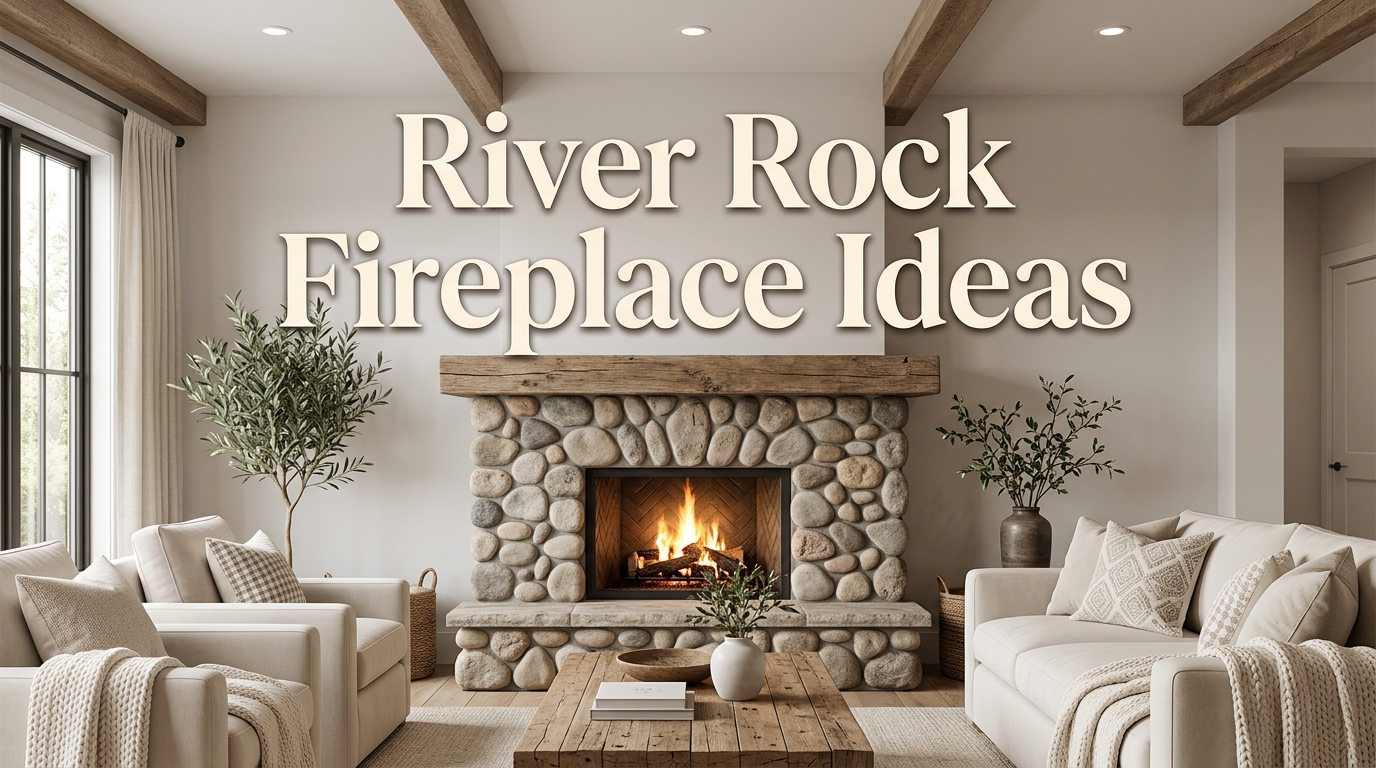
18 River Rock Fireplace Ideas for a Warm, Rustic Focal Point
River rock has a softness that most fireplace stone simply does not. The rounded edges, uneven sizes, and quiet shifts between gray, brown, cream, and weathered taupe make a fireplace feel almost as though it grew out of the room rather than being installed there. That is why the best river rock fireplace ideas tend to feel warm and grounded even when the rest of the space is fairly simple.
Still, rustic does not have to mean dark cabin walls, oversized leather furniture, and a mantel crowded with woodland decor. River rock can lean lighter, moodier, more contemporary, cottage-inspired, or even quietly coastal depending on the grout, wood tones, lighting, hearth, and furniture around it. Proportion matters too. A dramatic stone chimney that looks wonderful beneath a twenty-foot ceiling may overwhelm a compact living room.
The following ideas look at the fireplace as part of the whole room, not just a decorative stone surround. Each one considers color, scale, materials, layout, texture, and everyday usability so you can create a focal point that feels intentional rather than merely rustic.
1. Take River Rock All the Way to the Ceiling

A floor-to-ceiling river rock fireplace makes the most sense in a room that already has height to celebrate. In a vaulted living room, lodge-style great room, or open cabin interior, let the stone rise all the way to the ceiling instead of stopping at mantel level.
The uninterrupted vertical line gives the fireplace architectural weight while the rounded stones keep that scale from feeling severe. Choose a mix of smoky gray, warm taupe, sand, and muted brown so the surface has movement without becoming visually noisy.
A substantial reclaimed timber mantel can break up the height at eye level, while low-profile sofas and broad armchairs keep the furniture from competing with the chimney. This approach is less successful in a low-ceiling room, where so much stone may feel heavy. Warm wall washers or discreet ceiling lights help reveal the rock texture after dark, turning every rounded edge and mortar line into part of the evening atmosphere.
2. Add a Chunky Reclaimed Timber Mantel

There is something especially convincing about smooth river stone paired with a rough, deeply grained wood beam. The contrast feels collected rather than matched, which is exactly why it suits rustic rooms so well. Choose a mantel with visible knots, saw marks, checking, or a weathered edge, then keep the rest of the styling restrained so the beam remains part of the architecture rather than becoming a crowded display shelf.
Two or three objects are often enough: a low ceramic vessel, a framed landscape, and perhaps a trailing branch in season. If the stones are mostly cool gray, a honeyed or chestnut-toned beam adds warmth; if the fireplace already has tan and brown rock, a paler oak or washed finish can prevent the wall from becoming too dark.
The mantel should also feel proportionate to the fireplace width. A skinny shelf can look lost against large stones, while an oversized beam may overwhelm a compact surround. Keep required clearances and installation details aligned with the fireplace manufacturer and local requirements.
3. Soften the Stone with an Overgrouted Finish

Overgrouted river rock has a softer, older character than sharply recessed mortar joints. Instead of reading as dozens of individual stones, the fireplace becomes a quieter, almost cottage-like mass with rounded shapes emerging from the mortar.
This look works beautifully when an existing fireplace feels too busy or when the room leans toward English cottage, relaxed farmhouse, or understated mountain style. A warm off-white, putty, or pale mushroom mortar tone is usually easier to live with than stark white because it connects naturally to beige upholstery, oak floors, linen curtains, and aged wood.
The biggest design advantage is visual calm: less contrast between stone and joints allows nearby furniture and artwork to breathe. It is not the right move if you love every color variation in the original rock, since more mortar reduces that variation. Before changing an existing fireplace, test the look on a small inconspicuous area and consult the appropriate masonry or fireplace professional about compatible materials around the firebox.
4. Use Pale River Rock for a Lighter Rustic Look

Not every river rock fireplace needs deep cabin colors. A pale palette can keep the rustic texture while making the whole room feel fresher and lighter. Look for stone with soft gray, cream, oatmeal, and muted sand tones, then pair it with white oak, natural linen, warm white walls, and a woven rug rather than dark leather and heavy stained wood.
The rounded rocks still provide plenty of character, but the reduced contrast makes the fireplace easier to integrate into a modern cottage or casual lake-house interior. This combination is especially useful in rooms with limited daylight, where dark grout and deep brown finishes can absorb visual light.
Keep the mantel simple, perhaps a smooth white-oak beam with minimal ornament, and repeat the stone colors in small doses through cushions or pottery. Avoid making every surface beige; a charcoal firebox, dark iron tools, or a black-framed window gives the eye a needed resting point. The result feels rustic, but not themed or overly nostalgic.
5. Go Moody with Charcoal Grout and a Black Firebox

A dark grout line can completely change the personality of rounded river stone. Pair medium gray or brown stones with charcoal mortar and a matte black firebox, and the fireplace shifts from traditional cabin to a moodier modern-rustic focal point.
This works best when the room has enough natural light to handle stronger contrast, especially if there are large windows, pale walls, or warm wood ceilings to balance the darkness. Keep the mantel clean-lined rather than heavily distressed; walnut, smoked oak, or blackened steel can all work depending on how contemporary you want the room to feel.
Furniture should stay visually calm, with solid upholstery, simple silhouettes, and only a few textured accents such as wool, boucle, leather, or a flatweave rug. In a small or shaded room, the same combination can feel dense, so use darker grout more selectively or stop the stone below the ceiling. Soft lamps placed away from the hearth will keep the room inviting instead of letting the fireplace become a dark visual block.
6. Shape the Firebox with a Gentle Arch

An arched firebox gives a river rock fireplace an old-world quality that straight rectangular openings rarely achieve. The curve echoes the naturally rounded stones, so the whole composition feels intentional even when the rocks vary widely in size and color. This idea suits cabins, Tudor-inspired homes, country houses, and rooms with visible timber framing, but it can also soften a newer interior that feels a little too boxy.
Let smaller stones follow the arch closely while larger rocks build visual weight at the sides, creating a graceful transition rather than a hard outline. A thick timber mantel can sit above the curve, though a mantel-free design is equally striking if the stone continues upward. Keep the hearth substantial enough to visually support the arch, using a simple slab or broad stone ledge rather than introducing another busy pattern.
Because the firebox shape and surround involve technical construction, treat the arch as an architectural decision first and a decorative one second, with installation planned around the specific fireplace system and local requirements.
7. Build a Low, Wide Fireplace for Horizontal Rooms

A low, wide river rock fireplace can be a better fit than a tall chimney when the room is long, horizontal, or built around a broad window wall. Stretching the stone sideways creates a grounded focal point that works naturally with deep sectionals, long benches, and low coffee tables.
The design feels particularly relaxed in ranch homes, lake cottages, and rustic-modern family rooms where sightlines matter more than dramatic ceiling height. Use larger stones near the base and around the firebox to give the surround visual stability, then soften the width with a simple beam mantel or a long ledge that holds only a few objects.
This layout also leaves more wall space above for one generous piece of art, though the scale should be large enough to hold its own against the stone. Avoid filling the entire width with small decor pieces; the fireplace already has plenty of texture. A pair of floor lamps or sconces at the outer edges can frame the composition without crowding the rockwork.
8. Embrace an Asymmetrical Stone Chimney

Perfect symmetry is not required for a river rock fireplace to feel balanced. An asymmetrical chimney can actually make the room feel more organic, especially in a mountain house, cabin, or renovation where the architecture has quirks worth keeping.
Shift the firebox slightly to one side, allow the stone mass to widen near a built-in bench or wood niche, or let the chimney taper unevenly as it rises. The key is to balance visual weight elsewhere rather than forcing matching shapes. A tall plant, open shelving, or a substantial chair on the lighter side can keep the whole wall from feeling lopsided.
Choose a consistent stone palette so the irregular outline reads as deliberate rather than chaotic. This idea is especially helpful when windows, doors, or structural posts prevent a centered layout. It may be less appropriate in highly formal rooms where symmetry is part of the overall design language. Keep mantel styling sparse, because too many small objects can make an already irregular composition look unsettled.
9. Pair River Rock with Shiplap

River rock and shiplap work well together when each material is given a clear job. Let the stone remain concentrated around the firebox and lower chimney, then use vertical or horizontal wood paneling above or beside it to lighten the wall.
The mix adds architectural rhythm without asking one texture to cover the entire surface. For a softer farmhouse look, choose warm white or creamy shiplap with medium-toned stone and a natural wood mantel. For something moodier, use taupe, deep olive, or charcoal paneling and keep the river rock comparatively light.
The transition line between materials matters; a clean mantel, trim board, or intentional reveal helps the combination look finished. This approach is practical in rooms where a full-height stone wall would feel too massive or too expensive visually.
Avoid combining heavily variegated stone, distressed wood, bold shiplap color, and busy mantel decor all at once. Two strong textures are enough. The fireplace should remain the focal point, not become a competition between rustic finishes.
10. Add an Integrated Firewood Niche

Built-in firewood storage can make a river rock fireplace feel more substantial while solving a real styling problem: where to put logs without leaving a loose pile on the floor. A recessed niche beside the firebox looks especially good when its opening is simple and dark, allowing the cut ends of stacked wood to add a warm circular pattern against the stone.
For symmetry, use matching niches on both sides; for a more relaxed cabin feel, one generous niche paired with shelves or a bench can look better. Keep the stone running continuously around the storage opening so the feature feels integrated rather than added later.
This idea is most useful with a wood-burning setup and may be purely decorative with other fireplace types, so match it to how the room actually functions. Do not let storage crowd circulation or dominate a narrow wall. A shallow basket can be a better alternative in small rooms. Even when empty, the niche should still look intentional, with a dark interior and clean proportions.
11. Frame the Fireplace with Windows

Few combinations make river rock look as beautiful as natural daylight. If the architecture allows it, frame the fireplace with windows on both sides so the stone sits between views of trees, water, snow, or garden greenery.
The changing light brings out subtle shifts in gray, taupe, brown, and cream that can disappear under flat overhead lighting. Keep window treatments quiet: woven shades, simple linen panels, or bare trim work better than heavy patterned drapery because the fireplace and outdoor view already provide plenty of visual interest.
This layout also creates an easy furniture plan, with two sofas facing each other perpendicular to the hearth or a pair of chairs angled toward the fire. Avoid tall bookcases directly beside the windows if they cut off light and make the stone feel boxed in. At night, add warm lamps around the seating area rather than relying only on the fire. The goal is a focal wall that feels connected to the landscape in daylight and cozy after sunset.
12. Ground the Stone with a Raised Hearth

A raised hearth turns the base of a river rock fireplace into more than a finishing detail. Done well, it becomes a strong horizontal line that visually anchors the stone and gives the room a natural place for a basket, a pair of lanterns, or simple seasonal greenery when the fireplace is not in use.
In a casual family room, a broad hearth can also read like a bench, but any seating use should respect the fireplace design, heat exposure, and required clearances. Choose a hearth surface that is calmer than the wall above it. A single slab of slate, bluestone, limestone, or another compatible hearth material keeps the composition from becoming too busy.
If the river rocks are multicolored, pull one of the quieter gray or taupe tones for the slab. In a compact room, keep the projection modest so it does not interrupt walking paths. The best raised hearths feel sturdy and purposeful, giving the rounded rockwork a visual foundation rather than adding another decorative layer.
13. Mix Stone Sizes for a More Natural Pattern

The most convincing river rock fireplaces rarely depend on stones that are all the same size. A carefully mixed scale creates the irregular, collected look people associate with streambeds and old lodge masonry. Use broad, palm-sized rocks to establish weight around the firebox and along the base, then weave smaller pieces into the gaps so the pattern feels varied without becoming random.
Color variation should be controlled in the same way. A few warmer rust or caramel stones can enliven a mostly gray surround, but too many high-contrast colors may make the wall look spotted. This approach works particularly well on large fireplaces, where identical small stones can create a repetitive pebble effect from across the room.
In a smaller surround, use fewer size extremes so the fireplace does not feel coarse or oversized. Keep nearby surfaces comparatively simple: plain plaster walls, solid upholstery, straightforward wood furniture. When the masonry itself has rich variation, the surrounding decor should give that texture enough space to be appreciated.
14. Connect the Fireplace to Exposed Ceiling Beams

Exposed ceiling beams and river rock naturally reinforce each other because both introduce visible structure and earthy texture. The trick is choosing wood tones that connect without making the room feel like a themed lodge. If the fireplace stones lean cool gray, medium oak or weathered chestnut beams add warmth overhead.
If the rock already contains strong brown and amber tones, slightly lighter beams can keep the ceiling from closing in. Let the fireplace rise toward the beams in a vaulted room, creating a vertical-to-horizontal meeting point that makes the architecture feel cohesive. Then soften all that hard material with generous textiles at eye level: wool rugs, linen curtains, upholstered seating, and throws with a loose weave.
This combination works best in medium to large rooms; too many heavy beams plus a massive stone chimney can overpower a low, compact space. Recessed or track lighting aimed across the stone, rather than straight at it, can emphasize texture while keeping the ceiling beams visually present after dark.
15. Keep the Styling Minimal for Modern Rustic Balance

River rock can look surprisingly modern when the styling around it is edited hard. Keep the stone itself natural, but pair it with a slim mantel, a simple rectangular firebox, clean plaster walls, and furniture with uncomplicated lines. Rather than adding antlers, signs, or layered farmhouse accessories, let one oversized artwork or an unframed landscape provide the only decoration above the hearth.
A restrained palette of warm white, charcoal, oak, and soft brown keeps attention on the irregular shapes of the stones. This is a smart direction for homeowners who love rustic materials but do not want a cabin-themed room. It also works well in newer houses where a highly distressed mantel would feel disconnected from the architecture.
The trade-off is that every proportion becomes more noticeable when there is less decor to distract the eye, so the mantel thickness, artwork size, and stone boundary need to feel deliberate. Leave some empty wall space nearby; visual breathing room is part of what makes the rustic texture feel contemporary.
16. Scale the Surround for a Small Living Room

A small living room does not need a tiny-looking fireplace; it needs a fireplace with disciplined proportions. Keep the river rock surround focused around the firebox instead of spreading stone across the entire wall, and choose medium or smaller rocks so the texture relates to the room scale.
A simple mantel that extends only slightly beyond the surround can provide definition without making the wall feel crowded. Light grout and a narrow color range help the stone read as one cohesive surface, while warm white walls prevent a compact room from becoming visually dense. Furniture placement matters just as much as the fireplace itself.
Use a loveseat, apartment-scale sofa, or two comfortable chairs positioned to enjoy the hearth without blocking the main path through the room. Skip bulky cabinets flanking the fireplace unless storage is essential. A single basket, compact wall sconce, and modest artwork are usually enough. The goal is not to minimize the fireplace, but to let it feel intentional rather than oversized for its surroundings.
17. Bring River Rock into a Cozy Bedroom

A bedroom river rock fireplace should feel quieter than one in a great room. Instead of a towering lodge-style chimney, consider a lower surround with softer stone colors, a simple wood mantel, and a firebox scaled to the wall rather than the whole room. Pale gray, beige, and muted brown rocks pair easily with upholstered headboards, wool blankets, washed linen bedding, and warm bedside lighting.
Place the fireplace where it can be seen from the bed without forcing awkward furniture angles; in many rooms, that means an opposite wall or a sitting corner rather than squeezing it between dressers. Keep mantel decor low and calm, perhaps one horizontal artwork and a small ceramic piece, because a bedroom benefits from less visual activity.
Dark river stone can still work, but it is better balanced by lighter walls and fabrics so the space does not feel cave-like. This idea suits primary bedrooms, guest suites, and cabin retreats where the fireplace is meant to create atmosphere as much as architectural interest.
18. Use a Two-Sided Fireplace to Divide an Open Plan

A two-sided river rock fireplace can divide an open plan without making the rooms feel disconnected. Wrap the rounded stone around the full mass so the fireplace looks architectural from both sides, then let one face serve the living area while the other opens toward a dining room, reading nook, or covered indoor-outdoor transition.
Because the structure is visible from several angles, keep the stone palette consistent and avoid a decorative “front” with neglected side walls. A thick timber mantel can wrap one or both faces, but a mantel-free design may feel cleaner if the chimney is already substantial. Furniture should stop short of the stone mass to preserve comfortable circulation and give the fireplace visual breathing room.
This is generally a more involved architectural concept than a simple surround update, so it fits best in renovations or new layouts where the fireplace can be planned as part of the room division. Styled carefully, it provides rustic texture, warmth, and a natural sense of separation without relying on a solid wall.