
Solace Meaning: Definition, Examples, and How to Use It
A solace is comfort in grief: relief from sadness, loss, or distress. More precisely, Merriam-Webster defines it as “comfort in grief” and “a source of relief or consolation.”
That is the dictionary version. The lived version is quieter. Solace is the friend who sits with you after bad news without trying to fix anything. It is the long walk you take when your thoughts will not settle, or the song you play on repeat the week everything went wrong. The word carries a formal, almost literary weight, and that is exactly why it survives. Sometimes plain “comfort” feels too small for what you are describing, and “solace” steps in to say: this mattered, and it hurt, and something helped.
It is pronounced SOL-iss, by the way, with the stress on the first syllable. The British pronunciation is /ˈsɒl.ɪs/ and the American /ˈsɑːlɪs/, according to Collins.
What Does “Solace” Mean?
Solace means comfort in grief or sorrow, the easing of sadness, loss, or distress. As a noun, it names both the feeling of comfort itself and anything that provides it. As a verb, to solace someone is to comfort or console them. It is a formal word, so you will meet it more in writing, speeches, and serious conversation than in everyday chat.
The dictionaries agree on the core. Dictionary.com lists the noun senses as “comfort in sorrow, misfortune, or trouble; alleviation of distress or discomfort” and “something that gives comfort, consolation, or relief.” Collins puts it in plainer learner’s terms: “Solace is a feeling of comfort that makes you feel less sad,” and marks both senses as formal. That little [formal] label matters more than it looks, and we will come back to it.
Solace as a Noun and as a Verb
Most people only ever meet the noun. The verb is real, listed in every major dictionary, but it lives mostly in literature and formal writing. Knowing which one you are dealing with clears up nearly every confusion about this word.
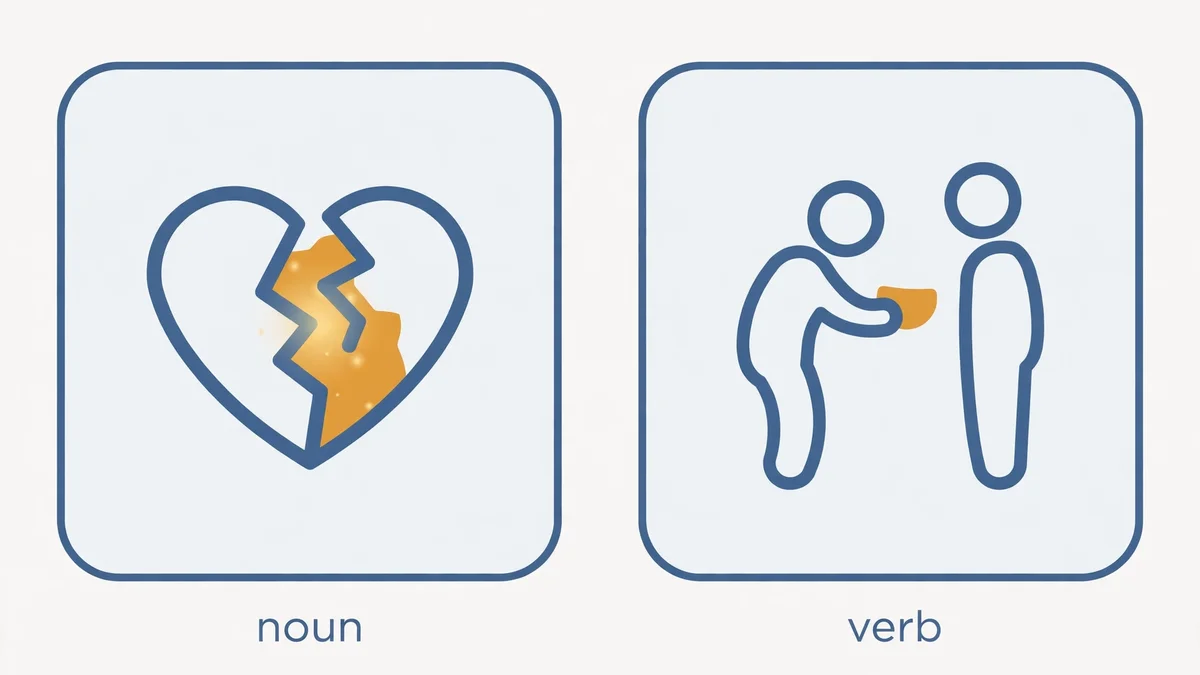
| Form | What it means | Example |
|---|---|---|
| Noun (uncountable) | The feeling of comfort itself | “I found solace in writing when my father died three years ago.” (Collins) |
| Noun (countable) | A person or thing that gives comfort | “She found the companionship of Marcia a solace.” (Collins) |
| Verb | To comfort, console, or cheer someone; to ease sorrow | “I solaced myself with a book while I waited for the bus.” (Merriam-Webster) |
A few related forms round out the family. A solacer is one who solaces, and solacement is an act of solacing or the state of being solaced, both recorded by Merriam-Webster. Dictionary.com also lists unsolaced and unsolacing as adjectives, for grief that found no comfort. The verb conjugates regularly: solace, solaces, solaced, solacing.
Solace vs Comfort vs Consolation vs Relief
These four words overlap, but they are not interchangeable. The comparison below follows the distinctions drawn in E-grammar Book’s usage guide, and it is the fastest way to pick the right one.
| Word | What it means | When it fits best |
|---|---|---|
| Comfort | A general sense of physical or emotional ease | Broad; works in almost any context |
| Consolation | Something that eases grief or disappointment | Loss, defeat, disappointment |
| Relief | The easing of distress or pressure | Can be brief or intense; often sudden |
| Solace | Deep, lasting comfort, usually emotional or spiritual | Grief, sorrow, hard seasons of life |
The difference is one of depth and duration. Comfort is what a warm blanket gives you. Relief is what you feel when the test results come back clear. Consolation is the prize for second place. Solace is what a phone call from an old friend gives you the week after a funeral: slower, deeper, and tied to something that actually hurt.
Where Did “Solace” Come From?
Solace is an old word with a distinguished family tree. Merriam-Webster traces it as a 14th-century borrowing from Latin by way of Anglo-French. Its Latin ancestor is solari, meaning “to console,” from solacium, comfort. Collins gives the chain as Old French solas, from Latin sōlātium, from sōlārī, to console. Dictionary.com dates its first recorded use to between 1250 and 1300.
Two details from Merriam-Webster’s etymology notes are worth knowing. First, solari itself comes from the Greek word hilaros, meaning “cheerful,” which is also the source of hilarious. So the word for deep comfort and the word for very funny share an ancestor, which I find oddly fitting. Second, solace is not related to solar; that comes from Latin sol by way of solaris. It is, however, a close relation of console and consolation, which grew from the same Latin root.
One historical curiosity: the verb is older than the noun. Merriam-Webster dates the verb’s first known use to the 13th century and the noun’s to the 14th. The noun won the popularity contest over the centuries, which is why the verb now sounds antique to modern ears.
“Solace” in Real Sentences
The word earns its keep in sentences about real hardship. Grouped by situation, here is how it actually gets used.
In grief and loss. “Her presence was a great solace for me.” “The kind words brought a little solace to the grieving widow.” Both are Merriam-Webster’s examples, and both show the word doing exactly what it was built for: naming comfort that arrives inside sorrow rather than replacing it.
Seeking it out. “Finding solace in nature helped him cope with grief.” “She turned to poetry for solace amid her worries.” Notice the preposition is almost always in: you find solace in something, the way you might take shelter in a building.
Giving it. “The counselor offered solace to her worried client.” And the verb, in one of Merriam-Webster’s most human examples: “I solaced myself with a book while I waited for the bus.” Small comforts count too.
In literature. Jane Austen used the verb in Pride and Prejudice (1813): the Bennet sisters “solaced their wretchedness by duets after supper.” Wilkie Collins used it in The Moonstone (1868): “I solaced myself with the most composing pipe of tobacco I ever remember to have smoked in my life.” These are the verb in its natural habitat, and they show why it reads as literary today: nobody at a bus stop in 2026 says “I solaced myself with a podcast,” though honestly, maybe they should.
In the news. Dictionary.com’s corpus of real-world usage shows the word thriving in journalism. The BBC reported that “through all the tragedy and trauma, this couple found solace in each other.” The Wall Street Journal wrote of Diana that “when Diana’s fairy-tale marriage was dissolving, she sought solace from her stepmother.” And the Los Angeles Times described theatergoers finding “moral solace” in a tragedy adapted for the stage. In every case, the pattern holds: real pain first, then the thing that eased it.
Two more from the same corpus show the word’s range beyond tragedy. The Wall Street Journal wrote of “these small solaces, this idea of a table carefully tended,” and the Guardian profiled a music writer whose “only solaces are the U2 album Rattle and Hum and poetry.” From grief to everyday refuge, the mechanism is identical: something eases the weight, even if it cannot lift it.

Phrases People Actually Use With “Solace”
Solace travels in fixed company. Collins’s corpus examples show the patterns clearly:
- Find solace in: “I found solace in writing when my father died three years ago.” The most common pattern by far.
- Take / seek solace in: slightly more deliberate versions of the same idea.
- A source of solace / one’s only solace: “The minister’s visit was the dying man’s only solace.” For the thing or person that helped.
- Small solace / cold solace: comfort that barely dents the pain. “It is small solace for the loss of her son.”
- Find solace where you can: a resigned, very human idiom for making do with whatever comfort is available.
When Should You Use “Solace”?
Collins labels solace as formal, and that label is practical advice. Reach for it in obituaries, condolence messages, essays, speeches, and any writing that wants gravity. “We found solace in each other” says something “we comforted each other” does not quite reach.
Skip it for trivial comforts. “This pizza is my solace” is a joke, and it works as a joke precisely because the word is too grand for pizza. The mismatch is the humor. Likewise, the verb form (“to solace someone”) will sound old-fashioned or poetic in modern speech; in everyday writing, “console” or “comfort” usually does the job with less friction.
My own rule of thumb: use solace when the sadness is real and the comfort is genuine. It is a word for hard seasons, not bad afternoons.
Frequently Asked Questions
Is solace a feeling or a thing?
Both. Collins lists it as an uncountable noun for the feeling of comfort (“a feeling of comfort that makes you feel less sad”) and as a singular noun for anything that provides it (“if something is a solace to you, it makes you feel less sad”).
What is the verb form of solace?
Solace itself is the verb: to solace someone is to comfort, console, or cheer them. It conjugates as solaced and solacing. It is correct but rare in modern speech, where it sounds literary.
What is the difference between solace and console?
They share the Latin root solari, but solace is most often the noun (the comfort itself) while console is the verb (the act of giving it). You offer console; what the grieving person feels is solace.
Is solace a formal word?
Yes. Collins marks both senses as formal. It suits writing, speeches, condolences, and serious moments far better than casual conversation.
How do you pronounce solace?
SOL-iss, with the stress on the first syllable. Collins gives the British pronunciation as /ˈsɒl.ɪs/ and the American as /ˈsɑːlɪs/.
What is the opposite of solace?
There is no single established antonym, but words pointing the other way include distress, misery, and discomfort. For the verb, the natural opposites would be to distress or to torment.
Sources and Further Reading
- Merriam-Webster’s dictionary entry for solace, with its etymology notes, literary examples, and related forms
- Collins English Dictionary’s entry for solace, which marks the word as formal and traces it to Old French solas
- Dictionary.com’s entry for solace, with full noun senses, verb conjugations, and derived forms
- E-grammar Book’s guide to solace, with the comfort-versus-consolation comparison and usage scenarios
Related:
Linklater Meaning: Surname Origin, the Filmmaker, the Voice Method & More
Sapiosexual Meaning: Attraction to Intelligence, Signs & FAQs
Ennui Meaning: What It Means, How to Say It, and Why It’s Not Just Boredom
Martyr Meaning — Definition, Origin & How It’s Used 2026
Masochist Meaning: Definition, Examples, and Masochist vs Sadist Explained



2 Comments